Free printable practice
Bodies Water Practice Activities
Printable Grade 2 Earth Science worksheets for identifying, comparing, and describing common bodies of water such as oceans, rivers, lakes, and ponds.
Free printable worksheet PDFs
Preview every available page, then download the free worksheet PDF for home, homeschool, tutoring, or classroom practice.
Preview the exact activity before downloading it.
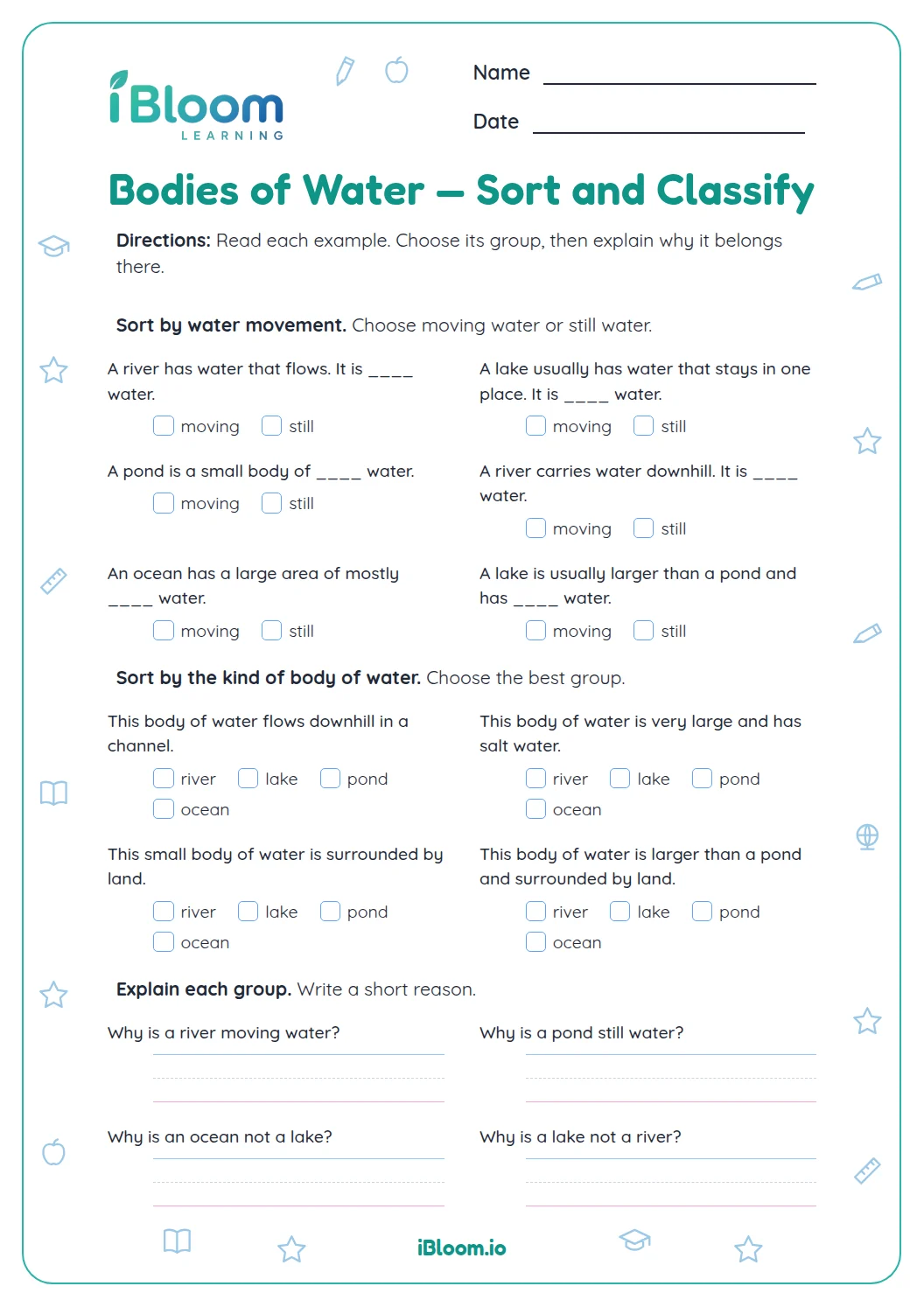 Bodies Water — Sort and ClassifyPrintable Grade 2 Earth Science worksheets for identifying, comparing, and describing common bodies of water such as oceans, rivers, lakes, and ponds. This sort and classify worksheet provides a distinct, age-appropriate way to practise the same lesson.Grade 2Free PDF preview
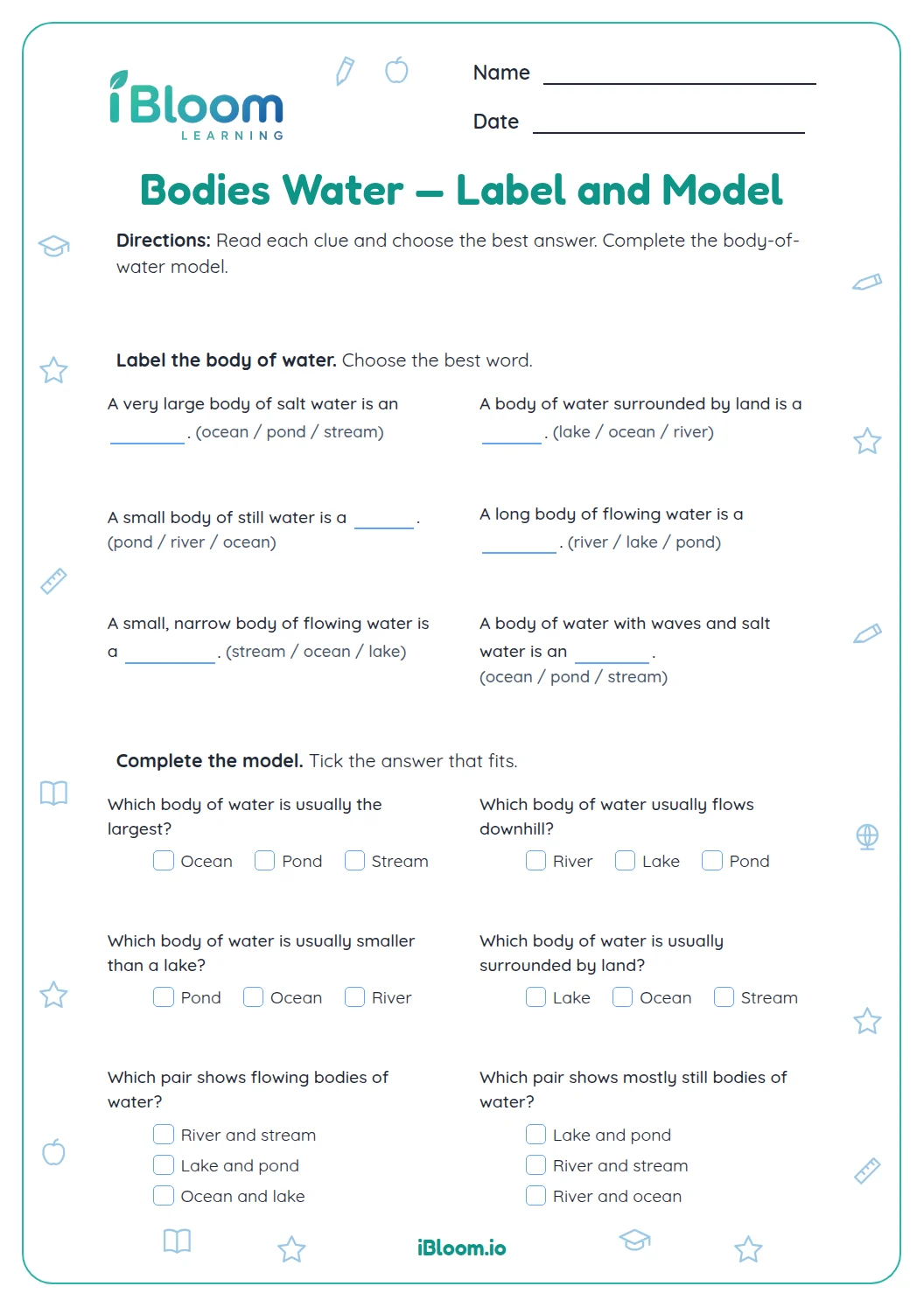 Bodies Water — Label and ModelPrintable Grade 2 Earth Science worksheets for identifying, comparing, and describing common bodies of water such as oceans, rivers, lakes, and ponds. This label and model worksheet provides a distinct, age-appropriate way to practise the same lesson.Grade 2Free PDF preview4 pages
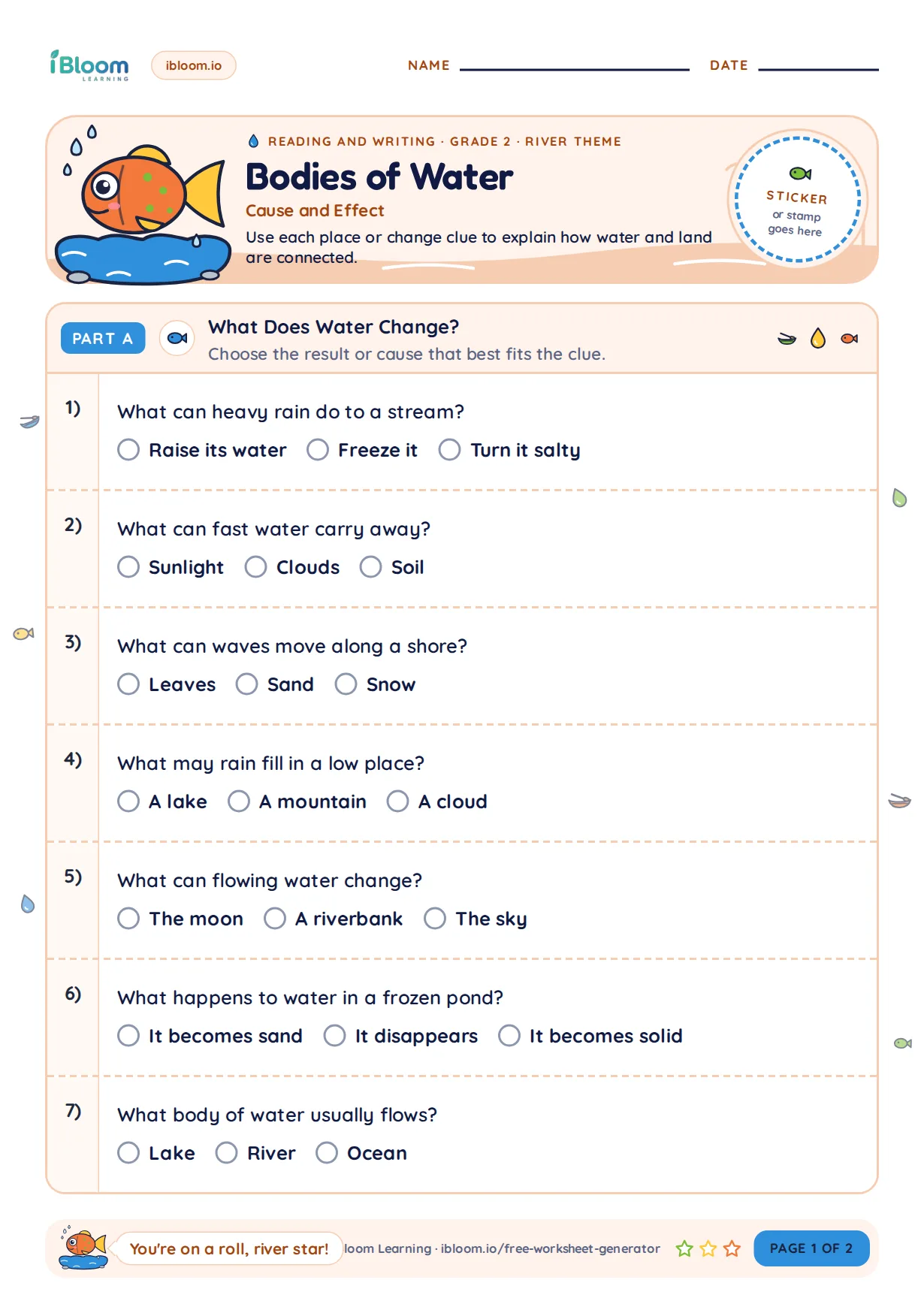 Bodies Water — Explain Cause and EffectPrintable Grade 2 Earth Science worksheets for identifying, comparing, and describing common bodies of water such as oceans, rivers, lakes, and ponds. This explain cause and effect worksheet provides a distinct, age-appropriate way to practise the same lesson.Grade 2Free PDF preview
 Bodies Water — Apply Science IdeasPrintable Grade 2 Earth Science worksheets for identifying, comparing, and describing common bodies of water such as oceans, rivers, lakes, and ponds. This apply science ideas worksheet provides a distinct, age-appropriate way to practise the same lesson.Grade 2Free PDF preview4 pages
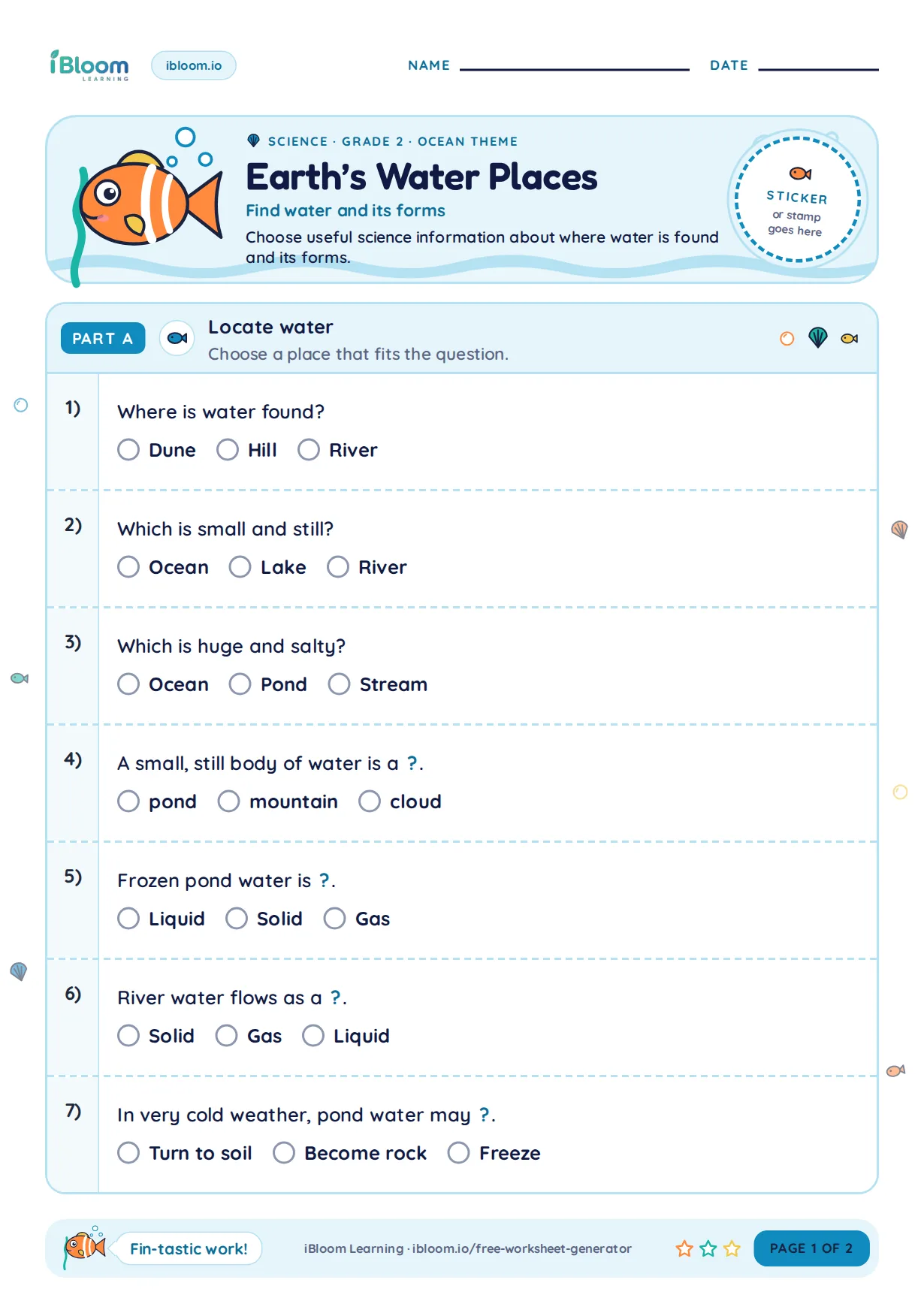 Bodies Water — Science Reasoning ReviewPrintable Grade 2 Earth Science worksheets for identifying, comparing, and describing common bodies of water such as oceans, rivers, lakes, and ponds. This science reasoning review worksheet provides a distinct, age-appropriate way to practise the same lesson.Grade 2Free PDF preview
Practice that builds confidence
What children learn
These Grade 2 Earth Science worksheets help children recognize and describe common bodies of water. Students practise using words such as ocean, river, lake, pond, and stream while noticing size, movement, and where water is found on Earth.
The printable activities include picture matching, labeling, sorting, simple map-style tasks, and short written responses. Children build science vocabulary while learning to compare water features in a clear, age-appropriate way.
Bodies of water are large or small areas where water collects or flows. In Grade 2, the focus is on recognizing familiar examples and describing them with simple observations. A river or stream usually flows from one place to another, while a lake or pond is surrounded by land. An ocean is very large and contains salt water. These worksheets give children repeated practice connecting each word to a picture, description, or real-world example.

Concept progression
Activities move from identification to comparison. Children may begin by matching a picture of a river to its name, then sort water bodies by clues such as “moving water” or “surrounded by land.” Later tasks ask them to complete sentences, label scenes, or explain how two bodies of water are alike and different. This progression helps students move beyond memorizing names toward using Earth Science vocabulary accurately.
A simple parent routine
At home, start with one worksheet and ask your child to point to each water feature before writing. After the page, connect the idea to life: “Have we seen a lake, pond, or river?” Use photos from trips, maps, or a globe to make the words concrete. Encourage complete oral sentences such as, “A river flows,” or “A pond is smaller than a lake,” before your child writes.

Classroom uses
Teachers can use these printables during an Earth Science unit, in science centers, as vocabulary review, or as a quick check after a lesson on land and water. They also work well with picture cards, anchor charts, map activities, or read-alouds about Earth’s surface. Pair work is useful because students can discuss clues before choosing an answer.

Common errors to watch for
Some children call every large water area an ocean or confuse lakes and ponds because both are still water surrounded by land. Others may focus only on size and miss movement, such as a river flowing. Gently guide students back to the clue in the picture or sentence. Ask, “Is the water moving?” or “Is land all around it?”
Free printable PDF download
Use this grade 2 bodies of water worksheet page to preview the activity, print it, or download it as a PDF for quick practice. It works well for homework, homeschool lessons, tutoring, morning work, revision, and classroom centers.
Answers and answer key support
After the child completes the worksheet independently, parents and teachers can use the answer support or answer key information to check the work, review mistakes, and choose the next practice step.
Why iBloom worksheets help
The worksheets use clear visuals, familiar vocabulary, and varied question types so children see each concept more than one way. A child-friendly strategy is: look at the shape, check whether the water moves, then name it. This simple routine builds confidence as students label, compare, and describe bodies of water.
Helpful answers
Frequently asked questions
What bodies of water do these Grade 2 worksheets cover?
They focus on common bodies of water that second graders are likely to meet in Earth Science, including oceans, rivers, lakes, ponds, and streams.
Are these worksheets mainly vocabulary practice or science practice?
They include both. Children learn the correct vocabulary while using science observations such as size, movement, and whether land surrounds the water.
How can I help my child tell the difference between a lake and a pond?
Explain that both are still water surrounded by land, but a pond is usually smaller and shallower. Use pictures and local examples if possible.
Do the activities include rivers and moving water?
Yes. Students practise identifying rivers or streams as water that flows from one place to another, often by using picture clues or short descriptions.
Can teachers use these pages in science centers?
Yes. The worksheets are suitable for independent centers, partner work, vocabulary review, or follow-up practice after a lesson on Earth’s land and water features.
Is this grade 2 bodies of water worksheet free?
Yes. You can preview it for free and use the printable worksheet for home or classroom practice.
Can I download this grade 2 bodies of water worksheet as a PDF?
Yes. Use the worksheet download option to save a printable PDF, or print the worksheet directly from the page.
Does this grade 2 bodies of water worksheet include answers or an answer key?
When the activity has fixed answers, iBloom includes answer support so parents and teachers can check the completed worksheet.