Free printable practice
Human Impact Practice Activities
Grade 2 science worksheets help children identify how people affect land, water, air, plants, animals, and local environments.
Free printable worksheet PDFs
Preview every available page, then download the free worksheet PDF for home, homeschool, tutoring, or classroom practice.
Preview the exact activity before downloading it.
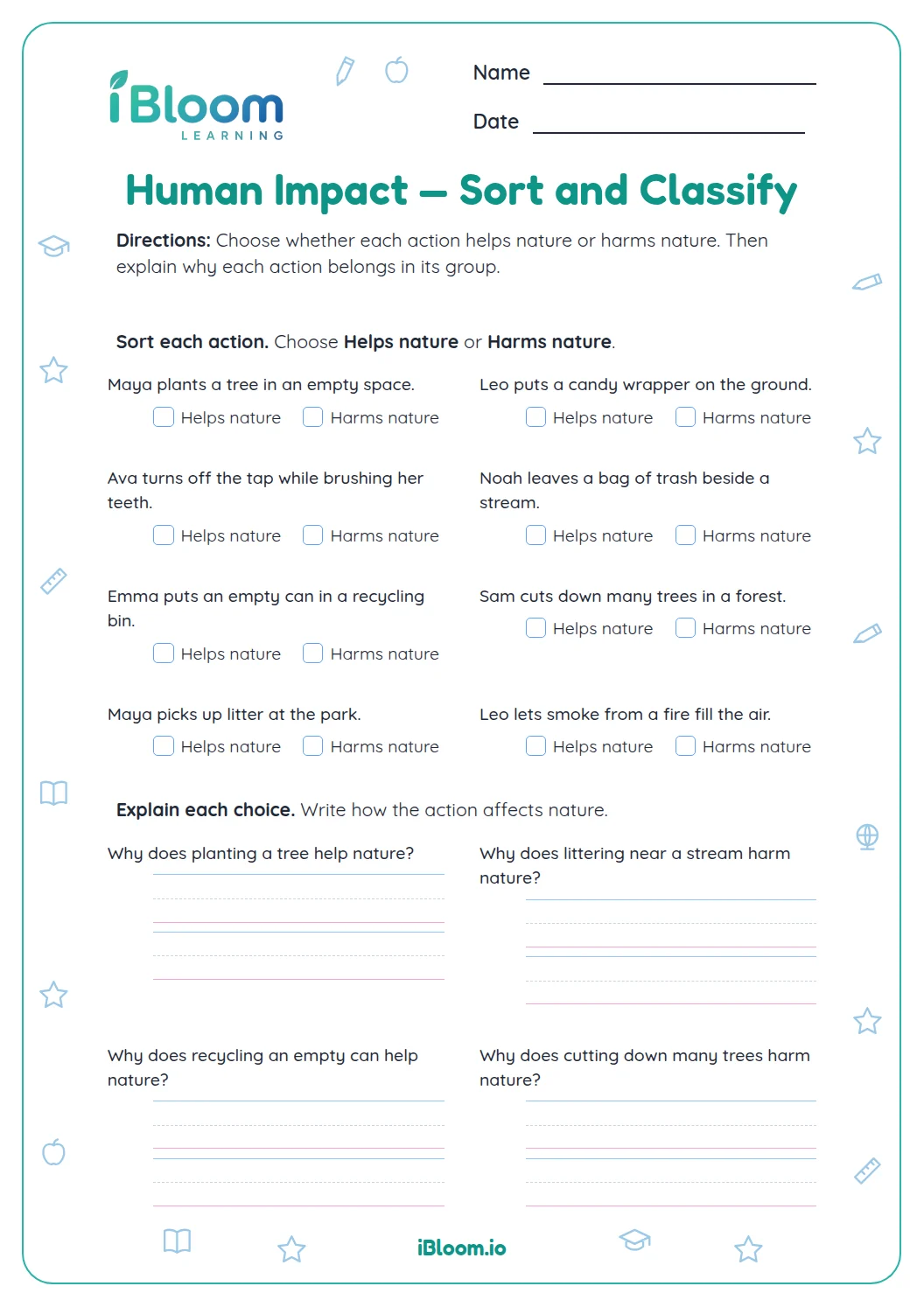 Human Impact — Sort and ClassifyGrade 2 science worksheets help children identify how people affect land, water, air, plants, animals, and local environments. This sort and classify worksheet provides a distinct, age-appropriate way to practise the same lesson.Grade 2Free PDF preview
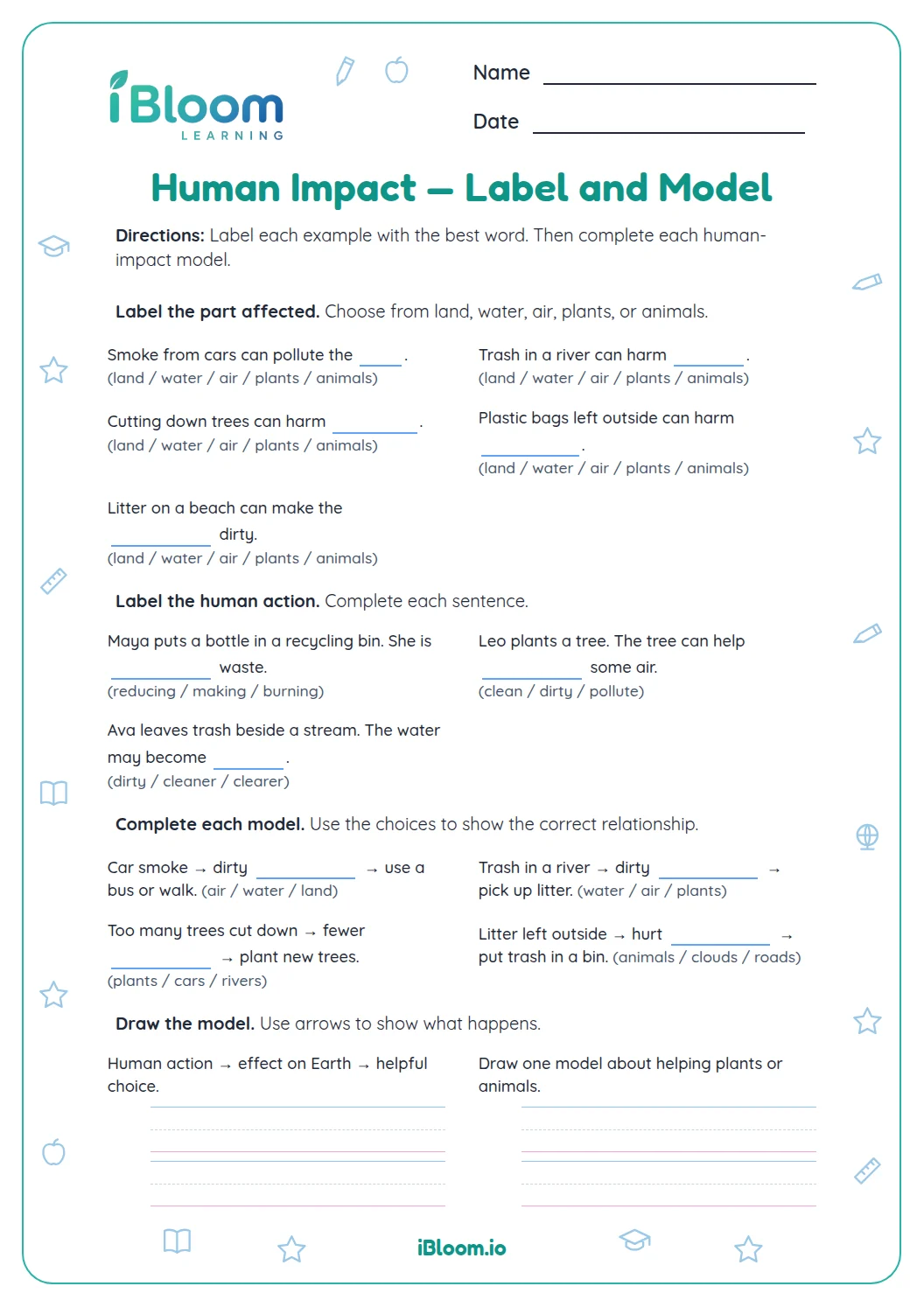 Human Impact — Label and ModelGrade 2 science worksheets help children identify how people affect land, water, air, plants, animals, and local environments. This label and model worksheet provides a distinct, age-appropriate way to practise the same lesson.Grade 2Free PDF preview
 Human Impact — Explain Cause and EffectGrade 2 science worksheets help children identify how people affect land, water, air, plants, animals, and local environments. This explain cause and effect worksheet provides a distinct, age-appropriate way to practise the same lesson.Grade 2Free PDF preview6 pages
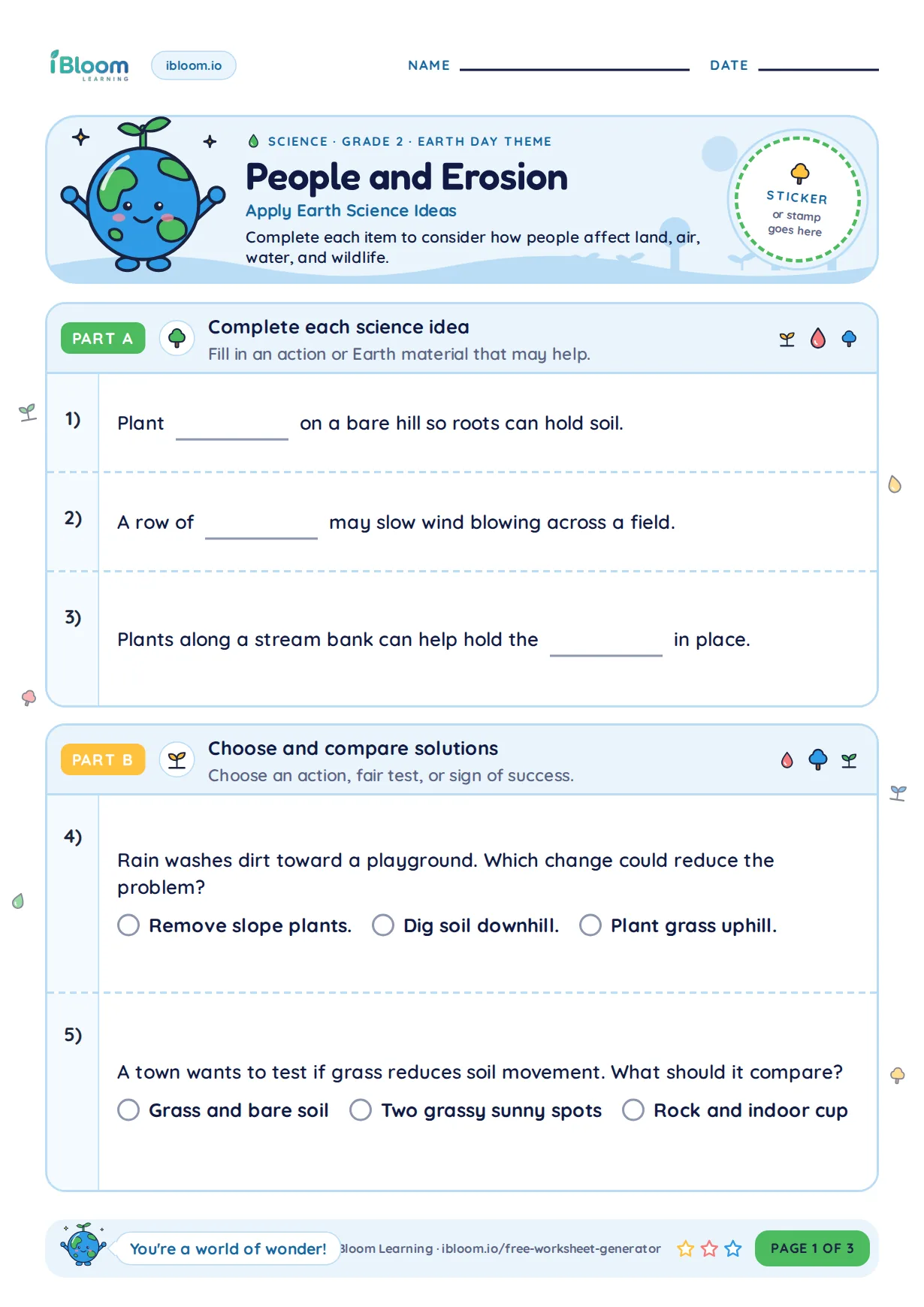 Human Impact — Apply Science IdeasGrade 2 science worksheets help children identify how people affect land, water, air, plants, animals, and local environments. This apply science ideas worksheet provides a distinct, age-appropriate way to practise the same lesson.Grade 2Free PDF preview
 Human Impact — Science Reasoning ReviewGrade 2 science worksheets help children identify how people affect land, water, air, plants, animals, and local environments. This science reasoning review worksheet provides a distinct, age-appropriate way to practise the same lesson.Grade 2Free PDF preview
Practice that builds confidence
What children learn
These Grade 2 Earth Science worksheets help children explore human impact: the ways people can change, harm, protect, or improve the environment. Students practise noticing evidence, describing cause and effect, and explaining simple choices such as saving water, reducing trash, and caring for habitats.
The printable activities may include picture sorting, short response prompts, matching tasks, scenario cards, and observation-based questions. Children connect everyday actions—littering, recycling, planting trees, wasting resources, or cleaning up a park—to their effects on land, water, air, plants, and animals.
Human impact is a Grade 2 Earth Science idea that connects science to everyday life. Children learn that people use natural resources, build roads and homes, create waste, and also make choices that protect nature. The focus is not on memorizing big environmental terms, but on explaining what happened, who or what is affected, and what could be done differently.
From noticing to explaining
The worksheets guide students from simple observation to basic reasoning. A child may first identify a picture of trash near a stream, then explain that animals could be hurt or the water could become dirty. Other tasks may ask students to compare helpful and harmful actions, such as planting flowers for insects versus picking plants carelessly, or turning off a faucet versus letting water run.
Parent routine
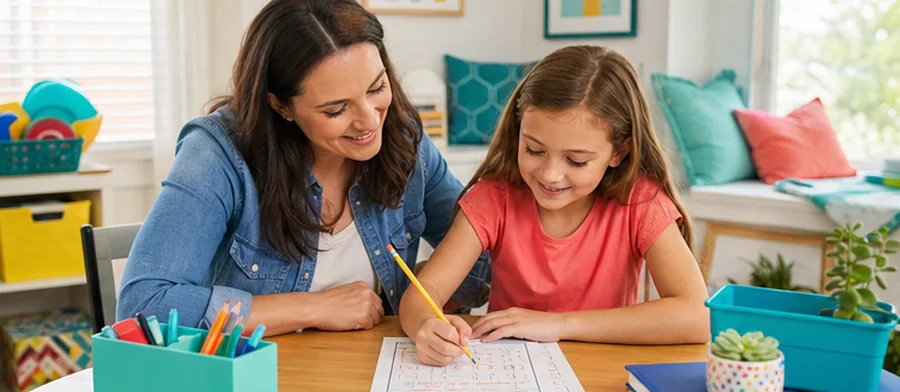
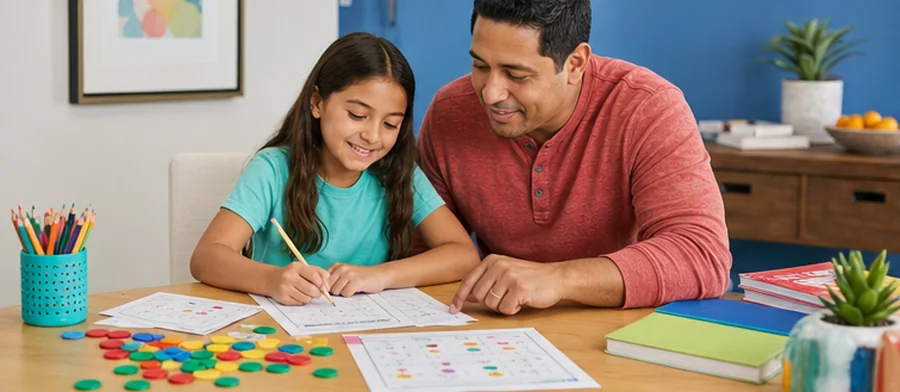
At home, choose one worksheet and connect it to a real place your child knows: your kitchen, sidewalk, playground, garden, or local park. Ask three questions: “What do you see?”, “How could this affect living things?”, and “What is one better choice?” After the page, let your child take one small action, such as sorting paper for recycling, switching off an unused light, or putting litter in the bin.
Classroom uses for teachers
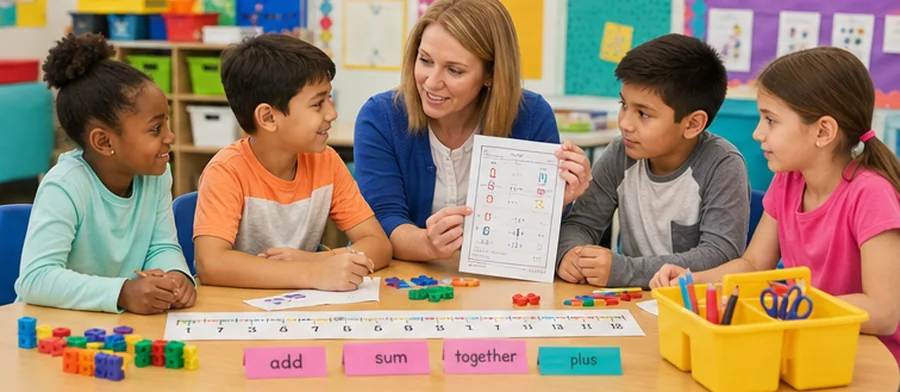
Teachers can use these printables for Earth Science lessons, science centers, morning work, partner talk, or an end-of-unit review. Picture-based items support early readers, while written prompts help students practise science vocabulary such as environment, habitat, pollution, recycle, conserve, protect, resource, land, water, and air.
Common errors and a child-friendly strategy
Some children think all human actions are bad for nature, while others notice only the immediate mess and miss the effect on animals or plants. Encourage the strategy: “Action → Effect → Better choice.” For example: “Someone leaves plastic on grass → a bird may eat it → put it in the trash or recycle it.” This keeps explanations clear and age-appropriate.
Free printable PDF download
Use this grade 2 human impact worksheet page to preview the activity, print it, or download it as a PDF for quick practice. It works well for homework, homeschool lessons, tutoring, morning work, revision, and classroom centers.
Answers and answer key support
After the child completes the worksheet independently, parents and teachers can use the answer support or answer key information to check the work, review mistakes, and choose the next practice step.
Why iBloom worksheets help
iBloom worksheets use familiar Grade 2 situations so children can reason from what they already understand. The activities combine visuals, simple language, and short explanations, helping students build scientific thinking while learning that small responsible choices can make a real difference in their community.
Helpful answers
Frequently asked questions
What does human impact mean for Grade 2 students?
For Grade 2, human impact means the ways people affect the environment, including land, water, air, plants, and animals. Children learn that actions can be helpful, harmful, or improved.
What kinds of activities are included in these worksheets?
Activities may include sorting helpful and harmful actions, matching causes to effects, answering picture-based questions, and writing simple ways people can protect the environment.
How can I make this topic practical at home?
Connect the worksheet to everyday choices. Ask your child to notice waste, water use, lights, plants, or litter, then name one action that would help the local environment.
Do children need to know advanced environmental science terms?
No. The worksheets use age-appropriate ideas and vocabulary such as recycle, protect, habitat, pollution, resource, land, water, and air.
How can teachers use these pages in class?
Teachers can use them during Earth Science lessons, science centers, partner discussions, quick checks for understanding, or as prompts for classroom conversations about responsible choices.
Is this grade 2 human impact worksheet free?
Yes. You can preview it for free and use the printable worksheet for home or classroom practice.
Can I download this grade 2 human impact worksheet as a PDF?
Yes. Use the worksheet download option to save a printable PDF, or print the worksheet directly from the page.
Does this grade 2 human impact worksheet include answers or an answer key?
When the activity has fixed answers, iBloom includes answer support so parents and teachers can check the completed worksheet.