






About this worksheet
This Grade 2 science worksheet asks learners to apply ideas about human impacts on Earth. Children choose ways plants and barriers may slow soil movement, explain how to compare designs, and identify actions that can protect air, water, land, and wildlife. It aligns with NGSS 2-ESS2-1 by comparing solutions designed to slow wind or water from changing land. The activity has 14 questions and a separate key.
Aligned to 2-ESS2-1
How can people help keep soil in place?
Plants can help hold soil with their roots. A barrier such as a low wall or a row of trees may slow water or wind. The best design depends on the place and the kind of soil movement.
Question 1 describes water carrying soil down a bare hill. Planting grass is a reasonable solution because roots can help hold the soil.
- 1Problem: water carries soil down a bare hill.
- 2Possible solution: plant grass.
- 3Why it may help: roots can hold soil in place.
How can people compare erosion solutions?
A fair test changes one feature and keeps the other conditions alike. Comparing grassy and bare soil after the same rain can show whether less soil moved. Students can use that evidence to compare designs before deciding what to try on a larger area.
Why compare more than one solution?
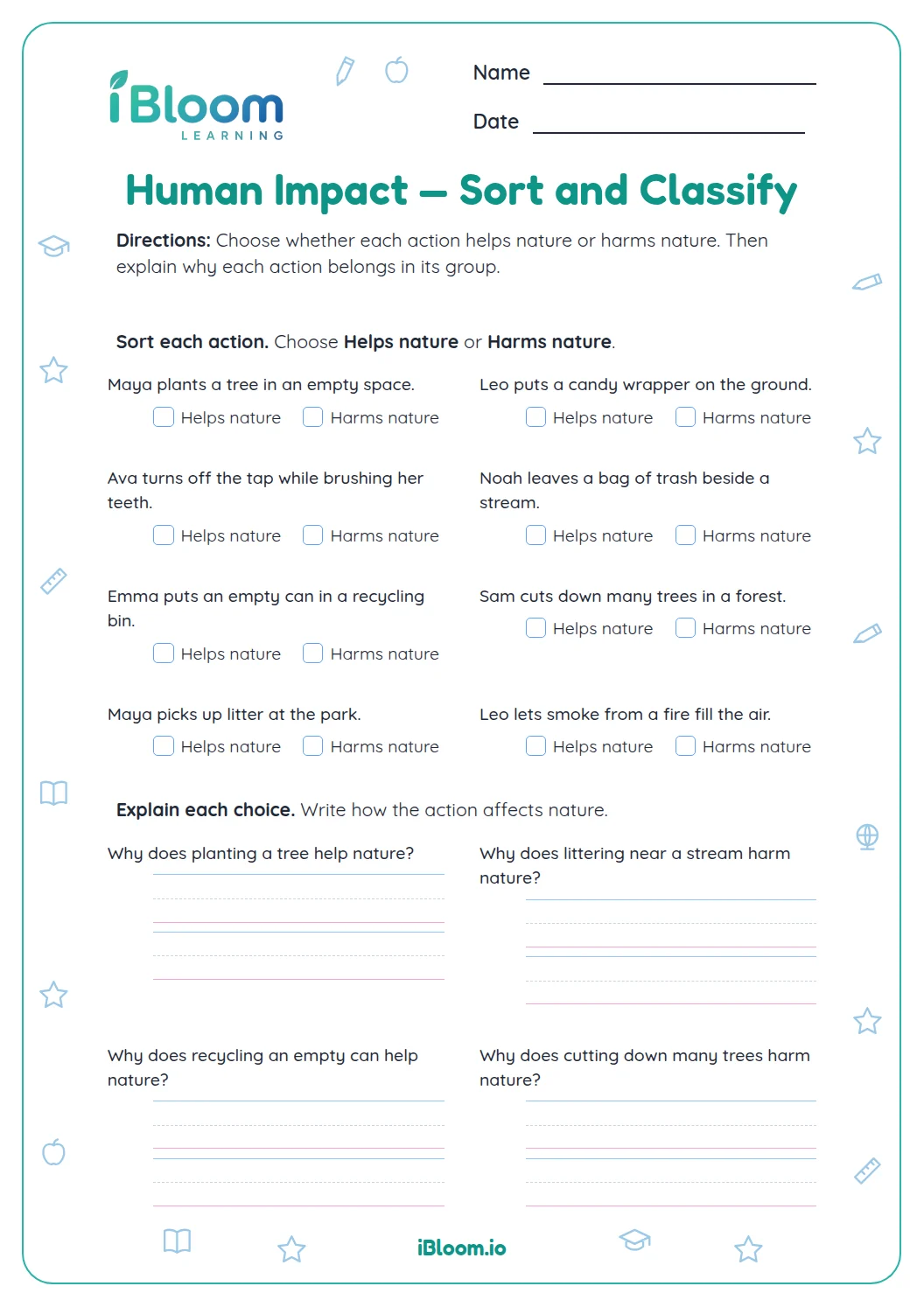
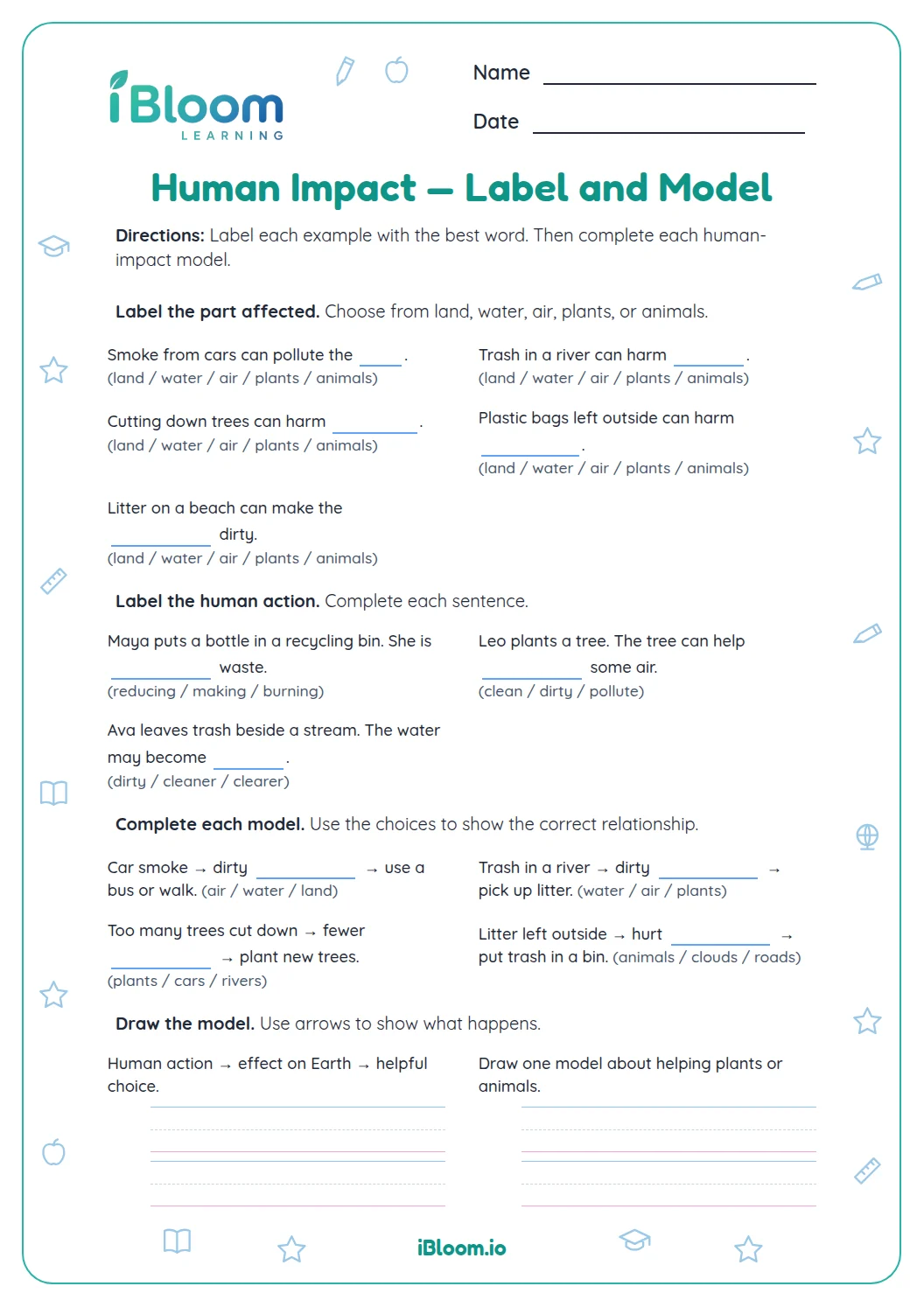
People can affect air, water, land, plants, and animals. Putting litter in a bin, choosing reusable items, and staying on marked paths are examples of actions that can reduce harm. The final six questions connect these choices to possible effects in familiar places.
How to use this worksheet
- 1Name what is moving the soil: wind or water.
- 2Identify the land or place that needs protection.
- 3Choose a design that could slow the wind or water.
- 4Explain how the design might hold soil in place.
- 5Think of a fair comparison that could show whether it helped.
Common mistakes and quick fixes
The mistake
Thinking a solution is proven before it is tested.
The fix
Use “may help,” then describe an observation that could provide evidence.
The mistake
Choosing an action that exposes loose soil.
The fix
Look for roots or barriers that slow moving wind or water.
The mistake
Comparing two places after different weather.
The fix
Keep the conditions alike so the design is the main difference.
Next Generation Science Standards
Learners compare ways to reduce the effects of wind and water on land.
Compare designs that can slow wind or water from changing land.
On this sheet: Learners select and compare ways to hold soil in place and consider how a test can show whether a design helped.
Show the official wordingHide the official wording
Compare multiple solutions designed to slow or prevent wind or water from changing the shape of the land.
What to practice next
Make more practice
Further reading
Questions parents and teachers ask
What is erosion?
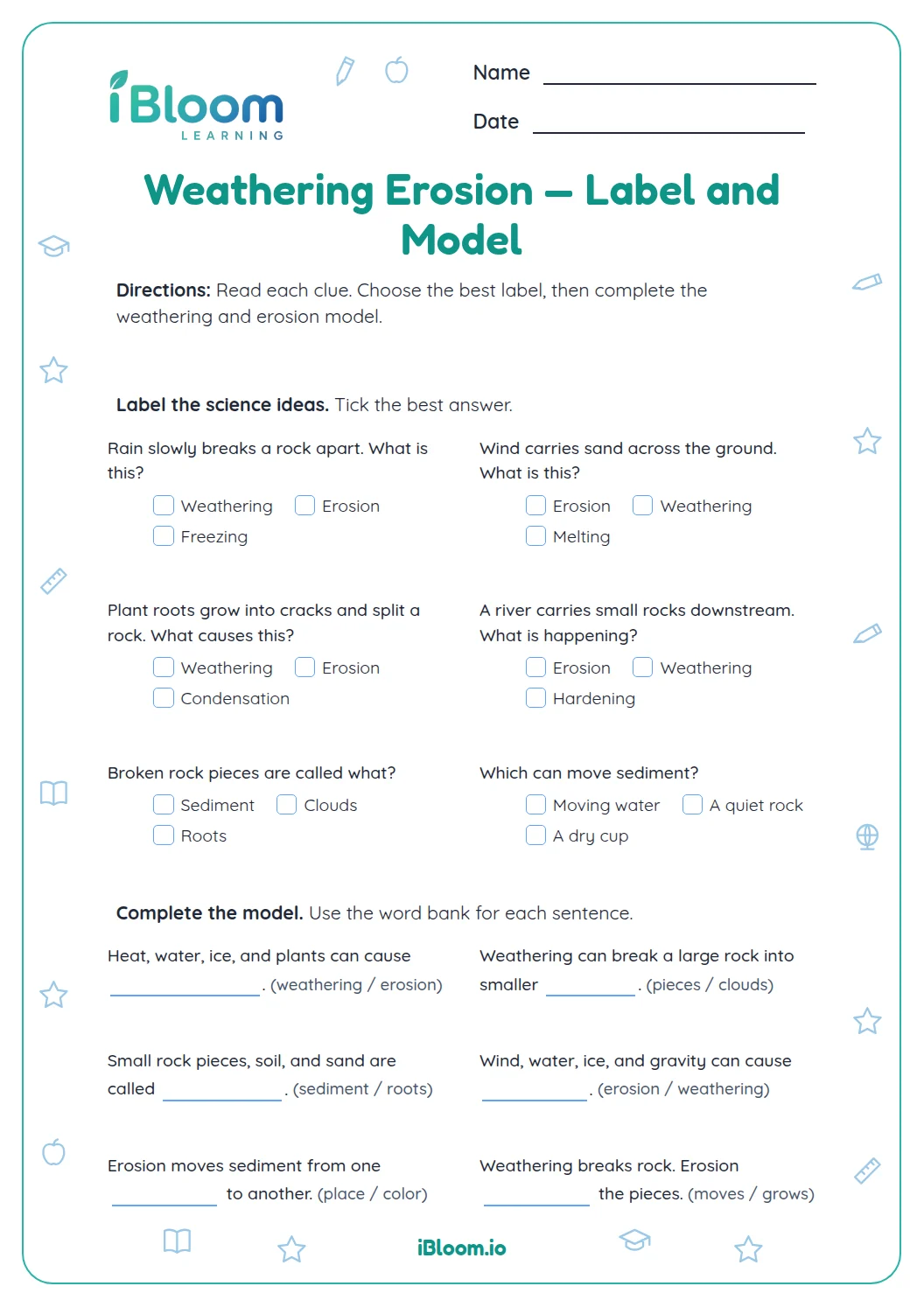
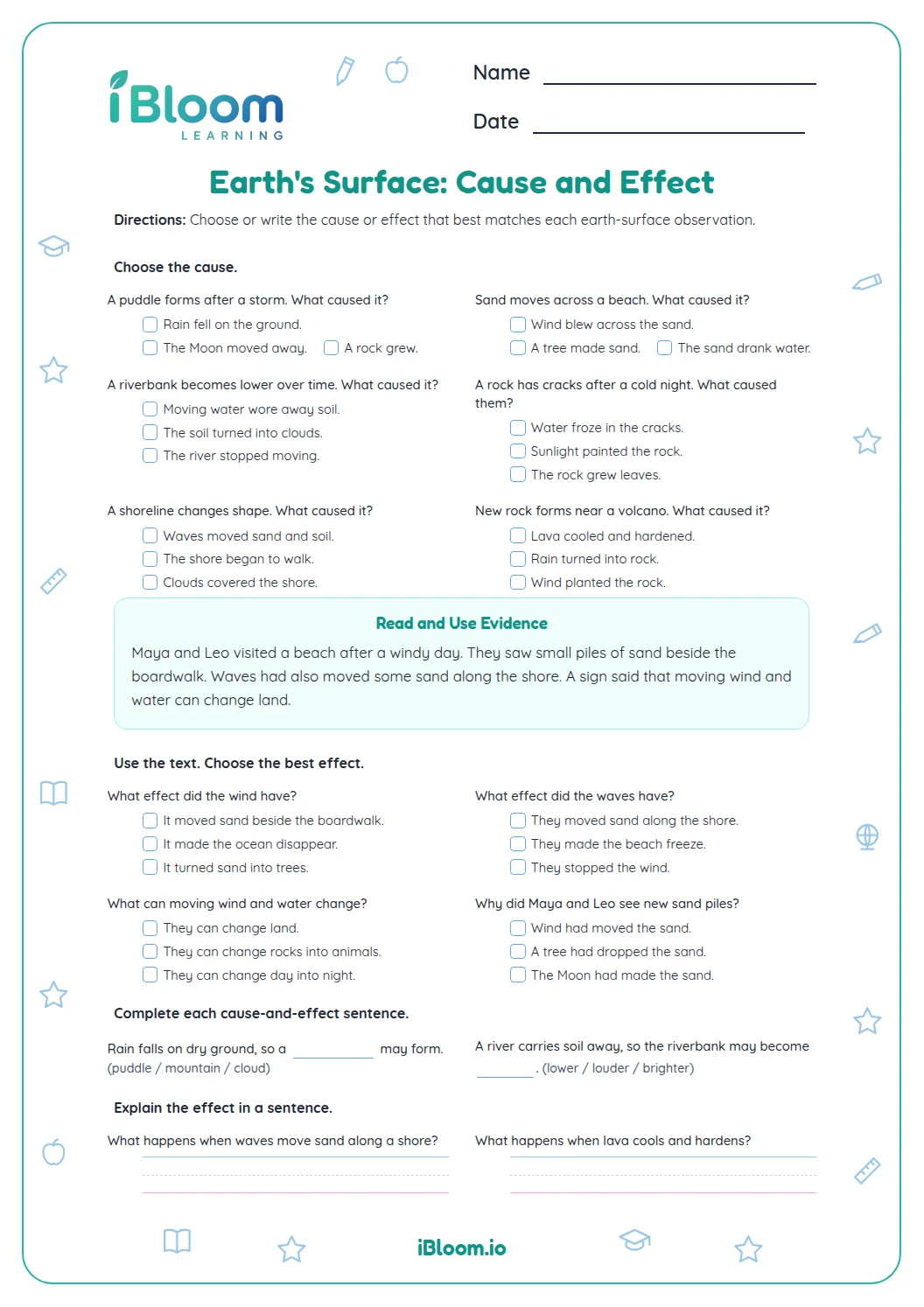
Erosion happens when moving water or wind carries soil or bits of rock from one place to another. A bare slope can lose soil during rain, and loose soil can blow across a field in strong wind. Several questions ask how people might reduce that movement.
How can plants help reduce erosion?
Plant roots can hold soil in place, and leaves may slow some falling rain near the ground. The worksheet uses hills, fields, and stream banks to help children choose where plants could be useful. The key treats these as possible solutions, not guarantees.
What is a windbreak?
A windbreak is a barrier, often a row of trees or shrubs, that slows wind over an area. If it helps, less soil may blow from protected ground. Learners consider a row of trees as one way people could respond to wind erosion.
How could children test an erosion solution?
They can compare two similar areas, change one design feature, and observe what happens after the same rain or wind. Measuring soil movement provides evidence about whether a design helped. Question 10 asks learners to describe a fair comparison. This keeps weather conditions alike for a useful comparison.
How can people reduce harm to air and water?
The questions connect smoke from cars with air quality and litter or plastic with streams. Choosing reusable items and putting wrappers in a bin are actions people can take. Other items ask how people can protect land and wildlife. Each choice links a familiar action to an environmental effect.
Is an answer key included?
Yes. The key lists the choices for selected-response items and gives sample answers for explanation prompts. Accept another response when it proposes a reasonable action and connects it to slowing erosion or reducing harm to a place or living thing.