






About this worksheet
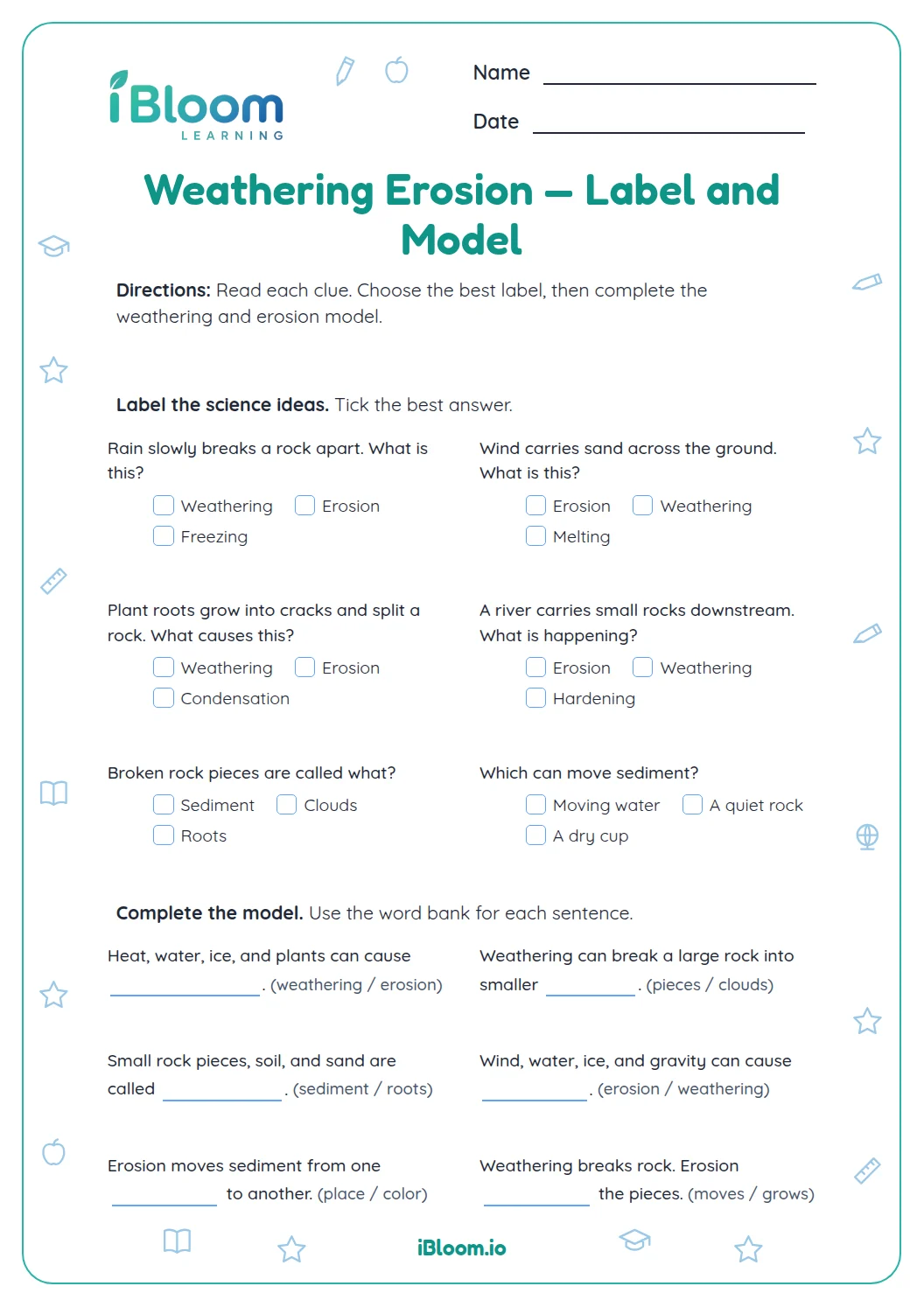
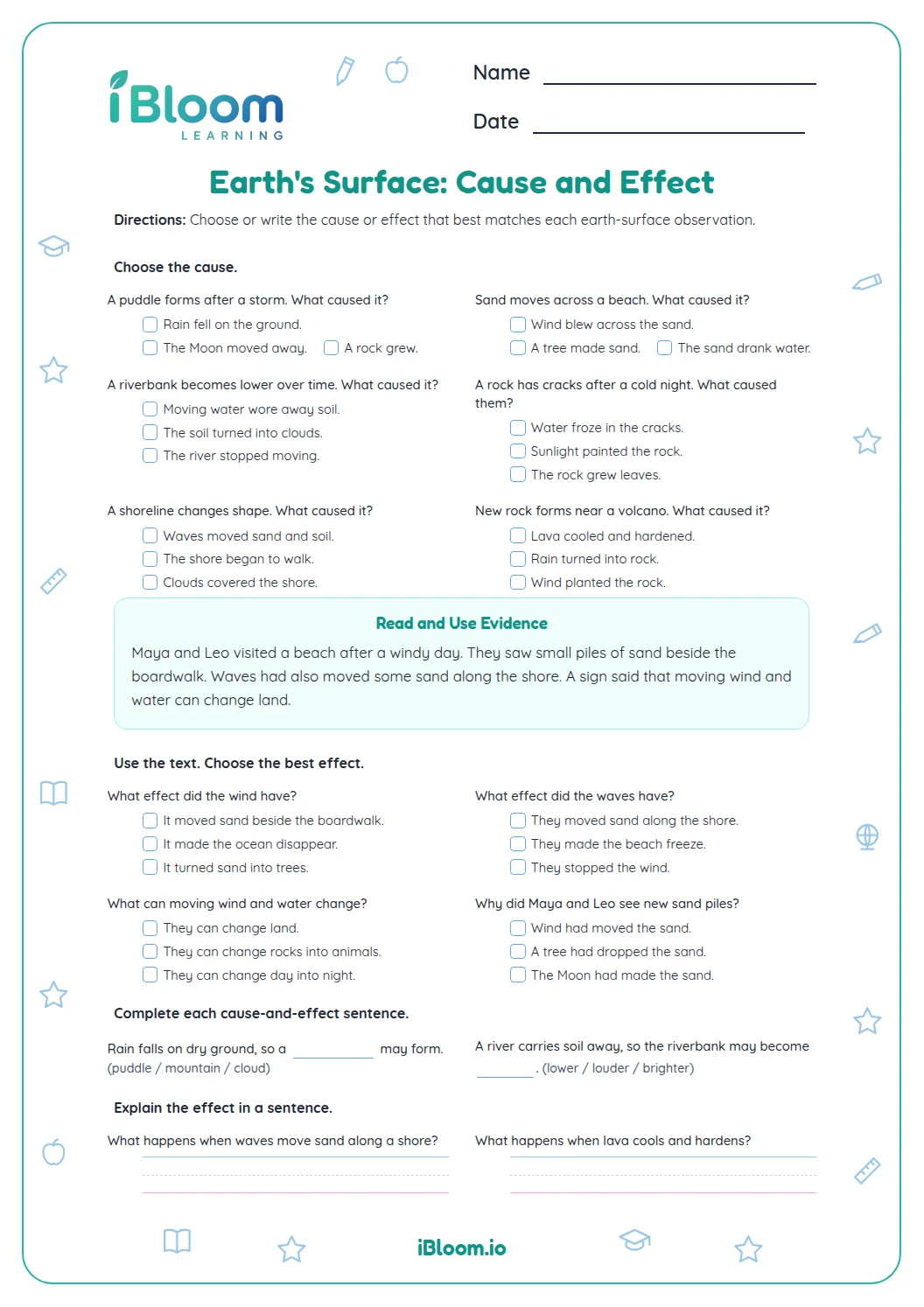
This Grade 2 worksheet practices cause and effect in weathering and erosion. Learners choose what happens when water freezes, wind moves sand, or rain falls on bare soil; complete science sentences; and explain causes in their own words. It includes 15 questions and a separate answer key. The examples also compare fast changes with changes that happen over many years, connecting the practice to NGSS 2-ESS1-1.
Aligned to 2-ESS1-1
What does weathering do to rock?
Weathering breaks rock into smaller pieces. Water can enter a crack, freeze, expand, and make the crack wider. Plant roots can also grow into cracks over time.
What makes erosion different?
Erosion carries soil, sand, or rock to another place. Rain running downhill and wind carrying sand are examples of movement. In Part A, q3 asks which action describes erosion.
How can you explain a cause and its effect?
Name what acts on the land, then tell what changes. For q11, freezing water is the cause; expanding ice can split the rock. The answer key gives a sample sentence, and other accurate wording works too.
How to use this worksheet
- 1Read the whole event before choosing a process.
- 2Ask whether rock breaks apart or material moves away.
- 3Use the word choices to complete each science sentence.
- 4For a written answer, name the cause and its effect.
- 5Check the answer key and accept accurate wording with the same idea.
Common mistakes and quick fixes
The mistake
Calling movement of soil weathering.
The fix
Erosion moves material to another place.
The mistake
Calling every rock break erosion.
The fix
If material breaks but stays put, weathering is occurring.
The mistake
Naming only the event in a written answer.
The fix
Add what it causes to happen.
These activities connect practice to the following standard.
Compare how Earth events can change land quickly or slowly.
On this sheet:
Show the official wordingHide the official wording
Use information from several sources to provide evidence that Earth events can occur quickly or slowly.
What to practice next
Make more practice
Further reading
Questions parents and teachers ask
What is the difference between weathering and erosion?
Weathering breaks rock into smaller pieces, while erosion moves rock or soil from one place to another. The worksheet asks learners to recognize both processes in examples involving ice, rain, wind, and roots. The answer key includes sample explanations for the written questions.
How many questions are on the worksheet?
There are 15 questions in three parts: five multiple-choice items, five sentence-completion items, and five written explanations. The parts move from identifying a process to explaining how an event changes rock or soil. A separate answer key supports checking.
What does the answer key include?
The key gives the correct choice or completion for each item and a sample response for each written question. Since children may explain a cause and effect in different words, compare the science idea rather than requiring the sample sentence word for word.
How does this sheet practice cause and effect?
Learners read about an event such as freezing water, moving wind, or heavy rain and identify the change it can cause. The last part asks them to state both parts of the relationship in a short written response.
Can I use this worksheet in a science lesson?
Yes. Use the first part to review weathering and erosion vocabulary, then let learners complete the sentence items. The written questions can be done independently or discussed with a partner before checking the answer key. Ask learners to point out the cause and the change in each explanation.