









About this worksheet
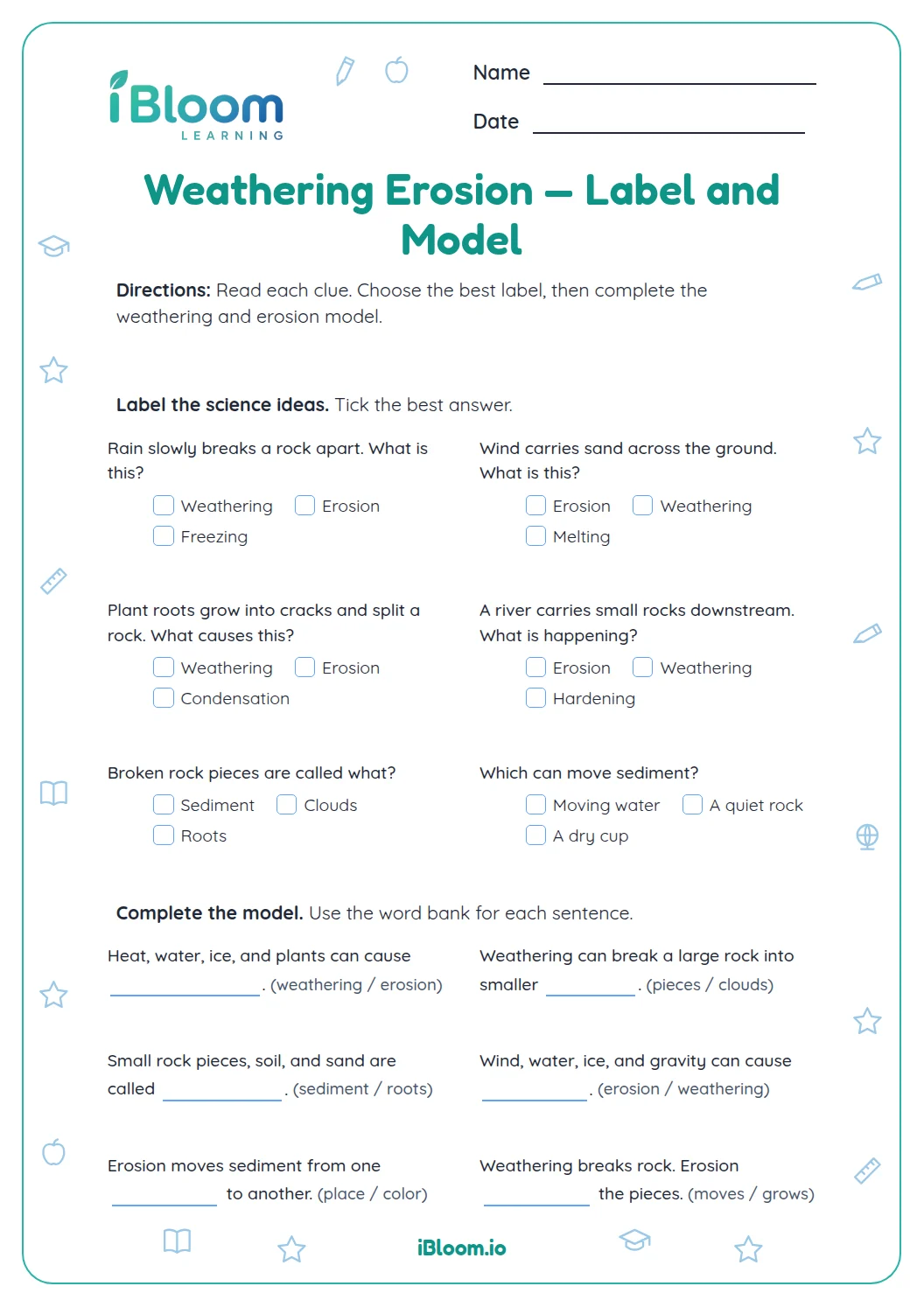
This Grade 2 printable explores how weathering breaks rock and erosion moves rock and soil. Fourteen two-choice questions ask learners to apply those ideas to freezing water, moving sediment, stream banks, and plant roots. A separate answer key marks the best answer for each situation.
How are weathering and erosion different?
Weathering breaks or wears down rock in place. Erosion moves sediment from one location to another by water, wind, ice, or gravity.
Question 9 describes a crack that grows after water freezes. The water can widen the crack as it freezes, breaking the rock in place.
- 1Water freezes inside a crack.
- 2The crack widens and rock breaks.
- 3Breaking rock in place = weathering.
Which changes happen quickly or slowly?
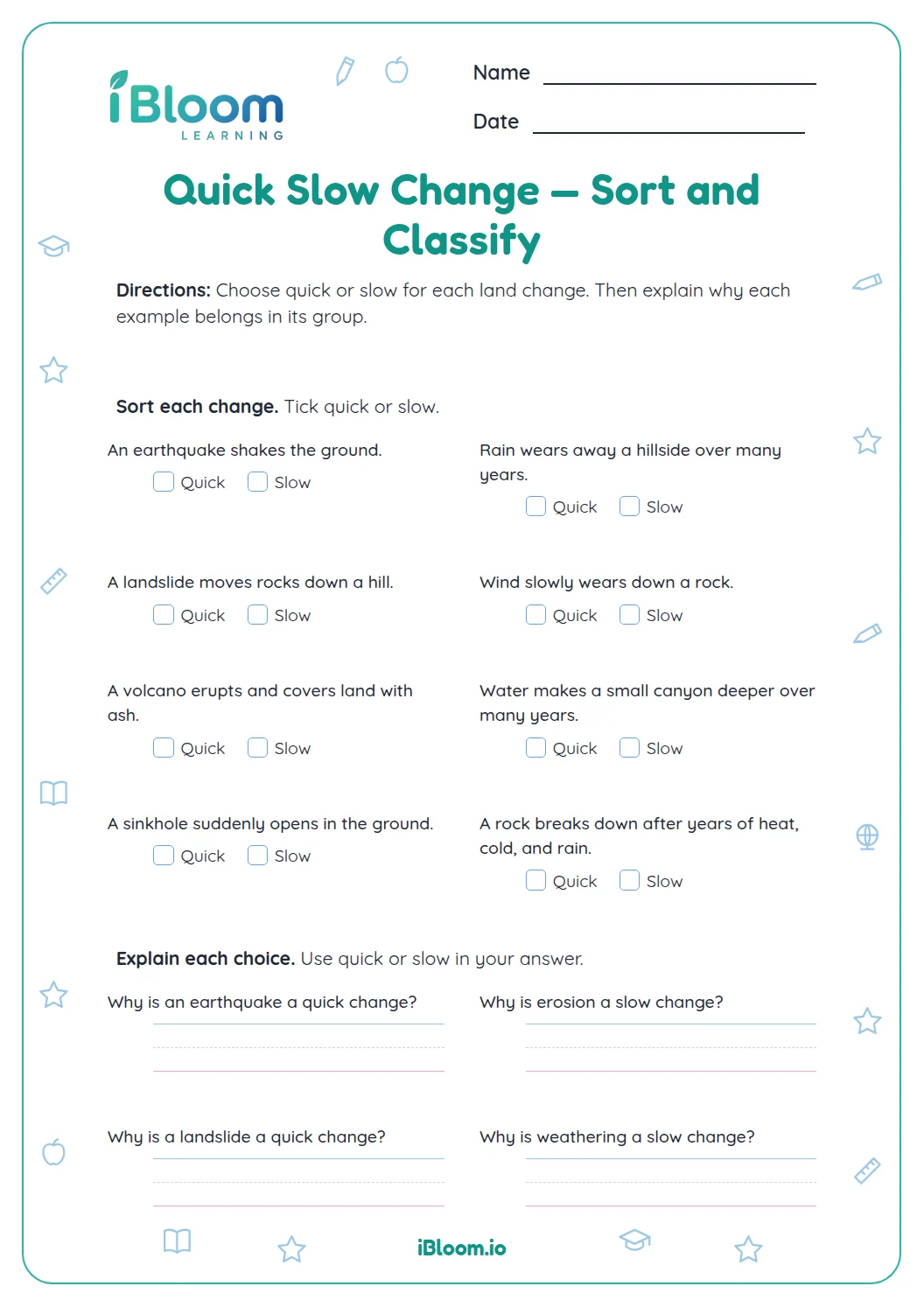
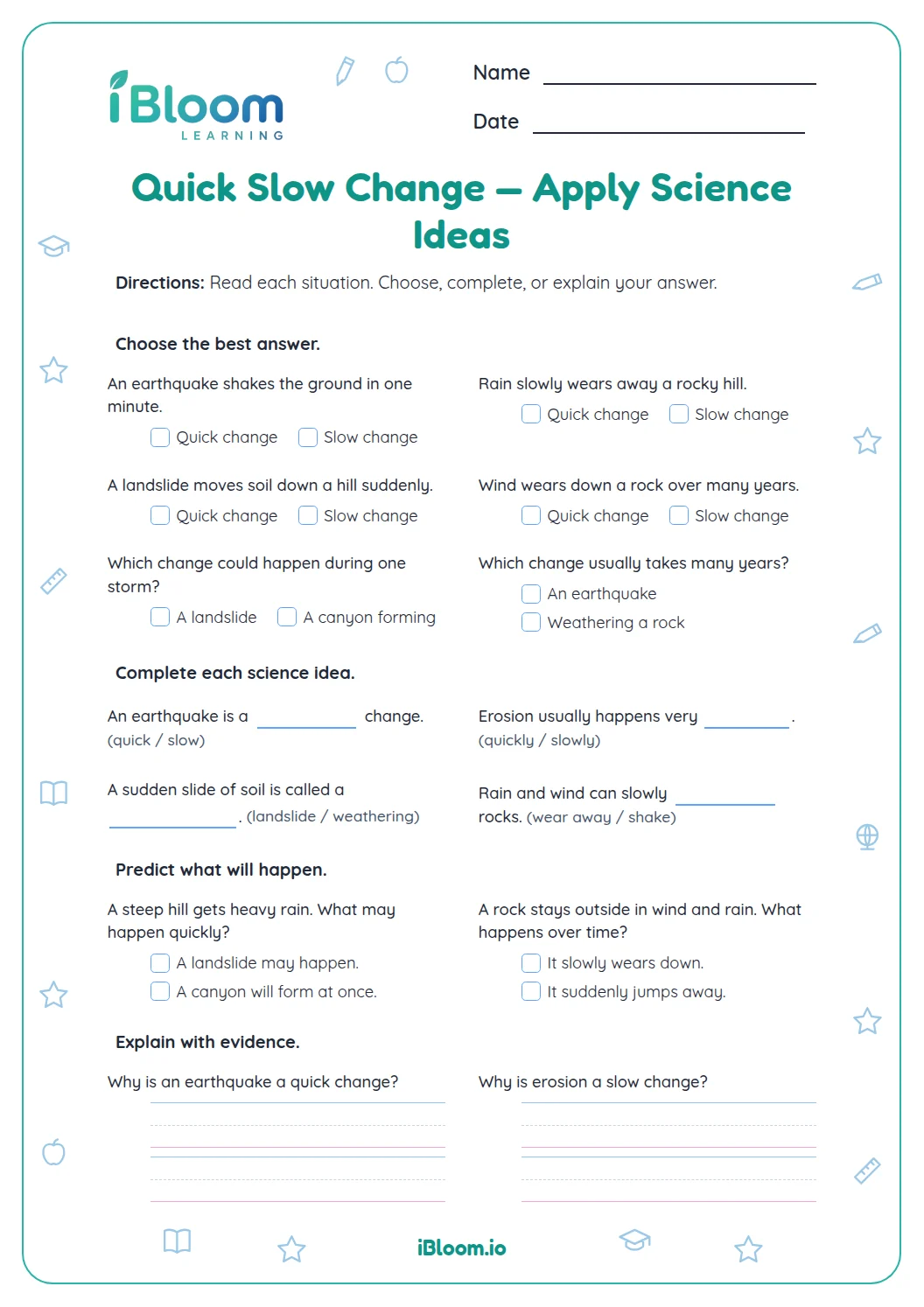
Some Earth changes happen quickly, while others take a long time. A river carrying sand over many years is a slow change; a landslide moving soil in minutes is quick.
What evidence can support an explanation?
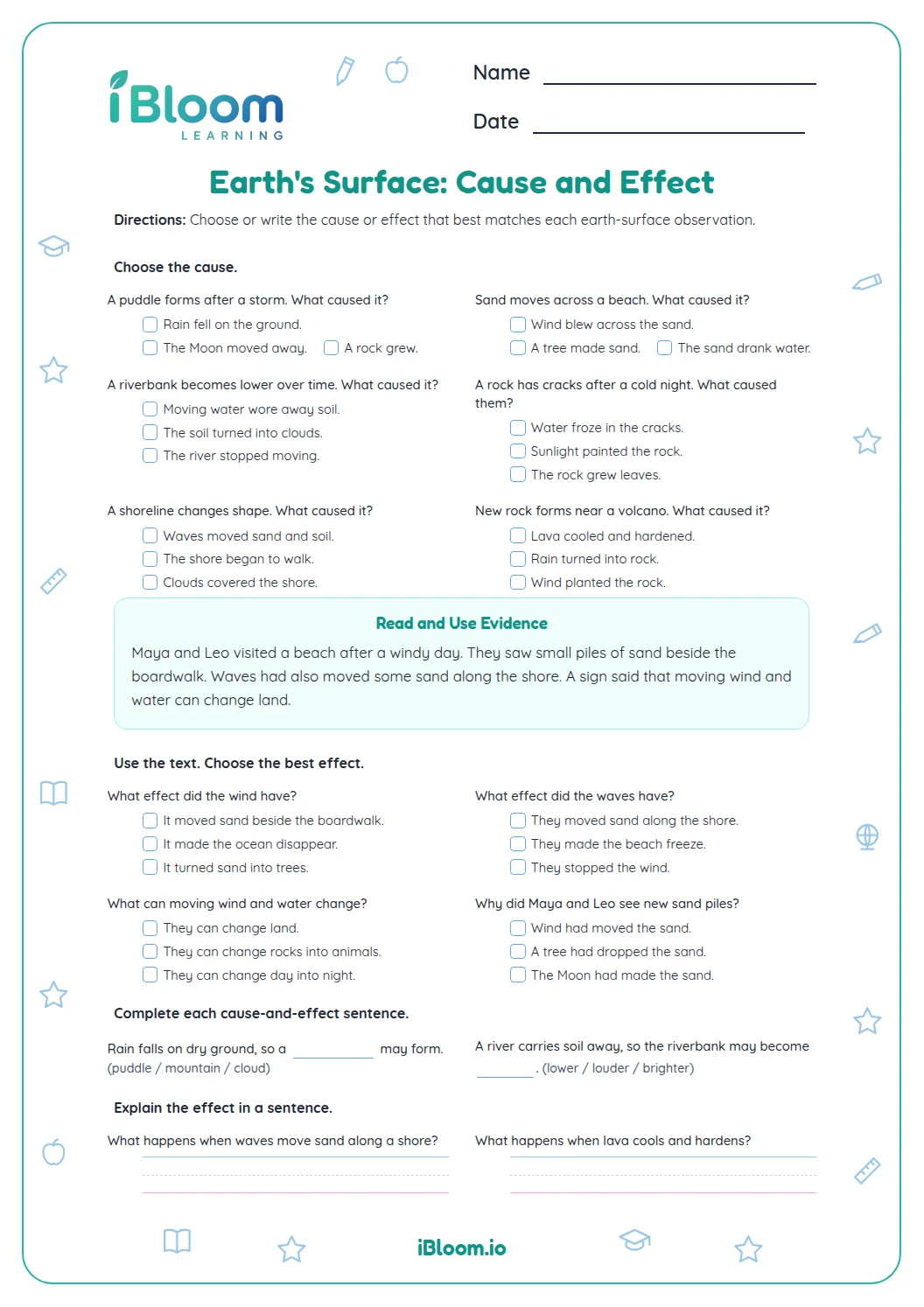
Part A names weathering, erosion, sediment, and slow change. Part B applies those ideas to movement, cracking, and evidence that land changes over time. A separate answer key marks each correct choice.
How to use this worksheet
- 1Read each situation and underline the material that changes.
- 2Ask whether rock breaks in place or pieces move.
- 3Name the cause, such as freezing water, wind, or rain.
- 4Use the time clue to compare rapid and slow events.
- 5Support explanations with an observation.
Common mistakes and quick fixes
The mistake
Calling sediment movement weathering.
The fix
Ask whether rock breaks in place or pieces move to a new place; movement is erosion.
The mistake
Calling a widened crack erosion before anything moves.
The fix
A crack widening changes rock in place, so it is weathering.
The mistake
Treating a quick landslide and a river carrying sand for years as the same pace.
The fix
Notice the time clue and compare how long each event takes.
What to practice next
Make more practice
Further reading
Questions parents and teachers ask
How are weathering and erosion different?
Weathering breaks or wears down rock where it is. Erosion moves the resulting sediment to another place. For example, water freezing in a crack can widen and break rock; rain carrying loose soil downhill is erosion because the soil travels.
What is sediment?
Sediment is small pieces of rock or soil. Rain, streams, wind, ice, and gravity can move sediment. In this worksheet, learners identify loose material that travels downhill and consider where sand may settle when moving water slows. Naming the material helps distinguish it from water itself.
How many questions are on the worksheet?
The worksheet has 14 two-choice questions in two parts. The questions cover weathering, erosion, sediment, freezing water, roots, and whether a change is quick or slow. The answer key shows the selected choice for each item, so an adult can review the reasoning with the learner afterward.
Which example is a slow change in question 6?
A river carrying sand over many years is the slow change. A landslide can move soil in minutes, so it is a quick event. Comparing the time clues helps learners distinguish gradual movement from a sudden change to the land.
What can roots do on a slope?
Roots can help hold soil in place on a slope. They do not move soil uphill. Question 14 asks learners to choose that stabilizing effect, while other items show how water can carry loose soil downhill. Together, these situations connect plant roots with soil staying in place.