Free printable practice
Food Practice Activities
Grade 2 science worksheets help children connect everyday foods to plants and identify edible roots, stems, leaves, flowers, fruits, and seeds.
Free printable worksheet PDFs
Preview every available page, then download the free worksheet PDF for home, homeschool, tutoring, or classroom practice.
Preview the exact activity before downloading it.
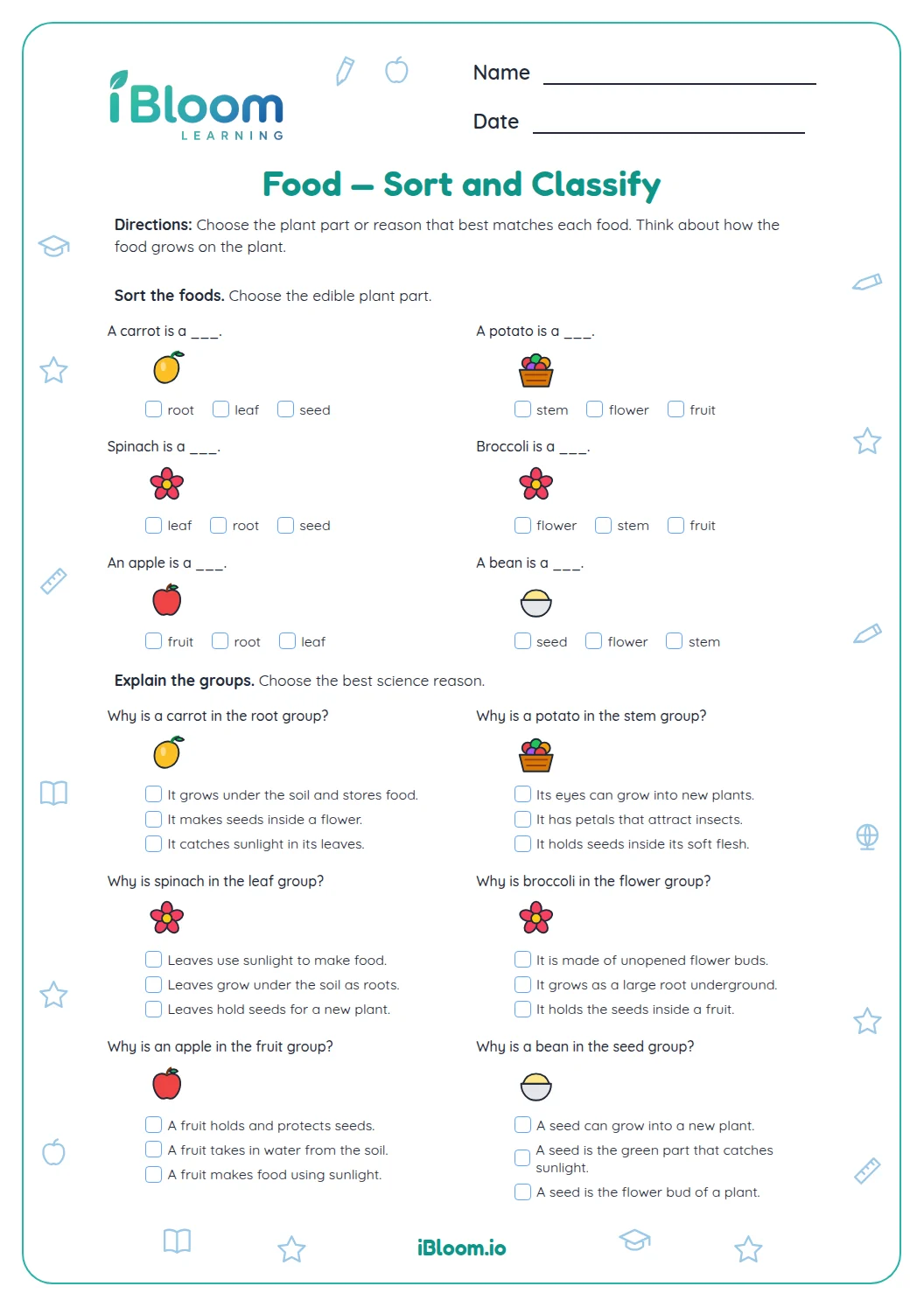 Food — Sort and ClassifyGrade 2 science worksheets help children connect everyday foods to plants and identify edible roots, stems, leaves, flowers, fruits, and seeds. This sort and classify worksheet provides a distinct, age-appropriate way to practise the same lesson.Grade 2Free PDF preview
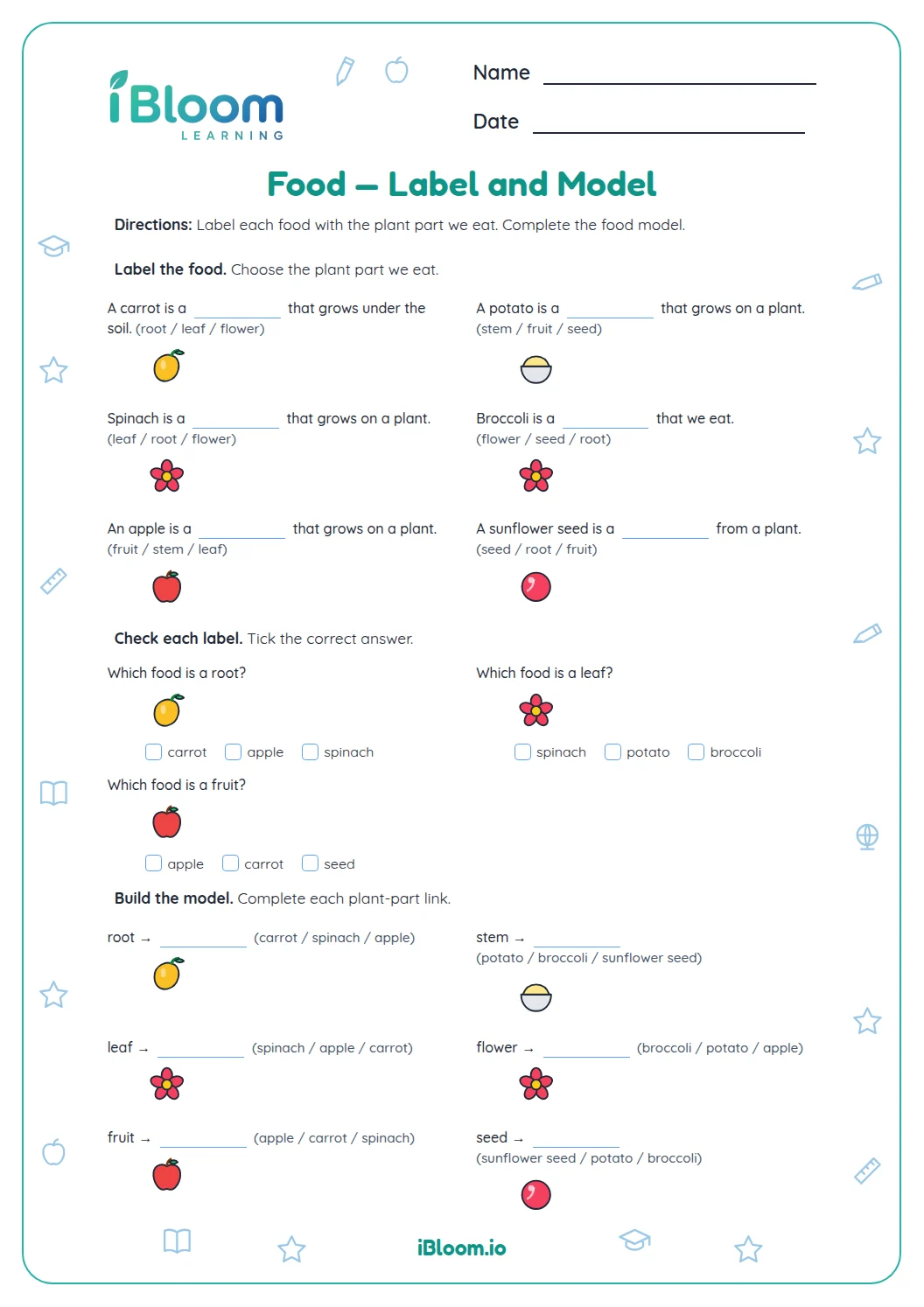 Food — Label and ModelGrade 2 science worksheets help children connect everyday foods to plants and identify edible roots, stems, leaves, flowers, fruits, and seeds. This label and model worksheet provides a distinct, age-appropriate way to practise the same lesson.Grade 2Free PDF preview
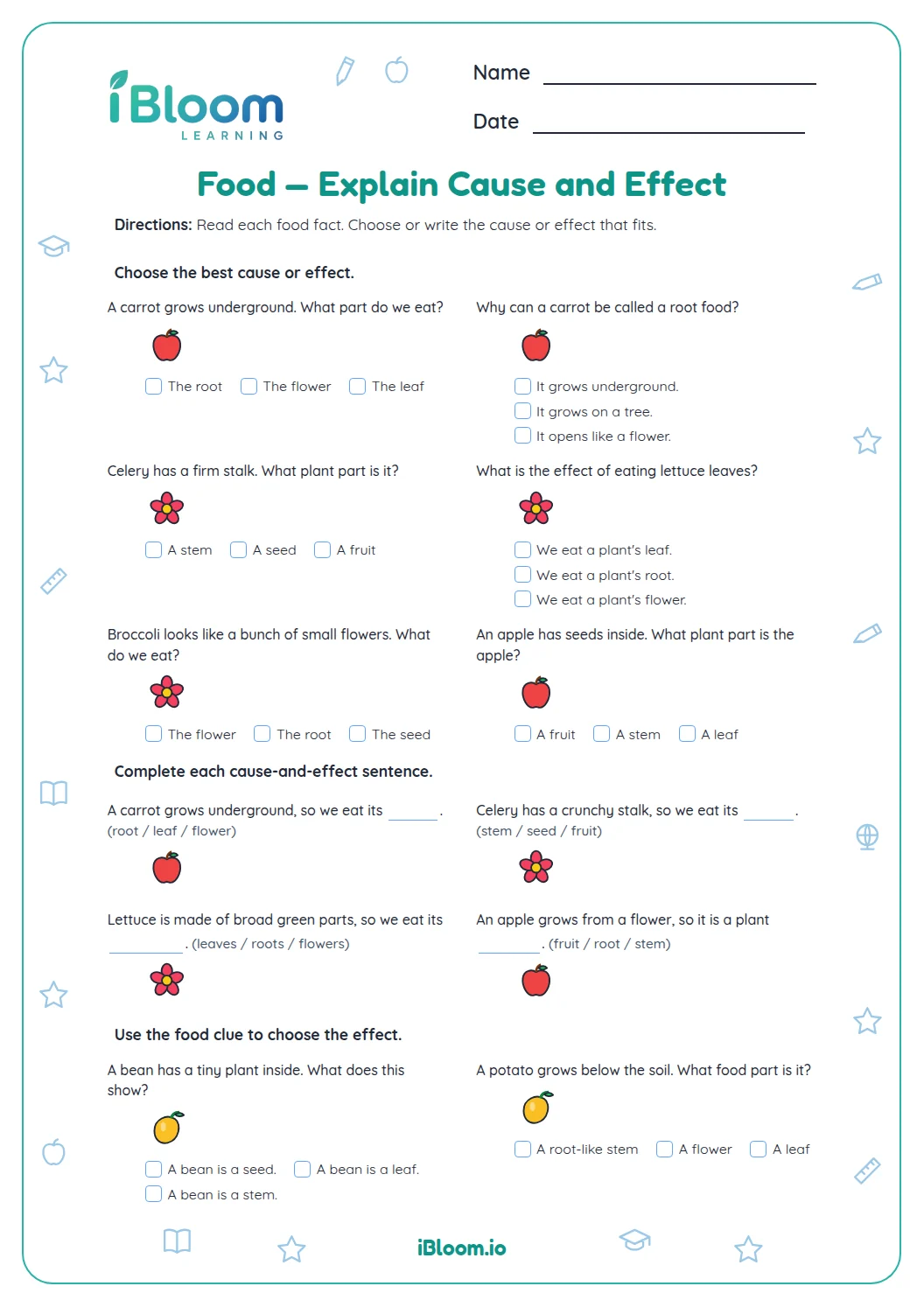 Food — Explain Cause and EffectGrade 2 science worksheets help children connect everyday foods to plants and identify edible roots, stems, leaves, flowers, fruits, and seeds. This explain cause and effect worksheet provides a distinct, age-appropriate way to practise the same lesson.Grade 2Free PDF preview
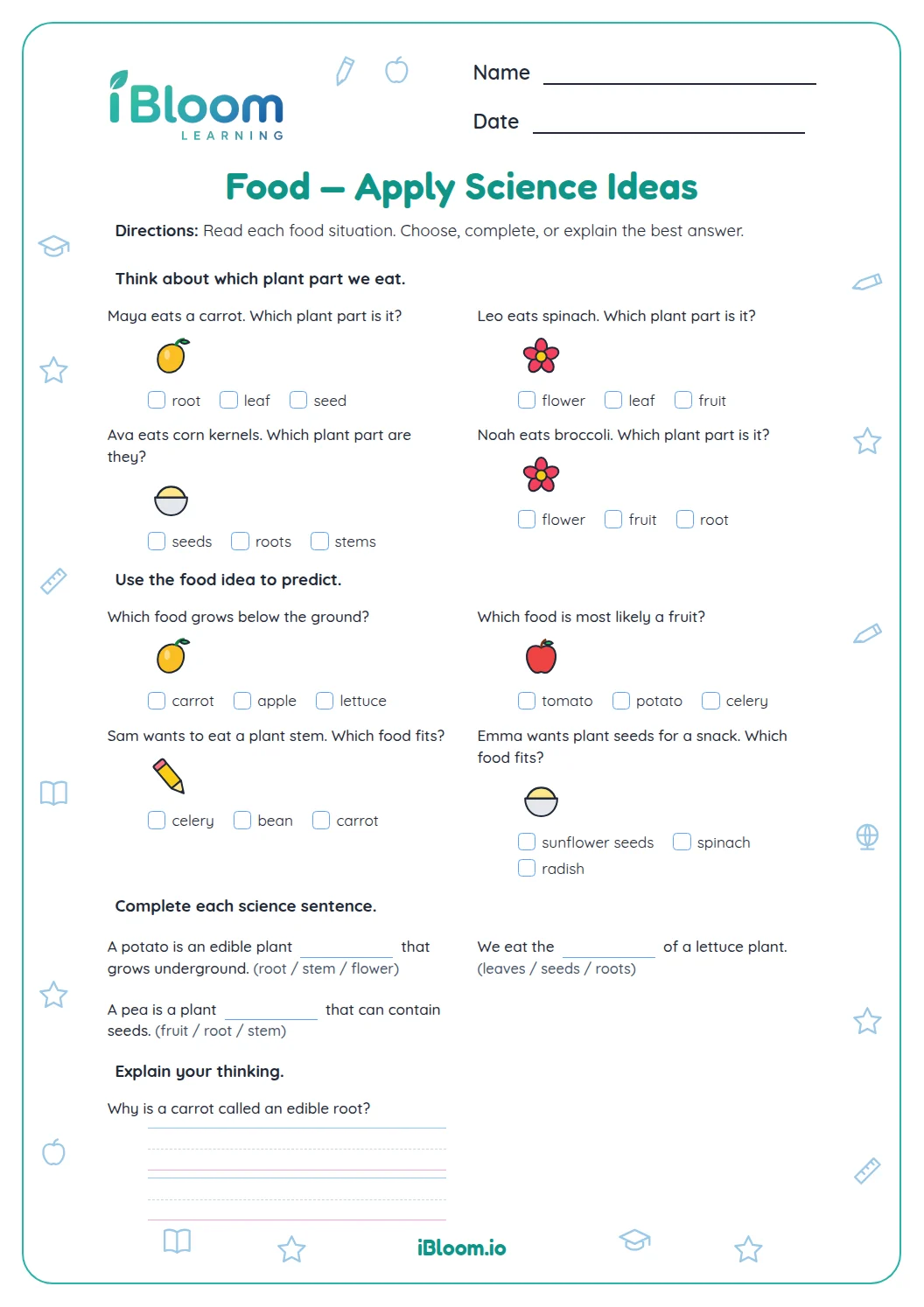 Food — Apply Science IdeasGrade 2 science worksheets help children connect everyday foods to plants and identify edible roots, stems, leaves, flowers, fruits, and seeds. This apply science ideas worksheet provides a distinct, age-appropriate way to practise the same lesson.Grade 2Free PDF preview
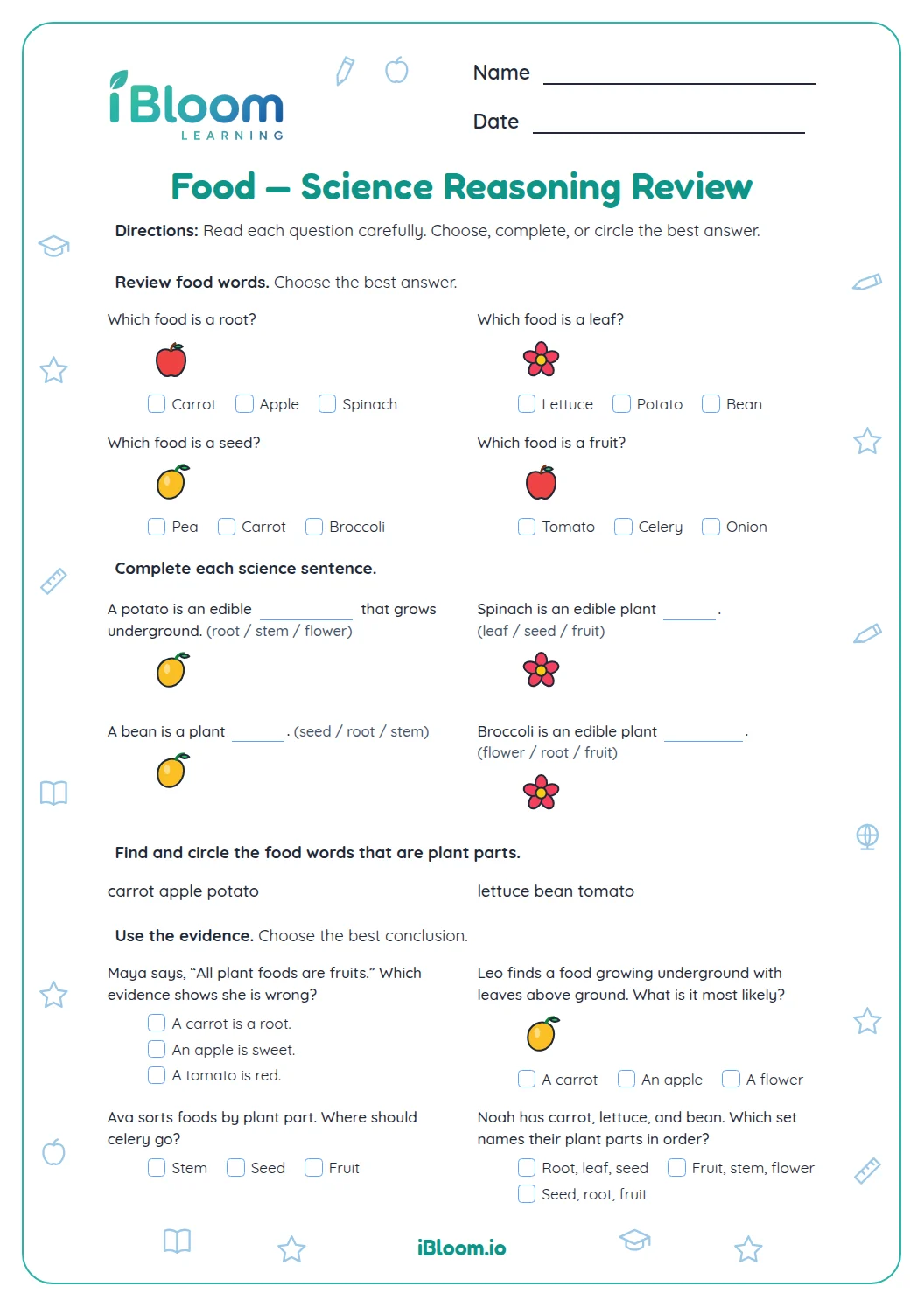 Food — Science Reasoning ReviewGrade 2 science worksheets help children connect everyday foods to plants and identify edible roots, stems, leaves, flowers, fruits, and seeds. This science reasoning review worksheet provides a distinct, age-appropriate way to practise the same lesson.Grade 2Free PDF preview
Practice that builds confidence
Understanding food from plants
These Grade 2 science worksheets focus on food in the Plants unit: where plant foods come from, which plant parts people eat, and how familiar foods can be grouped by roots, stems, leaves, flowers, fruits, and seeds.
The printable activities include sorting, matching, labeling, picture-based questions, and short written responses. Children practise using science vocabulary while connecting classroom learning to foods they see at home, in lunchboxes, and at the grocery store.
Children learn that many foods begin as parts of plants. Carrots and radishes are roots, celery can be a stem, spinach and lettuce are leaves, broccoli is a flower, apples and tomatoes are fruits because they contain seeds, and beans, peas, and corn can be seeds. The worksheets build from simple picture recognition to explaining why a food belongs in a plant-part group.

Concept progression for Grade 2
The practice starts with familiar examples before asking children to compare foods that may be less obvious. Students move from “This is a plant food” to “This is the part of the plant we eat.” They also meet the idea that plants make their own food using sunlight, air, and water, while people and animals get food by eating plants or other living things.
Parent routine at home
Choose three foods during a meal or snack and ask, “Did this come from a plant? Which part?” A child might say, “The apple is a fruit because it has seeds,” or “The lettuce is a leaf.” After the conversation, use one worksheet page to sort or label the same kinds of foods. This connects science words to real objects instead of memorized lists.

Classroom uses for teachers
Teachers can use these printables in science centers, small-group review, or as a follow-up to observing real fruits, seeds, leaves, or vegetables. The pages also support vocabulary practice for root, stem, leaf, flower, fruit, seed, plant, and food. Picture tasks are useful for quick checks before a class discussion or a hands-on food sorting activity.

Common errors to watch for
Some children call every plant food a vegetable. Help them separate everyday food words from science words: “vegetable” is a cooking word, while root, leaf, fruit, and seed are plant-part words. Another common mistake is thinking only sweet foods are fruits; remind children that fruits have seeds.
Free printable PDF download
Use this grade 2 plant food worksheet page to preview the activity, print it, or download it as a PDF for quick practice. It works well for homework, homeschool lessons, tutoring, morning work, revision, and classroom centers.
Answers and answer key support
After the child completes the worksheet independently, parents and teachers can use the answer support or answer key information to check the work, review mistakes, and choose the next practice step.
Why iBloom worksheets help
Each worksheet gives children a clear visual task and a reason to use plant vocabulary. A simple child-friendly strategy is: look, name the food, ask where it grows on the plant, then choose the plant part. This routine supports careful observation and confident science explanations.
Helpful answers
Frequently asked questions
What do Grade 2 children practise in these plant food worksheets?
They practise identifying foods that come from plants and sorting them by edible plant parts such as roots, stems, leaves, flowers, fruits, and seeds.
Do the worksheets teach that plants make their own food?
Yes. The activities introduce the simple Grade 2 idea that plants use sunlight, air, and water to make food, while people and animals get food by eating plants or other living things.
Are fruits and vegetables explained in a science-friendly way?
Yes. Children are encouraged to use plant-part words. For example, a tomato can be discussed as a fruit because it has seeds, even though people often call it a vegetable in cooking.
How can I use these worksheets with real food at home?
Pick foods from a snack or meal, ask which ones come from plants, then have your child name the plant part. After that, complete a matching or sorting page to reinforce the same idea.
Can these pages be used in a classroom science center?
Yes. They work well after a lesson with real plant samples or pictures. Students can sort, label, and explain plant foods independently or with a partner.
Is this grade 2 plant food worksheet free?
Yes. You can preview it for free and use the printable worksheet for home or classroom practice.
Can I download this grade 2 plant food worksheet as a PDF?
Yes. Use the worksheet download option to save a printable PDF, or print the worksheet directly from the page.
Does this grade 2 plant food worksheet include answers or an answer key?
When the activity has fixed answers, iBloom includes answer support so parents and teachers can check the completed worksheet.