Free printable practice
Photosynthesis Practice Activities
Grade 2 photosynthesis worksheets help children understand how plants use sunlight, water, and air to make food and grow.
Free printable worksheet PDFs
Preview every available page, then download the free worksheet PDF for home, homeschool, tutoring, or classroom practice.
Preview the exact activity before downloading it.
 Photosynthesis — Sort and ClassifyGrade 2 photosynthesis worksheets help children understand how plants use sunlight, water, and air to make food and grow. This sort and classify worksheet provides a distinct, age-appropriate way to practise the same lesson.Grade 2Free PDF preview6 pages
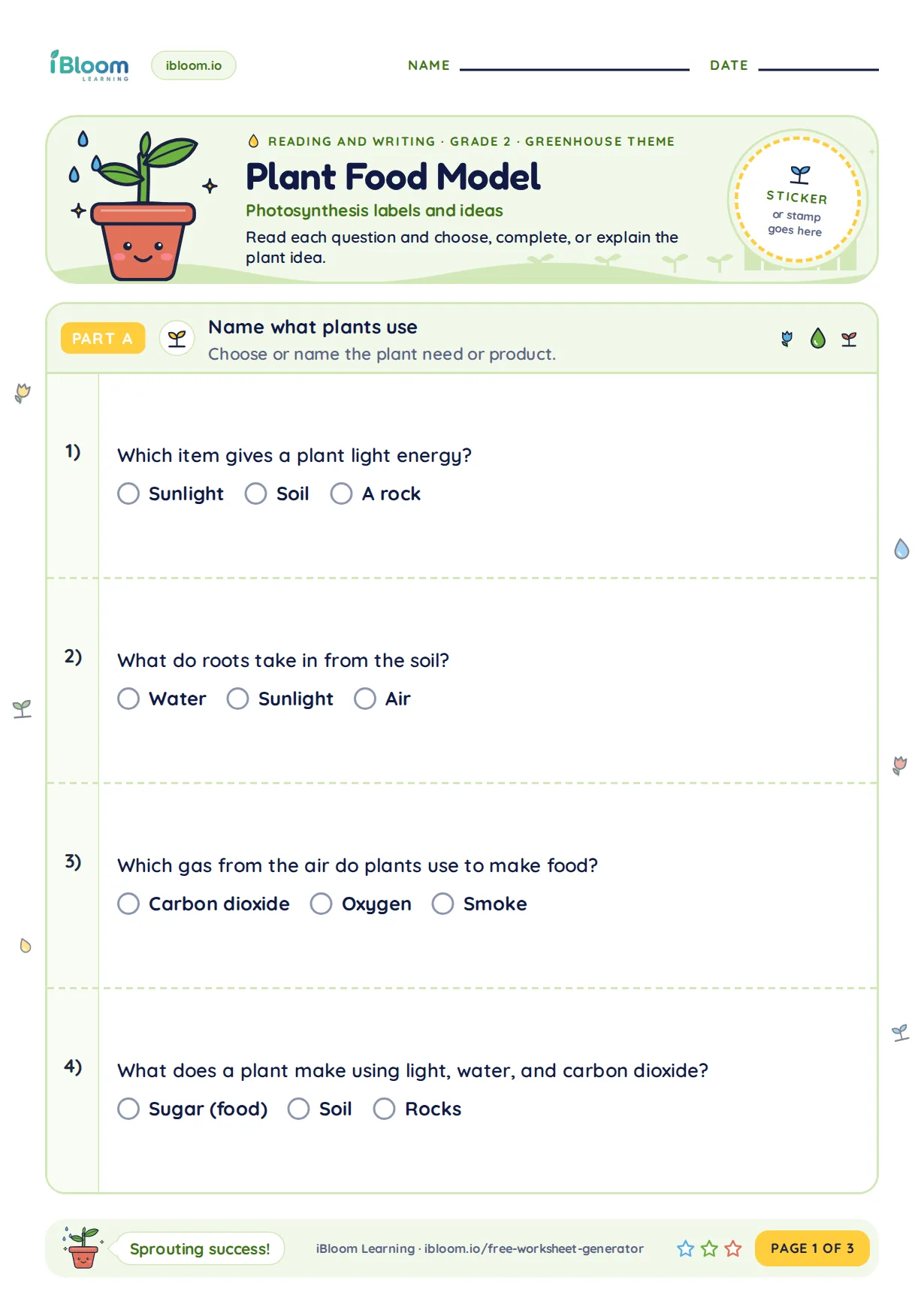 Photosynthesis — Label and ModelGrade 2 photosynthesis worksheets help children understand how plants use sunlight, water, and air to make food and grow. This label and model worksheet provides a distinct, age-appropriate way to practise the same lesson.Grade 2Free PDF preview
 Photosynthesis — Explain Cause and EffectGrade 2 photosynthesis worksheets help children understand how plants use sunlight, water, and air to make food and grow. This explain cause and effect worksheet provides a distinct, age-appropriate way to practise the same lesson.Grade 2Free PDF preview4 pages
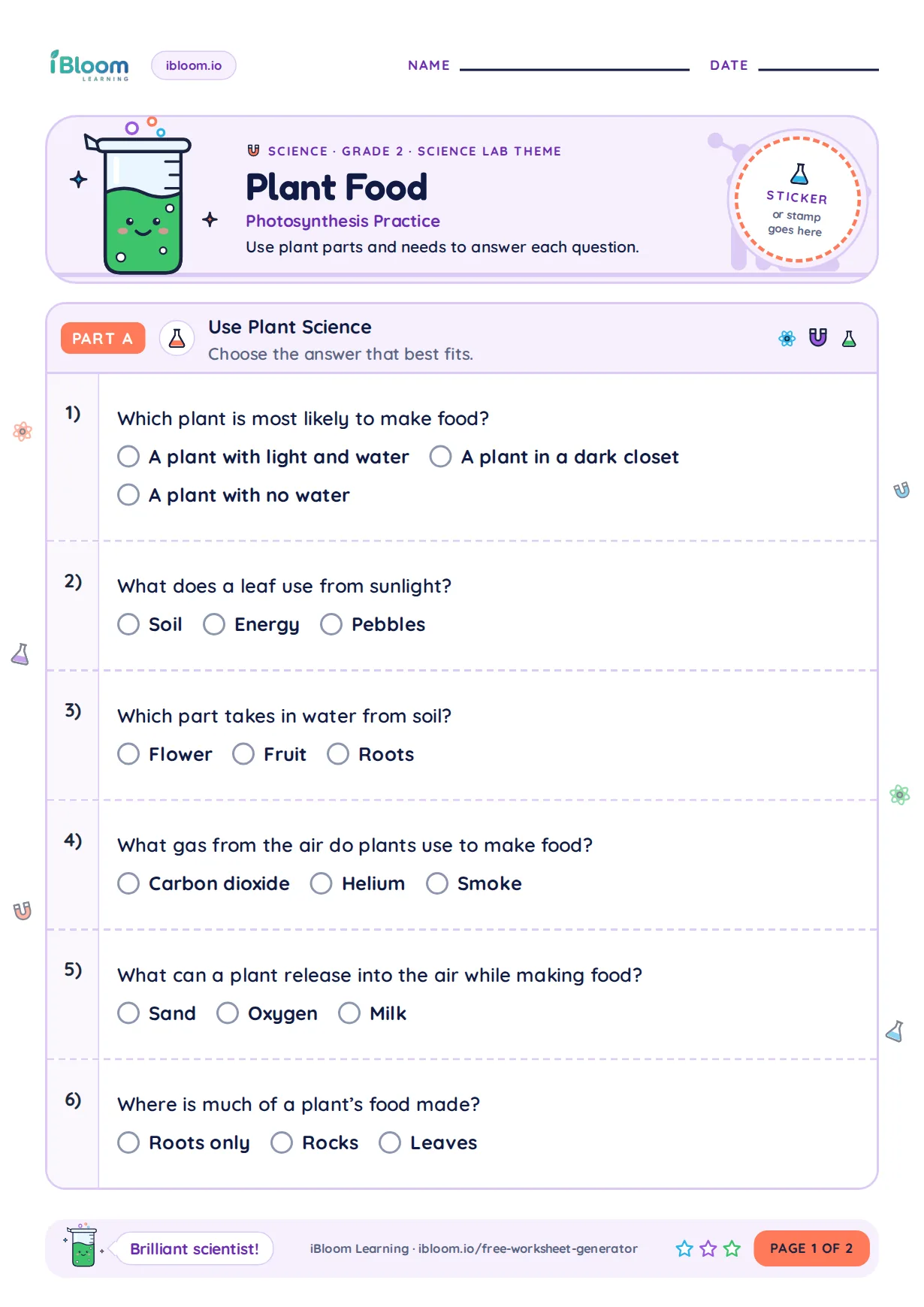 Photosynthesis — Apply Science IdeasGrade 2 photosynthesis worksheets help children understand how plants use sunlight, water, and air to make food and grow. This apply science ideas worksheet provides a distinct, age-appropriate way to practise the same lesson.Grade 2Free PDF preview
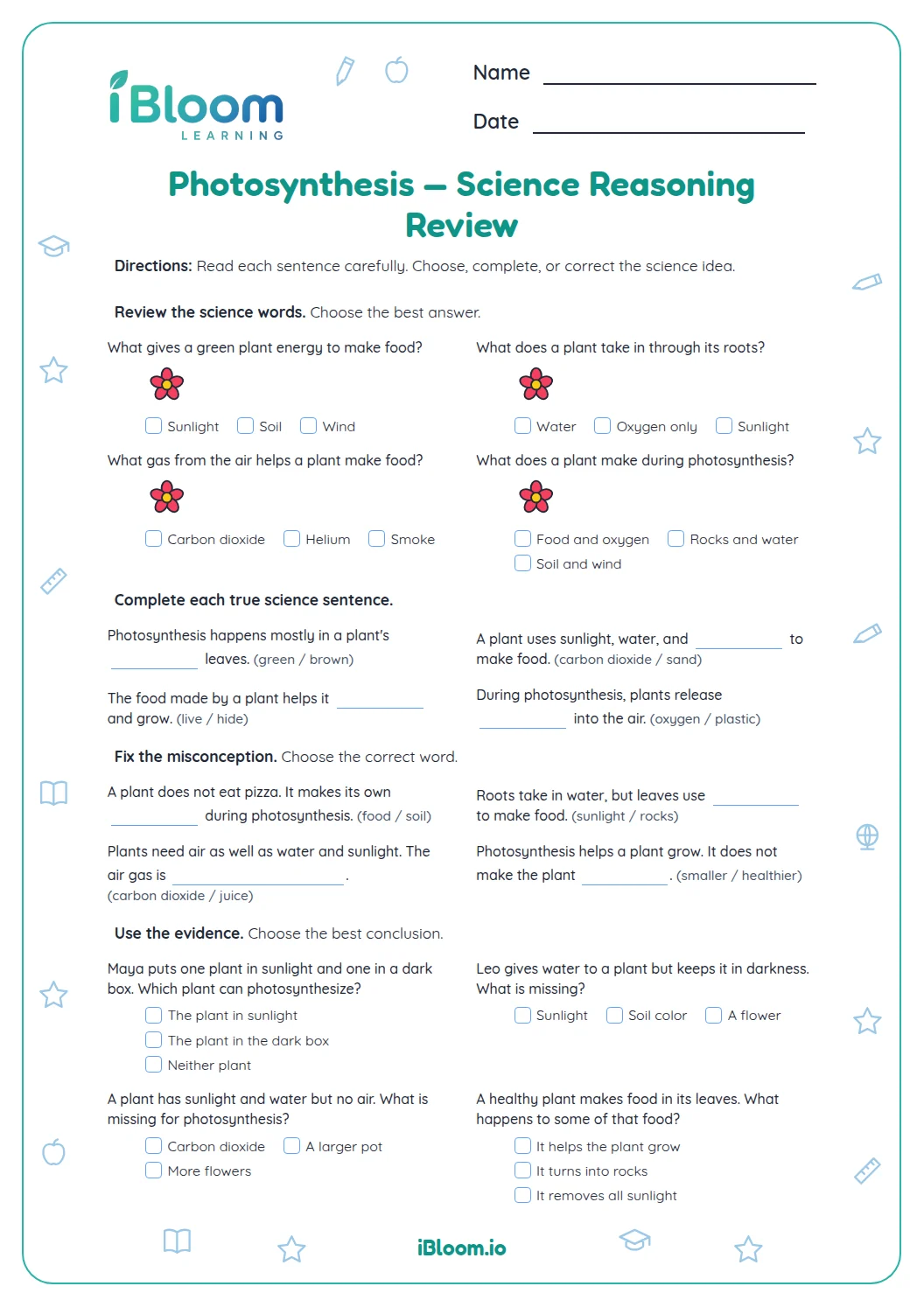 Photosynthesis — Science Reasoning ReviewGrade 2 photosynthesis worksheets help children understand how plants use sunlight, water, and air to make food and grow. This science reasoning review worksheet provides a distinct, age-appropriate way to practise the same lesson.Grade 2Free PDF preview
Practice that builds confidence
Understanding photosynthesis in Grade 2
These Grade 2 science worksheets introduce photosynthesis in a simple, age-appropriate way. Children practise identifying what plants need, how leaves help make food, and why sunlight, water, and air matter for healthy growth.
The printable activities include picture-based questions, labeling tasks, sequencing exercises, matching vocabulary, and short written responses. They help children connect the idea of photosynthesis to real plants they can observe at home, in class, or outdoors.
At this level, children do not need a chemical equation. They need a clear life-science idea: plants are living things that make their own food. These worksheets guide them to see that roots take in water, leaves take in air and capture sunlight, and the plant uses these to make food that helps it grow.

Building the concept step by step
The practice moves from concrete observations to simple explanations. Children may first identify plant parts, then sort plant needs such as sunlight and water, then complete a sequence showing how a plant gets what it needs. Vocabulary such as leaf, root, stem, sunlight, water, air, food, and oxygen appears in child-friendly contexts so children can use science words without memorizing long definitions.
A simple parent routine
Choose one worksheet and one real plant. Ask your child to point to the leaves, stem, and soil, then ask: Where does the water go? Where does the sunlight touch? After the worksheet, let your child explain the process in one sentence, such as: The plant uses sunlight, water, and air to make food. If possible, compare a plant near a window with one in a darker place and discuss what might happen.
Classroom uses for teachers
Teachers can use these pages during a plants unit, as science centers, small-group review, morning work, or an exit ticket after a plant observation lesson. The mix of labeling, matching, and short-answer tasks supports different learners while keeping the focus on the main idea. Worksheets also pair well with seed-growing activities, classroom gardens, or a read-aloud about plant life cycles.

Common errors to watch for
Many children think plants eat soil or that water alone is plant food. Others may say the sun feeds the plant directly. Gently correct this by saying that soil holds the plant and can provide nutrients, but the plant makes its own food using sunlight, water, and air. Another common mix-up is forgetting the job of leaves, so return to leaf pictures often.
Free printable PDF download
Use this grade 2 photosynthesis worksheet page to preview the activity, print it, or download it as a PDF for quick practice. It works well for homework, homeschool lessons, tutoring, morning work, revision, and classroom centers.
Answers and answer key support
After the child completes the worksheet independently, parents and teachers can use the answer support or answer key information to check the work, review mistakes, and choose the next practice step.
Why iBloom worksheets help
The activities use clear visuals, repeated vocabulary, and manageable questions so Grade 2 children can build confidence with a big science idea. A helpful strategy for children is Say the three needs: sun, water, air. Then ask: What does the plant make? Food. This short pattern helps them explain photosynthesis in their own words.
Helpful answers
Frequently asked questions
What should a Grade 2 child understand about photosynthesis?
A Grade 2 child should understand that plants use sunlight, water, and air to make their own food, and that this helps them grow. They do not need to learn the full chemical process.
Do these worksheets include plant parts?
Yes. The activities connect photosynthesis to plant parts such as leaves, roots, and stems, helping children understand the role each part plays in getting sunlight, water, or air.
How can I explain photosynthesis without making it too difficult?
Use a simple sentence: Plants use sunlight, water, and air to make food. Then point to a real plant and show where the leaves, roots, and stem are.
Are these worksheets useful with a seed-growing activity?
Yes. They work well alongside planting seeds because children can observe how light and water affect growth, then connect those observations to the worksheet questions.
What misconception should I correct first?
The most common misconception is that plants eat soil. Explain that soil helps hold the plant and provides some nutrients, but the plant makes its own food using sunlight, water, and air.
Is this grade 2 photosynthesis worksheet free?
Yes. You can preview it for free and use the printable worksheet for home or classroom practice.
Can I download this grade 2 photosynthesis worksheet as a PDF?
Yes. Use the worksheet download option to save a printable PDF, or print the worksheet directly from the page.
Does this grade 2 photosynthesis worksheet include answers or an answer key?
When the activity has fixed answers, iBloom includes answer support so parents and teachers can check the completed worksheet.