Free printable practice
Plants Practice Activities
Printable Grade 2 plant science worksheets covering plant parts, needs, seeds, life cycles, habitats, pollination, seed dispersal, and simple photosynthesis.
Explore Plants
Free printable worksheet PDFs
Preview every available page, then download the free worksheet PDF for home, homeschool, tutoring, or classroom practice.
Preview the exact activity before downloading it.
 Anatomy — Sort and ClassifyGrade 2 plant anatomy worksheets help children label plant parts and explain how roots, stems, leaves, flowers, fruits, and seeds help plants live. This sort and classify worksheet provides a distinct, age-appropriate way to practise the same lesson.Grade 2Free PDF preview
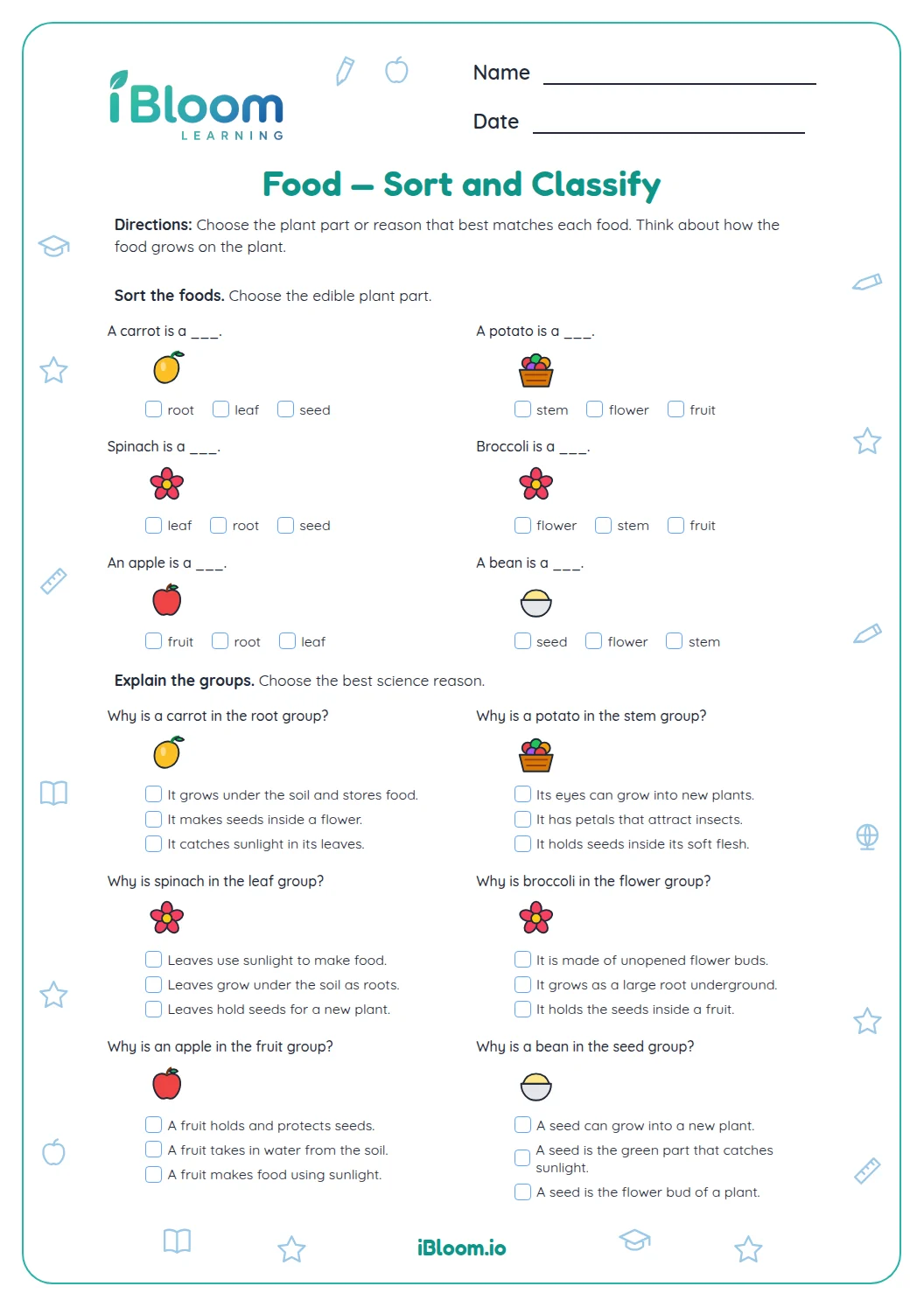 Food — Sort and ClassifyGrade 2 science worksheets help children connect everyday foods to plants and identify edible roots, stems, leaves, flowers, fruits, and seeds. This sort and classify worksheet provides a distinct, age-appropriate way to practise the same lesson.Grade 2Free PDF preview
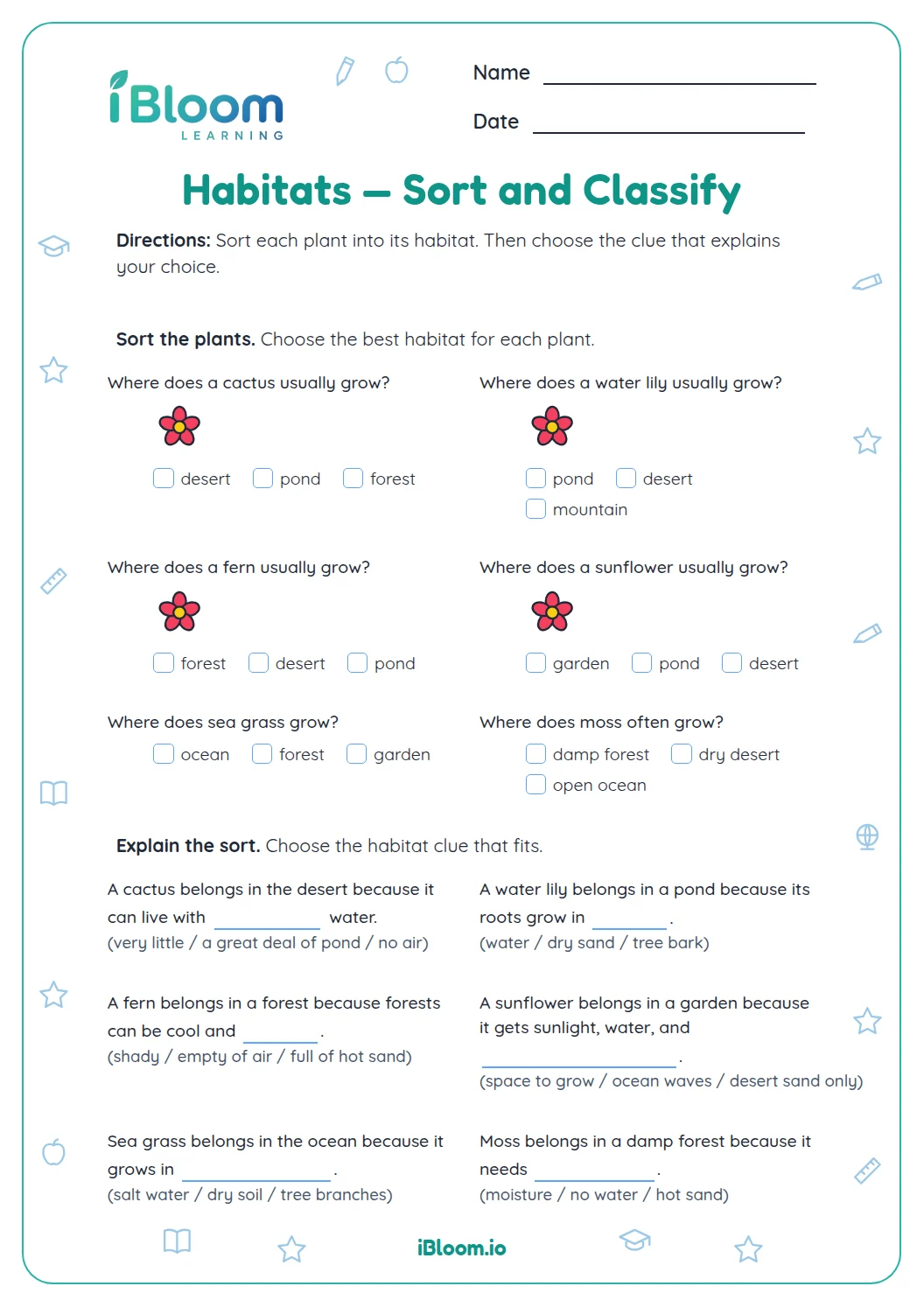 Habitats — Sort and ClassifyPrintable Grade 2 science activities that help children connect plants with the habitats where they get light, water, air, space, and protection. This sort and classify worksheet provides a distinct, age-appropriate way to practise the same lesson.Grade 2Free PDF preview
 Photosynthesis — Sort and ClassifyGrade 2 photosynthesis worksheets help children understand how plants use sunlight, water, and air to make food and grow. This sort and classify worksheet provides a distinct, age-appropriate way to practise the same lesson.Grade 2Free PDF preview4 pages
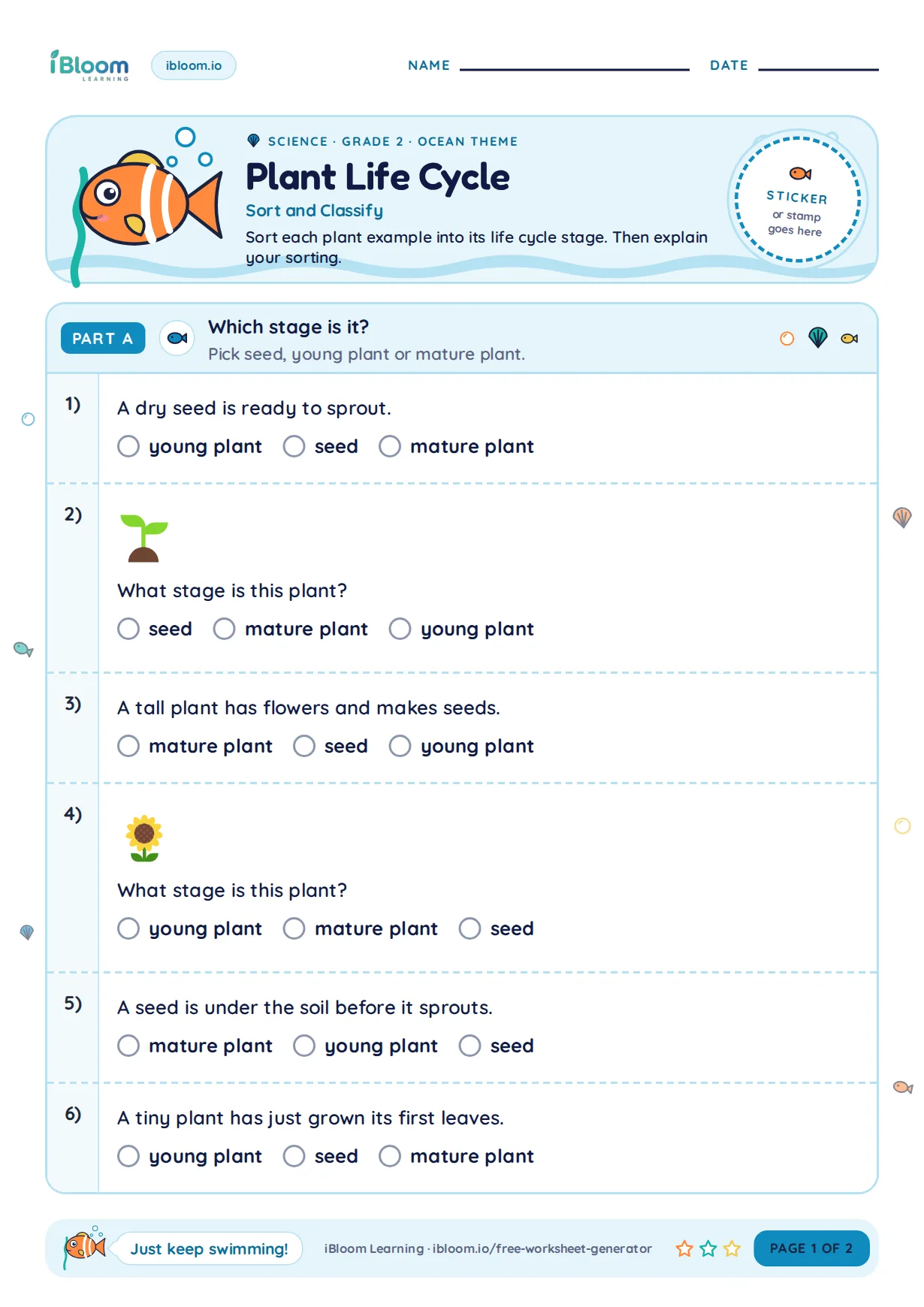 Plant Life Cycle — Sort and ClassifyGrade 2 plant life cycle worksheets help children sequence how a plant grows from seed to mature plant using clear science vocabulary and visuals. This sort and classify worksheet provides a distinct, age-appropriate way to practise the same lesson.Grade 2Free PDF preview
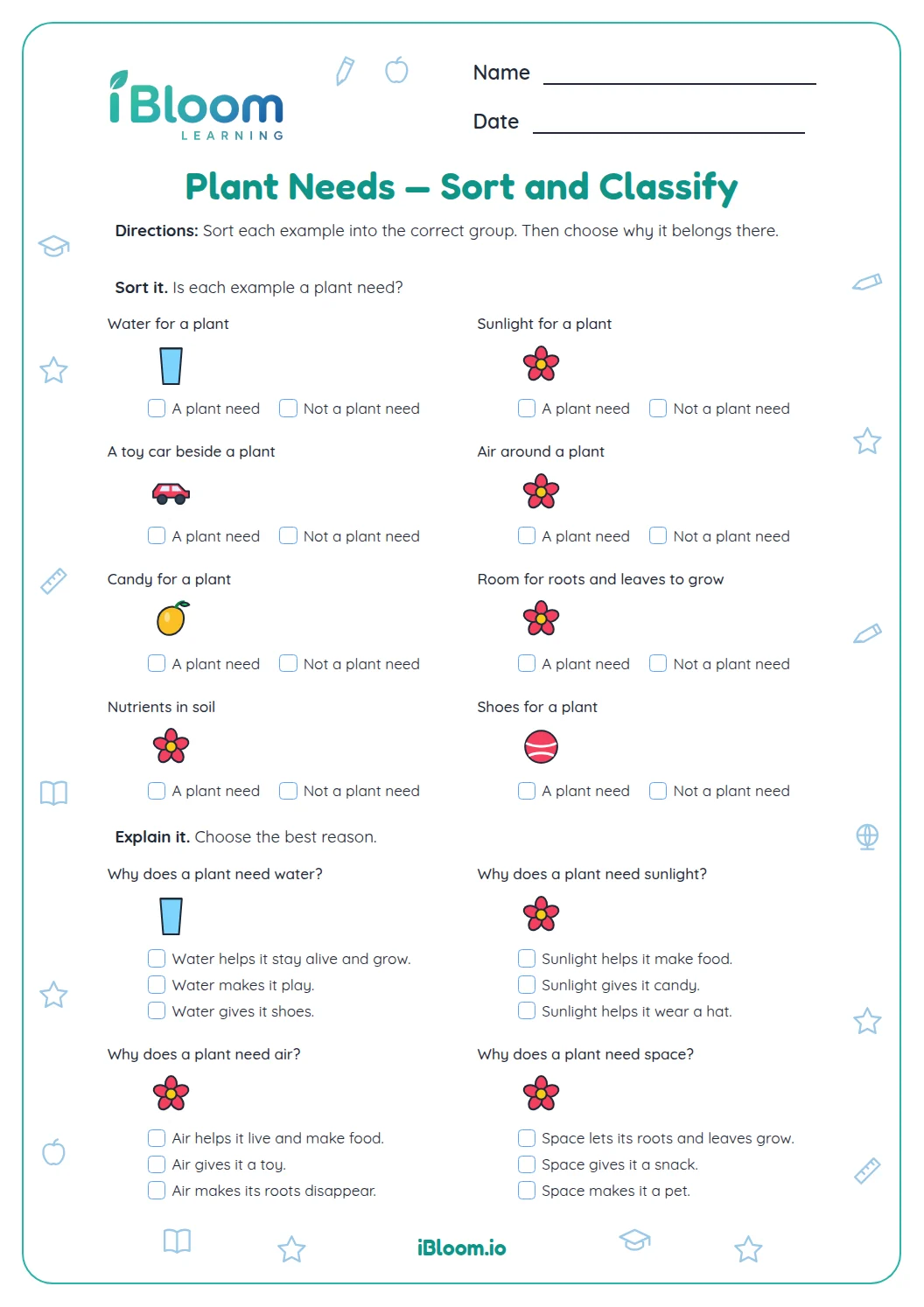 Plant Needs — Sort and ClassifyPrintable Grade 2 science activities that help children identify, explain, and apply what plants need to live and grow. This sort and classify worksheet provides a distinct, age-appropriate way to practise the same lesson.Grade 2Free PDF preview
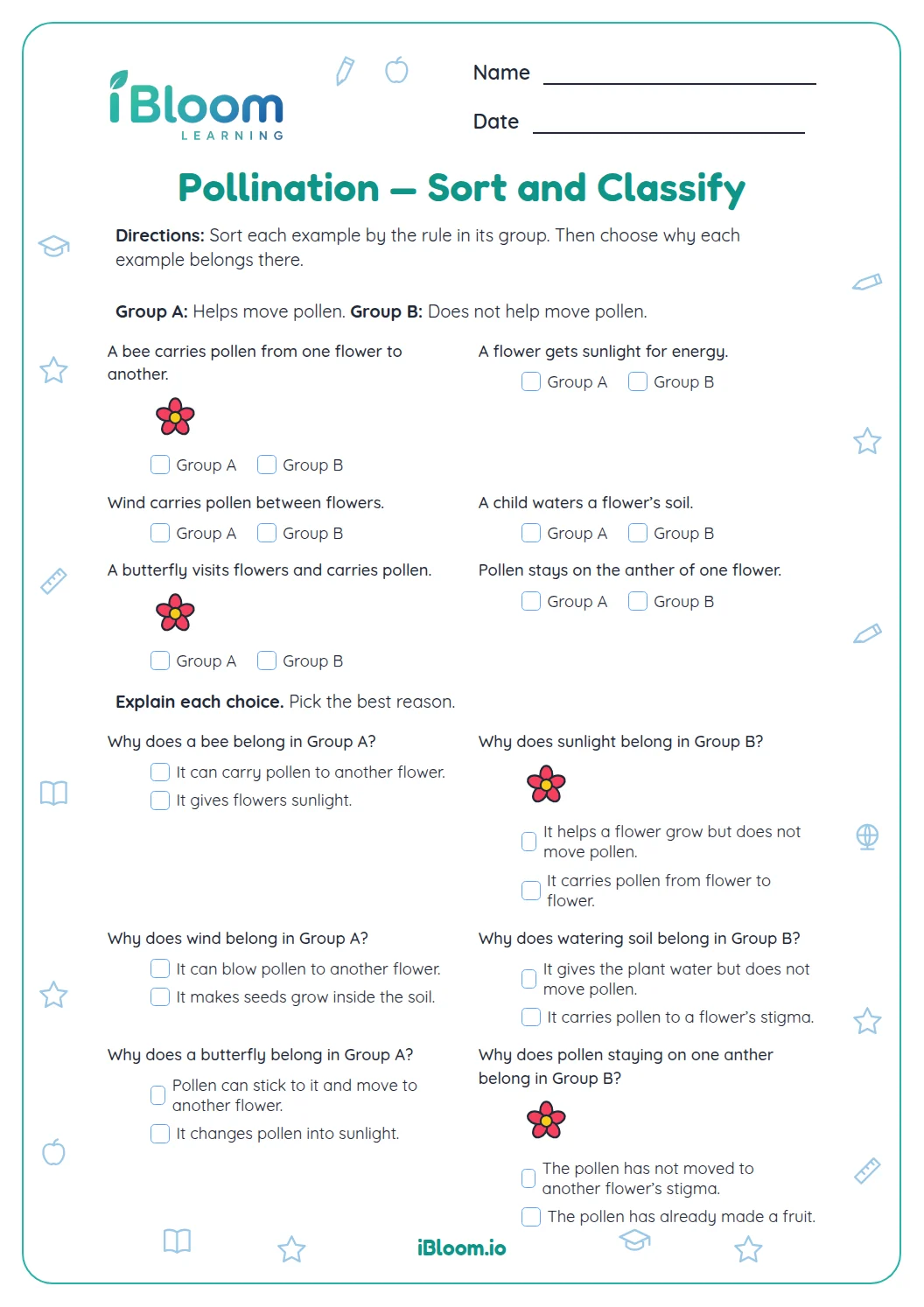 Pollination — Sort and ClassifyGrade 2 science worksheets that help children understand how pollen moves from flower to flower and why pollination matters for seeds and fruits. This sort and classify worksheet provides a distinct, age-appropriate way to practise the same lesson.Grade 2Free PDF preview
 Seed Disperal — Sort and ClassifyGrade 2 science worksheets help children understand how seeds move by wind, water, animals, and other natural methods. This sort and classify worksheet provides a distinct, age-appropriate way to practise the same lesson.Grade 2Free PDF preview
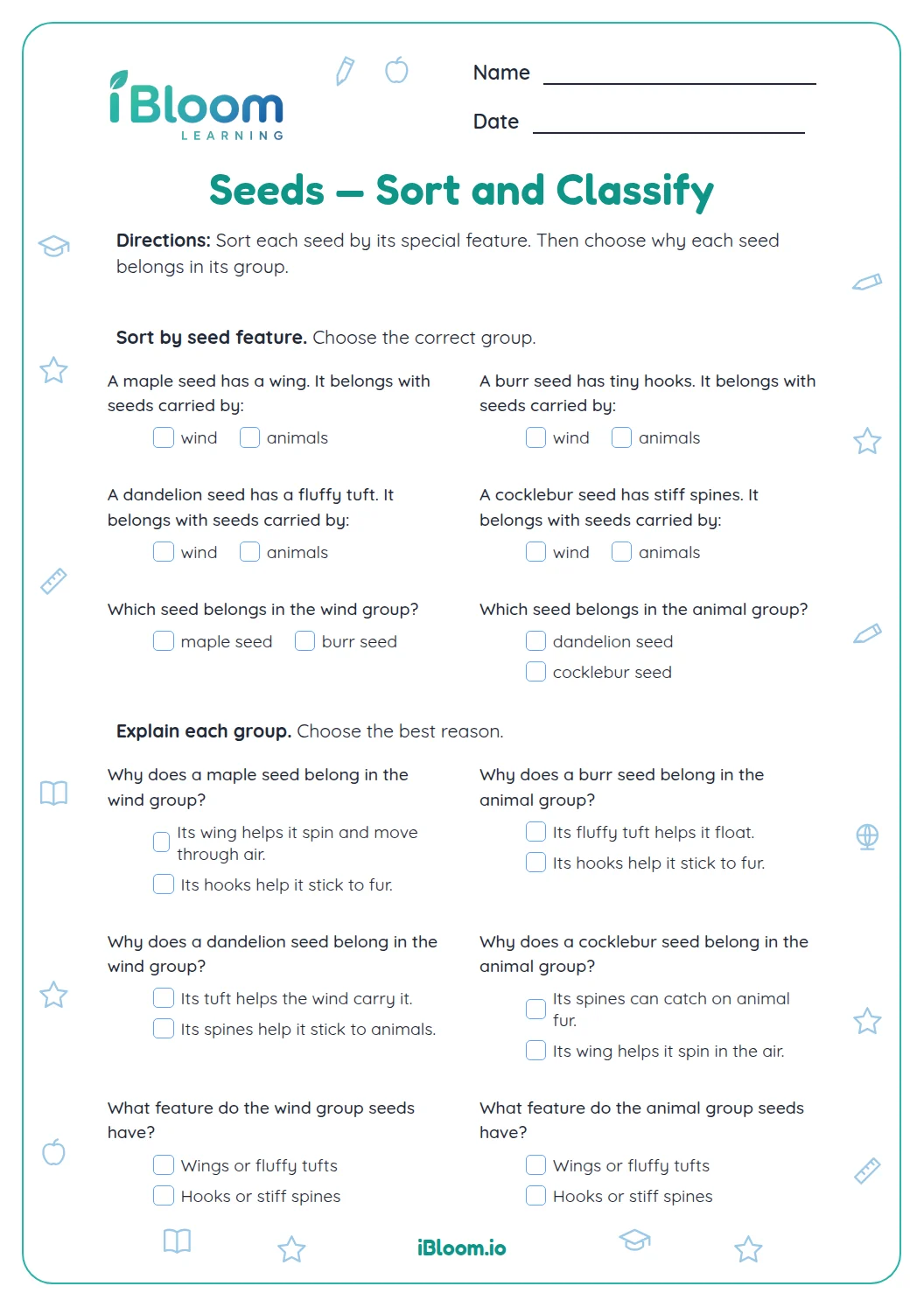 Seeds — Sort and ClassifyExplore seeds practice activities within Plants Practice Activities, organised so children, families, and elementary teachers can move from broad learning areas to focused printable practice. This sort and classify worksheet provides a distinct, age-appropriate way to practise the same lesson.Grade 2Free PDF preview
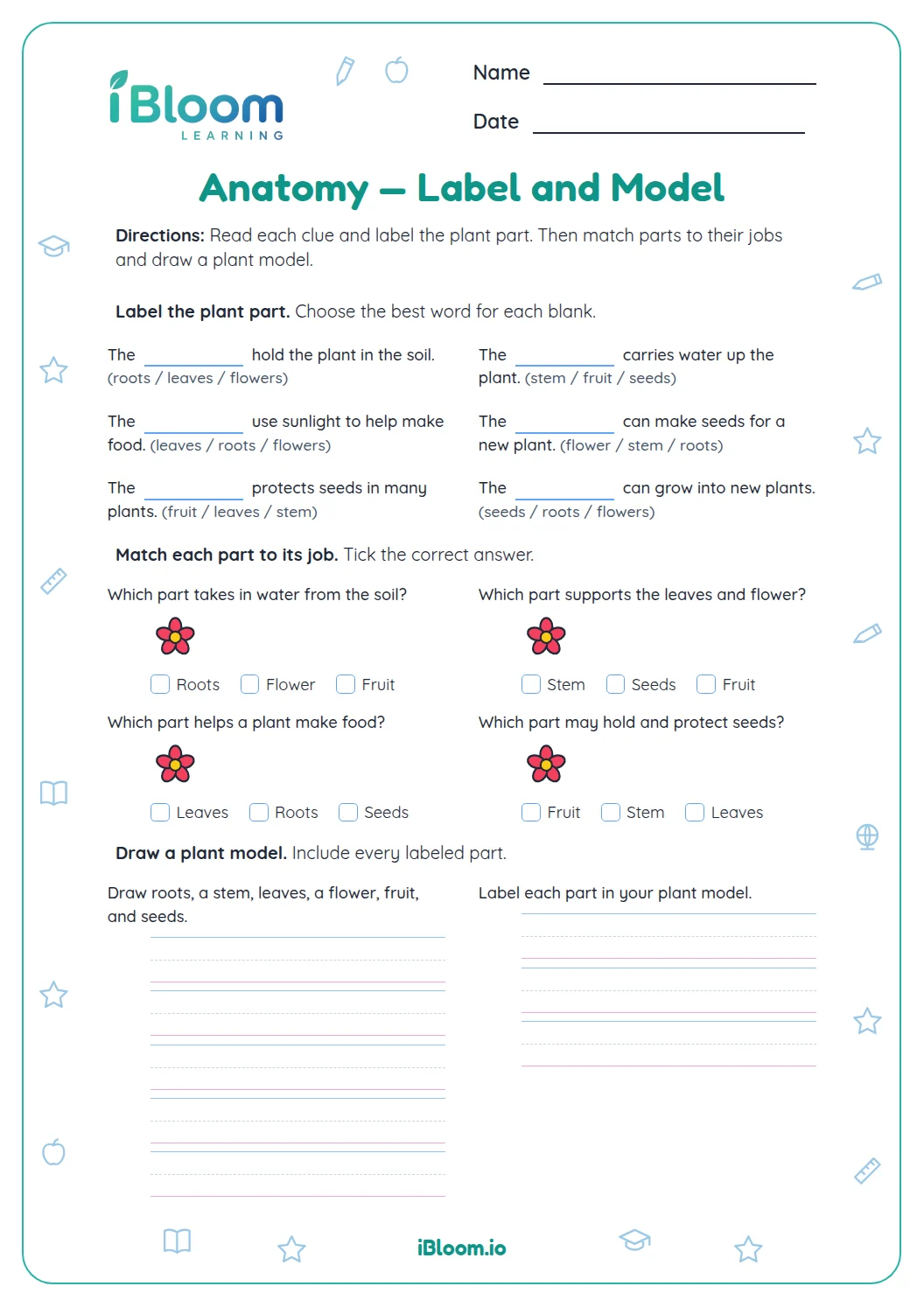 Anatomy — Label and ModelGrade 2 plant anatomy worksheets help children label plant parts and explain how roots, stems, leaves, flowers, fruits, and seeds help plants live. This label and model worksheet provides a distinct, age-appropriate way to practise the same lesson.Grade 2Free PDF preview
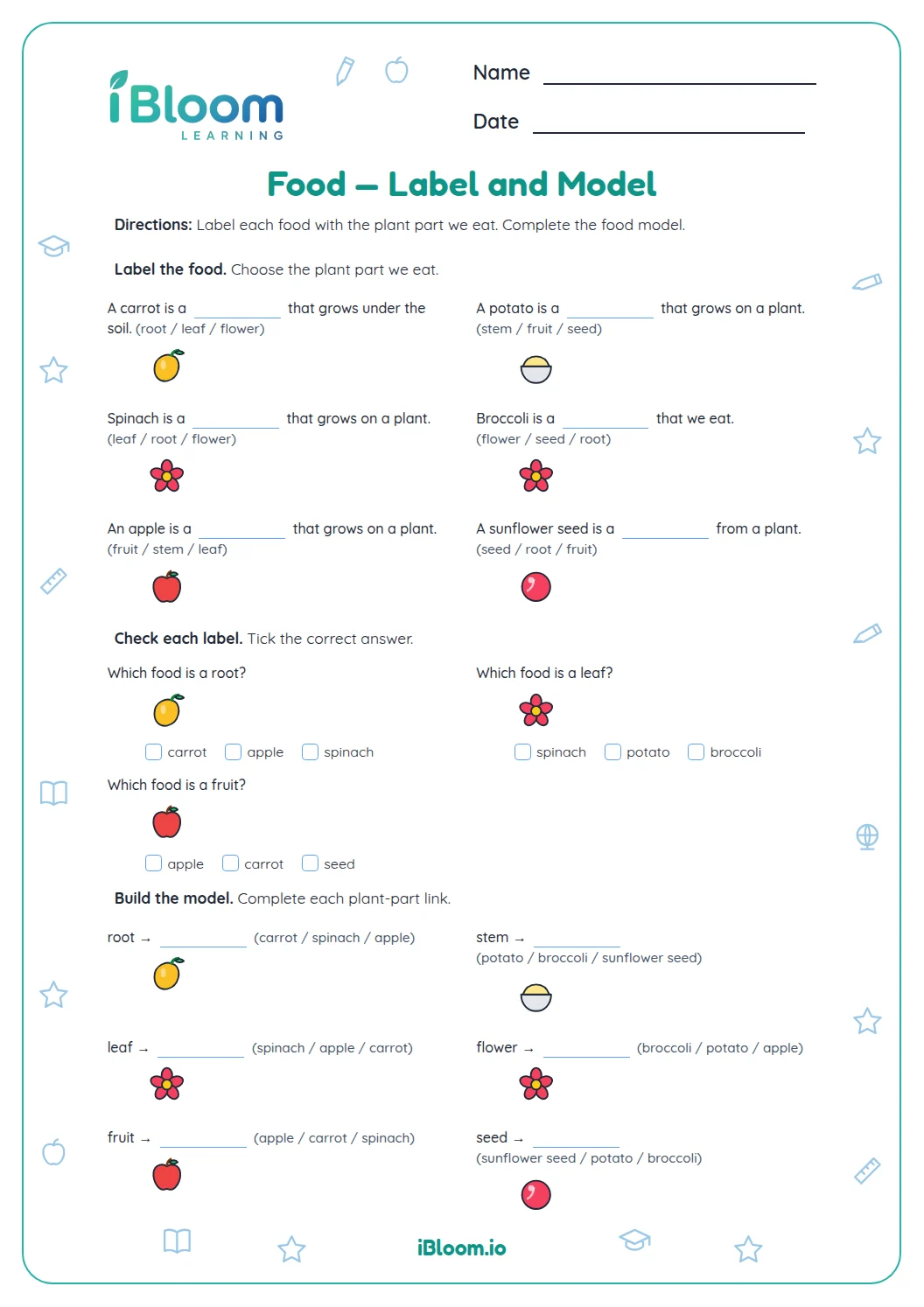 Food — Label and ModelGrade 2 science worksheets help children connect everyday foods to plants and identify edible roots, stems, leaves, flowers, fruits, and seeds. This label and model worksheet provides a distinct, age-appropriate way to practise the same lesson.Grade 2Free PDF preview4 pages
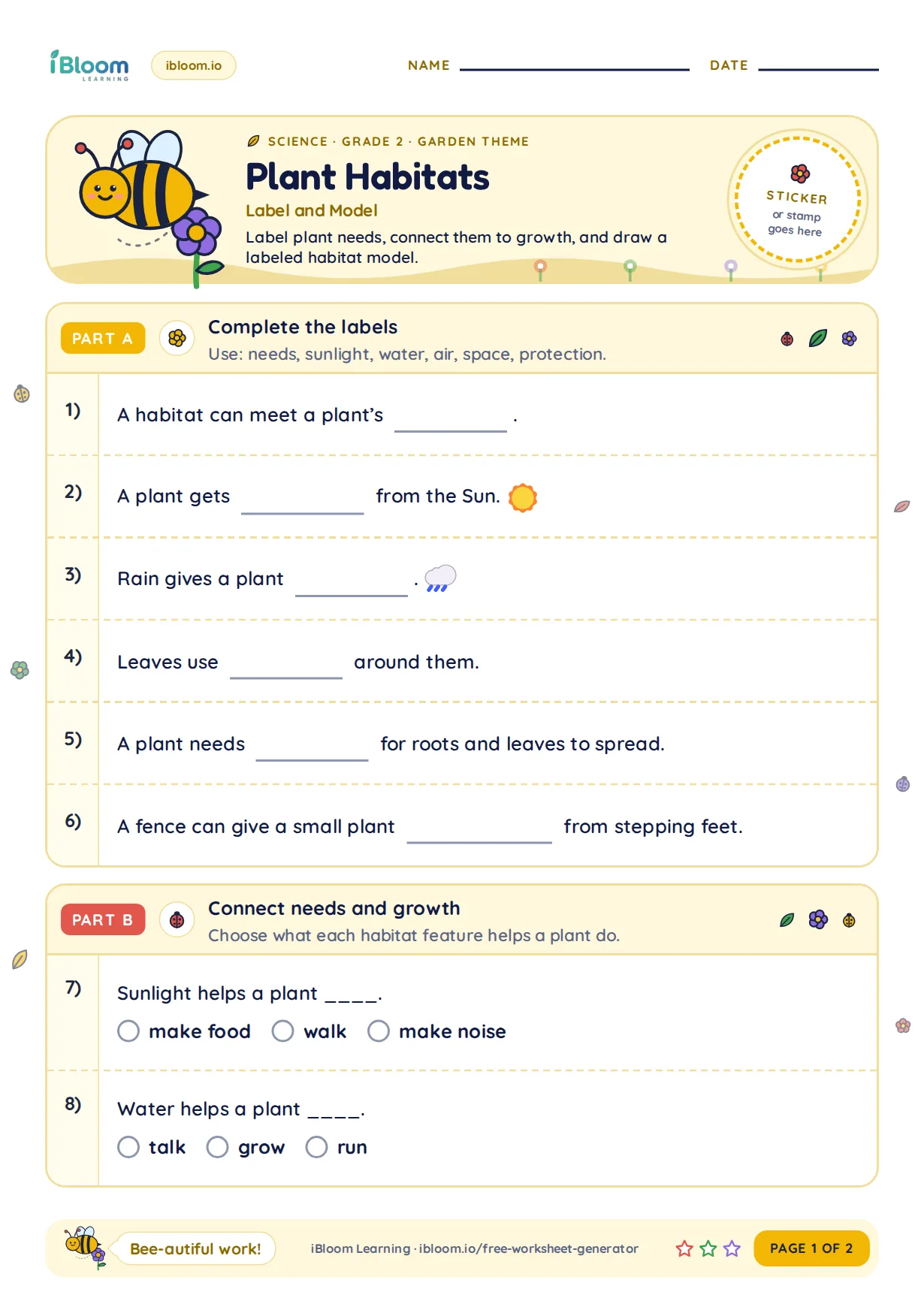 Habitats — Label and ModelPrintable Grade 2 science activities that help children connect plants with the habitats where they get light, water, air, space, and protection. This label and model worksheet provides a distinct, age-appropriate way to practise the same lesson.Grade 2Free PDF preview
 Photosynthesis — Label and ModelGrade 2 photosynthesis worksheets help children understand how plants use sunlight, water, and air to make food and grow. This label and model worksheet provides a distinct, age-appropriate way to practise the same lesson.Grade 2Free PDF preview4 pages
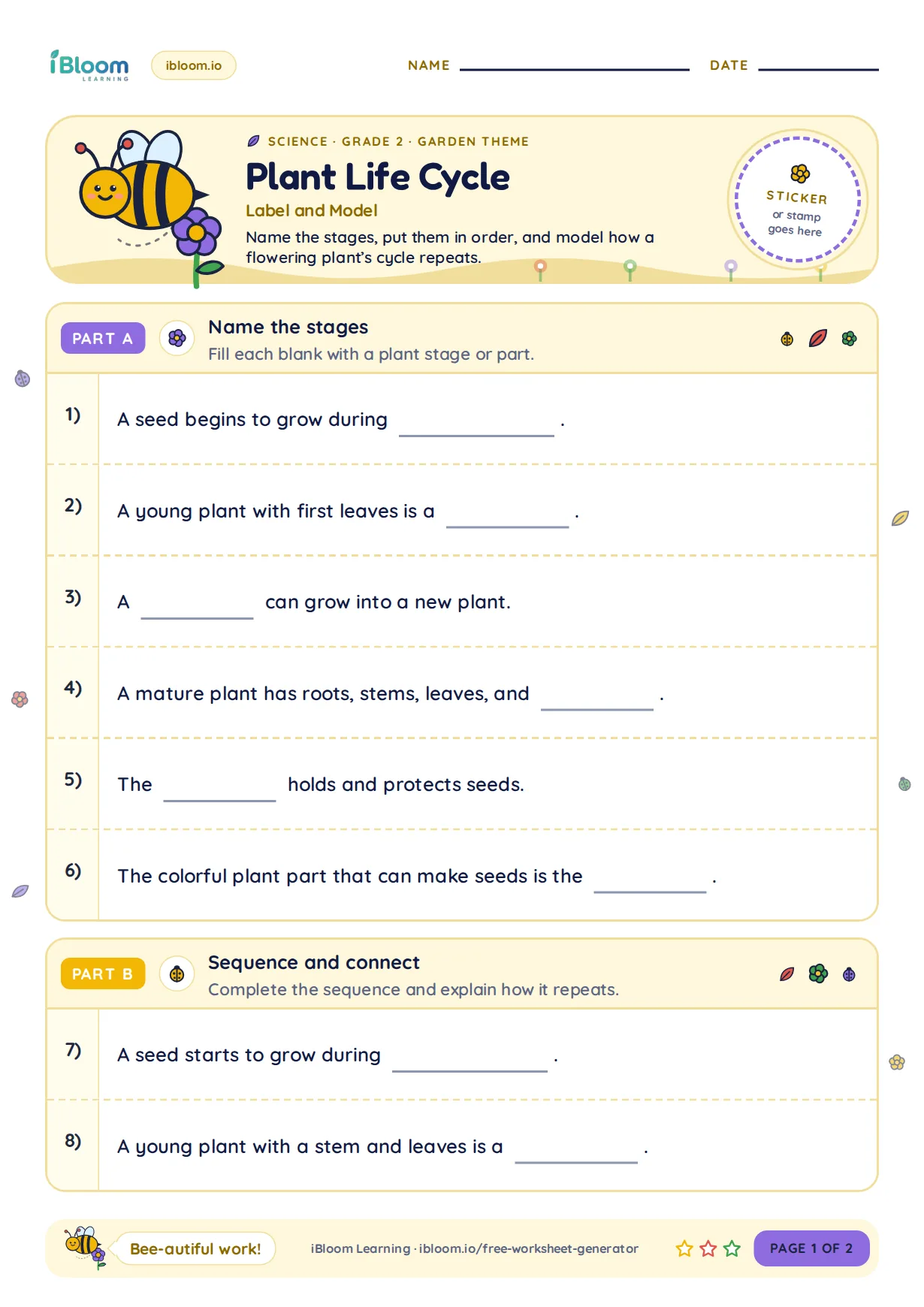 Plant Life Cycle — Label and ModelGrade 2 plant life cycle worksheets help children sequence how a plant grows from seed to mature plant using clear science vocabulary and visuals. This label and model worksheet provides a distinct, age-appropriate way to practise the same lesson.Grade 2Free PDF preview
 Plant Needs — Label and ModelPrintable Grade 2 science activities that help children identify, explain, and apply what plants need to live and grow. This label and model worksheet provides a distinct, age-appropriate way to practise the same lesson.Grade 2Free PDF preview
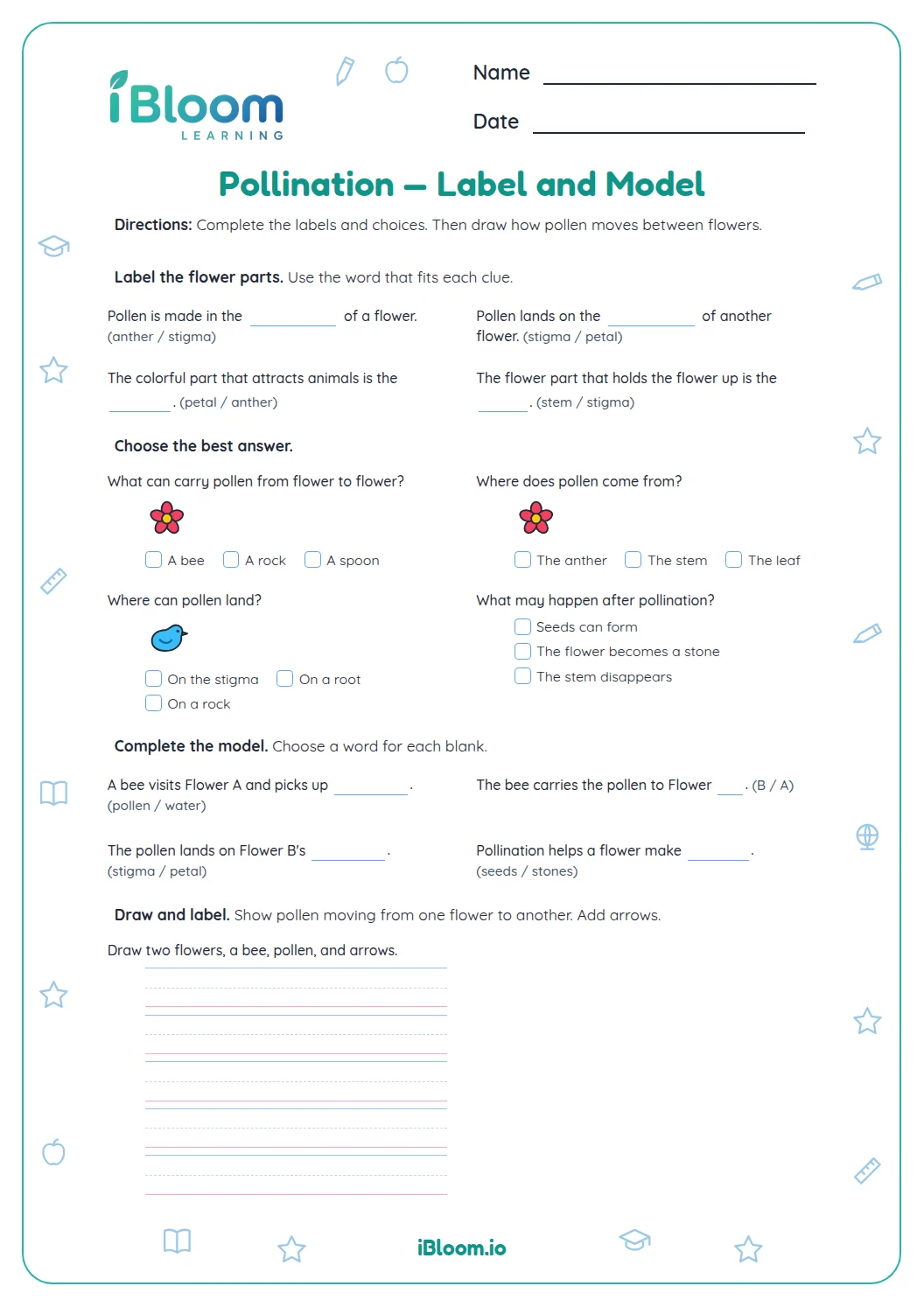 Pollination — Label and ModelGrade 2 science worksheets that help children understand how pollen moves from flower to flower and why pollination matters for seeds and fruits. This label and model worksheet provides a distinct, age-appropriate way to practise the same lesson.Grade 2Free PDF preview4 pages
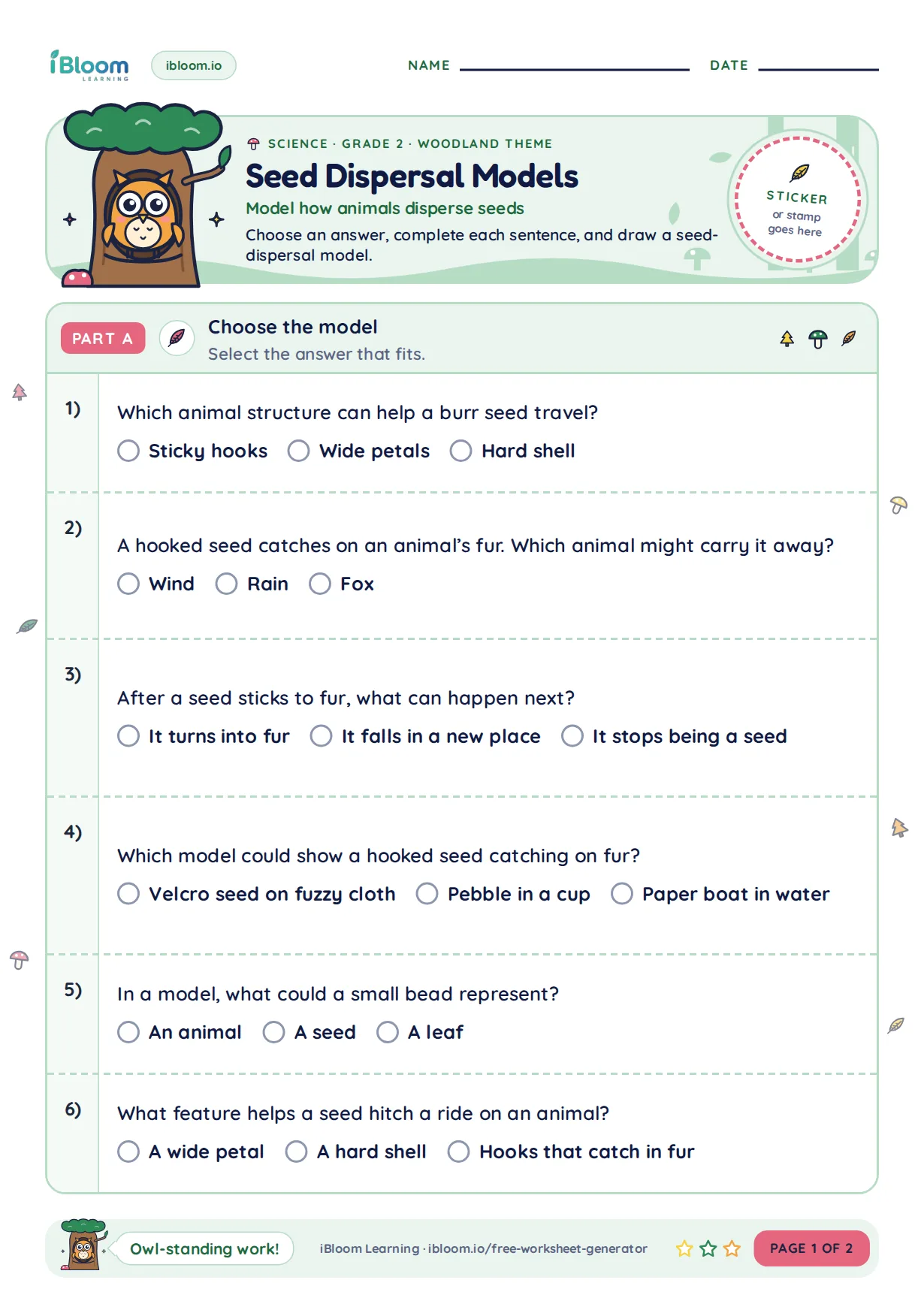 Seed Disperal — Label and ModelGrade 2 science worksheets help children understand how seeds move by wind, water, animals, and other natural methods. This label and model worksheet provides a distinct, age-appropriate way to practise the same lesson.Grade 2Free PDF preview
 Seeds — Label and ModelExplore seeds practice activities within Plants Practice Activities, organised so children, families, and elementary teachers can move from broad learning areas to focused printable practice. This label and model worksheet provides a distinct, age-appropriate way to practise the same lesson.Grade 2Free PDF preview
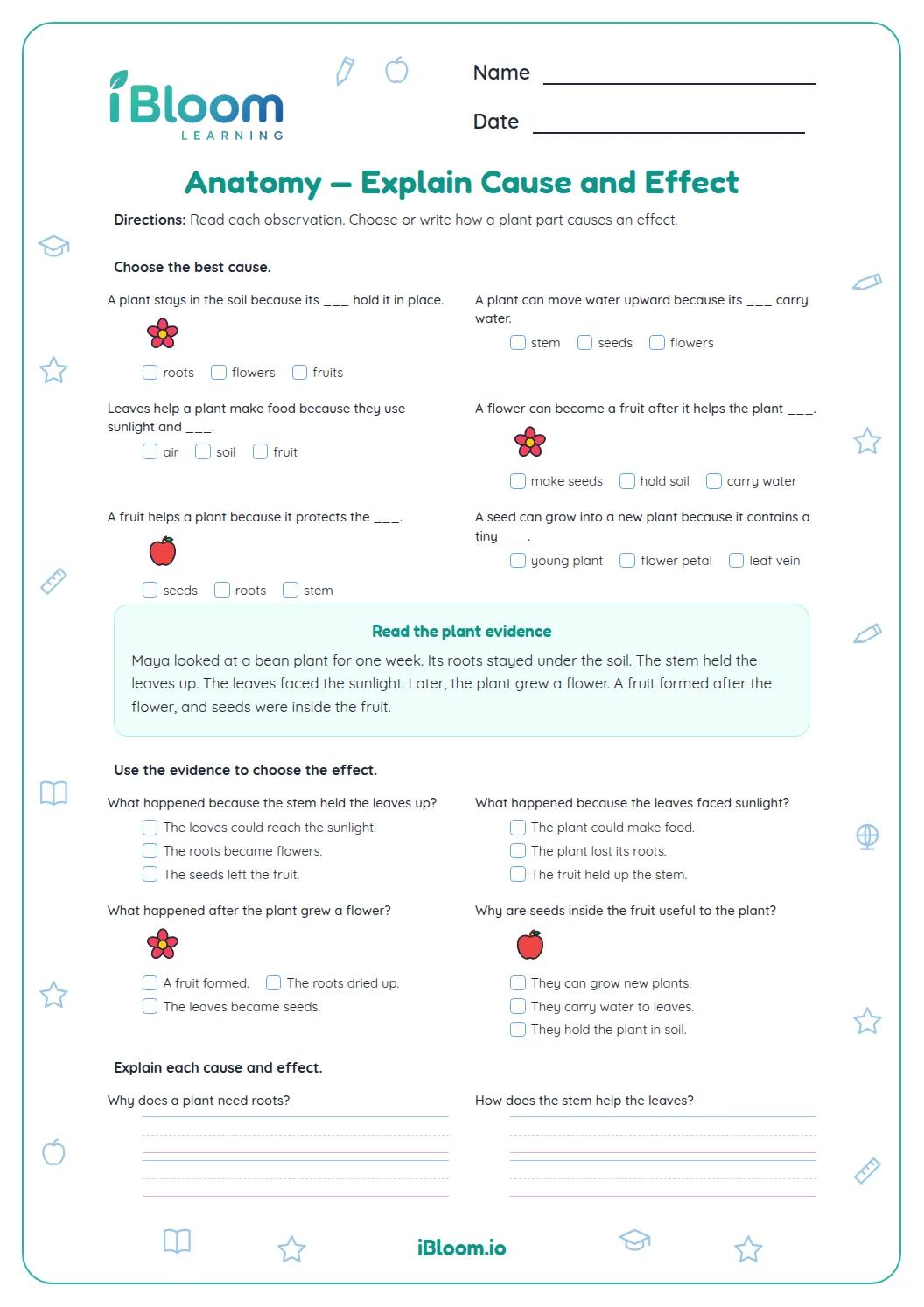 Anatomy — Explain Cause and EffectGrade 2 plant anatomy worksheets help children label plant parts and explain how roots, stems, leaves, flowers, fruits, and seeds help plants live. This explain cause and effect worksheet provides a distinct, age-appropriate way to practise the same lesson.Grade 2Free PDF preview
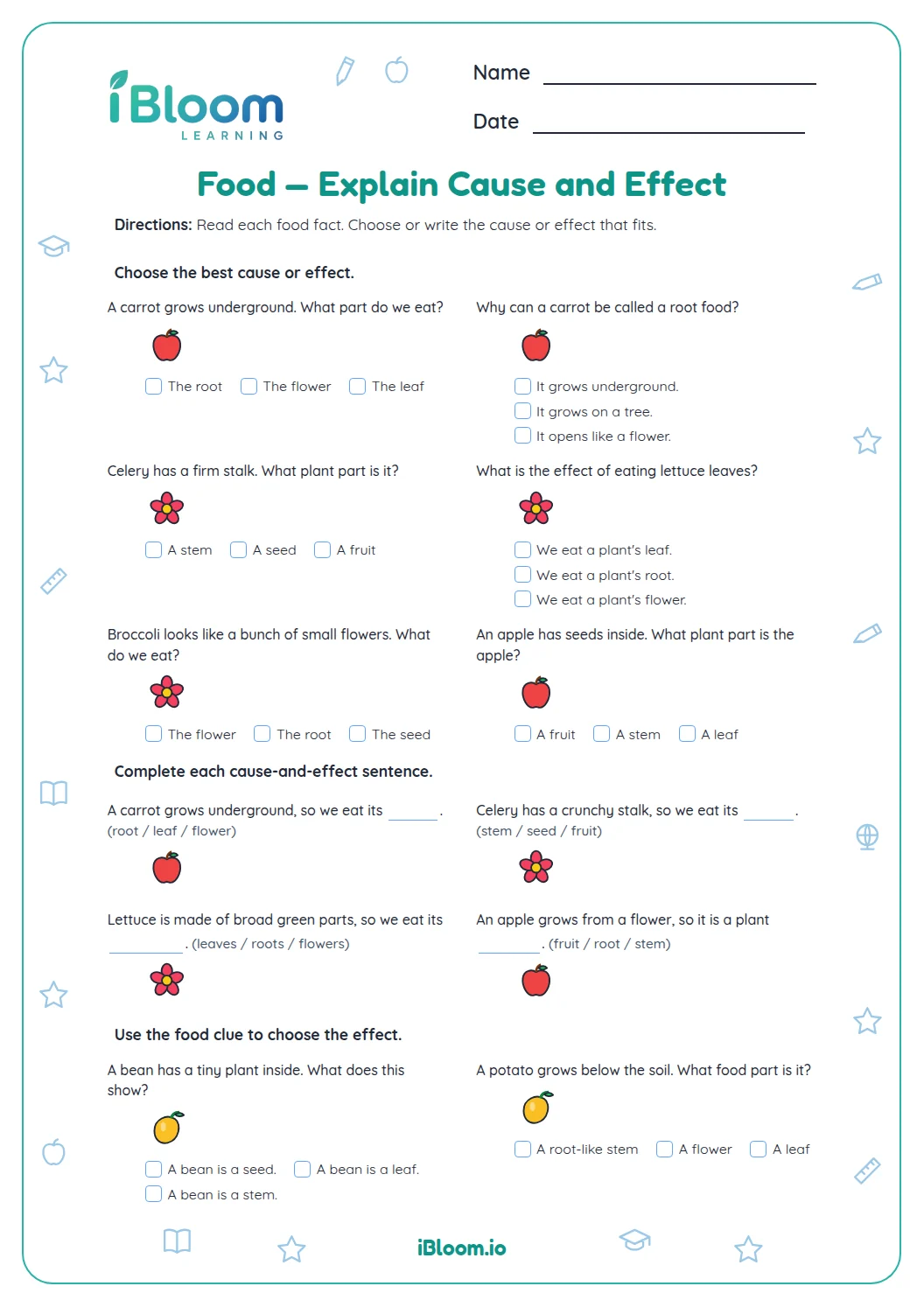 Food — Explain Cause and EffectGrade 2 science worksheets help children connect everyday foods to plants and identify edible roots, stems, leaves, flowers, fruits, and seeds. This explain cause and effect worksheet provides a distinct, age-appropriate way to practise the same lesson.Grade 2Free PDF preview
Practice that builds confidence
What students practise
These Grade 2 plant practice activities help children observe how plants grow, survive, and reproduce. Students review plant needs, basic anatomy, seeds, habitats, the plant life cycle, pollination, seed dispersal, and the idea that plants make their own food.
The printable worksheets include labeling, matching, sequencing, short responses, sorting tasks, and picture-based questions. They are designed to build science vocabulary while helping children connect classroom ideas to real plants they see at home, in gardens, and outdoors.
Children work with the core idea that plants are living things with parts that do specific jobs. Worksheets may ask them to label roots, stems, leaves, flowers, fruits, and seeds; match plant parts to functions; or identify what a plant needs to grow. Vocabulary such as sunlight, water, air, soil, nutrients, habitat, pollen, seed, sprout, and seedling is reinforced through simple visual tasks.

Building concepts in a clear order
The activities move from visible features to life processes. A child may begin by naming plant parts, then explain how roots take in water, stems support the plant, and leaves help make food. From there, they can sequence seed, sprout, seedling, adult plant, flower, fruit, and new seeds. Pollination and seed dispersal are introduced with concrete examples such as insects moving pollen or seeds traveling by wind, water, animals, or sticking to fur.
At-home routine for parents
Choose one worksheet and pair it with a real plant, fruit, or seed. Ask your child to point to a leaf, stem, flower, or seed, then complete the matching or labeling page. Afterward, use one sentence frame: “A plant needs ___ because ___.” For life cycle pages, have your child retell the steps aloud using first, next, then, and finally.

Classroom uses for teachers
Teachers can use these pages for science centers, morning work, notebook inserts, small-group review, or quick checks after a plant lesson. Sorting pages work well for partner discussion, while sequencing pages support oral language and writing. Picture-based questions are useful for students who are still developing reading stamina but can explain science ideas verbally.

Common errors to watch for
Second graders may think soil is a plant’s food, when plants make their own food using sunlight, air, and water. They may also mix up pollination with seed dispersal, or assume every seed grows in the same habitat. Encourage them to use evidence from pictures: Is pollen moving to a flower, or is a seed moving away from the parent plant?
Free printable PDF download
Use this grade 2 plants worksheet page to preview the activity, print it, or download it as a PDF for quick practice. It works well for homework, homeschool lessons, tutoring, morning work, revision, and classroom centers.
Answers and answer key support
After the child completes the worksheet independently, parents and teachers can use the answer support or answer key information to check the work, review mistakes, and choose the next practice step.
Why iBloom worksheets help
The collection keeps plant science concrete, visual, and age-appropriate. Each page gives children a small thinking task—label, sort, match, sequence, or explain—so they can practise accurate science language without becoming overwhelmed. A helpful strategy for children is: look closely, name the part or stage, then tell its job.
Helpful answers
Frequently asked questions
What plant topics are included in these Grade 2 worksheets?
They cover plant parts, plant needs, seeds, habitats, the plant life cycle, pollination, seed dispersal, and a simple Grade 2 explanation of photosynthesis.
How is photosynthesis explained for second graders?
The worksheets keep it simple: plants use sunlight, air, and water to make their own food, mostly in their leaves. They do not require detailed chemical explanations.
Do the worksheets help children tell pollination and seed dispersal apart?
Yes. Activities use pictures and examples to show that pollination moves pollen between flowers, while seed dispersal moves seeds away from the parent plant.
Can these plant worksheets be used with a classroom growing activity?
Yes. They pair well with planting seeds, observing sprouts, keeping a plant journal, or comparing plants in different classroom or outdoor habitats.
What skills do students practise besides science facts?
Children practise labeling diagrams, sequencing events, sorting examples, using science vocabulary, reading picture clues, and writing short explanations.
Is this grade 2 plants worksheet free?
Yes. You can preview it for free and use the printable worksheet for home or classroom practice.
Can I download this grade 2 plants worksheet as a PDF?
Yes. Use the worksheet download option to save a printable PDF, or print the worksheet directly from the page.
Does this grade 2 plants worksheet include answers or an answer key?
When the activity has fixed answers, iBloom includes answer support so parents and teachers can check the completed worksheet.