Free printable practice
Seed Disperal Practice Activities
Grade 2 science worksheets help children understand how seeds move by wind, water, animals, and other natural methods.
Free printable worksheet PDFs
Preview every available page, then download the free worksheet PDF for home, homeschool, tutoring, or classroom practice.
Preview the exact activity before downloading it.
 Seed Disperal — Sort and ClassifyGrade 2 science worksheets help children understand how seeds move by wind, water, animals, and other natural methods. This sort and classify worksheet provides a distinct, age-appropriate way to practise the same lesson.Grade 2Free PDF preview4 pages
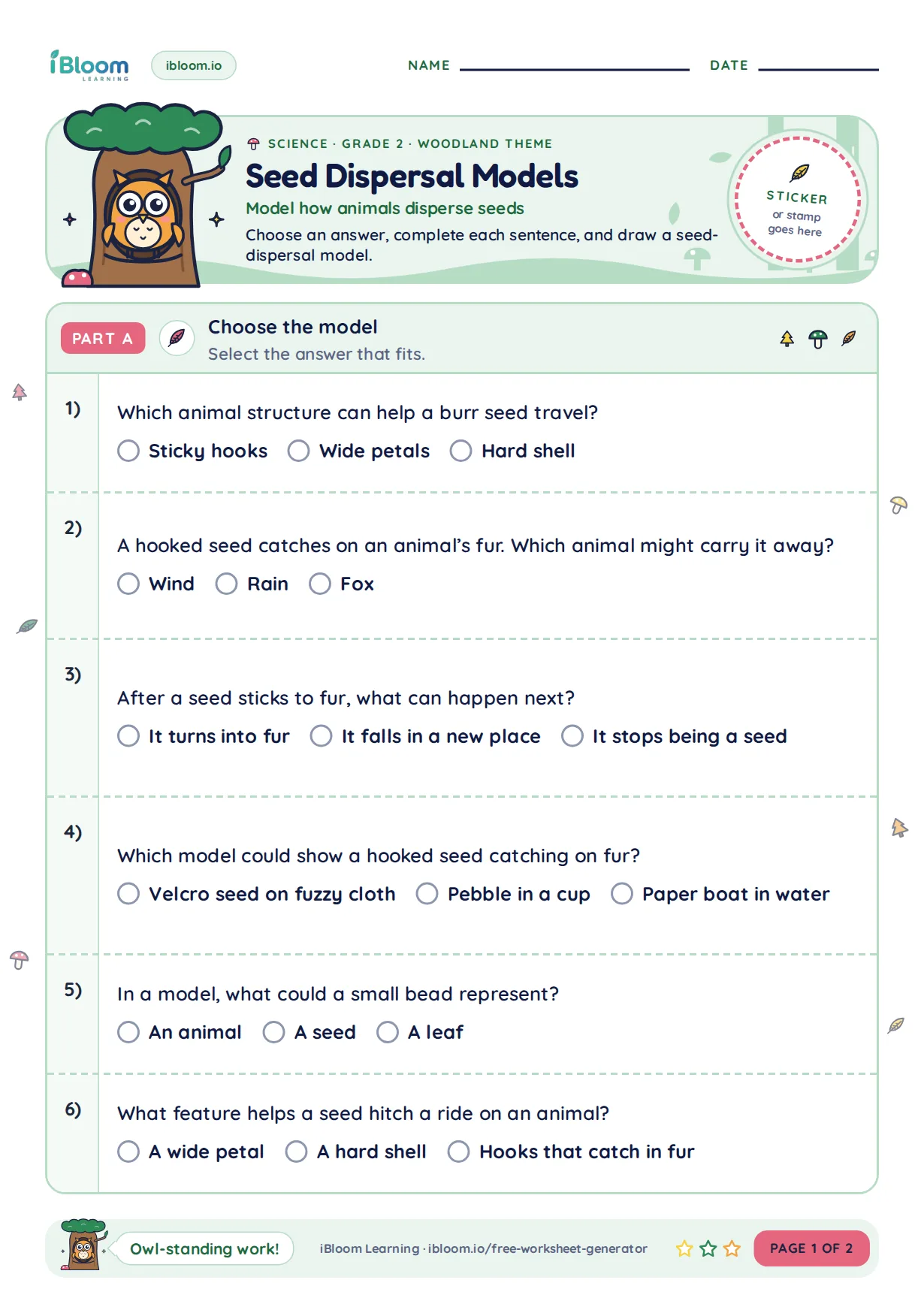 Seed Disperal — Label and ModelGrade 2 science worksheets help children understand how seeds move by wind, water, animals, and other natural methods. This label and model worksheet provides a distinct, age-appropriate way to practise the same lesson.Grade 2Free PDF preview
 Seed Disperal — Explain Cause and EffectGrade 2 science worksheets help children understand how seeds move by wind, water, animals, and other natural methods. This explain cause and effect worksheet provides a distinct, age-appropriate way to practise the same lesson.Grade 2Free PDF preview4 pages
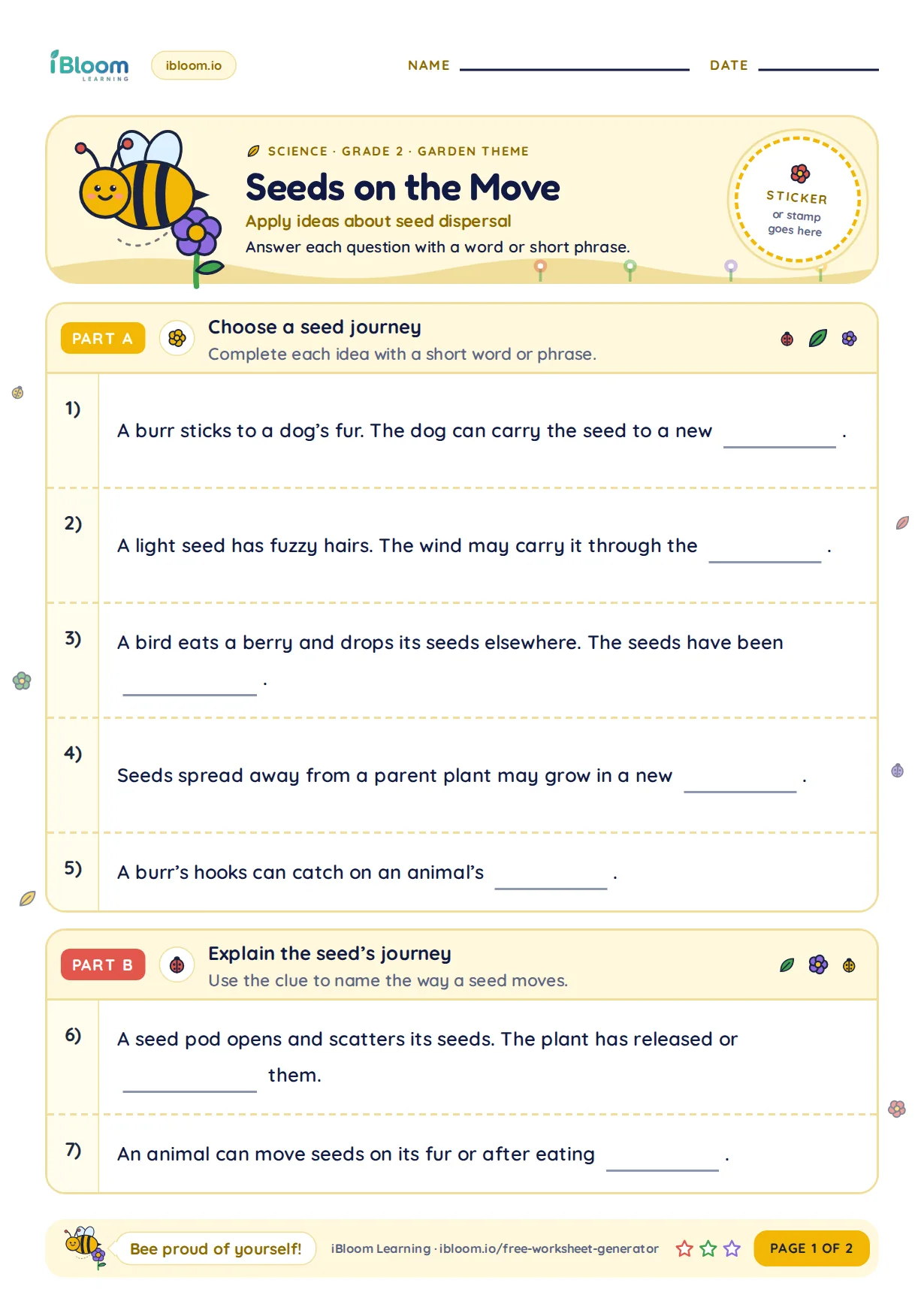 Seed Disperal — Apply Science IdeasGrade 2 science worksheets help children understand how seeds move by wind, water, animals, and other natural methods. This apply science ideas worksheet provides a distinct, age-appropriate way to practise the same lesson.Grade 2Free PDF preview
 Seed Disperal — Science Reasoning ReviewGrade 2 science worksheets help children understand how seeds move by wind, water, animals, and other natural methods. This science reasoning review worksheet provides a distinct, age-appropriate way to practise the same lesson.Grade 2Free PDF preview
Practice that builds confidence
What children learn about seed dispersal
These Grade 2 seed dispersal practice activities help children explore how new plants begin in new places. Students learn that seeds do not always fall straight below the parent plant; they can travel by wind, water, animals, gravity, or bursting pods.
The printable worksheets include observation-style questions, sorting tasks, matching activities, labeled examples, and short explanations using familiar seeds such as dandelions, maple seeds, coconuts, burrs, berries, and peas. Each activity builds plant science vocabulary while keeping the focus on real-world cause and effect.
Seed dispersal is the movement of seeds away from the parent plant. In Grade 2, children do not need advanced plant biology; they need to notice features and connect them to movement. A fluffy seed may float in the wind, a seed inside fruit may be carried by an animal, and a floating seed may travel across water. These worksheets help students explain how a seed’s shape, covering, or location helps it move.
Skill progression in the worksheets
Activities move from recognition to reasoning. Children first identify pictures of seeds and plants, then sort them by dispersal method. Later questions ask them to choose the best explanation: for example, why a burr sticks to fur or why a coconut can travel in water. Short writing prompts encourage complete science sentences using words such as seed, parent plant, travel, float, stick, fruit, and sprout.
A simple parent routine
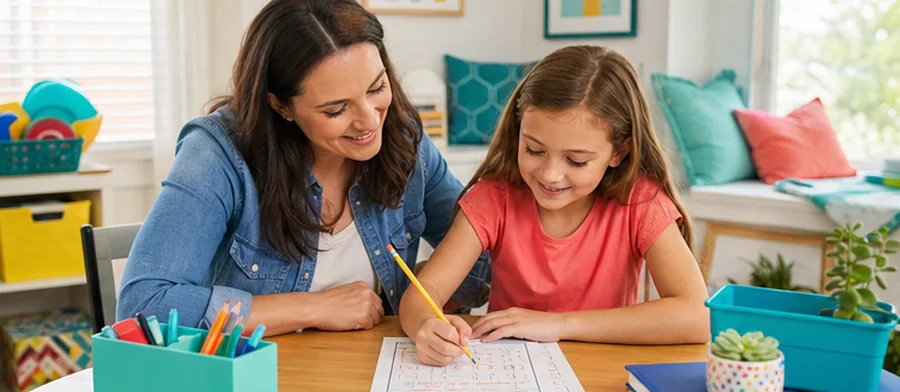
At home, start with a quick outdoor or kitchen observation. Look at an apple seed, a dandelion, a dry pod, or a seed packet. Ask, “How could this seed move to a new place?” Then complete one worksheet section together. Encourage your child to point to evidence in the picture before answering. End by having them say one sentence aloud: “This seed is dispersed by ___ because ___.”
Classroom uses for teachers
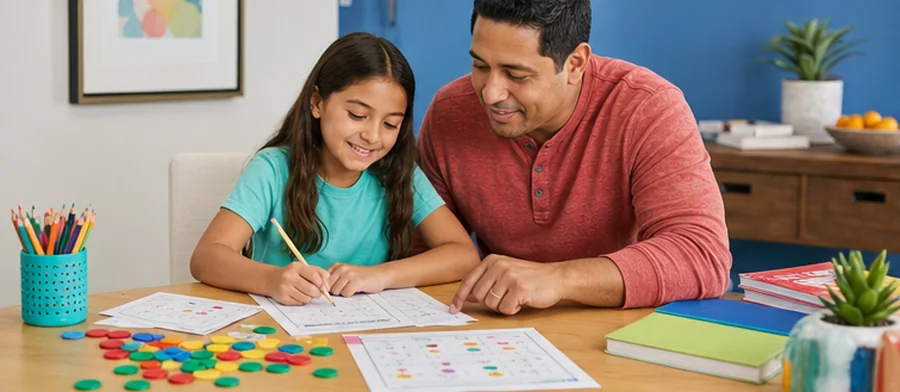
Teachers can use these printables during a plants unit, science centers, small-group review, or as a follow-up to a seed walk. The sorting pages work well for partner discussion because students must justify their choices. The short-response items can be used for science notebooks or informal assessment of whether students understand the link between seed features and dispersal method.
Common errors to watch for
Many children think all seeds are planted by people or simply drop under the plant. Others may match by appearance only, such as choosing wind for every small seed. Guide them to ask what helps the seed move: wings, fluff, hooks, fruit, a hard floating shell, or a pod that splits open. If a child gives a wrong answer, ask what would happen to the seed in wind, water, or near an animal.
Free printable PDF download
Use this grade 2 seed dispersal worksheet page to preview the activity, print it, or download it as a PDF for quick practice. It works well for homework, homeschool lessons, tutoring, morning work, revision, and classroom centers.
Answers and answer key support
After the child completes the worksheet independently, parents and teachers can use the answer support or answer key information to check the work, review mistakes, and choose the next practice step.
Why iBloom worksheets help
The pages combine clear visuals with short, focused questions so Grade 2 learners can reason without feeling overwhelmed. A child-friendly strategy is: “Look at the seed, find its special feature, then choose how it travels.” This helps students move beyond memorizing examples and begin thinking like young scientists observing plants in the world around them.
Helpful answers
Frequently asked questions
What is seed dispersal for Grade 2 students?
Seed dispersal means seeds move away from the parent plant to a new place where they may grow. Grade 2 students usually learn common methods such as wind, water, animals, gravity, and bursting pods.
Which examples of seed dispersal are included in these worksheets?
The activities use familiar examples such as dandelion seeds carried by wind, maple seeds that spin, burrs that stick to animals, fruits with seeds, coconuts that float, and pods that split open.
How can I help my child choose the correct dispersal method?
Ask your child to look for a clue on the seed. Fluff or wings may suggest wind, hooks may suggest animals, fruit may suggest animals eating and moving seeds, and a hard floating covering may suggest water.
Are these worksheets suitable for a plants unit?
Yes. They fit naturally into a Grade 2 plants unit after children have learned that plants grow from seeds. They help connect seed structure, movement, and the chance for a new plant to grow.
Can these pages be used in science centers?
Yes. Teachers can place sorting, matching, and explanation pages in centers so students can work independently or in pairs while discussing how each seed travels.
Is this grade 2 seed dispersal worksheet free?
Yes. You can preview it for free and use the printable worksheet for home or classroom practice.
Can I download this grade 2 seed dispersal worksheet as a PDF?
Yes. Use the worksheet download option to save a printable PDF, or print the worksheet directly from the page.
Does this grade 2 seed dispersal worksheet include answers or an answer key?
When the activity has fixed answers, iBloom includes answer support so parents and teachers can check the completed worksheet.