Free printable practice
Pollination Practice Activities
Grade 2 science worksheets that help children understand how pollen moves from flower to flower and why pollination matters for seeds and fruits.
Free printable worksheet PDFs
Preview every available page, then download the free worksheet PDF for home, homeschool, tutoring, or classroom practice.
Preview the exact activity before downloading it.
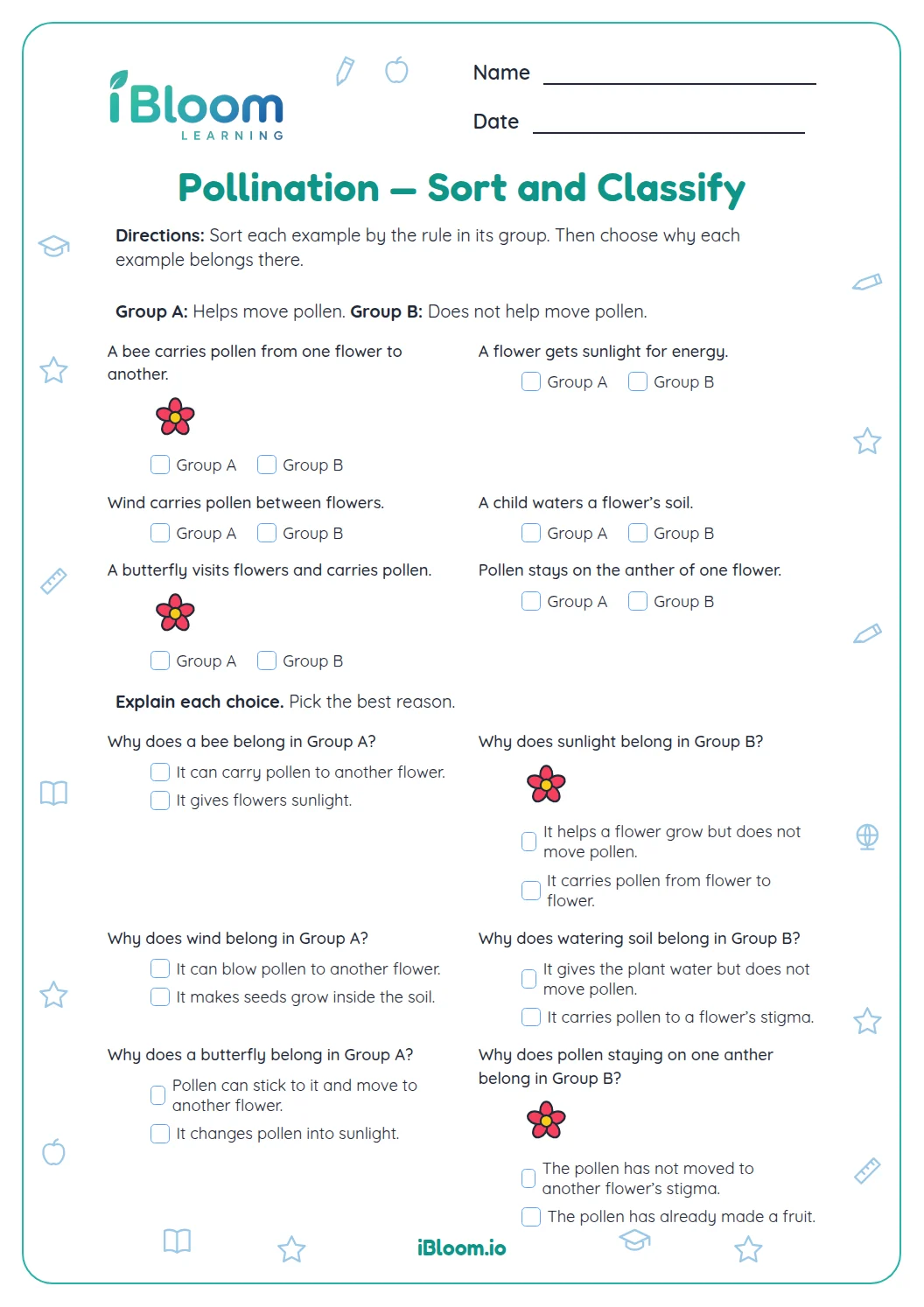 Pollination — Sort and ClassifyGrade 2 science worksheets that help children understand how pollen moves from flower to flower and why pollination matters for seeds and fruits. This sort and classify worksheet provides a distinct, age-appropriate way to practise the same lesson.Grade 2Free PDF preview
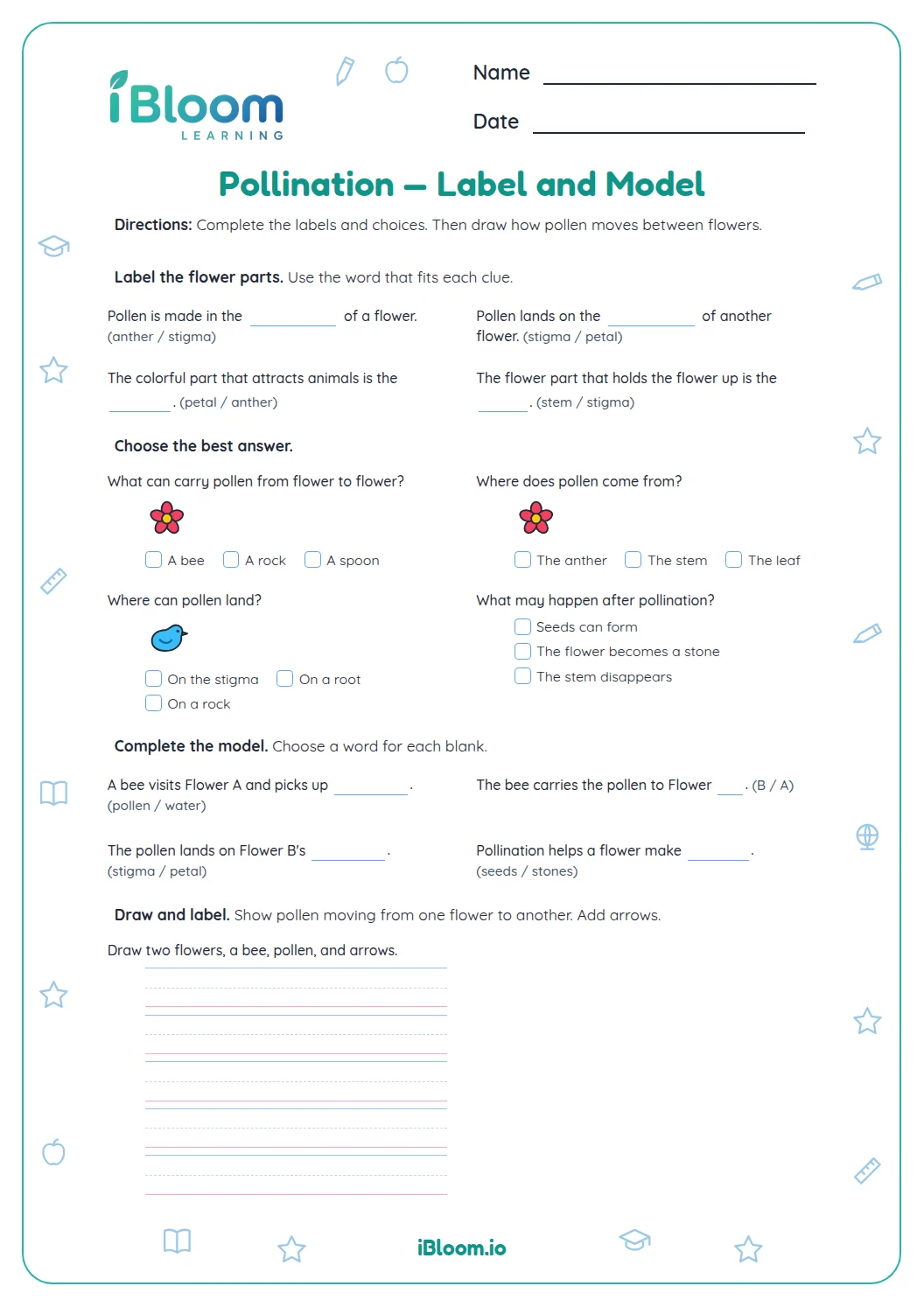 Pollination — Label and ModelGrade 2 science worksheets that help children understand how pollen moves from flower to flower and why pollination matters for seeds and fruits. This label and model worksheet provides a distinct, age-appropriate way to practise the same lesson.Grade 2Free PDF preview
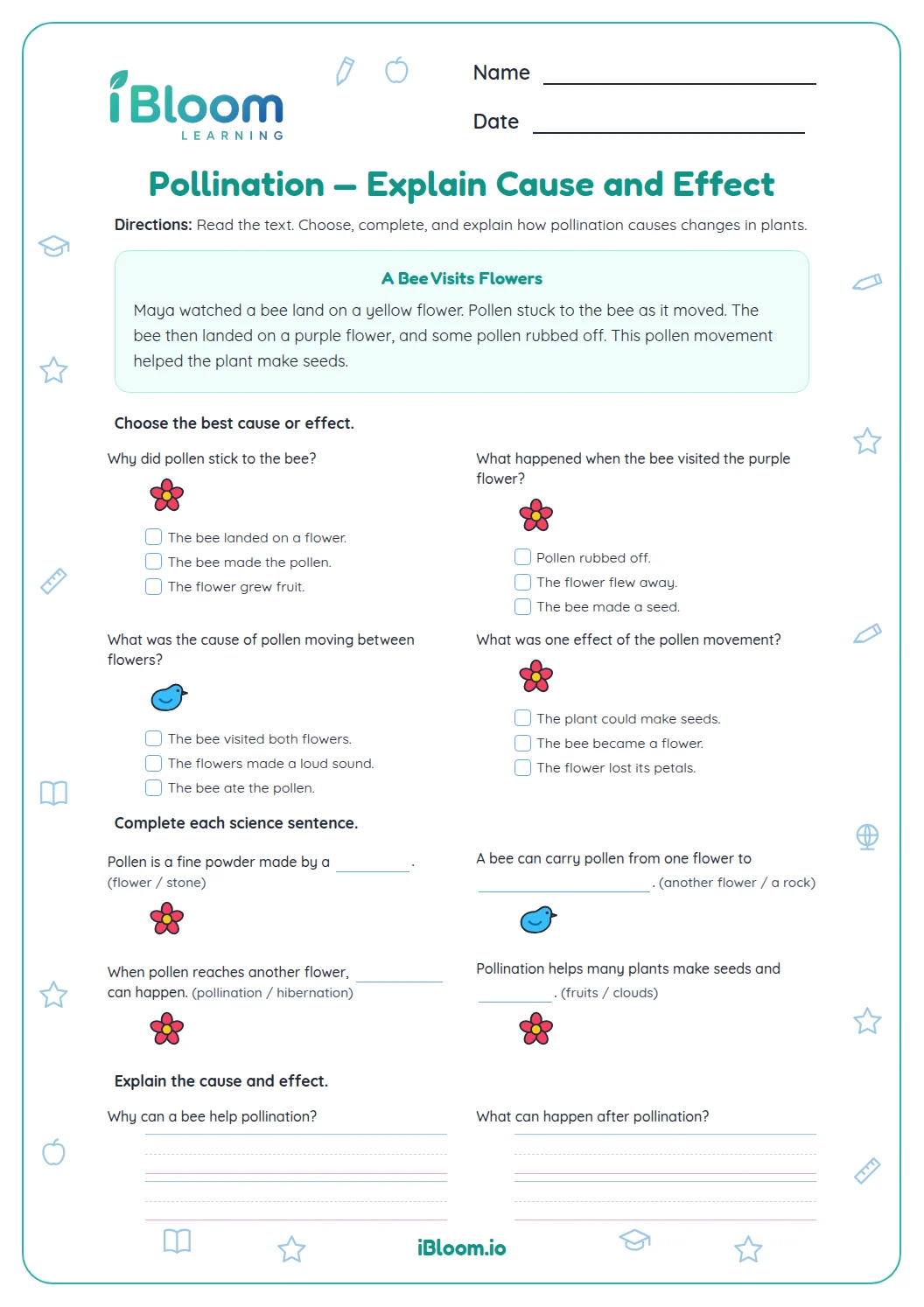 Pollination — Explain Cause and EffectGrade 2 science worksheets that help children understand how pollen moves from flower to flower and why pollination matters for seeds and fruits. This explain cause and effect worksheet provides a distinct, age-appropriate way to practise the same lesson.Grade 2Free PDF preview4 pages
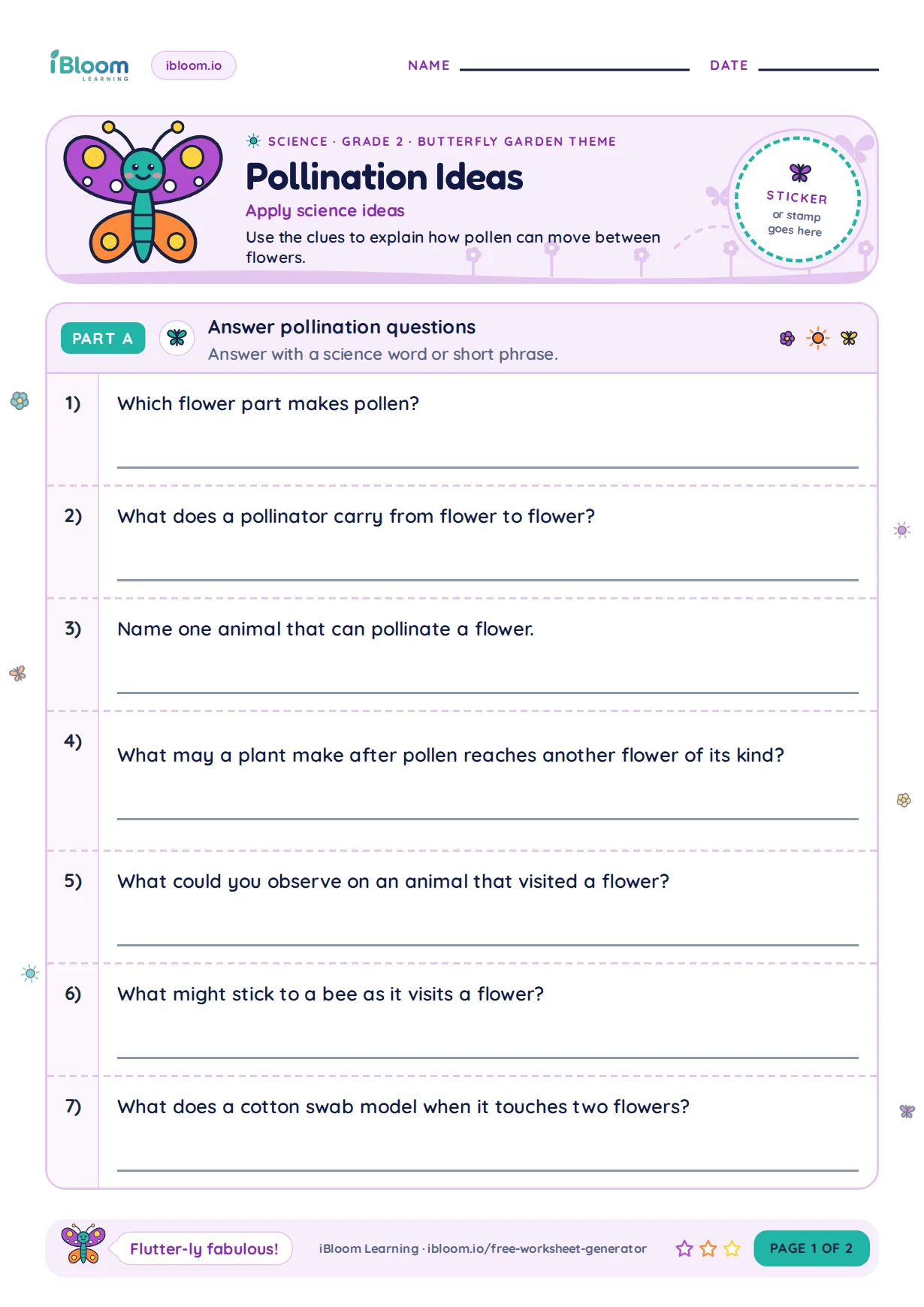 Pollination — Apply Science IdeasGrade 2 science worksheets that help children understand how pollen moves from flower to flower and why pollination matters for seeds and fruits. This apply science ideas worksheet provides a distinct, age-appropriate way to practise the same lesson.Grade 2Free PDF preview
 Pollination — Science Reasoning ReviewGrade 2 science worksheets that help children understand how pollen moves from flower to flower and why pollination matters for seeds and fruits. This science reasoning review worksheet provides a distinct, age-appropriate way to practise the same lesson.Grade 2Free PDF preview
Practice that builds confidence
What Grade 2 students learn
These Grade 2 pollination worksheets help children explore how flowering plants make new plants. Students practise identifying pollen, flowers, pollinators, and the simple sequence from pollination to seeds and fruit.
The printable activities include picture-based tasks, matching, sequencing, labeling, sorting, and short response prompts. Each page keeps the science clear and age-appropriate while building vocabulary children need in the Plants unit.
Pollination is the movement of pollen from one flower to another so a plant can begin making seeds. At this level, children do not need complex flower anatomy; they need to connect clear ideas: flowers have pollen, pollinators can move pollen, and many plants then form seeds or fruit. Worksheets may show bees, butterflies, birds, wind, and flowers to help students see that pollination can happen in more than one way.

Skills built through the activities
Children practise science vocabulary such as pollen, pollinator, flower, seed, fruit, and plant life cycle. They may label parts in a simple picture, match a pollinator to its role, put events in order, or decide whether a statement about pollination is true. These tasks strengthen observation, cause-and-effect thinking, and early explanation skills.
A simple parent routine
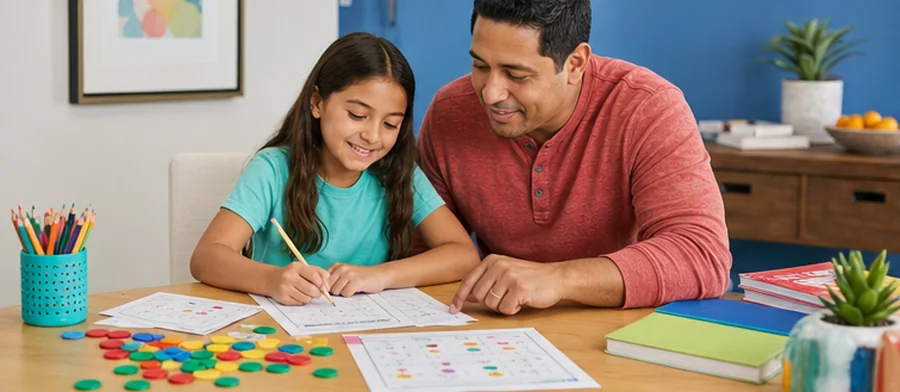
Start with a real flower, a photo, or a fruit with seeds. Ask, “Where do you think the seeds came from?” Then complete one worksheet together: read the directions aloud, circle key words, and have your child explain each answer in a full sentence. End with a quick outdoor or window observation: look for flowers, insects, or signs that a plant has formed fruit.
Classroom uses for teachers
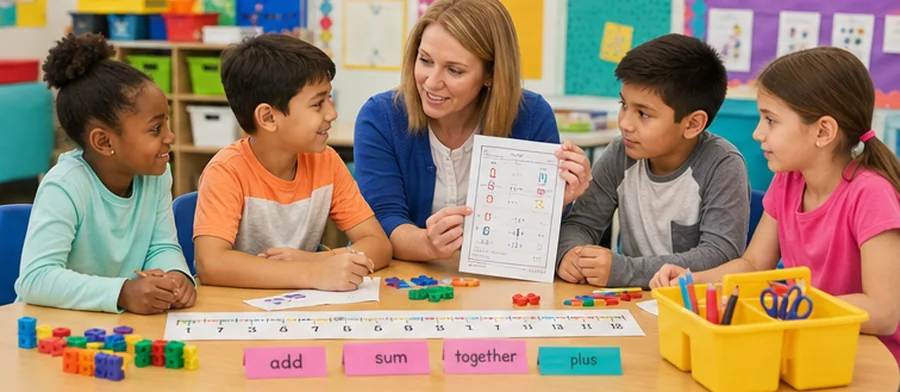
Teachers can use these printables during a Grade 2 plants lesson, in science centers, as partner work after a read-aloud, or as a quick check for understanding. Sequencing pages work well after a demonstration or video, while vocabulary pages support students who need repeated exposure to new science words.
Common errors to watch for
Some children think bees “make” flowers grow, or that pollination and planting seeds are the same event. Others may believe only bees pollinate, or that fruit appears without a seed-making process. Encourage students to say, “A pollinator moves pollen,” and “pollination helps the plant make seeds.”
Free printable PDF download
Use this grade 2 pollination worksheet page to preview the activity, print it, or download it as a PDF for quick practice. It works well for homework, homeschool lessons, tutoring, morning work, revision, and classroom centers.
Answers and answer key support
After the child completes the worksheet independently, parents and teachers can use the answer support or answer key information to check the work, review mistakes, and choose the next practice step.
Why iBloom worksheets help
These worksheets use clear pictures, direct language, and varied question types so children can build the concept step by step. A child-friendly strategy is: “Name the mover, name what moves, name what happens next.” For example: “A bee moves pollen to another flower. Then the plant can make seeds.”
Helpful answers
Frequently asked questions
What is pollination in simple Grade 2 language?
Pollination is when pollen moves from one flower to another. This helps many plants make seeds, and some plants also grow fruit around those seeds.
Do these worksheets teach detailed flower parts?
They focus on age-appropriate ideas: pollen, flowers, pollinators, seeds, and fruit. They do not require children to memorize advanced flower anatomy.
Which pollinators might children see in the activities?
Worksheets may include familiar pollinators such as bees, butterflies, birds, and other animals, along with the idea that wind can also move pollen.
How can I help my child if they confuse pollination with planting?
Use two short sentences: planting is when a seed goes into soil; pollination happens before many seeds are made. Then ask your child to sequence flower, pollen movement, seed, and new plant.
Are these pollination printables useful for science centers?
Yes. Matching, labeling, and sequencing pages work well as independent or partner center tasks after students have heard a short lesson about pollination.
Is this grade 2 pollination worksheet free?
Yes. You can preview it for free and use the printable worksheet for home or classroom practice.
Can I download this grade 2 pollination worksheet as a PDF?
Yes. Use the worksheet download option to save a printable PDF, or print the worksheet directly from the page.
Does this grade 2 pollination worksheet include answers or an answer key?
When the activity has fixed answers, iBloom includes answer support so parents and teachers can check the completed worksheet.