Free printable practice
Plant Needs Practice Activities
Printable Grade 2 science activities that help children identify, explain, and apply what plants need to live and grow.
Free printable worksheet PDFs
Preview every available page, then download the free worksheet PDF for home, homeschool, tutoring, or classroom practice.
Preview the exact activity before downloading it.
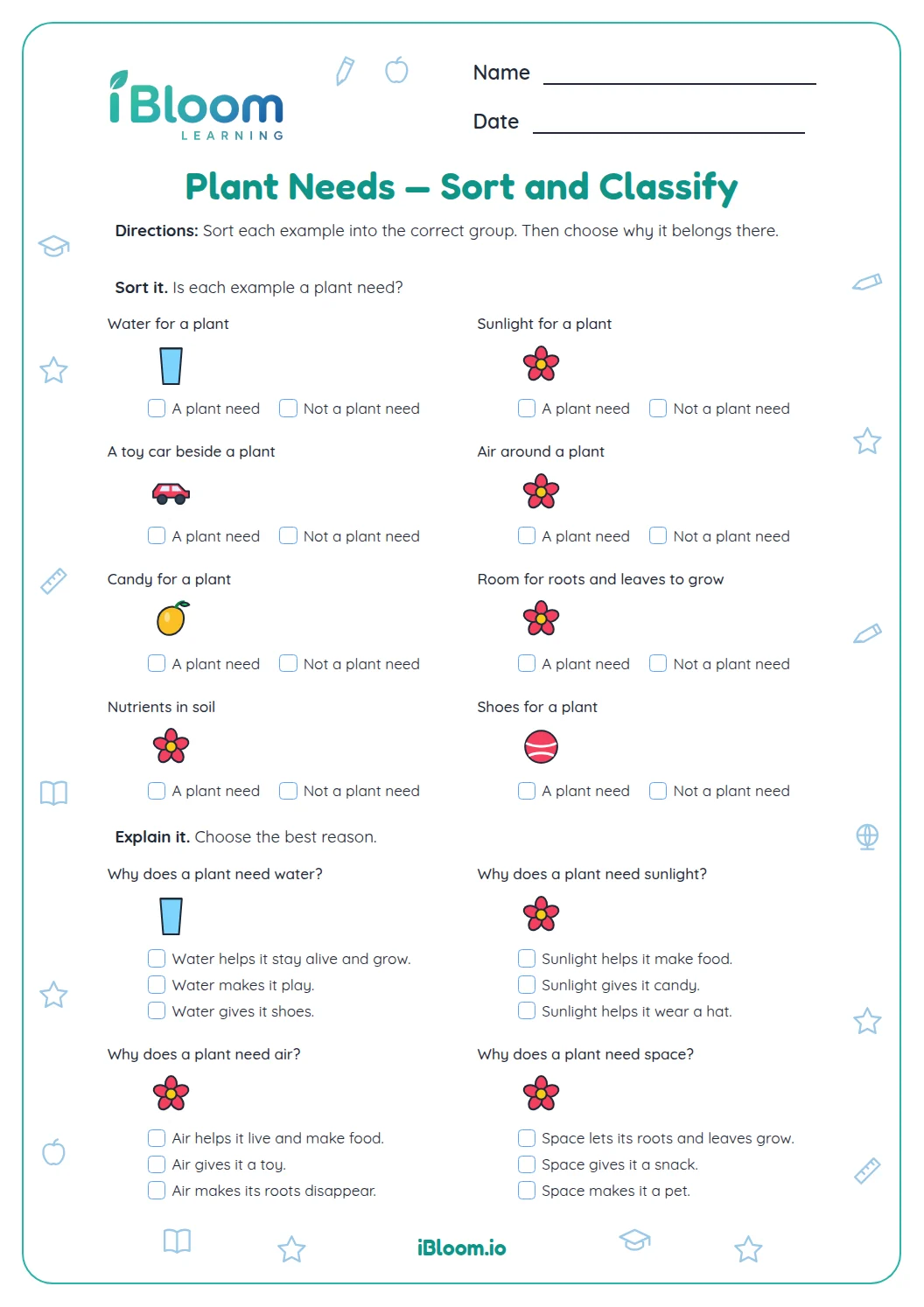 Plant Needs — Sort and ClassifyPrintable Grade 2 science activities that help children identify, explain, and apply what plants need to live and grow. This sort and classify worksheet provides a distinct, age-appropriate way to practise the same lesson.Grade 2Free PDF preview
 Plant Needs — Label and ModelPrintable Grade 2 science activities that help children identify, explain, and apply what plants need to live and grow. This label and model worksheet provides a distinct, age-appropriate way to practise the same lesson.Grade 2Free PDF preview
 Plant Needs — Explain Cause and EffectPrintable Grade 2 science activities that help children identify, explain, and apply what plants need to live and grow. This explain cause and effect worksheet provides a distinct, age-appropriate way to practise the same lesson.Grade 2Free PDF preview4 pages
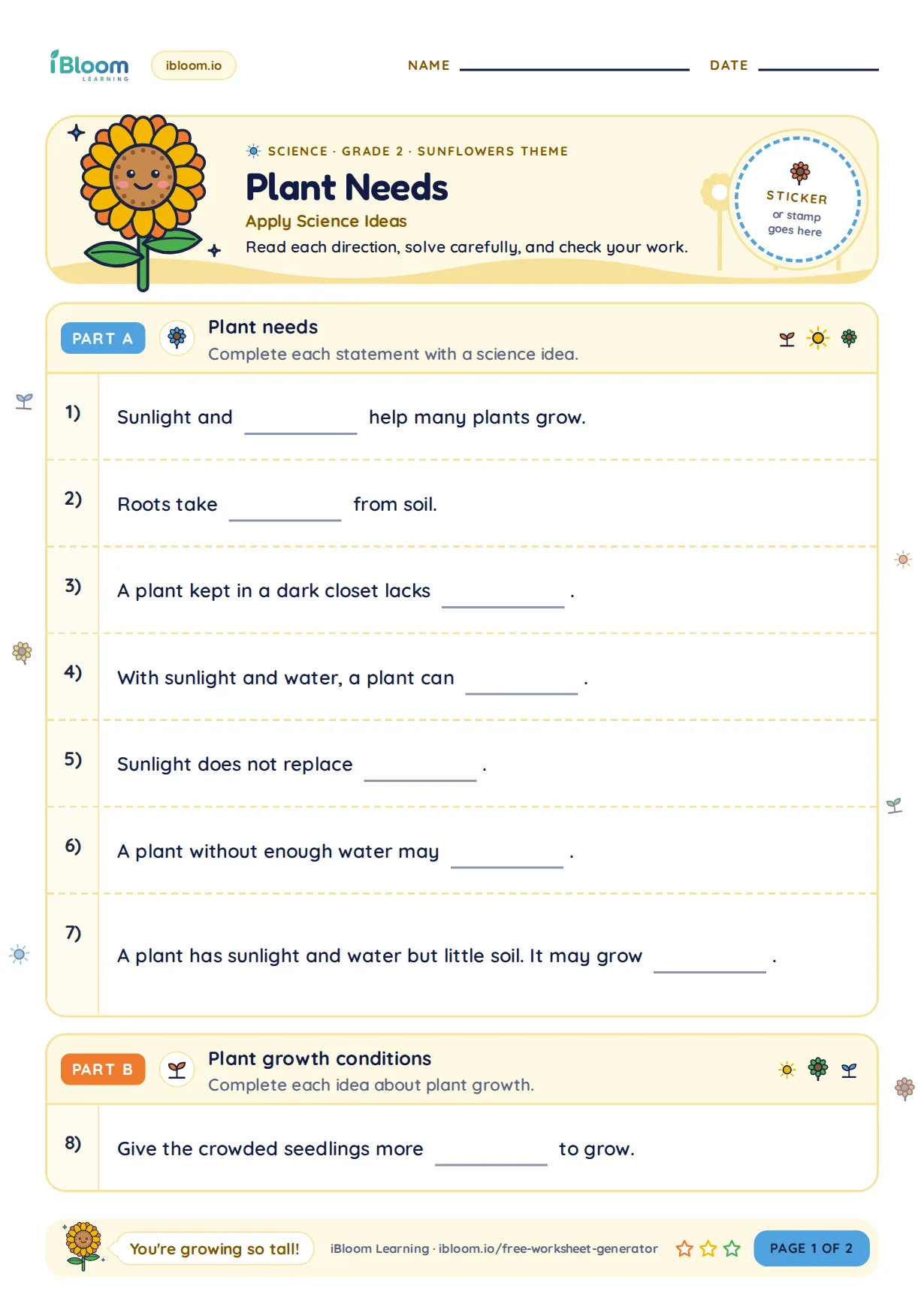 Plant Needs — Apply Science IdeasPrintable Grade 2 science activities that help children identify, explain, and apply what plants need to live and grow. This apply science ideas worksheet provides a distinct, age-appropriate way to practise the same lesson.Grade 2Free PDF preview8 pages
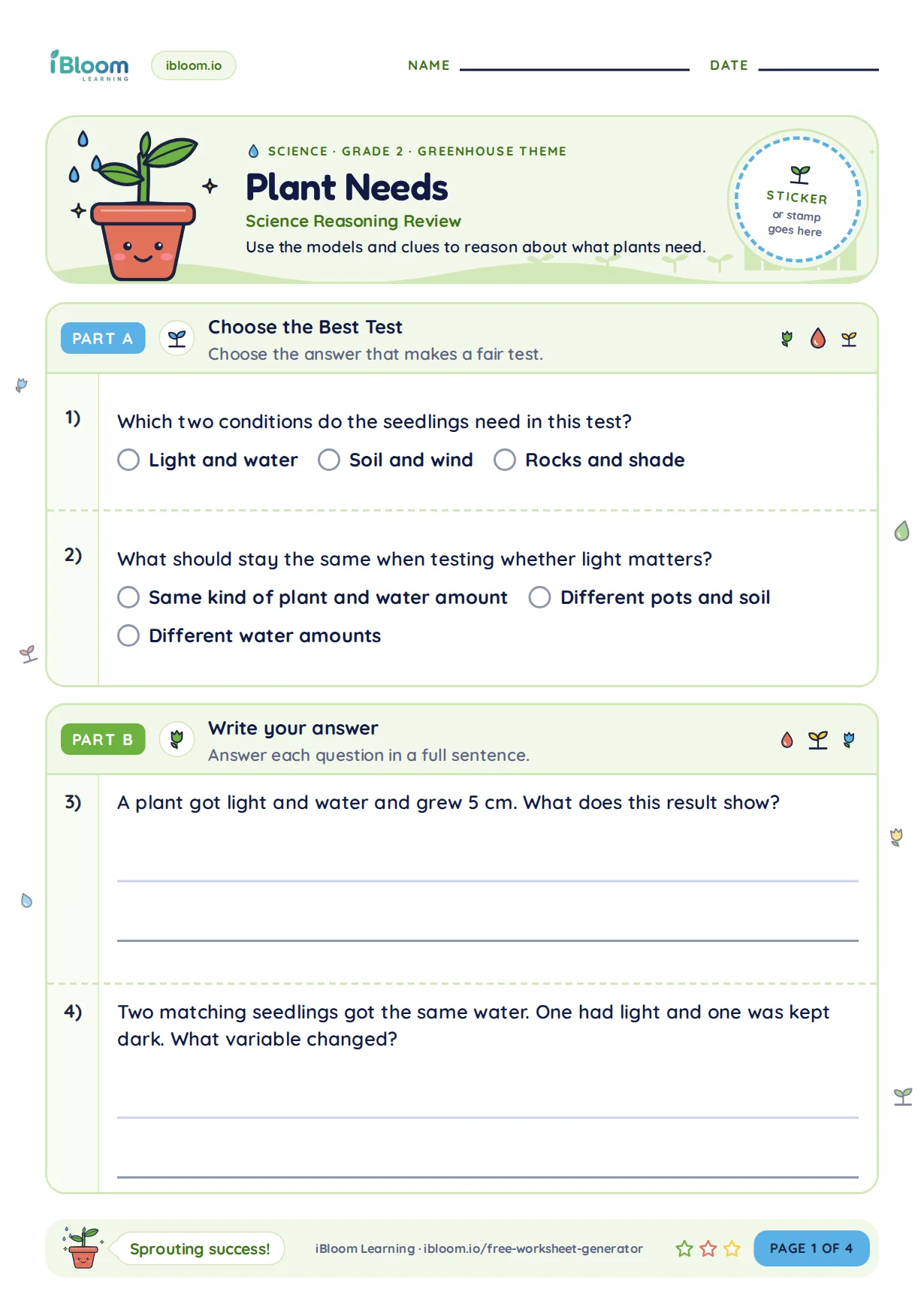 Plant Needs — Science Reasoning ReviewPrintable Grade 2 science activities that help children identify, explain, and apply what plants need to live and grow. This science reasoning review worksheet provides a distinct, age-appropriate way to practise the same lesson.Grade 2Free PDF preview
Practice that builds confidence
What grade 2 scientists look for
These Grade 2 plant needs worksheets help children explore the basic requirements for healthy plant growth: sunlight, water, air, space, and support from soil. Students practise reading simple science prompts, observing plant situations, and explaining why a plant may grow well or struggle.
The printable activities include labeling, matching, short-answer thinking, picture-based questions, and real-life plant care scenarios. Children connect everyday examples, such as watering a seedling or placing a pot near a window, to clear science vocabulary and evidence.
Children learn that plants are living things with needs, not objects that “just grow.” The worksheets guide them to notice signs such as green leaves, strong stems, dry soil, crowded roots, or a plant leaning toward light. They practise using words like sunlight, water, air, soil, space, roots, stem, leaves, grow, healthy, and wilt.

How the learning progresses
Activities usually begin with recognition: choosing which items a plant needs and crossing out things it does not need, such as toys or candy. Then students move to explanation, such as telling why a plant kept in a dark closet may not grow well. Later questions ask children to compare two plant pictures, complete simple cause-and-effect statements, or decide what a gardener should do next.
A simple parent routine
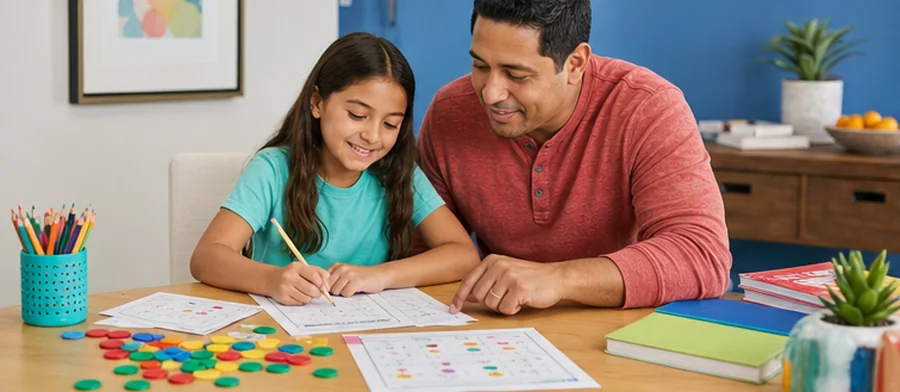
At home, place a real plant or picture of a plant where your child can see it. Ask, “What does this plant need today?” Let your child check the soil, look for light, and describe the plant using one science word. After a worksheet question, ask for a reason: “How do you know?” This keeps the practice focused on observation, not guessing.
Classroom uses for teachers
Teachers can use these printables after a plant read-aloud, during science centers, or as a quick check after discussing living and nonliving things. Picture questions work well for small-group talk because students can point to evidence before writing. A worksheet can also support a seed-growing activity by helping children connect daily care to the needs of the plant.

Common errors to watch for
Some children think soil is “food” for plants or that water alone is enough. Others may list what people need instead of what plants need. Watch for answers that name a need without explaining the effect, such as “sun” with no reason. A helpful child-friendly strategy is: “Name the need, look for the clue, tell what happens.” For example, “The plant needs water because the soil is dry, and water helps it stay healthy.”
Free printable PDF download
Use this grade 2 plant needs worksheet page to preview the activity, print it, or download it as a PDF for quick practice. It works well for homework, homeschool lessons, tutoring, morning work, revision, and classroom centers.
Answers and answer key support
After the child completes the worksheet independently, parents and teachers can use the answer support or answer key information to check the work, review mistakes, and choose the next practice step.
Why iBloom worksheets help
The activities balance simple visuals with short written responses so Grade 2 students can show understanding in more than one way. The questions stay close to familiar plant-care situations while building the habit of using evidence. This makes the worksheets useful for review, independent practice, and conversations about how living things depend on their environment.
Helpful answers
Frequently asked questions
What plant needs are covered in these Grade 2 worksheets?
They focus on the main needs young learners are expected to understand: sunlight, water, air, space, and soil as support for roots and access to nutrients.
Do children need to grow a real plant before using these worksheets?
No. The worksheets can be used on their own with pictures and scenarios, but a real classroom or home plant can make the observation questions more meaningful.
How do these activities help children move beyond memorizing a list?
Many questions ask students to use clues, compare plant situations, or explain what a plant needs next, so they practise cause and effect as well as vocabulary.
What mistake should I listen for when discussing soil?
Children often say soil is plant food. It is better to guide them to say soil holds the plant, holds water, and provides materials that help the plant grow.
Can these worksheets be used in science centers?
Yes. Picture-based matching, labeling, and short response pages work well for centers, small groups, or follow-up after a plant observation activity.
Is this grade 2 plant needs worksheet free?
Yes. You can preview it for free and use the printable worksheet for home or classroom practice.
Can I download this grade 2 plant needs worksheet as a PDF?
Yes. Use the worksheet download option to save a printable PDF, or print the worksheet directly from the page.
Does this grade 2 plant needs worksheet include answers or an answer key?
When the activity has fixed answers, iBloom includes answer support so parents and teachers can check the completed worksheet.