







About this worksheet
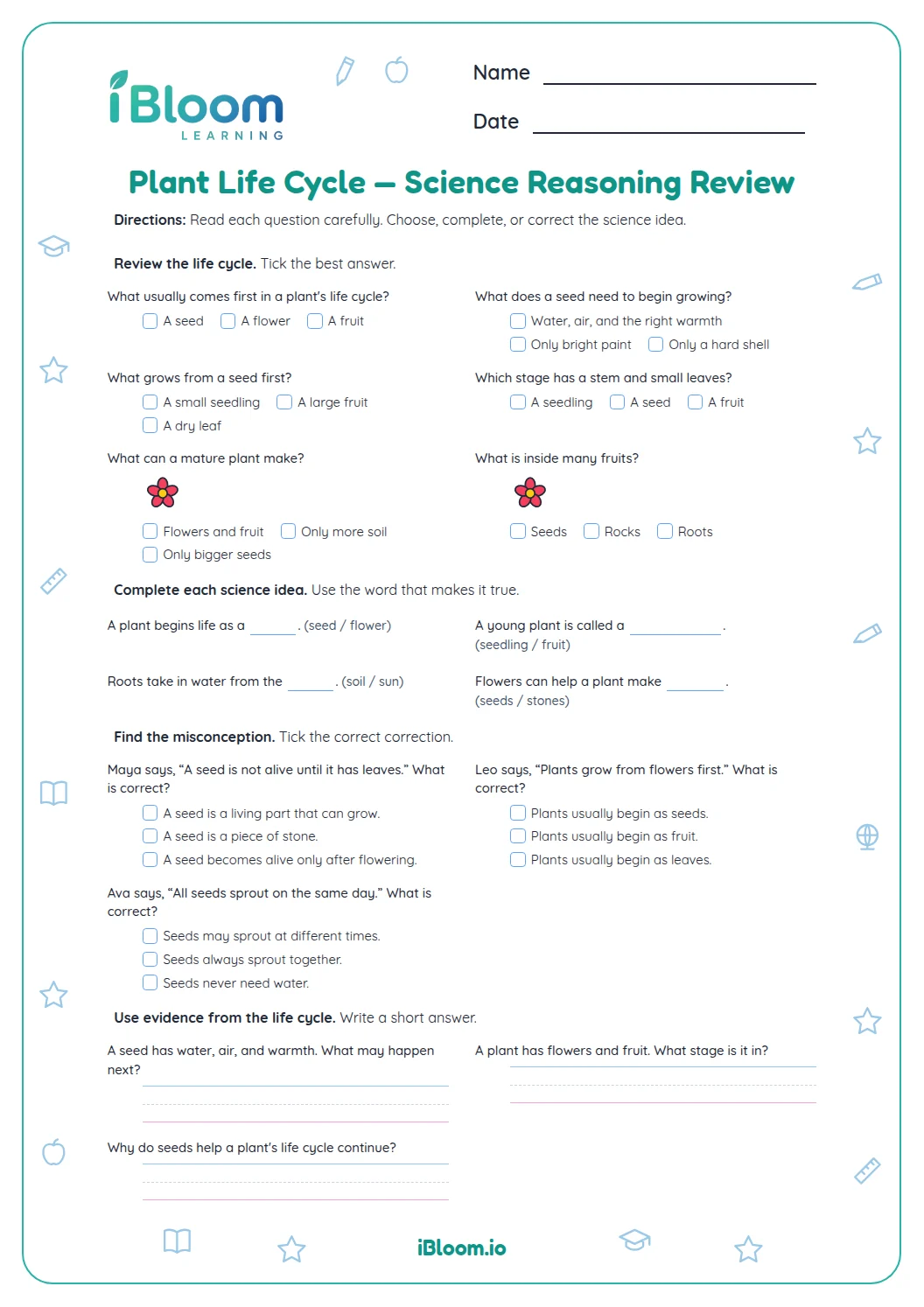
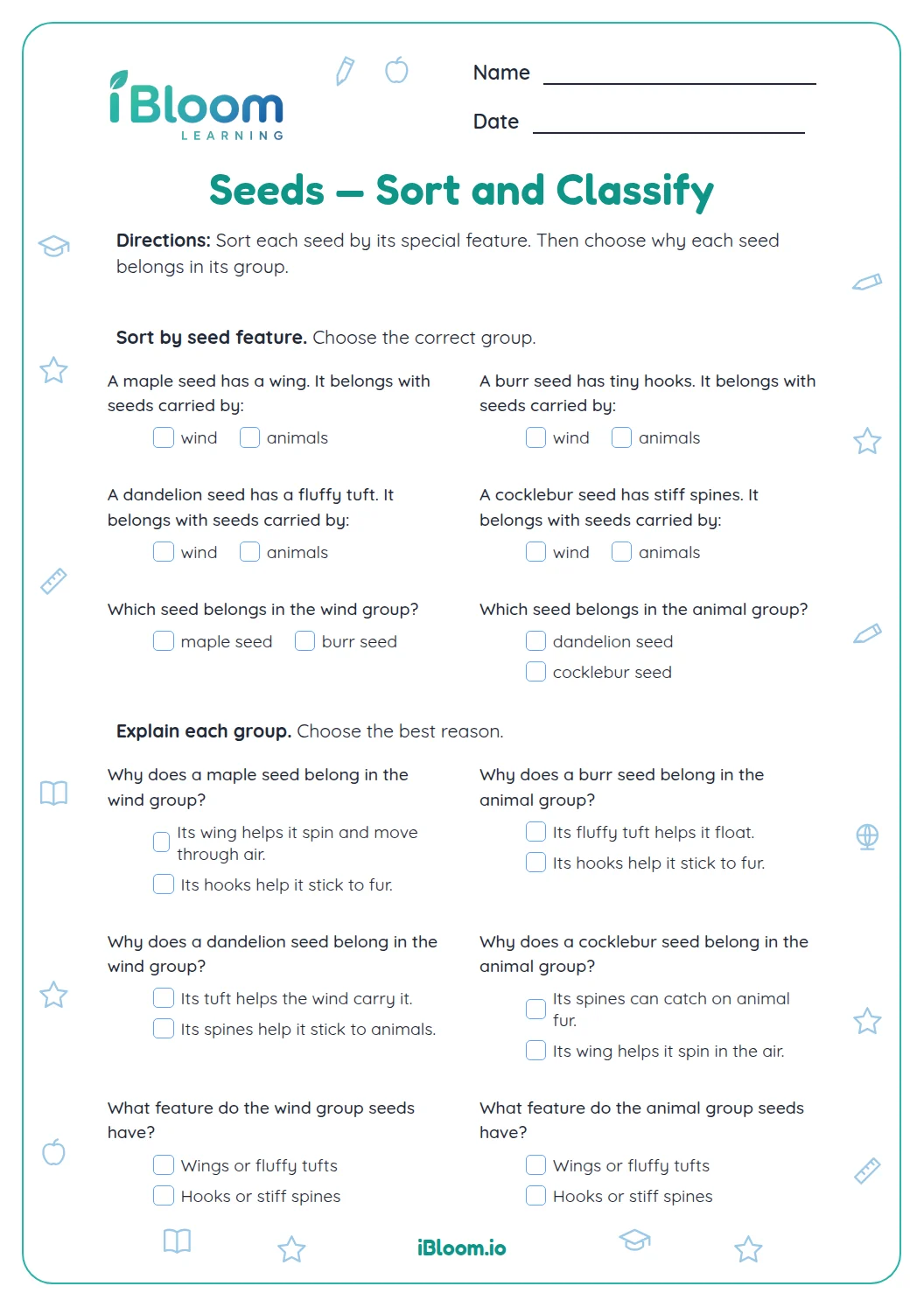
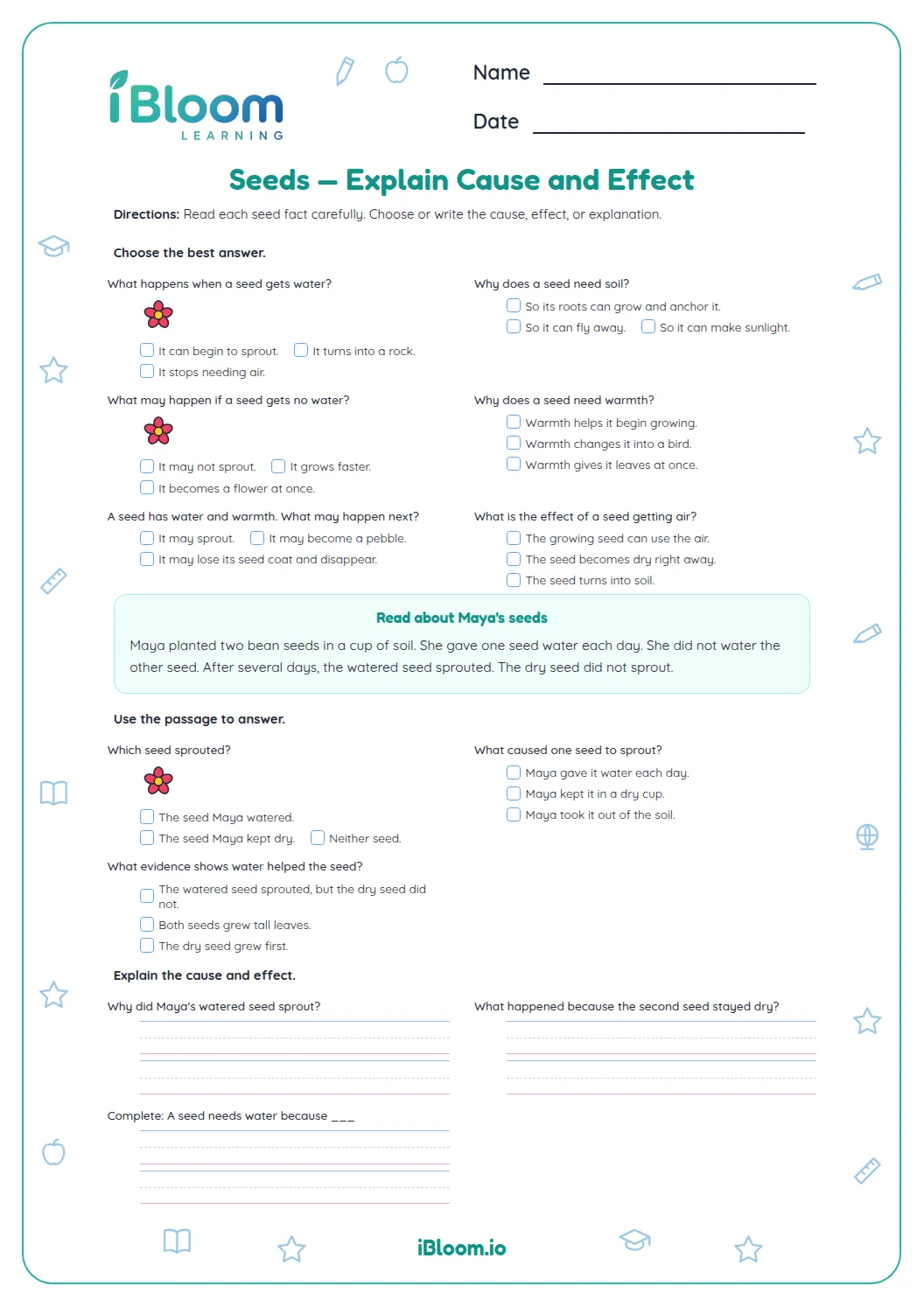
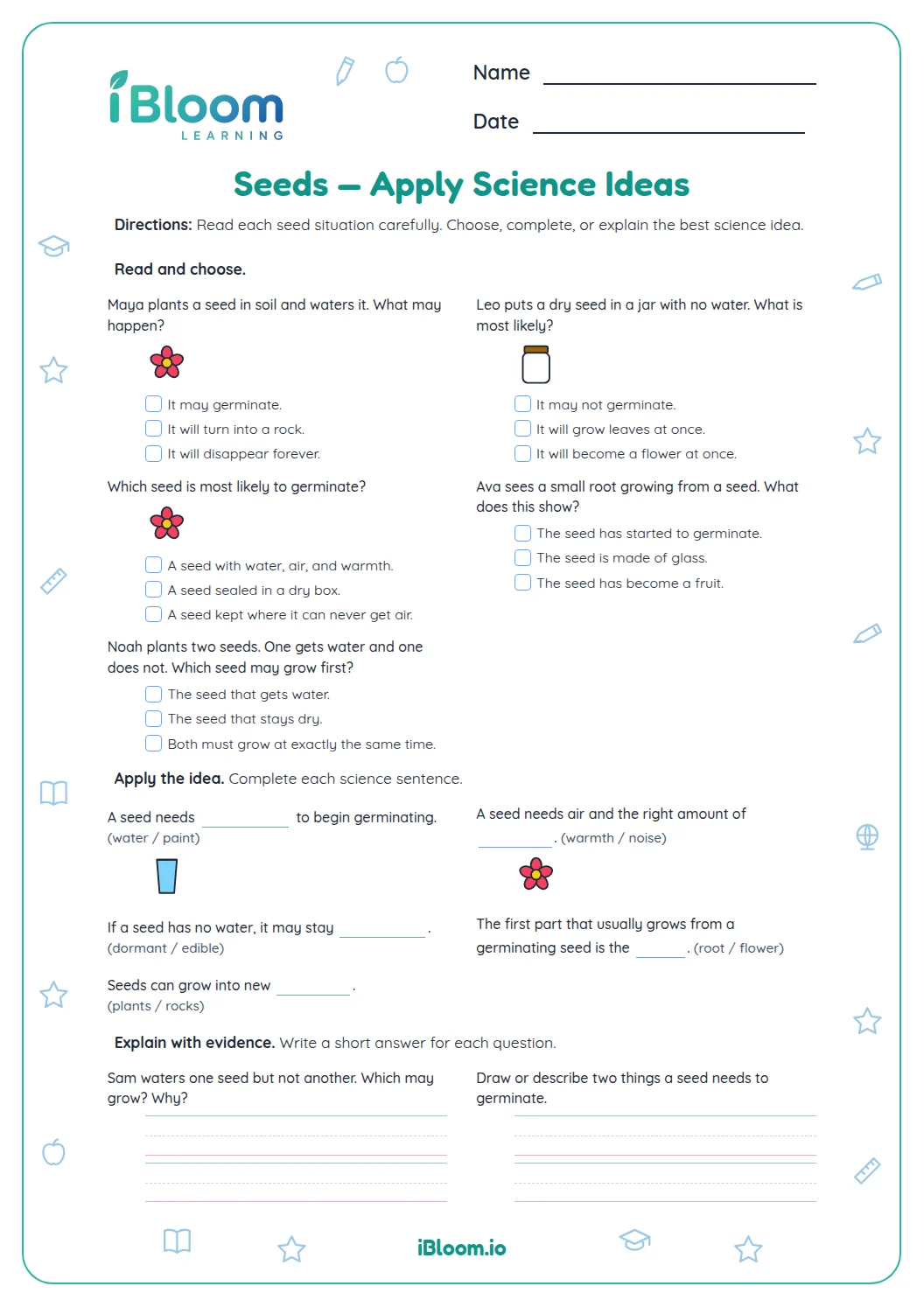
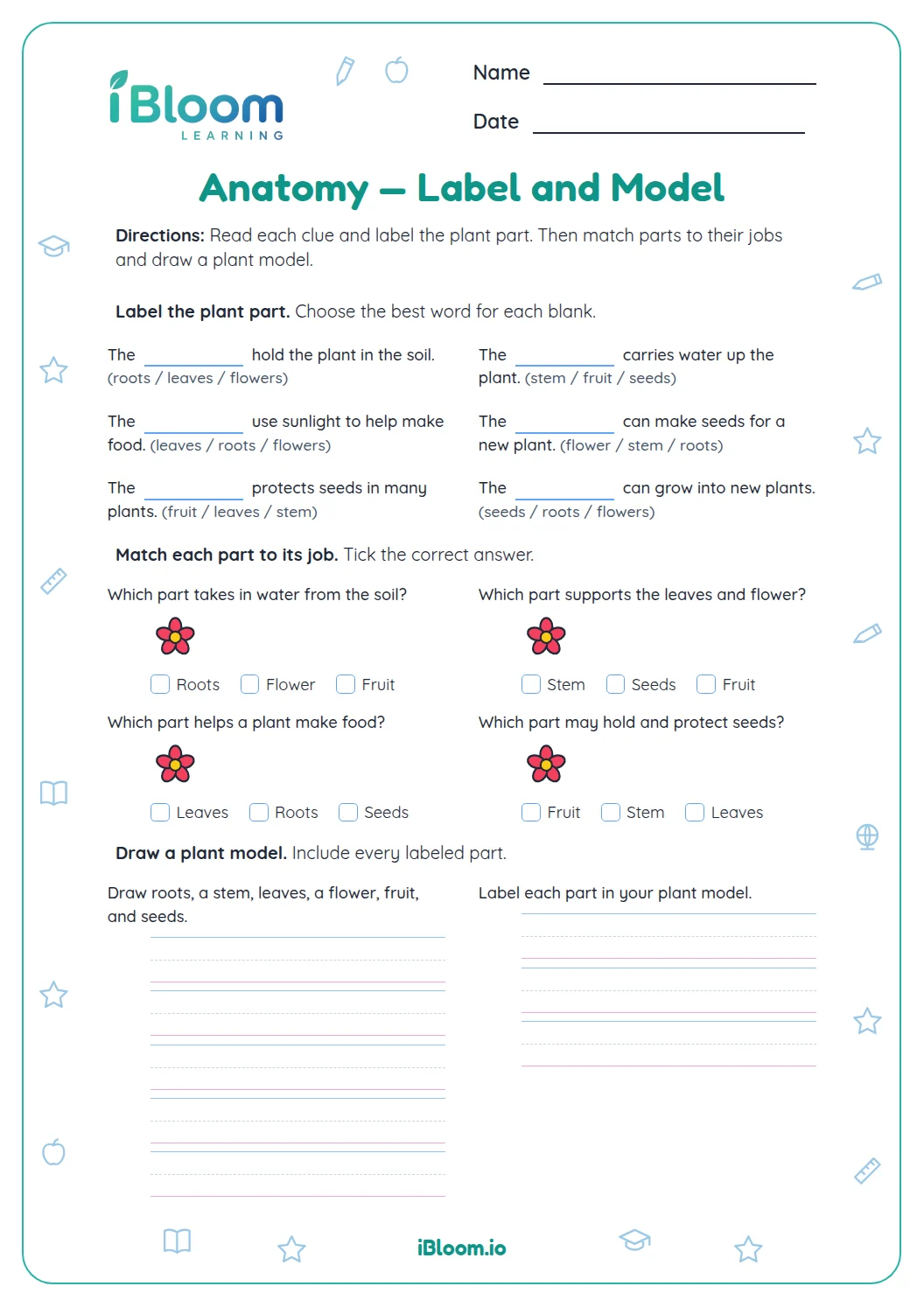
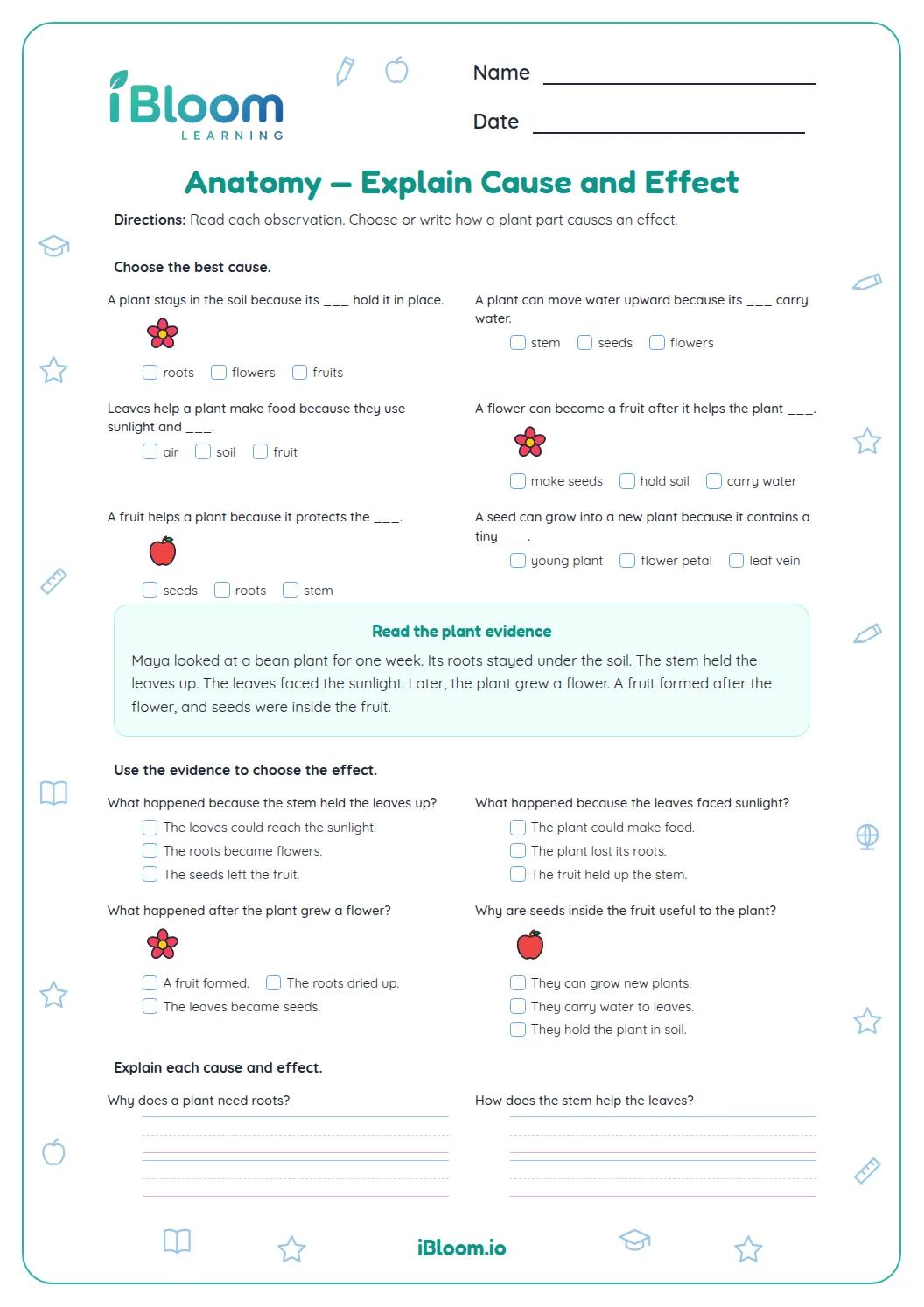
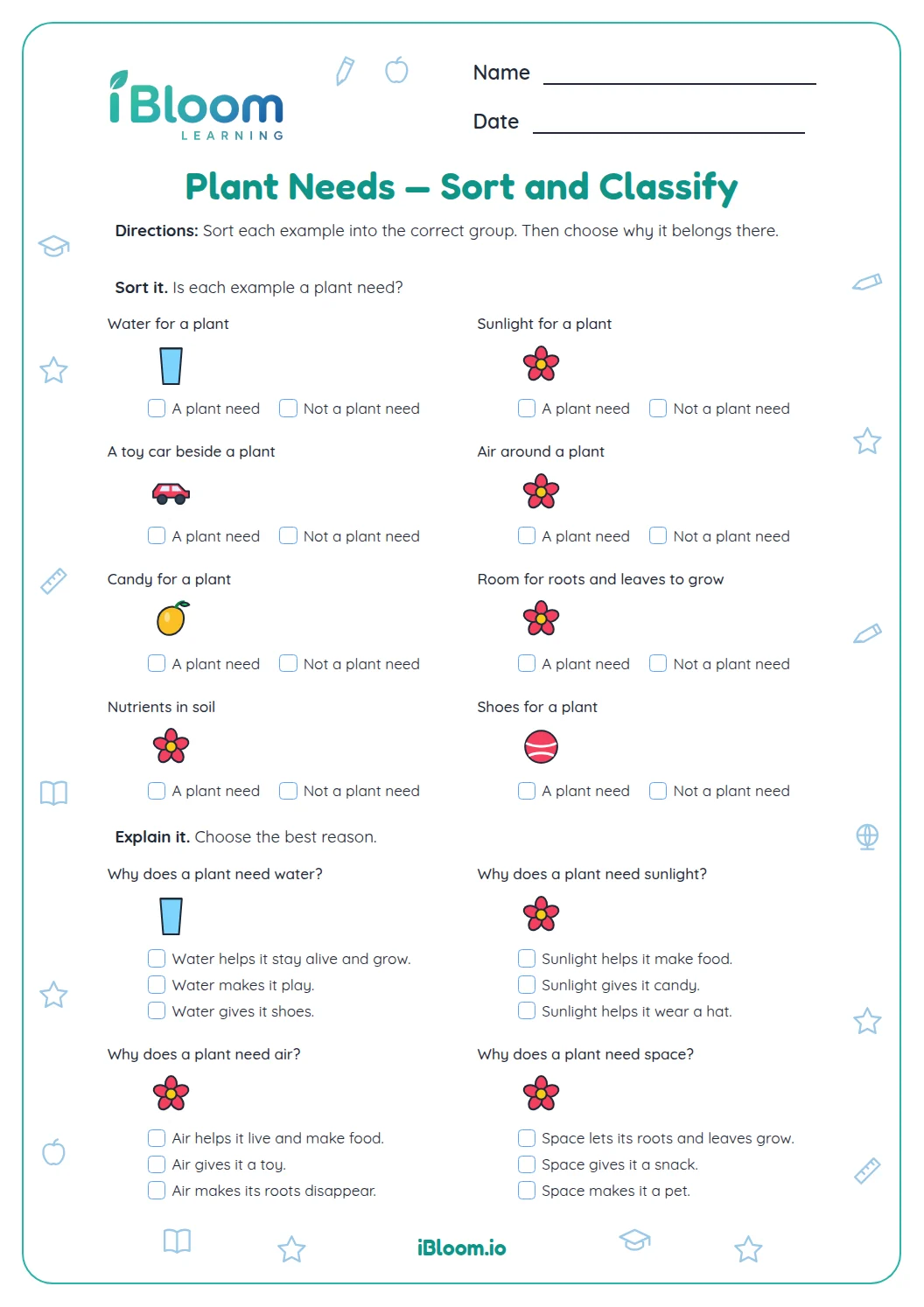
This Grade 2 science worksheet gives children practice naming the stages and parts of a flowering plant’s life cycle. Fourteen fill-in questions cover seeds, germination, seedlings, mature plants, flowers, fruit, and how new seeds begin another cycle. Children complete a short sequence and connect seeds with new plants. The page supports the NGSS life-cycle modeling expectation for flowering plants, with a separate answer key for checking each response.
Aligned to 3-LS1-1
What are the main stages of a flowering plant?
A flowering plant begins as a seed. When it starts to grow, germination is happening. The young plant is a seedling; later it grows into a mature plant that can flower and make fruit with seeds.
Questions 1–6 pair each stage or plant part with a clue. For example, a small stem and first leaves describe a seedling, while fruit holds and protects seeds.
- 1Clue: a small stem and first leaves
- 2Stage: seedling
- 3Compare: a mature plant has grown larger and can make flowers and seeds.
How does the plant cycle repeat?
Question 10 completes the seed-to-mature-plant sequence; question 13 asks children to draw and label a flowering plant life cycle with arrows.
What should the life-cycle model include?
A useful model labels the stages and uses arrows to show what happens next. The final sentence connects seeds in fruit with the start of another plant.
How to use this worksheet
- 1Read each clue and name the plant stage or part it describes.
- 2Use the growth sequence to distinguish germination from the seedling stage.
- 3Complete the stage sequence in order.
- 4Draw and label the flowering-plant stages, then add arrows.
- 5Finish by explaining how seeds can begin another plant life cycle.
Common mistakes and quick fixes
The mistake
Putting seedling before germination.
The fix
Germination is the start of growth inside or from the seed; the seedling appears afterward.
The mistake
Calling the flower the fruit that holds seeds.
The fix
A flower can develop into fruit; the fruit contains or protects the seeds.
The mistake
Drawing a line of stages with no return arrow.
The fix
Add an arrow from fruit with seeds back to a seed to show how another plant can begin.
NGSS alignment
This sheet uses a labeled flowering-plant sequence as a simple life-cycle model.
Model the shared stages in flowering-plant life cycles.
On this sheet: The labeled sequence and drawing model show growth and how seeds begin another flowering-plant cycle.
Show the official wordingHide the official wording
Develop models to describe that organisms have unique and diverse life cycles but all have in common birth, growth, reproduction, and death.
What to practice next
Further reading
Questions parents and teachers ask
What are the stages of a flowering plant life cycle?
A simple sequence is seed, germination, seedling, mature plant, flower, and fruit with seeds. New seeds can grow into plants, so the cycle repeats. Questions 10 and 13 practice the order in a sequence and a labeled drawing.
What is germination?
Germination is when a seed begins to grow. It comes before the seedling stage, when a young plant has a small stem and leaves. Questions 1 and 11 distinguish germination from the seedling stage by using these clues. This order helps children name what happens first.
How is a seed different from a fruit?
A seed can grow into a new plant. Fruit develops after flowering and holds or protects seeds. The worksheet asks children to distinguish both: question 3 identifies the part that can grow, and question 5 identifies what holds seeds.
What should the life-cycle drawing show?
Label the stages of a flowering plant and use arrows to show what happens next. The arrows should make a repeating path from a mature flowering plant to fruit with seeds and back to a new seed. Question 13 provides the drawing task; the key describes the essential labels and direction.
Is there an answer key?
Yes. The key gives the stage and part answers, the completed sequence, and the main features of a correct cycle drawing. For the drawing, children may arrange the stages differently if the labels and arrows still show the life cycle in order.