





About this worksheet
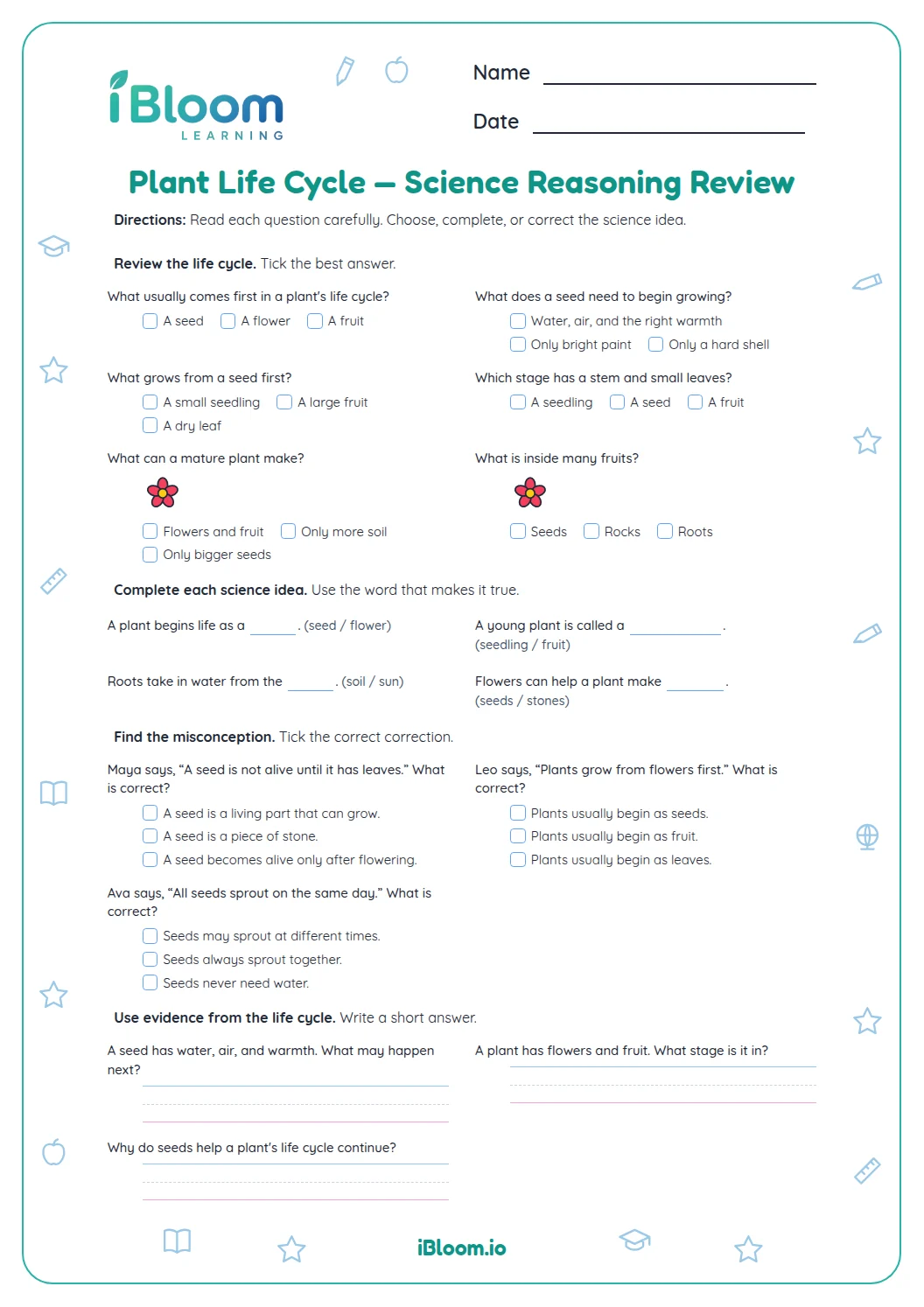
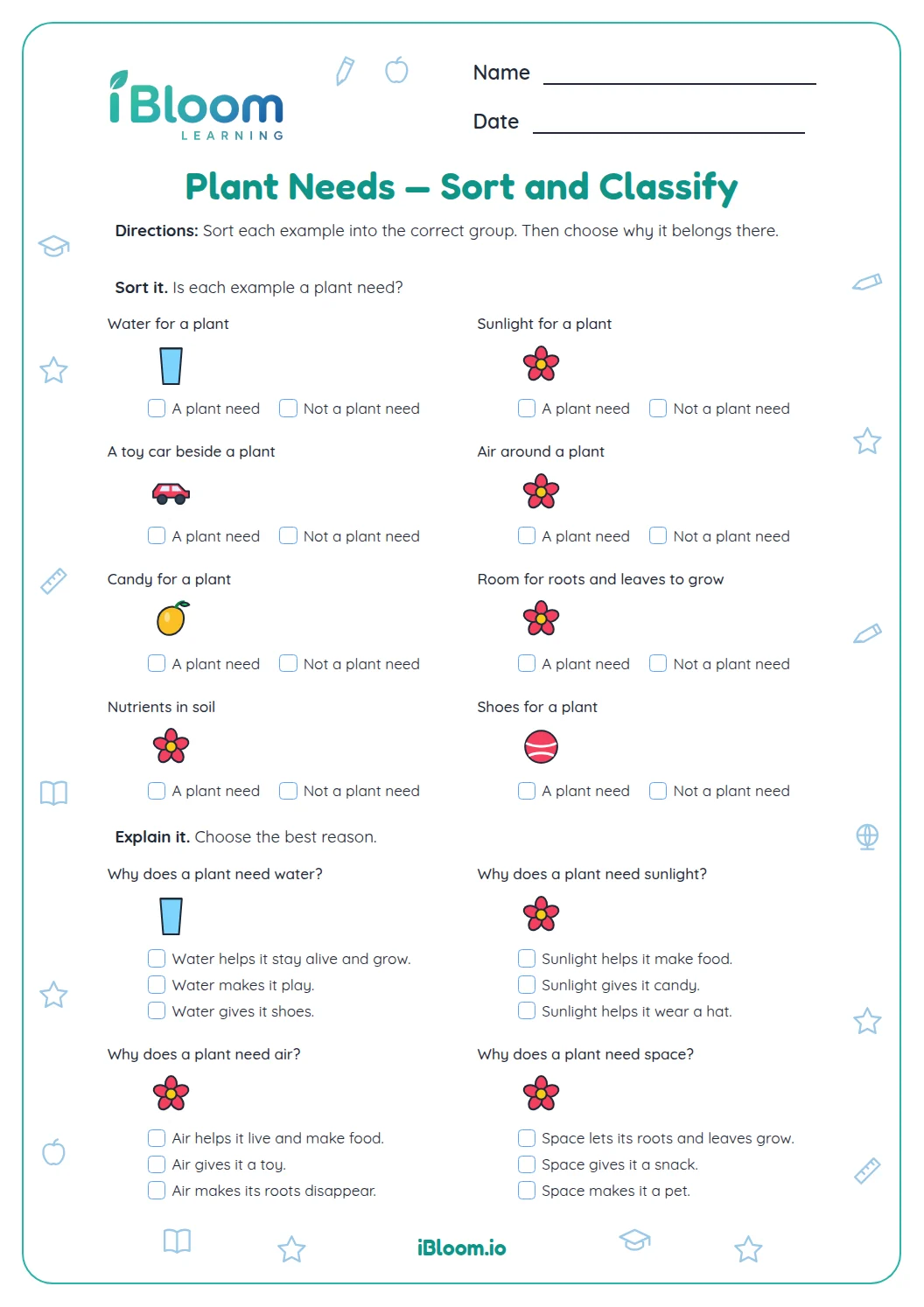
This Grade 2 science worksheet follows a plant from seed to seedling and flowering plant. Students connect events to likely results, complete plant life-cycle ideas, and explain how water and sunlight affect growth in a fair comparison. The page has 15 questions in three parts and an answer key with model responses.
Aligned to 2-LS2-1
What happens as a plant grows?
A seed can germinate and sprout. A seedling develops leaves; a mature plant may flower and later form seeds.
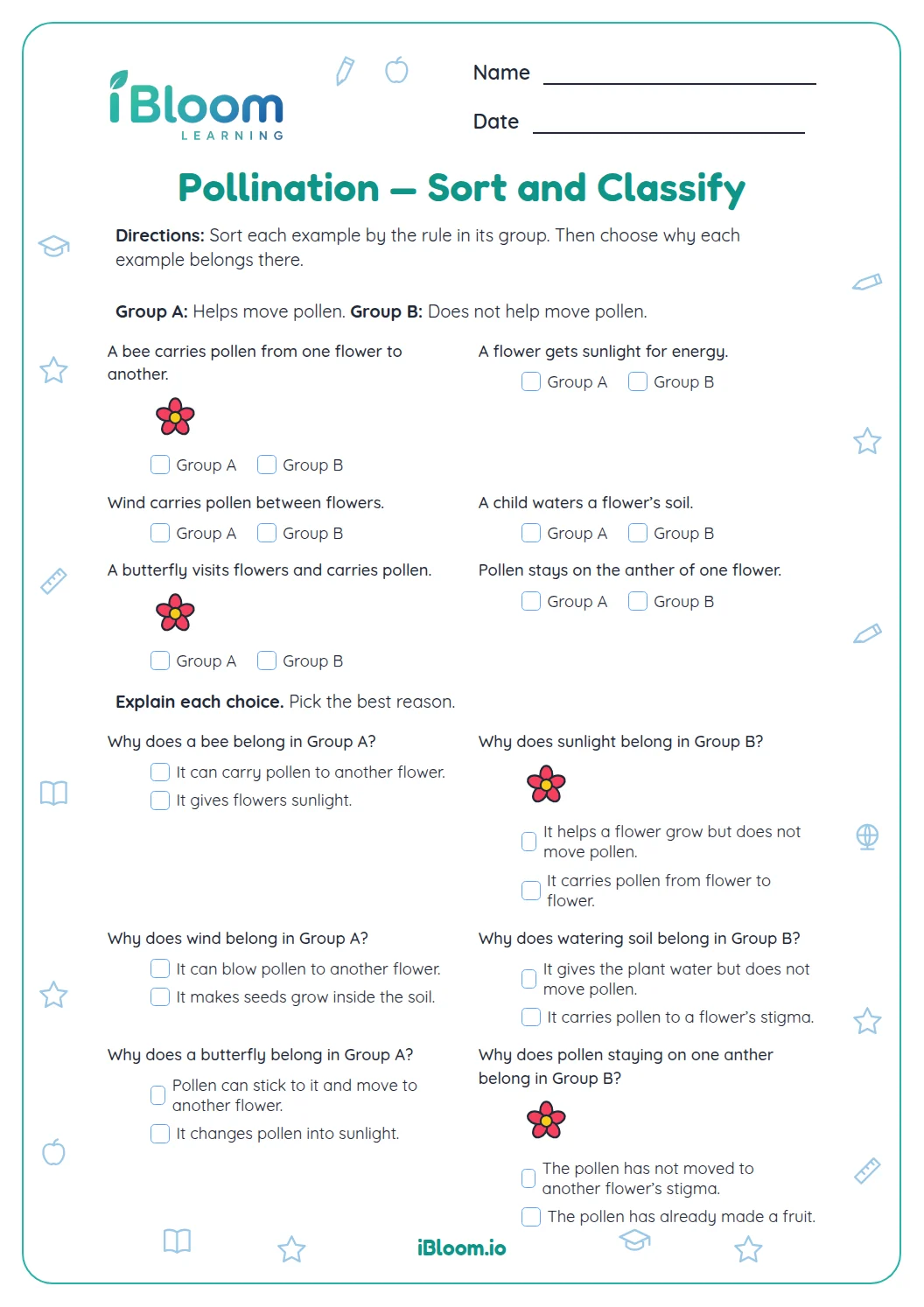
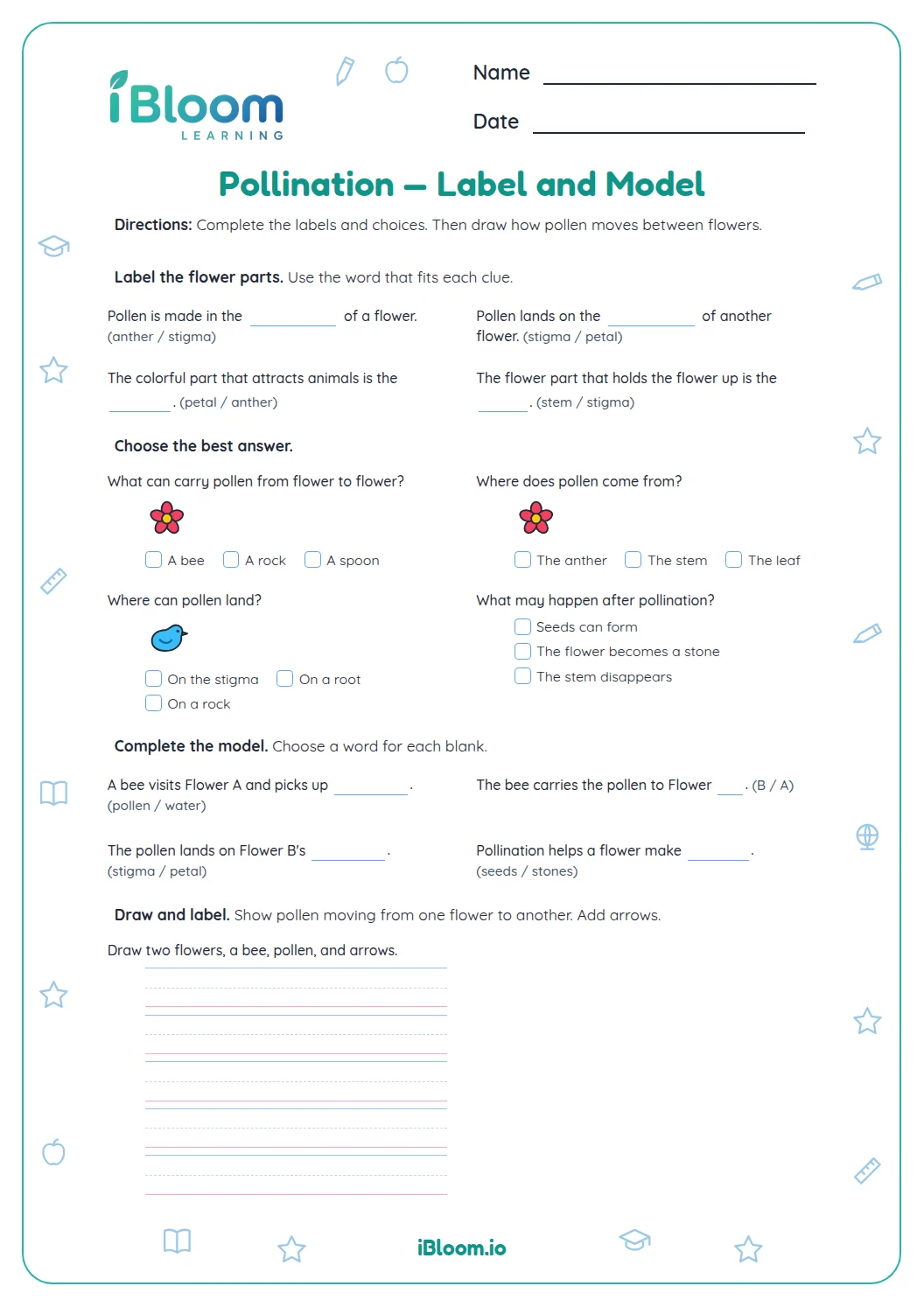
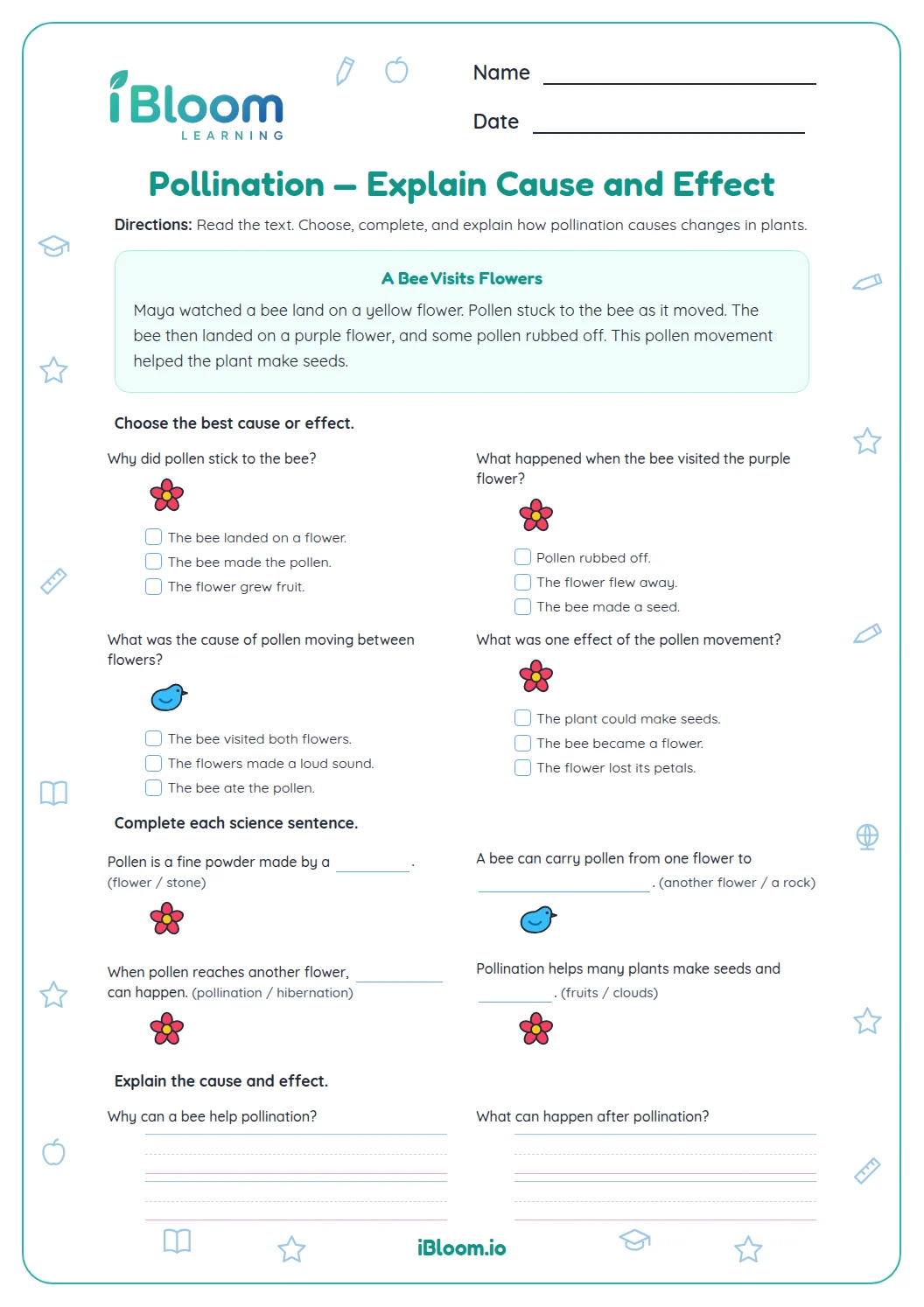
- 1Question 4 links pollination with a later result: seeds can develop.
How do sunlight and water affect plant growth?
A fair comparison changes one factor while keeping the others the same. Part C asks students to identify a test that keeps water equal while comparing sunlight and darkness.
- 1Question 11 describes two seedlings that get equal water; Maya changes sunlight.
How can I explain cause and effect?
Name the event, then state a likely result. Use “may” when more than one outcome is possible.
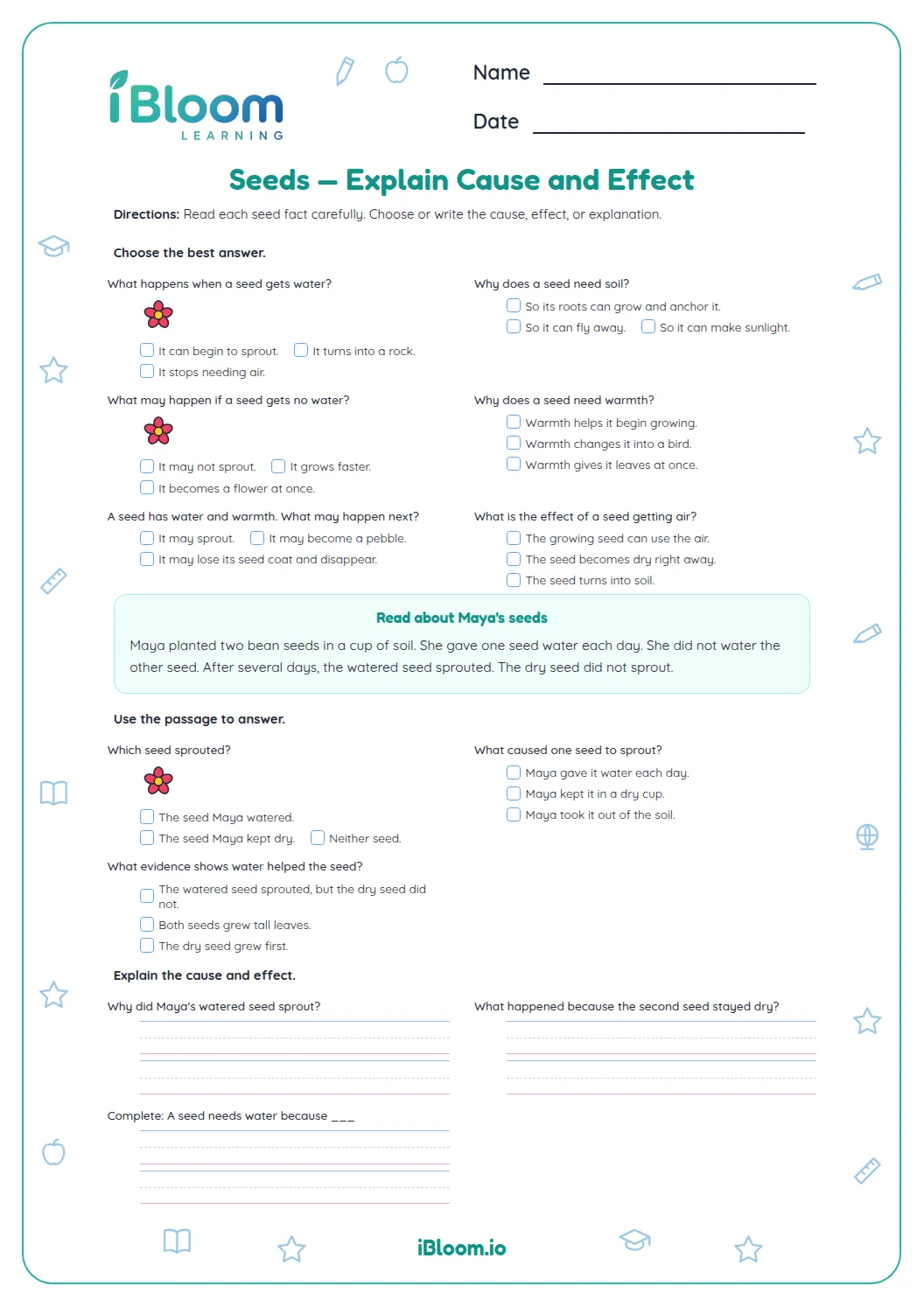
- 1Question 15: without water, a seedling may wilt or stop growing well.
How to use this worksheet
- 1Read each event carefully.
- 2In Part A, select a result that can follow.
- 3Use one plant science word in each Part B blank.
- 4In Part C, identify what Maya changes and what she keeps the same.
- 5Use “may” for effects that are likely rather than guaranteed.
Common mistakes and quick fixes
The mistake
Saying a seed becomes a flower immediately.
The fix
Name the stages in order: seed, sprout, seedling, mature plant, then flowers and seeds.
The mistake
Changing water and sunlight at the same time in an investigation.
The fix
Keep one factor the same so the effect of the changed factor is clearer.
The mistake
Treating every possible plant result as certain.
The fix
Use “may” because growing conditions and plants can vary.
Next Generation Science Standards alignment
Use a fair comparison to reason about how sunlight and water affect plant growth.
On this sheet: Part C compares plant growth while changing sunlight as one variable.
Show the official wordingHide the official wording
Plan and conduct an investigation to determine if plants need sunlight and water to grow.
What to practice next
Make more practice
Further reading
Questions parents and teachers ask
How many questions are included?
The worksheet has 15 questions in three parts: five multiple-choice cause-and-effect items, five plant-word blanks, and five questions about plant growth and a fair comparison. The answer key includes sample responses for open-ended items, since students may phrase a correct explanation in different ways.
Does the worksheet cover the whole plant life cycle?
It follows a seed through germination and seedling growth to a mature flowering plant that can form seeds. Students also reason about what a plant needs as it grows. The questions use a simple cycle rather than requiring students to memorize technical stage names.
What is a fair plant investigation?
A fair comparison changes one factor while keeping other conditions the same. In Part C, Maya gives both seedlings the same amount of water and changes their light conditions. Comparing their growth helps show how sunlight affects plants.
Can several answers be right for the written questions?
Yes. The key gives sample answers, and a child may use different words to make the same accurate cause-and-effect connection. For example, a seedling without water may wilt or grow poorly. Check that the response names a plausible effect and connects it to the stated condition.
What supplies are needed?
The worksheet and answer key are printable; no special supplies are needed. If you want to extend Part C, plant two quick-growing seeds in matching cups, keep their water the same, and compare a sunny location with a dark one over several days.