






About this worksheet
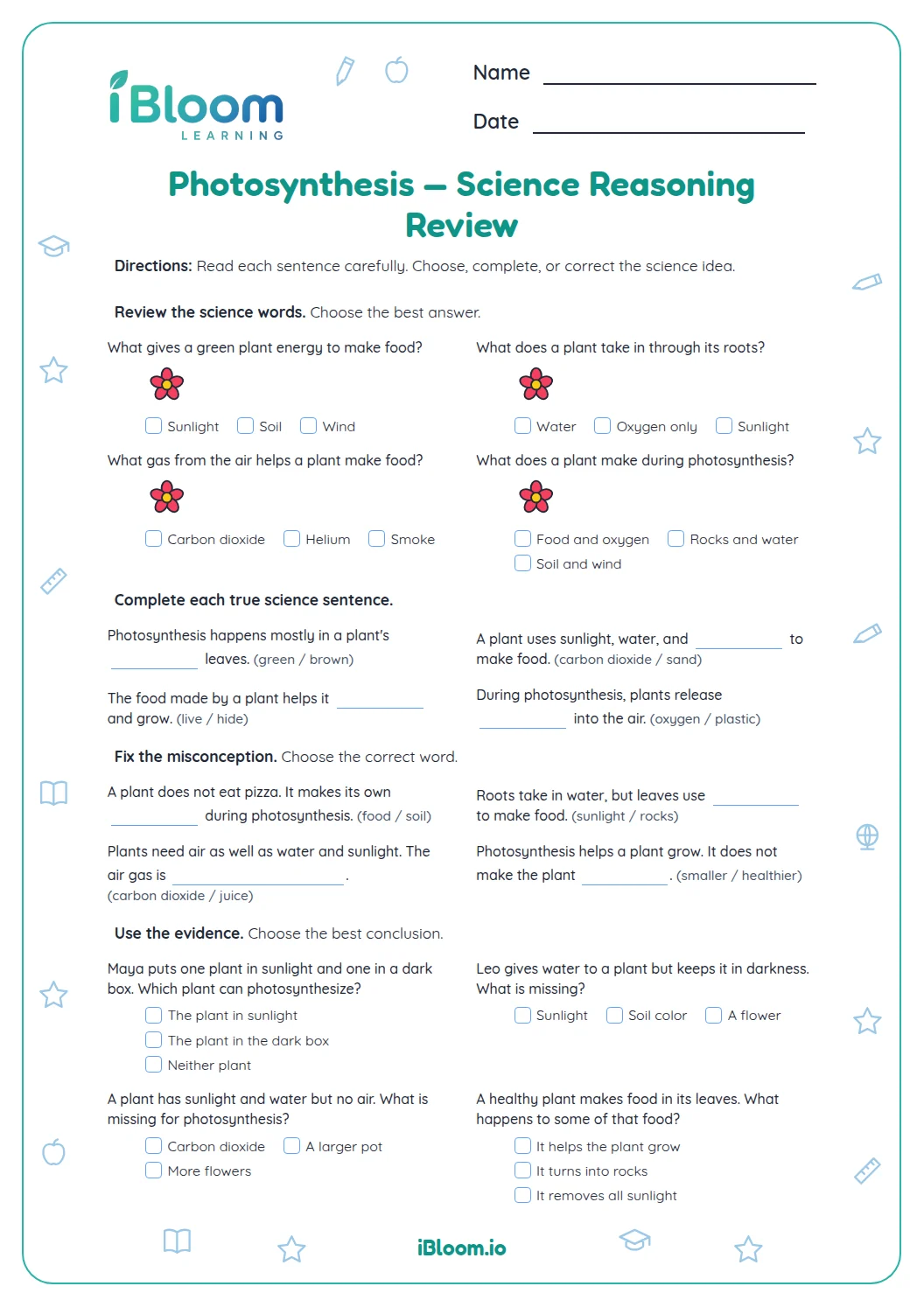
This printable is for grade 2 learners practicing identifying sunlight, water, and carbon dioxide as inputs and oxygen and sugar as products in photosynthesis. It has 15 questions across 4 parts and a separate answer key. The activity moves from direct practice to applying the skill, with specific steps and common fixes below.
What does this worksheet help learners practice?
The sheet contains 15 items in 4 parts. For example, water and sunlight are inputs plants use to make food; oxygen is released into the air.
How can a learner work through the skill?
For example, water and sunlight are inputs plants use to make food; oxygen is released into the air.
How can we check the work?
Use the answer key after attempting each item. For a missed answer, return to the matching prompt and name the step or story detail that supports the correction.
How to use this worksheet
- 1Read the direction for the current part.
- 2Try each item before looking at the key.
- 3Use the space or handwriting row provided for that item.
- 4Check the answer and revisit the prompt if it differs.
Common mistakes and quick fixes
The mistake
Calling soil a food input.
The fix
Name water, carbon dioxide, and light as materials or energy used.
The mistake
Mixing up carbon dioxide and oxygen.
The fix
Plants use carbon dioxide and release oxygen during photosynthesis.
The mistake
Saying roots make most plant food.
The fix
Leaves capture light and make most of a plant’s food.
What to practice next
Make more practice
Questions parents and teachers ask
How many practice questions are included?
This printable contains 15 questions in 4 parts. The items practice identifying sunlight, water, and carbon dioxide as inputs and oxygen and sugar as products in photosynthesis. Complete a part at a time, then use the separate answer key to check the work and revisit any prompt that needs another try.
Is an answer key included?
Yes, the printable includes a separate answer key. Ask the learner to try each item before checking it. If an answer differs, compare the work with the matching prompt and discuss the step that leads to the keyed response.
What grade is this worksheet for?
This worksheet is listed for Grade 2. It gives learners grade-appropriate practice with identifying sunlight, water, and carbon dioxide as inputs and oxygen and sugar as products in photosynthesis. An adult can read directions or help check the work after the learner has attempted each item.
What does the practice include?
The worksheet moves through identifying sunlight, water, and carbon dioxide as inputs and oxygen and sugar as products in photosynthesis. Read each part’s direction before beginning, and use the answer format shown for its items. The key lets an adult or learner check responses after the practice is complete.
How should we use the answer key?
Complete the questions before checking the key. When an answer differs, reread the matching prompt and identify the place-value step, handwriting model, or passage detail that supports the correct response. Then retry the item independently. One more try can show whether the idea is clear.