






About this worksheet
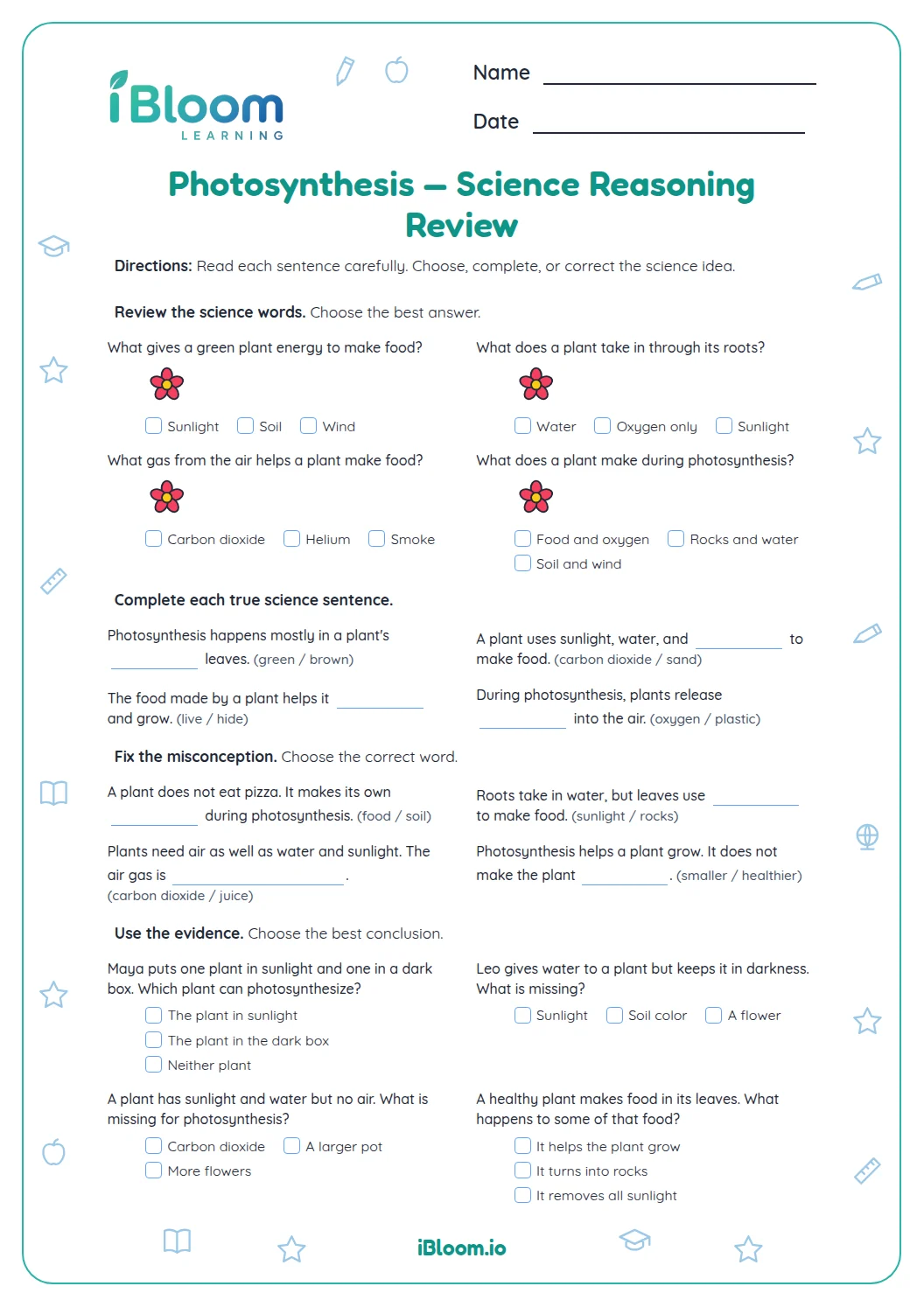
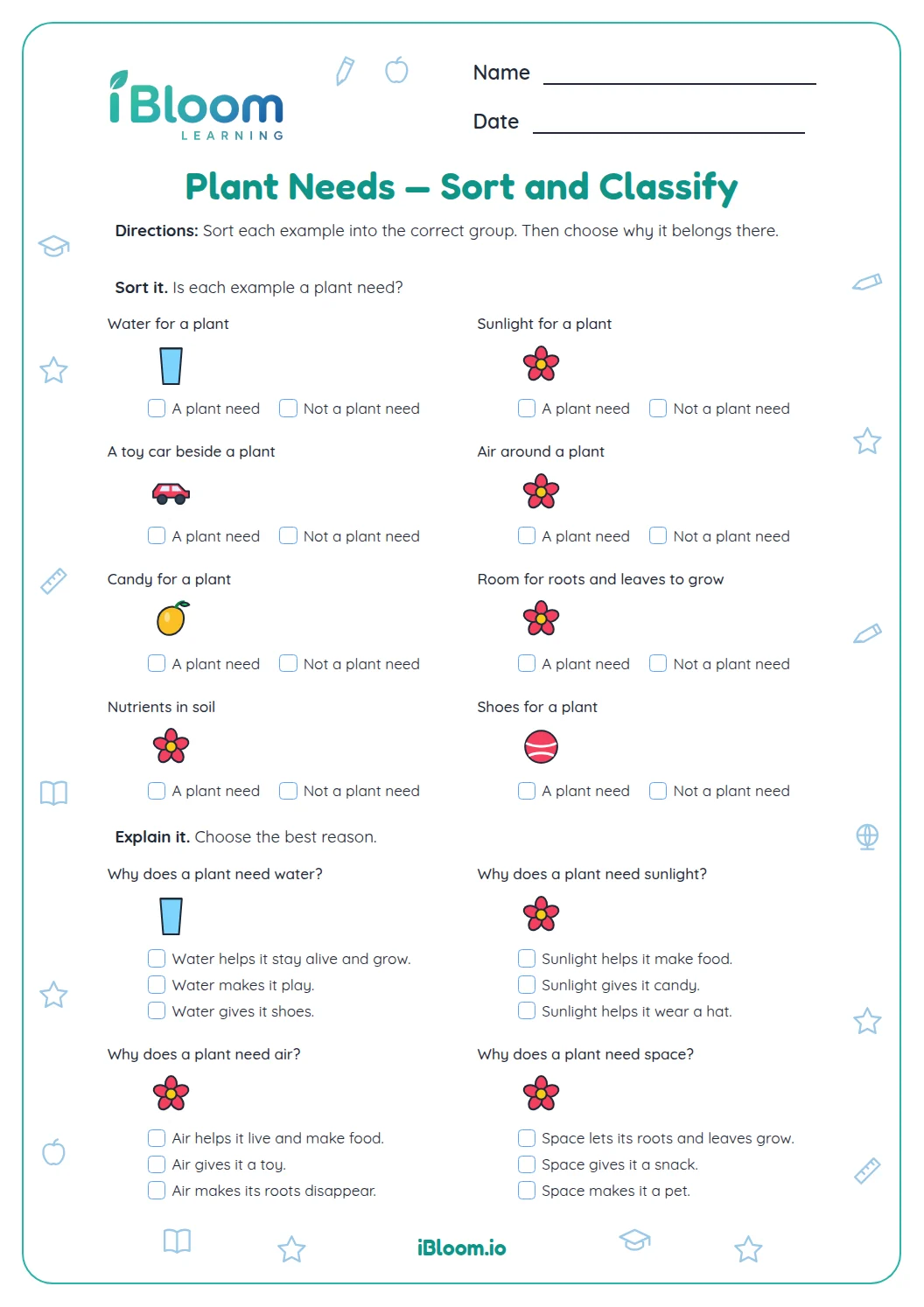
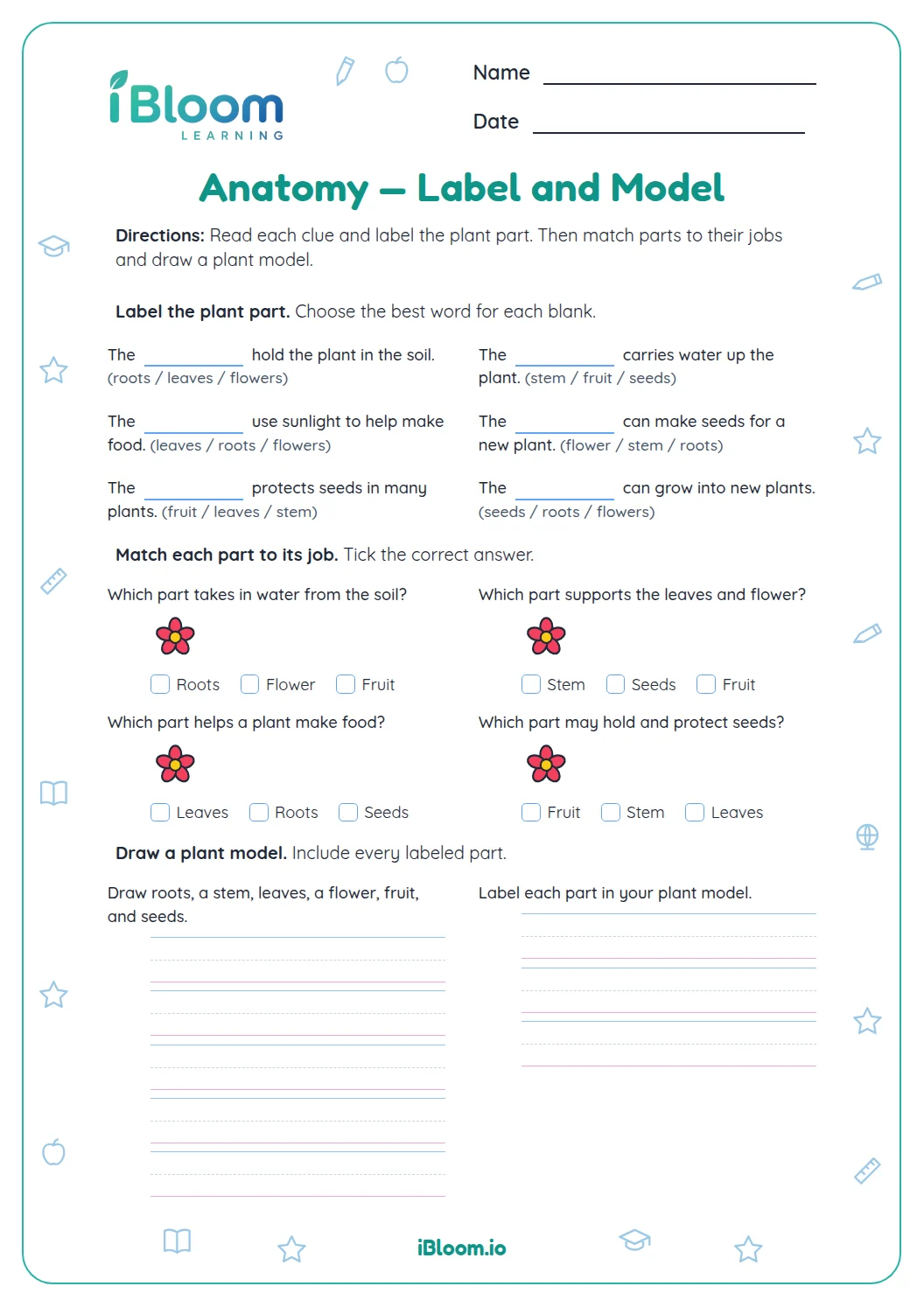
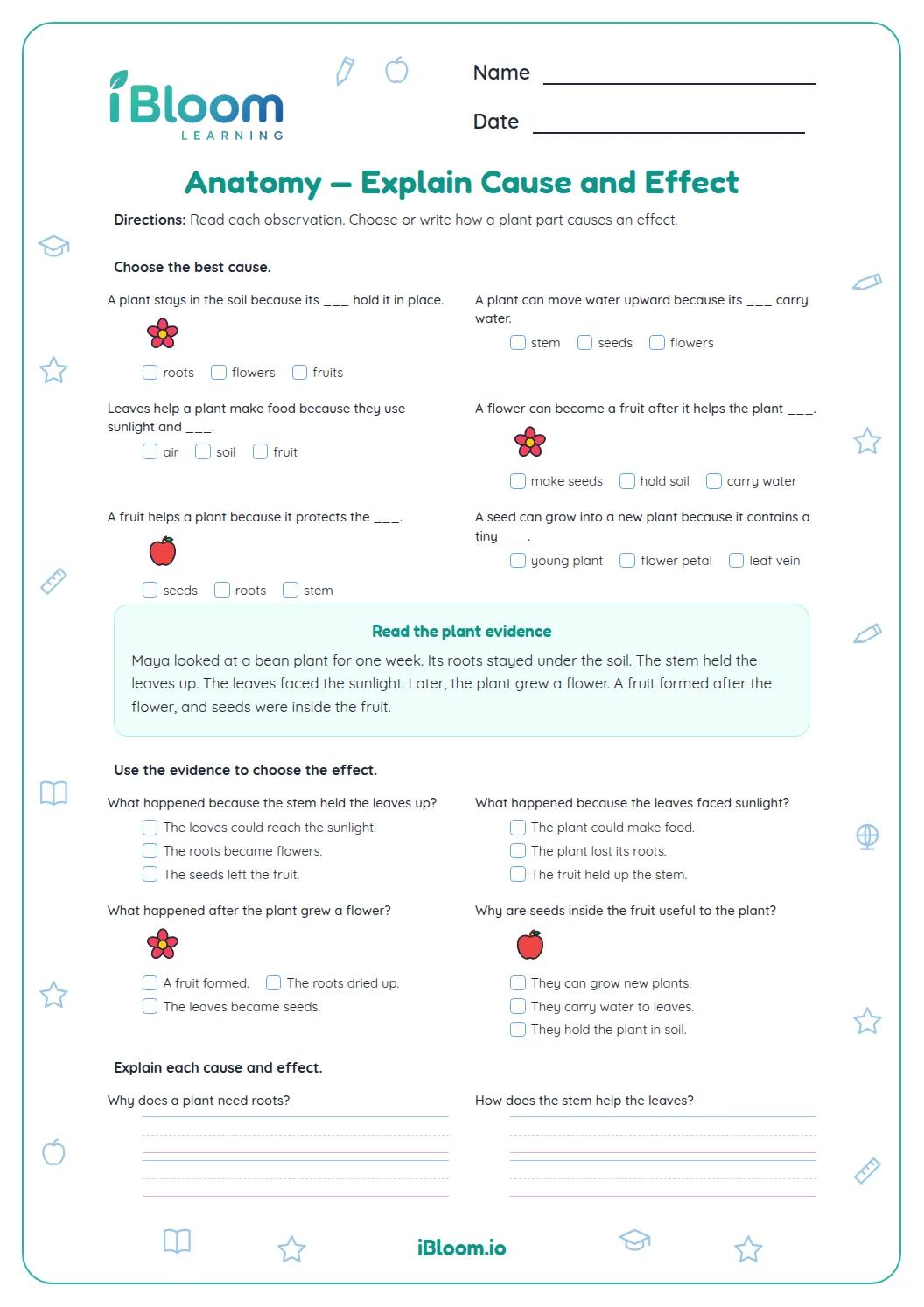
This Grade 2 printable introduces photosynthesis through simple questions about what plants use and what different plant parts do. Children identify light, water, air, roots, and leaves, then apply those ideas to a plant-care situation. The questions use short choices, fill-ins, and brief answers so learners can explain the basic idea in their own words. A separate answer key is included.
What ideas does the worksheet cover?
Children identify what plants need for photosynthesis, connect roots to water uptake, and name leaves as a place where food is made. Later questions ask them to apply these ideas to a plant kept in darkness.
- Part A: choose the best science idea
- Part B: complete statements with key words
- Part C: apply the ideas to a plant situation
How do light and water work together?
A plant needs light energy as well as water and carbon dioxide to make food. Roots take in water; leaves receive light.
- 1A plant in light and water can use light energy to make food.
- 2If the plant stays in darkness, light is missing.
What can children observe at home or school?
Look at a healthy plant and notice its leaves and stem. An adult can help describe how water reaches the plant through its roots. Keep the explanation focused on the worksheet idea: light energy helps a plant make food.
How to use this worksheet
- 1Read the Part A choices and discuss what plants need.
- 2For Part B, use the science word that completes the sentence.
- 3In Part C, underline the clue about light, water, or plant parts.
- 4Ask the learner to explain one answer aloud in a full sentence.
- 5Check responses with the answer key.
Plant science mix-ups to watch for
The mistake
Saying soil is the plant’s food.
The fix
Explain that soil can hold water and minerals, while plants make food using light energy.
The mistake
Saying roots make the food because they take in water.
The fix
Separate the jobs: roots take in water; leaves are where much food making happens.
The mistake
Thinking water alone is enough for photosynthesis.
The fix
Name the other inputs too: light energy and carbon dioxide from air.
What to practice next
Make more practice
Questions parents and teachers ask
What is photosynthesis?
Photosynthesis is how plants use light energy to make food. This worksheet introduces the idea by connecting sunlight, water, and carbon dioxide with food made in plant leaves. Children also review which plant parts take in water and how light helps the process.
Do plants get food from soil?
Plants make their own food through photosynthesis. Soil supports a plant and can provide water and minerals, but it is not the food source described in this process. Questions ask children to separate plant needs from plant food.
What do roots do in this worksheet?
Roots take in water from the soil. The questions ask children to distinguish this job from the leaf’s role in making food with light energy. Pointing to the plant parts can make the difference easier to explain. Adults can review the vocabulary together.
Why does a plant need light?
Light provides energy for photosynthesis. A plant kept in darkness cannot use sunlight to make food, which is why the worksheet asks children to identify the missing need. Water and air are also part of the plant’s needs.
What age is this activity for?
The printable is labeled Grade 2 and uses simple language about plant parts and needs. An adult may read the questions aloud and explain carbon dioxide as a gas in air. The focus is on the basic relationship between light and plant food.