






About this worksheet
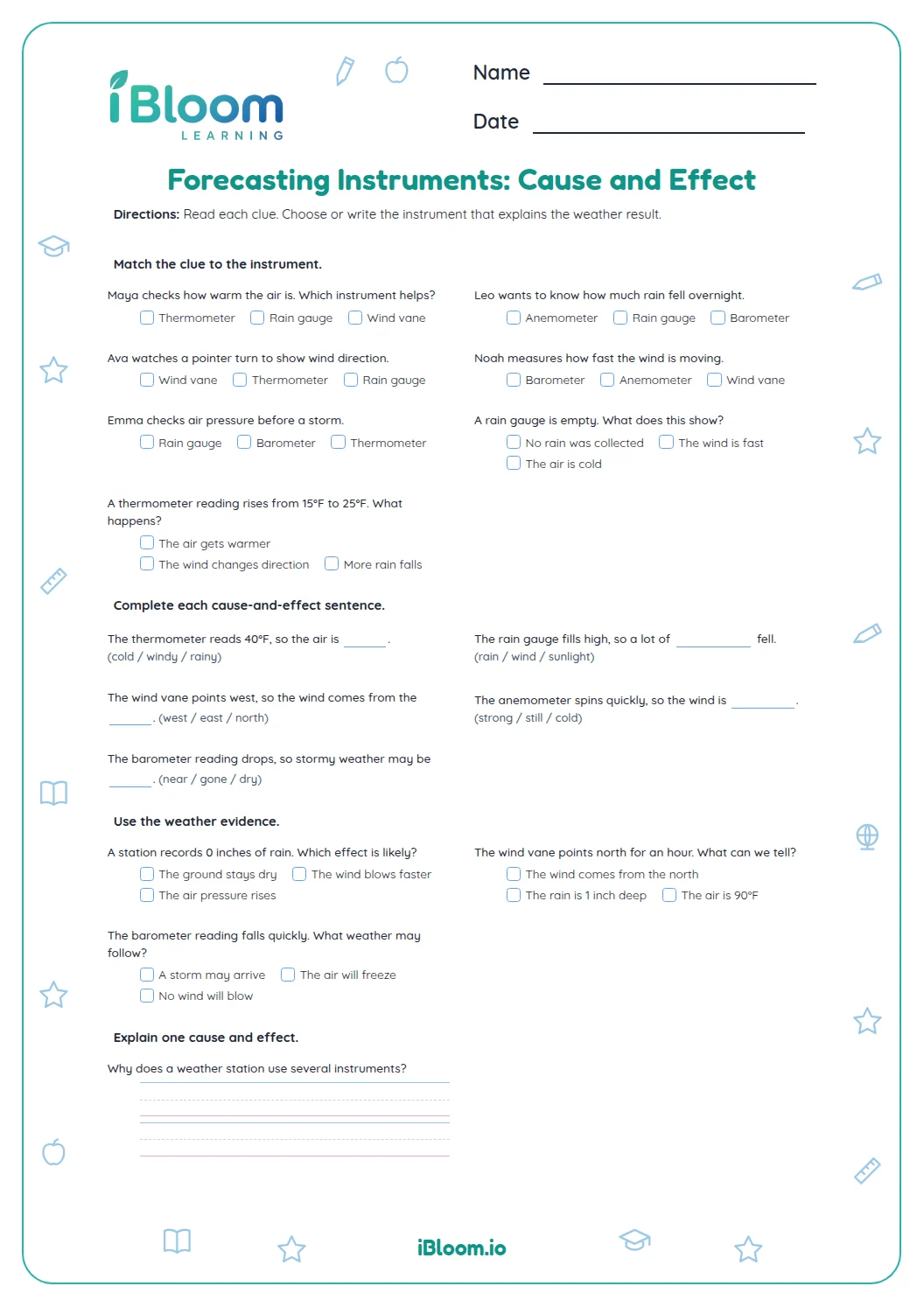
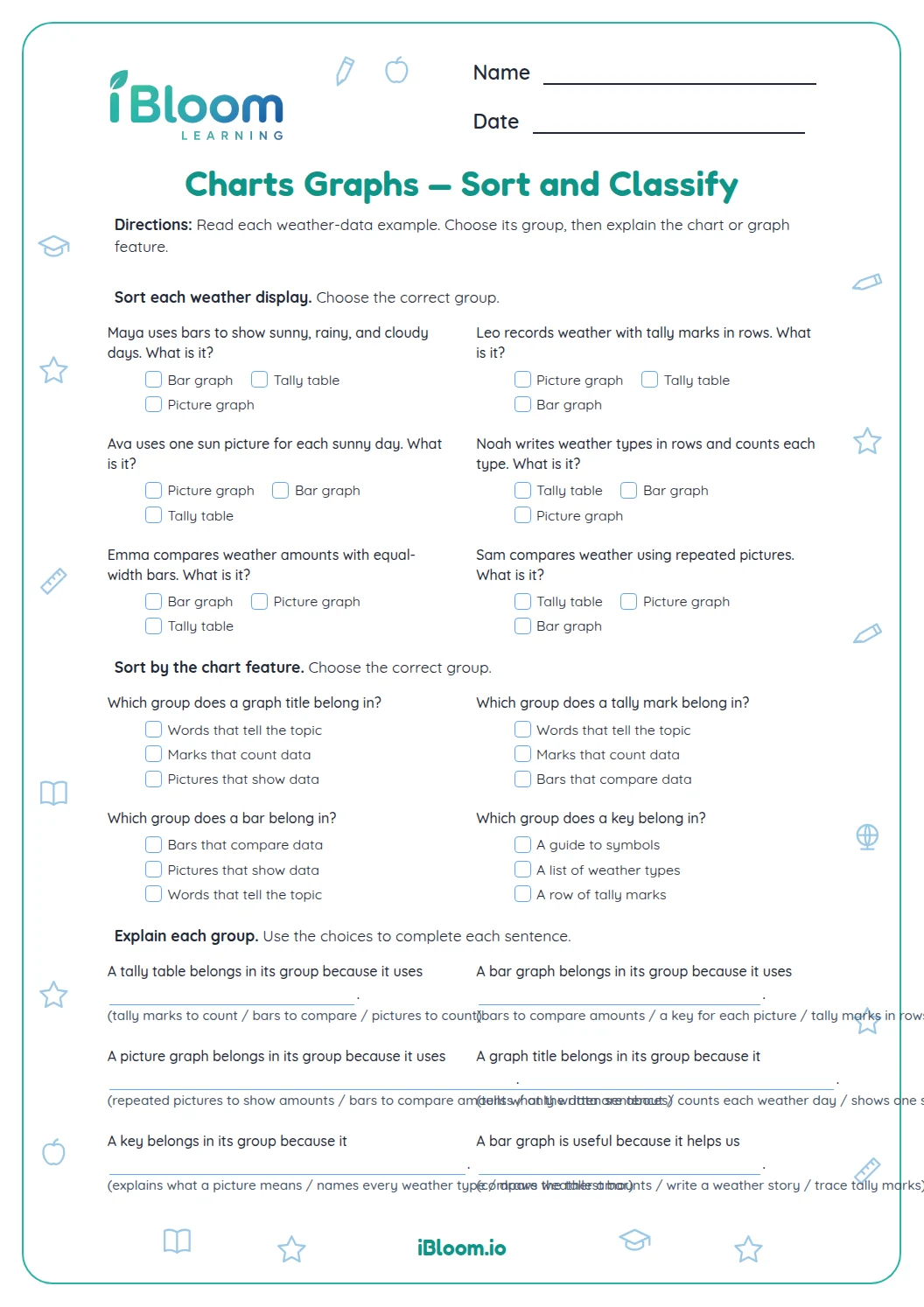
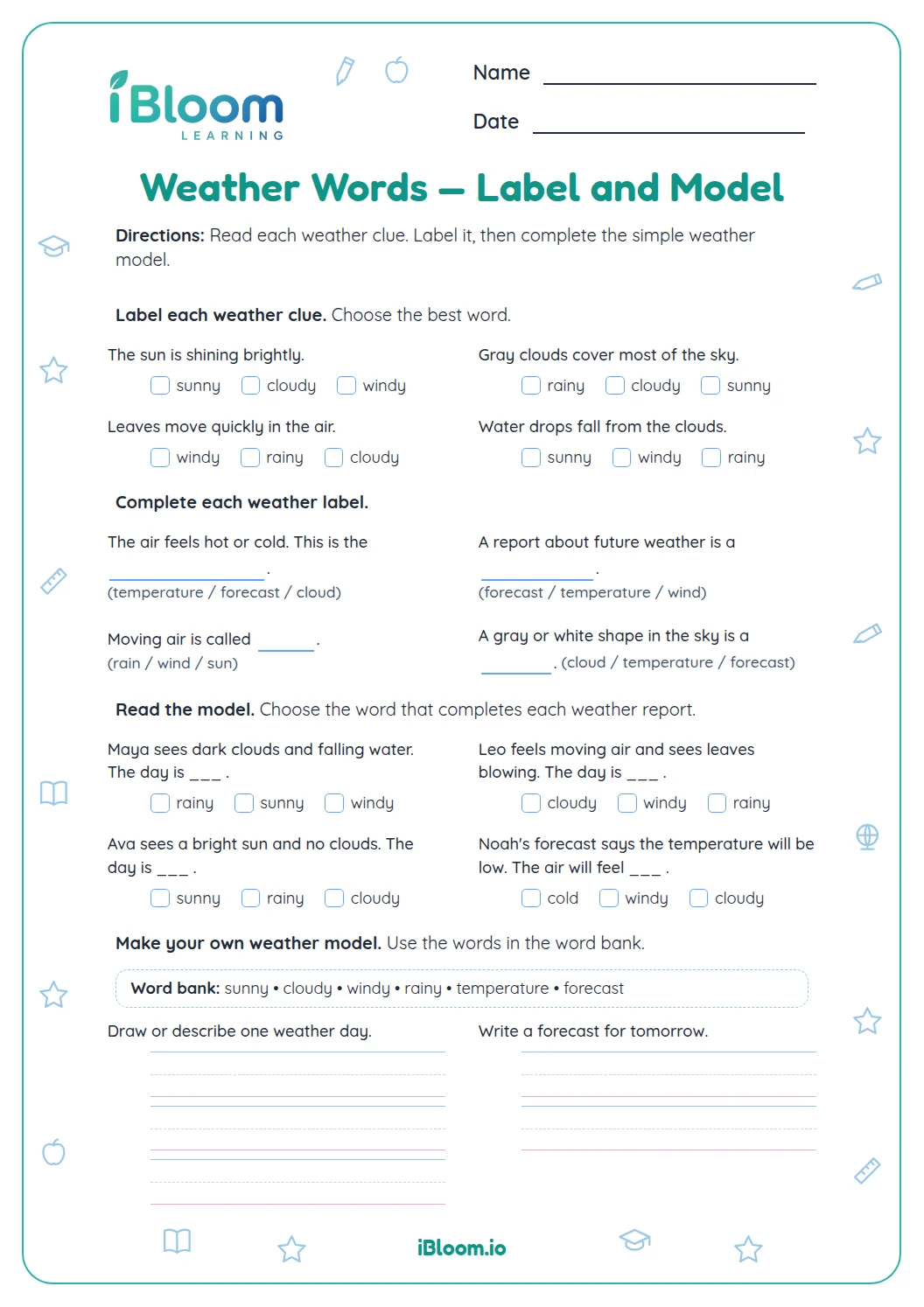
This Grade 2 science worksheet connects common weather instruments to the information they collect. Students match a thermometer, rain gauge and wind vane to temperature, rainfall and wind direction, then interpret short observations and decide what evidence can support a conclusion. The final items ask students to explain which tool could answer a weather question.
Which tool measures each condition?
A thermometer measures temperature, a rain gauge measures collected precipitation, and a wind vane shows the direction the wind comes from. Each tool answers a different question, so matching the tool to the question is the first step.
Questions 1–5 use familiar examples: a temperature reading, a measured amount of rain and a vane pointing north. Students connect the reading to the condition instead of treating the tools as interchangeable.
What can a weather reading tell us?
A measurement supports a statement about what has been observed. If a rain gauge contains 2 inches of water, the class can record that amount. It does not tell the class by itself how much rain will fall tomorrow.
Questions 6–12 ask students to compare readings over time and choose a conclusion that stays close to the evidence. Recording when an observation was made helps make a fair comparison.
How can students use an instrument to answer a question?
Start by naming the weather information the question asks for. Choose a tool that collects that information, take or read the measurement, and record it clearly. For example, use a rain gauge and compare its records to investigate rainfall across two weeks.
How to use this worksheet
- 1Read the question and name the weather condition it asks about.
- 2Choose the instrument that measures or shows that condition.
- 3Record the result with its unit or direction.
- 4Compare readings from matching times when possible.
- 5State only what the observations support.
Common mistakes and quick fixes
What to practice next
Questions parents and teachers ask
What does a rain gauge measure?
A rain gauge collects precipitation so a class can measure how much rain fell over a period of time. If it contains 2 inches after a storm, students can record 2 inches of rain. It does not measure temperature or wind direction.
What can a wind vane tell you?
A wind vane shows wind direction. If it points east, the class records the direction the wind is coming from as east. A vane does not give the amount of rainfall or the air temperature, so students should choose a different tool for those questions.
Can a dark cloud tell the class exactly how much rain will fall?
No. A dark cloud is an observation, but it does not give an exact rainfall amount. Students can use a rain gauge to measure precipitation that has fallen, and they can record observations over time to learn about weather patterns.
How many questions are on the worksheet?
There are 14 questions: 12 multiple-choice items about tools and weather evidence, followed by two written explanations. The answer key identifies the correct choices and provides sample wording for the two open responses. The four instruments are thermometer, rain gauge, wind vane and anemometer.
Why record the time of a temperature reading?
Air temperature can change during the day. Recording the time with a reading makes it possible to compare morning and afternoon observations more fairly. A thermometer measures the temperature; a clock only helps label when that measurement was taken.