






About this worksheet
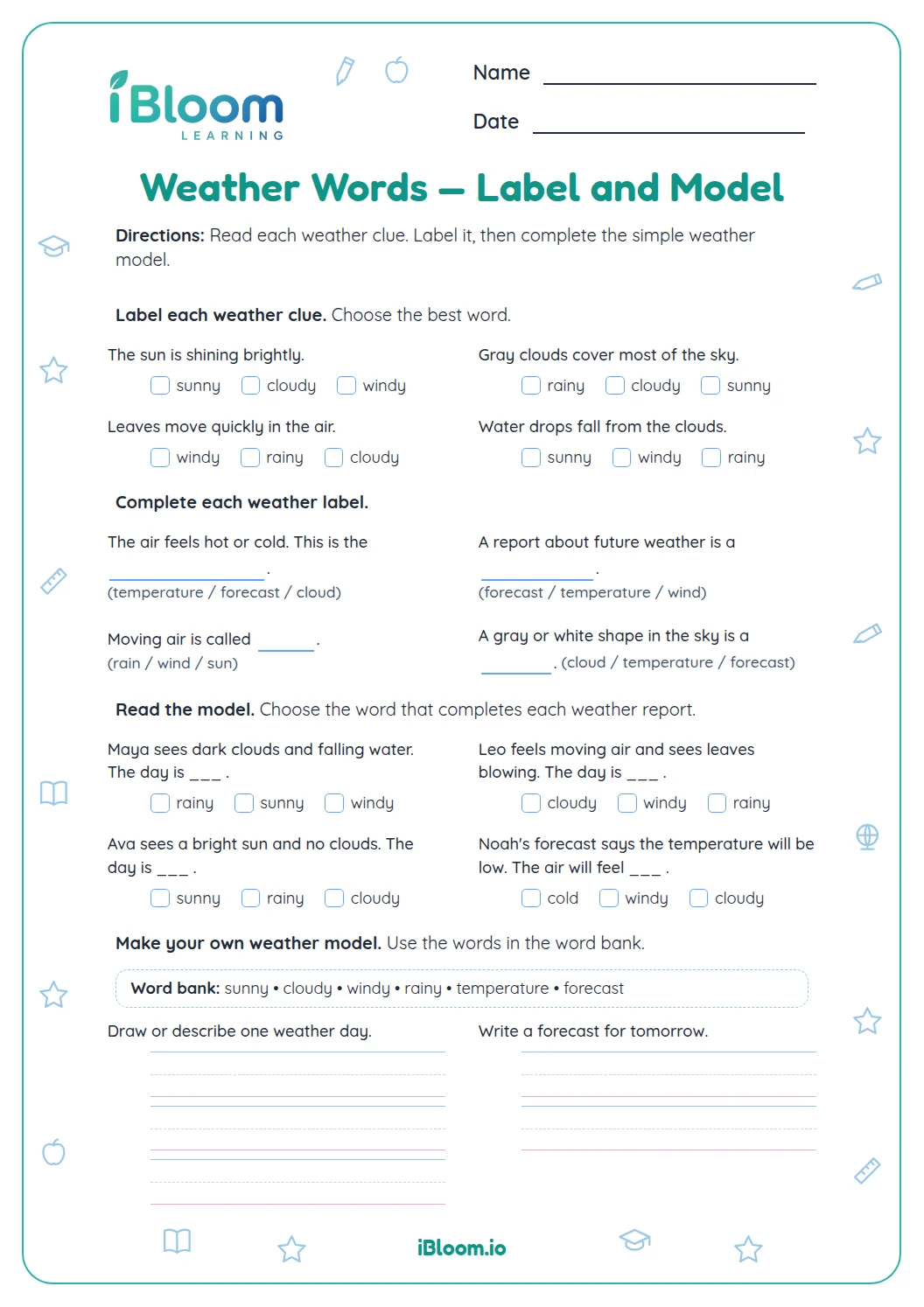
This Grade 2 science worksheet helps students apply weather words to observations and simple reports. Part A matches conditions to words such as cloudy, windy and snowy. Part B completes weather statements using forecast, temperature, hot, cold and rainy. Part C asks students to connect a clue with a short explanation. The answer key includes acceptable sample responses for open-ended questions.
Which weather word matches each clue?
Part A gives six observations and asks students to select the best word. Leaves moving across a playground point to wind; snowflakes falling describe snowy weather. Students should use the clue in the sentence, not pick a word just because it is familiar.
How do reports and tools describe weather?
Part B connects words to a report or measurement. A forecast tells what weather may happen, while a thermometer gives a temperature. A reading of 90°F points to hot air, and 35°F points to cold air.
How can students explain a weather idea?
Part C asks for one-sentence explanations using a clue. For example, if a forecast predicts rain at recess, an umbrella could help keep a person dry. Accept other sensible answers that use the given evidence.
How to use this worksheet
- 1Read the whole weather clue.
- 2Decide whether it describes the sky, precipitation, wind or temperature.
- 3For a report, think about whether it describes now or predicts later.
- 4Answer written questions with one clear sentence.
- 5Check that the weather word matches the clue.
Common mistakes and quick fixes
The mistake
Calling a forecast the temperature.
The fix
A forecast predicts weather; a thermometer measures temperature.
The mistake
Using sunny when the clue says dark clouds.
The fix
Match the word to the observation described in the sentence.
The mistake
Writing hot for a low temperature such as 35°F.
The fix
Compare the temperature clue with what warm and cold mean.
What to practice next
Make more practice
Questions parents and teachers ask
How many questions are included?
There are 16 questions in three parts: six weather-word choices, six clue completions and four short explanations. Students use observations, a thermometer reading, and a weather report. The answer key includes the selected words and sample responses for the open questions.
Does the page include weather instruments?
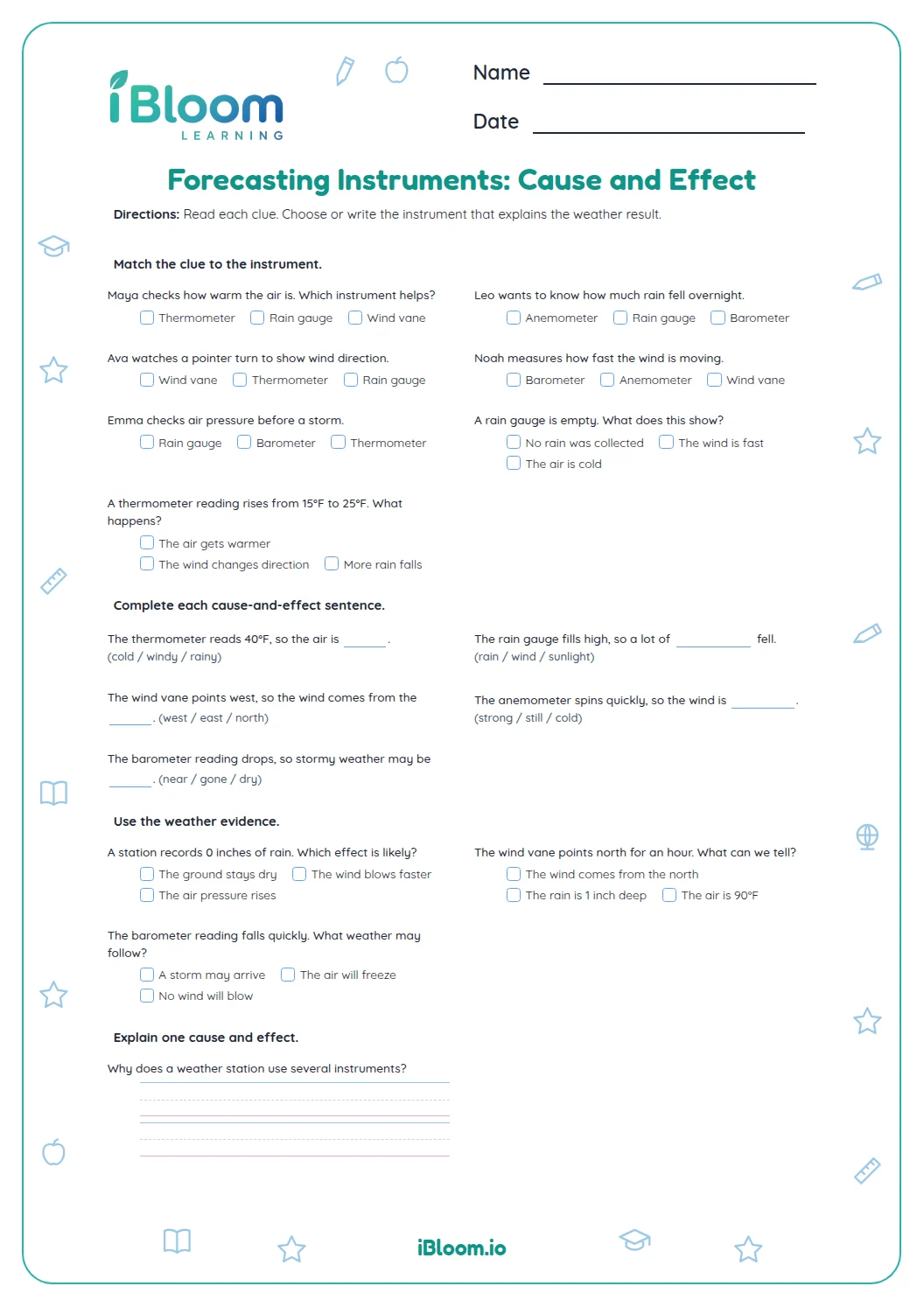
Yes. Question 5 asks what a thermometer measures: the temperature, or how hot or cold the air is. The other items use clues such as clouds, falling rain, moving leaves, sunshine and a forecast to describe weather. The instrument gives a number that describes air conditions.
What should students write for the open-ended questions?
Each response should connect a weather clue to a sensible idea. For question 14, a forecast of rain during recess supports naming an umbrella and explaining that it helps keep a person dry. The key gives examples, and other evidence-based wording can also fit.
Is the worksheet suitable for Grade 2?
The page uses familiar observations and asks for short word choices, completions and explanations. Students distinguish terms such as forecast and temperature, then use simple evidence like a thermometer reading or falling raindrops to describe conditions. The examples use words from the worksheet, including sunny, snowy, rainy, and windy.
Is an answer key included?
Yes. The printable key lists the correct word for each choice and completion, plus a sample response for each written question. For those four questions, check that the response uses the stated observation or forecast as its reason.