


About this worksheet
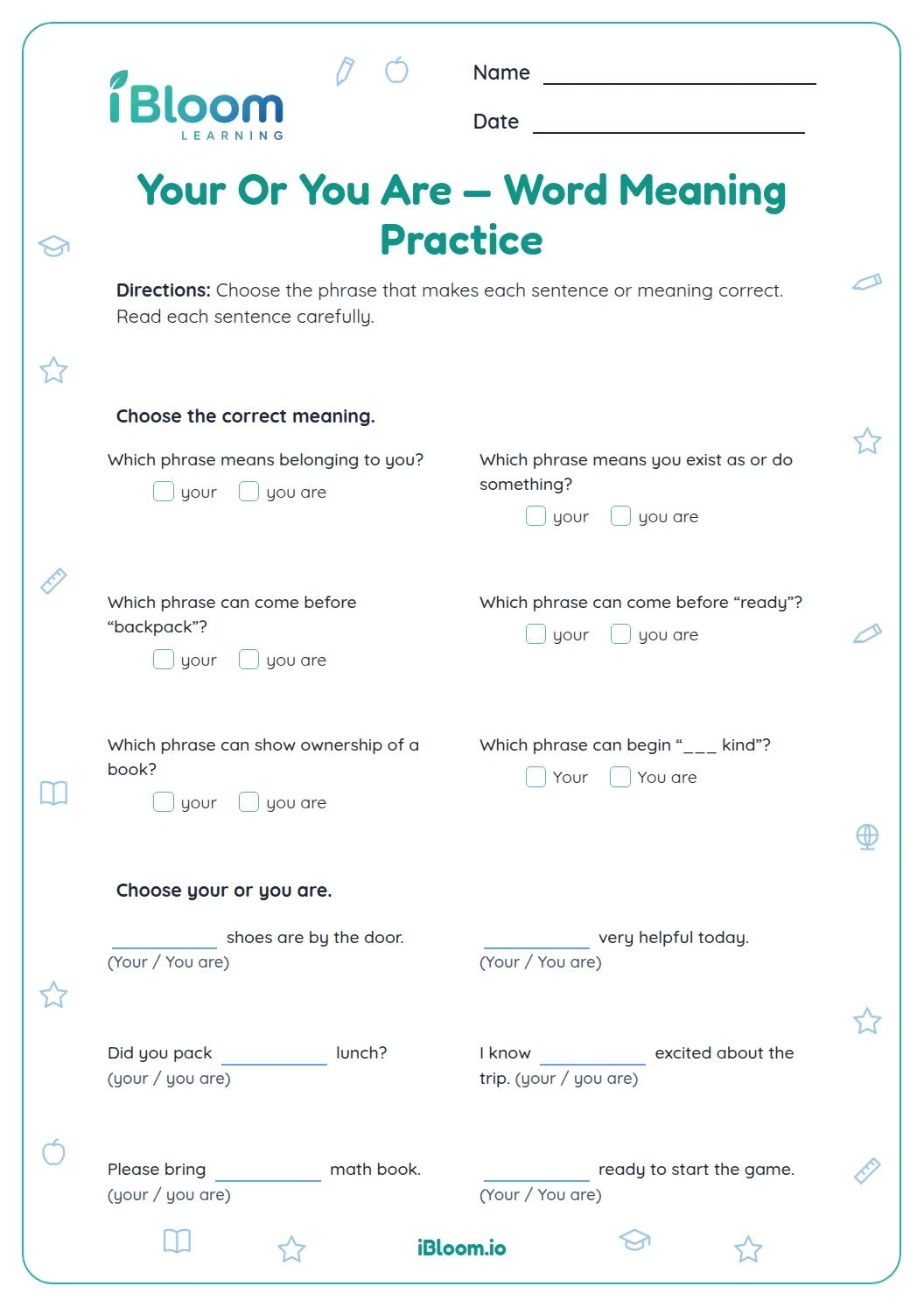
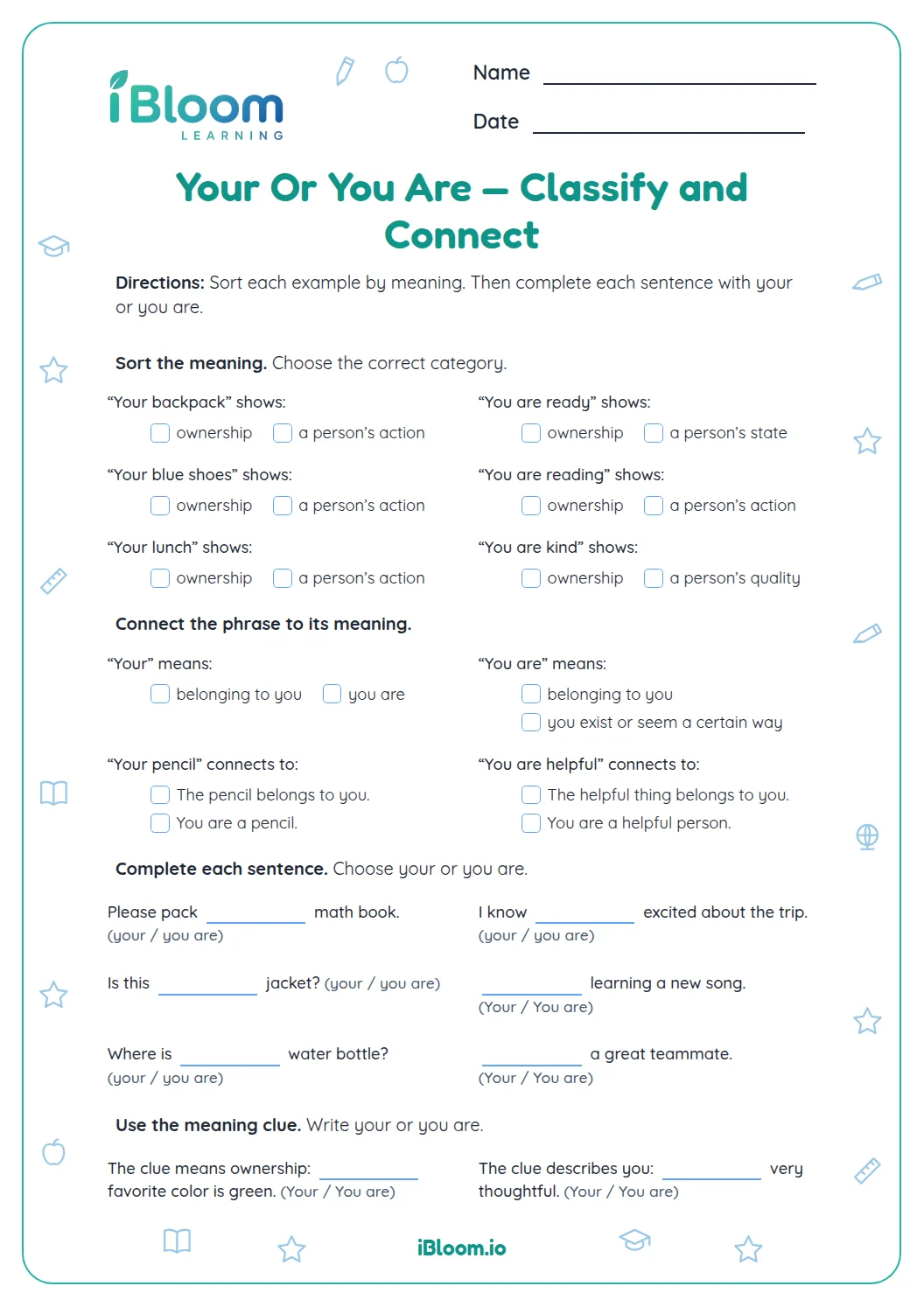
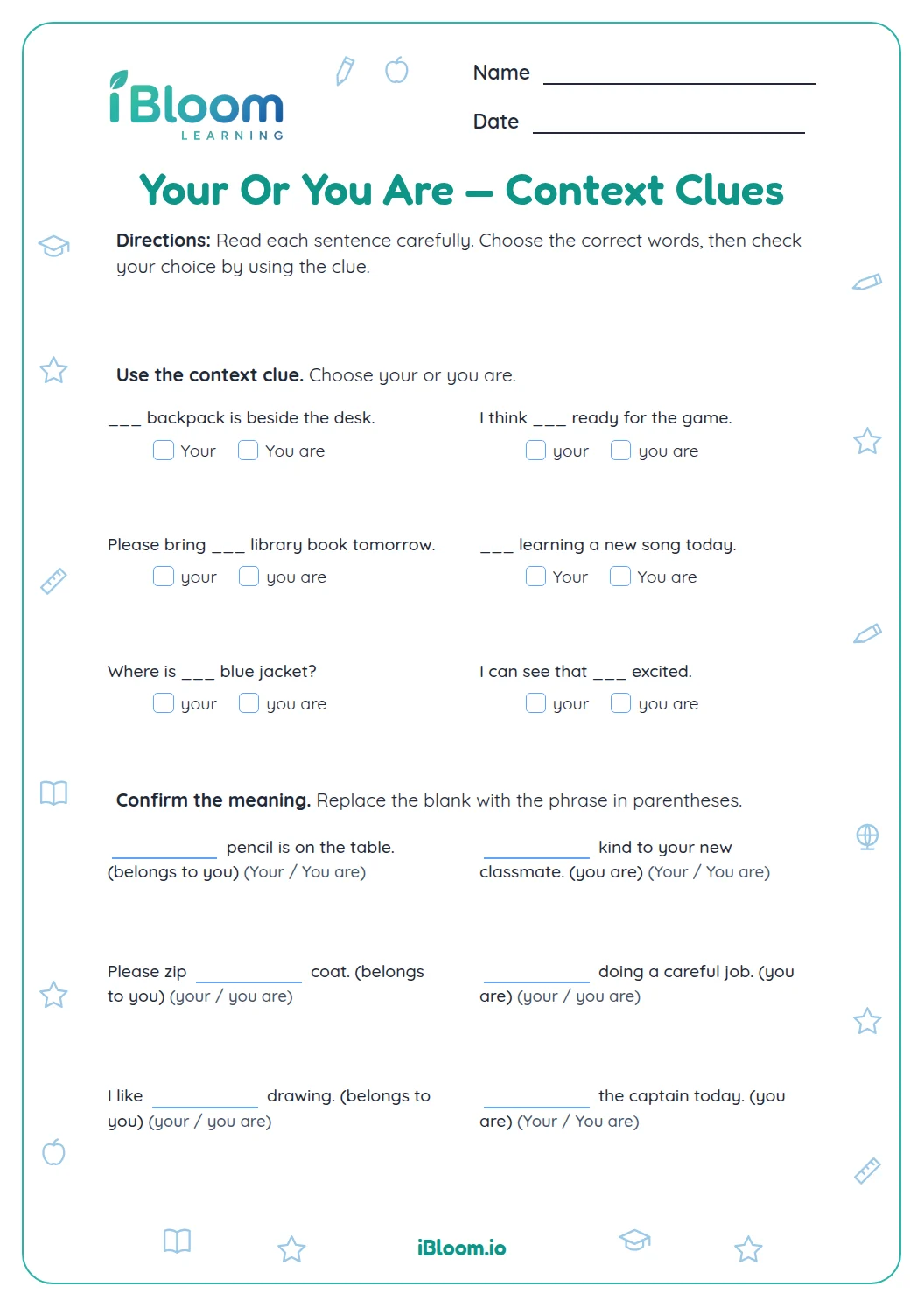
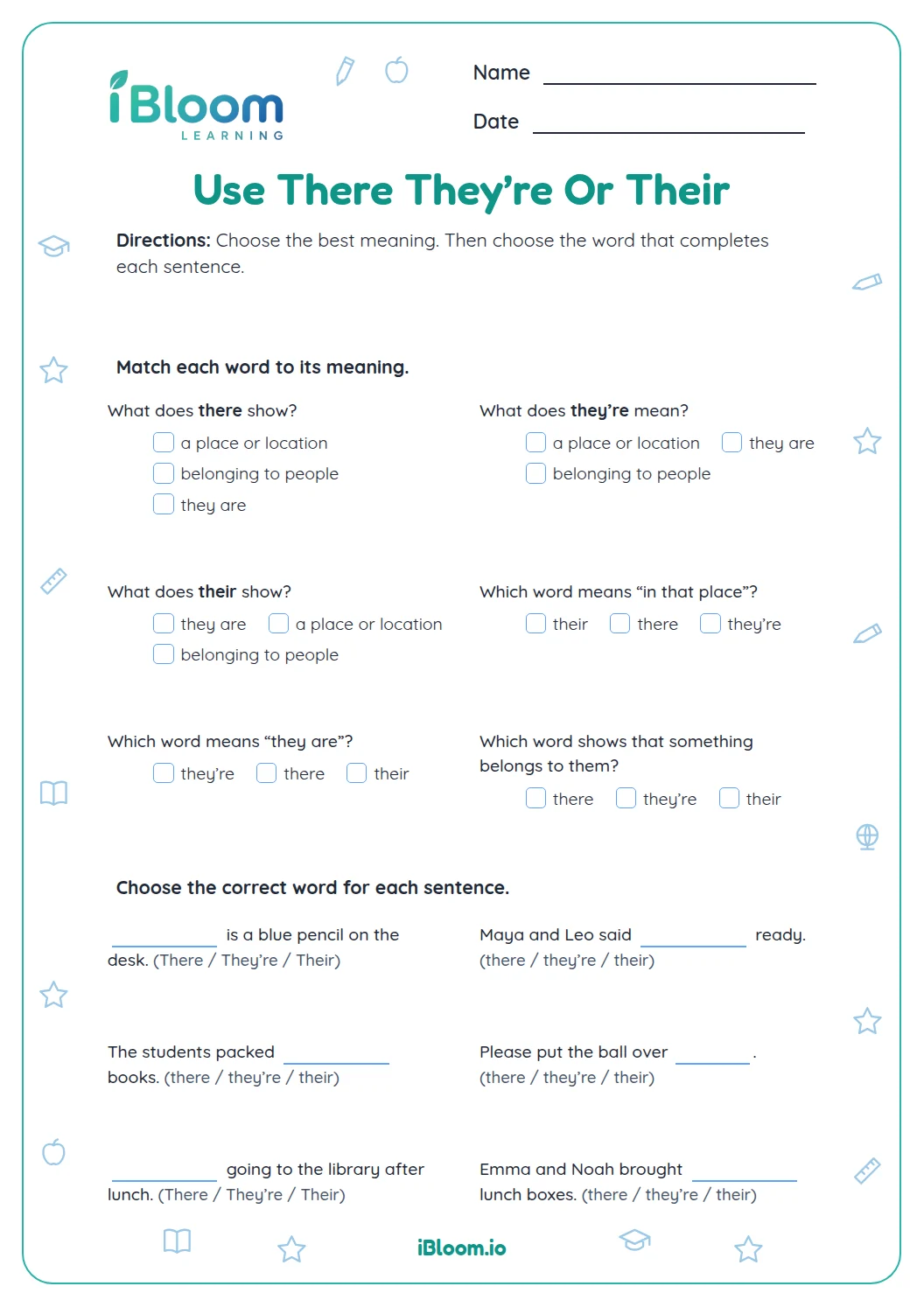
This Grade 3 printable helps children distinguish your, which shows ownership, from you’re, the contraction for you are. It includes five choice questions, six sentence blanks, and four short explanations or revisions, with an answer key. The practice connects to Common Core language conventions.
Aligned to L.3.1
How can a sentence show which form fits?
Your shows that something belongs to you: your folder, your idea. You’re means you are. Read the words after you’re as a quick check: “You’re ready” can expand to “You are ready.”
- 1I hope you’re ready to read.
- 2Expand you’re: you are ready to read.
- 3Answer: you’re
What is the quick check for your and you’re?
Try you are in the sentence. If it still makes sense, use you’re. If the sentence names something belonging to someone, use your. Part B gives six blanks; Part C checks meanings and revisions with four compact choices.
What does each part ask children to do?
Part A offers five sentence choices. Part B asks for the form that completes six sentences. Part C has four meaning and correction checks, keeping the practice compact while applying the same distinction.
How to use this worksheet
- 1Read the whole sentence before choosing.
- 2Try you are wherever you see you’re.
- 3Use your before a thing that belongs to someone.
- 4Complete the blanks before checking the key.
- 5Explain why each revised form fits.
Common mistakes and quick fixes
The mistake
Using your for an action or description, as in “your ready.”
The fix
Replace you’re with you are; if the sentence works, choose you’re.
The mistake
Using you’re before a naming word to show ownership.
The fix
Ask what belongs to whom; use your before the thing.
The mistake
Choosing by sound alone because the words sound alike.
The fix
Read the sentence and use the you are test.
Common Core alignment
This practice connects each item to a clear grade-level language or math goal.
Use standard English grammar and usage when choosing your or you’re.
On this sheet: The questions ask children to choose and explain the correct form in complete sentences.
Show the official wordingHide the official wording
Demonstrate command of the conventions of standard English grammar and usage when writing or speaking.
What to practice next
Make more practice
Further reading
Questions parents and teachers ask
What does your mean?
Your shows that something belongs to the person being spoken to. In “Please bring your library book,” the book belongs to the listener. A useful clue is that your comes right before a naming word, such as book, seat, or name.
What does you’re mean?
You’re is a contraction for you are. Read the sentence with those two words in place of you’re: “You’re welcome” becomes “You are welcome.” If that sentence makes sense, you’re is the form to choose. The worksheet uses this check in both choices and sentence blanks, so children connect the form to what the sentence means.
How can a child check the answer?
Try expanding you’re to you are. If the sentence still works, choose you’re; if it refers to something belonging to you, choose your. The worksheet asks children to make this check in complete sentences and explain the difference. The printed choices and blanks use both forms throughout the sheet.
What is one example from the worksheet?
Question 2 says, “I hope you’re ready to read.” Replacing you’re with you are gives “I hope you are ready to read,” which makes sense. The answer is you’re, and the key shows the selected form. It is one of the five opening choice questions and models the same substitution children can use on the remaining items.
Can an adult read the questions aloud?
Yes. Read each sentence naturally, then pause at the blank and ask the child to test you are. The spoken forms sound alike, so the goal is to use the sentence meaning and grammar rather than guess from sound. That strategy helps separate spelling from pronunciation.
What does the answer key include?
The separate key lists the correct form for the first eleven items and sample responses for the four explanation and revision questions. Answers to the writing prompts may use different words while expressing the same idea. A child can point to each written word while listening, then explain why the sentence needs an ownership word or a contraction.