


About this worksheet
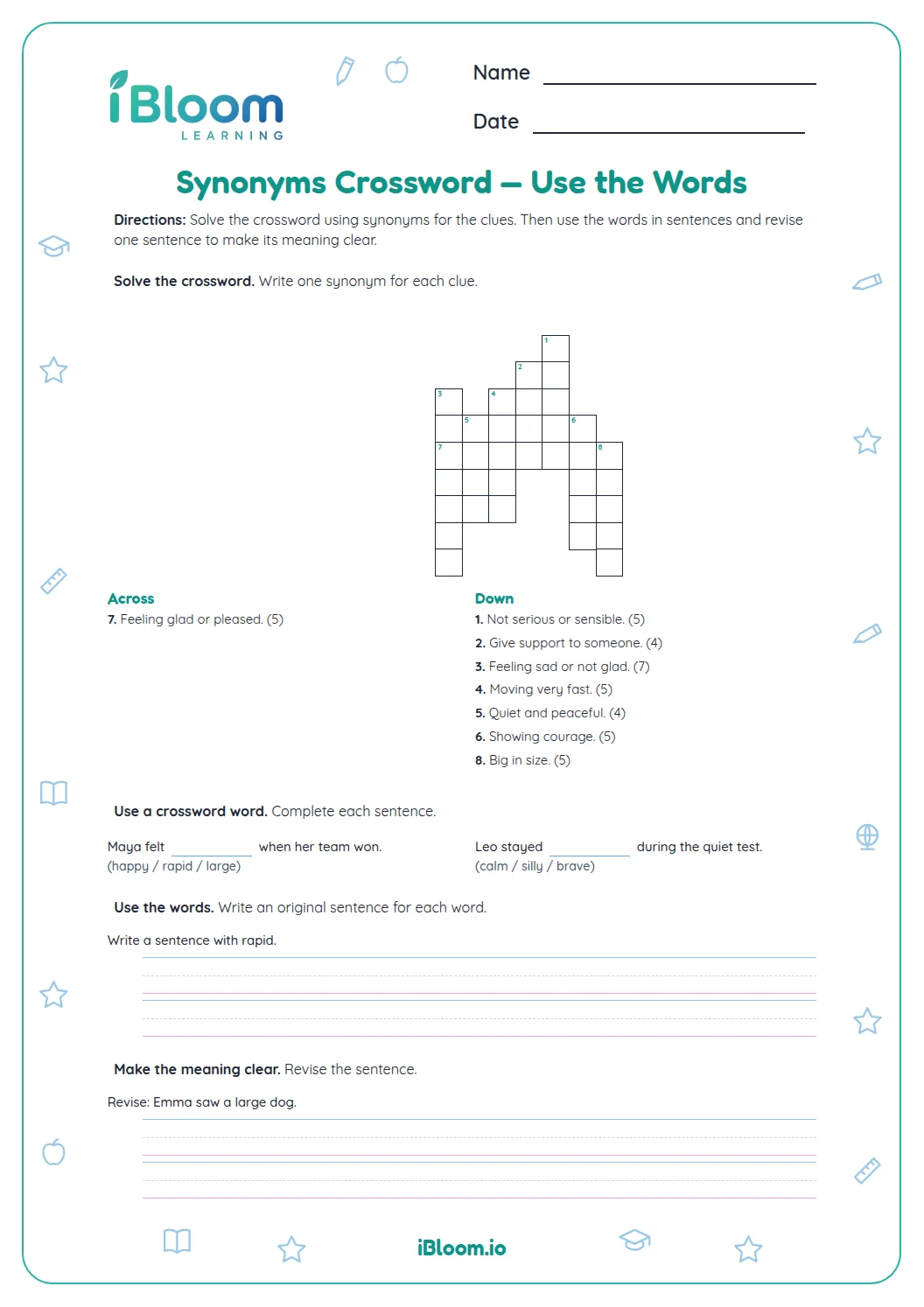
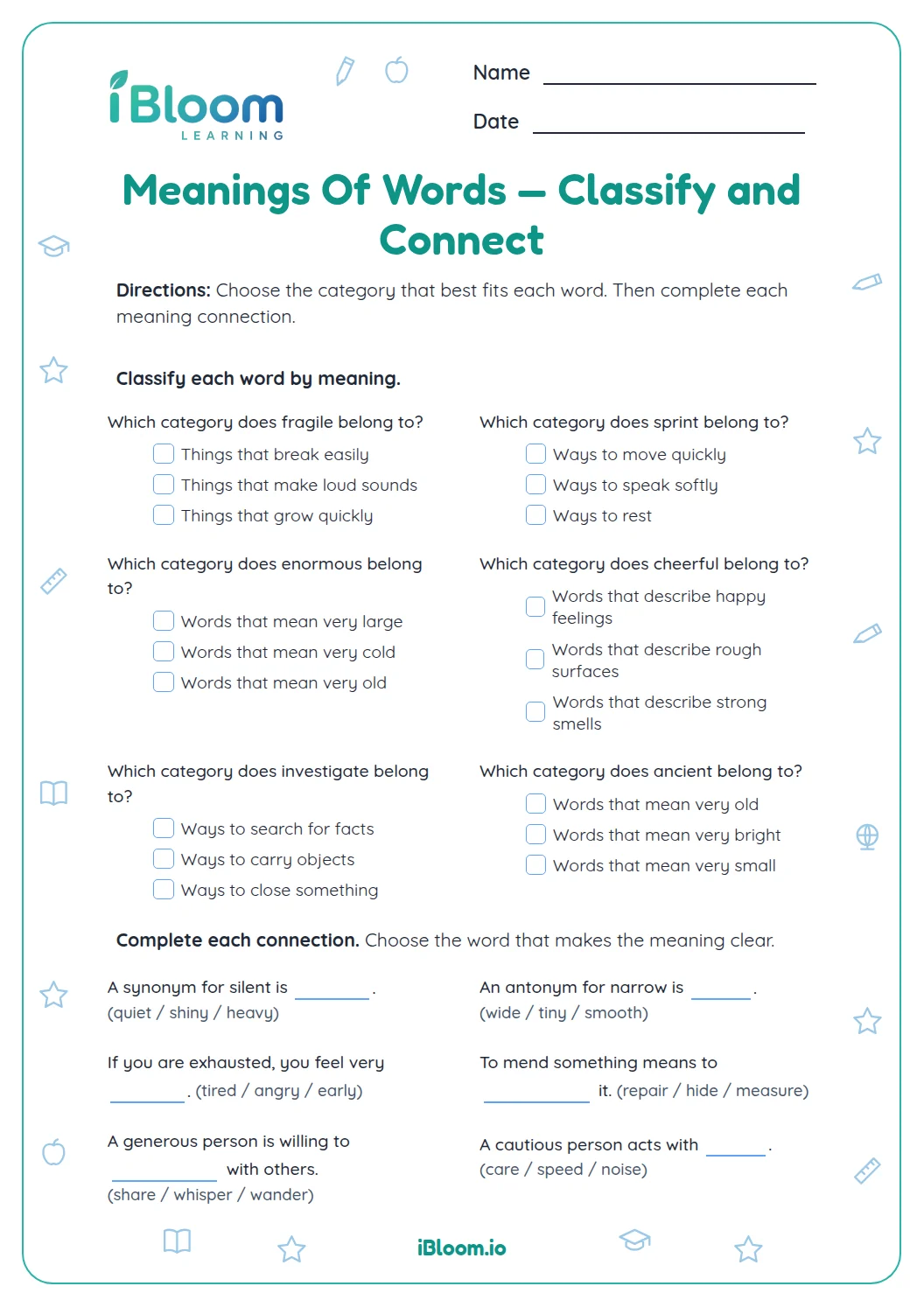
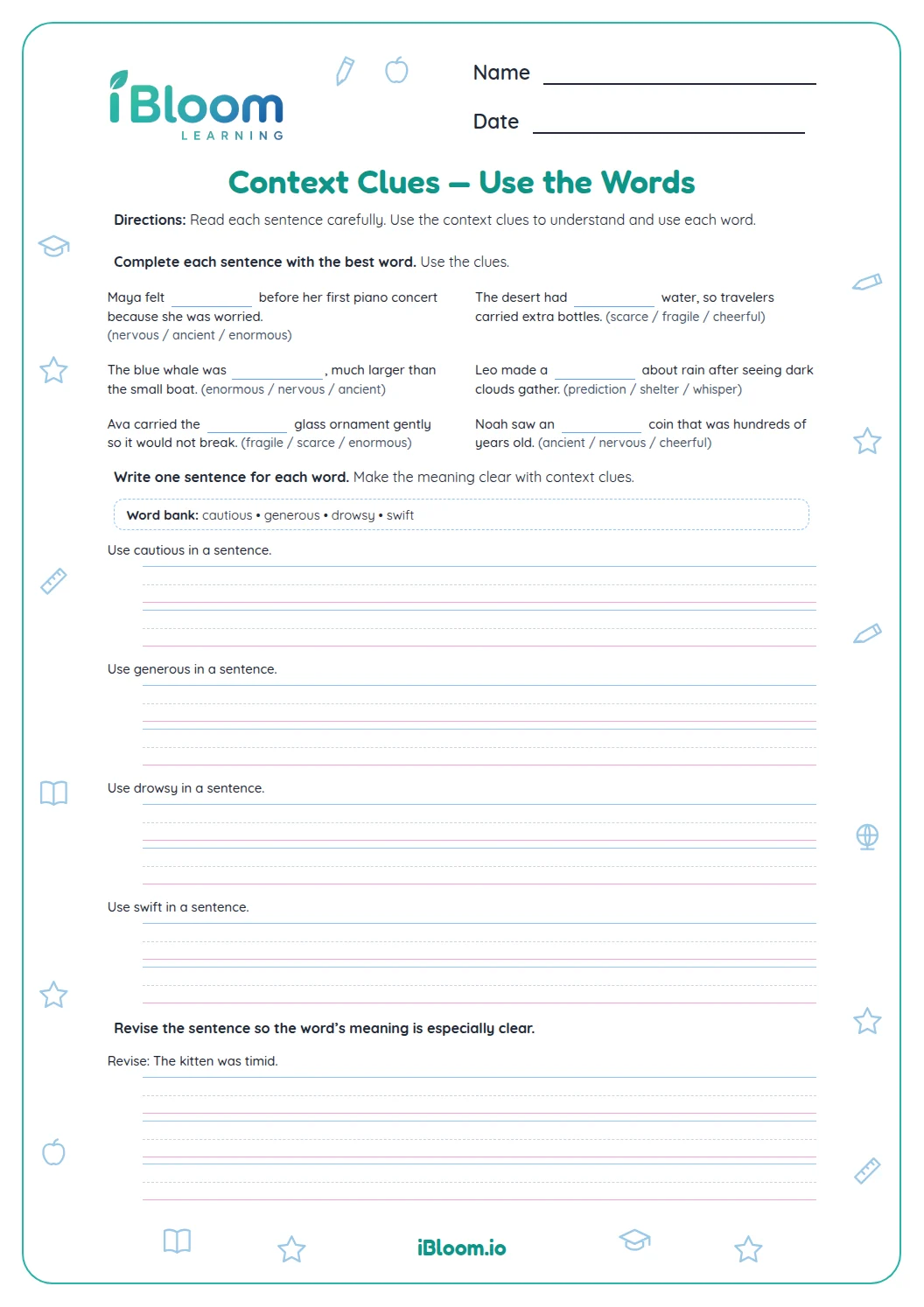
This Grade 4 printable pairs a five-entry crossword with ten vocabulary questions. Clues ask learners to use definitions, synonyms, antonyms, and context to identify precise words. The answer key lists each intended response and supports checking the crossword crossings.
Aligned to L.4.4
How do crossing letters help with a clue?
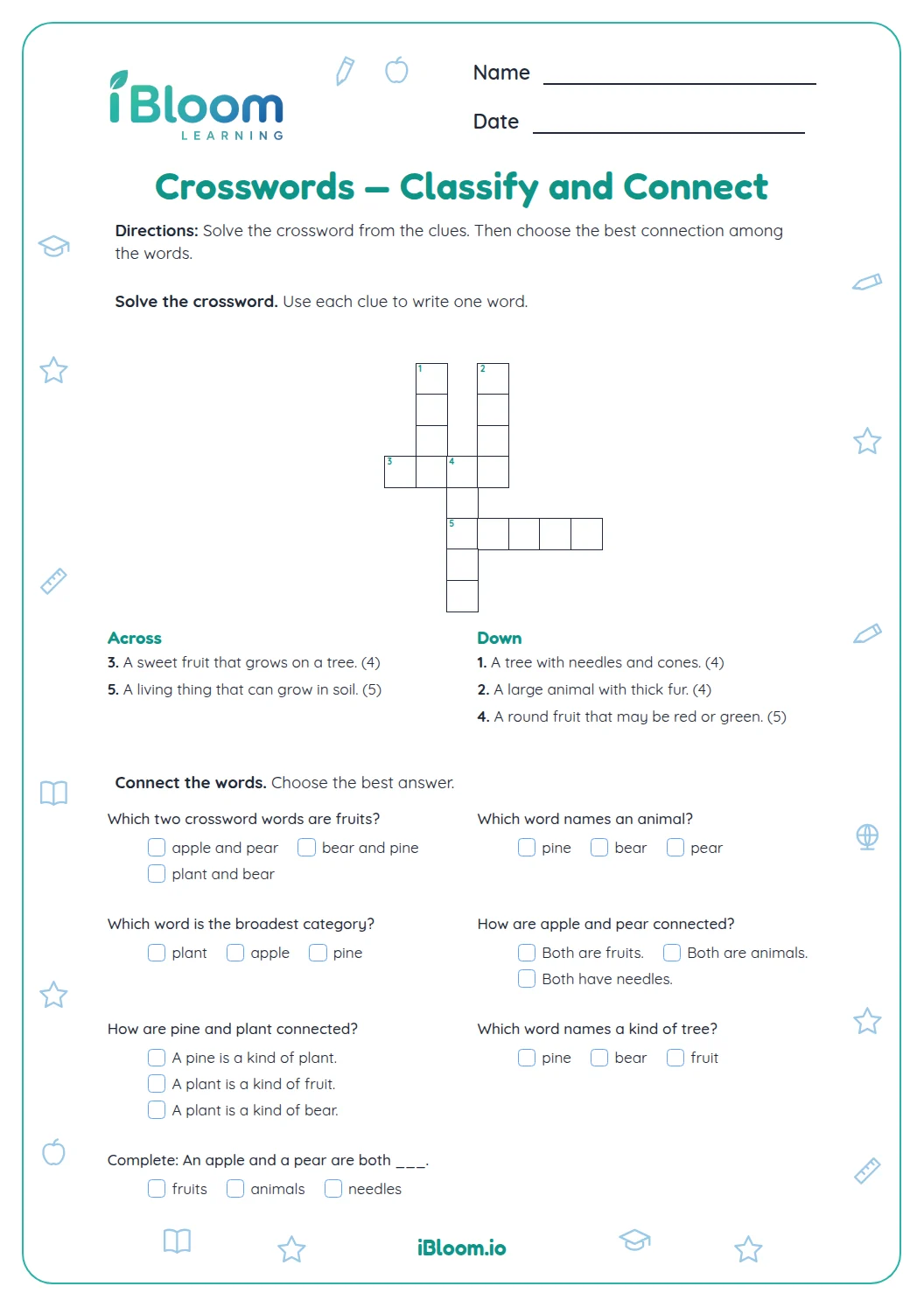
Solve a clue by matching its meaning to a word, then use the crossing entries to check each letter. For “a place where children learn,” the answer is school; its letters should also fit the intersecting words.
- 1Clue: A place where children learn.
- 2Answer: school
- 3Check each crossing letter against the across entries.
How do context questions build precision?
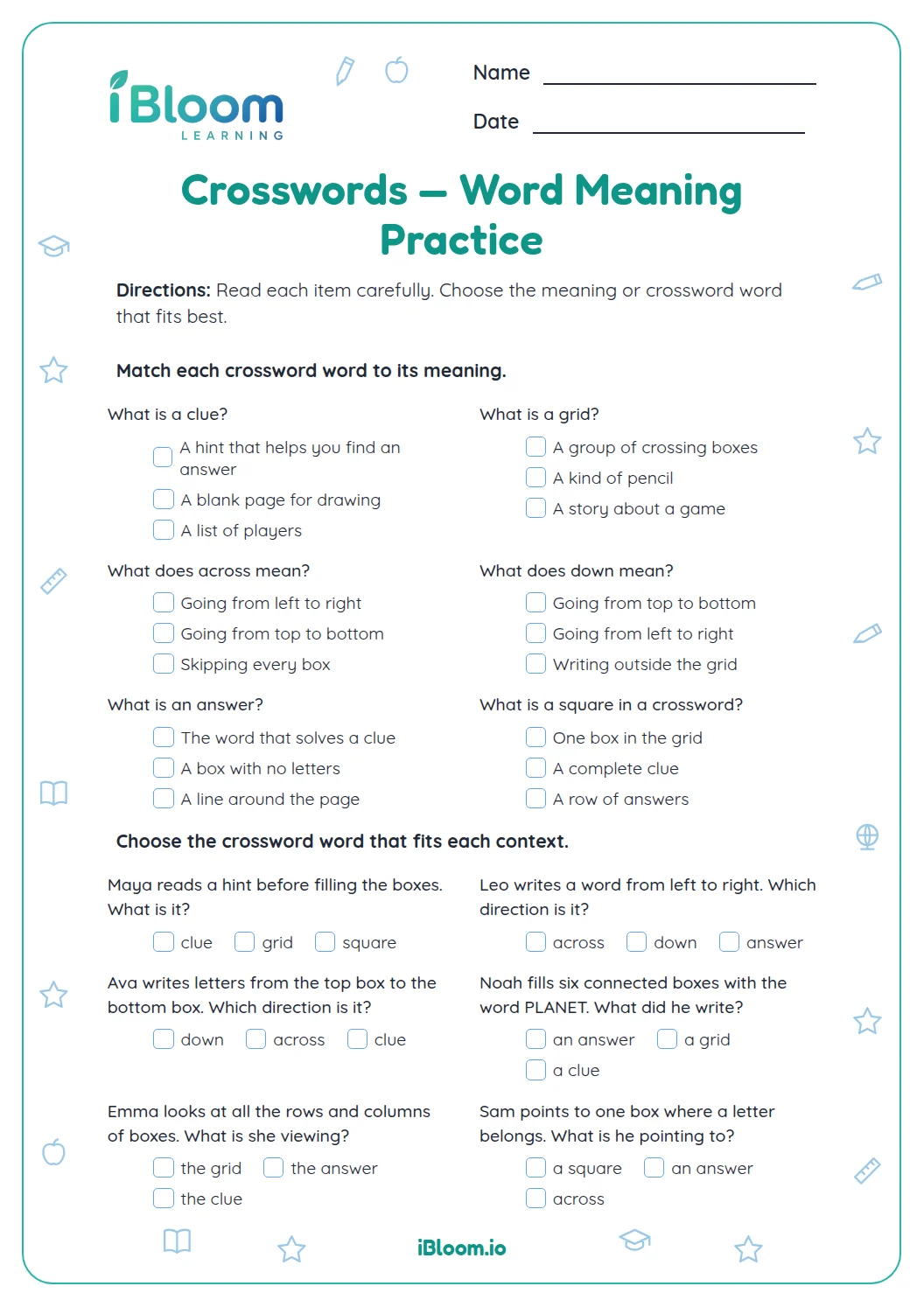
Part B asks for the word that best matches a definition or sentence. Read the full clue, decide what meaning is needed, and then compare the options. A word can sound plausible yet fail to fit the clue exactly.
How to use the worksheet
- 1Read the complete clue before guessing a word.
- 2Count the entry spaces and check the crossing letters.
- 3For a choice question, test each option against the meaning in the prompt.
- 4Reread the clue after filling the answer to confirm it still makes sense.
Common mistakes and quick checks
The mistake
Choosing a related word that does not fit the definition
The fix
Use the exact meaning requested, not a word from the same topic.
The mistake
Ignoring a crossing that disagrees
The fix
Recheck the clue and adjust the answer until every crossing fits.
The mistake
Choosing an answer by length alone
The fix
Use length as a check after matching the clue meaning.
Curriculum alignment
This worksheet practices L.4.4.
Use clue wording, context, and crossing letters to determine word meanings.
On this sheet:
Show the official wordingHide the official wording
Determine or clarify the meaning of unknown and multiple-meaning words and phrases based on grade 4 reading and content, choosing flexibly from a range of strategies.
What to practice next
Make more practice
Further reading
Questions parents and teachers ask
How does the crossword support vocabulary learning?
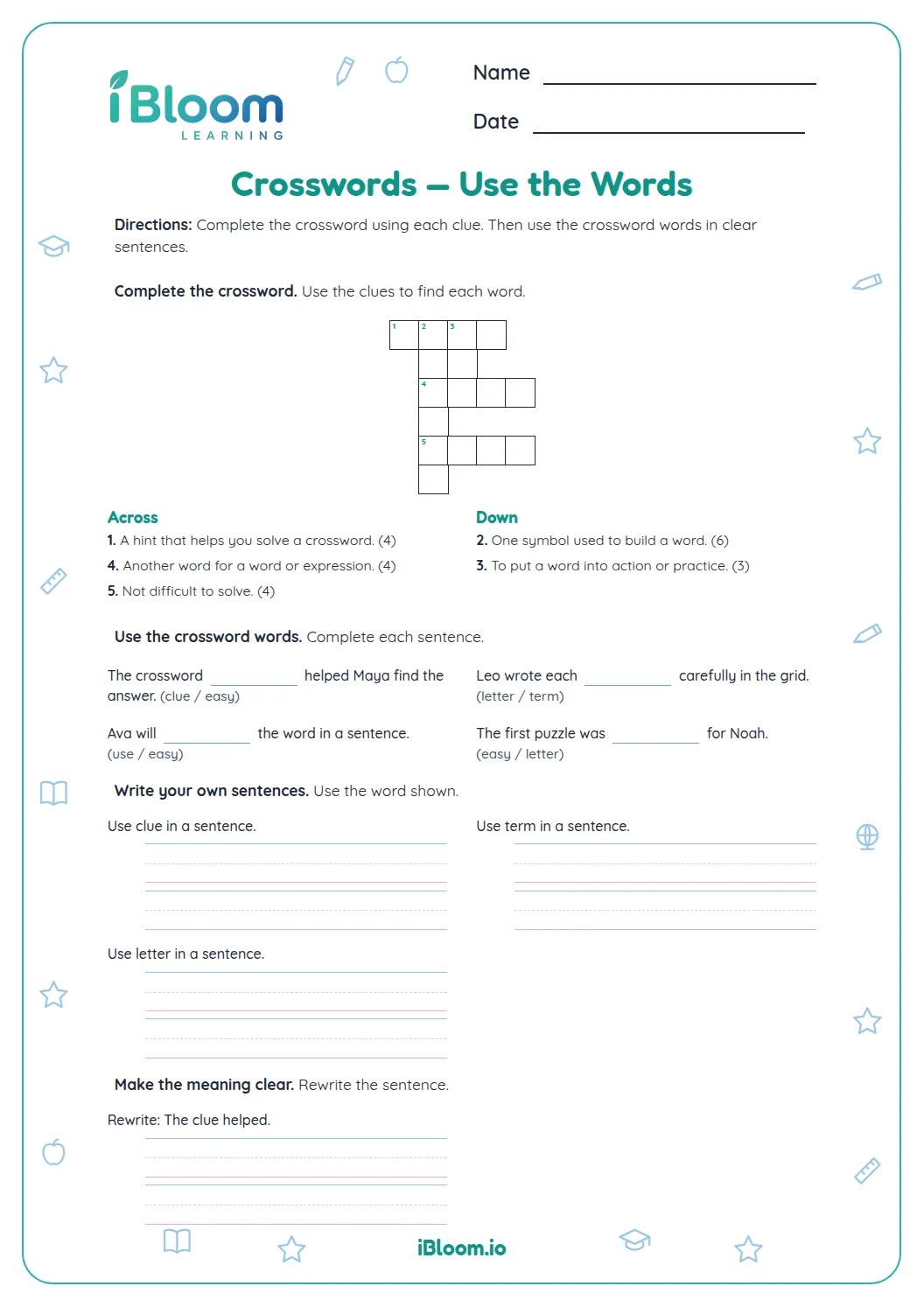
A clue prompts the learner to retrieve a word from its meaning. Crossing letters provide a second check: if a letter conflicts, the clue or answer needs another look. The five entries use familiar elementary vocabulary. Reread the clue after answering to check that the word fits.
What kinds of clues appear?
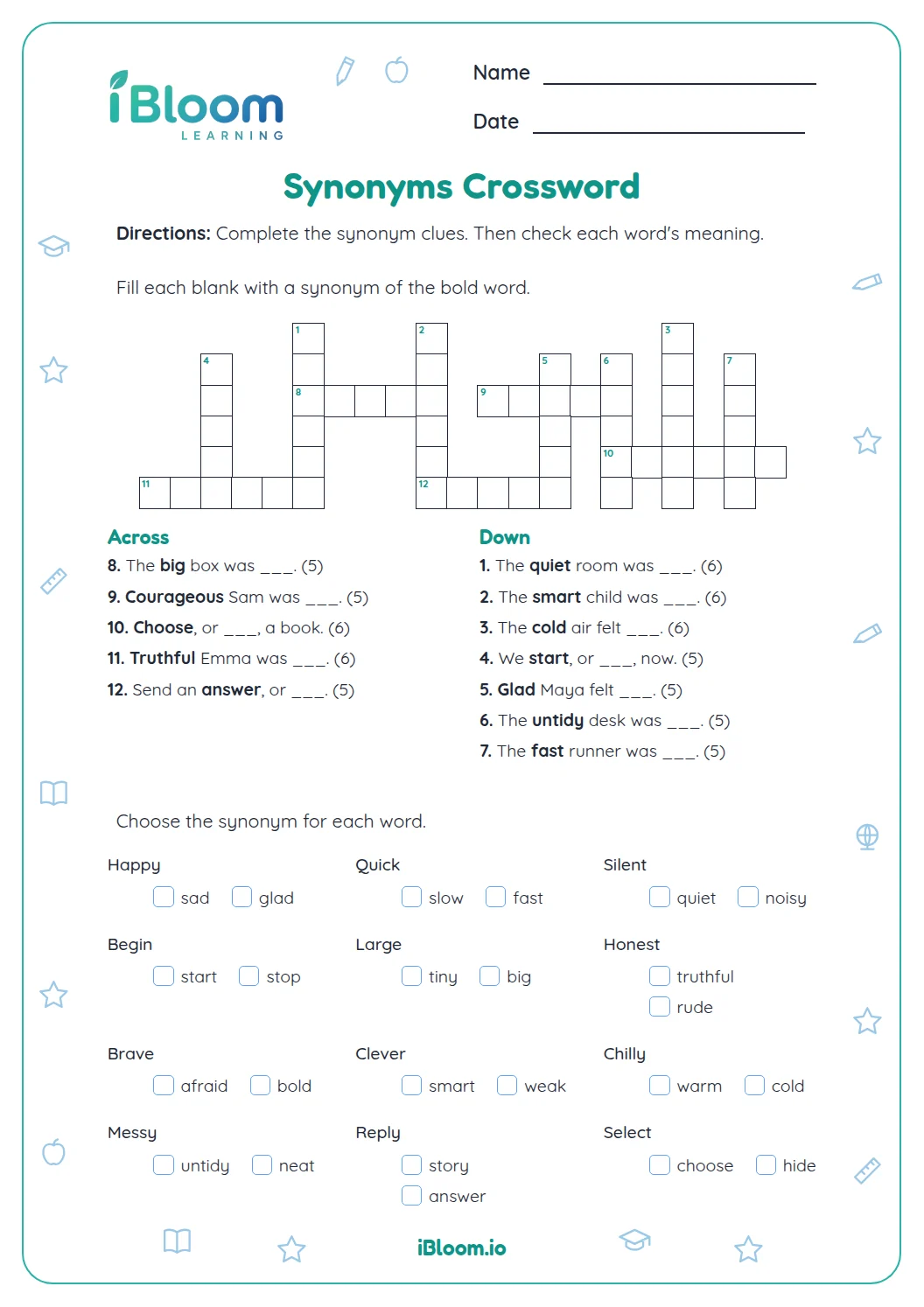
The crossword and multiple-choice items use definitions, synonyms, an antonym, and short context sentences. Learners need to consider what the clue means rather than relying only on the number of letters or a familiar topic. Reread the clue after answering to check that the word fits.
What if two choices seem possible?
Read the full sentence or definition and look for a detail that narrows the meaning. Then compare the candidate word with the other options and, in the crossword, use crossing letters to confirm the spelling. Reread the clue after answering to check that the word fits.
How many crossword entries are there?
There are five crossword clues, followed by ten vocabulary questions. The crossword clues are grouped in Part A, and the meaning and context choices are grouped in Part B. Reread the clue after answering to check that the word fits.
Is there an answer key?
Yes. A separate key gives the intended word for each crossword clue and choice question. For the crossword, use it to check both the word and whether the crossings support the entry. Reread the clue after answering to check that the word fits.