


About this worksheet
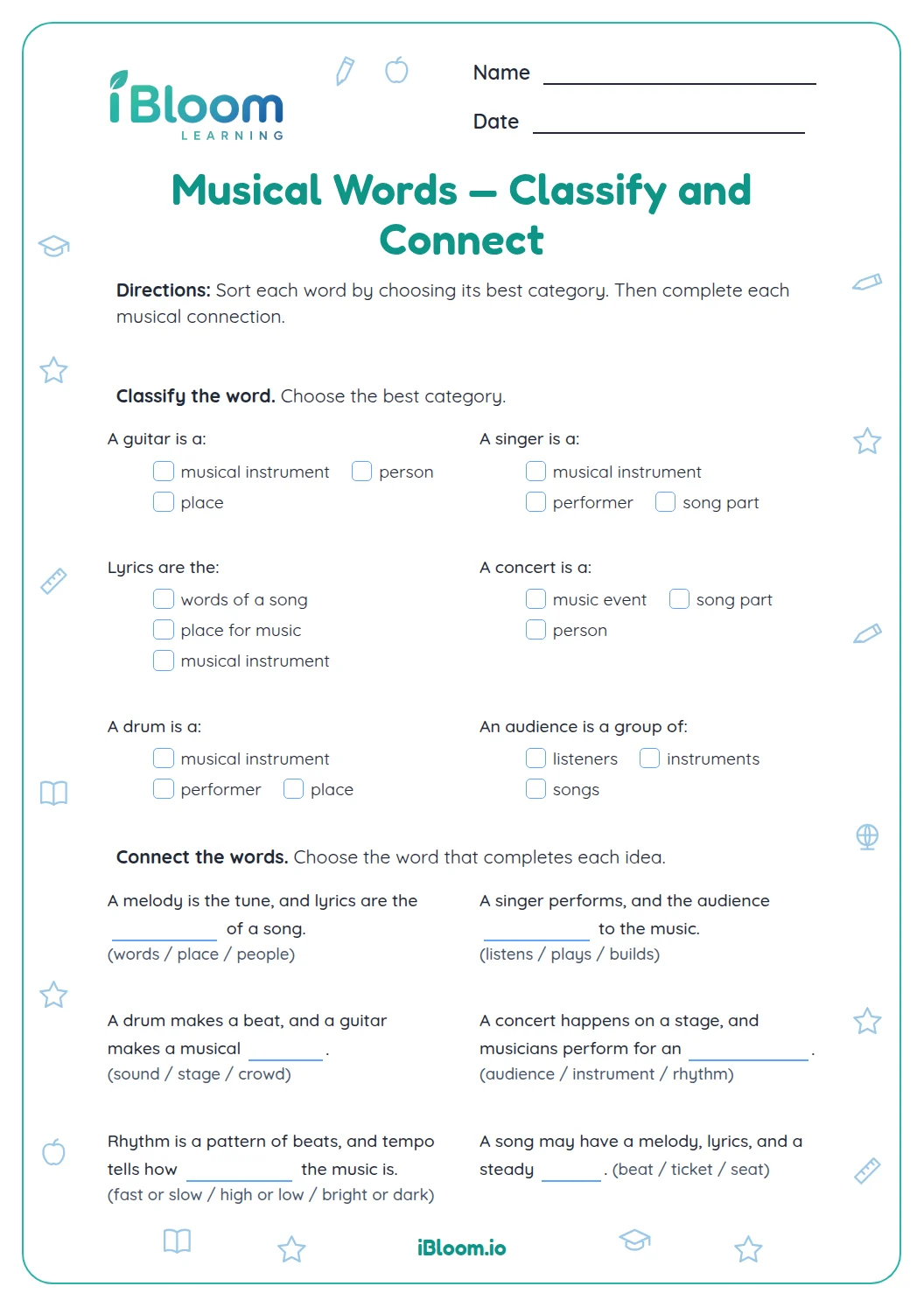
This printable focuses on common music words: melody, rhythm, tempo, chorus, lyrics, musician, solo, volume, and orchestra. Grade 3 students match terms to meanings, identify words in short music situations, and write two sentences using vocabulary precisely. The tasks practice CCSS L.3.4. A separate answer key provides correct choices and sample sentences.
Aligned to L.3.4
How do the music words differ in meaning?
Some words name parts of a song, while others describe sound or performance. Matching each term to a clear meaning helps distinguish a melody from lyrics or tempo from volume.
- 1Melody means the tune in a song.
- 2Lyrics are the words in a song.
- 3A tune and the words are different parts of music.
How do music situations point to the right term?
Look for the action or clue in the sentence. A person playing alone gives the clue for solo; a group playing several instruments gives the clue for orchestra.
How can a sentence show a word’s meaning?
Use the target word in a complete sentence that includes a fitting action or detail. “The quick tempo made the dancers move faster” shows that tempo describes how fast or slow music goes.
How to practice musical word meanings
- 1Read the whole definition before selecting a music word.
- 2Compare related terms, such as melody and lyrics, by asking what each names.
- 3In each situation, underline the action or sound clue.
- 4Choose the word that describes that exact part of music.
- 5Write a full sentence with the target word and a detail that shows its meaning.
- 6Check your choices and compare your sentences with the answer key.
Common mistakes and quick fixes
The mistake
Mixing up lyrics and melody.
The fix
Lyrics are the words; melody is the tune you can hum.
The mistake
Treating tempo and volume as the same feature.
The fix
Tempo is speed; volume is loudness or softness.
The mistake
Calling one performer an orchestra.
The fix
A solo is one performer alone; an orchestra is a large group of musicians.
Common Core alignment
The activities build vocabulary meaning from definitions, context, and accurate word use.
Use sentence clues and music examples to clarify word meanings.
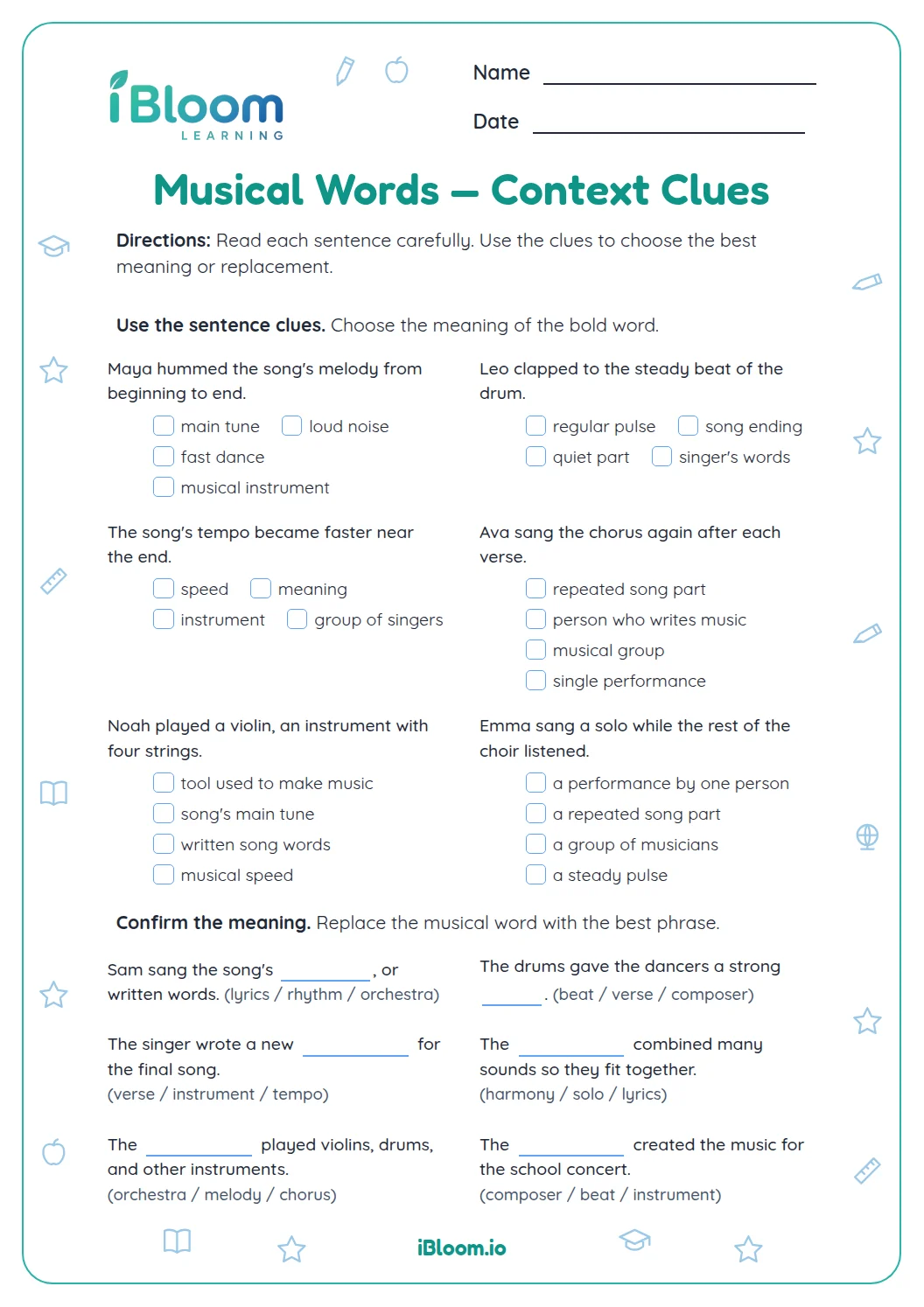
On this sheet: Context questions ask children to connect music situations with the correct vocabulary.
Show the official wordingHide the official wording
Determine or clarify the meaning of unknown and multiple-meaning word and phrases based on grade 3 reading and content, choosing flexibly from a range of strategies.
What to practice next
Make more practice
Further reading
Questions parents and teachers ask
What is the difference between melody and lyrics?
Melody is the tune in a song, while lyrics are the words. The worksheet asks students to match each term to its meaning and then identify the right term in a short situation, such as humming a tune or singing printed words.
How are tempo and volume different?
Tempo describes how fast or slow the music goes. Volume describes how loud or soft it sounds. The sheet uses separate situations for each idea so students can attend to the clue and choose the precise word. The answer key accepts other clear responses that show the same idea.
What does “solo” mean in this worksheet?
A solo is a musical performance by one performer alone. Question 9 describes Ava playing her violin alone on stage. The other choices name a song section or a group rather than a single performer. A quick reread of the passage or prompt helps connect the answer to its evidence.
Which words do students write with?
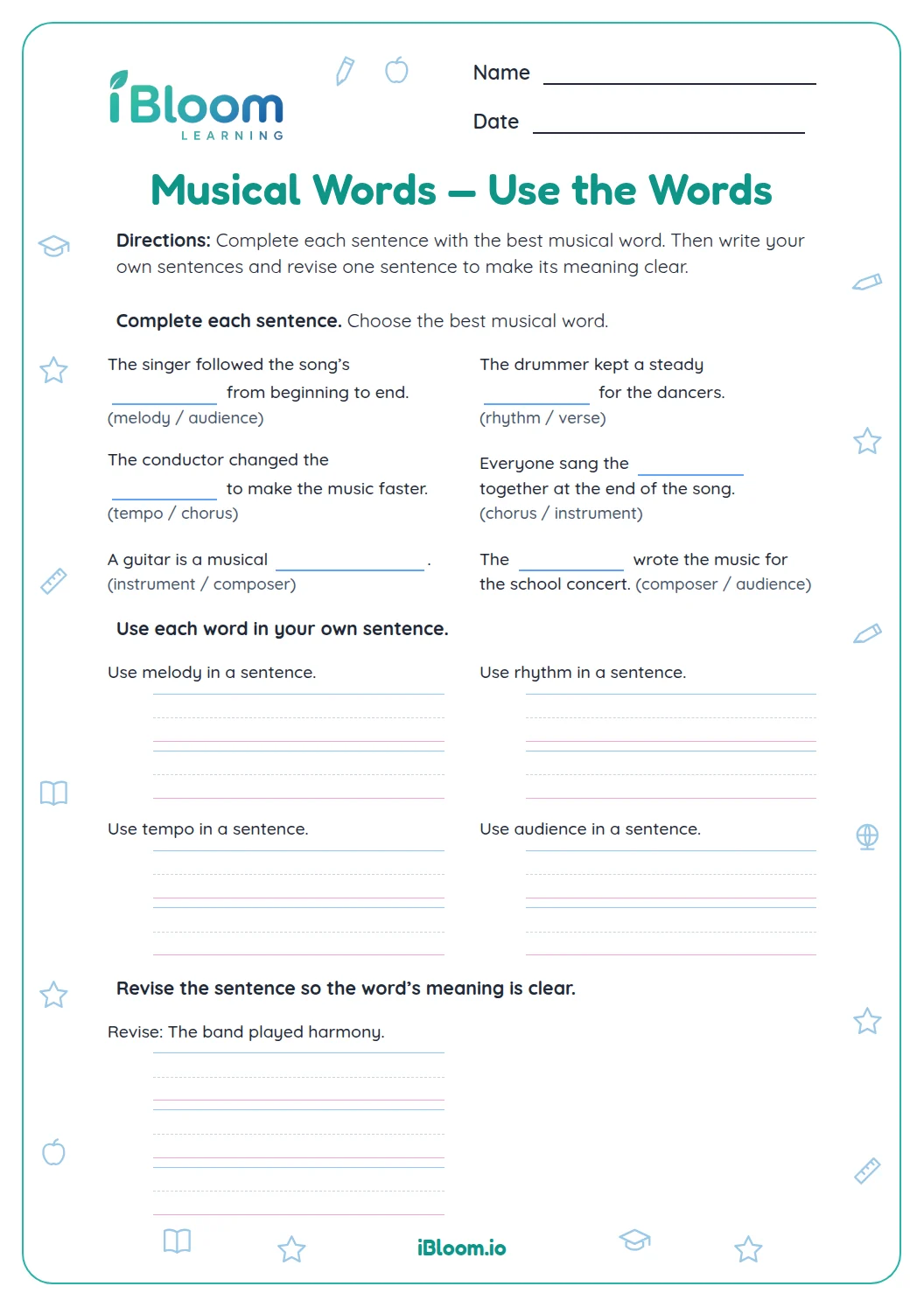
The final two prompts ask for sentences with rhythm and tempo. Each sentence should make the meaning clear through a music related detail. The answer key provides one sample for each, and other accurate sentences are acceptable. The answer key accepts other clear responses that show the same idea.
How many questions are included?
There are 14 questions: six definition matches, six context choices, and two sentence responses. The printable is organized from matching words to applying them in musical situations and writing. Each task keeps the practice connected to the named skill. The question provides a concrete way to practice the target skill.
Which standards does this sheet practice?
It practices CCSS L.3.4 by using context and examples to clarify word meanings. The curriculum section links to the official ELA standards, and music situations give children a reason to apply each meaning. The question provides a concrete way to practice the target skill.