





About this worksheet
This Grade 1 family paragraph worksheet moves from choosing useful details to writing. Children select family facts that fit a topic, put paragraph ideas in order, notice a sentence convention, and write two short responses about family life. The 14 questions move from guided choices to independent writing, with a separate answer key.
Aligned to W.1.2
What is on the family writing page?
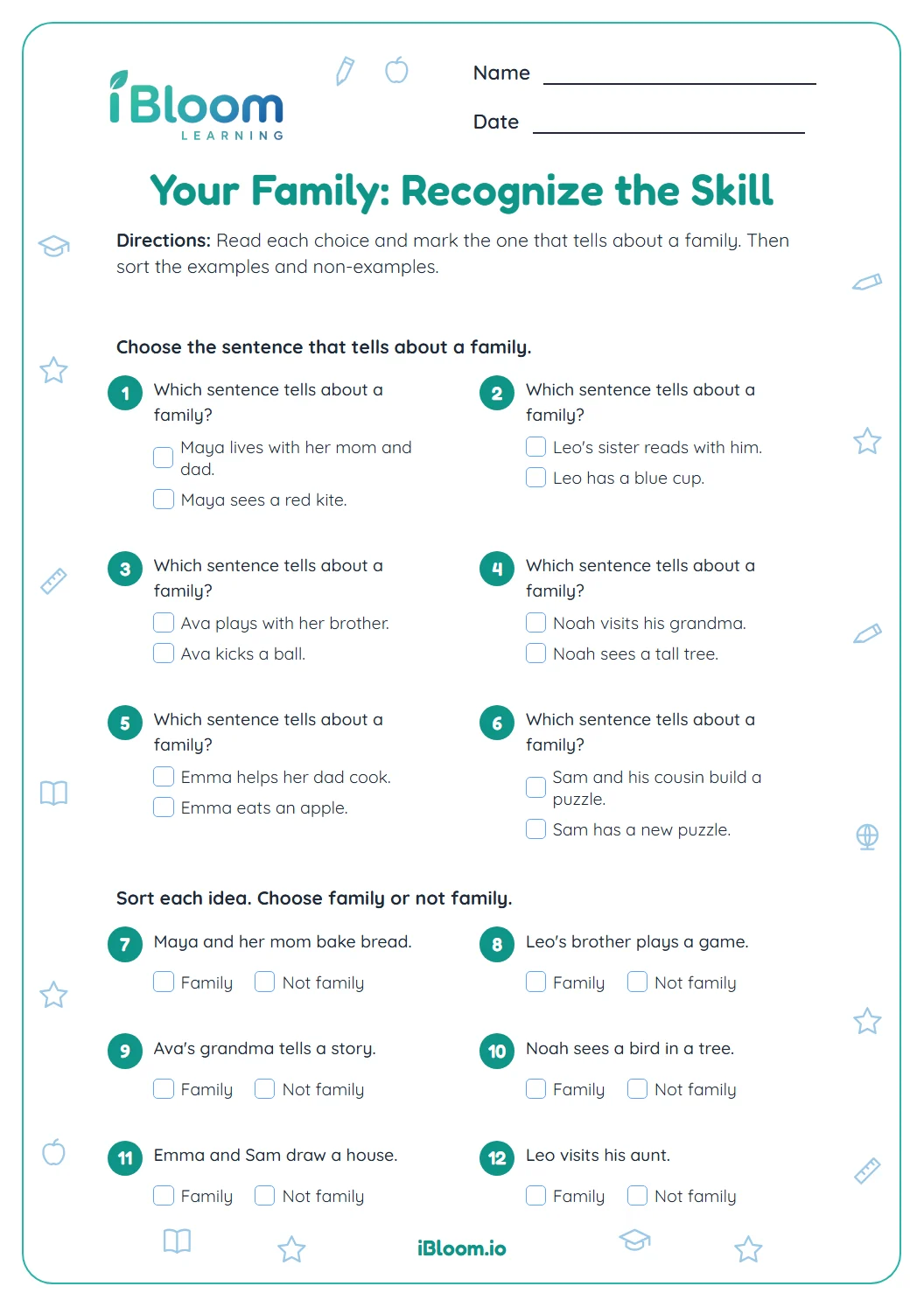
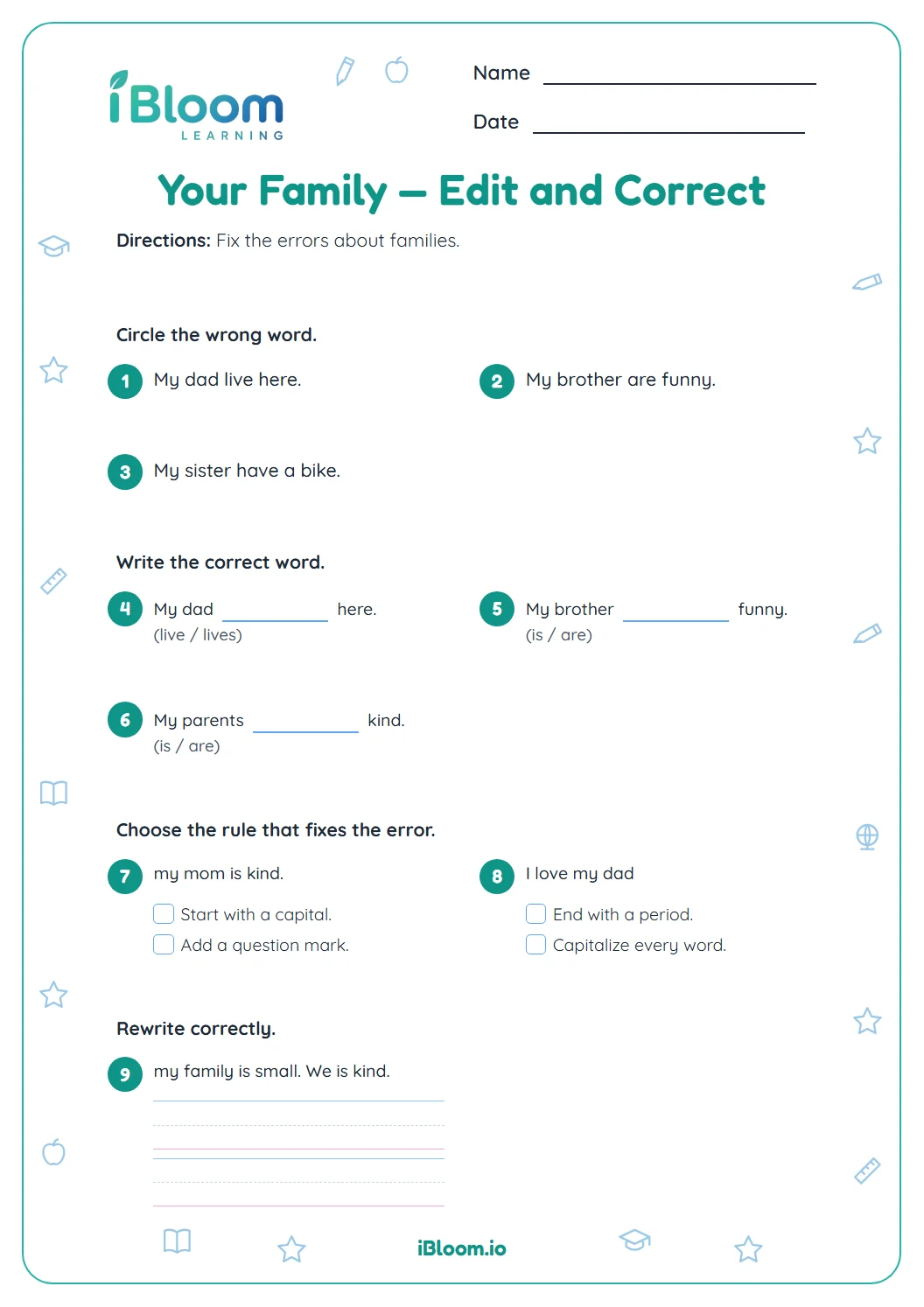
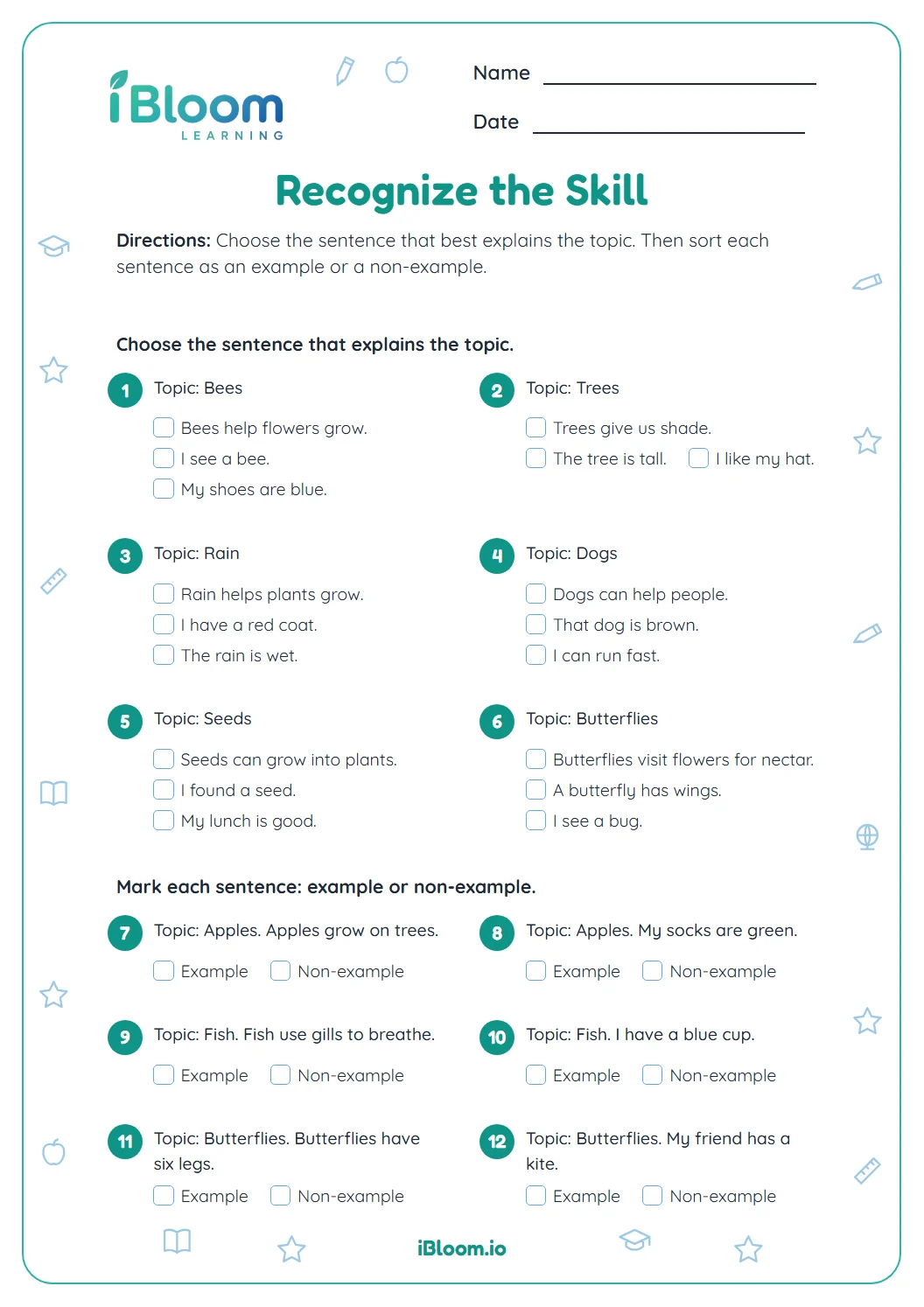
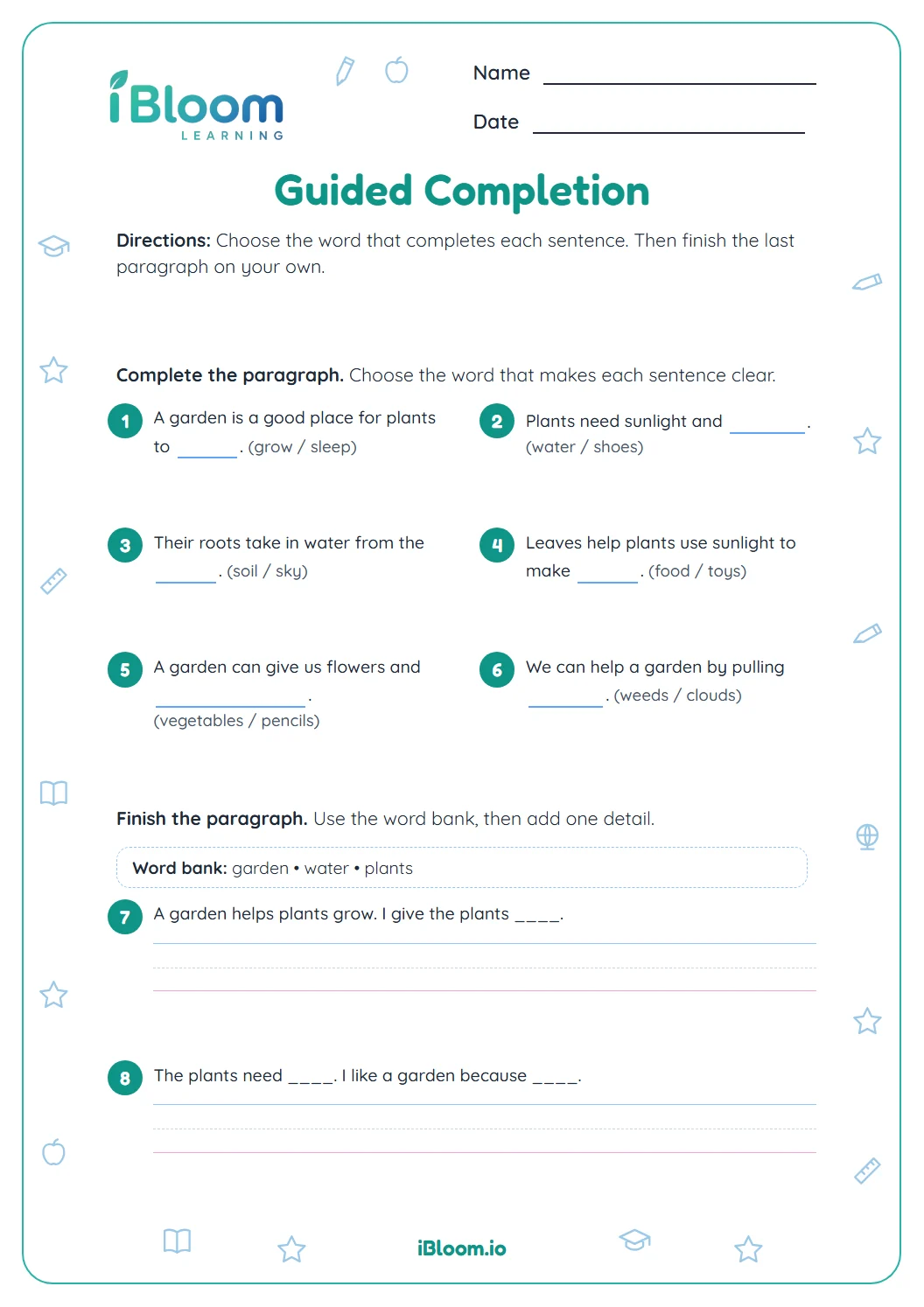
Part A picks family facts that could fit a paragraph. Part B plans a clear order, checks useful details, and reviews a sentence convention. Part C gives two short writing prompts.
- Part A: 10 multiple-choice planning and detail questions
- Part B: 2 short writing prompts
How can a child organize a paragraph?
Start by naming the topic. Add one or more facts that tell about it. Finish with a thought that sounds complete. For this sheet, a family topic might be cooking together, a garden, or a family outing.
What does a supporting detail look like?
A supporting detail gives information about the named topic. If the topic is a family garden, “We plant beans and tomatoes” belongs because it tells what the family does in the garden.
- 1Topic: Our family garden
- 2Detail: We plant beans and tomatoes.
- 3The detail tells what the family does in its garden.
How should children answer the writing prompts?
A child may use real family experiences or an imagined example. For the first prompt, write one topic sentence; for the second, write two facts about something the family enjoys. The key gives sample responses because family experiences and wording differ.
How to use this worksheet
- 1Read the topic in the prompt before looking at the choices.
- 2Ask whether each detail tells about that topic.
- 3Put the topic sentence before details and the closing.
- 4For a writing prompt, say the idea aloud before writing it.
- 5Read the paragraph once to check that it stays on one topic.
Common mistakes and quick fixes
The mistake
Choosing an interesting detail that does not fit the topic
The fix
Ask, “Does this tell about the family garden, meal, or activity?” Keep only details that answer yes.
The mistake
Starting with a detail before naming the topic
The fix
Write a sentence that names the subject first, then add facts.
The mistake
Stopping after the facts with no closing thought
The fix
Add a final sentence that completes the idea, such as “I like helping my family.”
Common Core alignment
The page uses a familiar family topic to practice informative writing.
Name a topic, add family facts, and give the paragraph a closing.
On this sheet: Part C asks children to write a topic sentence, supporting family details, and a closing.
Show the official wordingHide the official wording
Write informative/explanatory texts in which they name a topic, supply some facts about the topic, and provide some sense of closure.
What to practice next
Make more practice
Further reading
Questions parents and teachers ask
How many writing prompts are included?
Part C has two short writing prompts: one asks for a topic sentence, and one asks for two facts about something a family enjoys. The earlier 12 choice questions help children select and organize details. The key includes sample answers rather than wording children must copy.
Can children write about a family that looks different from the examples?
Yes. The prompts invite children to use their own family experiences, and sample answers are examples rather than required wording. A child can write about caregivers, relatives, or people who live together, using details that feel familiar. Children may also invent a family for practice.
What is a topic sentence?
A topic sentence names what the paragraph will be about. For example, “My family likes to cook together” names a family activity. The next sentences should add facts that help the reader learn about cooking together. A closing thought helps the paragraph feel complete.
How can I help a child choose details?
Read the topic and each detail aloud. Ask whether the detail gives information about the topic. For a paragraph about a family pet, “Our dog sleeps by the door” fits, while a fact about a cloud does not. Sorting aloud makes the connection easier to hear.
Does the worksheet include an answer key?
Yes. The separate key gives correct choices and sample responses for both open writing prompts. Because children may write different true details about their families, the samples show possible answers. Accept a clear response that stays with its topic.
How long should this worksheet take?
Plan about 20 minutes, with extra time if a child wants to talk through family ideas before writing. The page has 14 questions, including two short writing prompts that take more time than choice items. An adult can read choices aloud as needed