


About this worksheet
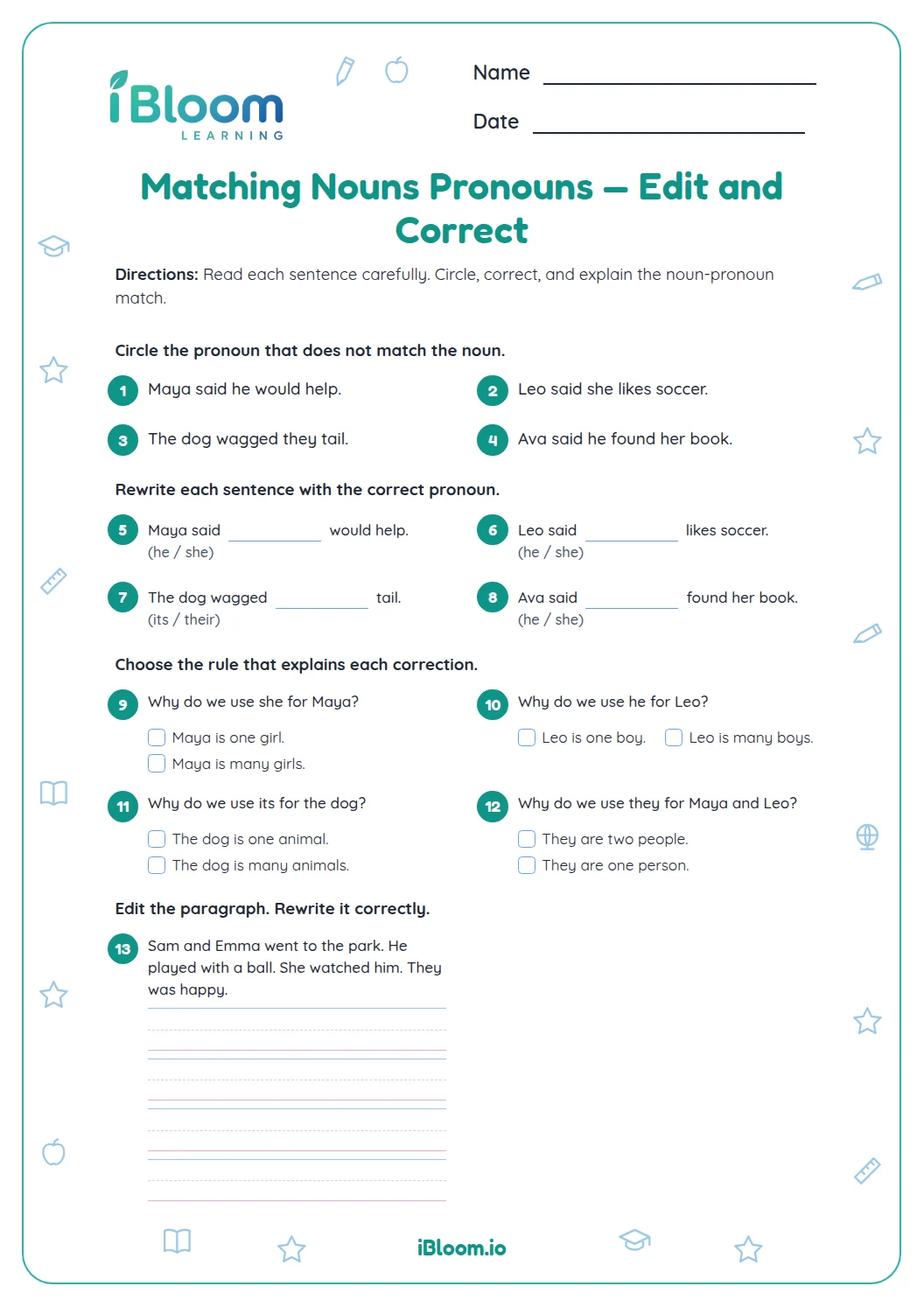
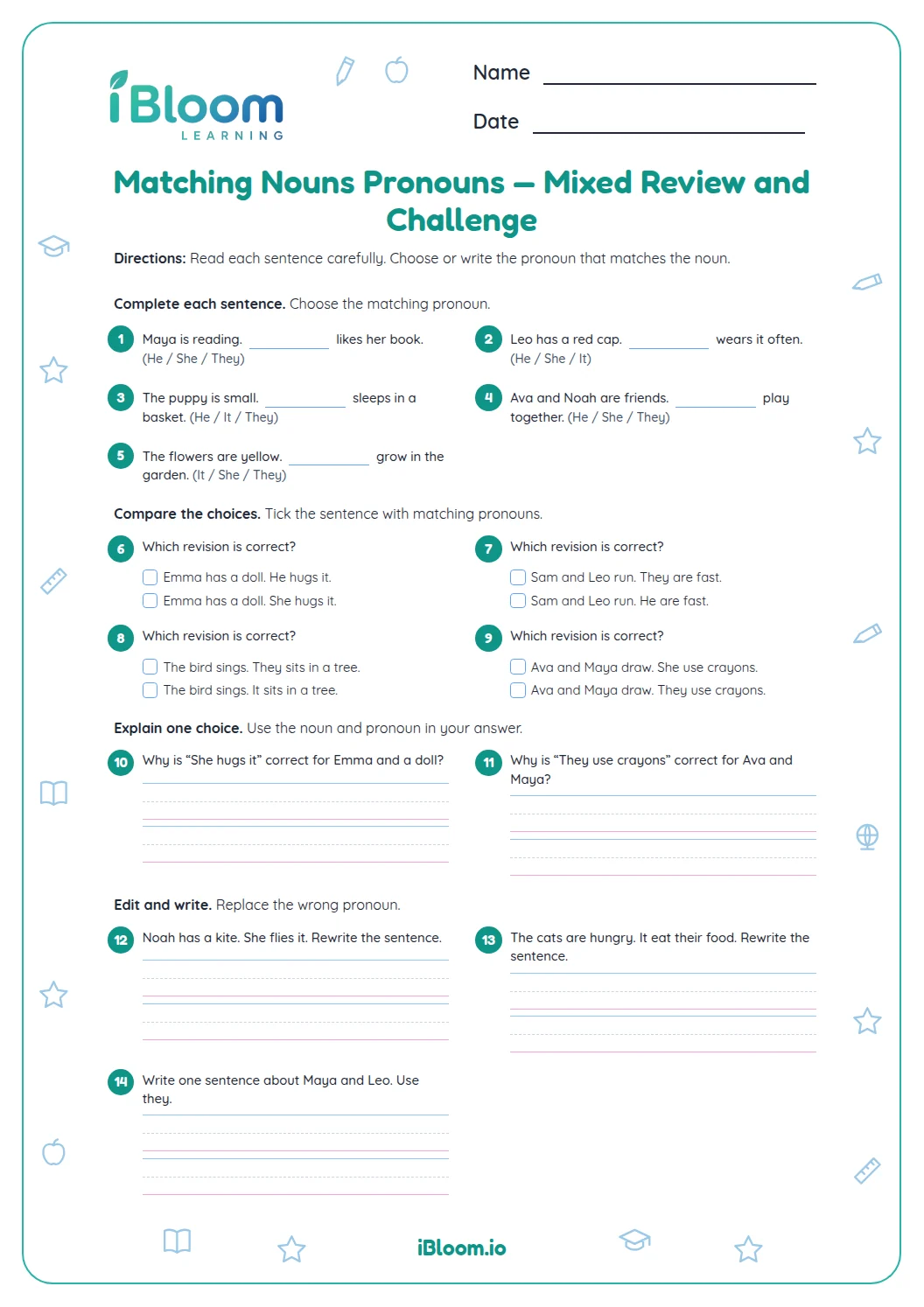
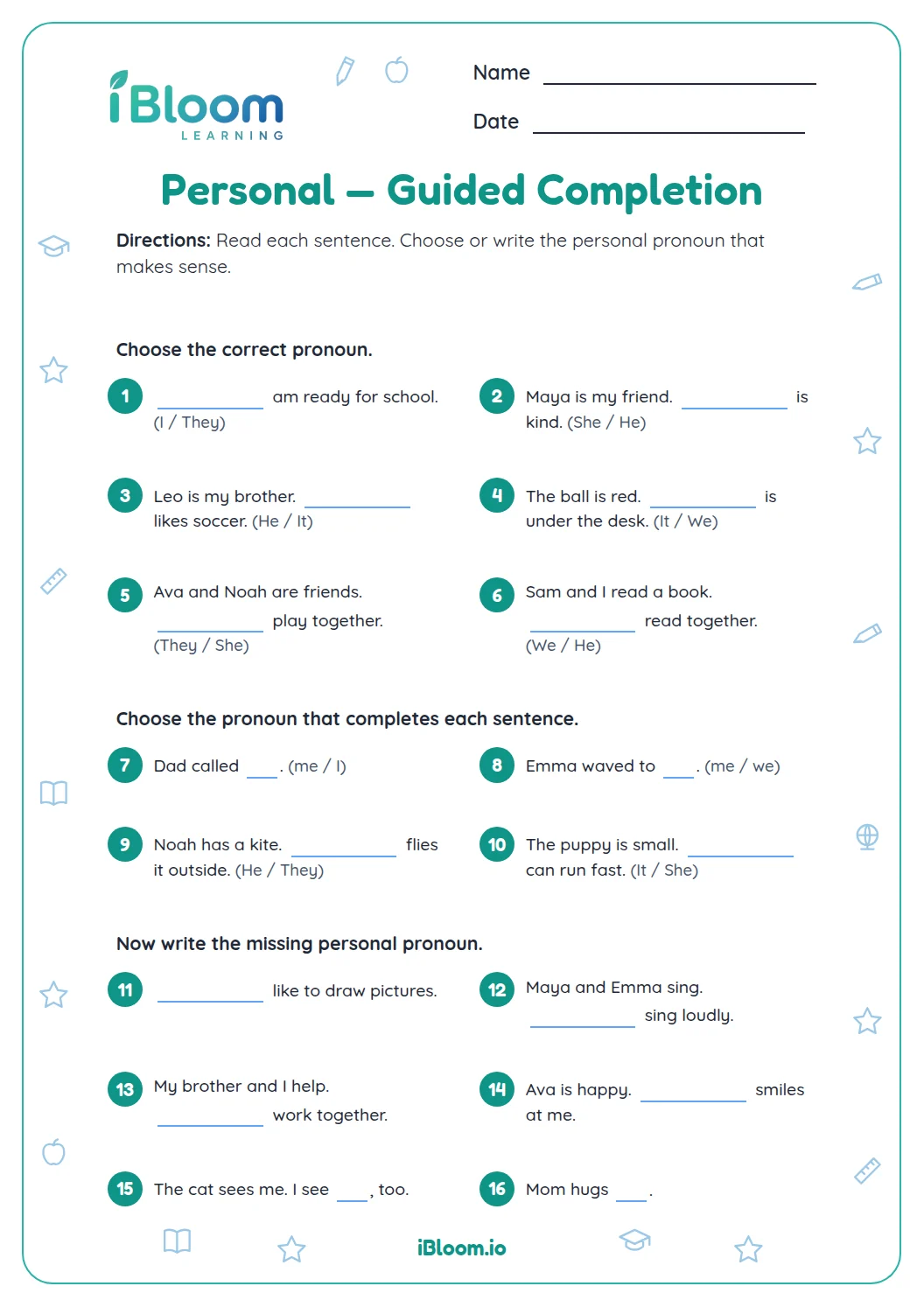
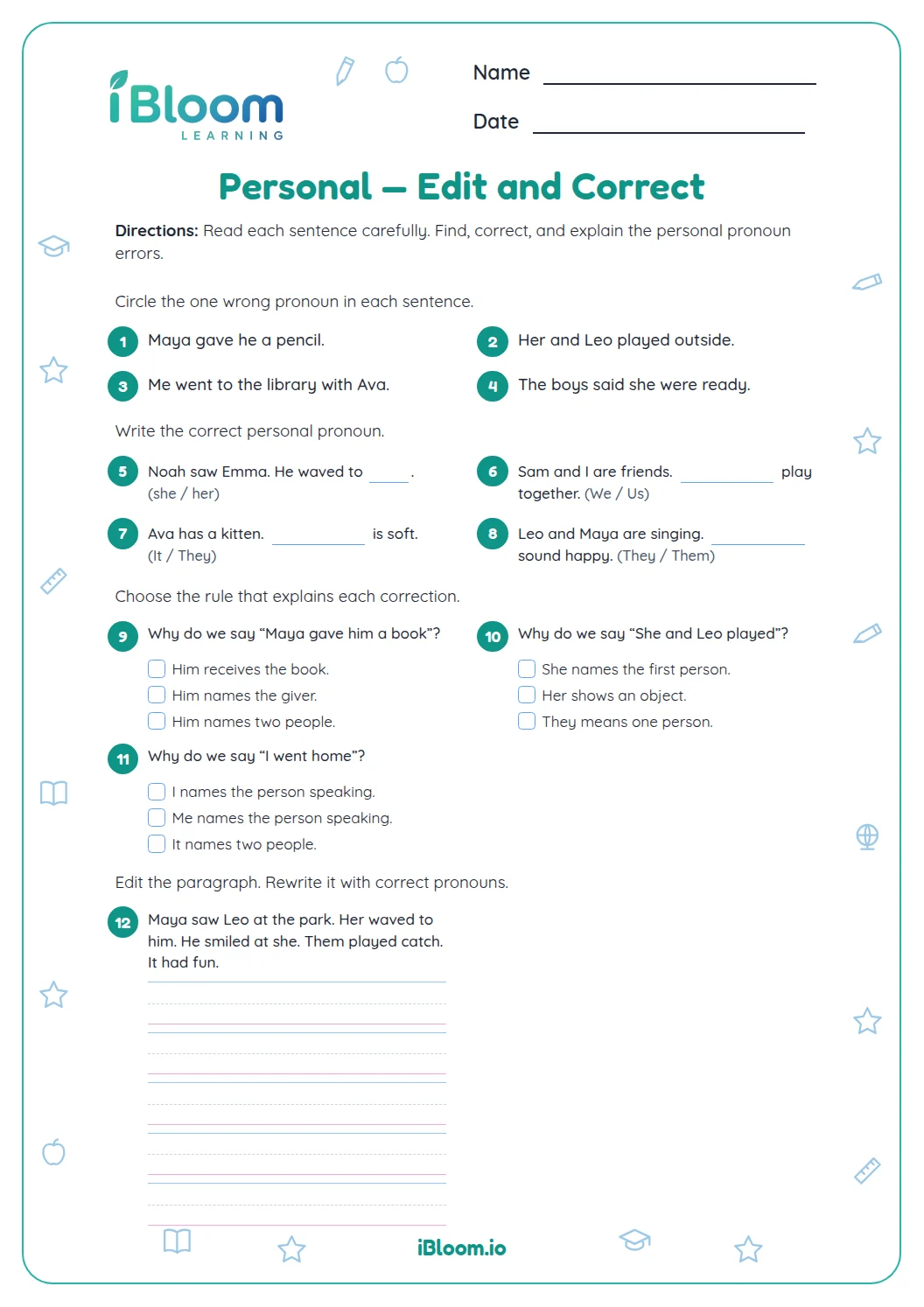
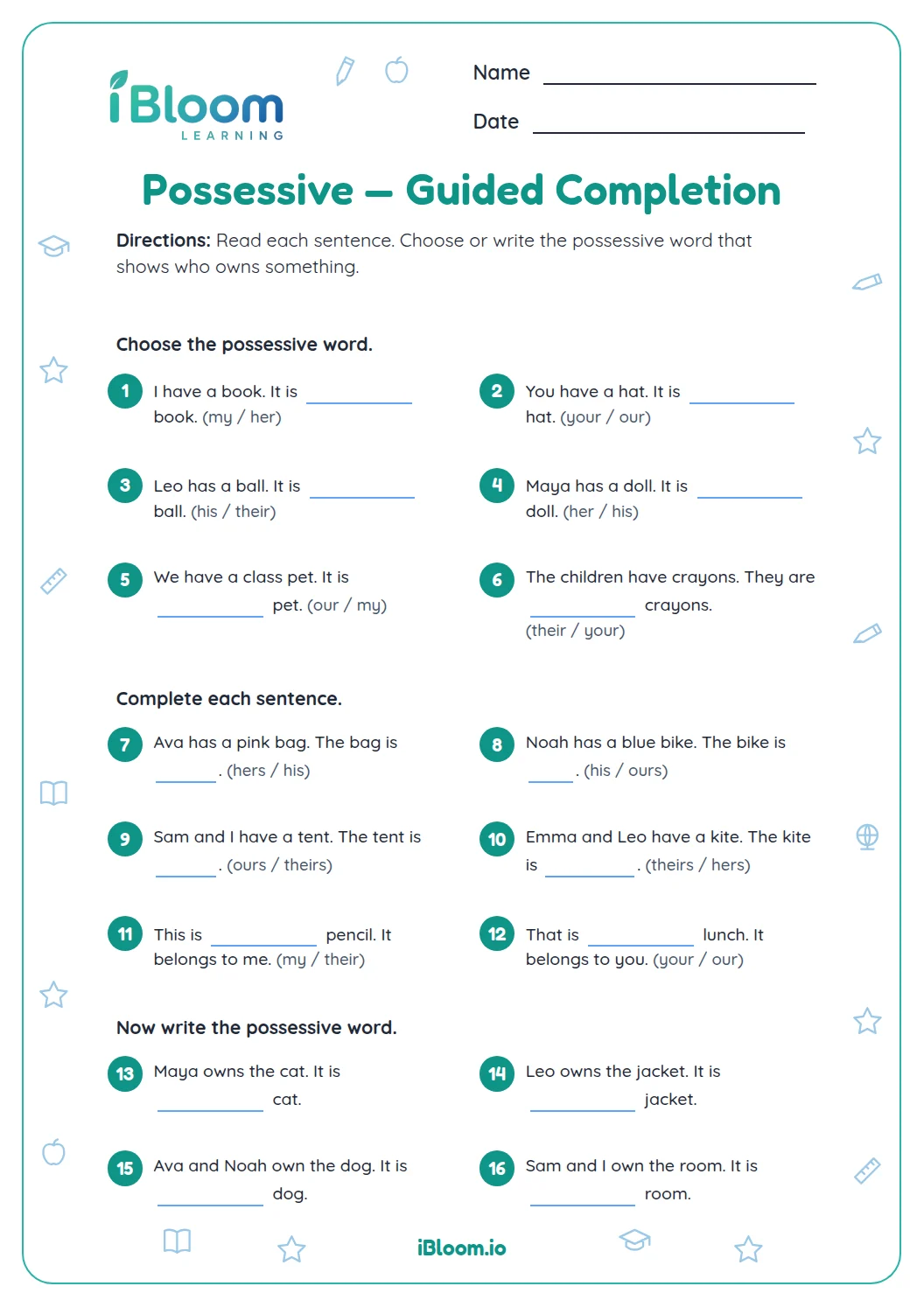
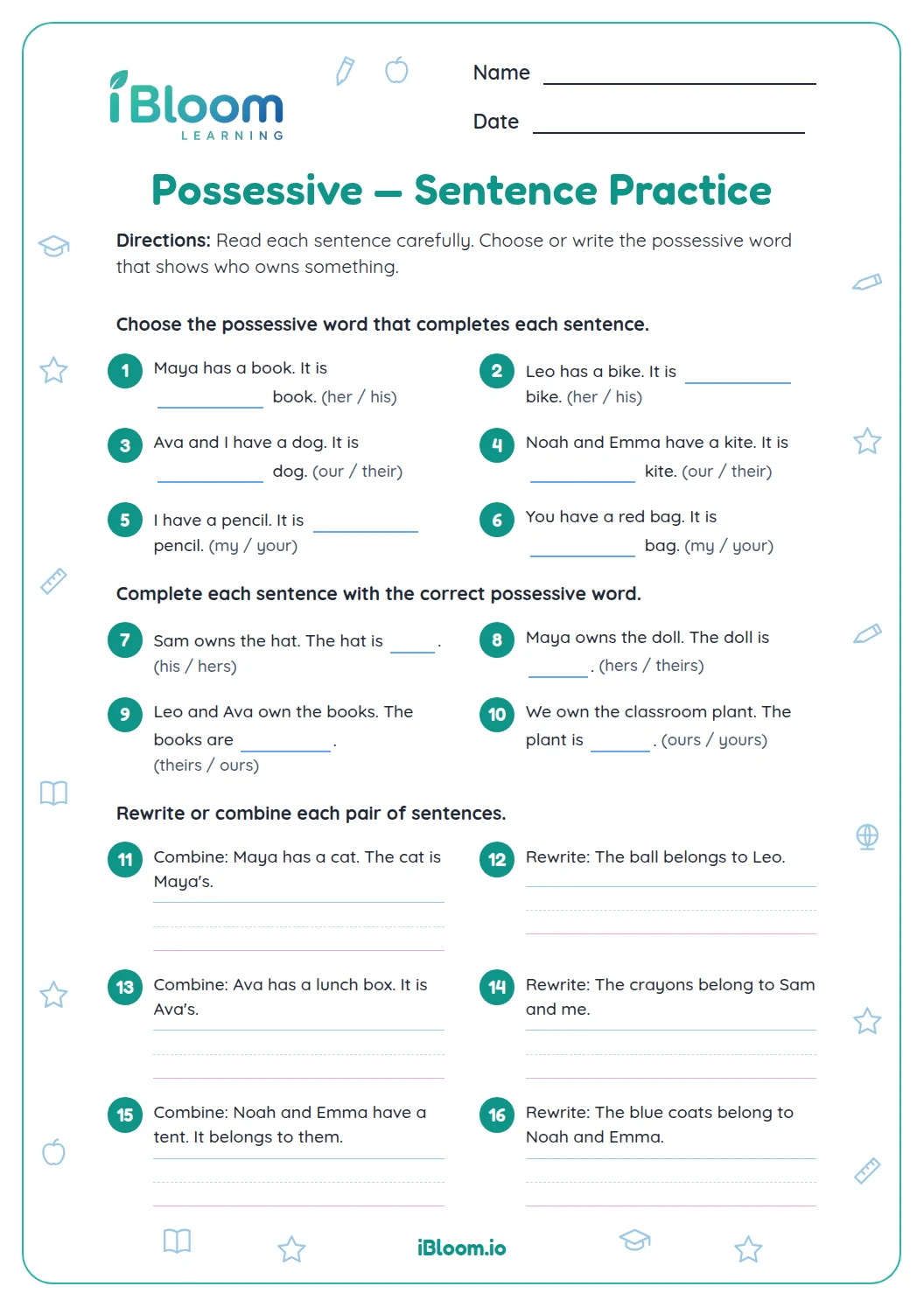
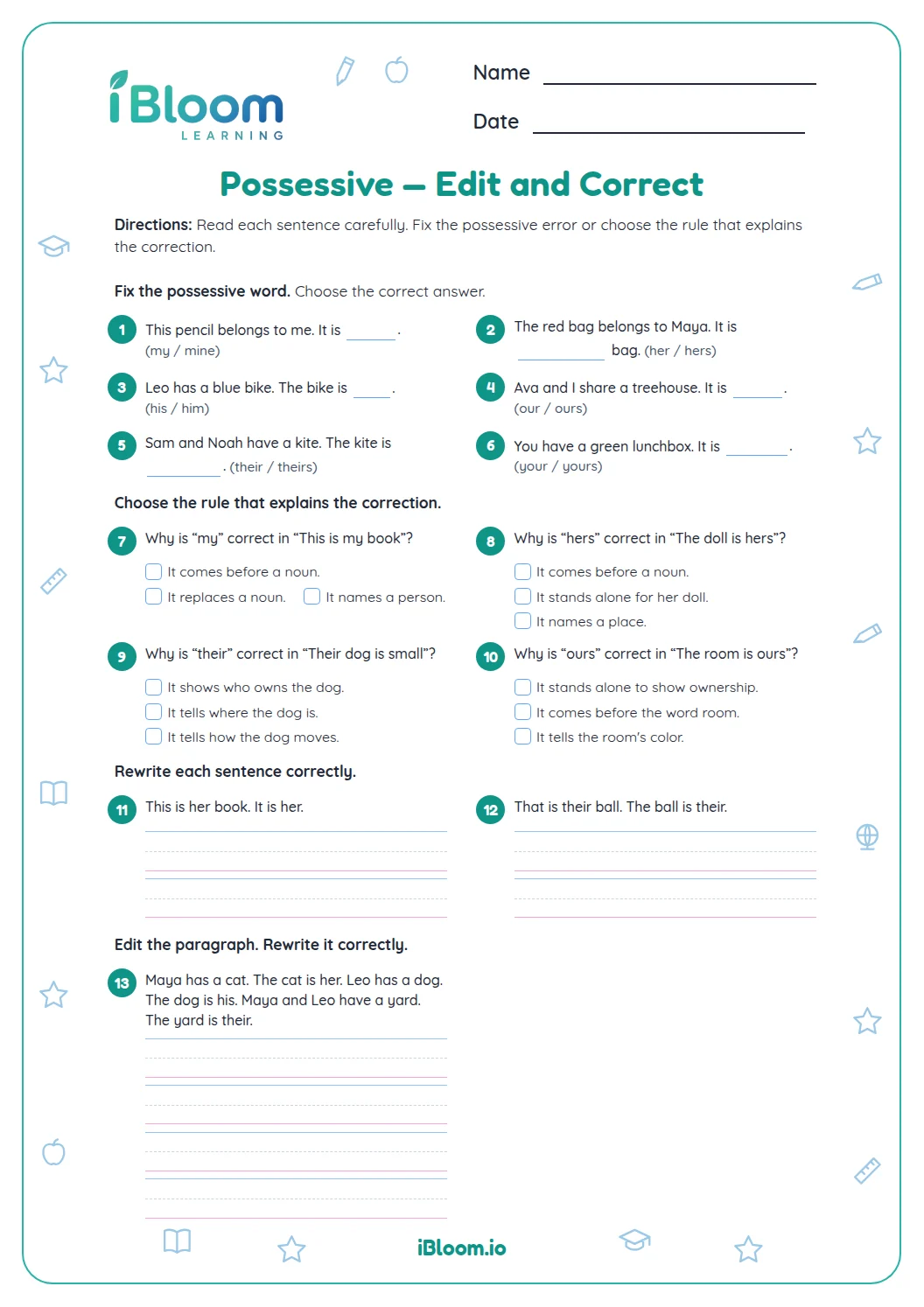
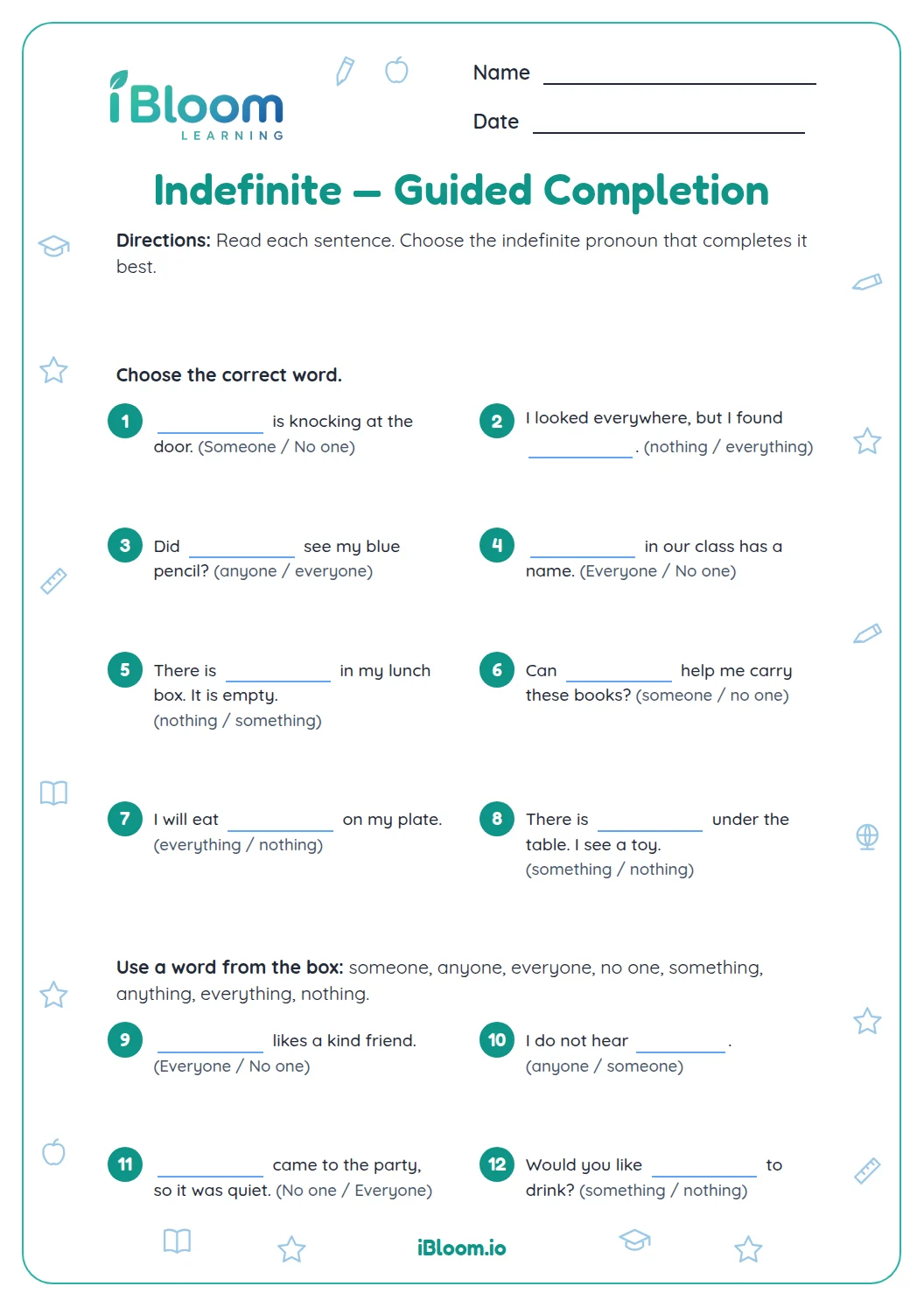
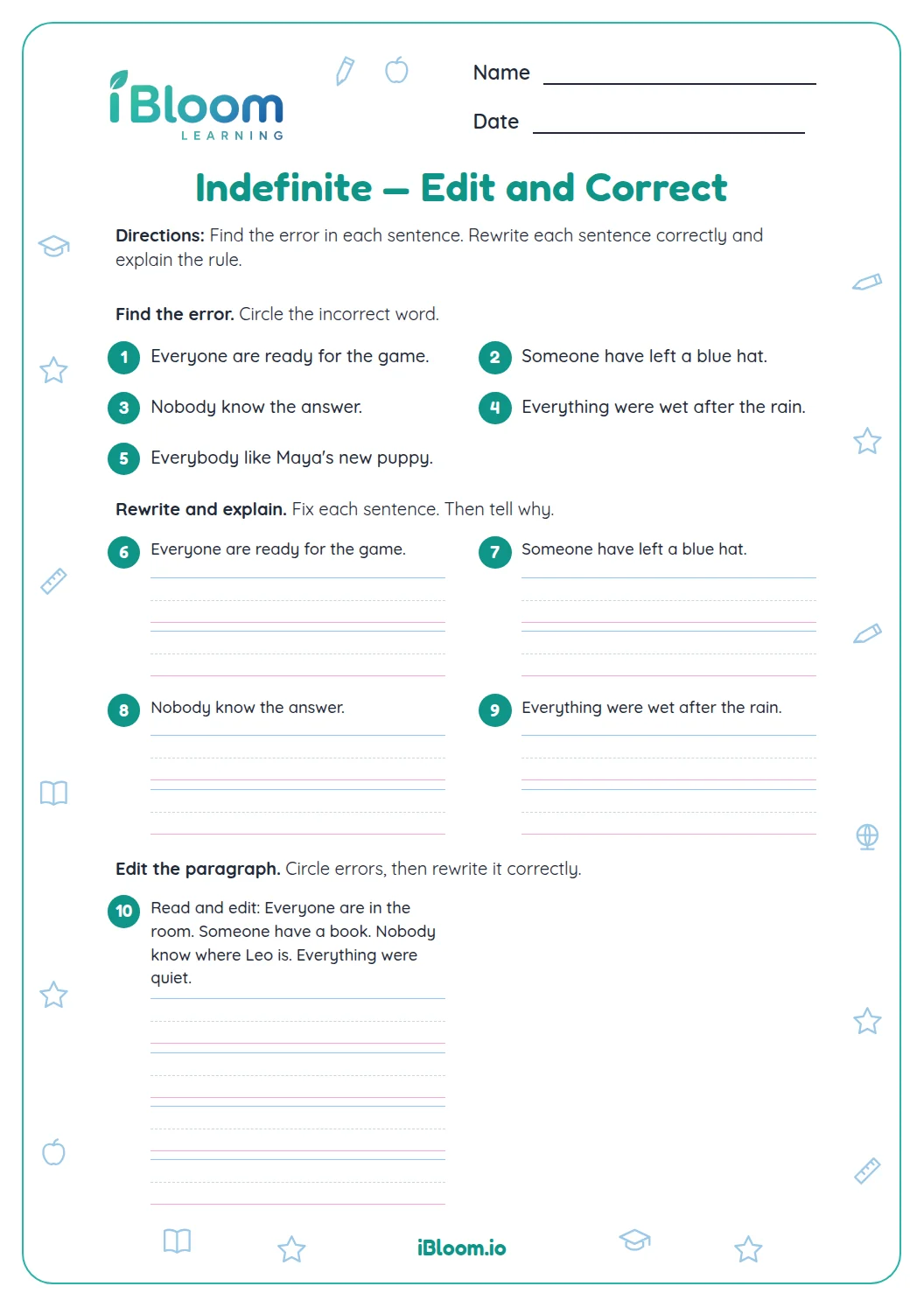
This Grade 1 grammar printable helps children connect a pronoun to the noun it refers to. Learners complete 16 short sentences, first choosing a matching pronoun and then writing one in a blank. The questions practice singular and plural personal pronouns and possessive forms such as she, they, it, its, his, her, and their. It practices CCSS L.1.1d by asking children to use personal and possessive pronouns. A separate answer key is included.
Aligned to L.1.1d
What job does a pronoun do?
A pronoun takes the place of a noun. In “Maya has a kite. She flies it,” she refers to Maya and it refers to the kite.
How can a child match a pronoun to its noun?
Find the noun first. Ask who or what it names, then decide whether the sentence needs a pronoun for one person, a group, or a thing. Check the sentence with the pronoun inserted.
- 1Maya has a kite. ___ flies it.
- 2The noun is Maya, one girl.
- 3Use she for Maya.
- 4Answer: She
When does a sentence need a possessive pronoun?
Possessive pronouns show who something belongs to. In “The puppy wags its tail,” its tells whose tail. Keep the pronoun connected to the noun that owns the object.
How to use this worksheet
- 1Read the whole sentence and find the noun being named.
- 2Decide whether the noun is one person, a group, or a thing.
- 3Choose a pronoun that matches the noun.
- 4For possessives, ask who owns the item named after the blank.
- 5Read the completed sentence aloud and check the answer key.
Common mistakes and quick fixes
The mistake
Using they for one named person.
The fix
Check whether the sentence names one person or more than one before choosing.
The mistake
Confusing it with its.
The fix
Use it as a subject or object; use its before a thing that belongs to it.
The mistake
Using a singular pronoun for a plural noun.
The fix
Match words such as boys or ducks with they, them, or their.
Common Core alignment
Use pronouns that match the people, animals, or things named.
On this sheet: The sentences ask learners to select personal and possessive pronouns that match nouns.
Show the official wordingHide the official wording
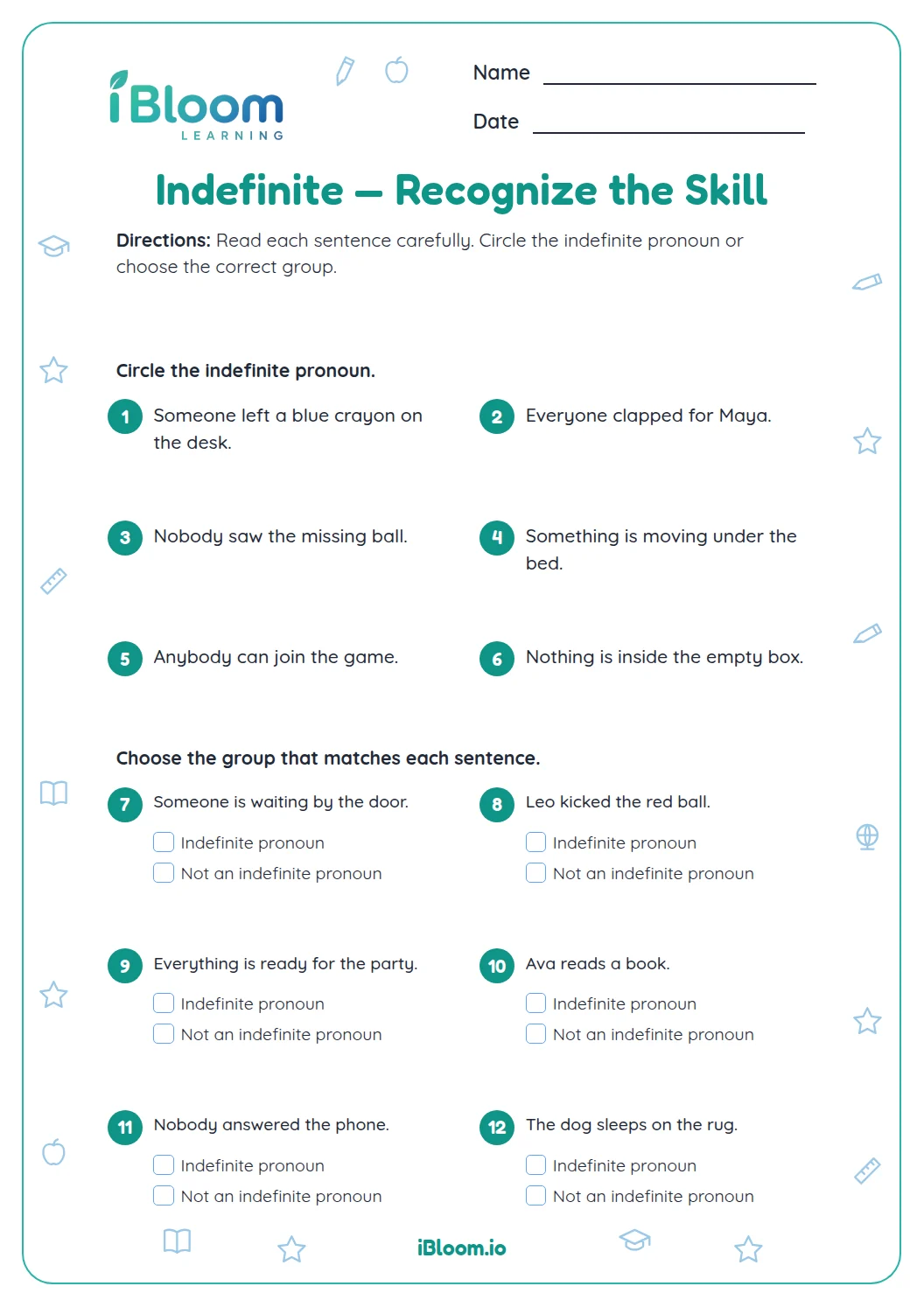
Use personal, possessive, and indefinite pronouns (e.g., I, me, my; they, them, their, anyone, everything).
What to practice next
Make more practice
Further reading
Questions parents and teachers ask
What does noun-pronoun matching mean?
A pronoun stands in for a noun, and it should fit the person, animal, or thing named. In “Maya has a kite. She flies it,” she refers to Maya and it refers to the kite. The worksheet asks children to choose or write a fitting pronoun in each sentence.
How many questions are on this page?
There are 16 sentence questions: eight multiple-choice items and eight fill-in items. The first part asks children to choose a pronoun. The second asks them to supply one. A separate answer key gives the intended response to each sentence.
What kinds of pronouns appear?
The questions use personal pronouns such as she, we, they, and it, as well as possessive forms such as its, her, his, and their. Children look for the noun first, then choose a pronoun that fits the sentence.
How can I help a child choose the right pronoun?
Ask who or what the sentence names. Check whether it refers to one person, more than one person, or a thing, and then read the sentence with the pronoun in place. For a possessive form, notice the noun that follows it.
Is an answer key included?
Yes. The answer key follows the worksheet and lists the intended pronoun for each question. For sentences with a name that could refer to different people, this worksheet uses clear clues so the expected pronoun is unambiguous. Read the finished sentence aloud to check that the pronoun matches the noun.