


About this worksheet
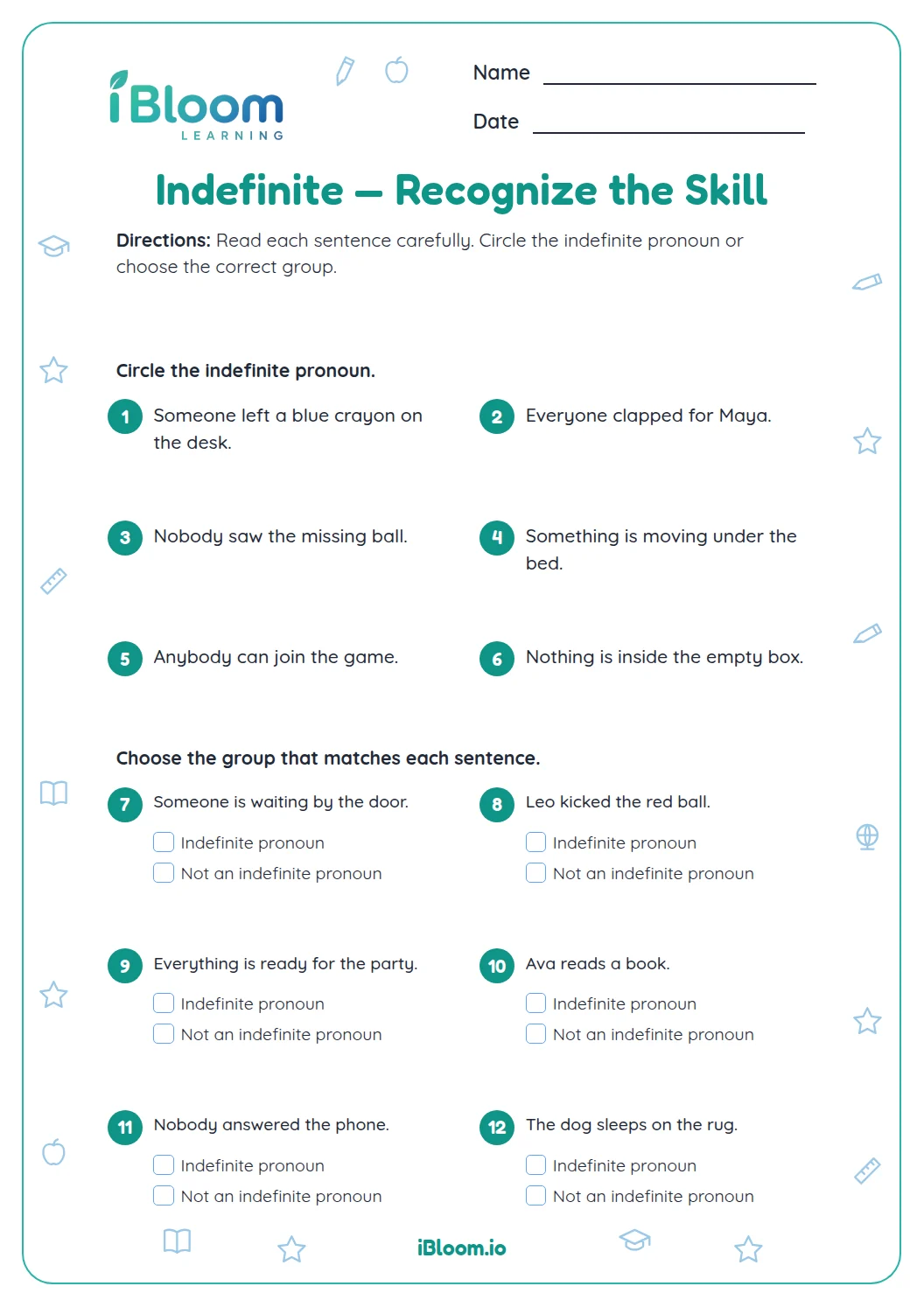
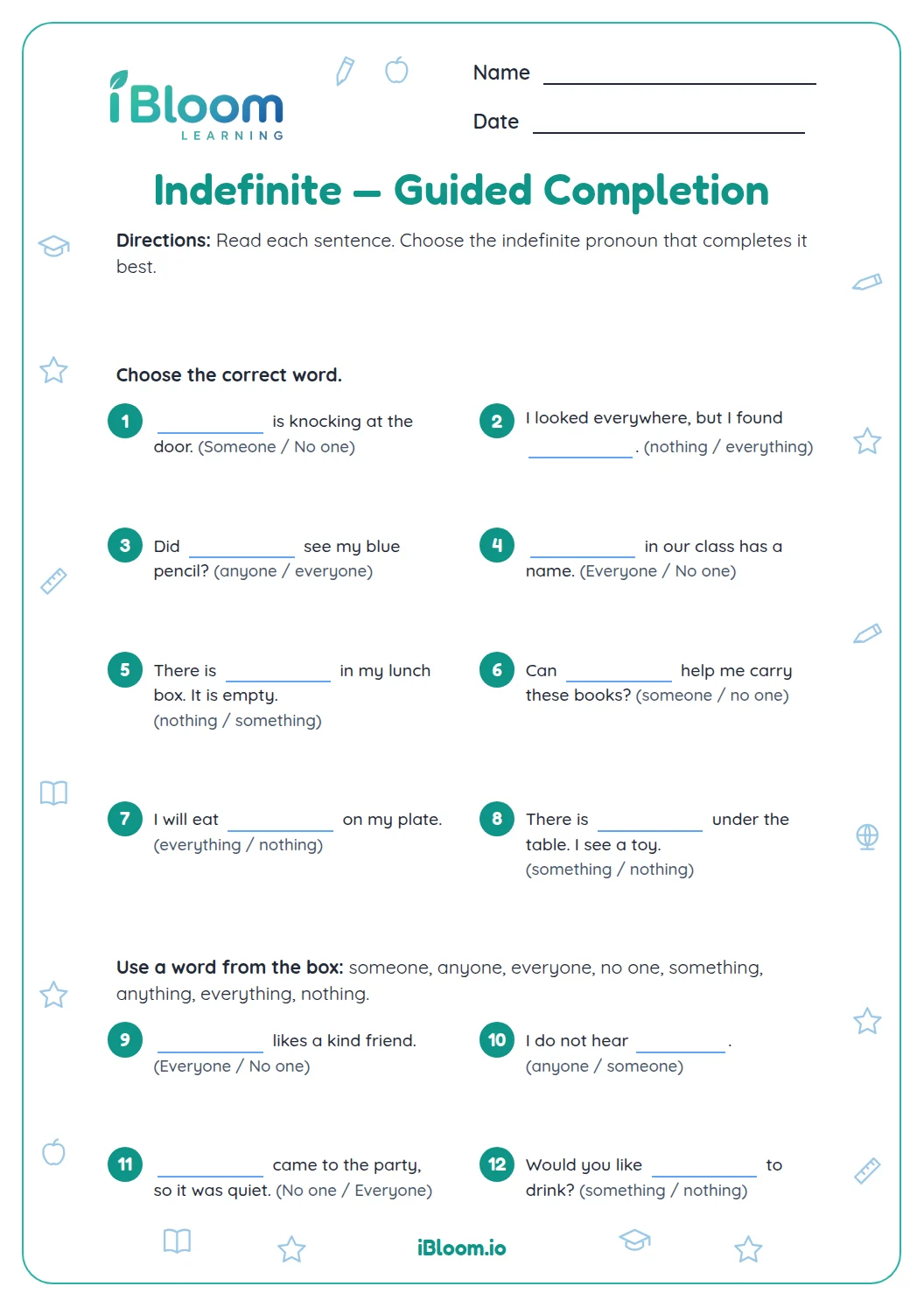
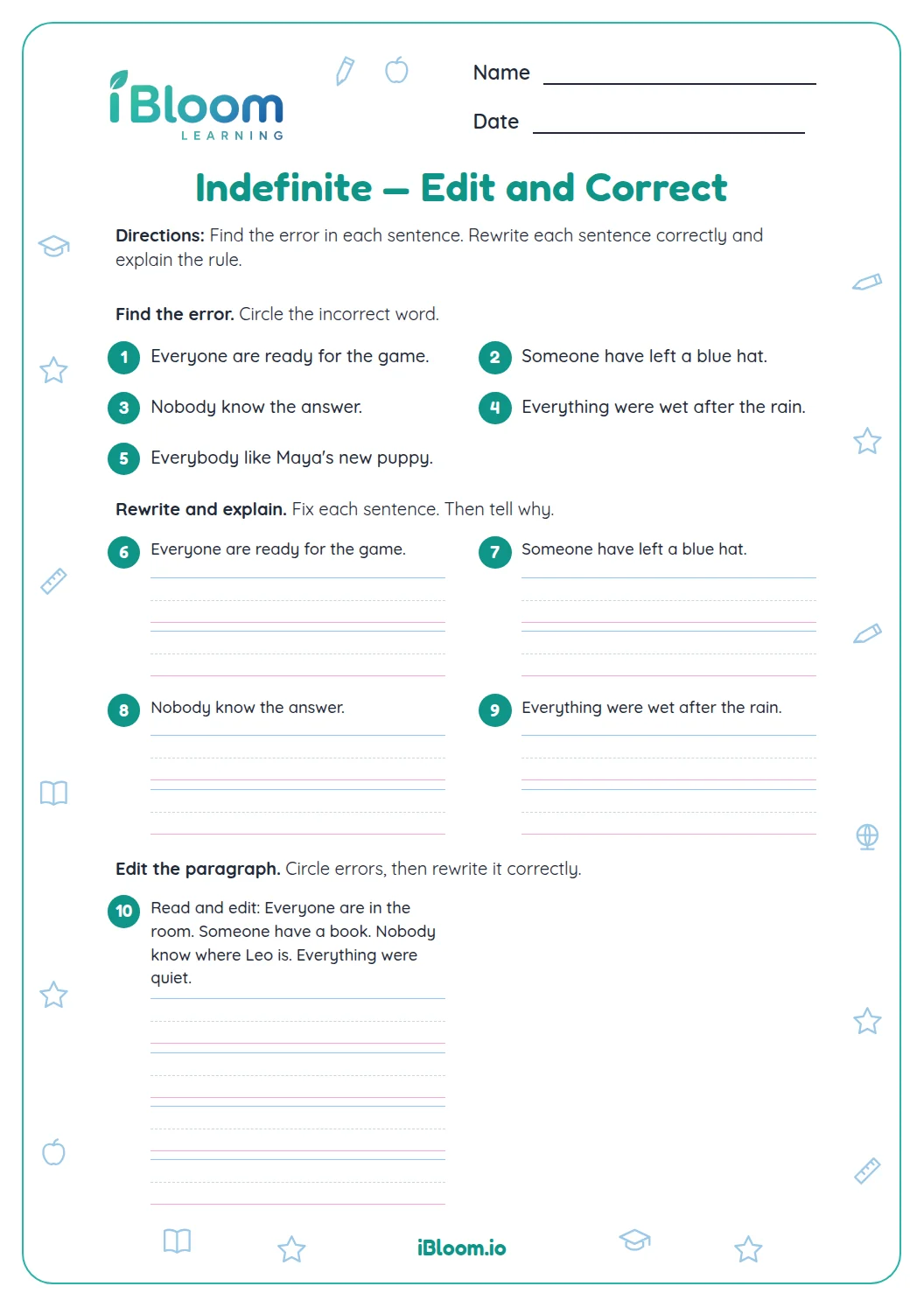
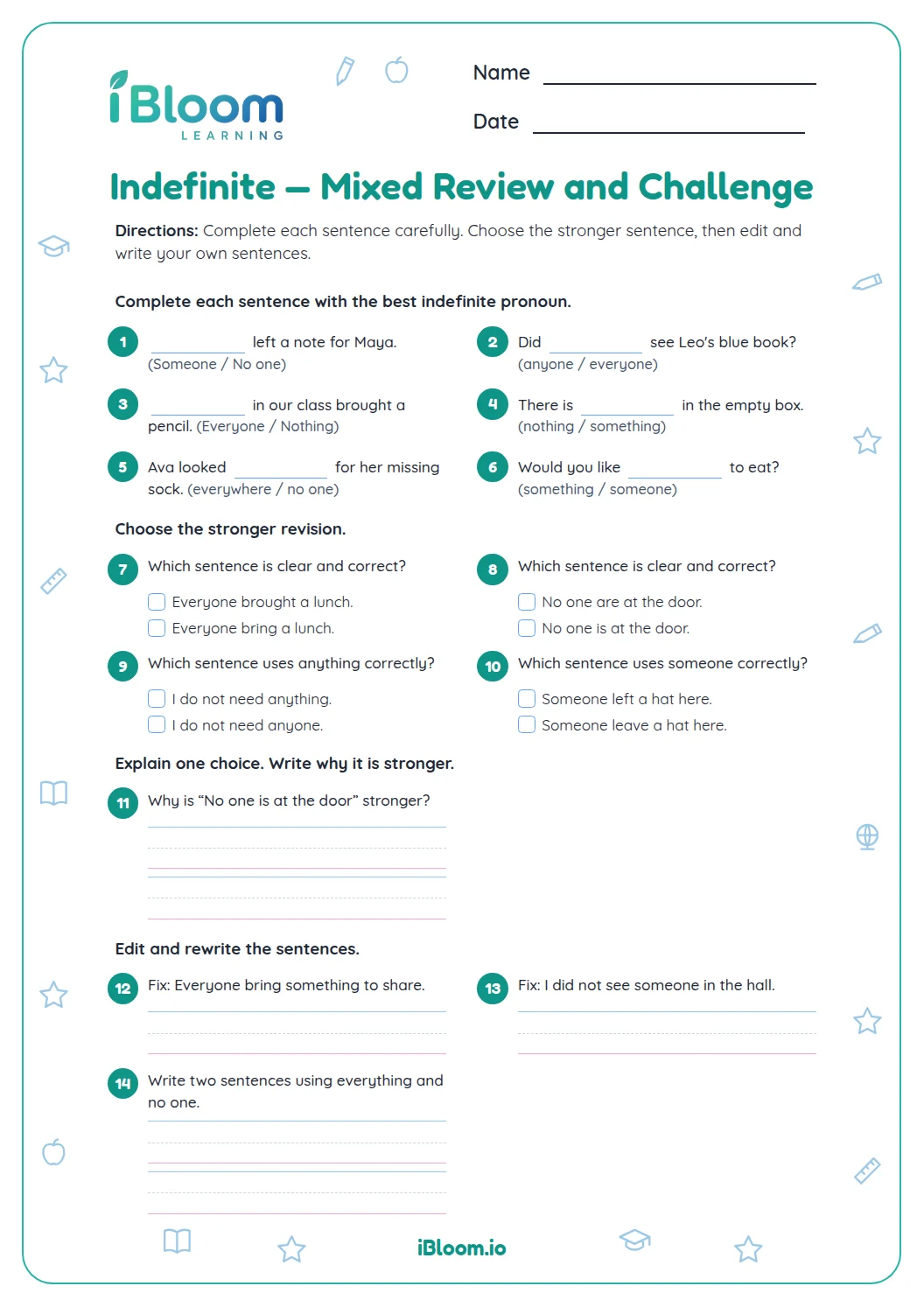
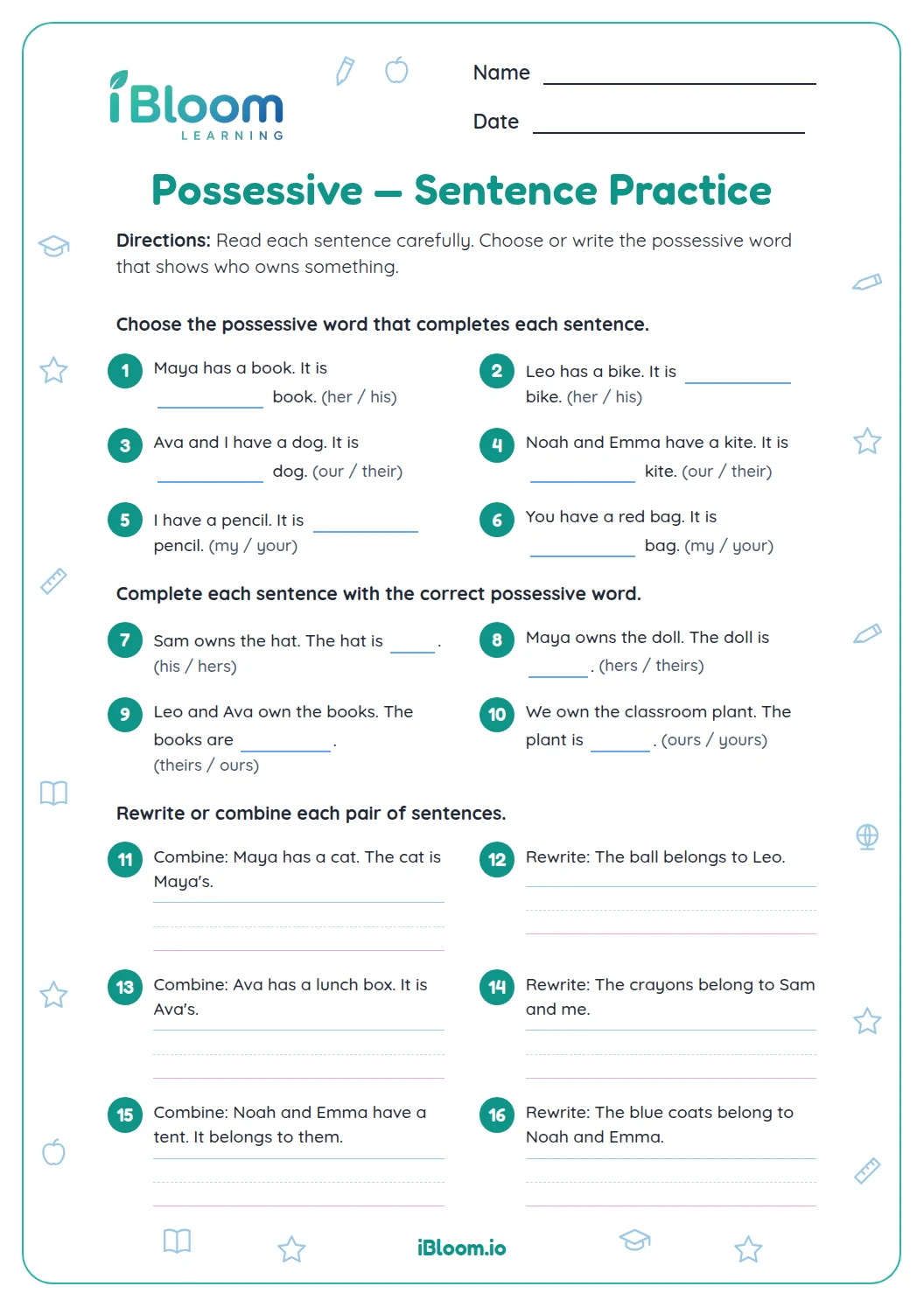
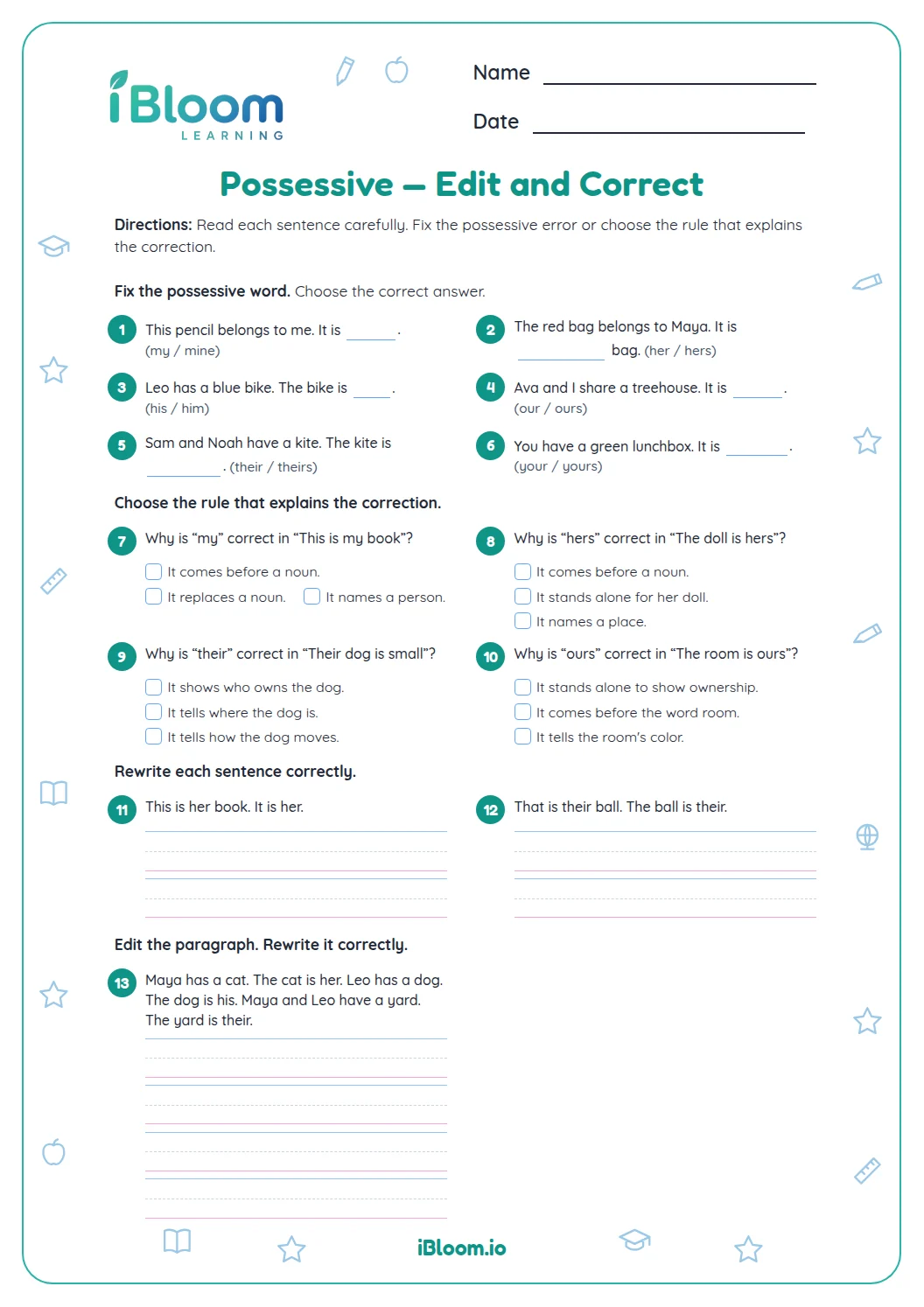
This Grade 1 printable gives children practice using indefinite pronouns in complete sentences. Learners choose a word from short options, fill a sentence blank, and match sentence meaning to a pronoun. The examples use someone, anyone, everyone, no one, something, and nothing. The page practices CCSS L.1.1.d and includes a separate answer key for quick checking.
Aligned to L.1.1.d
How can a child choose the right pronoun?
Read the whole sentence and ask whether it refers to a person or a thing, and whether it means one, all, or none. “___ left a note” points to an unnamed person, so someone fits. The choices let children compare how each pronoun changes a sentence’s meaning.
- 1___ left a note on the table.
- 2The blank is a person, but the name is not given.
- 3Someone left a note on the table.
How do blank sentences build sentence sense?
The blank items ask children to read for meaning rather than copy from a nearby word bank. “The jar is empty; ___ is left inside” signals nothing. Read the sentence again after filling the blank to make sure the complete idea sounds right.
What changes between someone and everyone?
Someone means an unnamed person. Everyone refers to all members of a group, while no one means not a single person. The last items connect those meanings to complete sentences so learners can choose the word that expresses the intended idea.
How to practice indefinite pronouns
- 1Read the sentence from beginning to end.
- 2Decide whether the blank refers to a person or a thing.
- 3Look for clues such as all, empty, or a question.
- 4Choose or write the pronoun that matches the clue.
- 5Read the completed sentence aloud and check its meaning.
Pronoun meanings to check
The mistake
Using anyone when the sentence says that all members got a turn.
The fix
Use everyone for all people in the group.
The mistake
Using something when the sentence says the box is empty.
The fix
Empty means nothing is inside.
The mistake
Thinking someone names a particular person.
The fix
Someone refers to a person whose identity is not stated.
Common Core alignment
This sheet gives focused practice with the standard below.
Use indefinite pronouns such as someone, anyone, and everything in sentences.
On this sheet: Learners choose and use indefinite pronouns to refer to people, things, or groups without naming them.
Show the official wordingHide the official wording
Use personal, possessive, and indefinite pronouns (e.g., I, me, my; they, them, their, anyone, everything).
What to practice next
Make more practice
Further reading
Questions parents and teachers ask
Which indefinite pronouns appear on this sheet?
The practice uses someone, anyone, everyone, no one, something, and nothing. Each word appears in a short sentence or a meaning choice so children can compare how the words refer to people, things, or groups. The note does not identify who left it, so the blank refers to an unnamed person.
How is someone different from anyone?
Someone usually points to an unnamed person in a statement, such as “Someone left a note.” Anyone often appears in a question about whether a person wants or is able to do something. The sentence gives a contrast: the box has no thing inside. Nothing matches the empty-box clue and completes the idea.
When should a child use everyone?
Use everyone when the sentence means all the people in a group. The sheet includes a sentence about every team member getting a turn, which gives a clear clue for everyone. Everyone means all the people in the class, which fits a sentence about the whole group bringing a book. The other choices do not express all members.
What does nothing mean in a sentence?
Nothing means not one thing. In “The jar is empty; nothing is left inside,” the word empty tells the reader that the jar has no contents. Anyone is natural in a question asking whether a person wants to help. The sentence asks if there is a willing helper, without naming one.
Can a child write answers on the worksheet?
Yes. The middle section has sentence blanks for children to write a pronoun. The other parts use choices, allowing learners to hear the sentence and compare meanings before writing independently. The clue says the cookies are for the whole class, so everyone refers to all the people receiving them. The phrase “whole class” rules out one person.
Is an answer key included?
Yes. The separate key shows the intended answer for all 16 items. Review the completed sentences together and ask the child which word or clue helped them decide. The speaker knows that something is in the bag but does not know what it is. Something refers to an unknown thing in this affirmative sentence.