


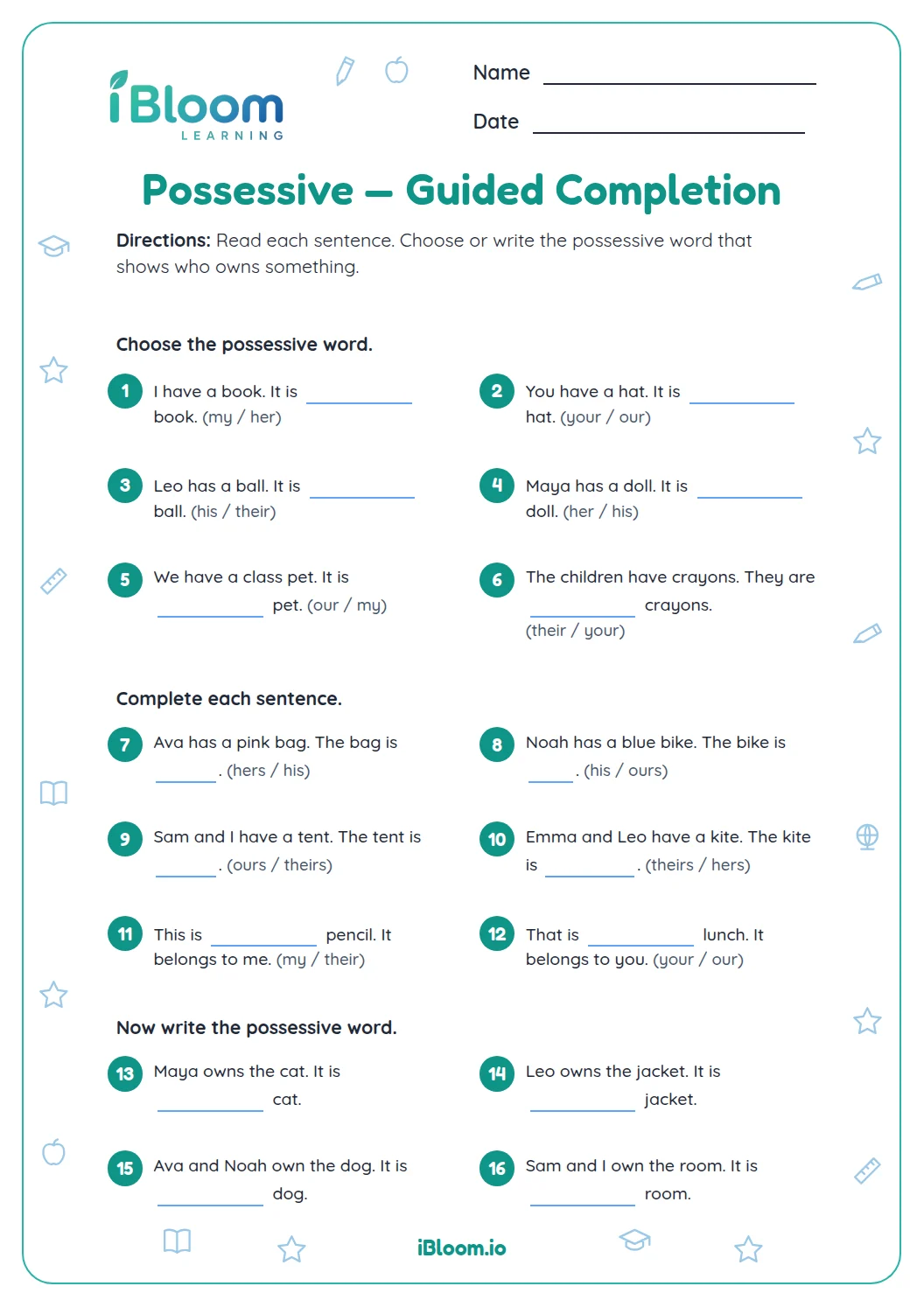
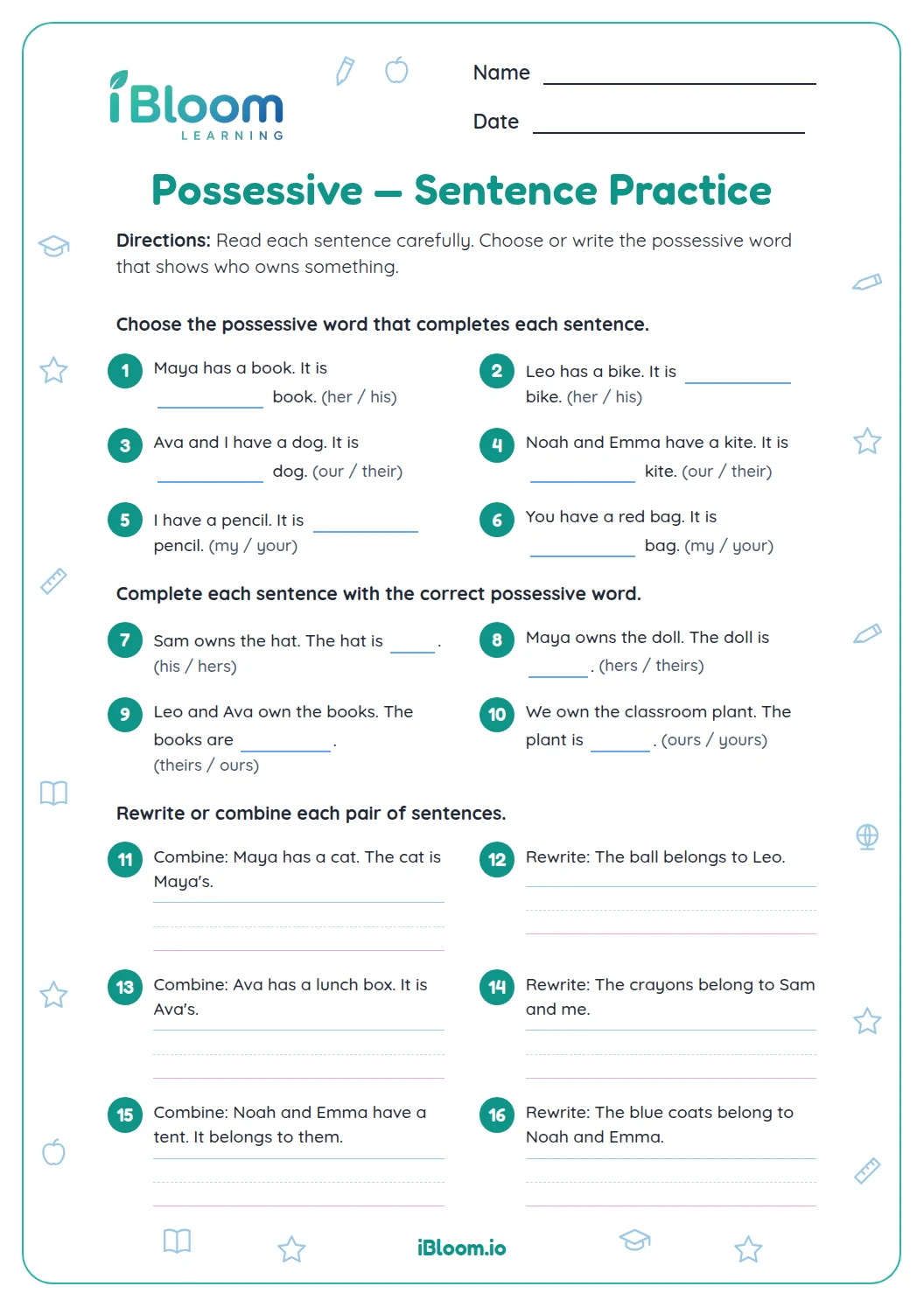
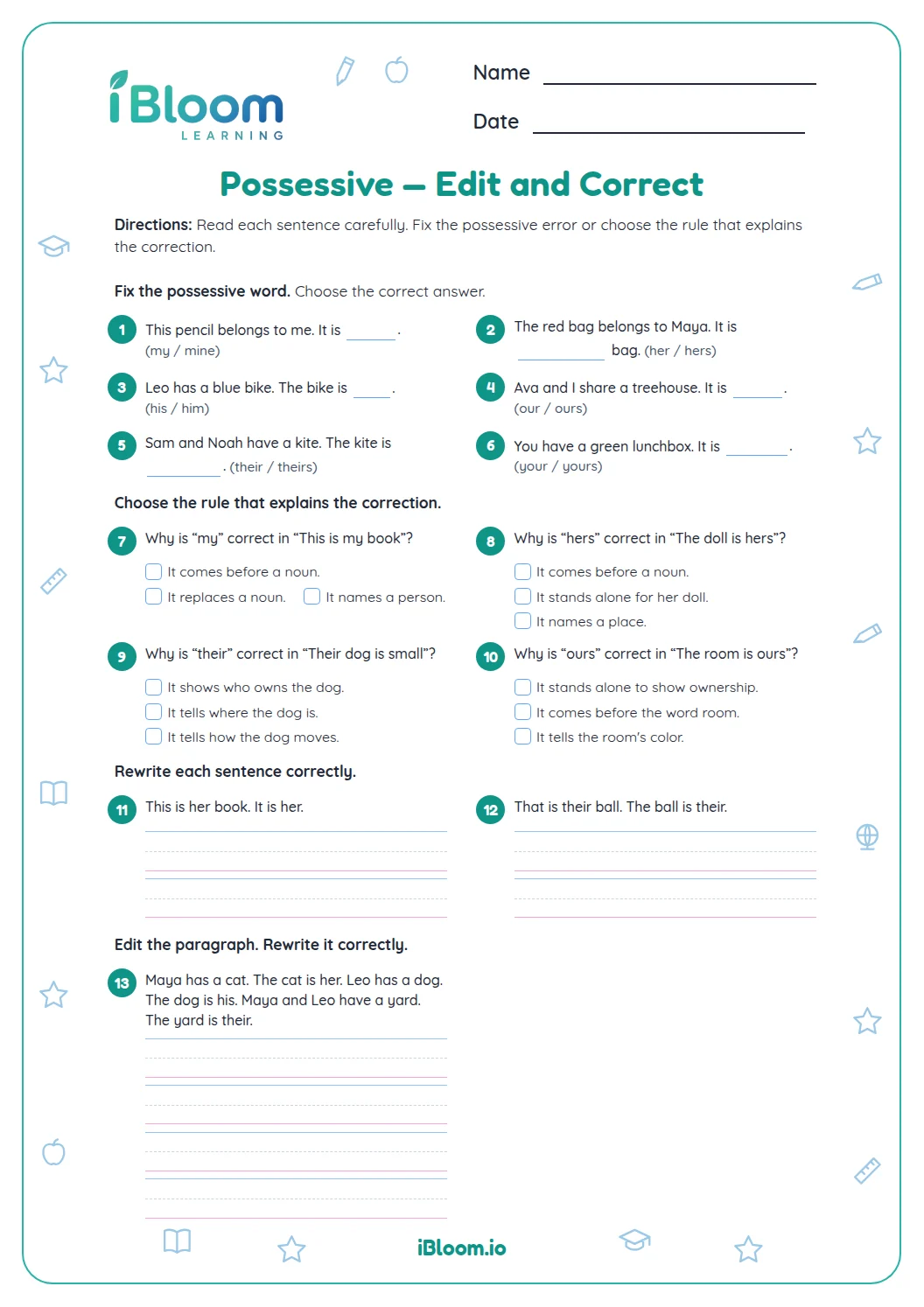
About this worksheet
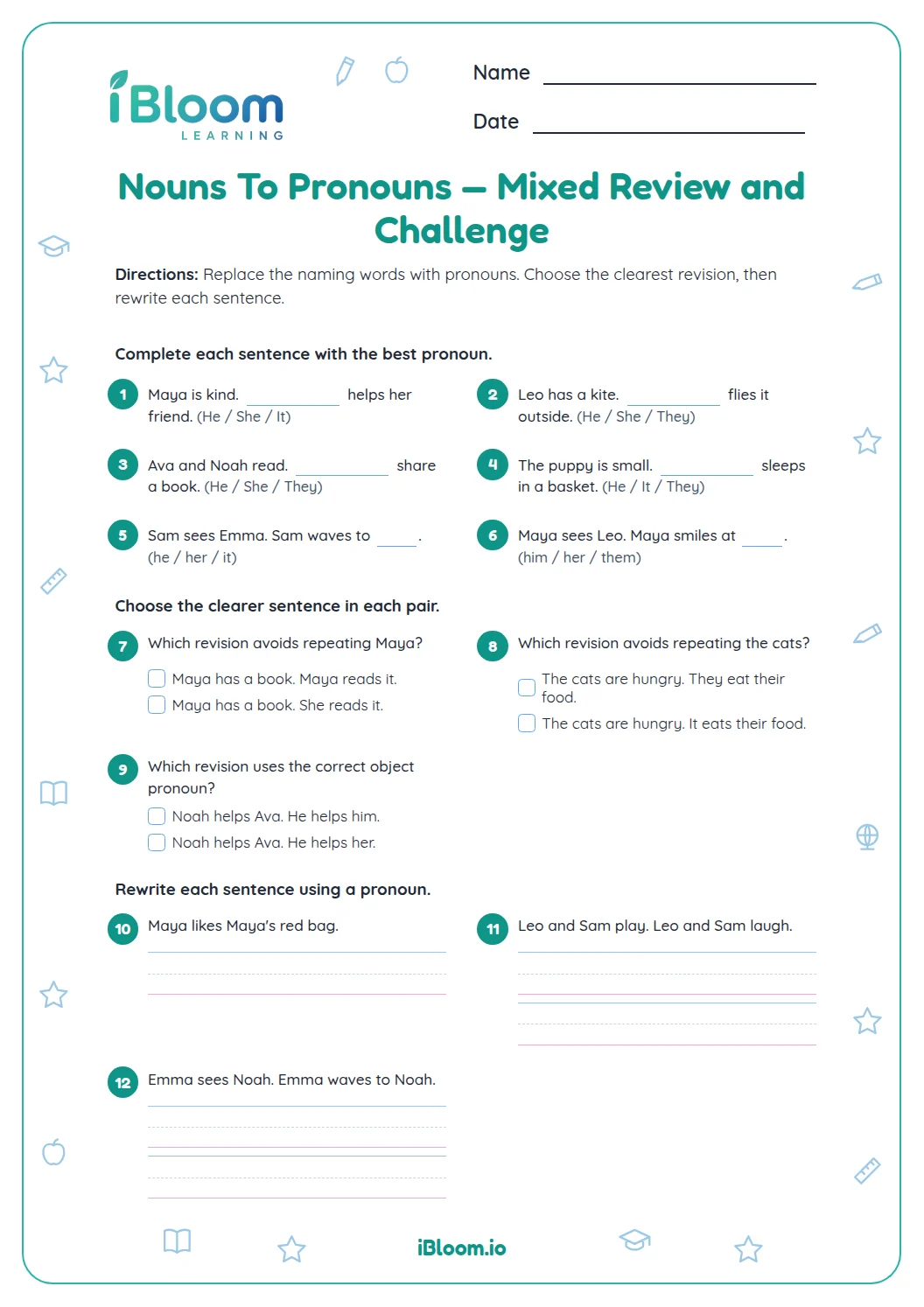
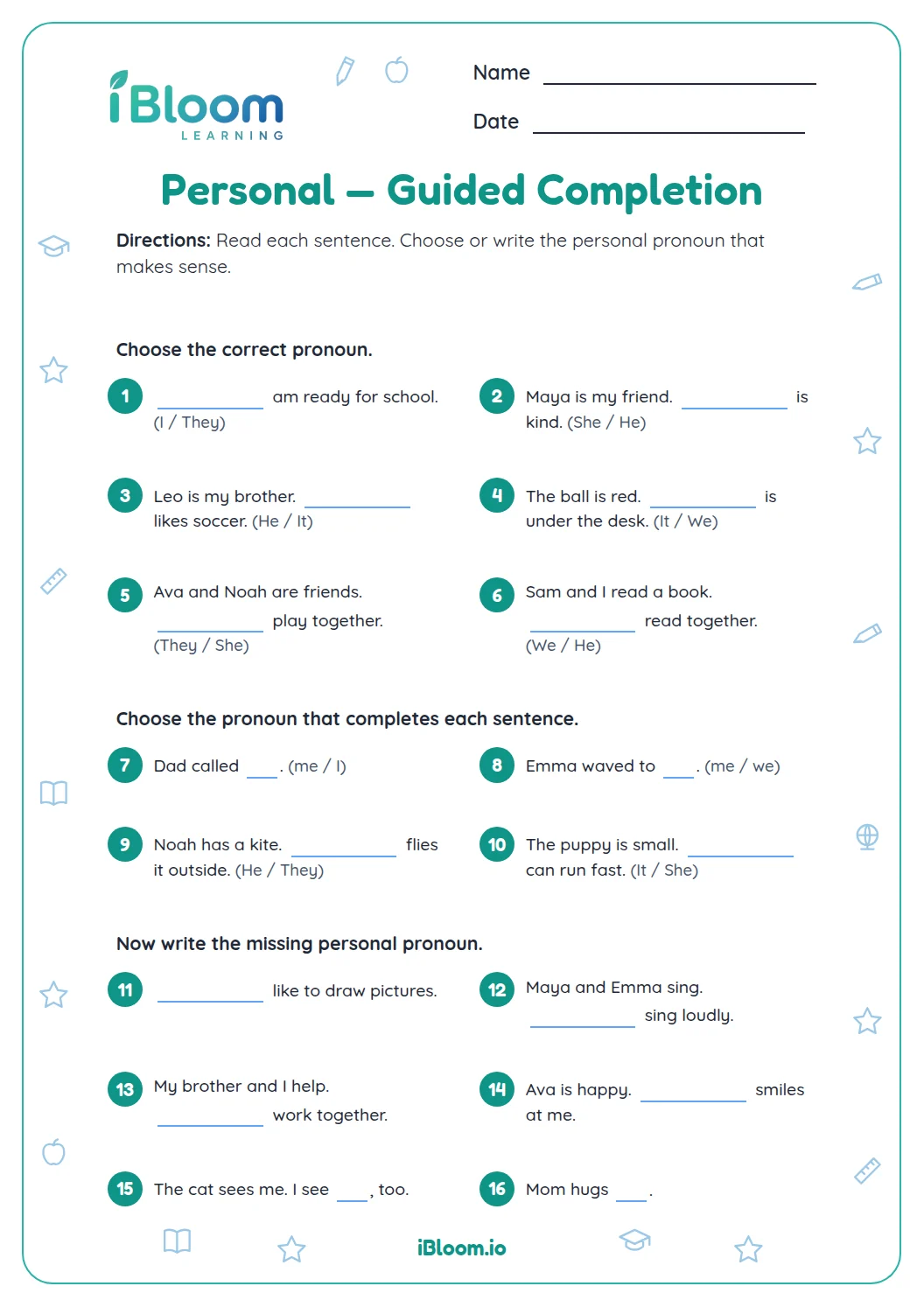
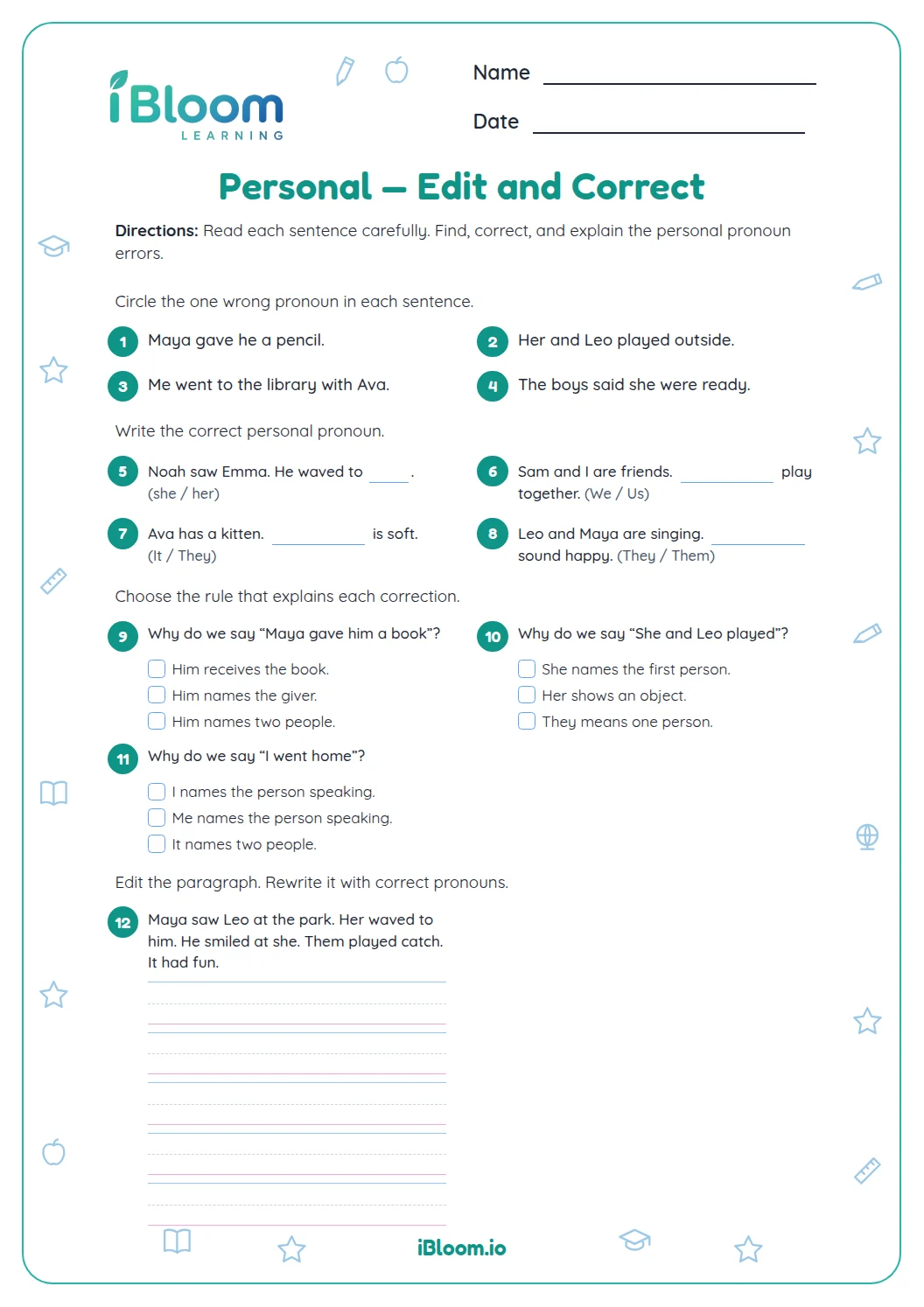
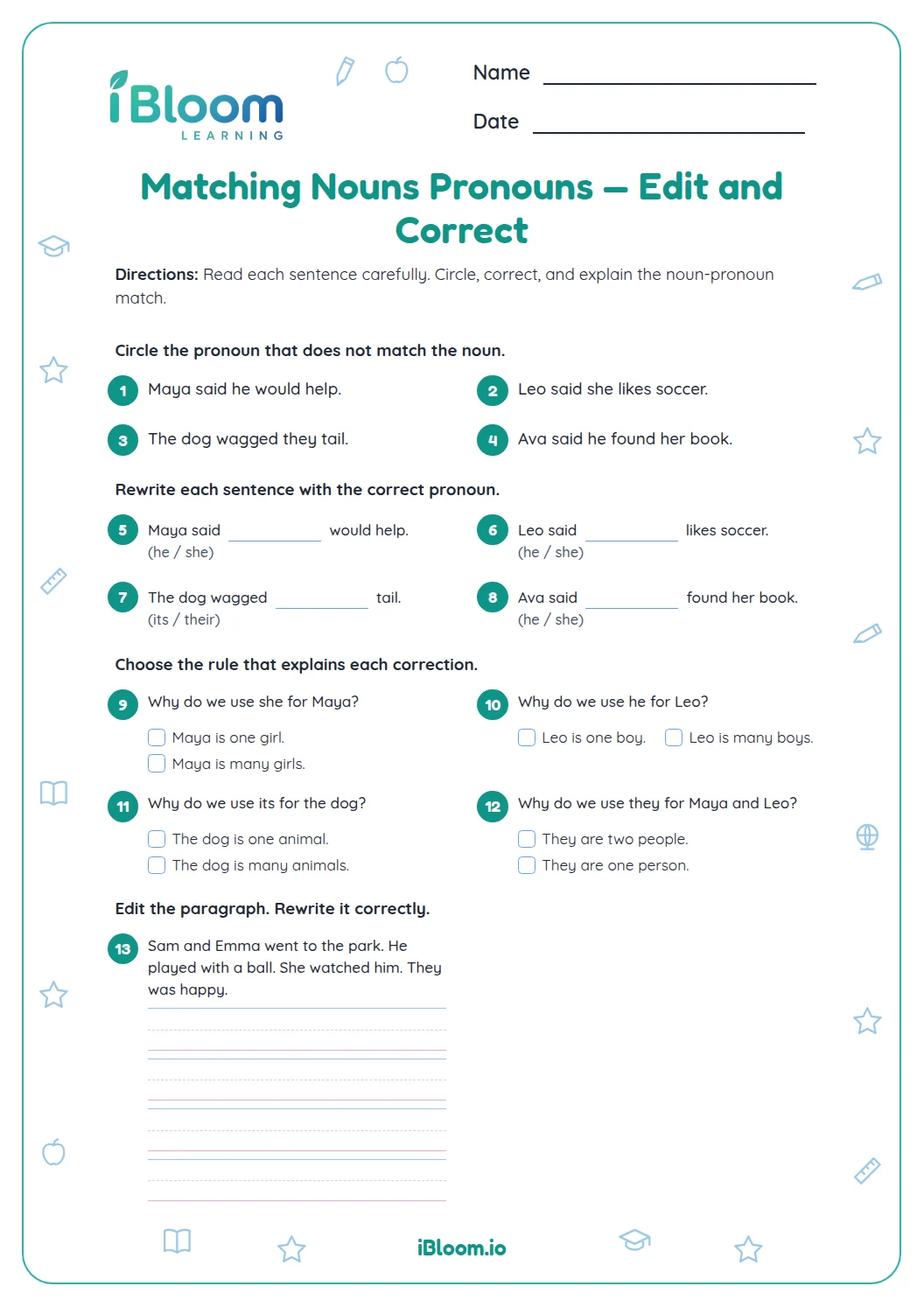
This Grade 1 printable worksheet teaches children to replace nouns with personal pronouns in complete sentences. Learners choose a matching pronoun, fill sentence blanks, and rewrite short examples using pronouns such as he, she, it, we, and they. It aligns with Common Core L.1.1.d and includes a separate answer key with a sample for open writing.
Aligned to L.1.1.d
How do I choose between he, she, and it?
Use he or she for a person when the sentence names him or her. Use it for an animal or thing when the sentence treats it as one.
- 1The bird can sing.
- 2It can sing.
What will learners practice?
Sixteen questions move from choosing a pronoun to filling sentence blanks and rewriting sentences.
How can I use the answer key?
Check each response after the learner finishes a part. For open responses, compare the answer with the model and accept other clear, correct wording.
How to use this worksheet
- 1Find the person, animal, or thing named in the first sentence.
- 2Choose a pronoun that matches whether the noun names one or more than one.
- 3Read the completed sentence to check that the pronoun points to the right noun.
- 4Rewrite the final sentences and compare the noun each pronoun replaces.
Common mistakes and quick fixes
The mistake
When do I use they?
The fix
Use they when the sentence is about more than one person, animal, or thing. “The birds fly. They flap their wings.”
The mistake
Which pronoun can replace “you and I”?
The fix
Use we. “You and I can help” becomes “We can help.”
The mistake
Can I use a pronoun more than once in a sentence?
The fix
Yes, when it clearly refers to the same noun and makes the sentence easy to understand. Read the sentence aloud to check that the reader knows who or what it means.
This worksheet practices the listed Common Core skill.
Use personal pronouns to replace nouns in complete sentences.
On this sheet:
Show the official wordingHide the official wording
Use personal, possessive, and indefinite pronouns (e.g., I, me, my; they, them, their, anyone, everything).
What to practice next
Make more practice
Further reading
Questions parents and teachers ask
What does a pronoun do?
A pronoun takes the place of a noun. In “Mia has a book. She reads,” the word “she” replaces Mia, so the sentence does not need to repeat the name. First name the noun, then reread the sentence with the pronoun in its place.
How do I choose between he, she, and it?
Use he or she for a person when the sentence names him or her. Use it for an animal or thing treated as one. Read the whole sentence to make sure the pronoun fits. A pronoun should match the person or group named earlier in the sentence.
When do I use they?
Use they when the sentence is about more than one person, animal, or thing. For example, “The birds fly. They flap their wings.” The pronoun points back to the plural noun. The examples use short sentences so the noun and its replacement are easy to spot.
Which pronoun can replace “you and I”?
Use we. For example, change “You and I can help” to “We can help.” The pronoun replaces both people together and keeps the sentence meaning clear. Check that the sentence still sounds complete after you replace the noun.
Can I use a pronoun more than once in a sentence?
Yes, when it clearly refers to the same noun and keeps the sentence easy to understand. Read the sentence aloud and check that a reader can tell who or what the pronoun means. If the meaning is unclear, repeat the noun instead of using a confusing pronoun.