





About this worksheet
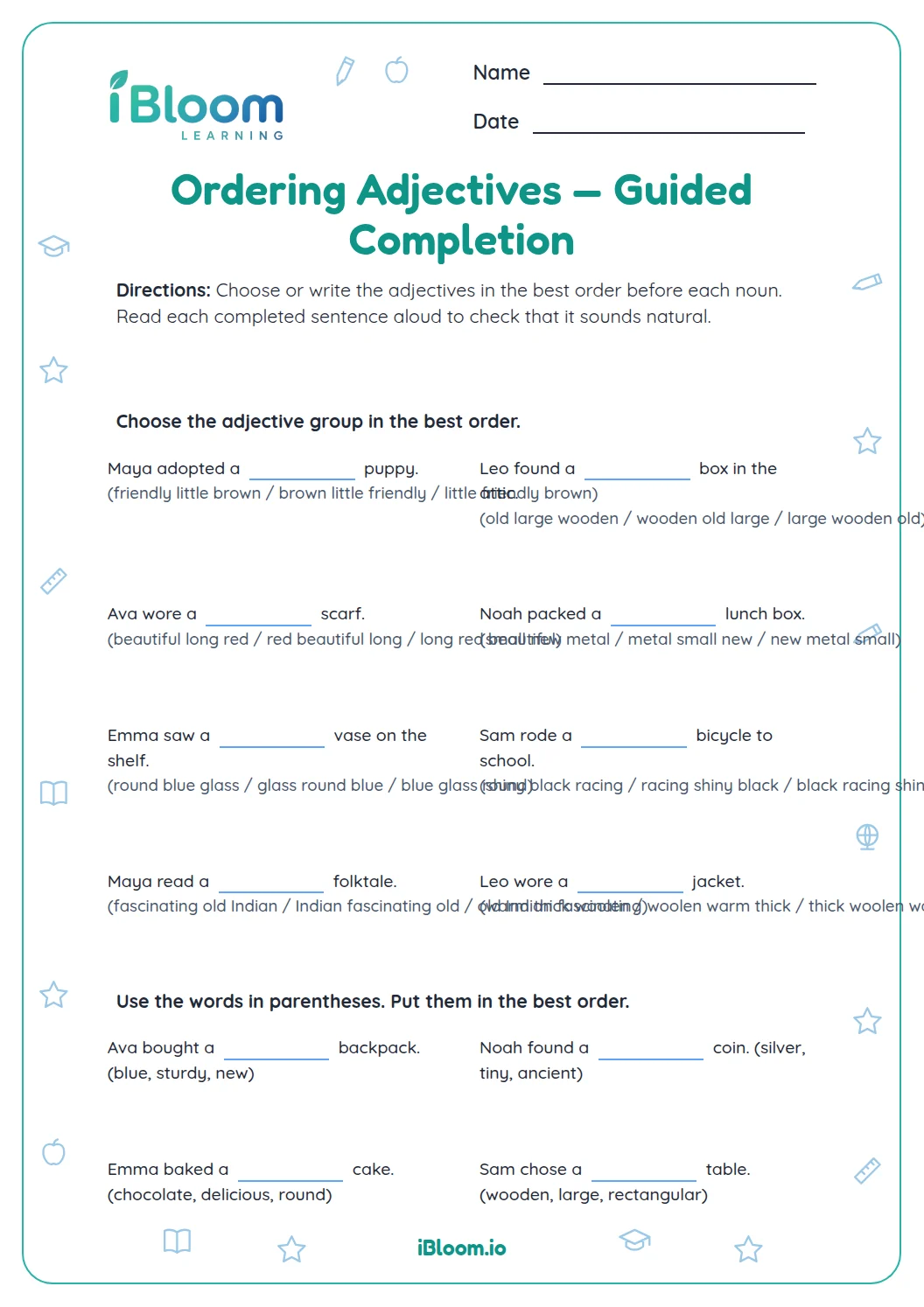
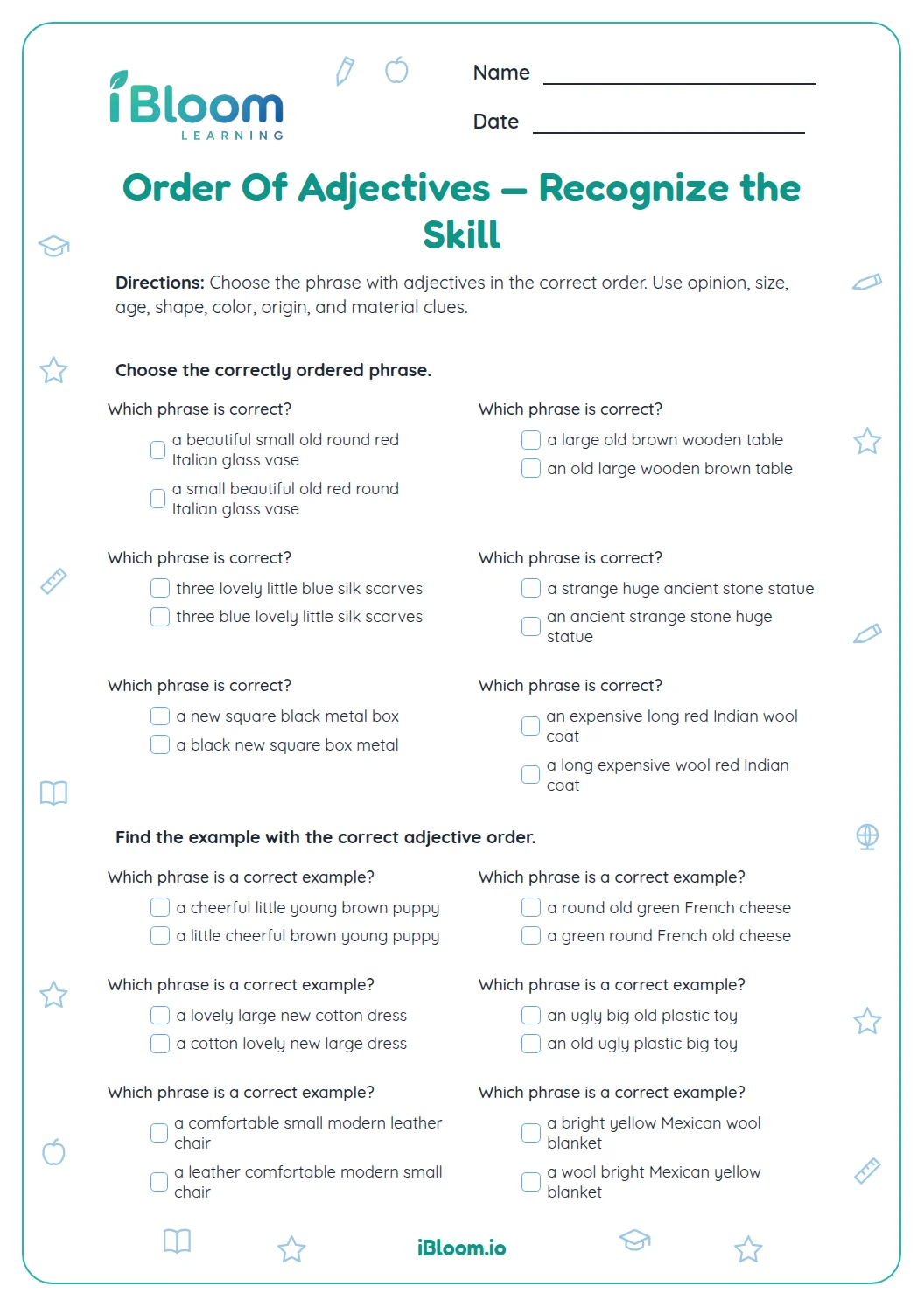
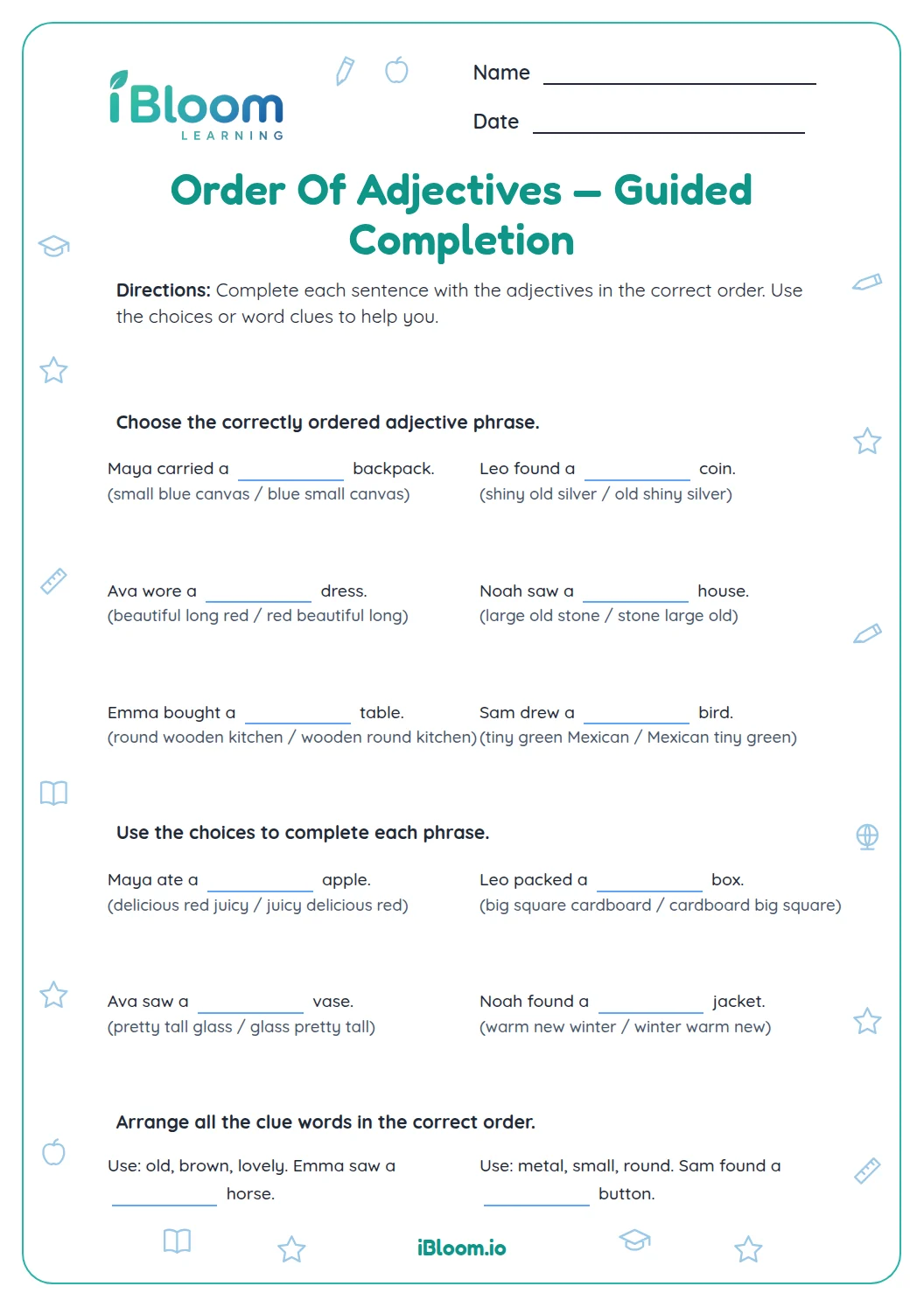
This Grade 5 printable practices conventional adjective order in familiar noun phrases. Students choose the best sequence in eight items, then reorder six sets of adjectives. The phrases include descriptions of a shell, scarf, bag, and bowl. The answer key shows the corrected phrases and explains the category sequence students can use when checking.
Aligned to L.5.1
How can students spot a natural adjective order?
Read the whole phrase aloud and check the descriptive jobs from broad opinion or size toward details such as color, origin, material, and purpose. Part A gives three sequences for each phrase.
- 11) a small beautiful pink shell → choose “a beautiful small pink shell.”
- 2Opinion comes before size, and size comes before color.
How should a phrase be corrected?
Keep the same details, change their order, and reread the noun phrase. Part B also asks students to name the order clue, so the correction shows both the edit and the reasoning.
What should an explanation include?
Name the adjective categories in sequence, such as opinion, color, and material. A short explanation is enough when it identifies why the corrected phrase sounds natural.
How to use this worksheet
- 1Read each phrase and identify the adjectives.
- 2For Part A, compare the order of adjective categories in each choice.
- 3For Part B, keep every detail and rearrange the adjectives.
- 4Name the order clue in a short explanation.
- 5Use the key to check both the corrected phrase and the reason.
Common mistakes and quick fixes
The mistake
Putting color before an opinion word, as in “pink beautiful shell.”
The fix
Put the opinion first: “beautiful pink shell.”
The mistake
Putting material before size, as in “wooden large box.”
The fix
Move size before material: “large wooden box.”
The mistake
Deleting a descriptive detail while revising.
The fix
Check that every adjective from the original remains in the corrected phrase.
Common Core alignment
The grammar standard below describes the conventions students apply while choosing and correcting adjective phrases.
Use standard English grammar when editing adjective phrases.
On this sheet: Every item asks students to apply grammar conventions while choosing or correcting adjective order.
Show the official wordingHide the official wording
Demonstrate command of the conventions of standard English grammar and usage when writing or speaking.
What to practice next
Make more practice
Further reading
Questions parents and teachers ask
What adjective order does the worksheet practice?
The phrases use familiar patterns, placing opinion before size, color, origin, material, or purpose. For example, “beautiful, small, pink shell” moves from an opinion to size and then color. Some adjective combinations can vary by emphasis, so each phrase is built for a clear conventional sequence.
How many items are on the worksheet?
There are 14 items in two parts: eight multiple-choice phrases and six reorder-and-explain items. The two-page answer key shows the corrected sequences and a category-based explanation for each phrase. The phrase itself is printed on the worksheet, so students can compare the category sequence without needing a separate word bank.
What should a student write for an explanation?
A short list of adjective categories is enough. For “beautiful, small, pink shell,” a student might write “opinion, size, color.” The key gives one model, and another explanation is fine if it correctly names the order used. This explanation step asks students to name the order rather than simply copy the answer.
How can I check a corrected phrase?
Compare the corrected phrase with the original to make sure every adjective remains. Then check that the sequence follows the category clues, such as opinion before size and color before material. The key gives one conventional order for each item.
Why do answer choices use the same adjectives?
Keeping the words the same lets students focus on sequence instead of vocabulary. They compare the adjective categories, select the most natural order, and then apply that reasoning to the six phrases they reorder themselves. The final phrases include material and purpose, giving students a chance to use the later categories too.