



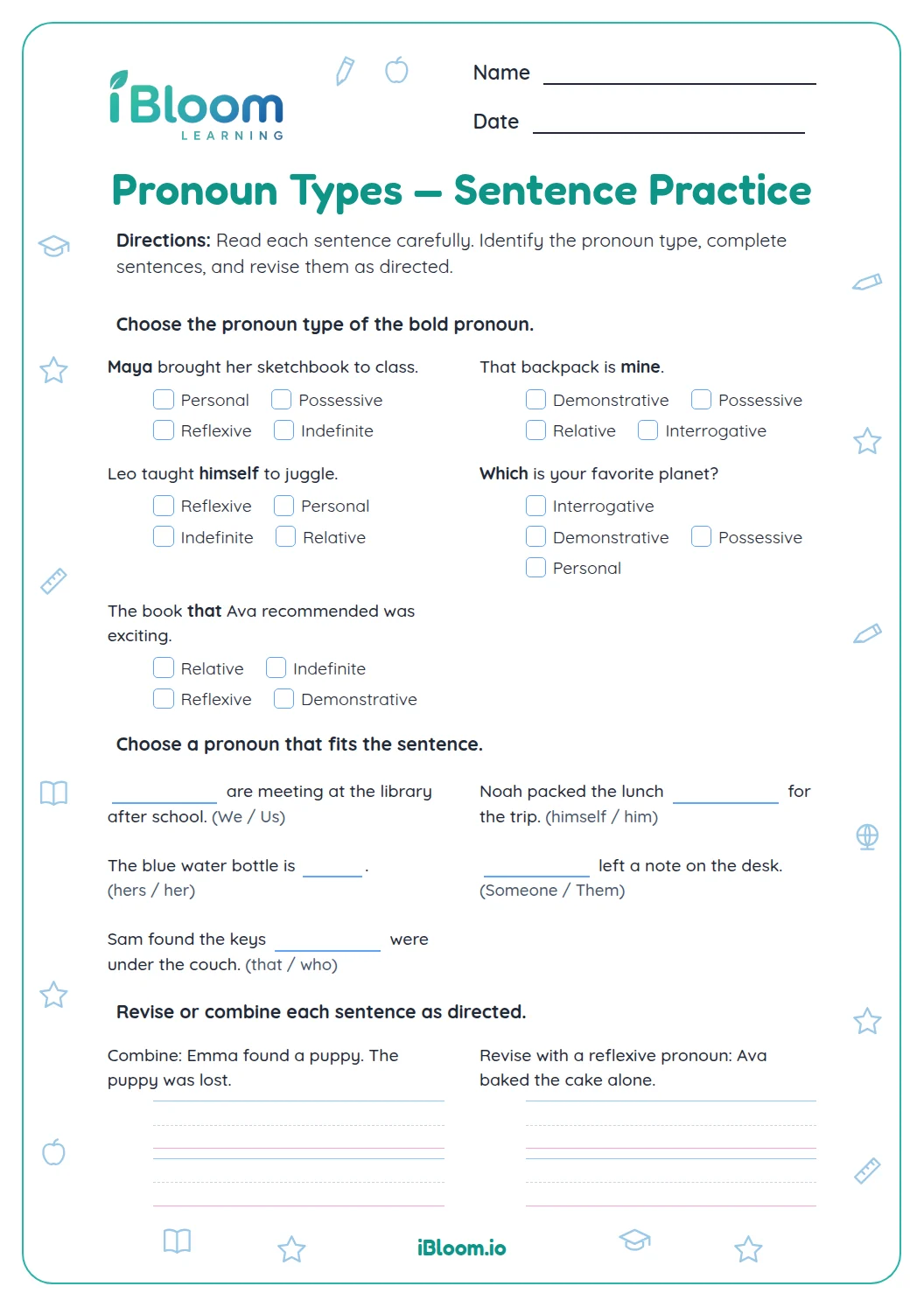
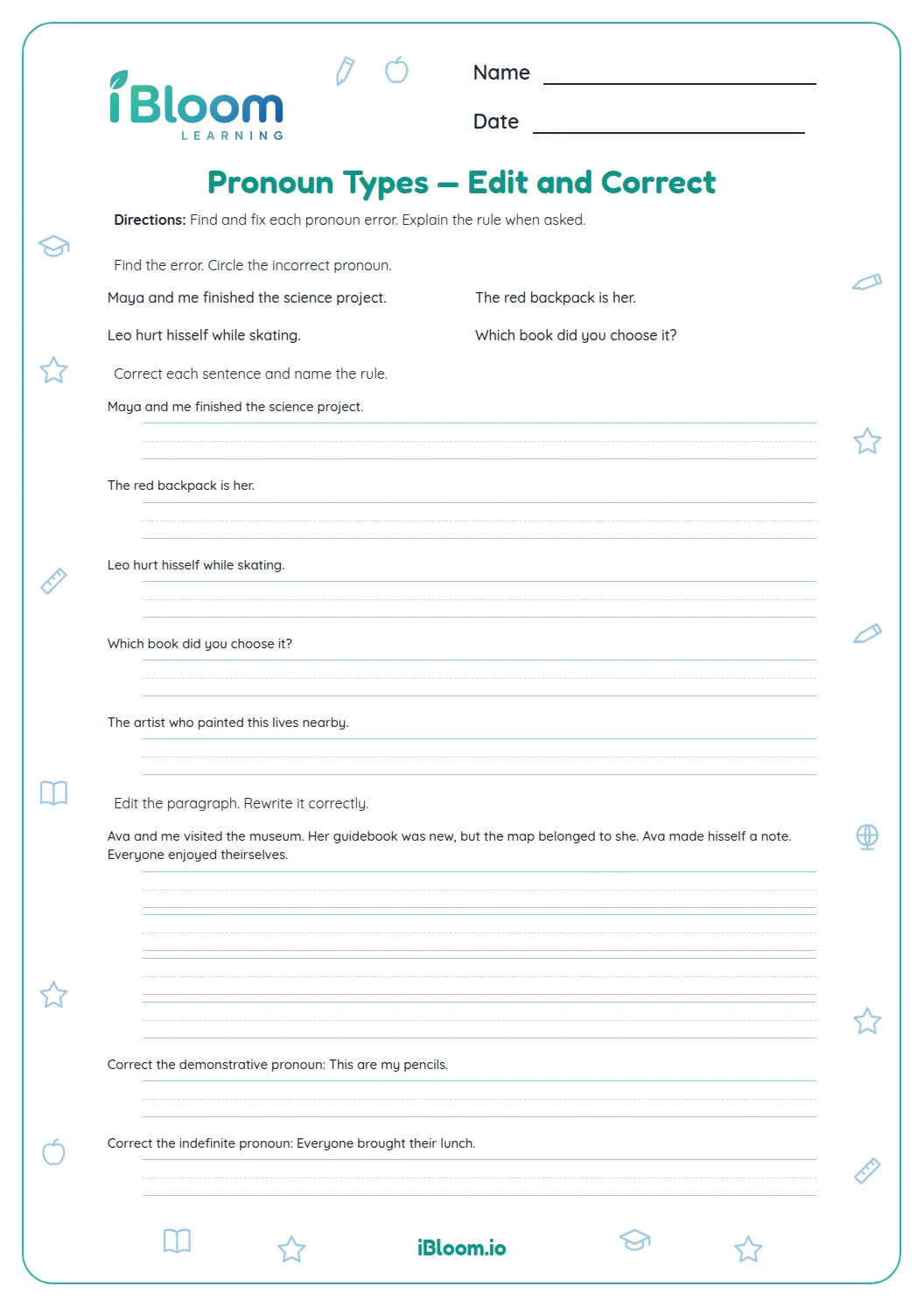
About this worksheet
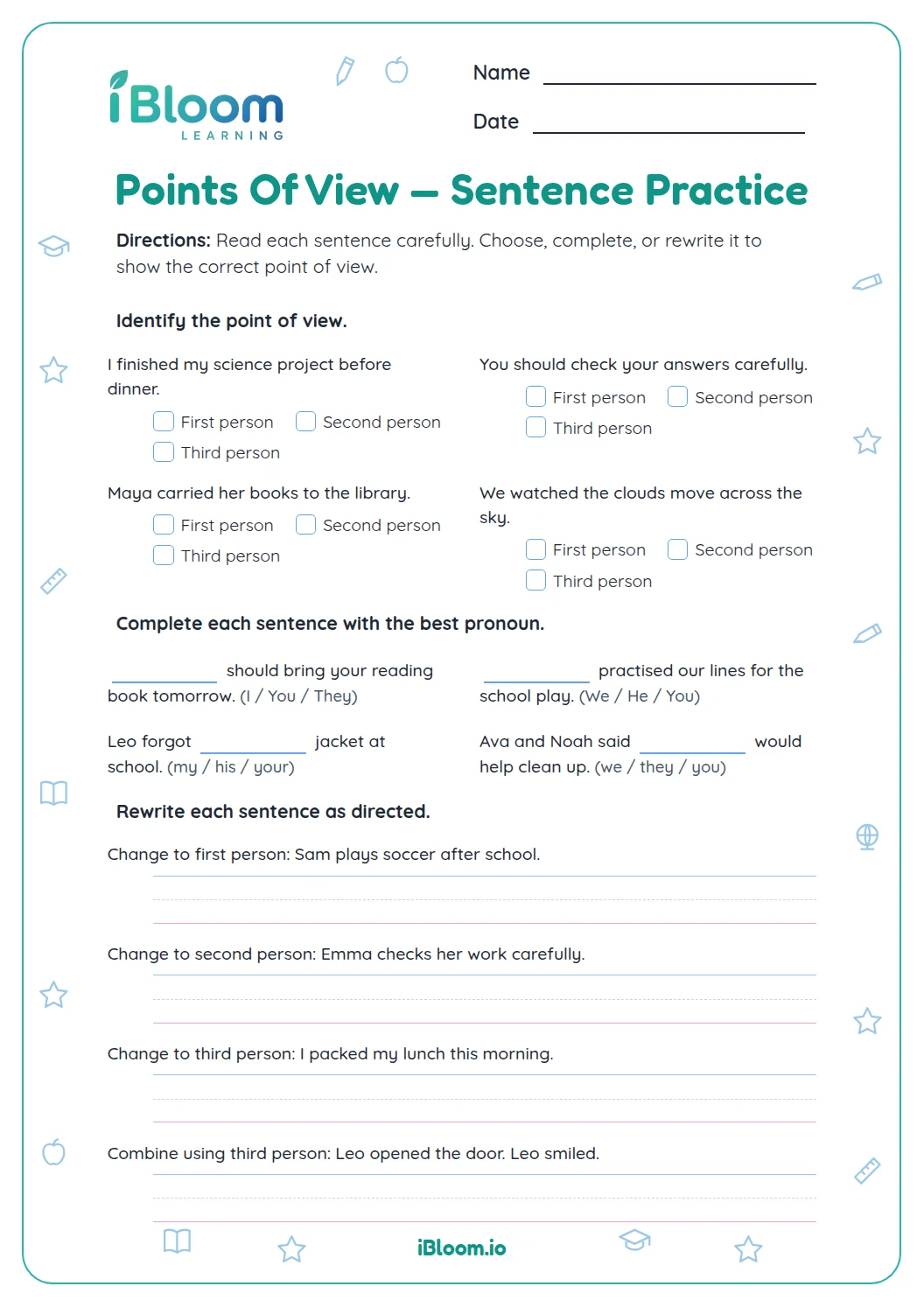
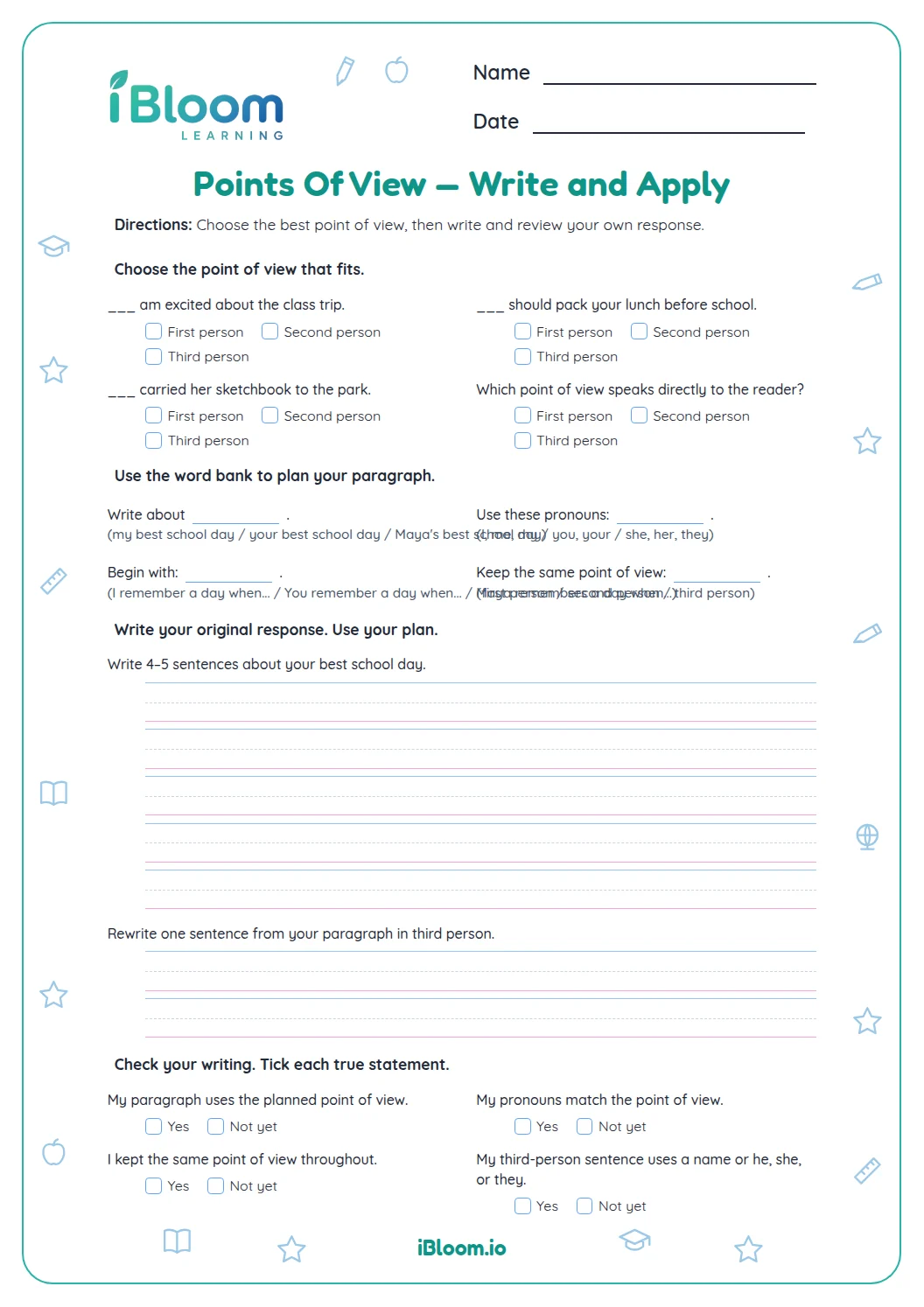
This Grade 5 worksheet gives students 14 sentence-level questions about first-, second-, and third-person point of view. In Part A, students identify the point of view from pronouns and sentence clues. In Part B, they rewrite sentences as directed, changing pronouns while keeping the event clear. A separate answer key includes sample rewrites.
How do pronouns signal point of view?
First person uses I or we for the speaker. Second person addresses the reader with you. Third person names someone or uses pronouns such as he, she, or they. Part A asks students to identify these clues in complete sentences.
How can a sentence be rewritten in a new point of view?
Find the original subject and pronouns, then change them to match the requested perspective. Check that possessive words change too: “I packed my sketchbook” becomes “She packed her sketchbook.”
- 1Rewrite in third person: I packed my sketchbook before the trip. → She packed her sketchbook before the trip.
What should a correct rewrite keep?
A rewrite should preserve the event while consistently using the requested point of view. Names and pronoun choices can vary when they still make sense; check that subject and possessive pronouns agree.
How to use this worksheet
- 1Read the full sentence and circle its pronouns mentally.
- 2Ask who is speaking or being addressed.
- 3Choose first, second, or third person from those clues.
- 4For a rewrite, identify every pronoun that needs to change.
- 5Read the new sentence to check that its point of view stays consistent.
Common mistakes and quick fixes
The mistake
Calling a sentence third person because it names a person.
The fix
Check whether the narrator uses I, you, or a name/he/she/they.
The mistake
Changing the subject pronoun but leaving a mismatched possessive.
The fix
Update both forms, as in I/my to she/her.
The mistake
Changing the event while rewriting.
The fix
Keep the same action and adjust only the wording needed for perspective.
What to practice next
Make more practice
Questions parents and teachers ask
What are first, second, and third person?
First person presents the speaker’s perspective with I or we. Second person addresses someone as you. Third person tells about someone using a name or pronouns such as he, she, or they. The worksheet asks students to identify these forms and use them in rewrites.
How many questions are on the worksheet?
There are 14 questions in two parts. Students identify point of view in eight sentences, then rewrite six sentences as directed. The answer key includes sample rewrites, and a different name or pronoun is acceptable when it consistently follows the requested perspective.
Does the worksheet focus on pronouns or storytelling?
It focuses on sentence-level point of view signaled by pronouns. Students practice recognizing first, second, and third person and changing a sentence’s pronouns. The activity builds a useful language skill for reading and writing without requiring a longer story passage.
Can more than one rewrite be correct?
Yes. The model answers show one possible rewrite. For example, a first-person sentence can become third person with a suitable name or pronoun, as long as the sentence keeps the same event and uses the new perspective consistently.
How can I check a rewritten sentence?
Check the requested point of view first, then check subject and possessive pronouns. “I packed my bag” can become “She packed her bag.” The action stays the same while both first-person forms change to match the third-person narrator.