


About this worksheet
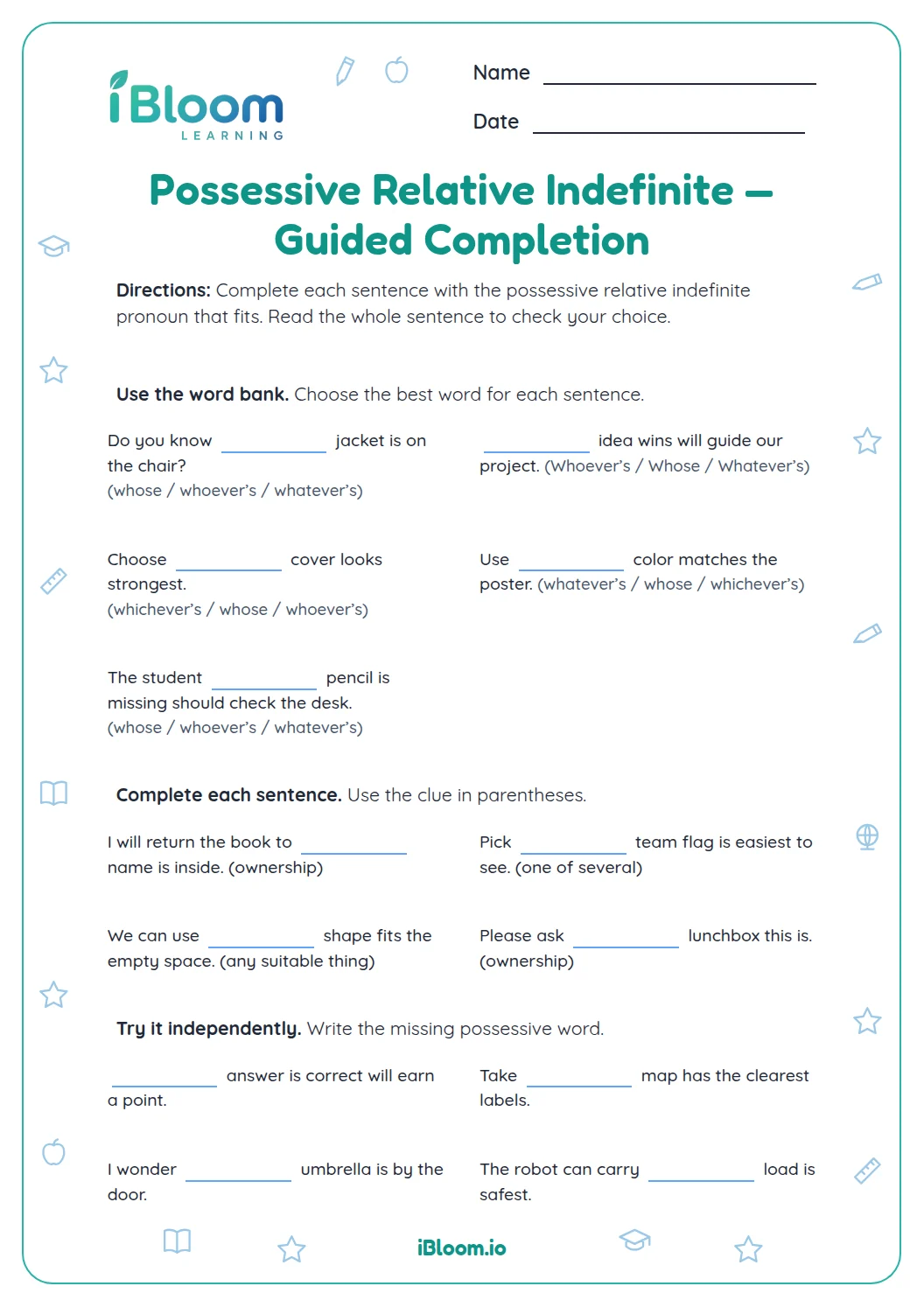
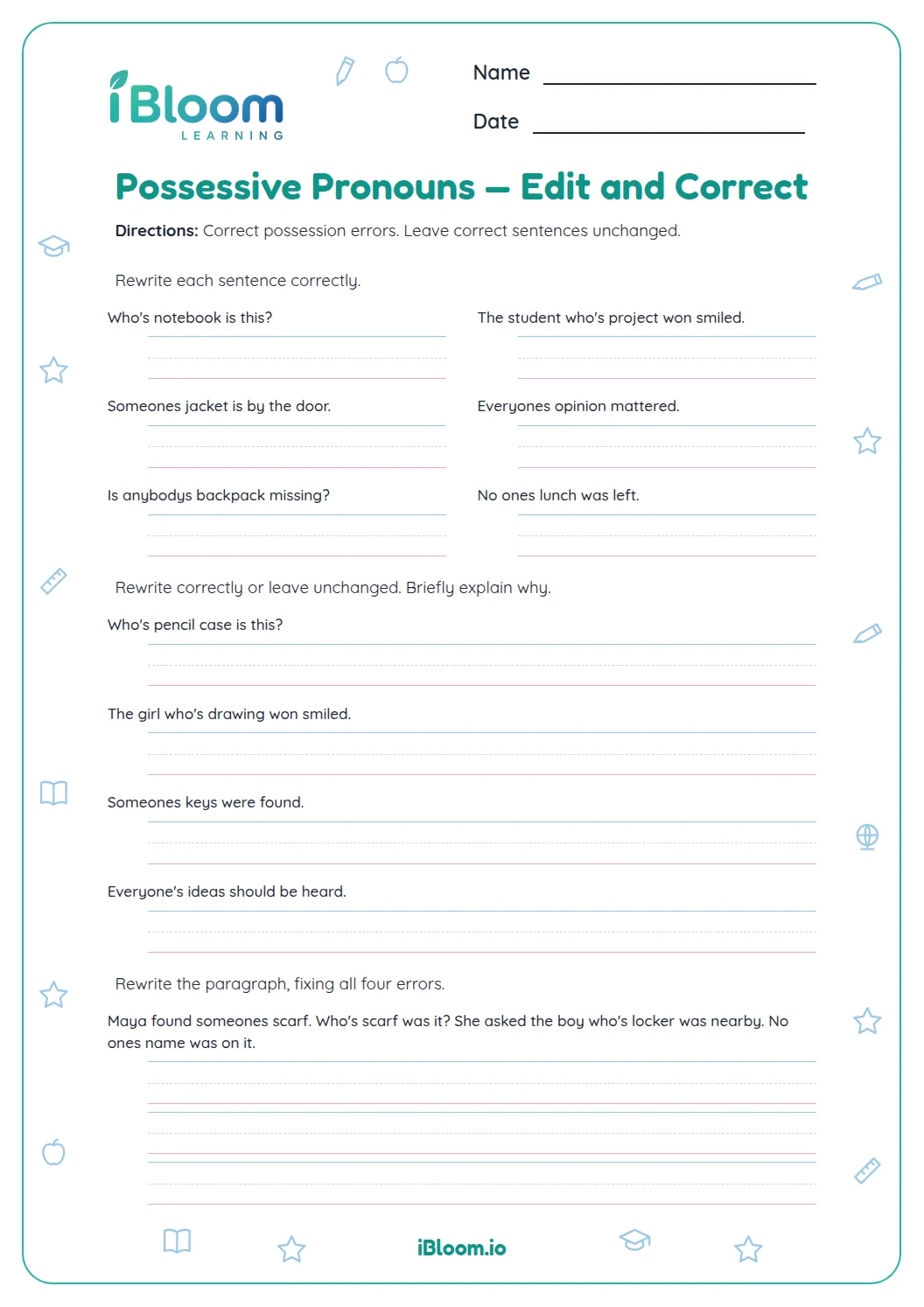
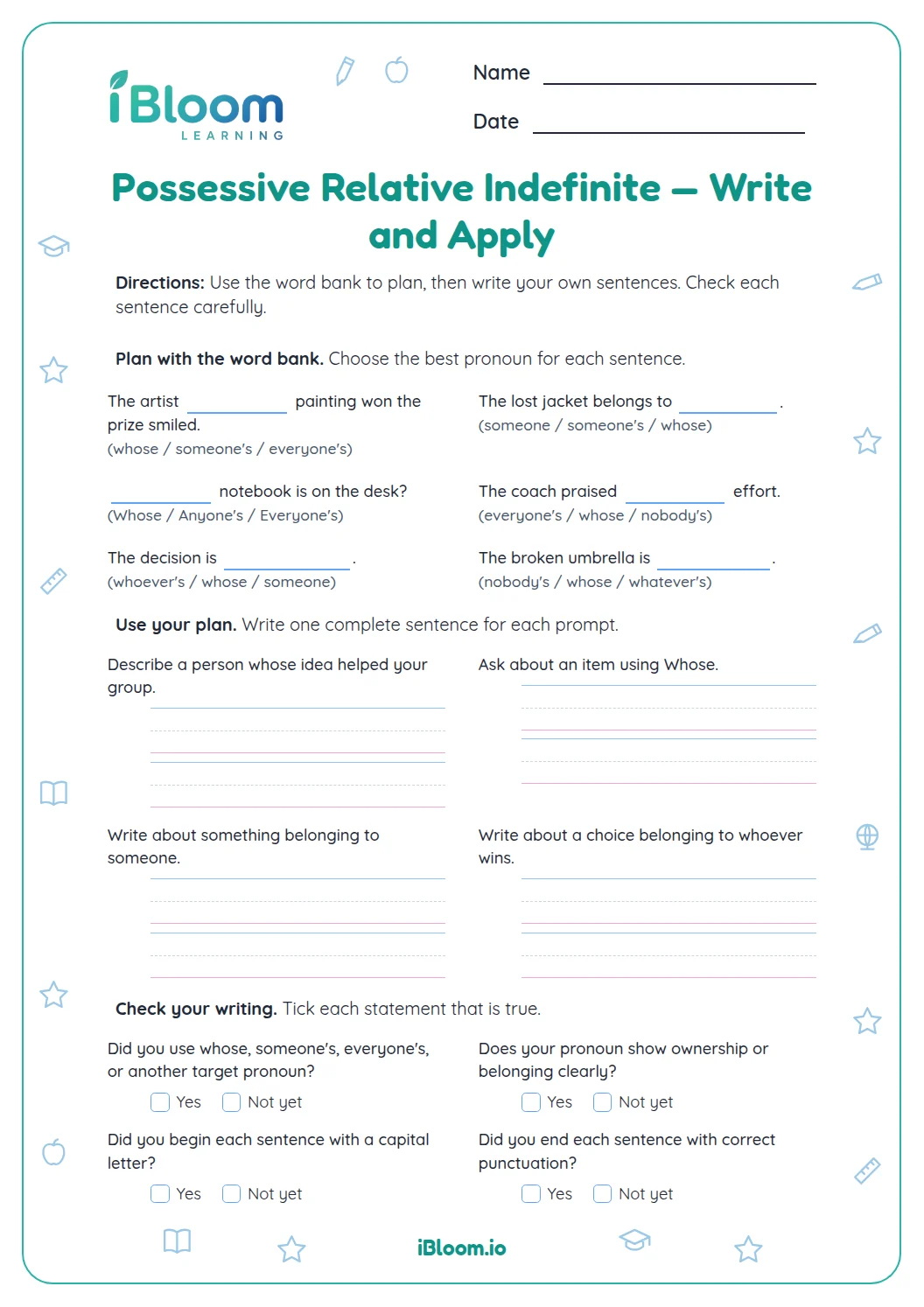
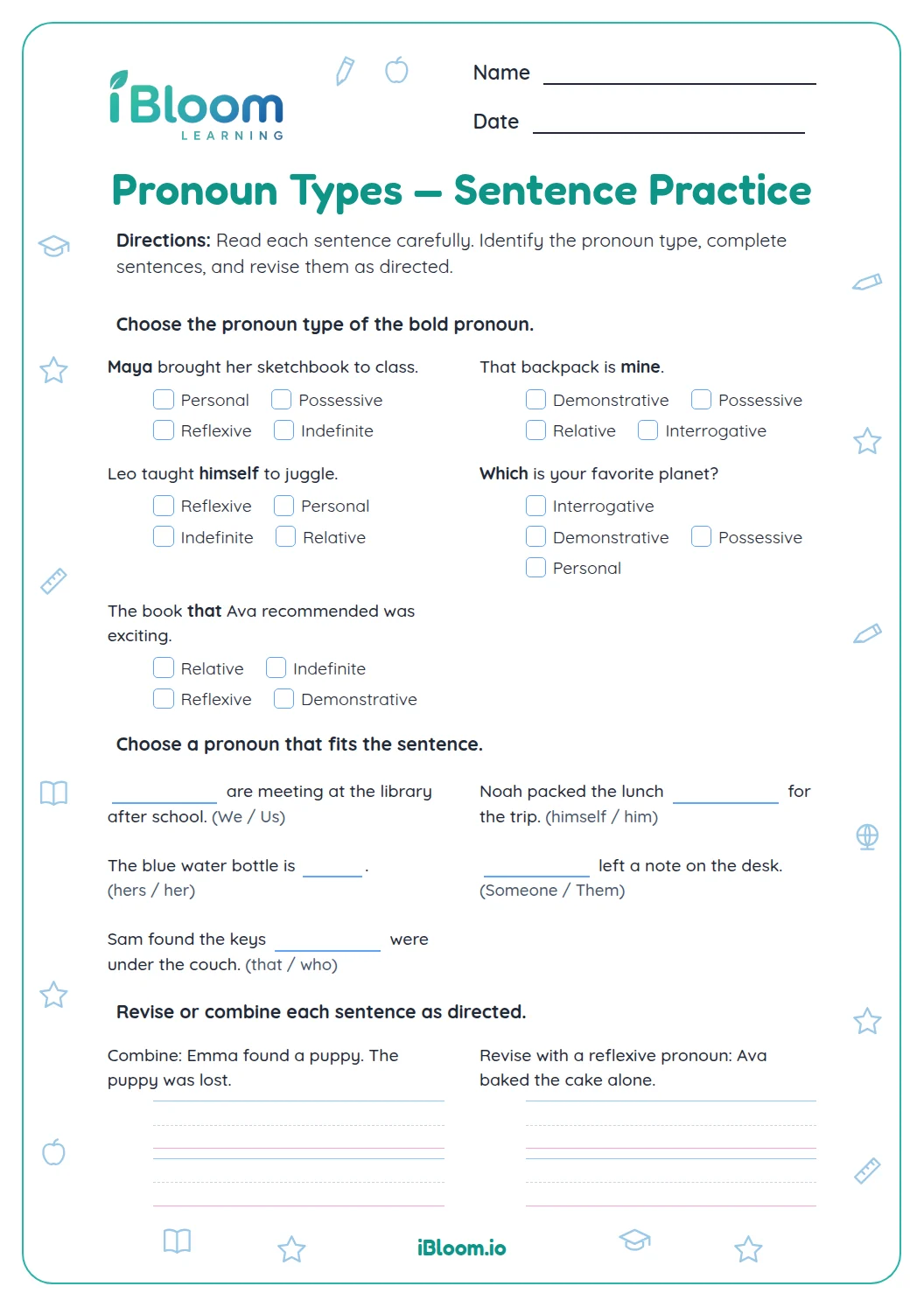
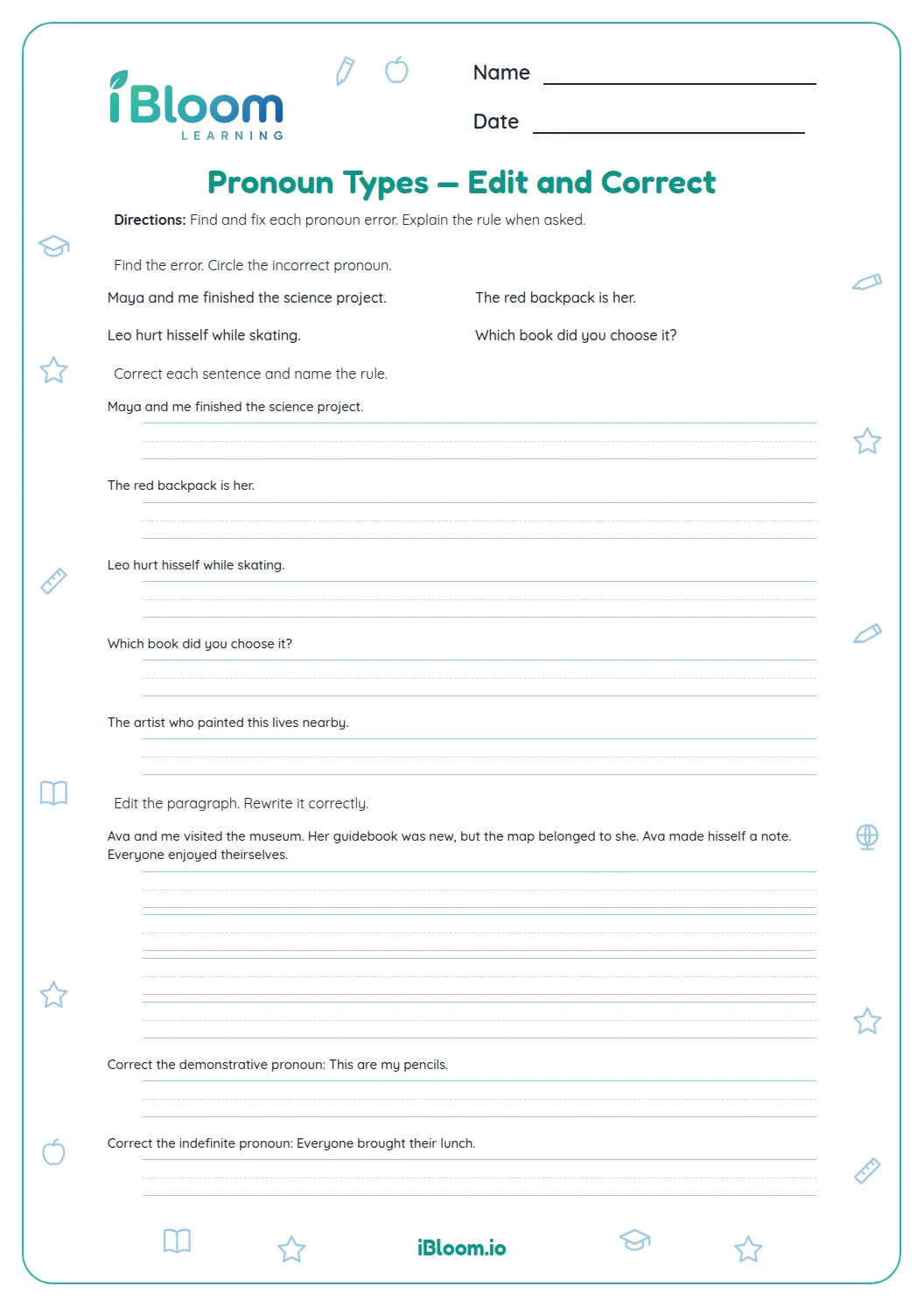
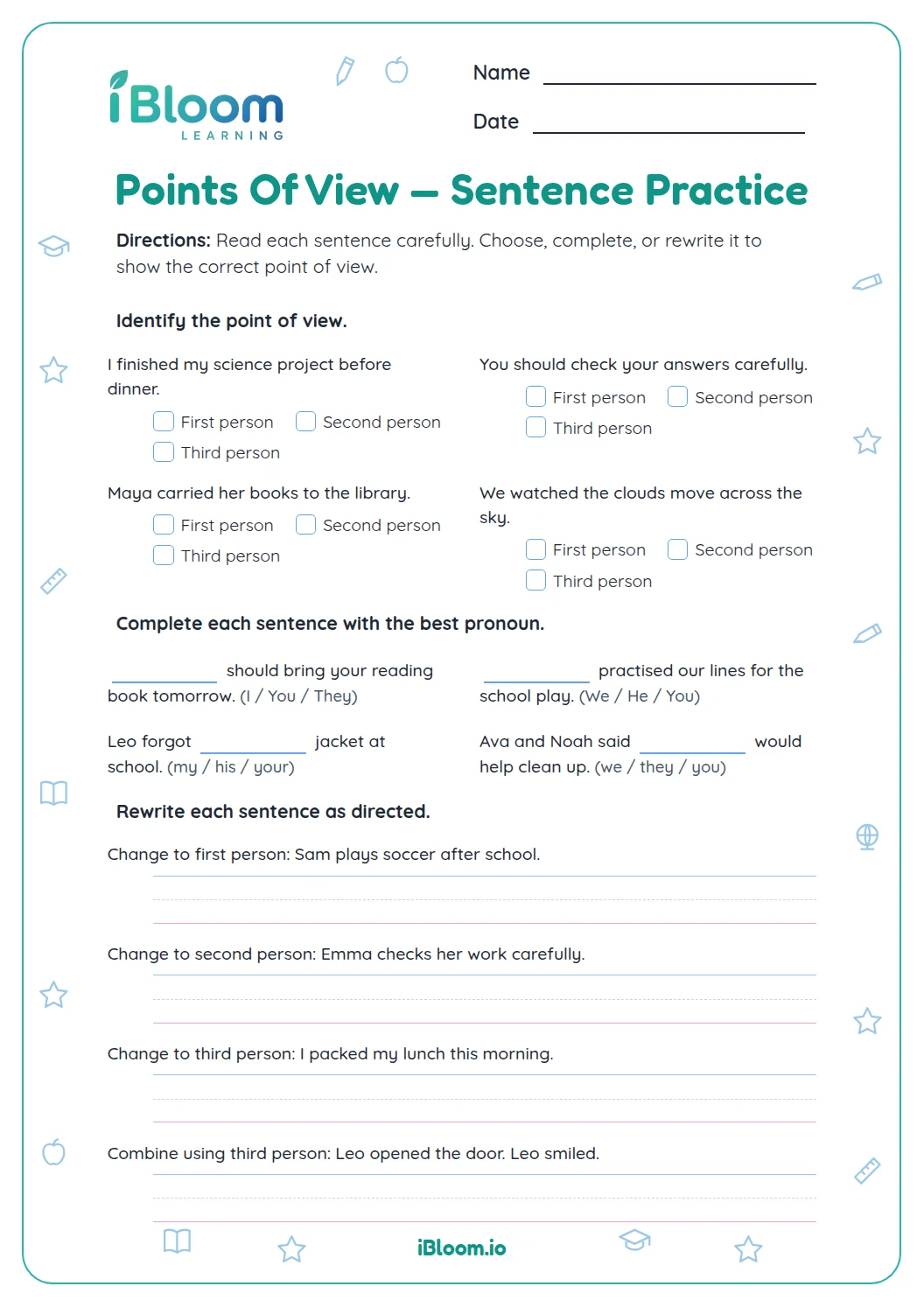
This Grade 5 sentence practice focuses on relative forms such as whose, possessive forms such as whoever’s, and indefinite forms such as whoever and whichever. Students choose a form, combine ideas, complete sentences, and correct errors. The relative pronoun items practice CCSS L.4.1.a, and a separate answer key is included.
Aligned to L.4.1.a
How do you choose a possessive relative pronoun?
Whose links a noun to its owner: “the student whose notebook is missing.” Whoever’s means “the possession of whoever”: “Whoever’s locker is open.”
Question 1 asks for a word that links student and notebook. The noun after the blank is notebook, so whose expresses possession.
- 1The student ___ notebook is missing.
- 2The notebook belongs to the student.
- 3Answer: whose
When does an indefinite pronoun fit?
Whoever and whichever refer to an unspecified person or choice. Add ’s when the pronoun shows ownership, as in “Whoever’s idea wins.” Whichever can also identify one choice from a group.
How can you correct a pronoun error?
Check whether the sentence needs ownership or a person who performs an action. Question 13 begins “Whose is ready”; because an unspecified person is ready, whoever is the correct subject.
- 1Whose is ready may begin the quiz.
- 2A person is ready, so use whoever.
- 3Corrected: Whoever is ready may begin the quiz.
How to use this worksheet
- 1Underline the noun or idea that follows the blank.
- 2Ask whether the sentence shows ownership or names an unspecified person or choice.
- 3Use whose before the thing owned; use whoever when the person acts.
- 4For sentence editing, read the corrected sentence aloud.
- 5Compare each answer with the key and check the sentence meaning.
Common mistakes and quick fixes
The mistake
Using who’s to show ownership.
The fix
Who’s means who is; use whose for possession.
The mistake
Using whose as the subject of an action.
The fix
Use whoever when an unspecified person does the action.
The mistake
Forgetting that whoever’s needs an owned thing after it.
The fix
Check that the next noun or idea is something belonging to that person.
Common Core alignment
This sheet practices relative pronouns in complete sentences.
Use relative pronouns such as who, whose, and which.
On this sheet: Use relative pronouns such as who, whose, and which.
Show the official wordingHide the official wording
Use relative pronouns (who, whose, whom, which, that) and relative adverbs (where, when, why).
What to practice next
Make more practice
Further reading
Questions parents and teachers ask
Which pronouns does the sheet practice?
The 14 items use relative pronouns such as whose, possessive forms such as whoever’s, and indefinite forms such as whoever and whichever. Students select a form, combine two ideas, complete sentences, and edit pronoun errors. A separate key gives answers, including sample sentences for the written corrections.
How is whose different from who’s?
Whose shows ownership, as in “the student whose notebook is missing.” Who’s is a contraction of who is or who has. Read the sentence with the contraction expanded; if it needs an owner before a noun, whose is the form to use.
What does whoever’s mean?
Whoever’s means that something belongs to an unspecified person. In “Whoever’s idea wins may lead the group,” the idea belongs to the person whose idea wins. The noun after the pronoun helps readers see what is owned. The worksheet contrasts this with whoever, which names a person doing an action.
Why does the worksheet include sentence combining?
Combining lets students connect a person to a detail about something they own. For example, “The girl won the race. Her shoes were bright yellow” can become “The girl whose shoes were bright yellow won the race.” The written items ask students to make a complete sentence, not just name a pronoun.
Which items need a full sentence?
The sentence-combining items and the final two correction questions call for a complete written sentence. The choice and completion items need only a pronoun. Students can compare the written corrections with the sample wording in the separate key after finishing the worksheet.