


About this worksheet
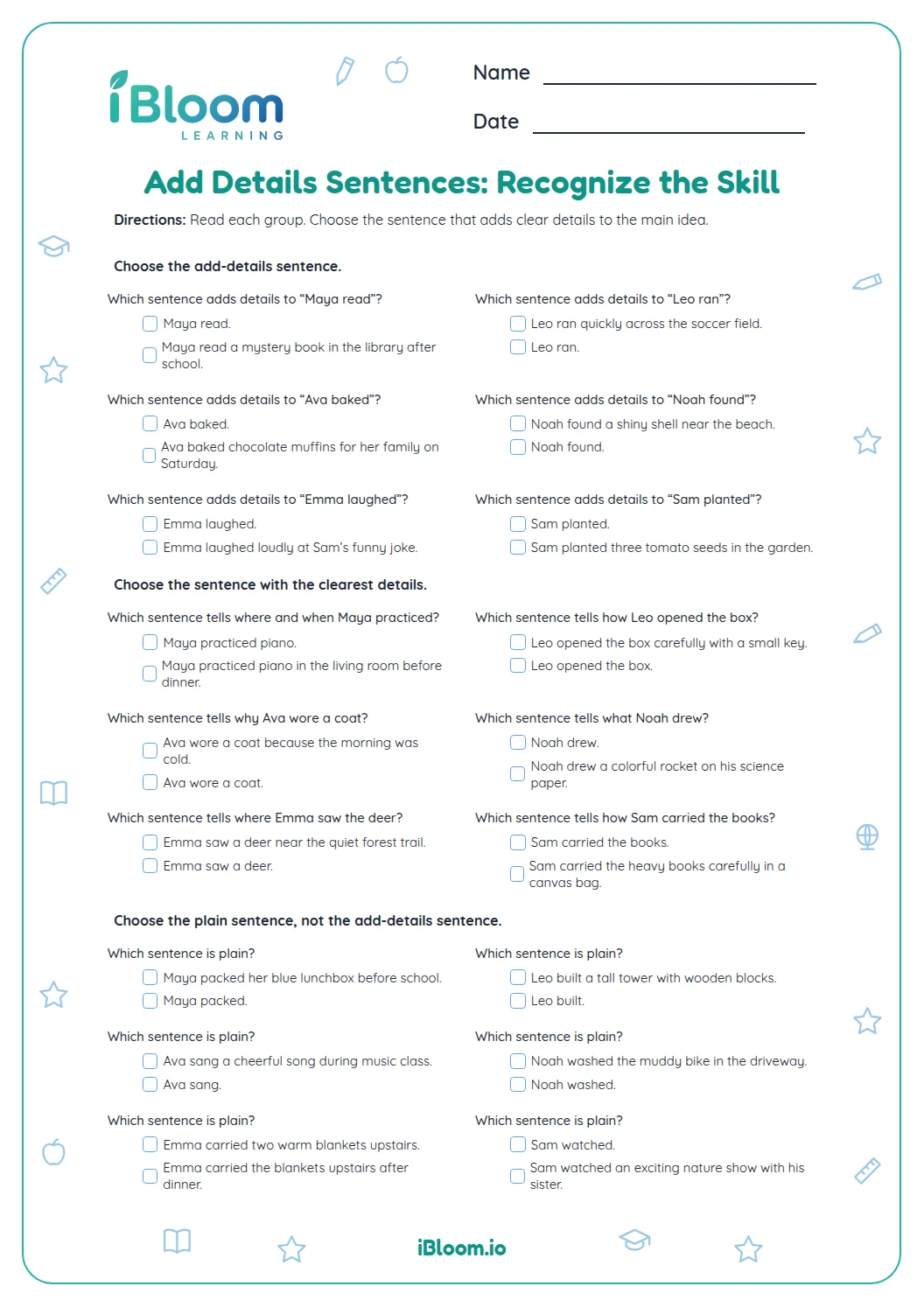
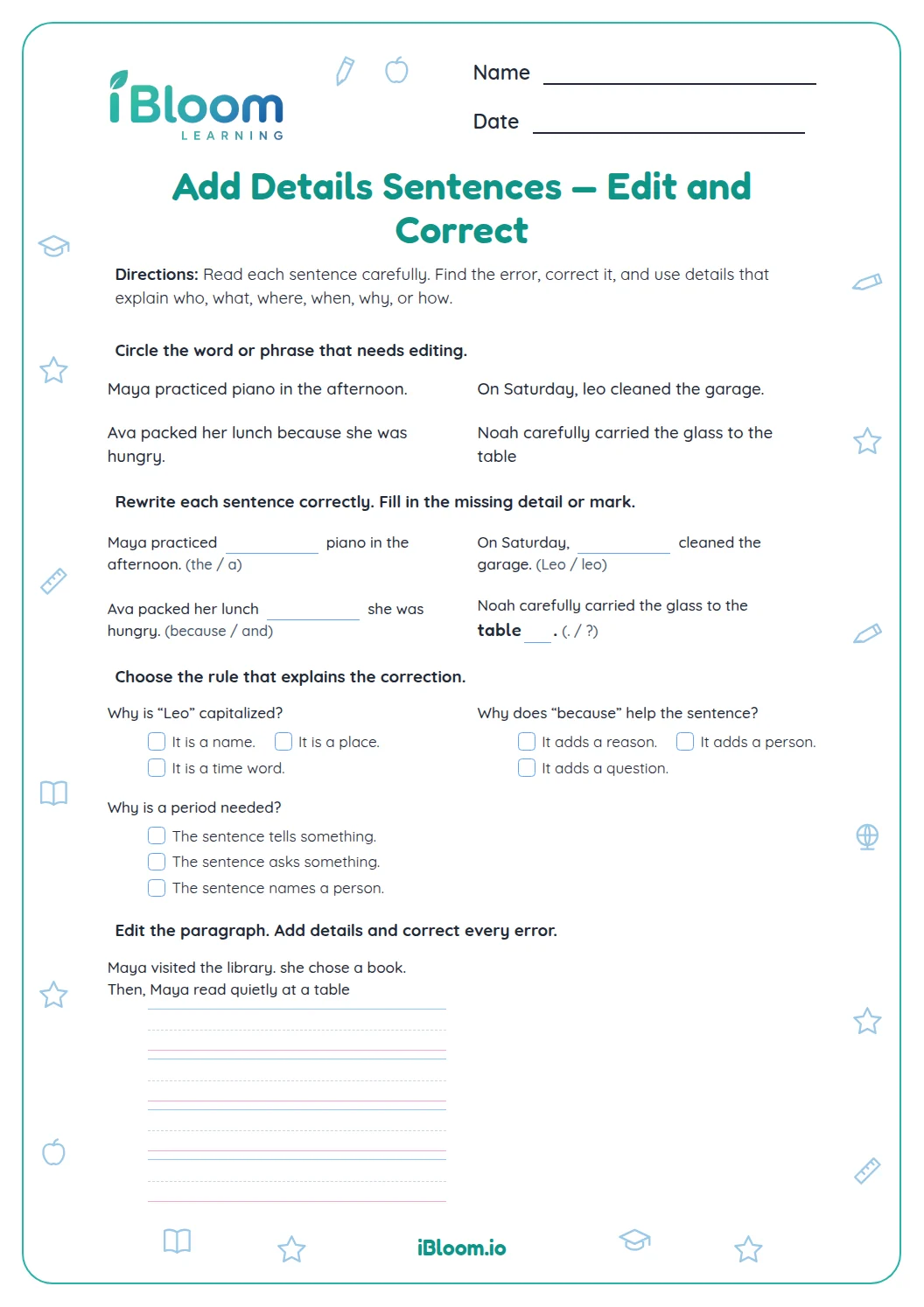
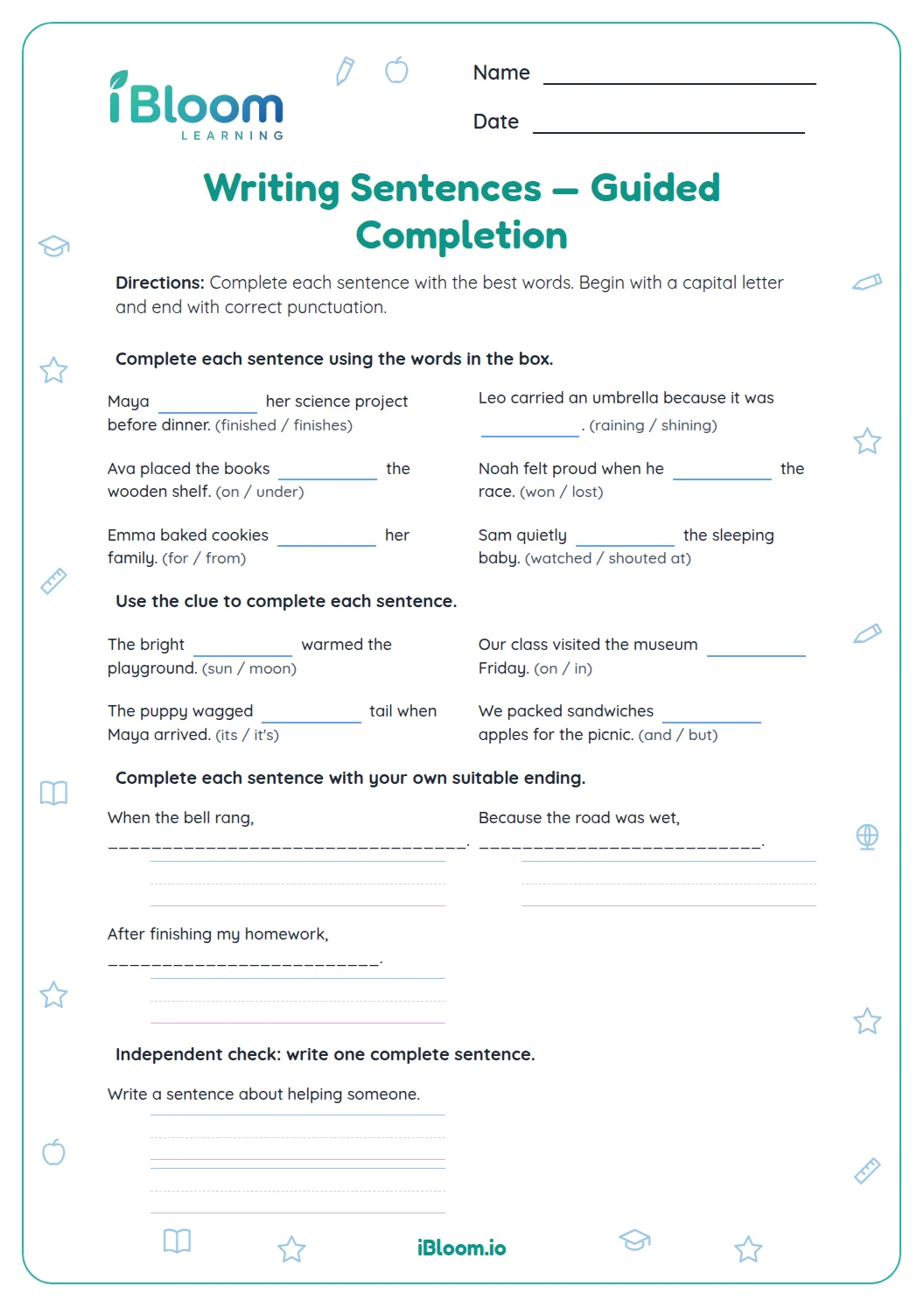
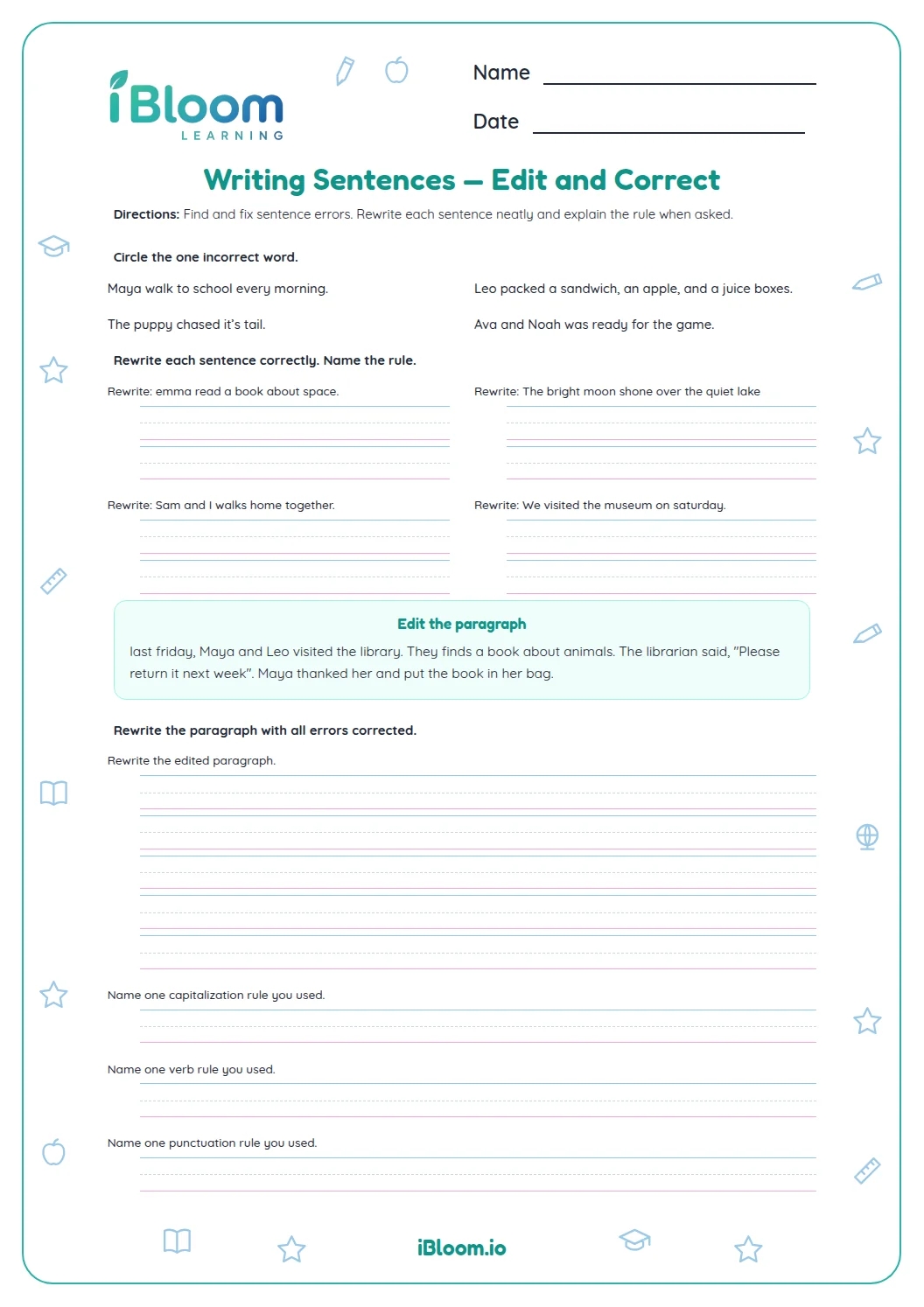
This Grade 5 worksheet helps students add precise details to sentences. Part A asks students to identify a phrase that tells where, when, why, or how; Part B offers eight short prompts for choosing a detail that fits; Part C invites two original descriptions. Students practice strengthening a draft while keeping its main idea clear, in line with CCSS W.5.5. The answer key gives model responses and accepts other meaningful details.
Aligned to CCSS W.5.5
How do details improve a short sentence?
A detail can name a color, size, place, time, feeling, sound, or action. Part A identifies a useful phrase; Part B asks students to choose a detail that answers a specific cue; Part C gives students room to write two original descriptions.
- 1Starter: A bird sang.
- 2Revision: A small blue bird sang from the maple tree.
- 3The added words tell what kind of bird and where it sang.
How can a student add the requested detail?
Read the cue in each sentence, such as where, when, or what kind. Choose a phrase that answers that cue and keeps the original idea clear.
- 1Prompt: Add a where detail to “The rain fell ___.”
- 2Choose: over the garden
- 3That phrase tells where the rain fell.
How can students apply the skill in their own writing?
Part C offers two fresh topics so students choose details themselves. Encourage a complete thought first, then add information that answers a reader’s likely question: what kind, where, when, or how?
How to use this worksheet
- 1Read the starter and keep its main idea.
- 2Choose details that answer what kind, where, when, or how.
- 3Write the revision as a complete sentence.
- 4For original prompts, choose details that fit the topic.
- 5Reread and remove any detail that distracts.
Common mistakes and quick fixes
The mistake
Adding adjectives that do not tell the reader anything useful.
The fix
Choose a precise detail that helps a reader picture or understand the subject.
The mistake
Changing the original idea while revising.
The fix
Keep the sentence’s main action or subject, then build around it.
The mistake
Writing a string of details without a complete sentence.
The fix
Read the response aloud and check that it has a clear subject and action.
Common Core alignment
This activity supports the stated Common Core writing goal.
Revise writing by adding details that serve the purpose and audience.
On this sheet: Students choose useful details, revise sentences, and strengthen their own descriptions.
Show the official wordingHide the official wording
With guidance and support from peers and adults, develop and strengthen writing as needed by planning, revising, editing, rewriting, or trying a new approach. (Editing for conventions should demonstrate command of Language standards 1-3 up to and including grade 5 here.)
What to practice next
Make more practice
Further reading
Questions parents and teachers ask
What does it mean to add details to a sentence?
Useful details tell the reader more about a person, place, action, or experience. “A bird sang” can become “A small blue bird sang from the maple tree.” The added words help a reader picture which bird, what it did, and where it was.
Does my child need to copy the sample answer exactly?
No. The key gives one possible response for each prompt. A different sentence is correct when it follows the cue, keeps the original idea, and remains clear and complete. Ask your child to explain how the new words help a reader picture the sentence.
How many details should a response include?
For the eight detail questions, choose a phrase that follows the cue and keeps the original idea. The two final descriptions have their own prompts and ask for specific information. The answer key provides samples, while other clear, meaningful responses can also work.
How can a student tell whether a detail helps?
Ask whether the detail helps the reader picture or understand the subject. “Small blue bird” gives useful information; a random detail about an unrelated lunch would distract. Read the revision aloud and check that each added phrase belongs with the sentence.
Why are some answers in the key labeled “Sample”?
Writers can revise a sentence in many correct ways, so one answer cannot cover every good choice. The sample shows the kind of specific information that works. A child’s response may use different words while still keeping the sentence clear and adding relevant details.