



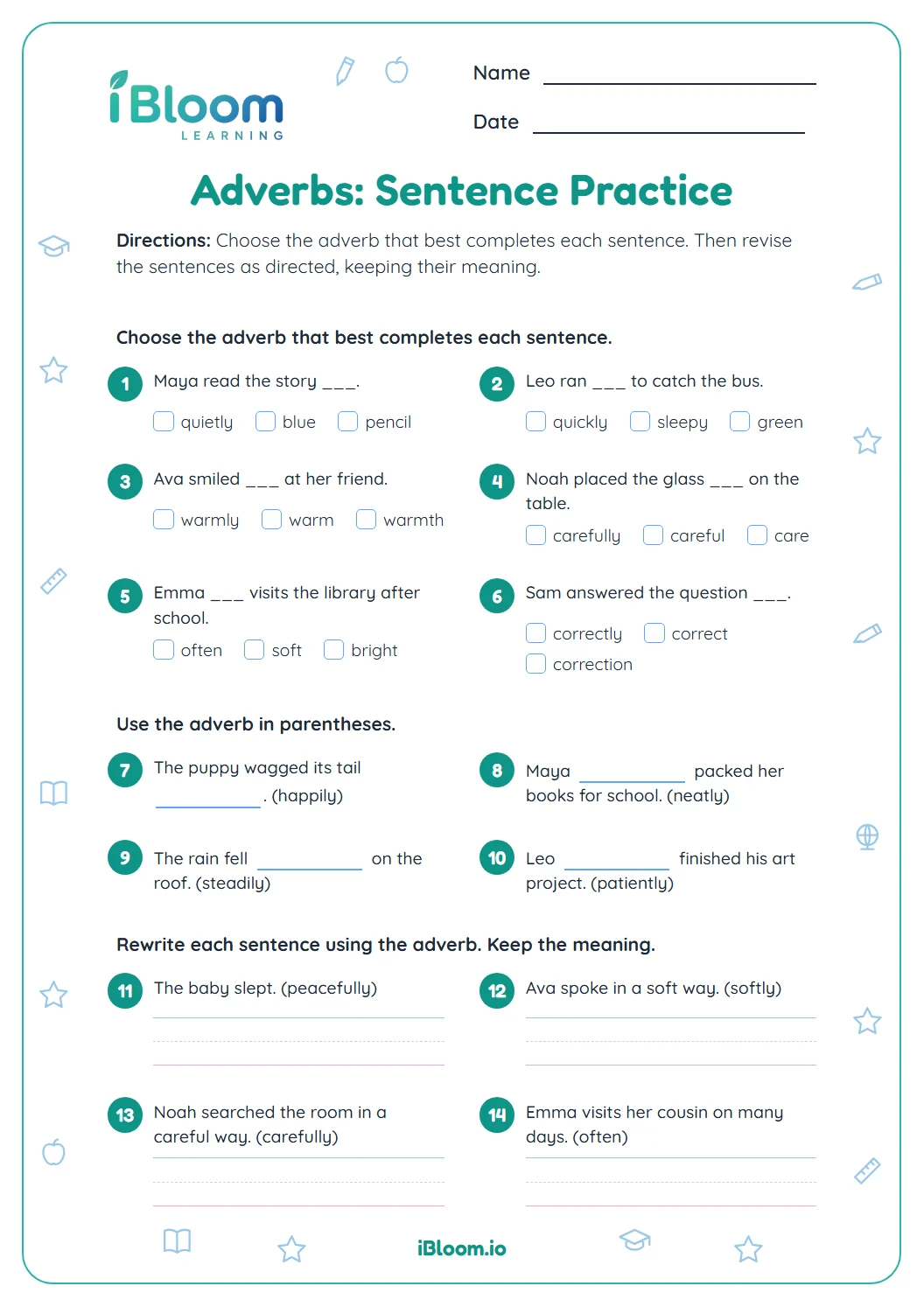
About this worksheet
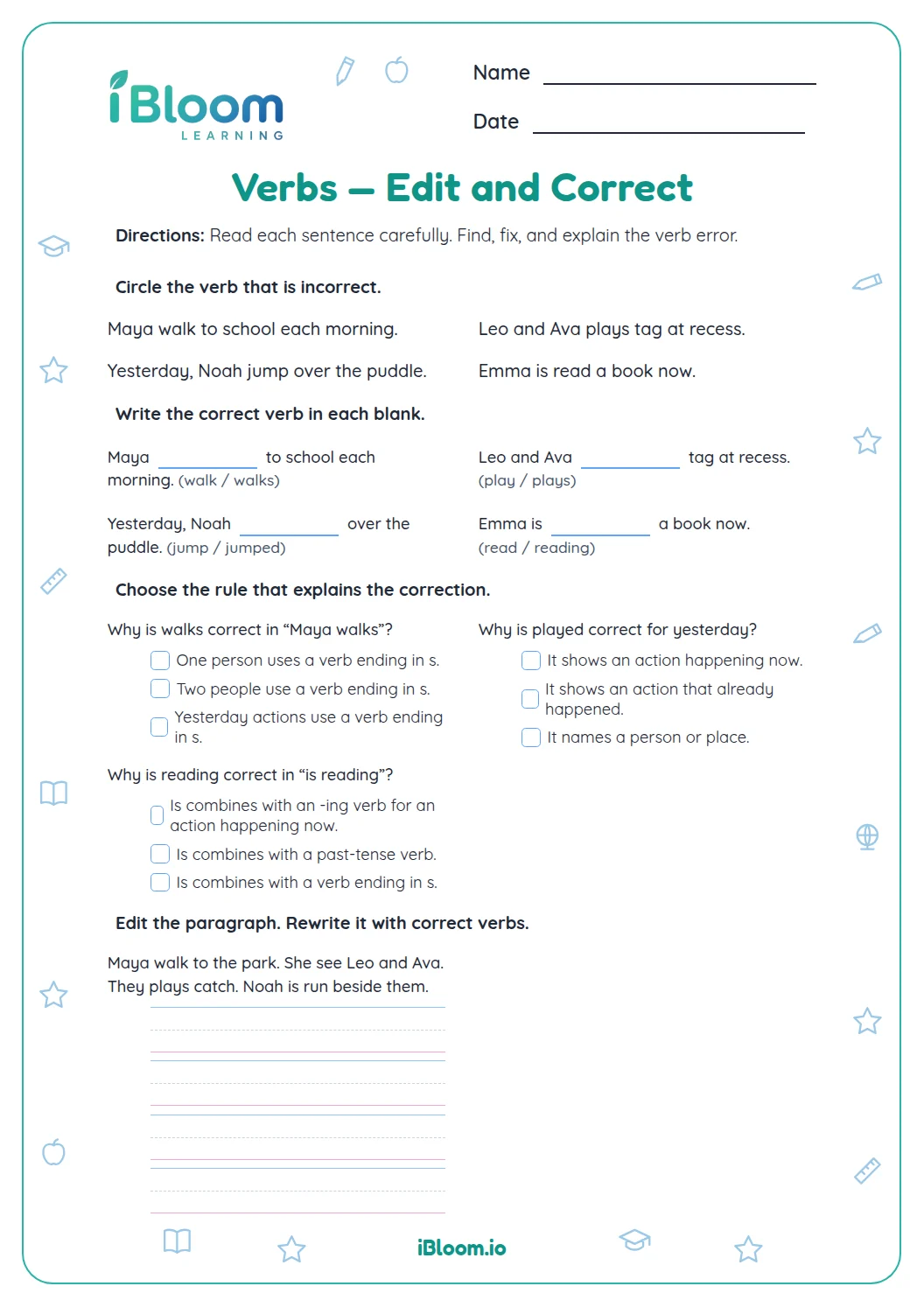
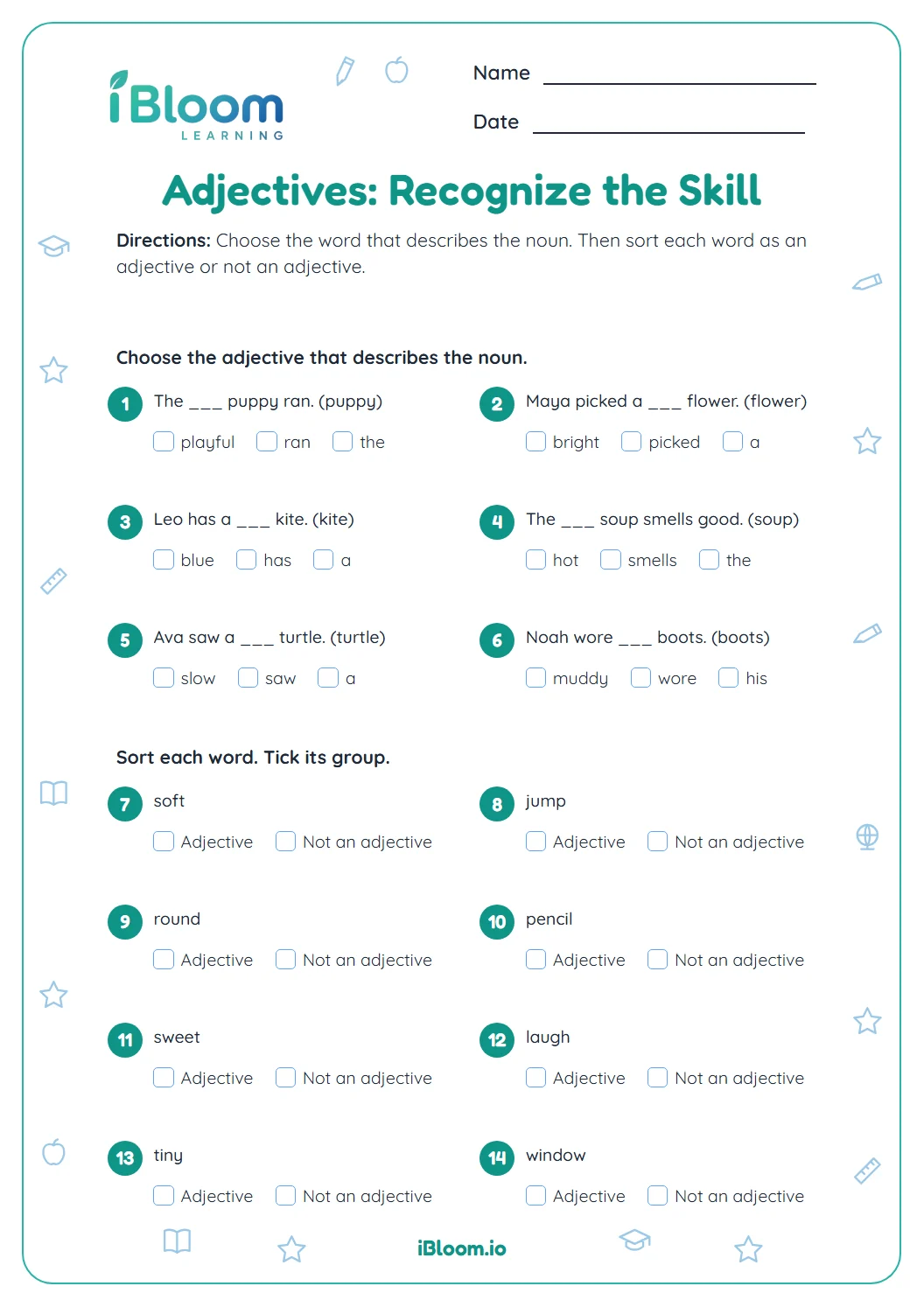
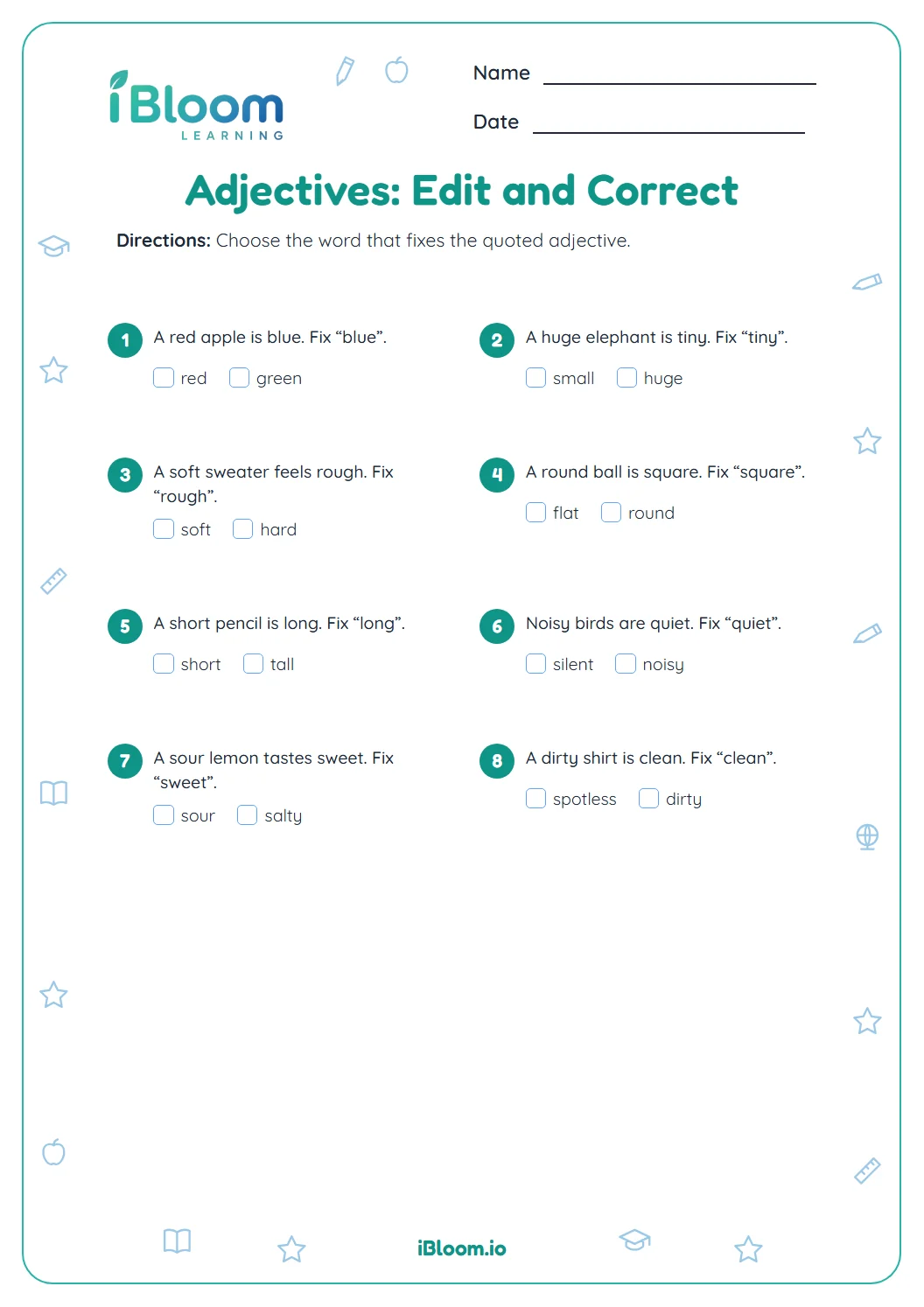
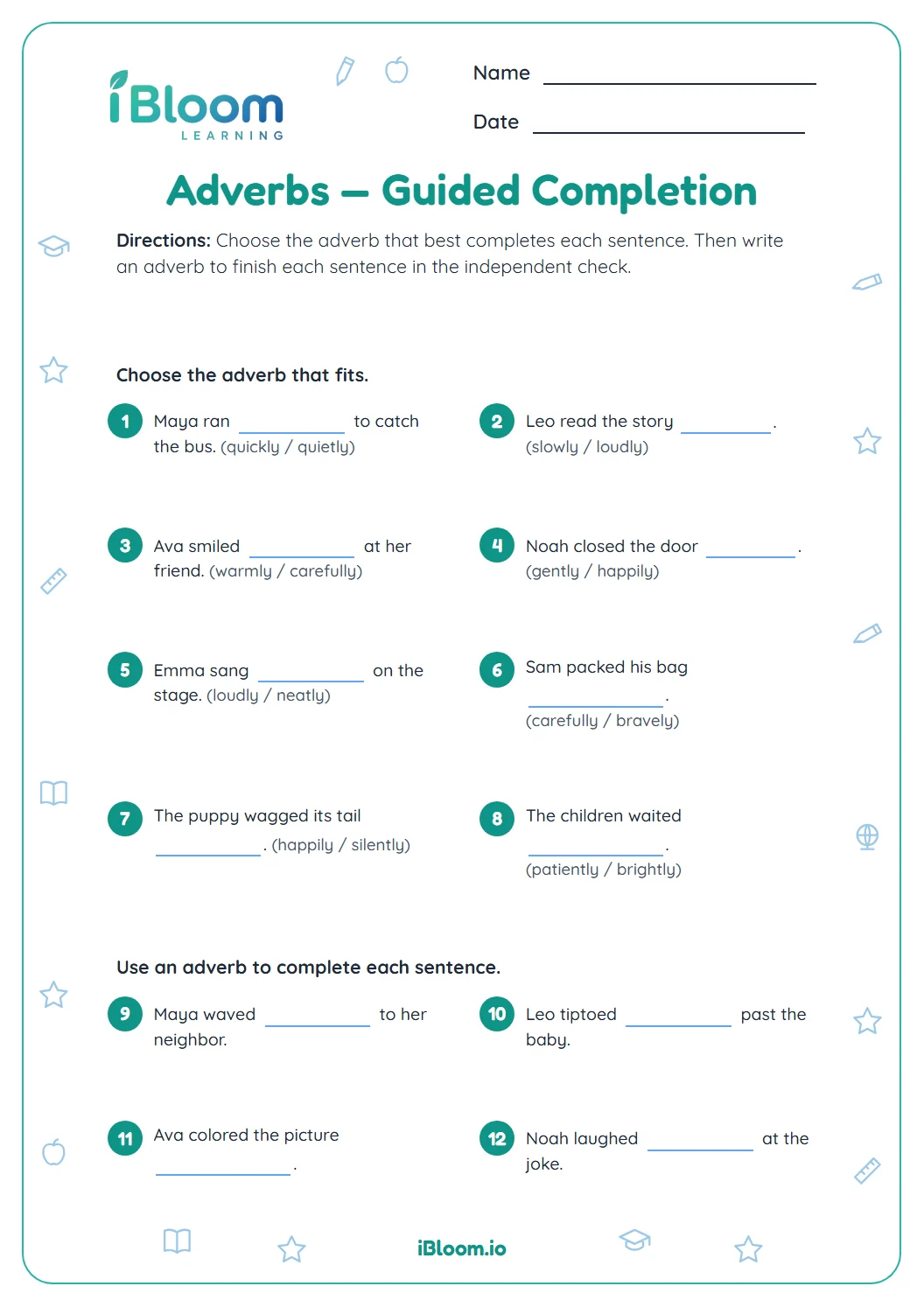
This guided-completion worksheet gives students 14 short sentences with a part of speech named as a cue. They choose a word that completes the sentence, practicing nouns, verbs, pronouns, adjectives, and adverbs in context. The source worksheet is labeled for Grades 1–5; these brief prompts can be used for review across that range. A separate answer key lists the intended word for each blank. The grammar practice aligns with CCSS L.3.1, command of standard English grammar and usage.
Aligned to L.3.1
How does a sentence help identify a word’s job?
The cue names the part of speech, and the sentence gives context for choosing between two words. In “The ___ shell,” shiny describes shell, while gently describes an action.
Read the completed sentence aloud and check that the chosen word does the named job.
- 1Adjective: The ___ shell.
- 2shiny describes the shell.
- 3Completed: The shiny shell.
How can students check a completed sentence?
Read the whole sentence with the chosen word and ask whether it does the named job. A noun names something, a verb tells what happens, and an adjective describes a noun.
For an adverb, ask how the action happens: in “The turtle moved slowly,” slowly tells how it moved.
What do pronouns and adverbs do in a sentence?
A pronoun can stand for a noun, as This does in “This is my coat.” An adverb can describe an action, as slowly does in “The turtle moved slowly.” The worksheet gives a cue so students can focus on one word job at a time.
How to use this worksheet
- 1Read the sentence and picture the meaning.
- 2Find the blank’s clue: a person, action, thing, or description.
- 3Try a word that fits both meaning and grammar.
- 4Read the completed sentence aloud.
- 5Use the answer key to discuss why the word fits.
Mistakes to watch for
The mistake
Using a describing word where an action word belongs
The fix
Ask what the blank needs: a thing, an action, or a word that describes.
The mistake
Choosing a word that makes sense but has the wrong job
The fix
Check how the word functions in this sentence, not just its dictionary meaning.
The mistake
Forgetting that a pronoun stands in for a noun
The fix
Ask which person or thing the pronoun refers to.
Common Core alignment
Complete sentences with words serving common grammatical roles.
On this sheet: Students select words that make grammatical sense in sentences.
Show the official wordingHide the official wording
Demonstrate command of the conventions of standard English grammar and usage when writing or speaking.
What to practice next
Make more practice
Further reading
Questions parents and teachers ask
Which parts of speech appear on the worksheet?
The 14 sentences cue nouns, verbs, pronouns, adjectives, and adverbs. For example, students choose a noun to complete “The ___ sings at dawn” and an adverb to complete “The turtle moved ___.” The answer key gives the intended word for each blank.
What ages can use this worksheet?
The source sheet is labeled Grades 1–5, so it can serve as guided review across those grades. The prompts name the part of speech and provide two choices. An adult can read a sentence aloud with younger students, while older students can explain why the selected word fits.
Can more than one answer fit a sentence?
Each blank has two choices, and the key identifies the intended answer based on the part-of-speech cue and sentence. Read the whole sentence with each option. If a student suggests another word beyond the choices, check whether it performs the named word job and fits the sentence.
How do I explain what an adverb does?
An adverb can tell how an action happens. In “The turtle moved slowly,” slowly tells how the turtle moved. Ask what the verb is, then ask how the action happened. The word that answers that question is the adverb in this sentence.
What is the difference between a noun and a pronoun?
A noun names a person, place, thing, or idea; a pronoun can stand in for a noun. In “Maya carried the basket. She set it down,” Maya and basket are nouns, while she and it refer to them. Ask what each pronoun stands for.