





About this worksheet
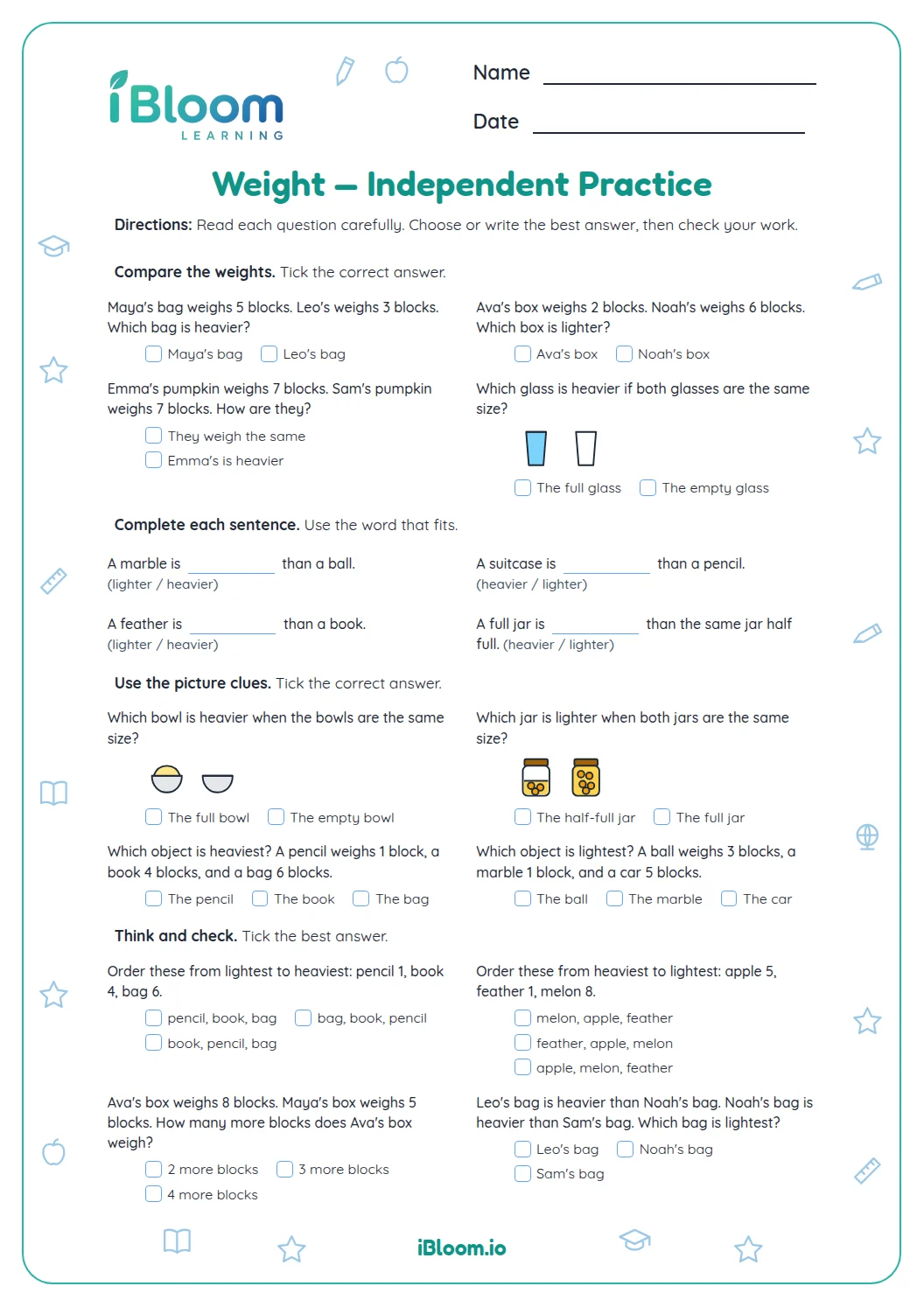
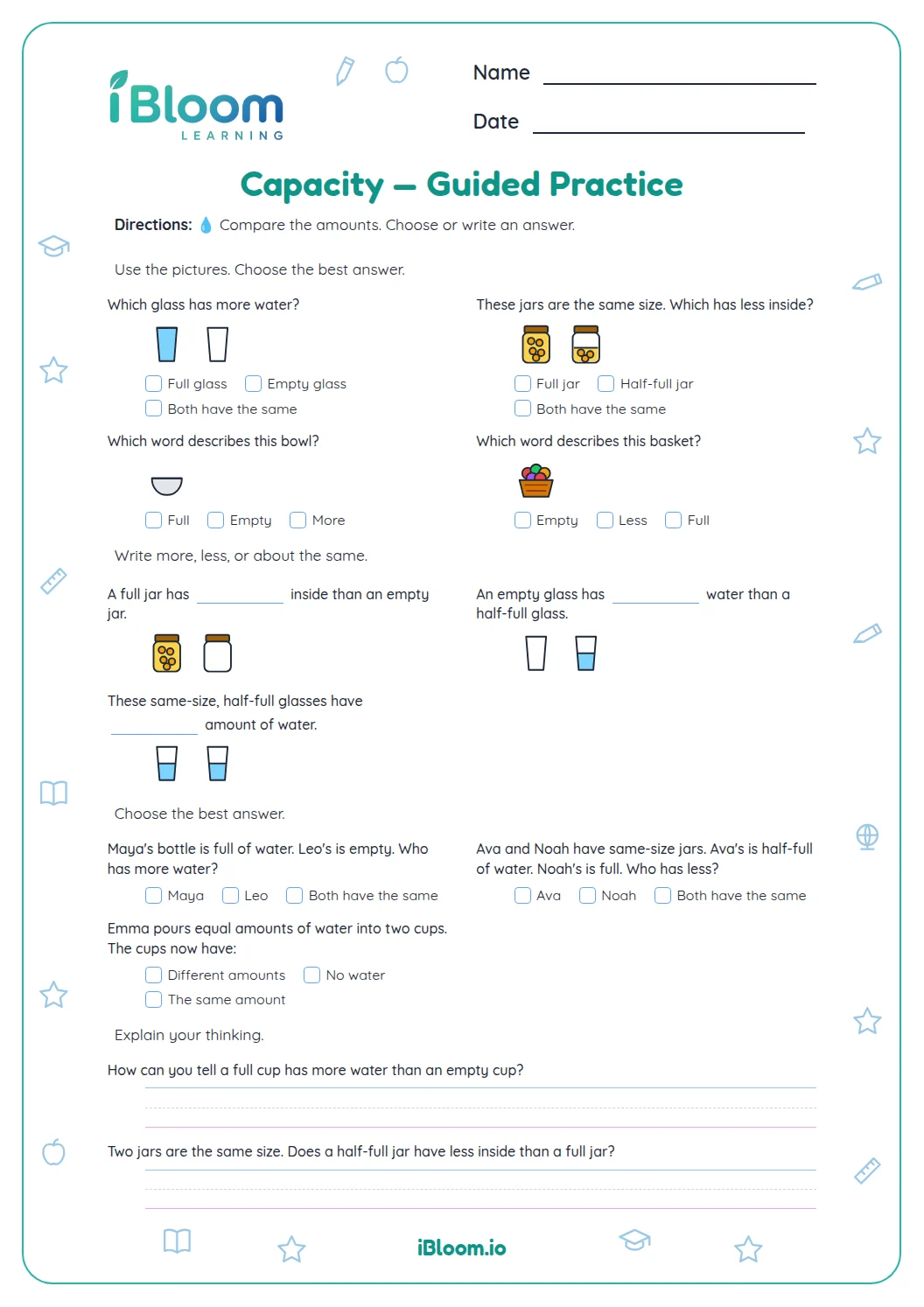
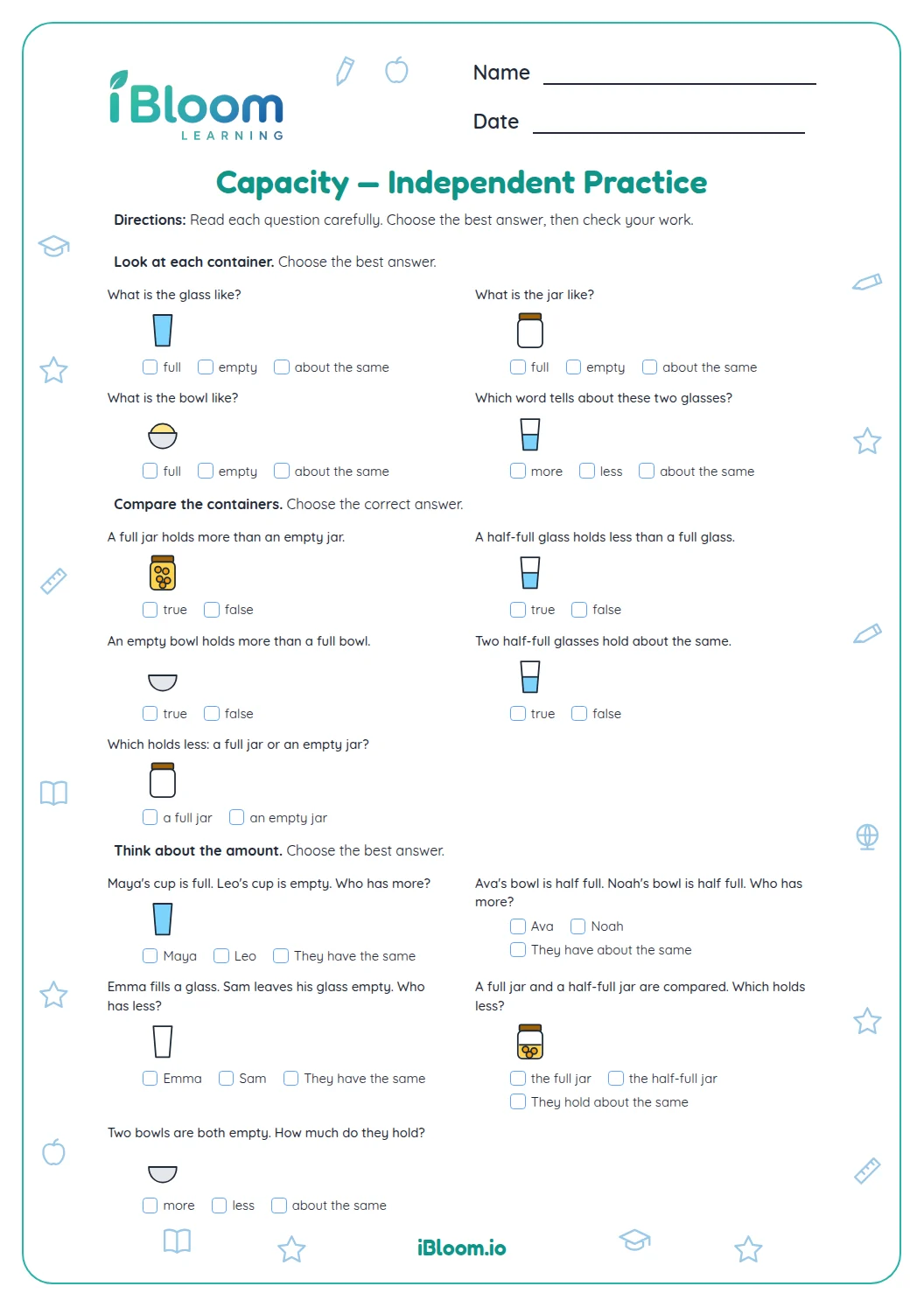
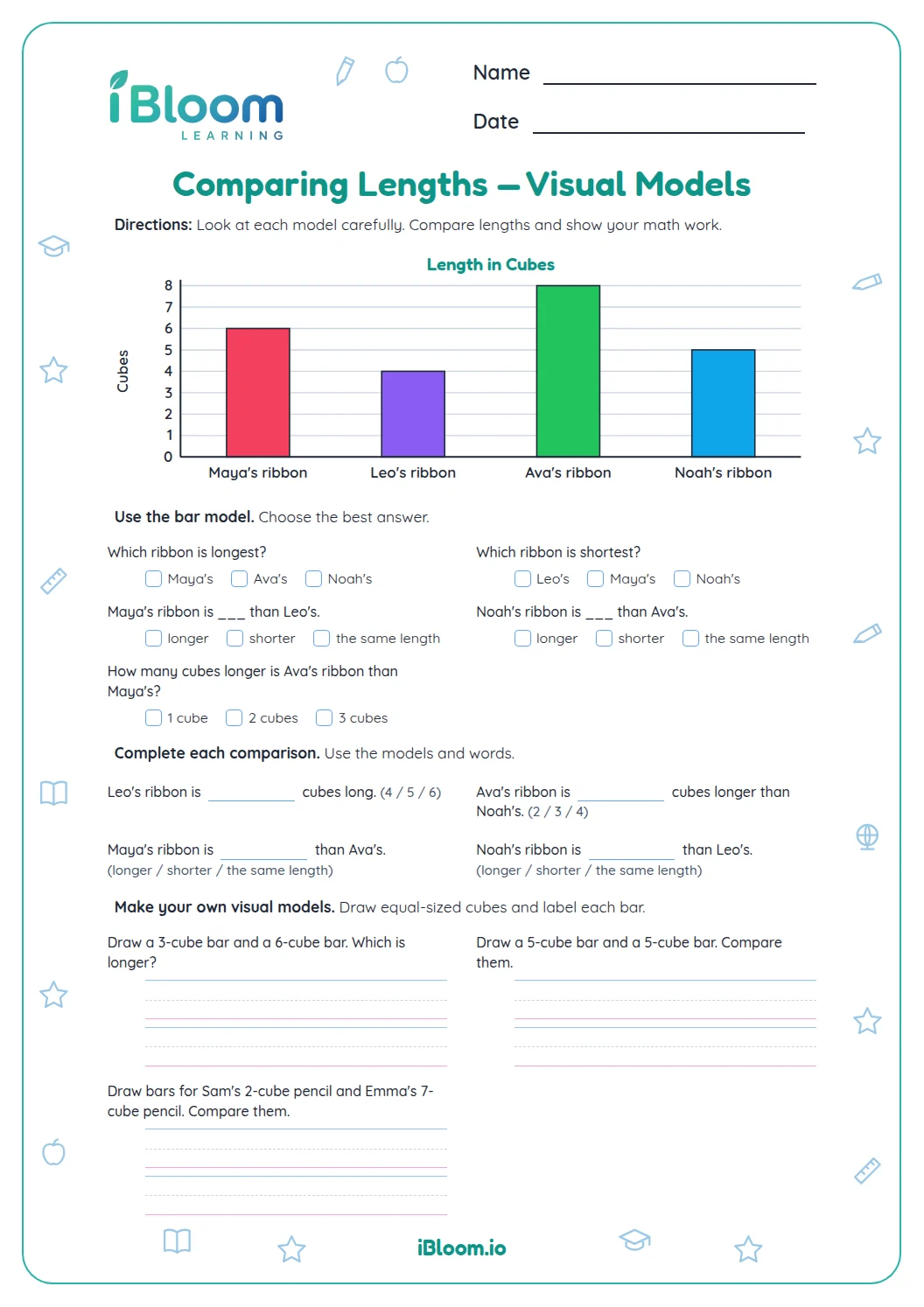
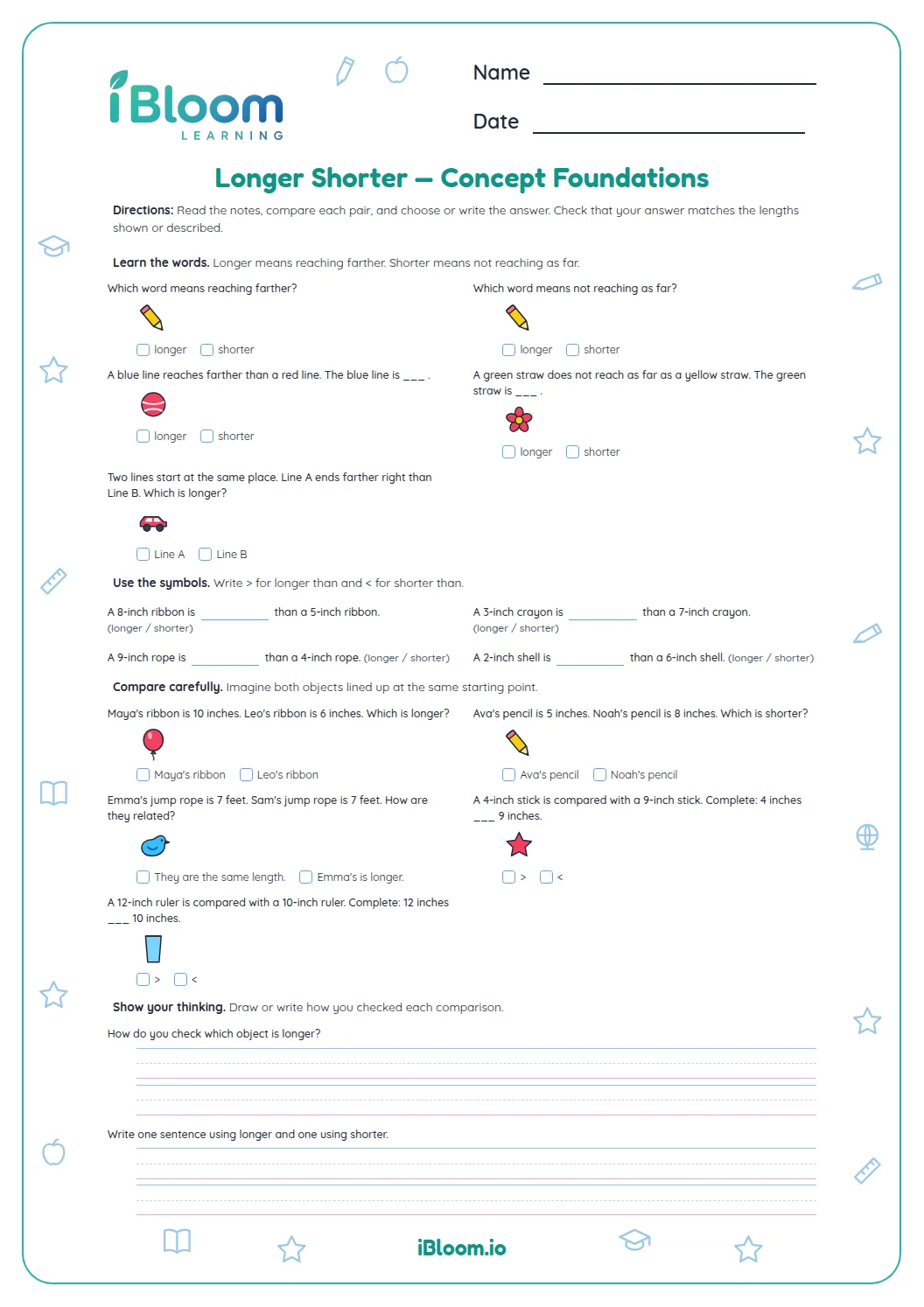
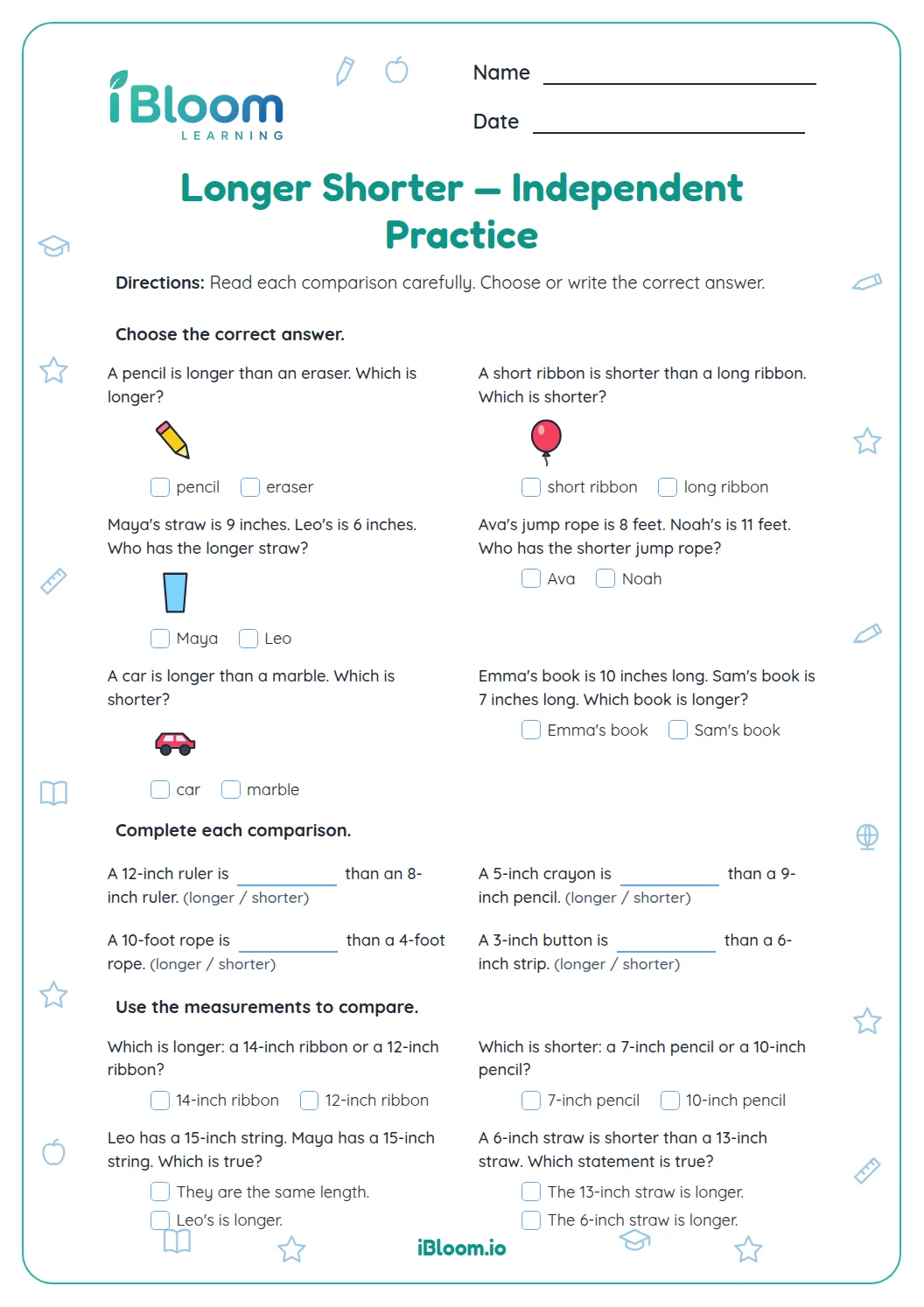
This Grade 1 worksheet introduces weight comparison with familiar objects and equal cubes as units. Students decide which object is heavier or lighter, compare equal weights, and use subtraction to find a difference in cube counts. Each comparison gives the weight clues in words, so students can focus on comparing the stated amounts. A separate answer key supports checking.
What do heavier, lighter, and equal mean?
Heavier means an object has greater weight; lighter means it has less. If two objects weigh the same number of equal cubes, their weights are equal. Each comparison gives the cube counts so students can focus on comparing weight rather than guessing from size.
How do equal cubes help compare weight?
In q1, the book weighs 6 cubes and the shell weighs 2 cubes. Both counts use the same unit, so 6 is greater than 2 and the book is heavier. The comparison would not be fair if the units were different sizes.
How do you find how much heavier something is?
Compare the two counts and subtract the smaller from the larger. In q6, the bag weighs 9 cubes and the lunchbox weighs 6 cubes. Their difference is 3 cubes. The bag is 3 cubes heavier.
How to use this worksheet
- 1Read the two weight counts in a pair.
- 2Check that both counts use the same unit.
- 3Name the object with more cubes as heavier.
- 4If the counts match, say the objects weigh the same.
- 5For a difference, subtract the smaller count from the larger.
Mistakes to watch for
The mistake
Assume the larger-looking object must be heavier.
The fix
Use the stated weight count; size by itself does not decide weight.
The mistake
Compare counts measured with different units.
The fix
Compare fairly by using the same size unit for both objects.
The mistake
Reverse heavier and lighter.
The fix
Point to the larger count first, then match it to the object name.
What to practice next
Make more practice
Questions parents and teachers ask
What does heavier mean?
Heavier means an object has greater weight than another object. When both weights are measured in equal cubes, the object with the larger count is heavier. For example, q1 says the book weighs 6 cubes and the shell weighs 2, so the book is heavier.
Why use cubes to compare weight?
Equal cubes act as same-size units, making the counts fair to compare. If one object is measured with tiny cubes and another with large cubes, the numbers alone may not show which weighs more. The questions state that their cube counts use one common unit.
Does a bigger object always weigh more?
No. Size alone does not tell weight. A large empty box can weigh less than a small rock. This sheet asks students to use the given weight counts and comparisons instead of guessing from how large an object looks.
How many questions are included?
There are 14 questions. Students compare heavier and lighter objects, identify equal weights, interpret equal-unit counts, and find a difference between two counts. The sheet has three pages, followed by a three-page answer key. The questions move from direct comparisons to differences and short reasoning.
Is a balance scale needed?
No scale is needed to complete this printable because each comparison includes its weight counts or comparison clue. A classroom balance and same-size cubes can offer a hands-on introduction before students work through the page. Its answer key spans three pages and shows the correct choices and values.