




About this worksheet
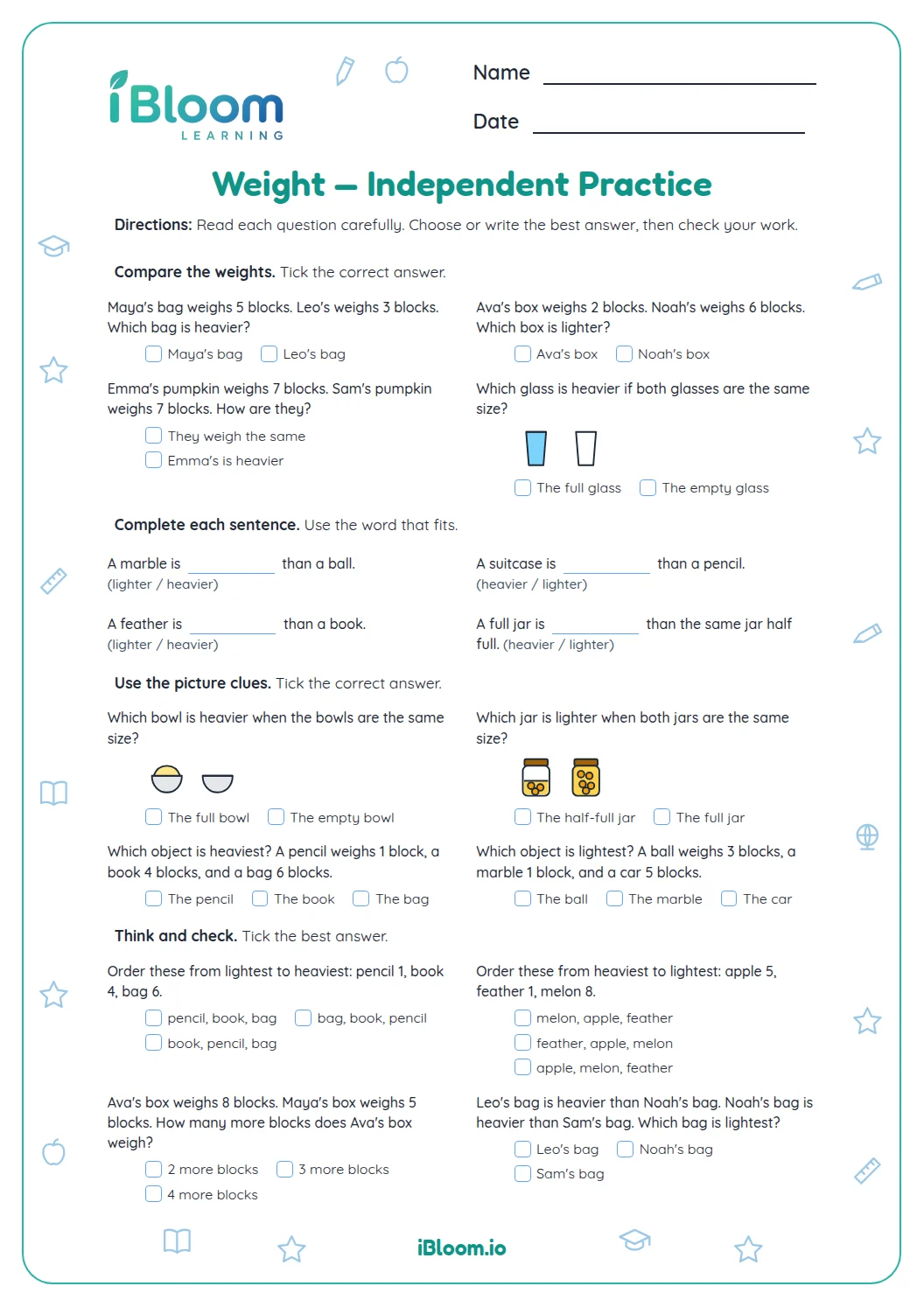
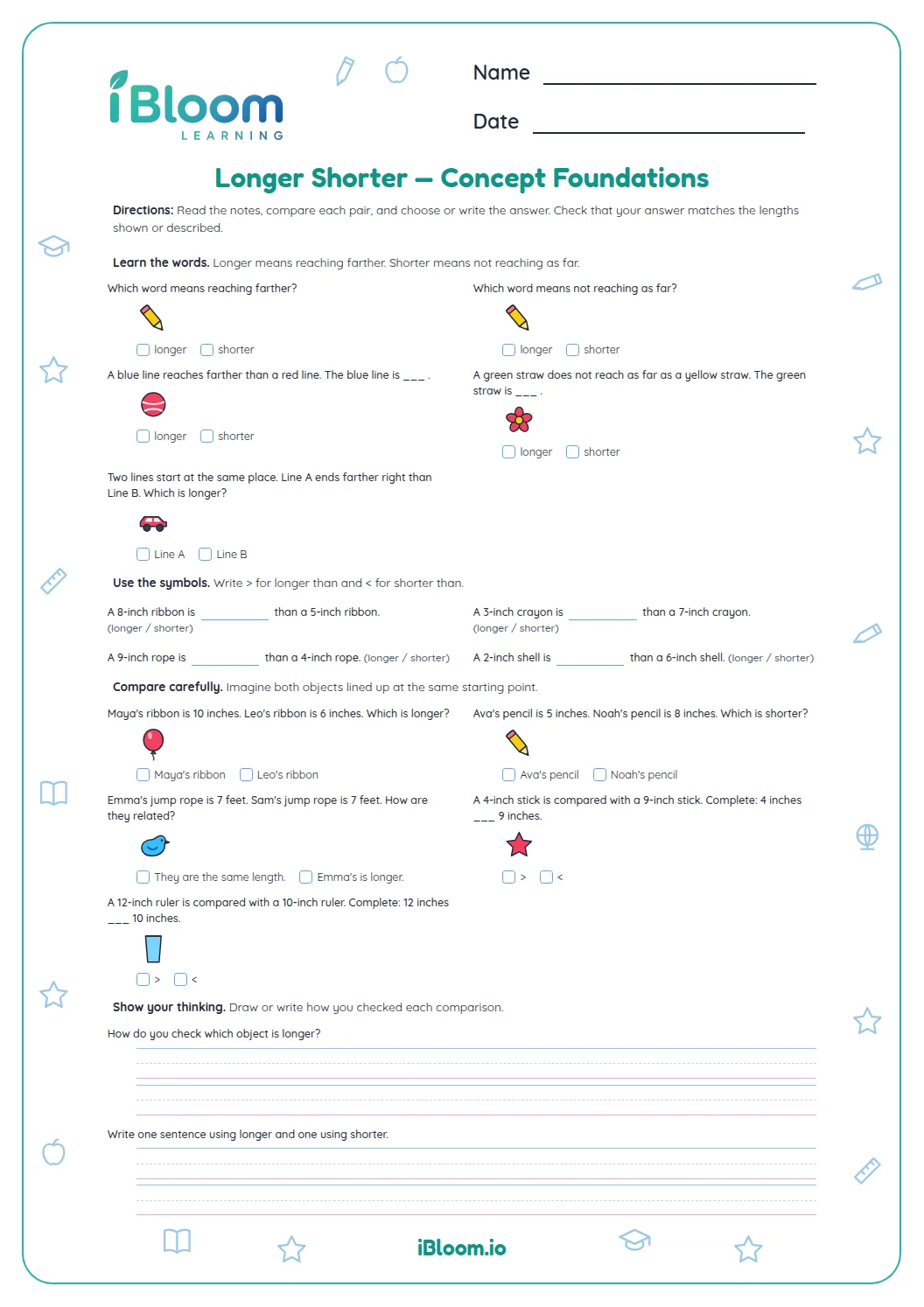
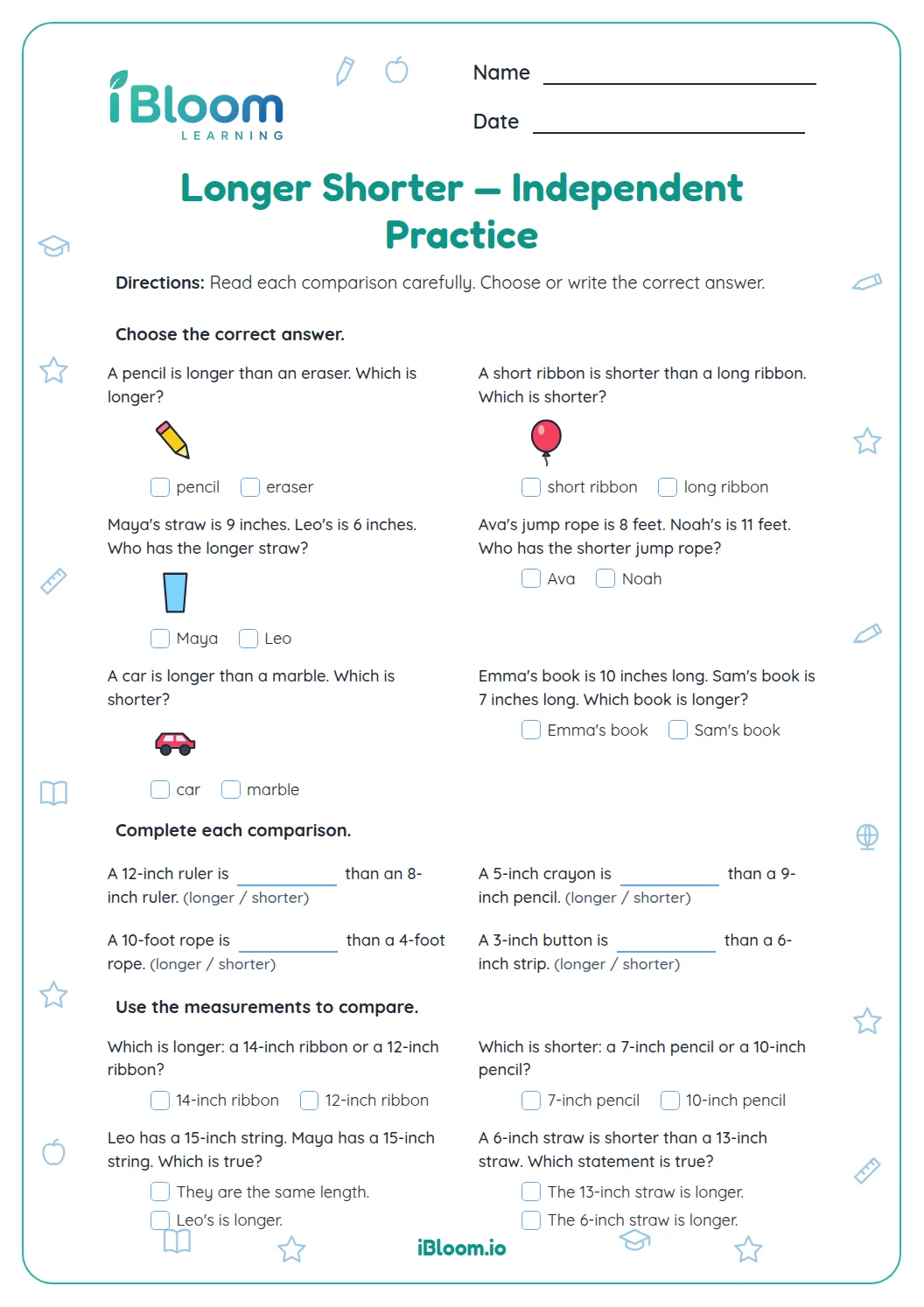
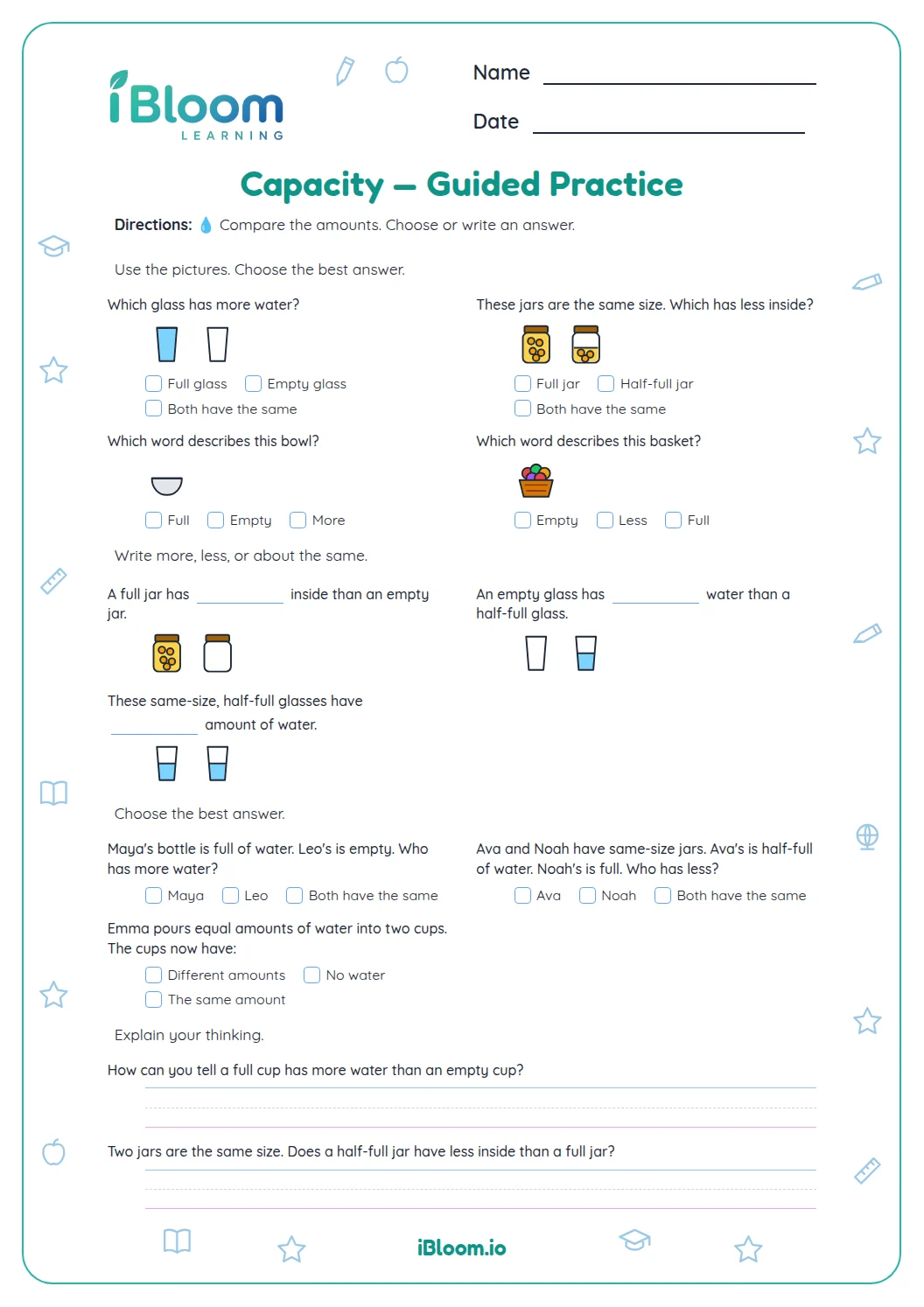
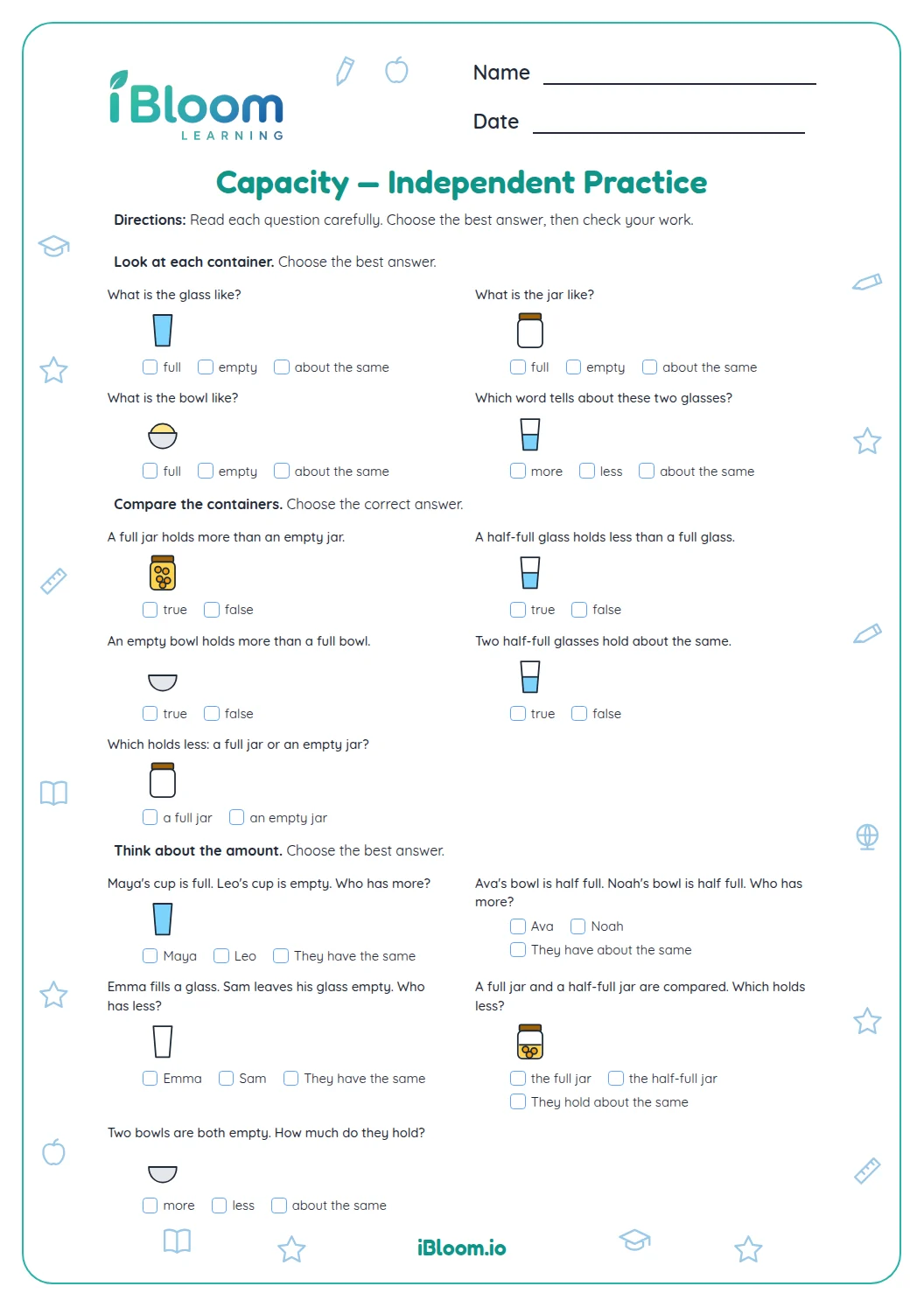
This free Grade 1 worksheet helps students compare the weight of familiar objects and containers. Students read short comparisons, complete comparison statements, explain simple comparisons, and draw examples. Students compare weights stated in the prompts, keeping the focus on measurable attributes and clear comparison language. A separate answer key provides model responses.
What does the worksheet ask students to do?
Part A uses statements about familiar containers and baskets. Part B completes comparison statements. Part C answers questions about stated weights and includes two drawing prompts.
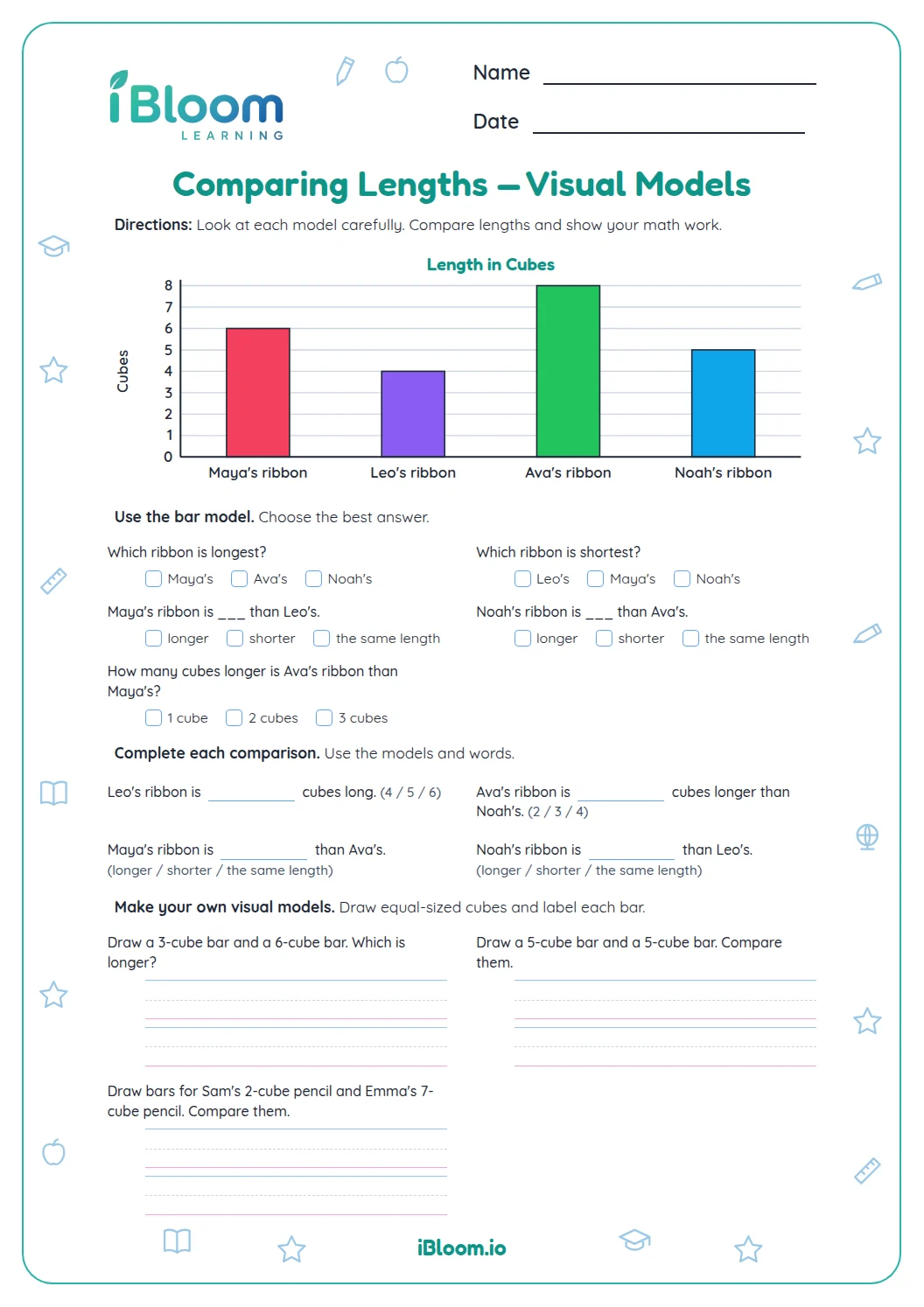
How do visual models help compare weight?
The words heavier and lighter compare how much two objects weigh; equal in weight means the amounts match. The prompts state the relationship or the information needed to infer it.
- 1The model shows a full glass and a half-full glass.
- 2The full glass has more of the same contents.
- 3The full glass is heavier.
How can students use comparison words?
Heavier means more weight, lighter means less weight, and equal means the weights match. Ask the student to name both objects before choosing a comparison word so the relationship stays clear.
How to use this worksheet
- 1Read each prompt and name the two objects being compared.
- 2In Part A, use the stated facts about each pair of objects.
- 3In Part B, reread the sentence after adding the comparison word.
- 4For Part C, explain your choice in a short phrase or sentence.
- 5Use the final drawing prompts to show unequal and equal weight examples.
Weight comparison mix-ups
The mistake
Calling the empty container heavier.
The fix
Compare the same container with different amounts inside; the fuller one is heavier in this model.
The mistake
Using “heavier” when you mean “lighter.”
The fix
Point to the object with more weight first, then name the one with less.
The mistake
Assuming objects of different sizes must have different weights.
The fix
Use the information in the prompt. It may say that two objects of different sizes weigh the same.
What to practice next
Make more practice
Further reading
Questions parents and teachers ask
What words do students practice?
Students practice heavier, lighter, and equal in weight. They use the words to compare full and empty containers, familiar objects, and two objects described as weighing the same. Students can pause after each part and use the key to review both the answer and the reasoning.
How many questions are on the worksheet?
There are 14 questions in three parts: visual comparisons, missing comparison words, and short answers or drawings. The separate answer key includes example responses for drawing tasks. Students can pause after each part and use the key to review both the answer and the reasoning.
What does “equal in weight” mean?
It means two objects weigh the same amount. They may look different, but the comparison says neither one is heavier or lighter. Students can pause after each part and use the key to review both the answer and the reasoning.
How can a child compare two objects?
Name the objects and look for information about how much each weighs or what each contains. Then decide which has more weight, less weight, or the same weight. Students can pause after each part and use the key to review both the answer and the reasoning.
Can the drawing answers look different from the key?
Yes. Students may draw different cups, bags, or baskets. The important part is that their labels match the prompt, such as showing the full cup as heavier than the empty cup. Students can pause after each part and use the key to review both the answer and the reasoning.