



About this worksheet
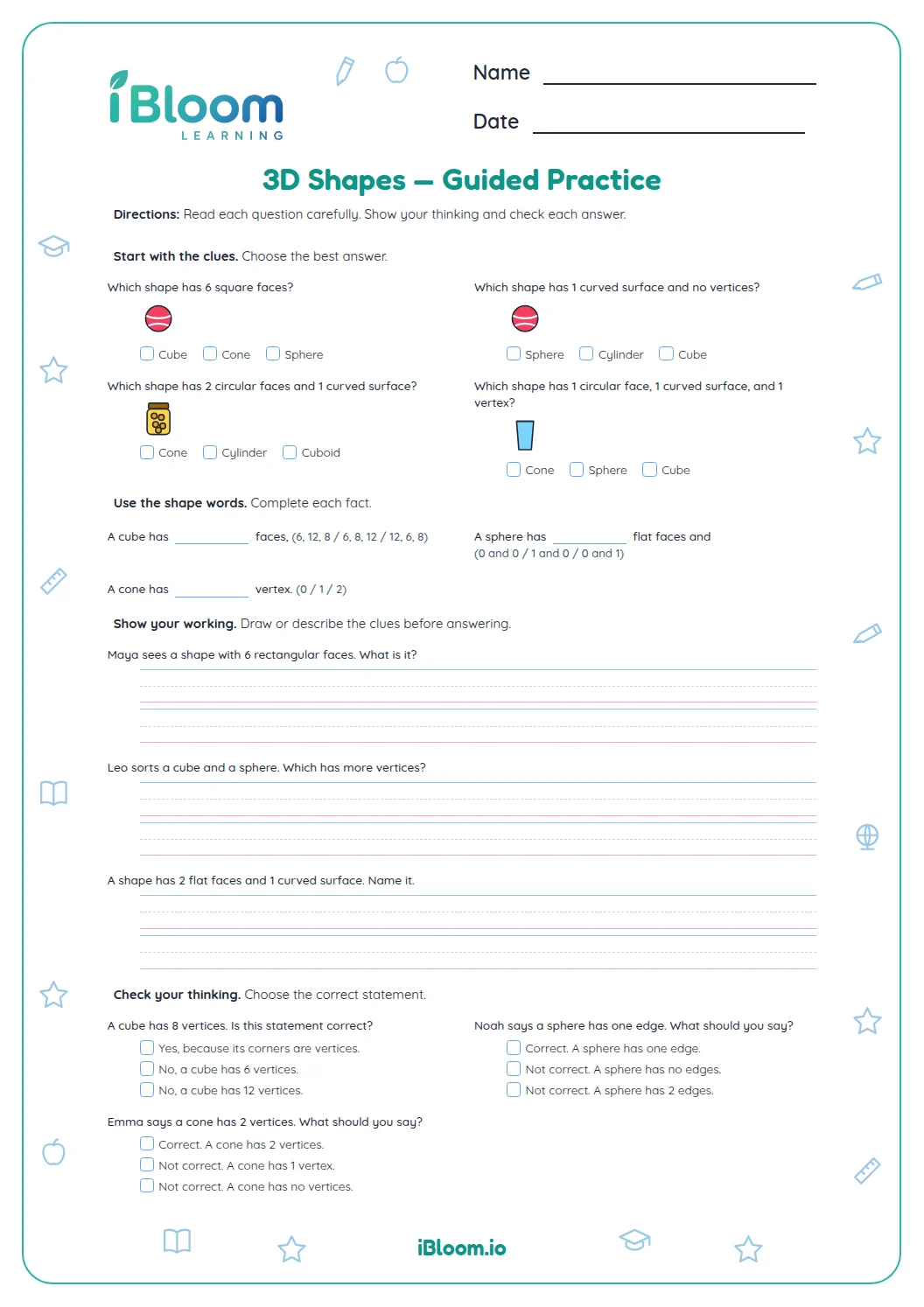
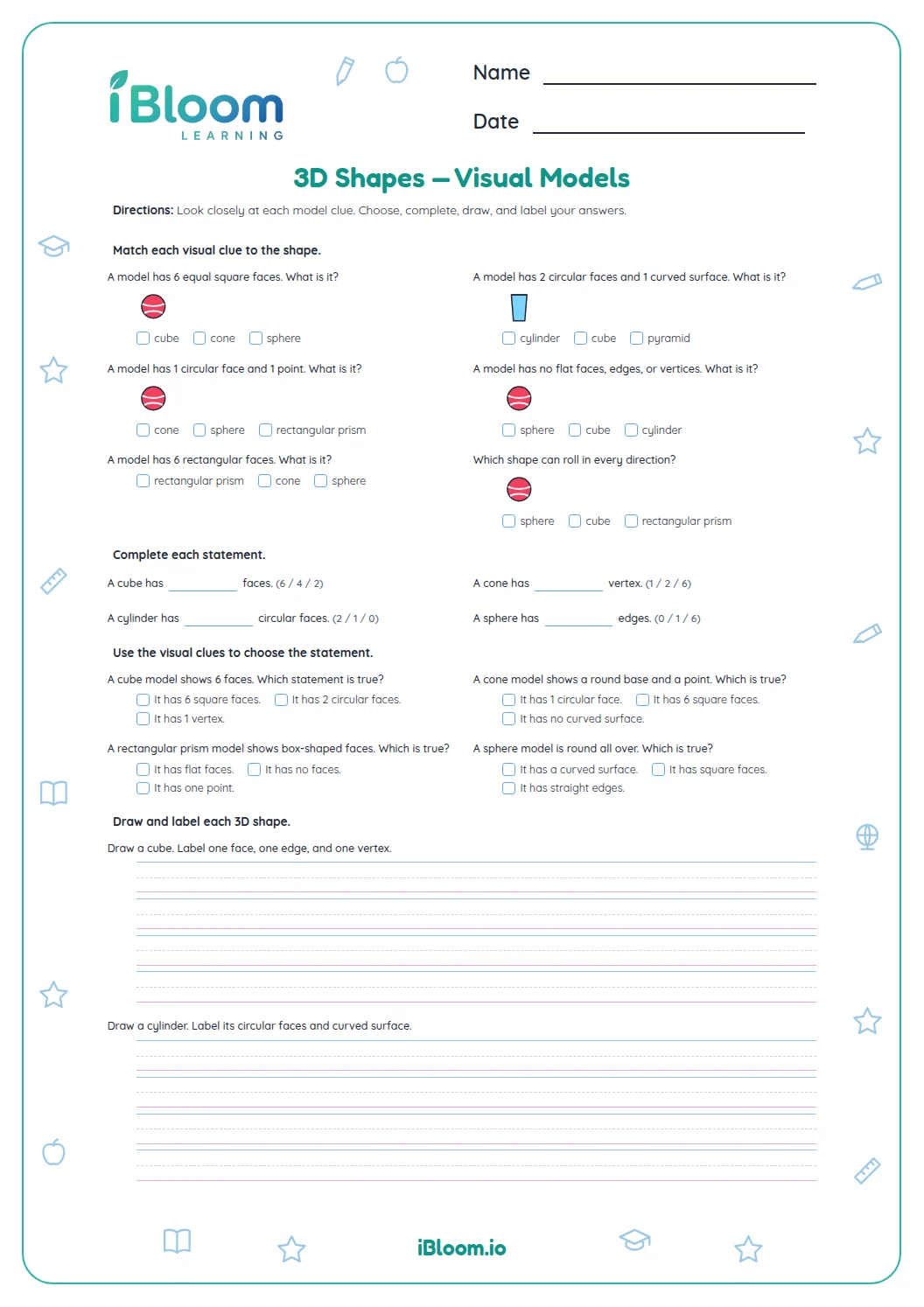
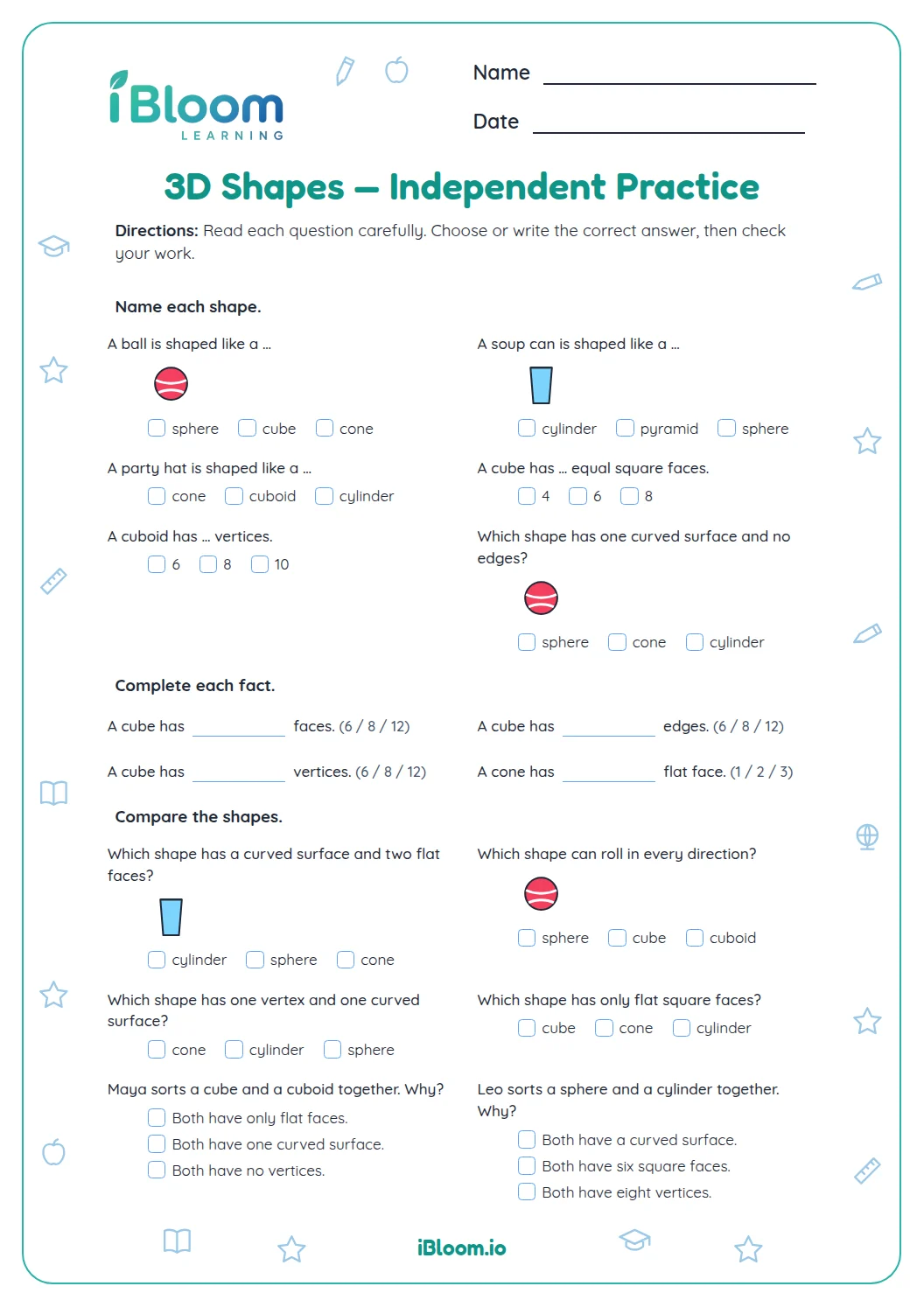
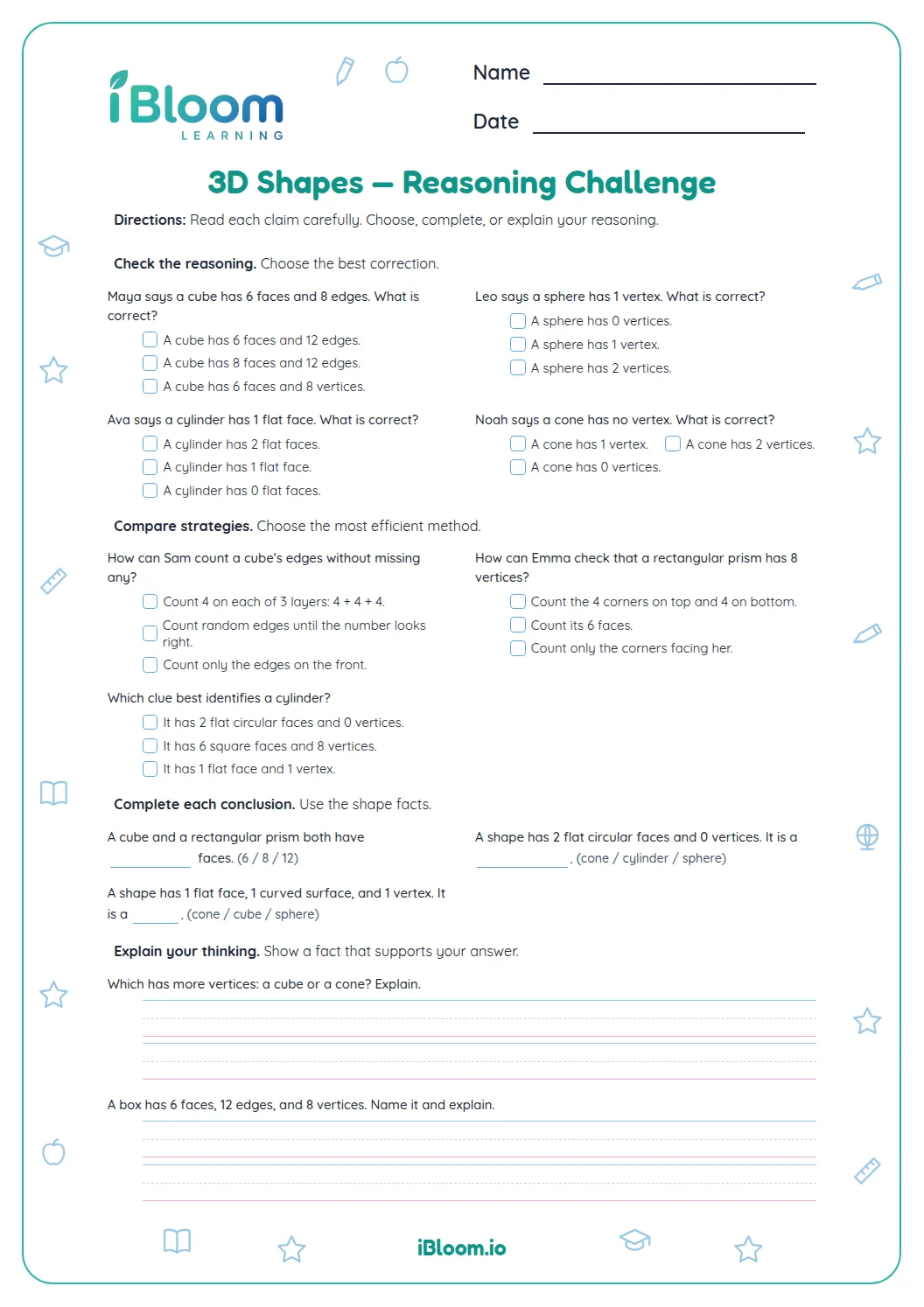
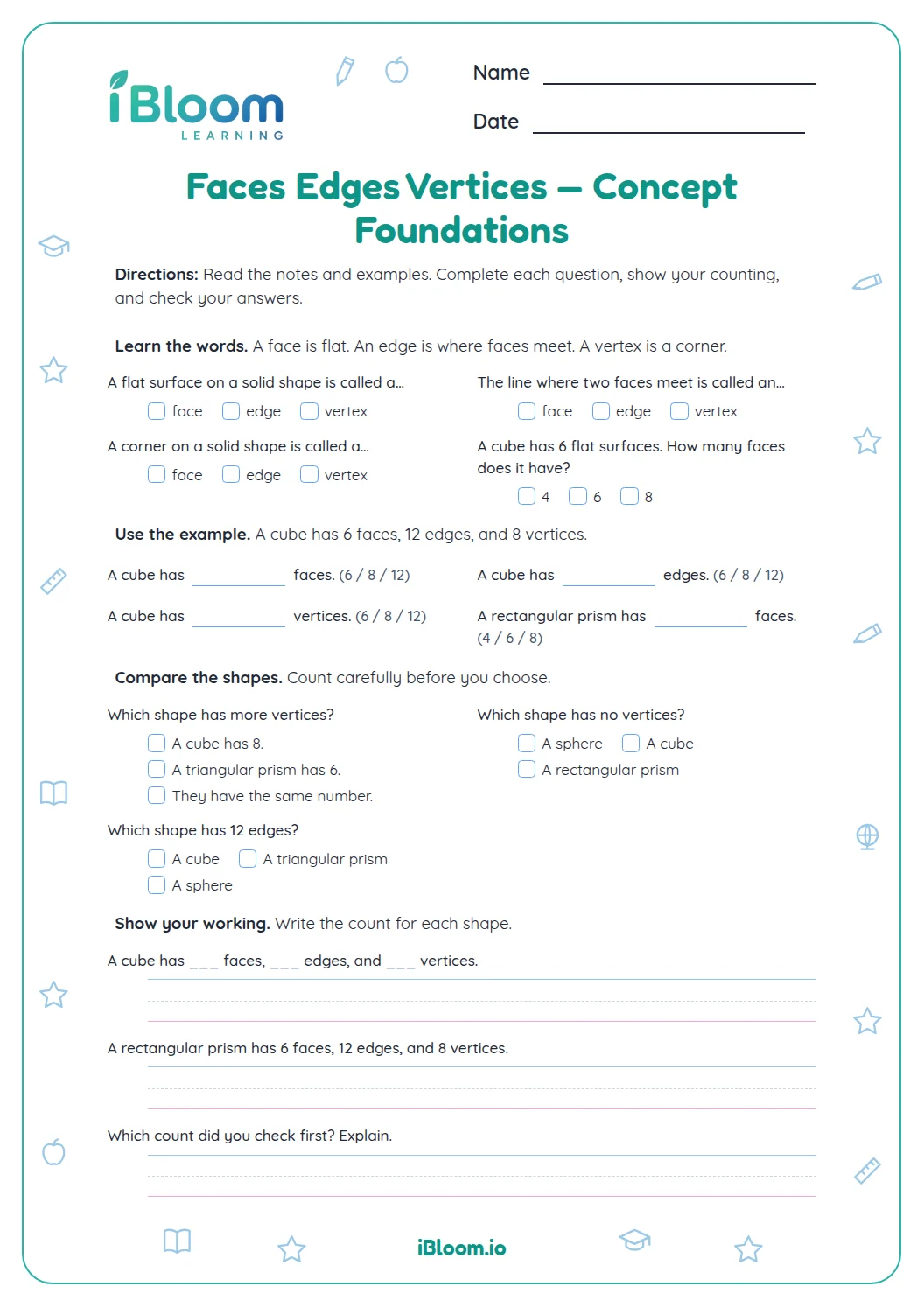
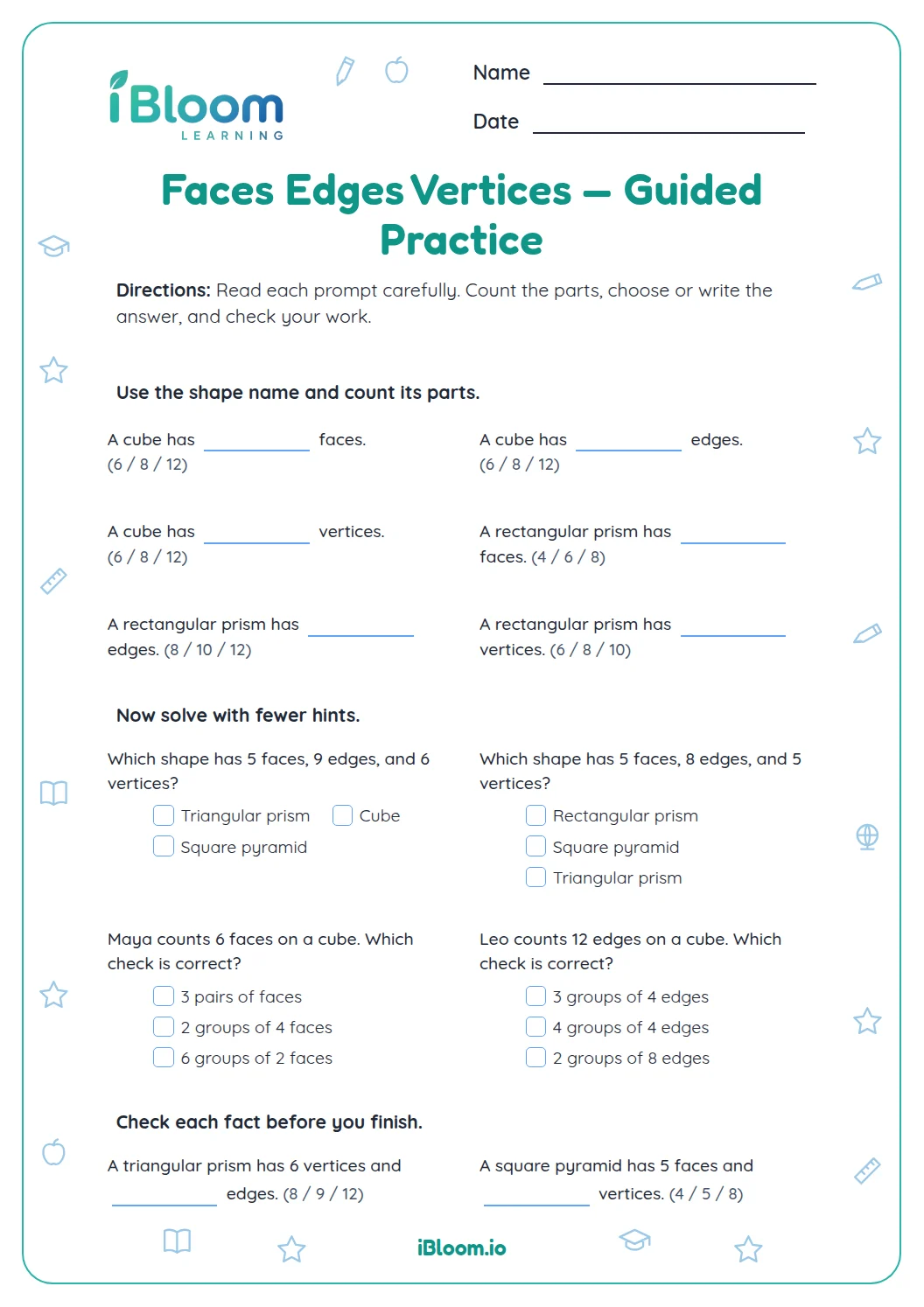
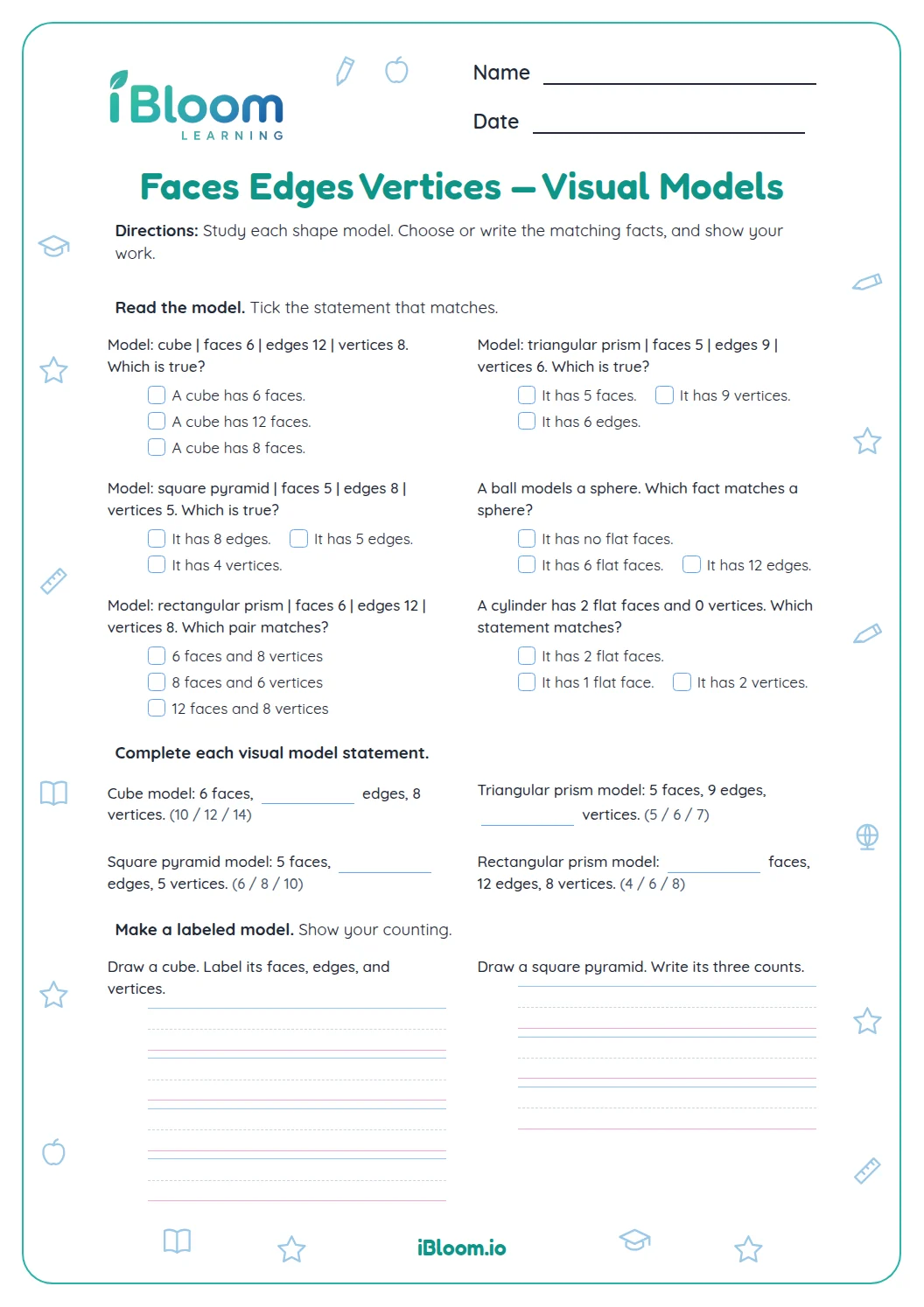
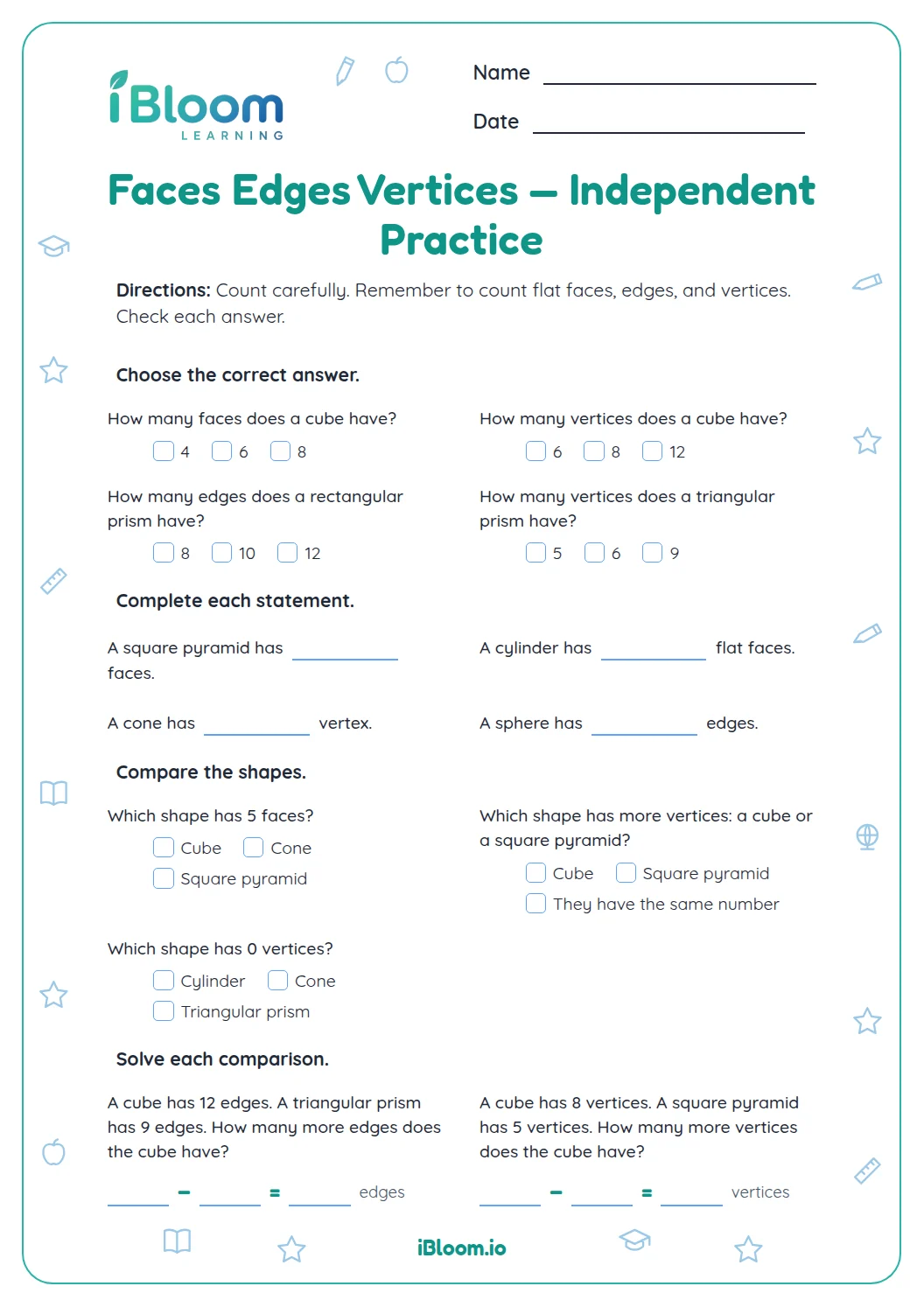
This Grade 2 worksheet uses familiar objects to practice naming cubes, cylinders, cones, spheres, and rectangular prisms. Its 14 questions move from object clues to solid-shape attributes and short real-world situations, with a separate answer key. Because the template does not draw 3D solids, the prompts use words and familiar object references as clues.
How can familiar objects help identify solids?
Look at flat faces and curved surfaces. Cans resemble cylinders, balls resemble spheres, and boxes can resemble cubes or rectangular prisms.
What clues describe a solid?
Count faces and notice their shapes. A cube has six square faces; a cylinder has two flat circular faces.
How to use this worksheet
- 1Read the directions and scan the first model or example.
- 2Work through each part in order, writing clearly in the answer spaces.
- 3Pause to explain one strategy or shape clue aloud.
- 4Check every response with the separate answer key.
- 5Choose one missed question and solve or copy it again carefully.
Common mistakes and quick fixes
The mistake
Calling every object that rolls a sphere.
The fix
Check for flat faces and curved surfaces; a cylinder rolls but is not a sphere.
The mistake
Choosing an answer without checking the amount or clue.
The fix
Use the visual model, place value, or stated attribute to verify the choice.
The mistake
Skipping the check after finishing.
The fix
Compare each response with the key and correct one item in a different color.
What to practice next
Make more practice
Questions parents and teachers ask
Which solid shapes appear?
The 14 questions practice matching familiar objects to solid shapes and using simple shape clues. Students identify cubes, cylinders, cones, spheres, and rectangular prisms, name faces, and solve a few short situations. The worksheet and answer key use text clues because the template does not draw 3D solids.
How is a 3D shape different from a flat shape?
A 3D shape takes up space and may have flat faces or curved surfaces. A cylinder has two flat circular faces and one curved surface. A sphere has a curved surface and no flat faces. Students use these clues to identify solids that familiar objects resemble.
Why use everyday objects?
Everyday objects give students a familiar starting point for shape language. A can resembles a cylinder, and a ball resembles a sphere. The worksheet asks children to connect such objects to solids, then use clues like the number or type of flat faces to check a match.
Is an answer key included?
Yes. The key lists each solid or attribute answer and gives a sample object with a clue for the open response. For that last item, other answers are acceptable when the object resembles a rectangular prism and the stated clue supports the match, such as a tissue box with rectangular faces.
What can we ask after finishing?
Invite your child to find a box, can, ball, or party hat and describe the surfaces. Ask which solid it most closely resembles and what clue supports that choice. A real object may include details beyond the solid model, so focus on the overall shape.