
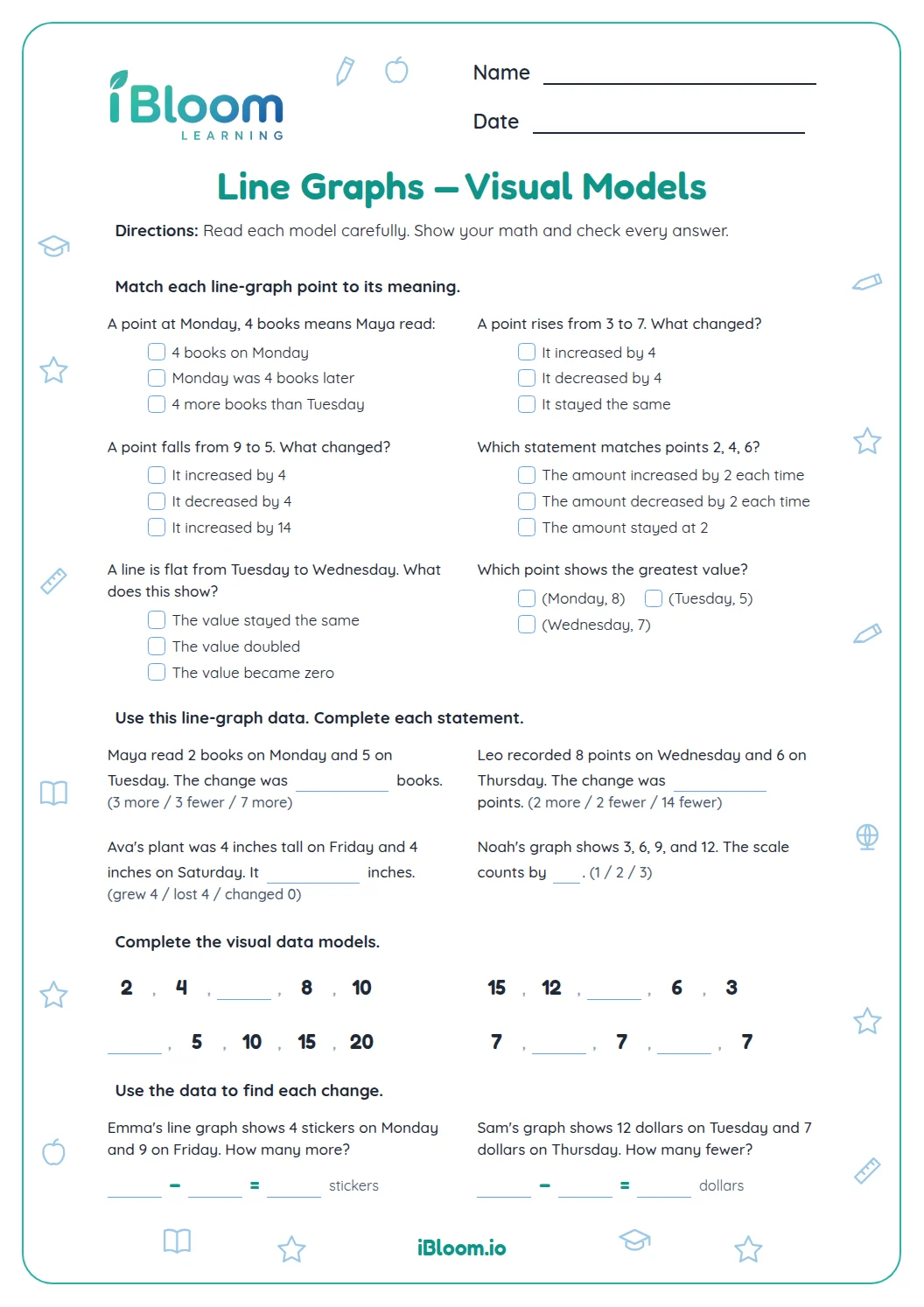
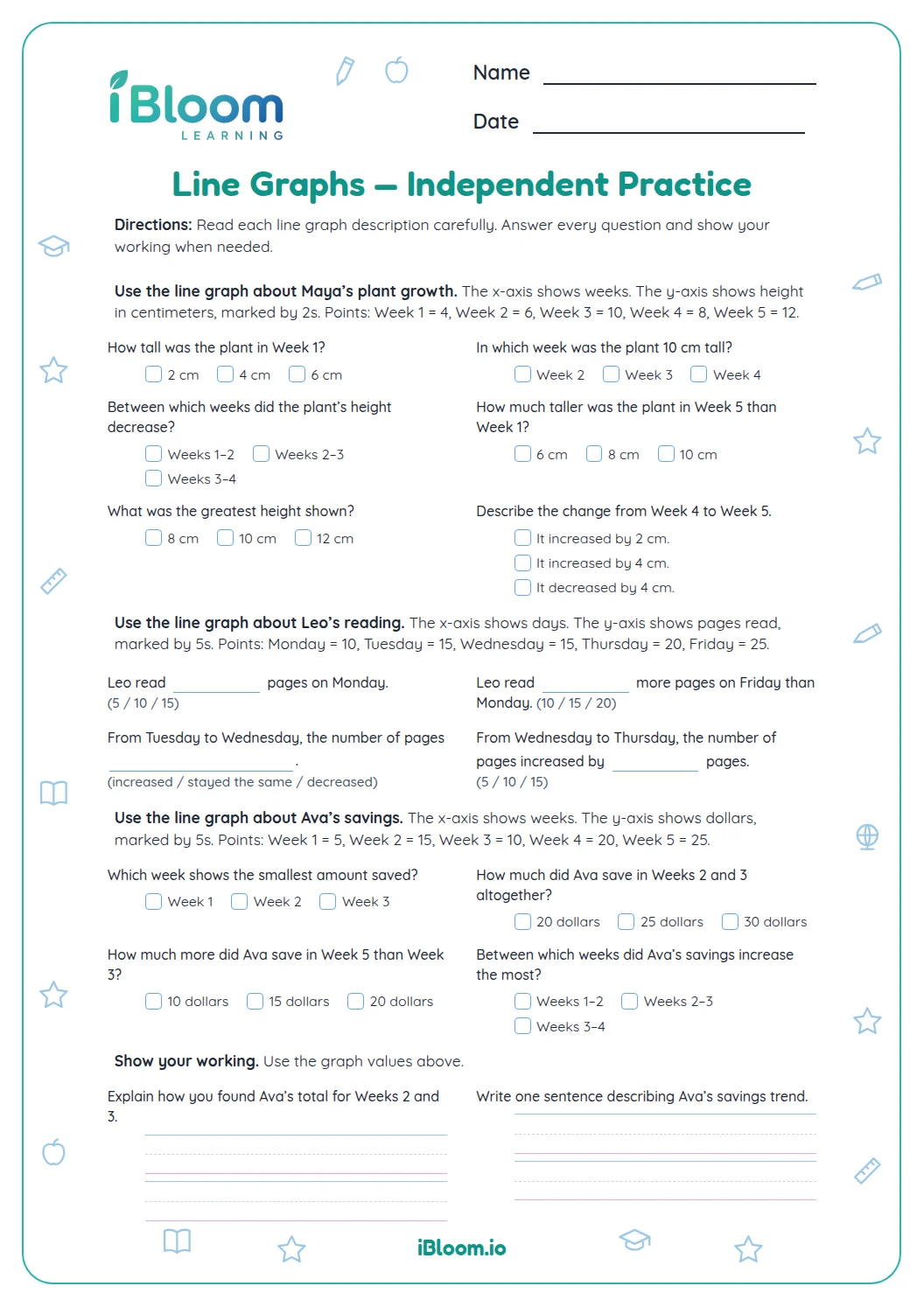
About this worksheet
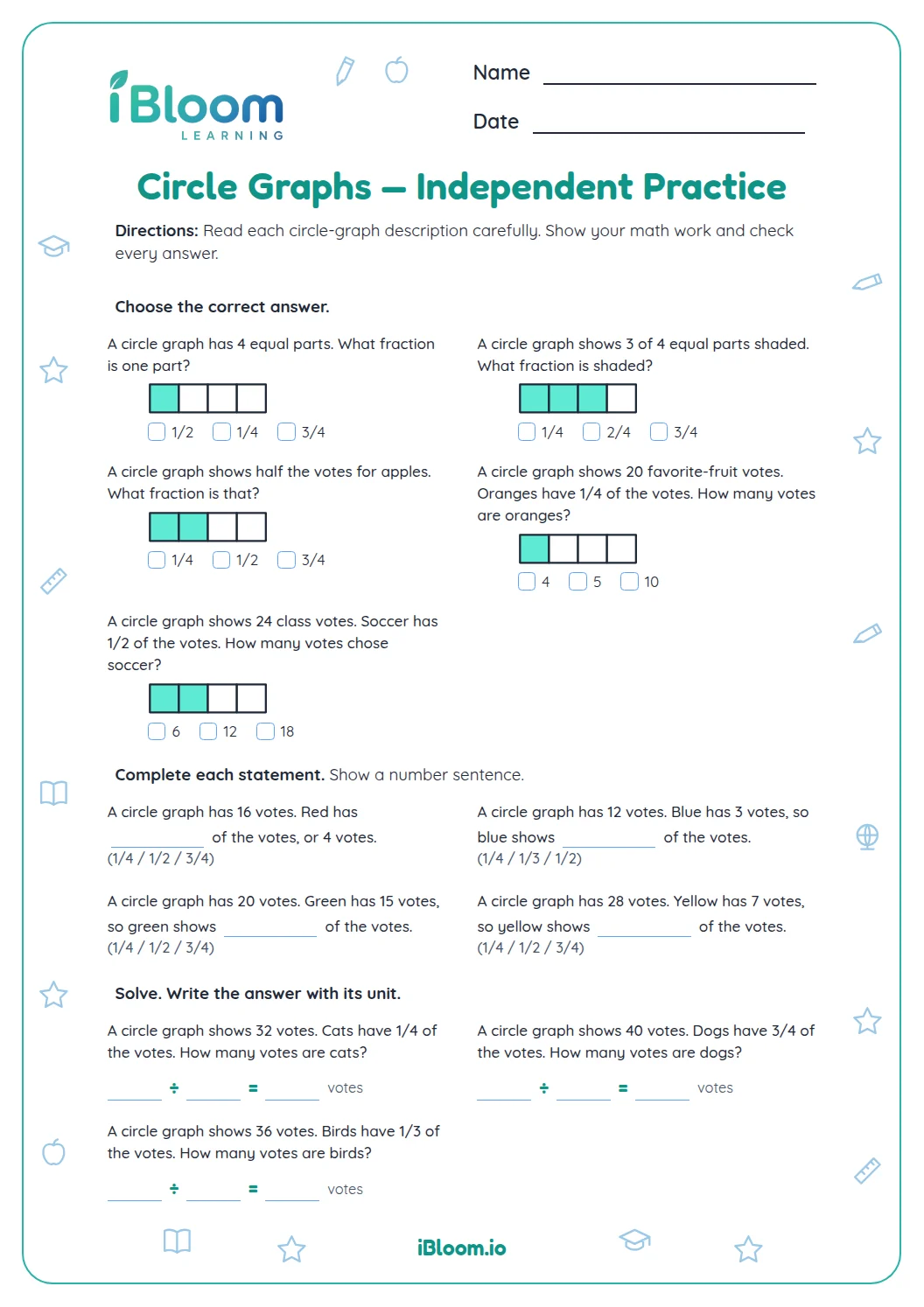
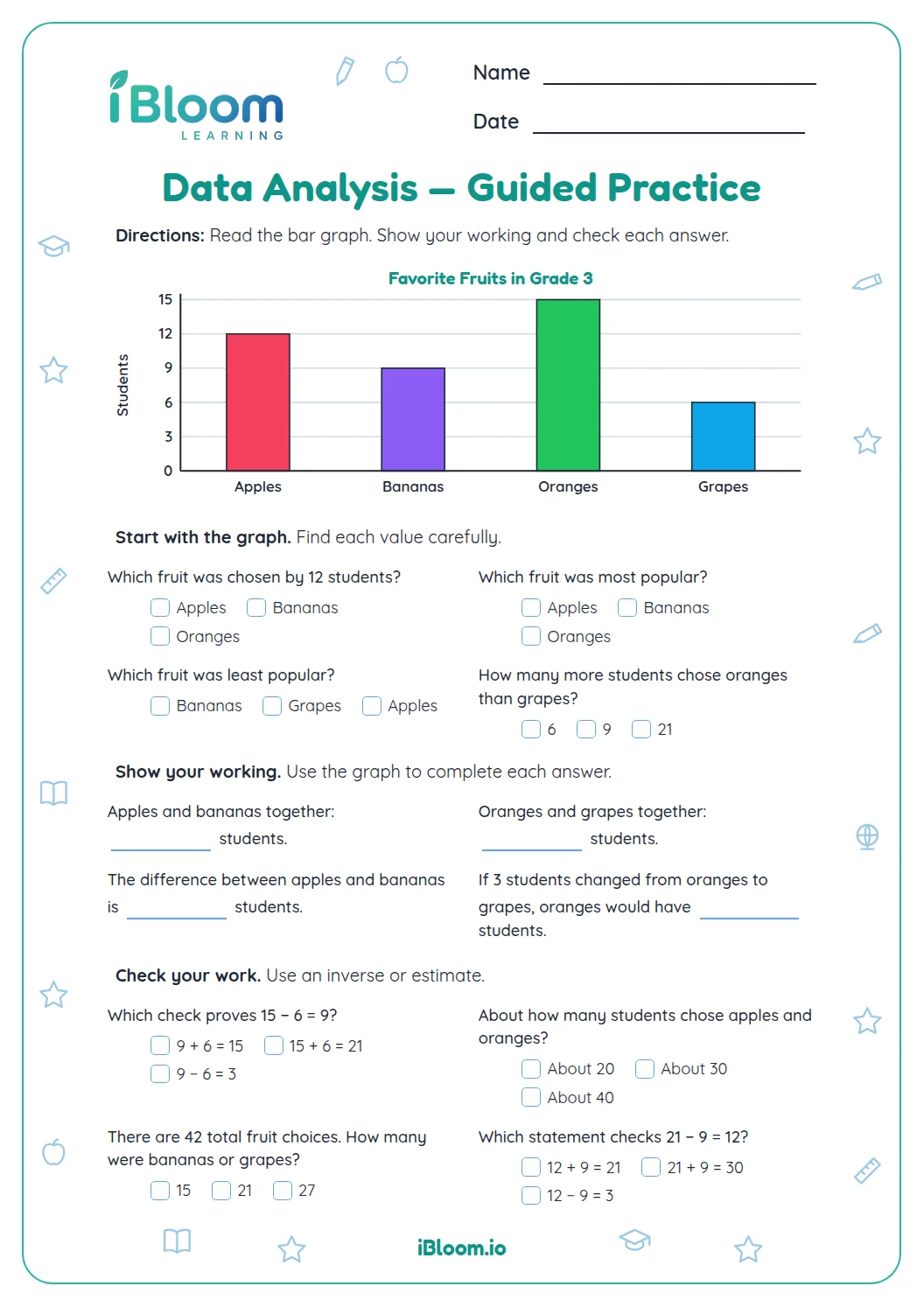
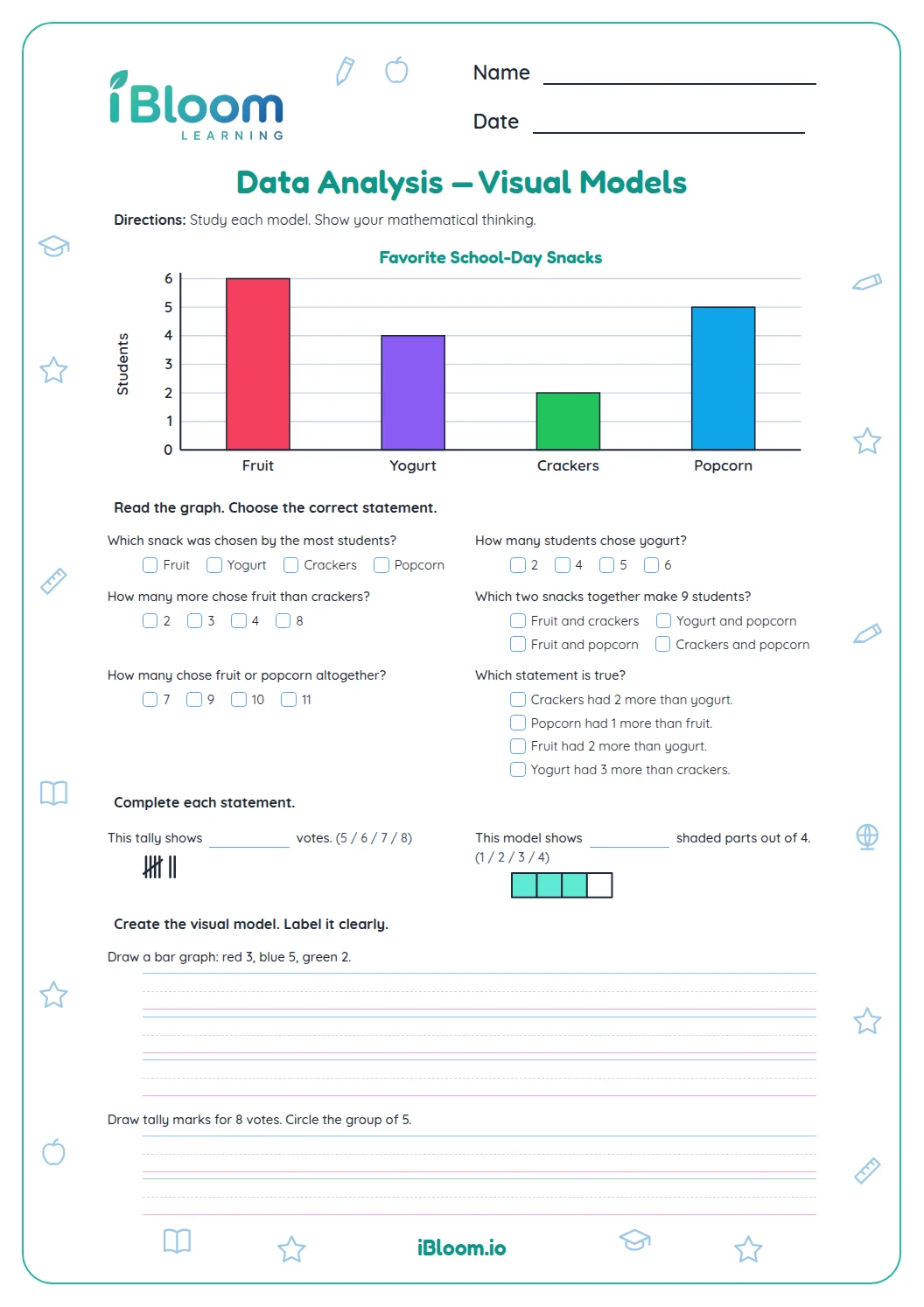
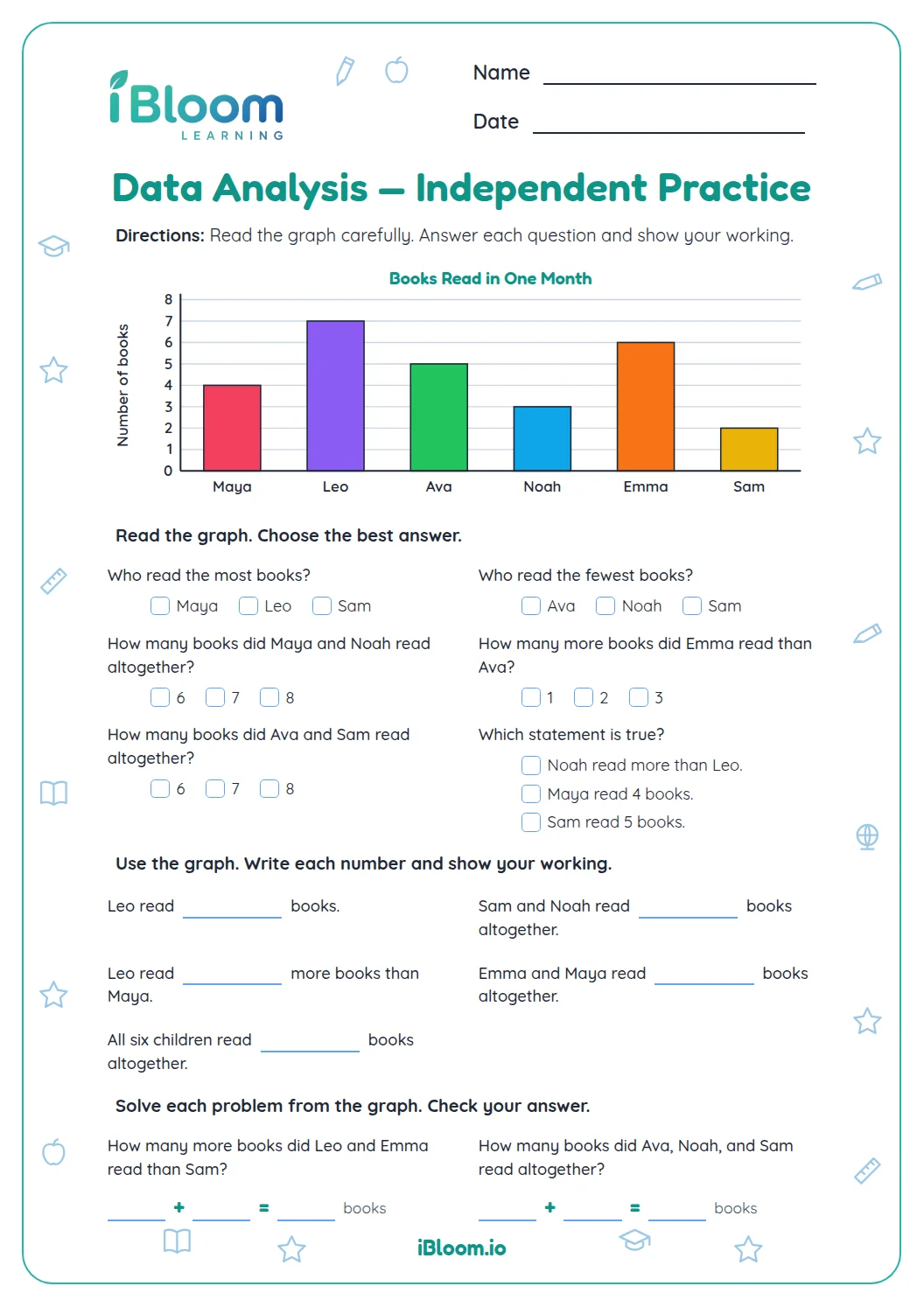
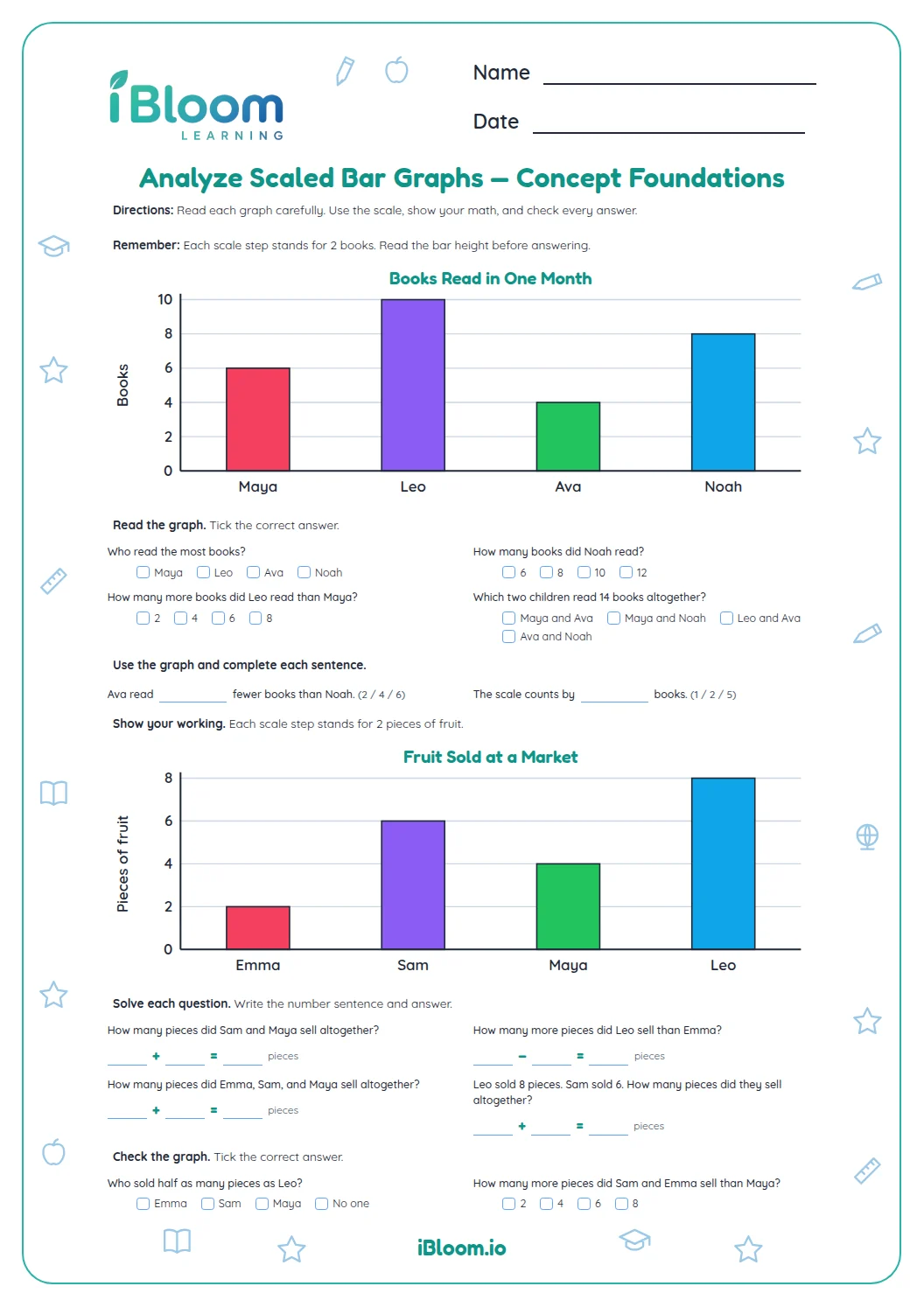
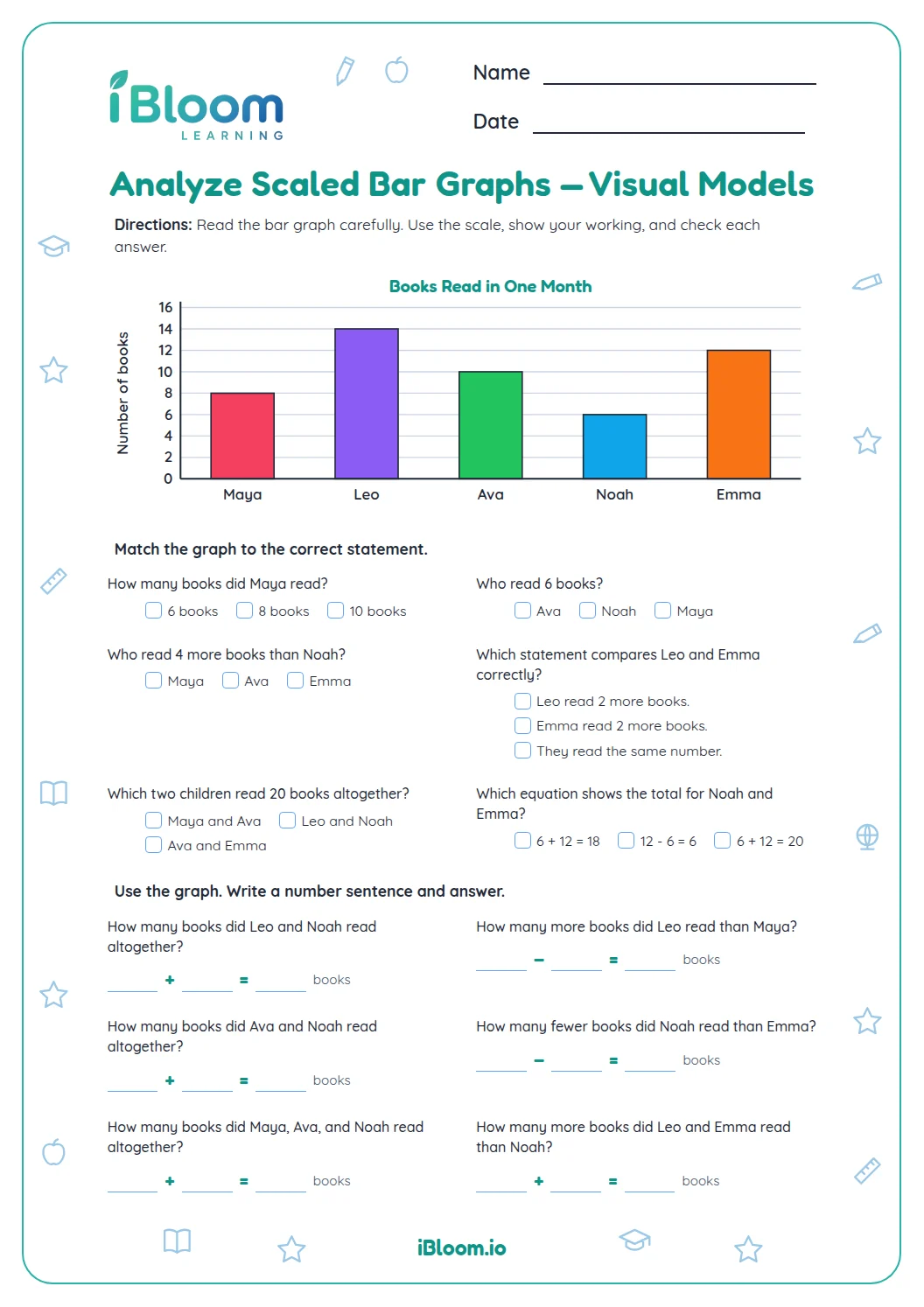
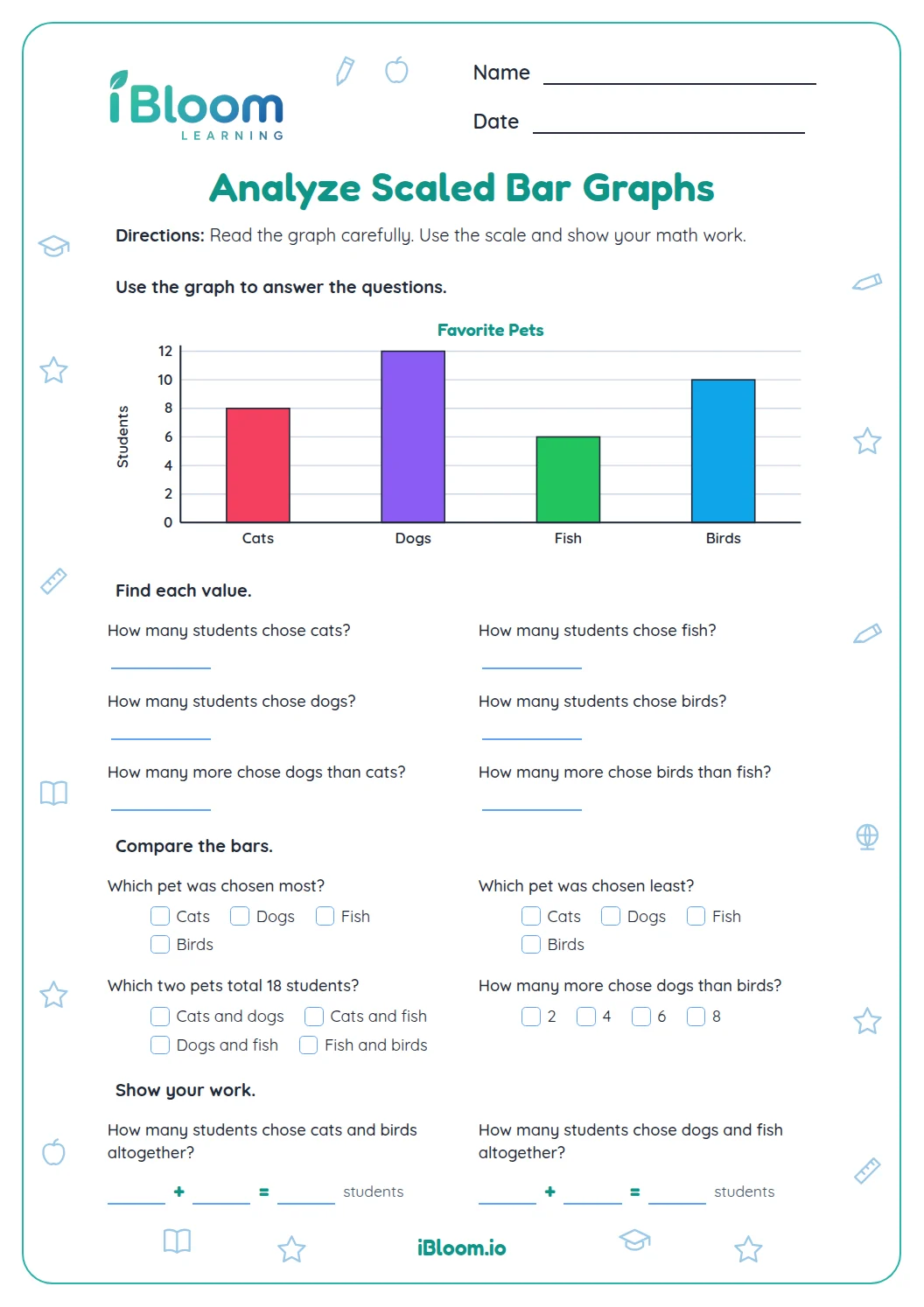
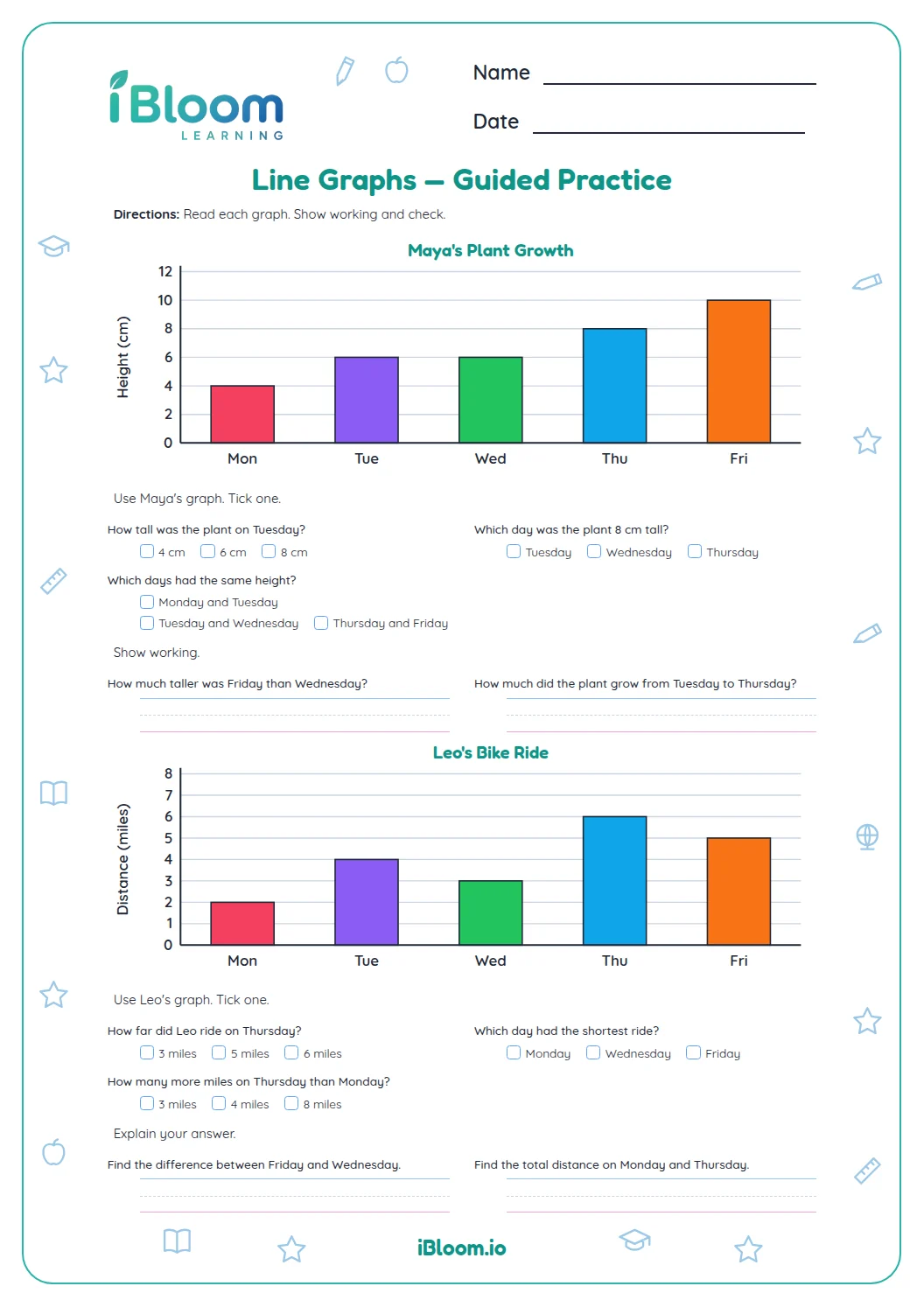
This printable is for Grade 3 learners practicing circle graph shares. It includes 15 questions in 2 parts, with concise items to leave room for a two-page worksheet and separate two-page answer key. Learners can use the models, time clues, or graph data shown on the sheet and check their work with the key.
Aligned to 3.NF.A.1
How does the worksheet practice circle graph shares and equal parts?
Part A reads shaded circle models as fractions. Parts B and C connect equal sections to votes and familiar groups, asking learners to find one share or a stated number of shares.
- 1What fraction of the circle is shaded?
- 2Answer: 1/4
How can a learner check an answer?
Read the direction for each part and identify the detail the question asks for. Solve it, then use the answer key to check the result and revisit any step that needs attention.
What is on the printable?
The sheet has 15 questions across three parts, followed by a separate answer key.
How to use this worksheet
- 1Count the equal sections in the circle model.
- 2Write the shaded sections over the total sections.
- 3For vote problems, divide the total by the number of equal sections.
- 4Multiply one section’s value when the question asks for several sections.
- 5Check that the answer uses the units or group named in the prompt.
Checks for equal shares
The mistake
Using the number of shaded parts as the denominator.
The fix
Count all equal parts for the denominator and shaded parts for the numerator.
The mistake
Dividing by the total number of votes.
The fix
Divide the total by the number of equal sections to find one share.
The mistake
Finding one share when the question asks for several.
The fix
Multiply the value of one share by the number of sections requested.
Common Core alignment
Name fractions as equal parts of a whole in circle models.
On this sheet:
Show the official wordingHide the official wording
Understand a fraction 1/b as the quantity formed by 1 part when a whole is partitioned into b equal parts; understand a fraction a/b as the quantity formed by a parts of size 1/b.
What to practice next
Make more practice
Further reading
Questions parents and teachers ask
What skill does this circle graph worksheet practice?
Learners read shaded circle models as fractions and use equal sections to reason about totals in simple vote situations. They identify the fraction shown, find the value of one section, and work out the amount in several sections. The focus stays on equal parts of a whole.
How many questions are included?
There are 15 questions across two parts. The first five use drawn circle models, while the remaining items connect equal parts to votes, books, students, or other familiar groups. Each question provides the information needed to find a fraction or whole-number amount.
Is an answer key included?
Yes. A separate key gives the fraction or number for each question. When checking a response, ask the learner to explain how many equal parts make the whole and what one part represents. That reasoning helps connect a circle model with the total.
How can a learner find the amount in one equal section?
Divide the total number of votes by the number of equal sections. For 24 votes in 8 sections, each section represents 3 votes. To find several sections, multiply the amount in one section by the number of sections being counted.
How long should the worksheet take?
Plan for about 20 minutes, allowing time to inspect the circle models and work through the equal-share questions. A learner can pause after the picture items and say what one section represents before continuing to the real-world situations.