





About this worksheet
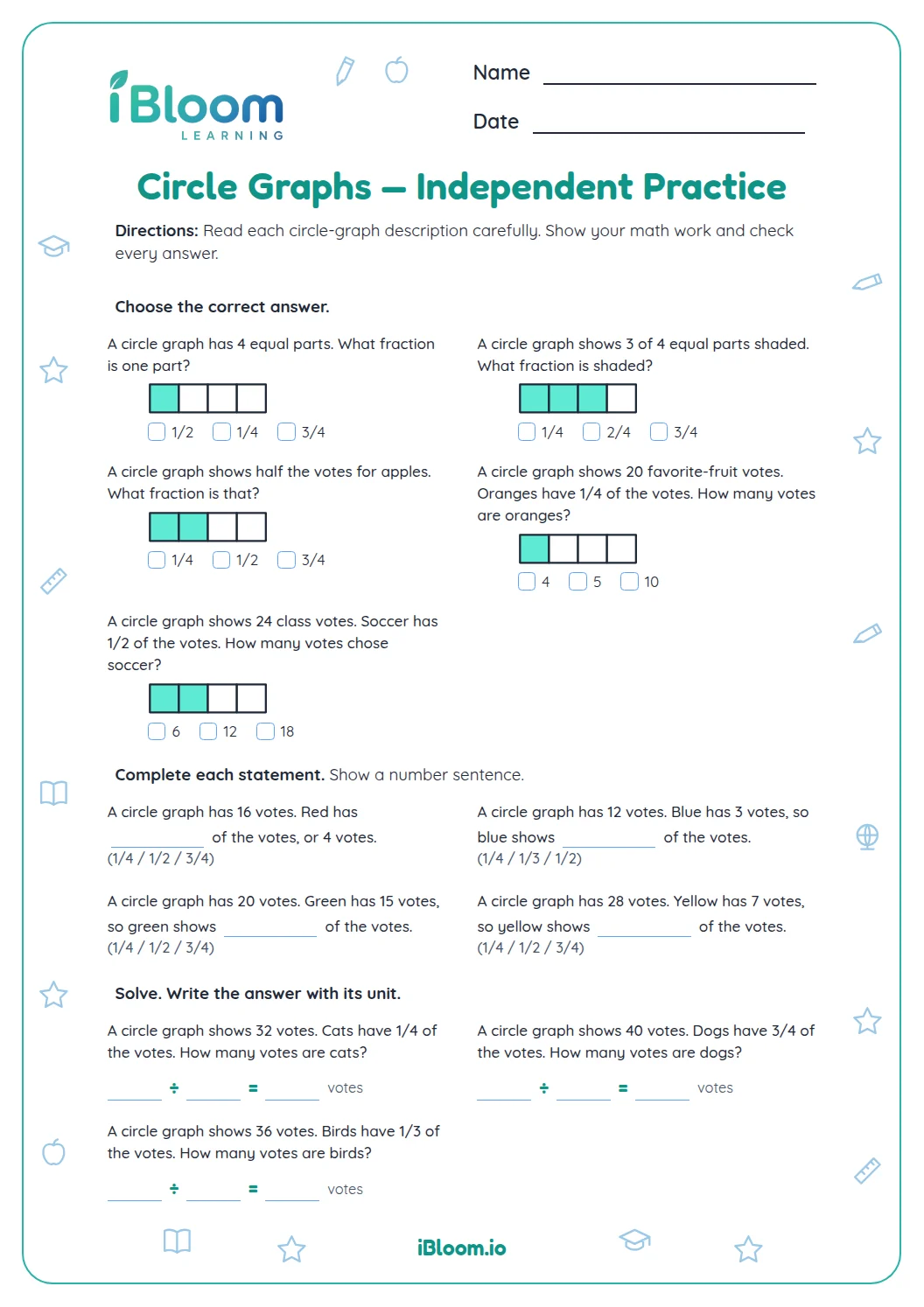
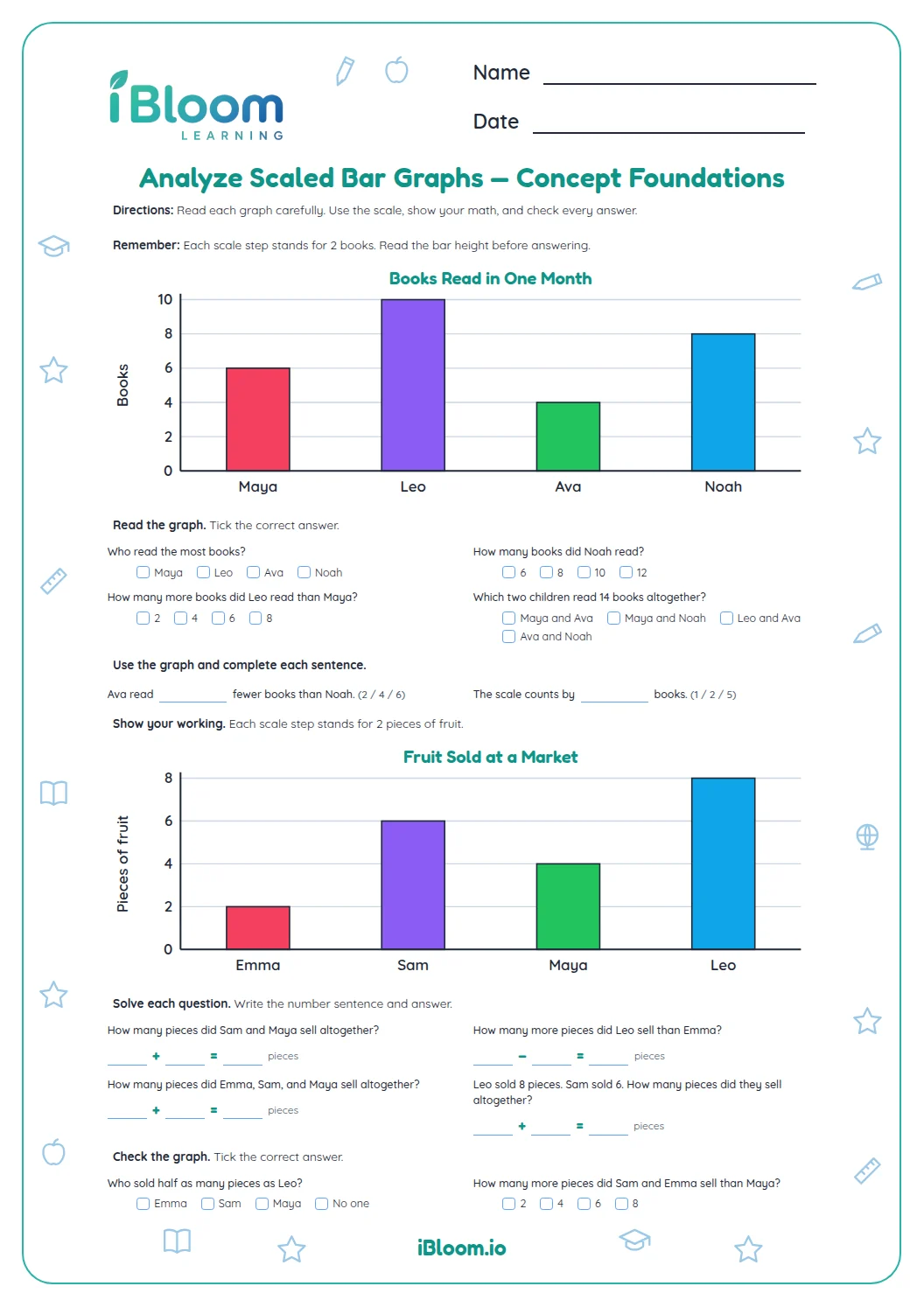
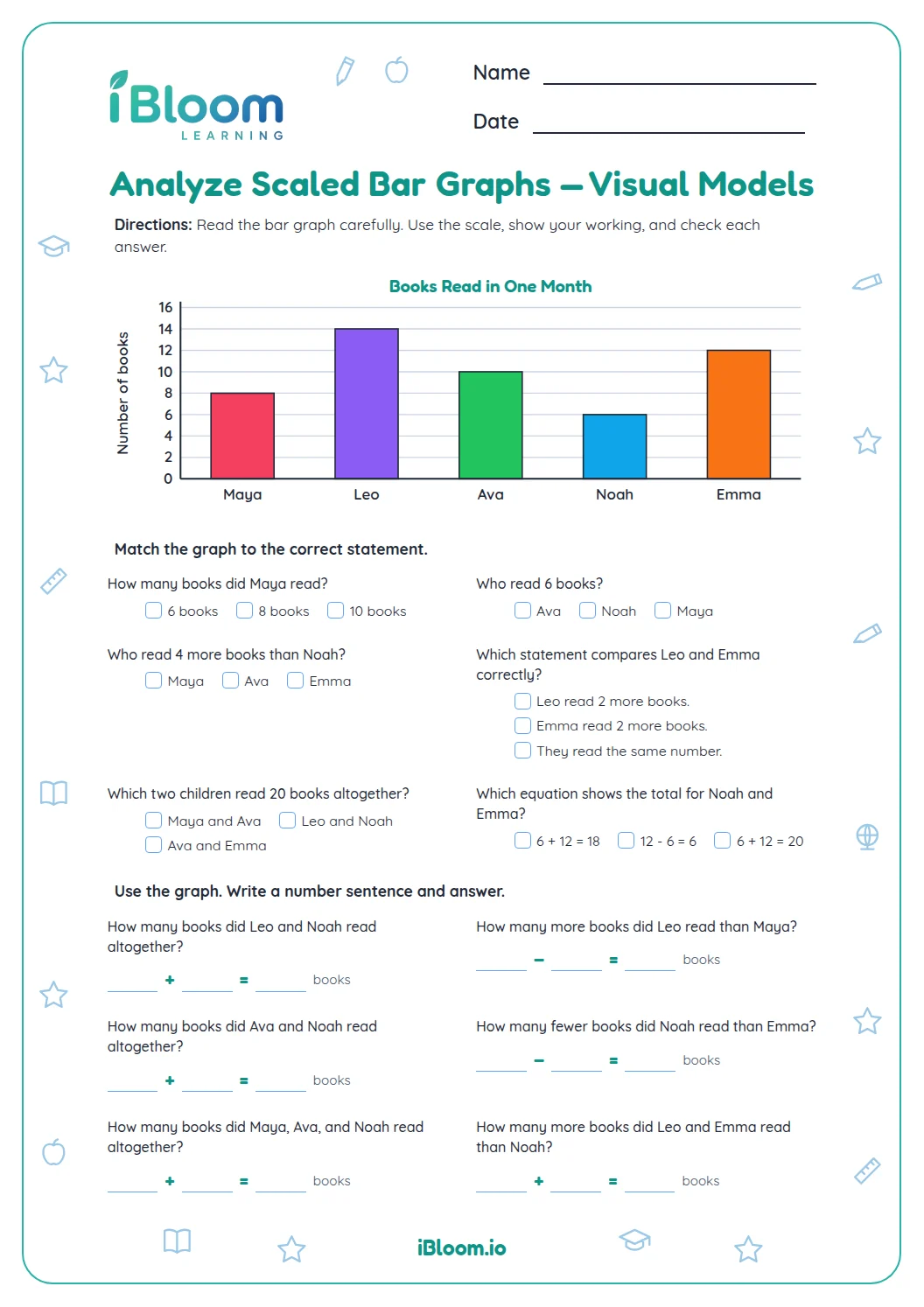
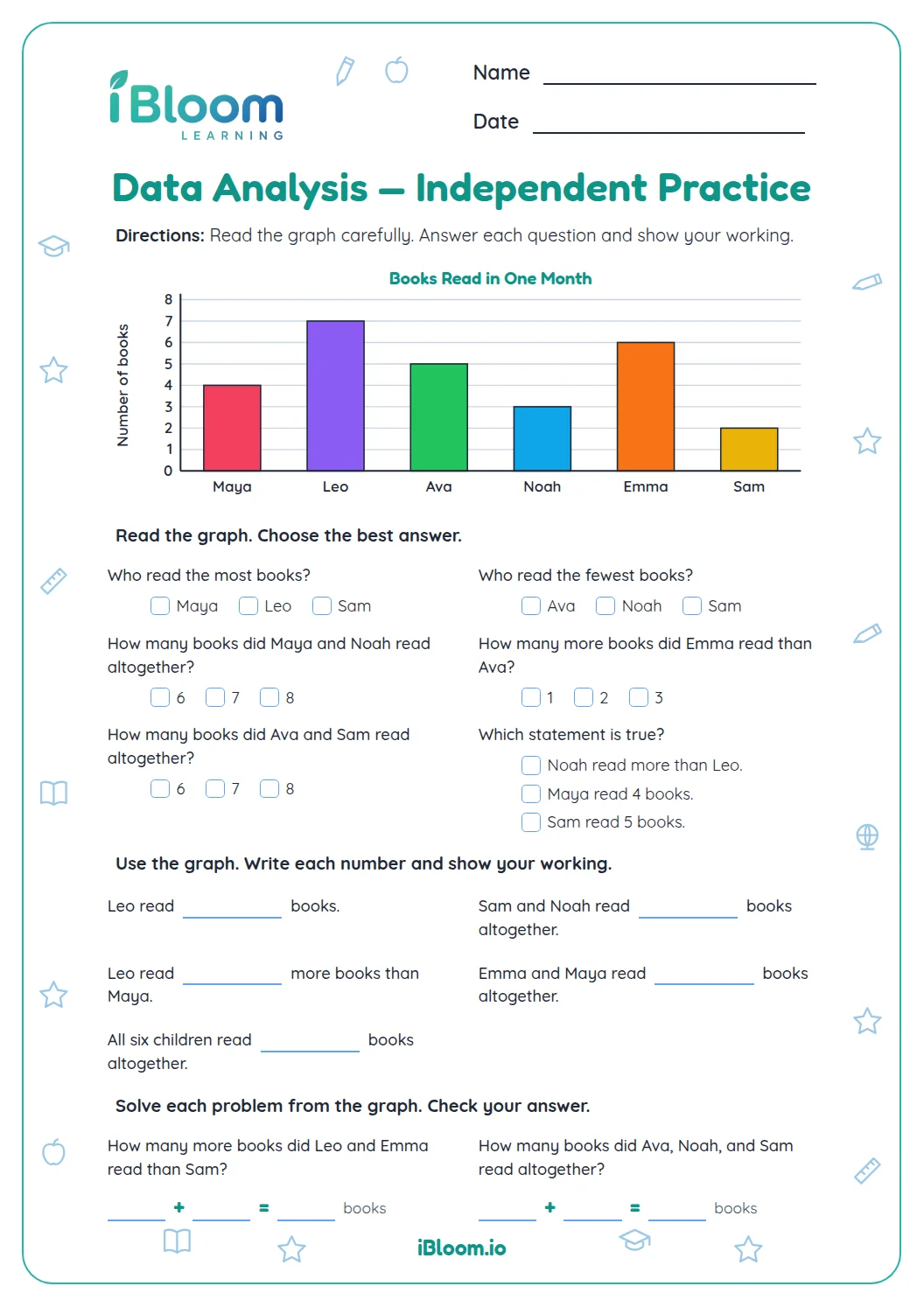
This printable circle-graphs reasoning challenge uses shaded circle models to make equal parts visible. Students name fractions, find missing parts, and connect a sector to the number of votes it represents. The answer key follows the same models. Students count equal sectors, name fractional shares, and find vote totals for groups of sectors.
How does a circle model represent data?
The whole circle represents all responses. Equal sectors divide that total into fair shares. The fraction of the circle and the count represented by one sector work together.
- 1Question 1 shows 3 shaded parts out of 8 equal parts, so the shaded share is 3/8.
- 2Question 6 divides 24 votes among 8 equal sectors: 24 ÷ 8 = 3 votes per sector.
How do you find a sector value?
Divide the total number of votes by the number of equal parts. Multiply that value by the number of sectors in the group.
How can you check a missing share?
Add the known parts and compare with the total number of equal sectors. For vote problems, multiply the sector value by all sectors to recover the full total.
How to work through this page
- 1Count all equal sectors first.
- 2Write shaded parts over total parts for a fraction.
- 3For vote totals, divide votes equally among sectors.
- 4Multiply back to check the total.
Common mistakes and quick fixes
The mistake
Using the shaded count as the whole
The fix
Count every equal sector for the denominator.
The mistake
Dividing sectors by votes
The fix
Divide the total votes by the number of equal sectors.
The mistake
Forgetting unshaded sectors
The fix
Subtract the known sectors from the total to find what remains.
What to practice next
Make more practice
Questions parents and teachers ask
What does the whole circle stand for?
The whole circle represents all responses or votes. Each equal sector is one share of that total. For example, when a circle is split into eight equal sectors, all eight together represent the full set. One sector then represents one eighth.
How do I find a fraction from the circle?
Count the sectors in the category for the numerator and all equal sectors for the denominator. Three shaded sectors in an eight-part circle represent 3/8. For example, if three of eight sectors are shaded, write 3/8. Keep the sector count on top and the total count on the bottom.
How do I find how many votes one sector represents?
Divide the total votes by the number of equal sectors. For 24 votes shared across 8 sectors, 24 ÷ 8 = 3 votes per sector. After dividing, multiply the value of one sector by the number of sectors to check the result. That product should match the vote total.
Why do some questions ask about several sectors?
Find the value of one sector, then multiply by the number of sectors in the category. The drawing shows how many equal shares to include. For example, if one sector stands for 3 votes and a category covers 5 sectors, multiply 3 by 5 to find its votes.
Can this page teach percentages?
It asks students to reason about equal shares and whole-number vote counts using circle models. A shaded sector stands for a share of the total. The pictures use shaded sectors to distinguish parts of the whole. Students can count sectors first, then use division or multiplication when votes are given.