





About this worksheet
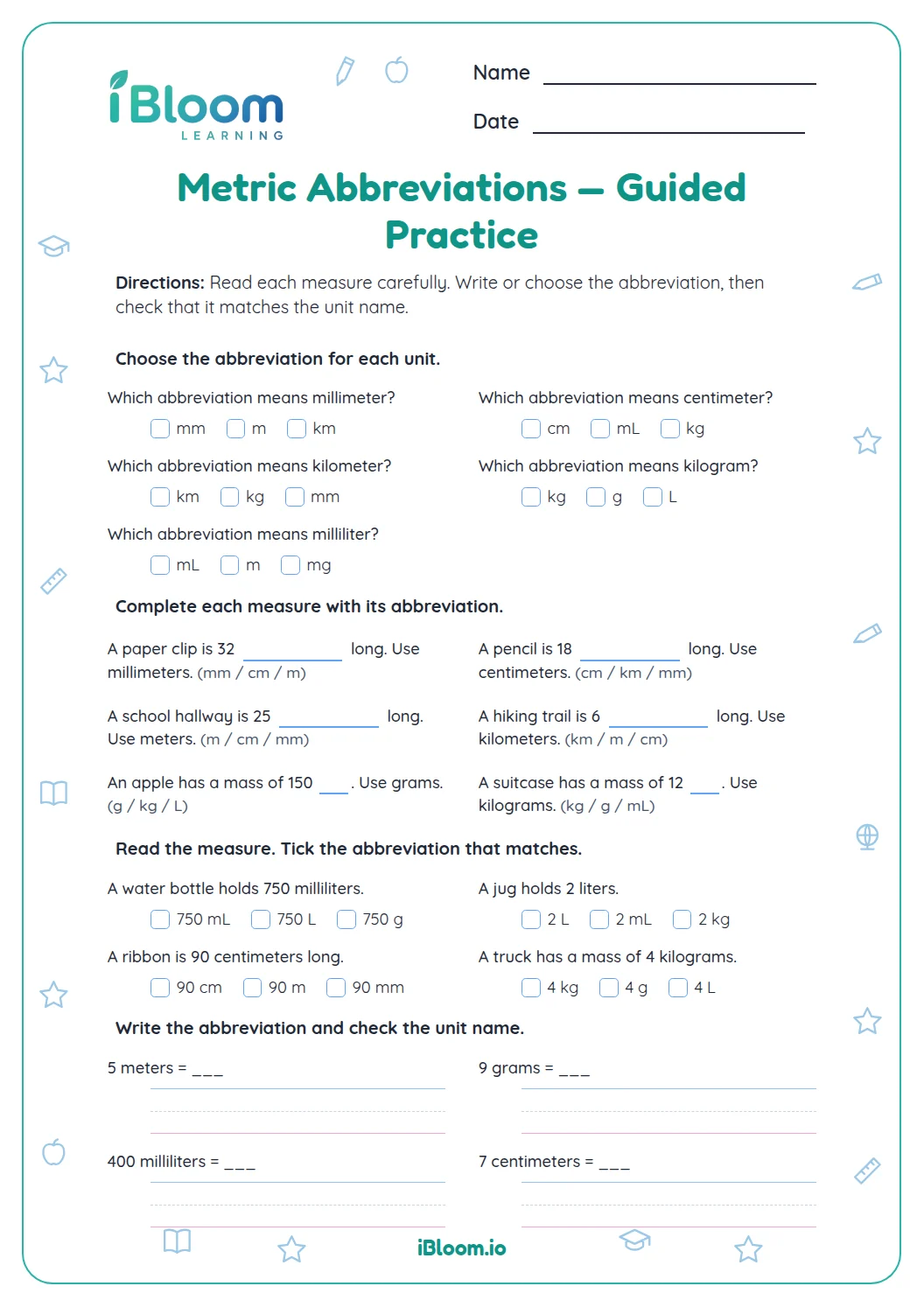
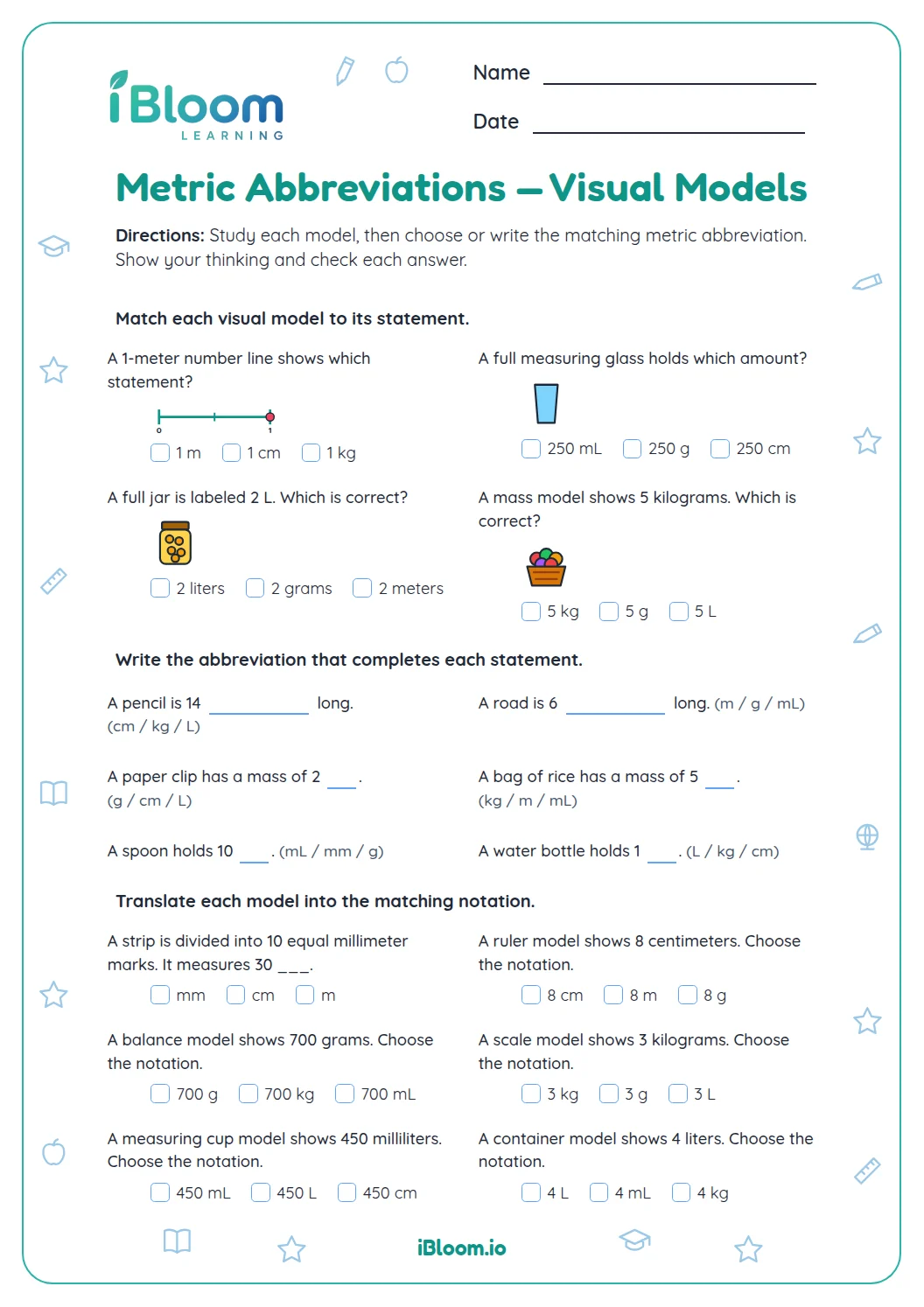
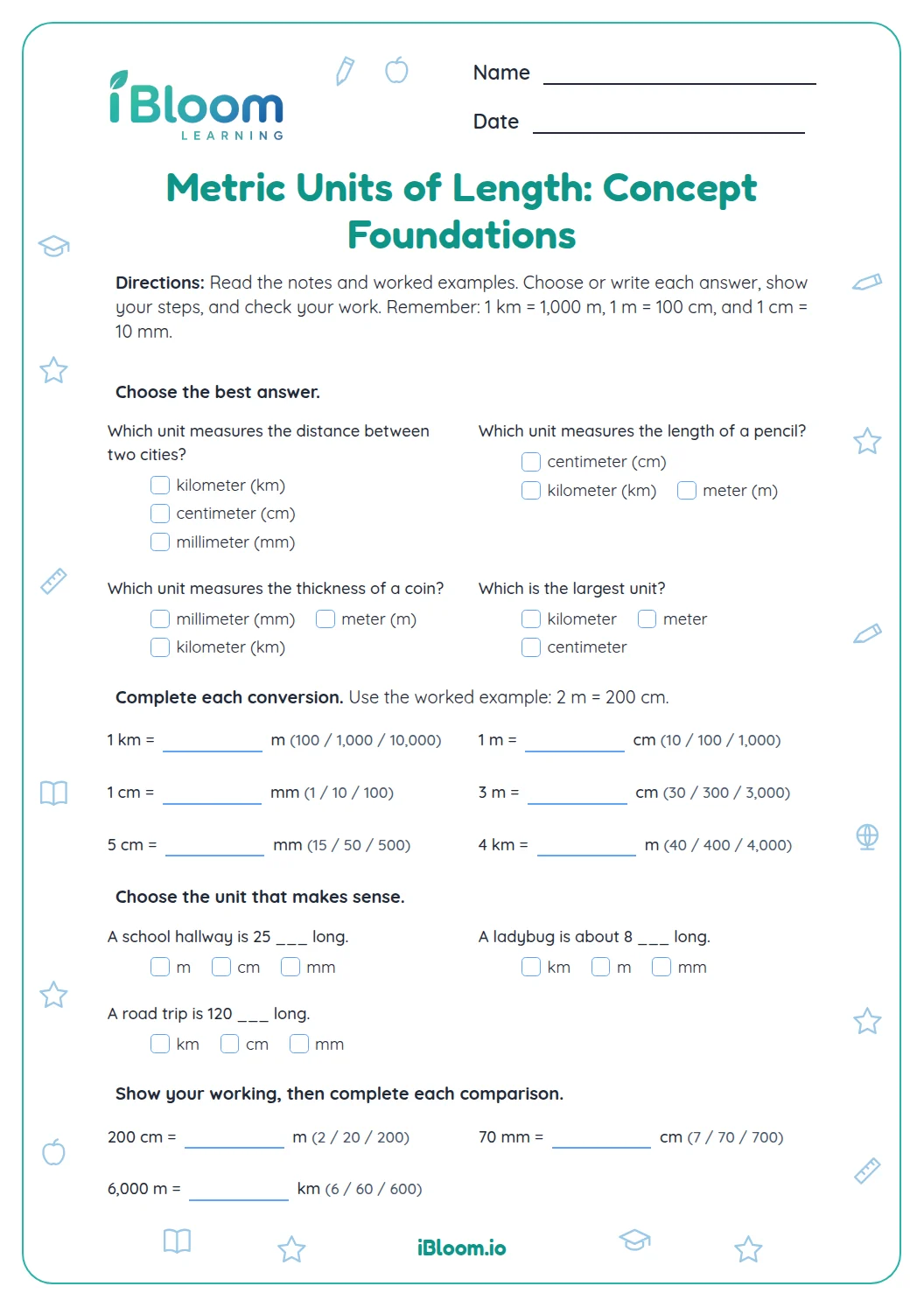
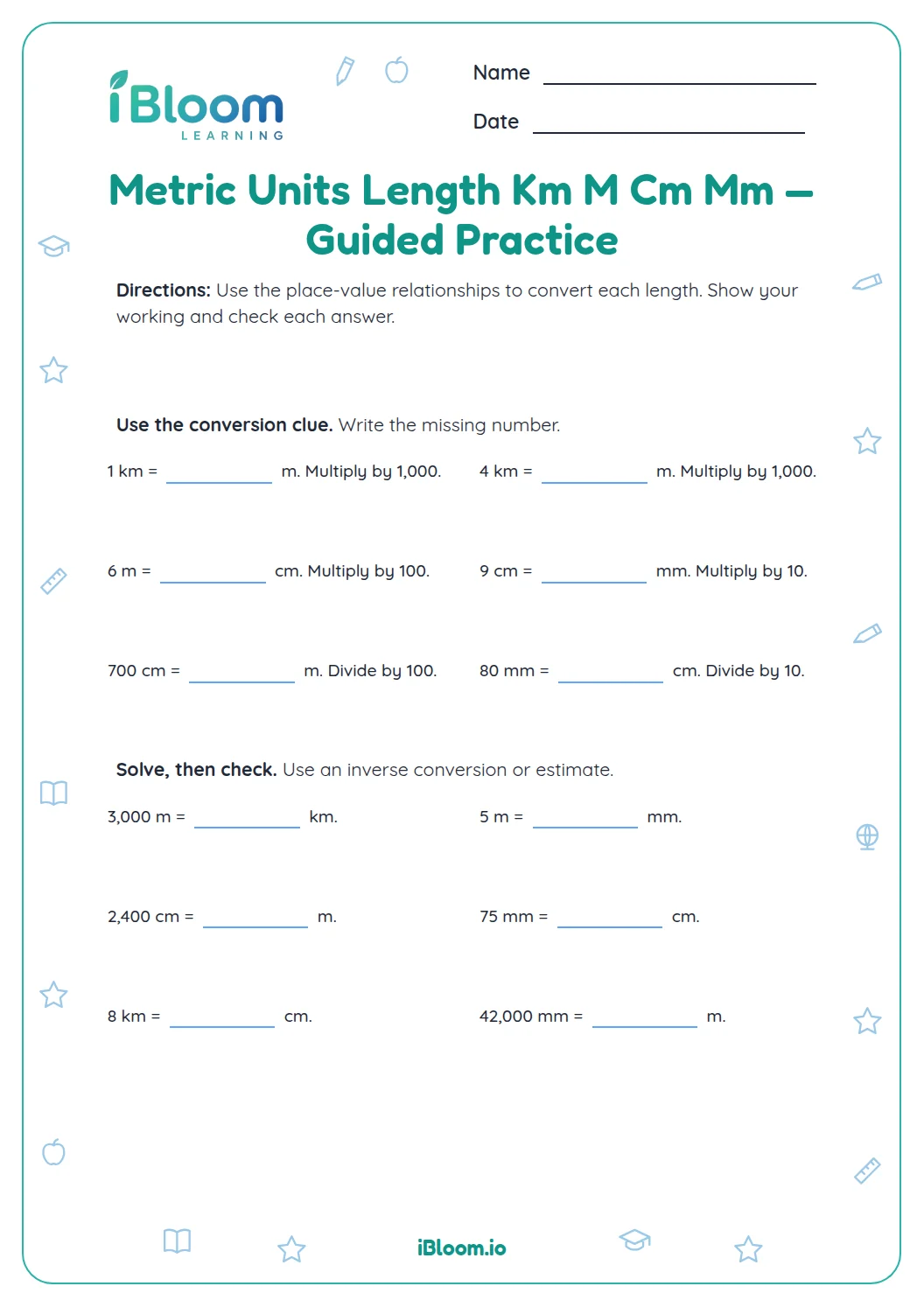
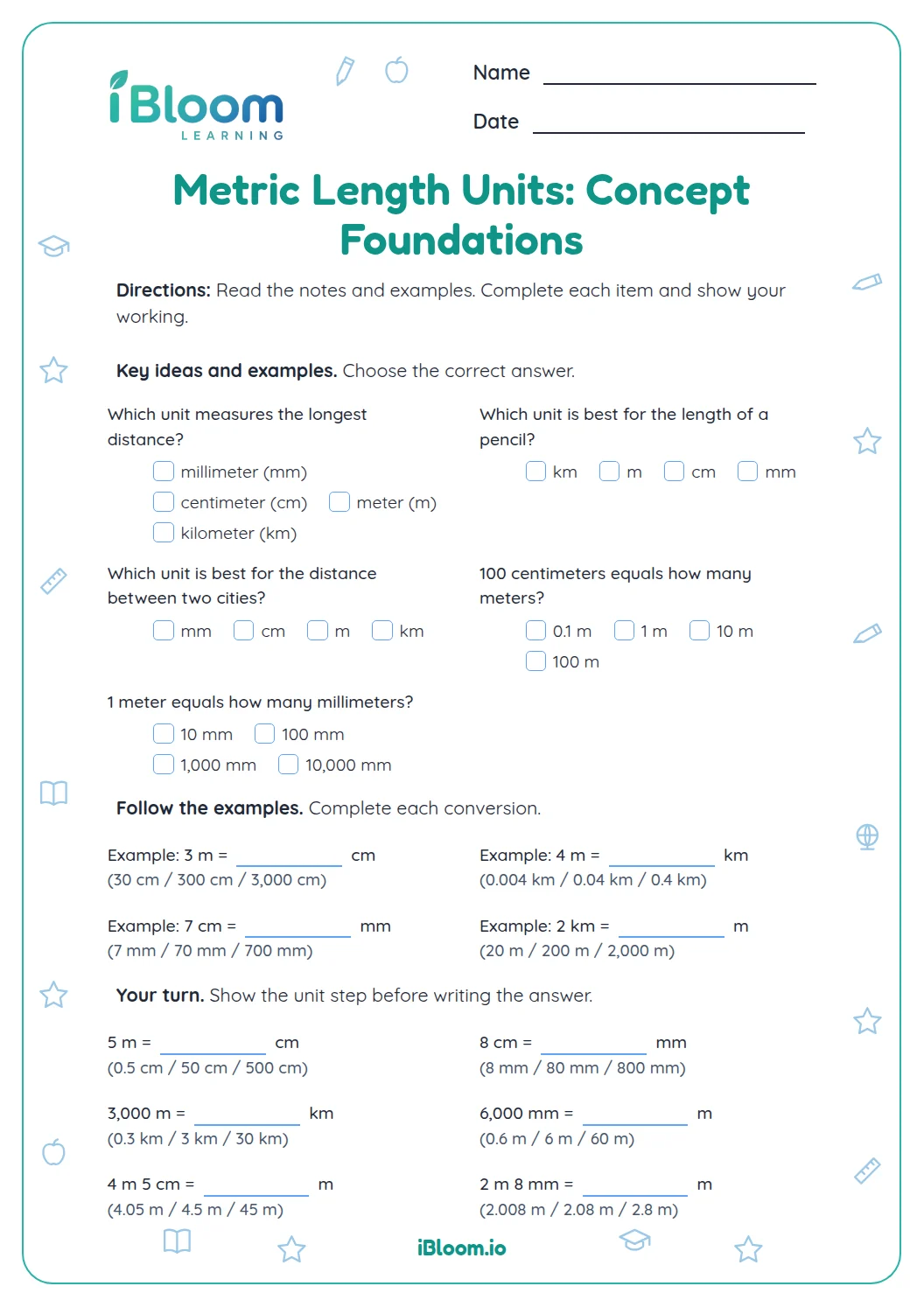
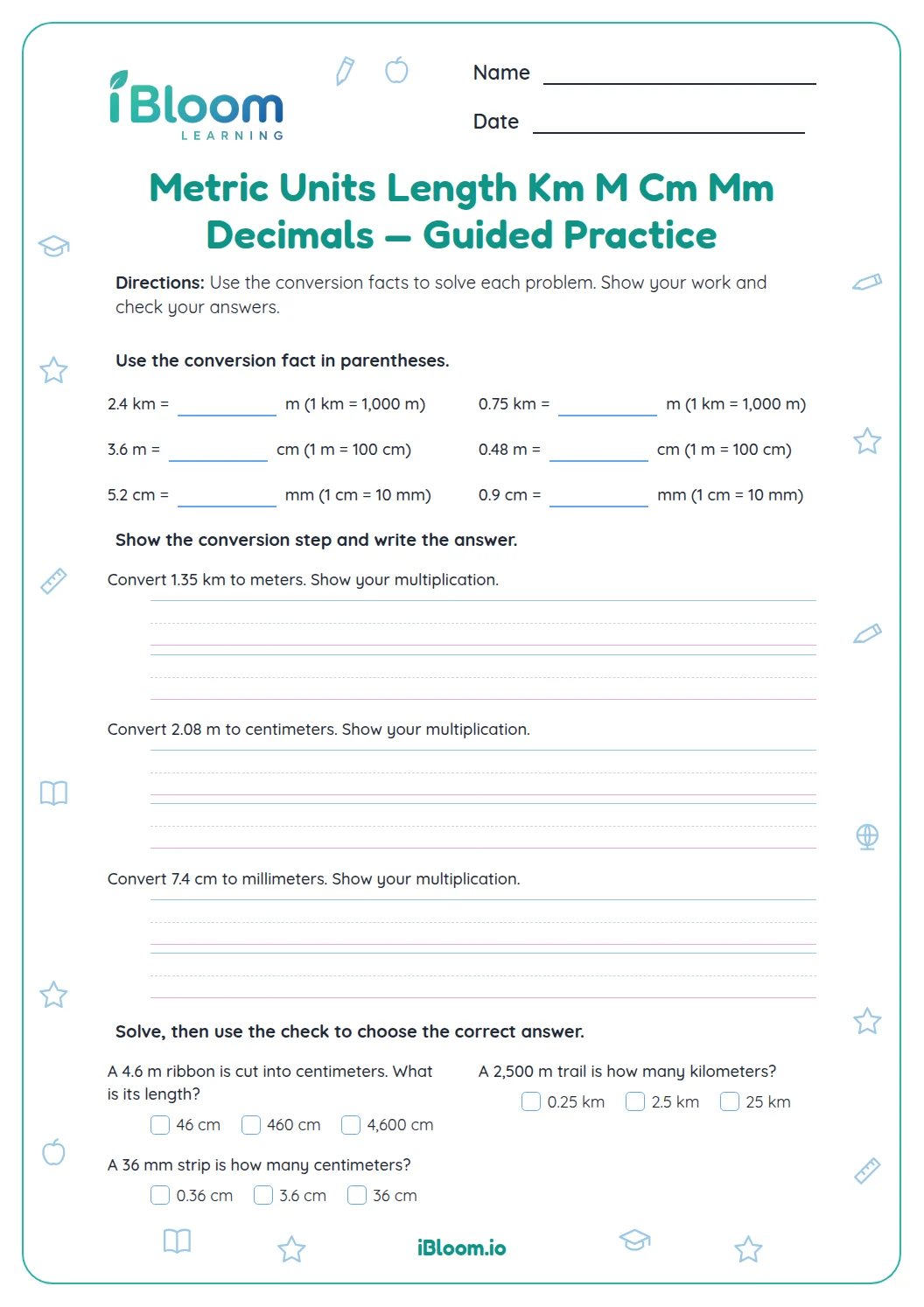
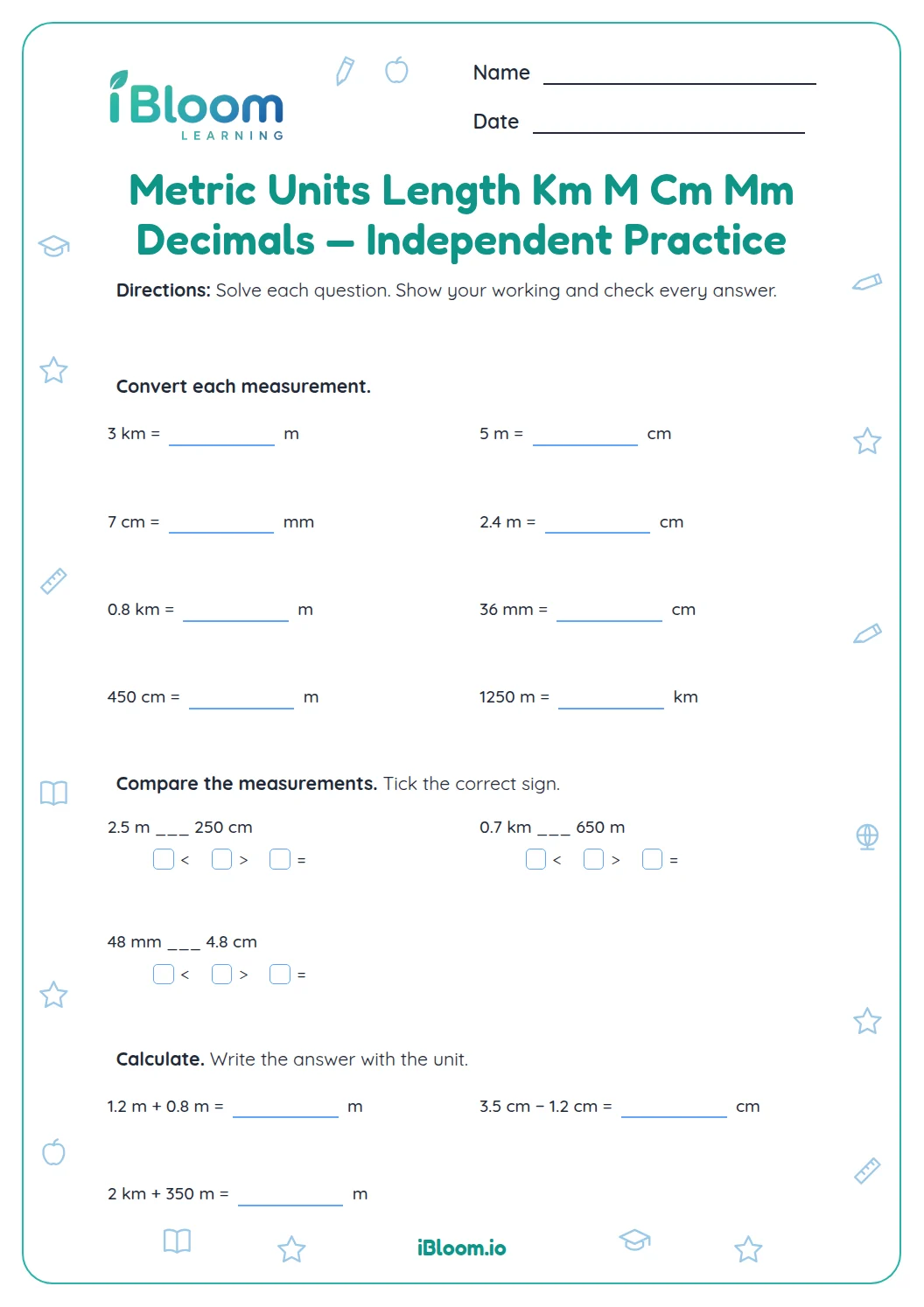
This Grade 4 worksheet uses visual models to practice metric units of length. Children read centimeter rulers, connect centimeters with millimeters, and use tables to express larger units in smaller units. The 14 questions move from reading pictured models to equivalent-length statements and short measurement problems. A separate answer key shows the model readings and equivalent measurements. The practice aligns with CCSS 4.MD.A.1.
Aligned to 4.MD.A.1
What can a ruler model tell you?
Start at zero and read the centimeter mark at the end of the bar. The first three questions use ruler drawings to practice reading a length in centimeters.
- 1The bar starts at 0 cm and ends at 4 cm.
- 2Read the endpoint: 4 cm.
How can you rename a metric length?
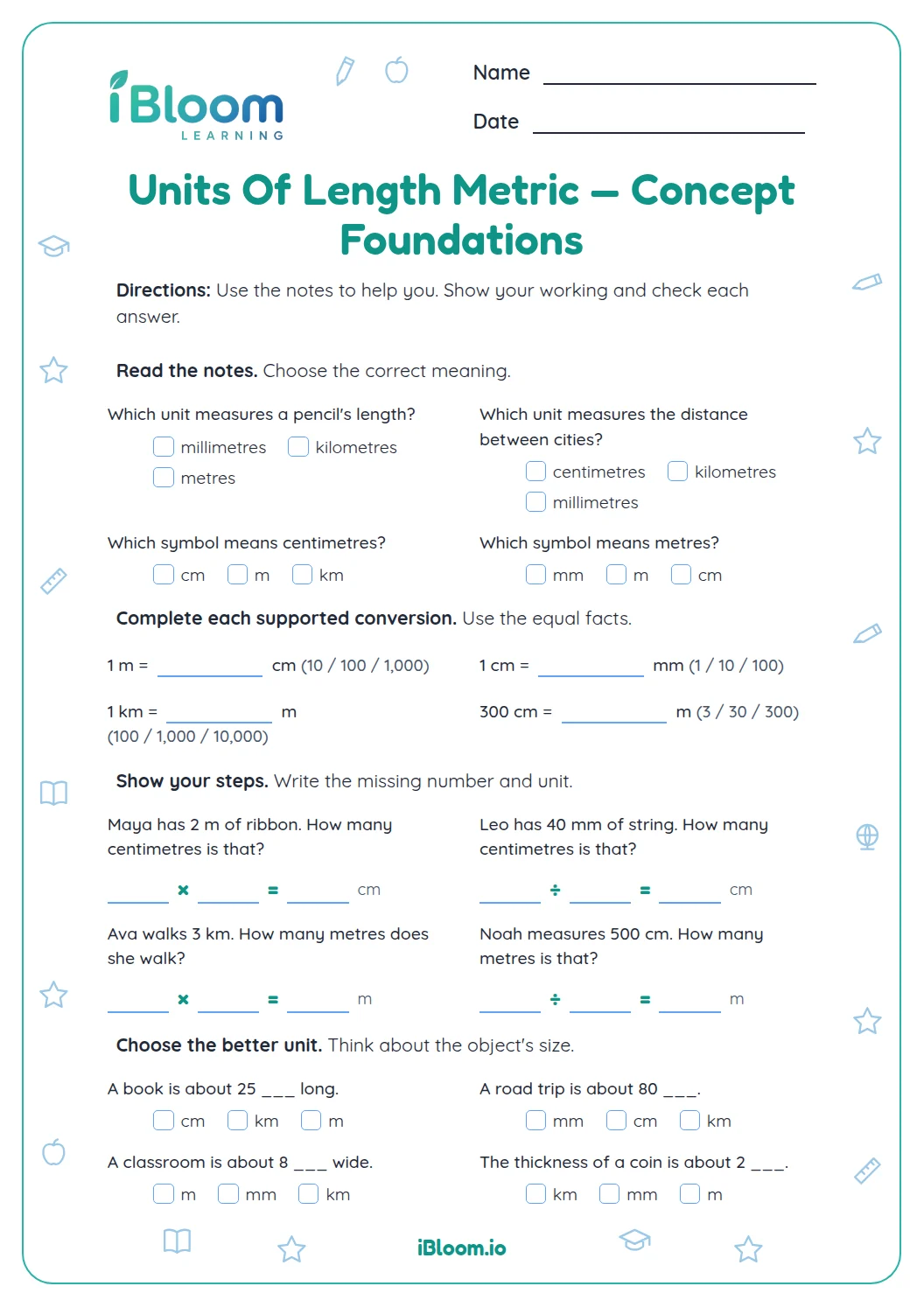
Use the number of smaller units in one larger unit: 1 cm = 10 mm, 1 m = 100 cm, and 1 km = 1,000 m. Multiply when expressing the same length with a smaller unit.
- Part A reads centimeter rulers and equivalent-length tables.
- Part B completes five conversion statements.
- Part C uses the relationships in four length problems.
How does a table support a length problem?
A two-column table keeps the starting unit beside its equivalent. For the ribbon in question 11, 2 cm is 20 mm, then 5 mm more makes 25 mm. Check that the final number is written in the unit the question asks for.
How to use this worksheet
- 1Read the endpoint on the ruler and write the length in centimeters.
- 2Read the endpoint on the ruler and include the unit.
- 3Use the ruler endpoint to identify the bar’s length.
- 4Use the table to find the centimeters equal to 2 meters.
- 5Use the table to find the meters equal to 2 kilometers.
- 6Complete the equivalent length in millimeters.
- 7Convert centimeters to millimeters.
- 8Convert centimeters to meters.
- 9Convert kilometers to meters.
- 10Convert meters to centimeters.
- 11Use the metric relationship in the table to solve the ribbon problem.
- 12Use the equivalent-length table to solve the path problem.
- 13Read the table, then convert the strip length.
- 14Use the metric table to find the wire length in millimeters.
Common mistakes and quick fixes
The mistake
Using 10 instead of 100 when converting meters to centimeters.
The fix
Remember that 1 meter contains 100 centimeters, then multiply the number of meters by 100.
The mistake
Dividing when changing from a larger unit to a smaller unit.
The fix
The count gets larger in smaller units, so multiply by the unit relationship.
The mistake
Reading only the whole centimeters in a mixed measure.
The fix
Keep the centimeters and millimeters together, then convert each part to millimeters.
Common Core alignment
Express metric measurements in a smaller unit and record equivalent lengths.
On this sheet: Children use models and tables to express metric lengths in smaller units.
Show the official wordingHide the official wording
Know relative sizes of measurement units within one system of units including km, m, cm; kg, g; lb, oz.; l, ml; hr, min, sec. Within a single system of measurement, express measurements in a larger unit in terms of a smaller unit. Record measurement equivalents in a two-column table. For example, know that 1 ft is 12 times as long as 1 in. Express the length of a 4 ft snake as 48 in. Generate a conversion table for feet and inches listing the number pairs (1, 12), (2, 24), (3, 36), ...
What to practice next
Make more practice
Further reading
Questions parents and teachers ask
How many millimeters are in a centimeter?
There are 10 millimeters in 1 centimeter. The centimeter ruler and the conversion items use this relationship. Keep the unit beside each number so it is clear whether the answer is in centimeters or millimeters. Several later items apply the same conversion to specific lengths.
How many centimeters are in a meter?
There are 100 centimeters in 1 meter. To change meters to centimeters, multiply by 100. The table items use that relationship to complete equivalents for two meters. Use this relationship in the table and direct conversion items on the page.
How do the kilometer and meter models help?
A kilometer equals 1,000 meters. The table shows the relationship so children can express a distance in meters, a smaller unit, while keeping the length the same. It lets learners compare a kilometer measurement with its meter equivalent on the worksheet.
How many questions are on the worksheet?
There are 14 questions: five model readings, five direct conversions and four length problems. The models include centimeter rulers and equivalent-length tables. The key also shows a unit for each answer, so check the label as well as the number given.
Is there an answer key?
Yes. A separate answer key shows the ruler readings, converted lengths and problem answers. Check both the number and the unit when reviewing each response. The key makes it possible to review the reading, arithmetic and unit together on each item.