
About this worksheet
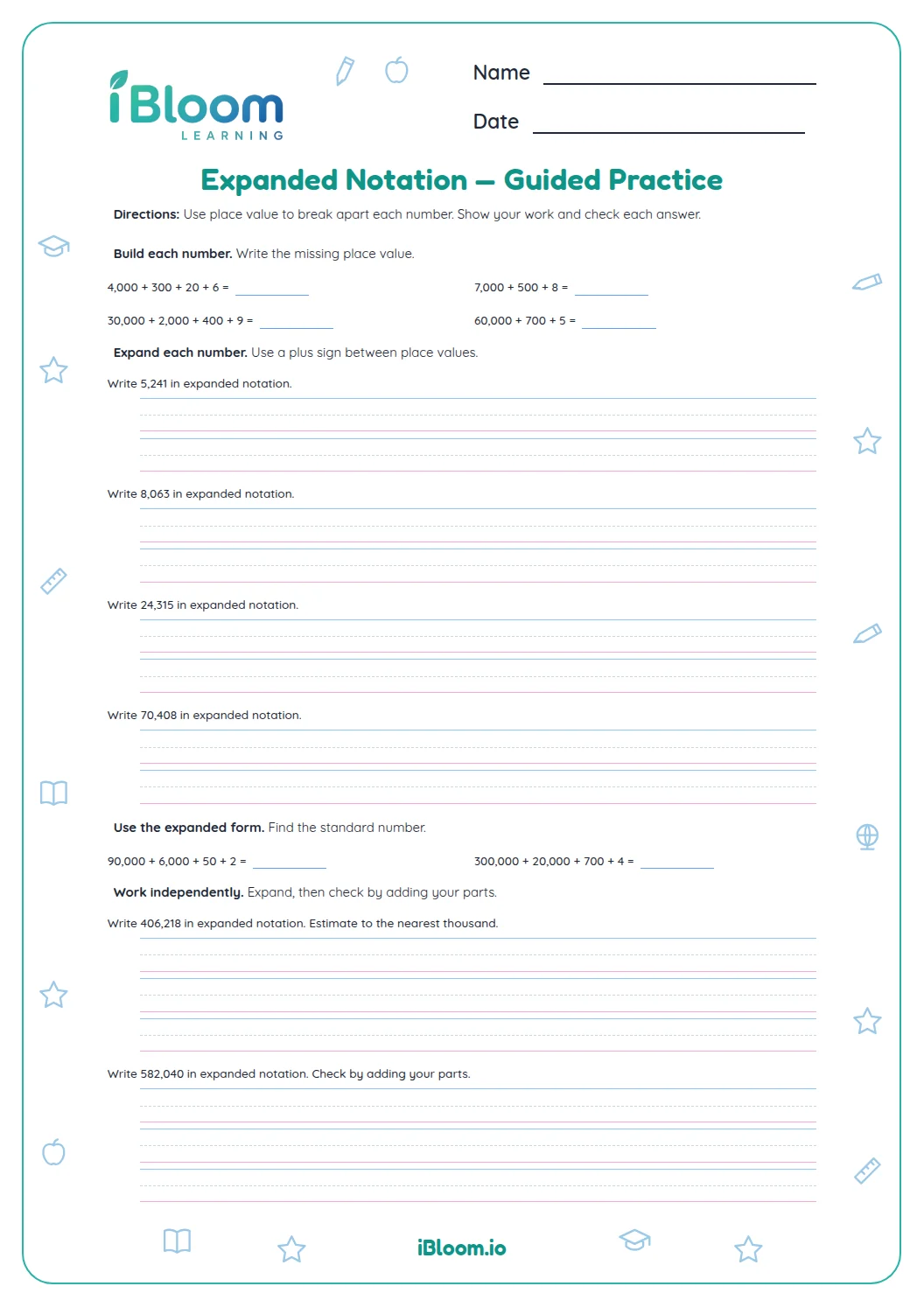
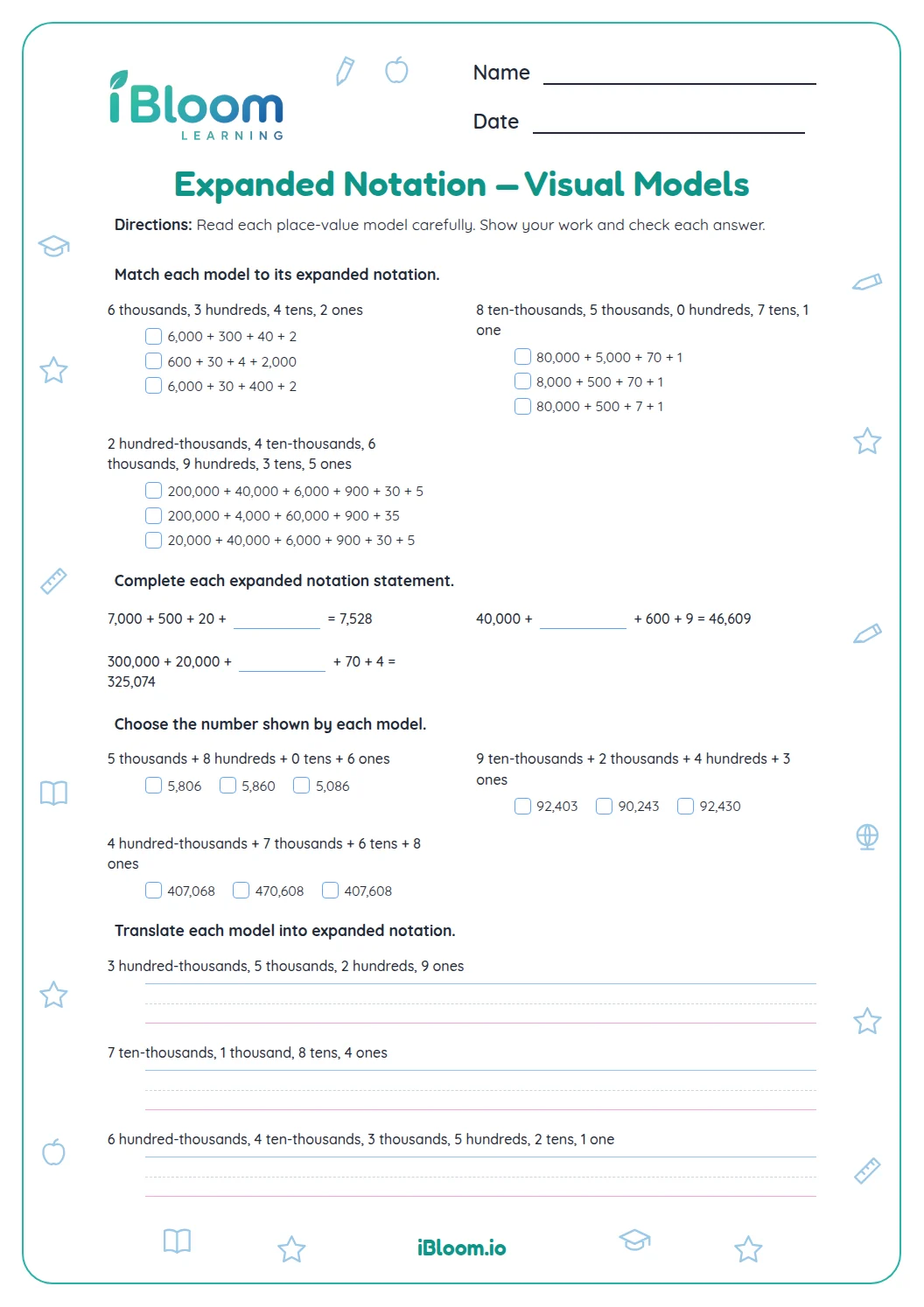
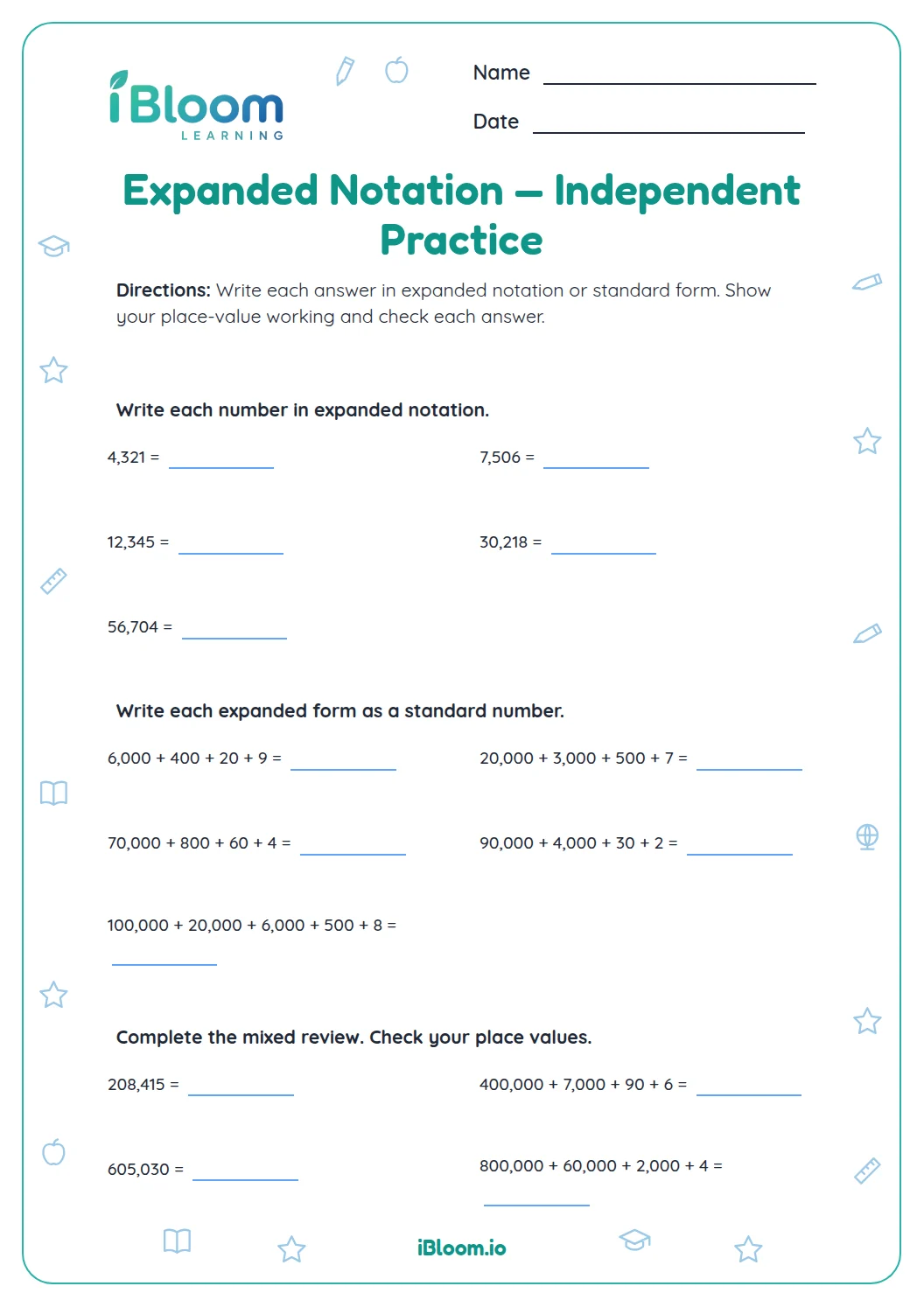
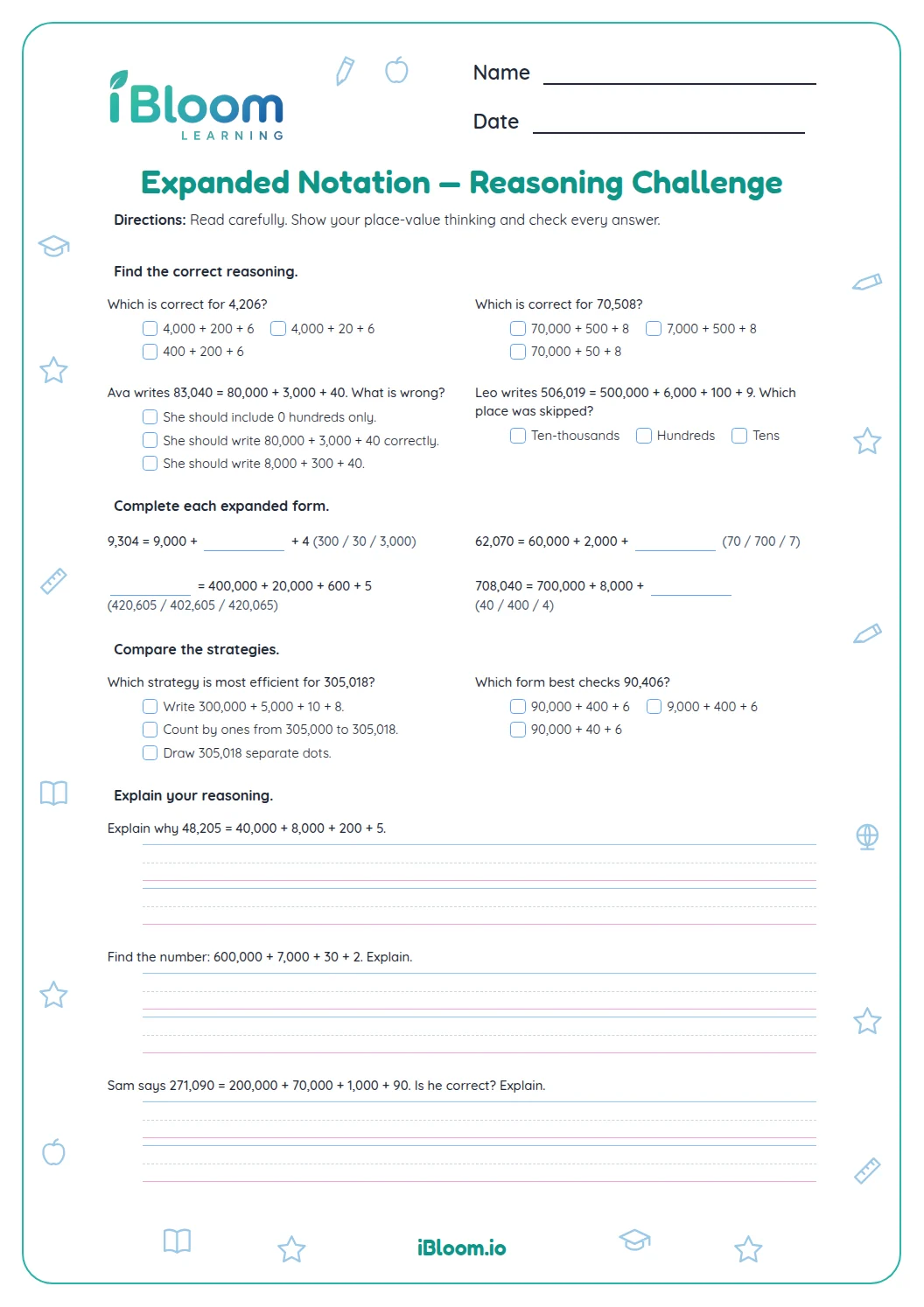
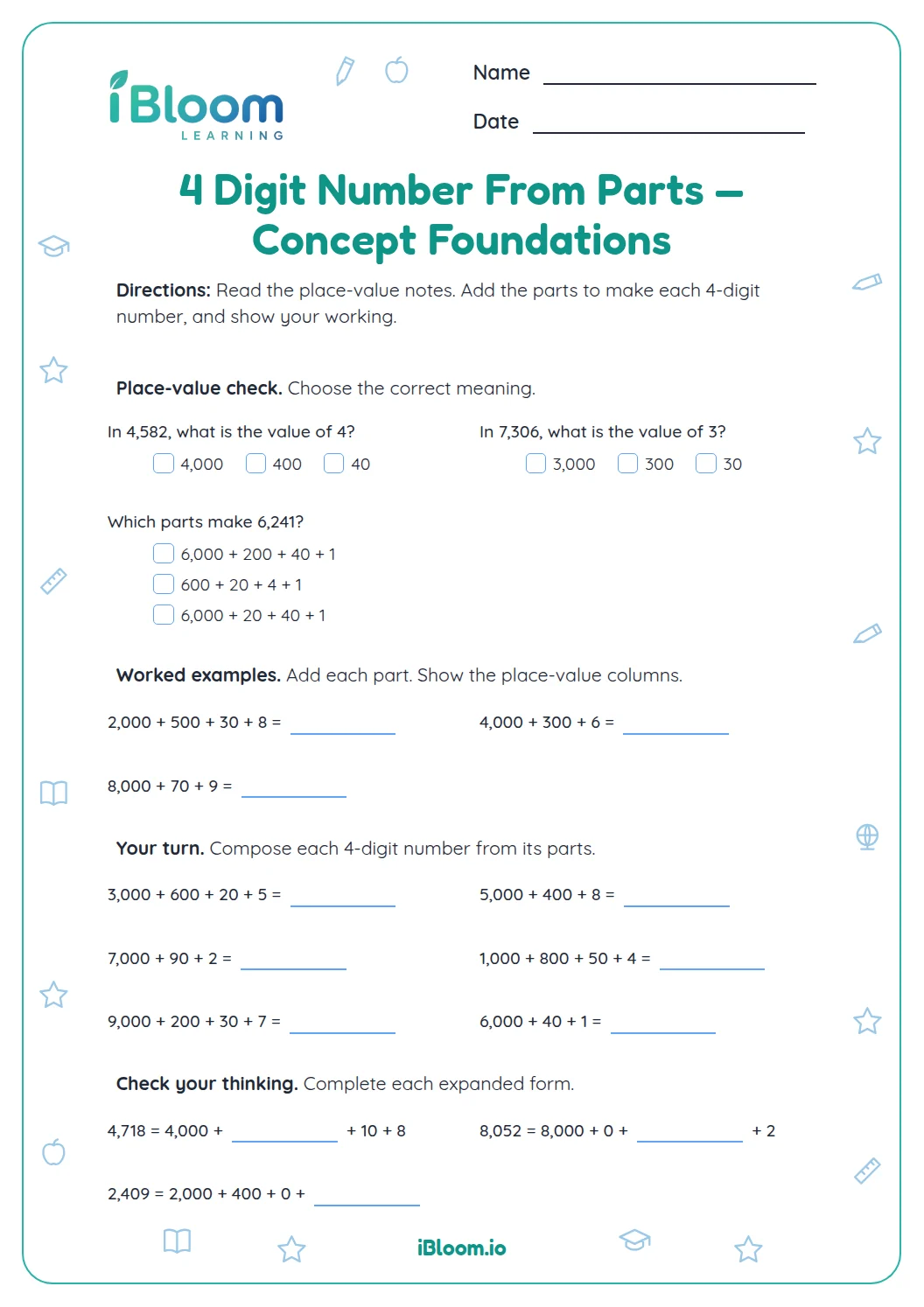
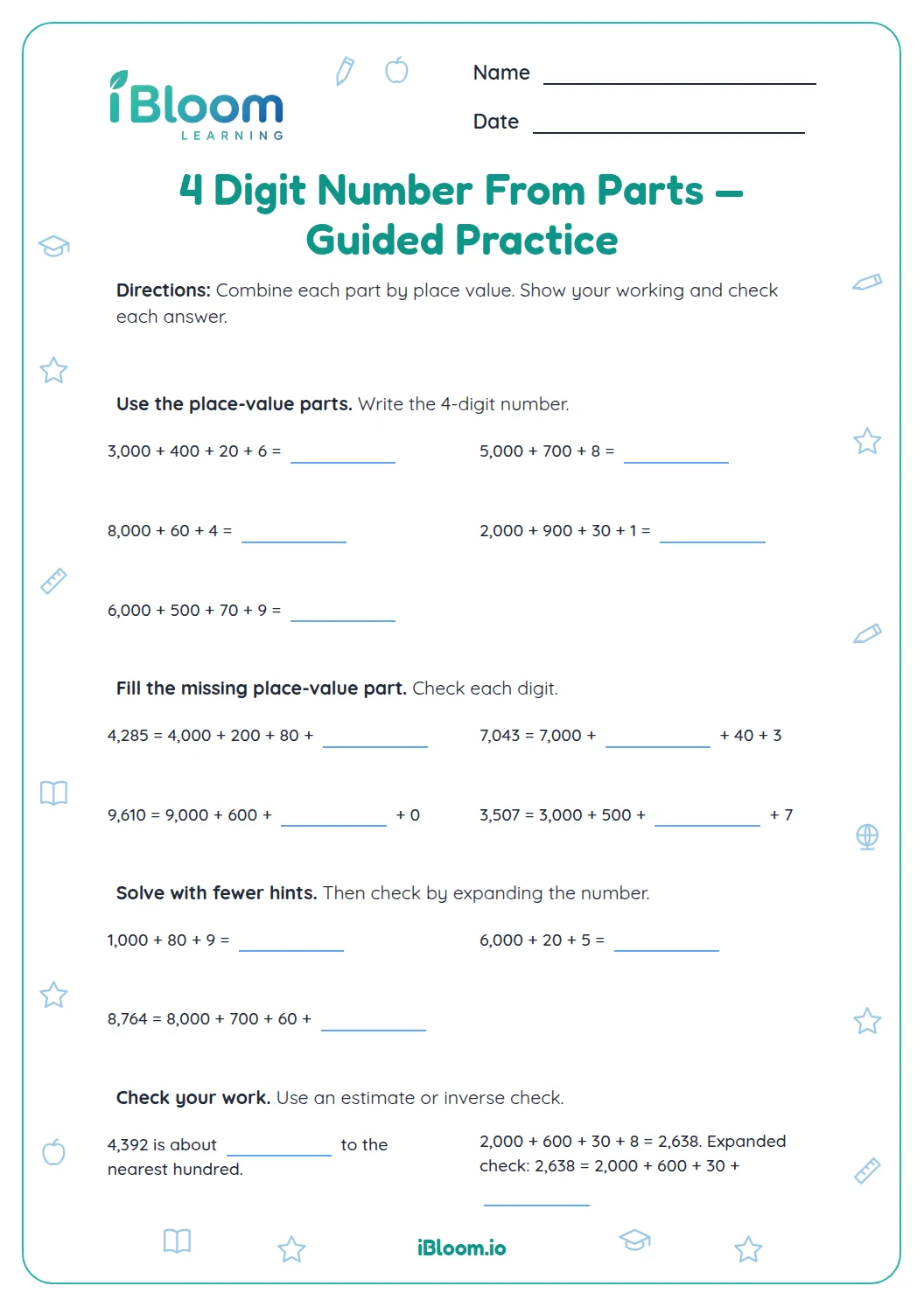
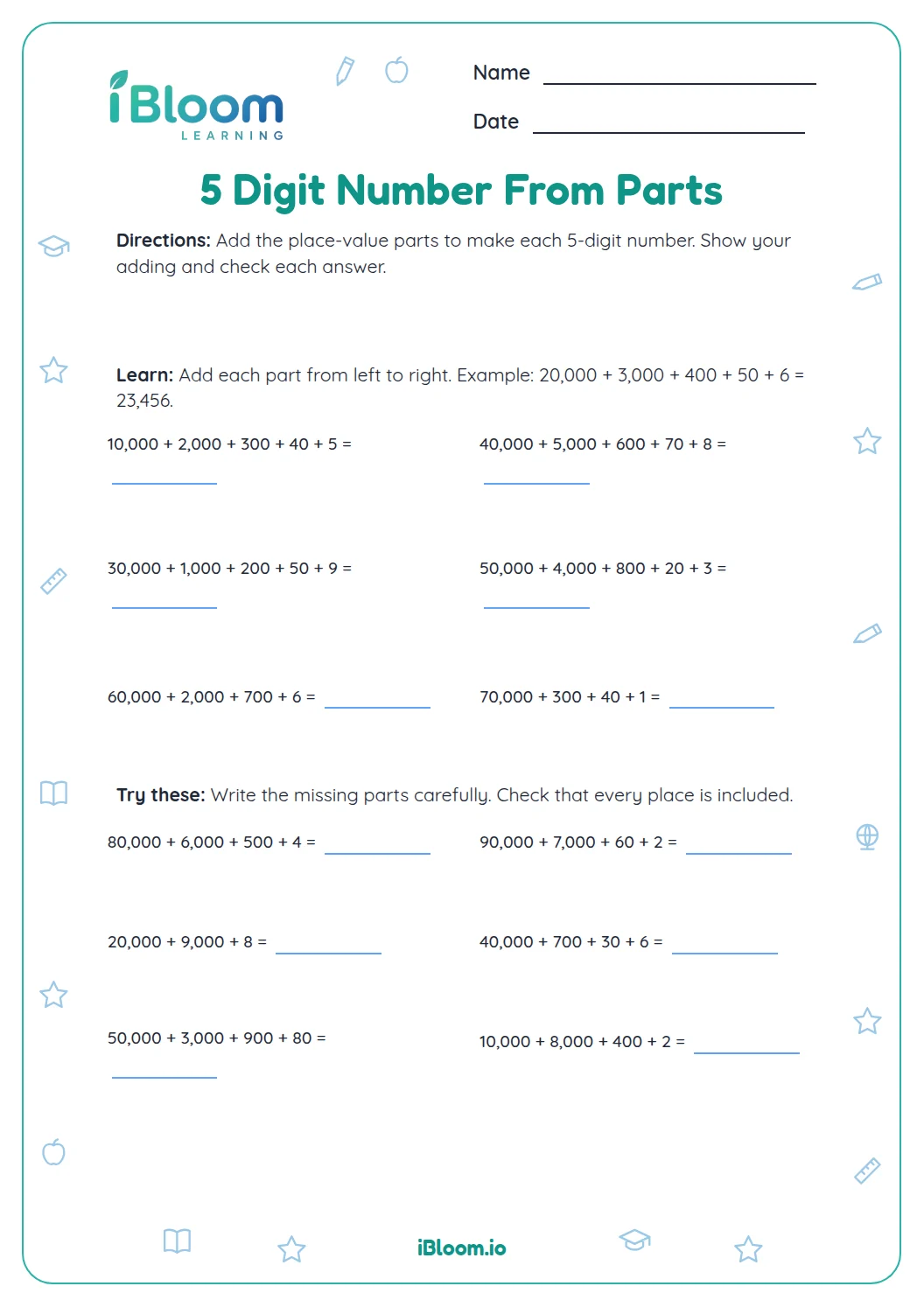
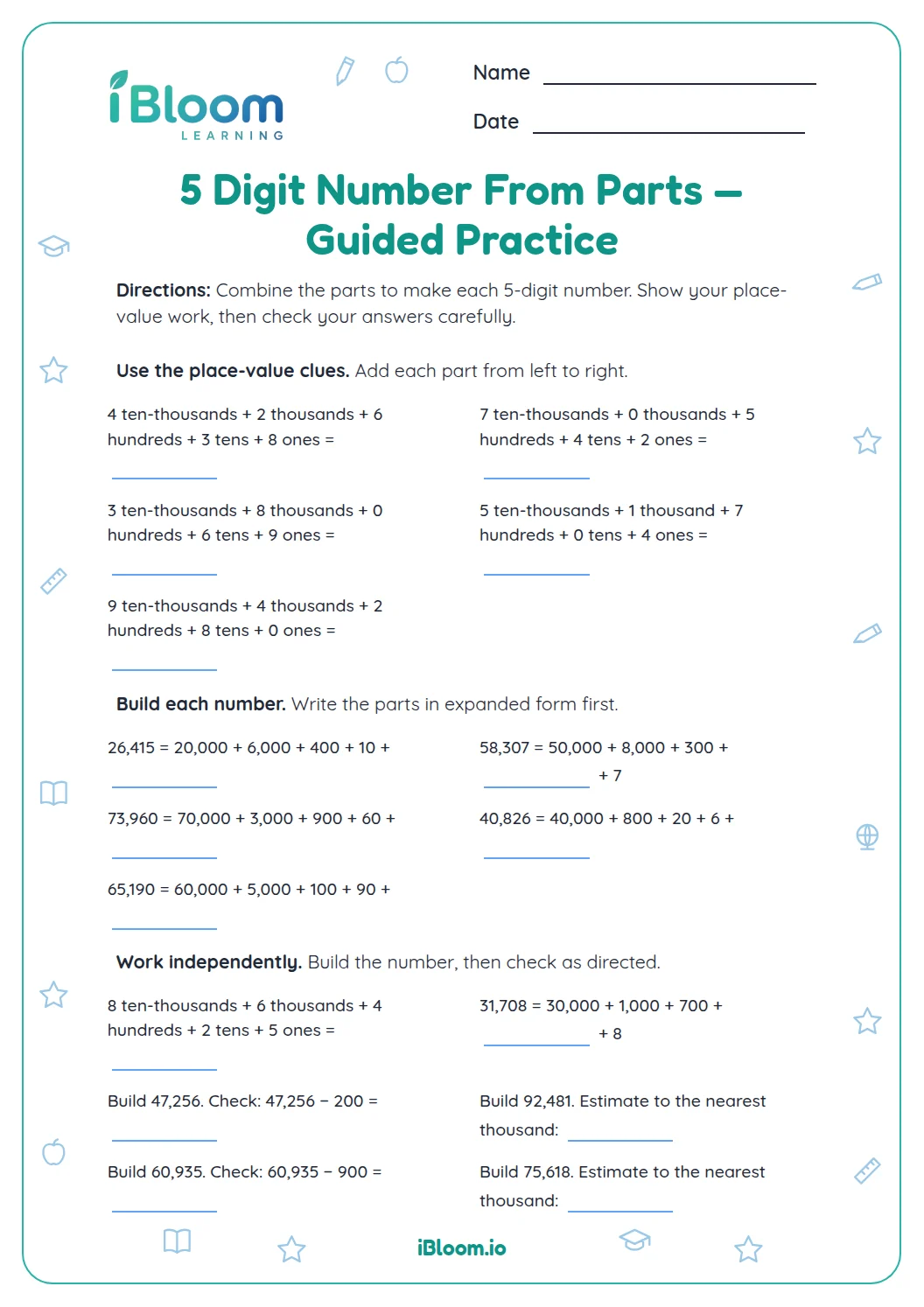
This free printable Grade 4 worksheet gives learners 16 questions on expanded notation and multi-digit place value. Learners write expanded and standard forms, compare numbers, and identify digit values in real-world counts. It includes a separate answer key and practices 4.NBT.A.2.
Aligned to 4.NBT.A.2
How does expanded notation show a real number?
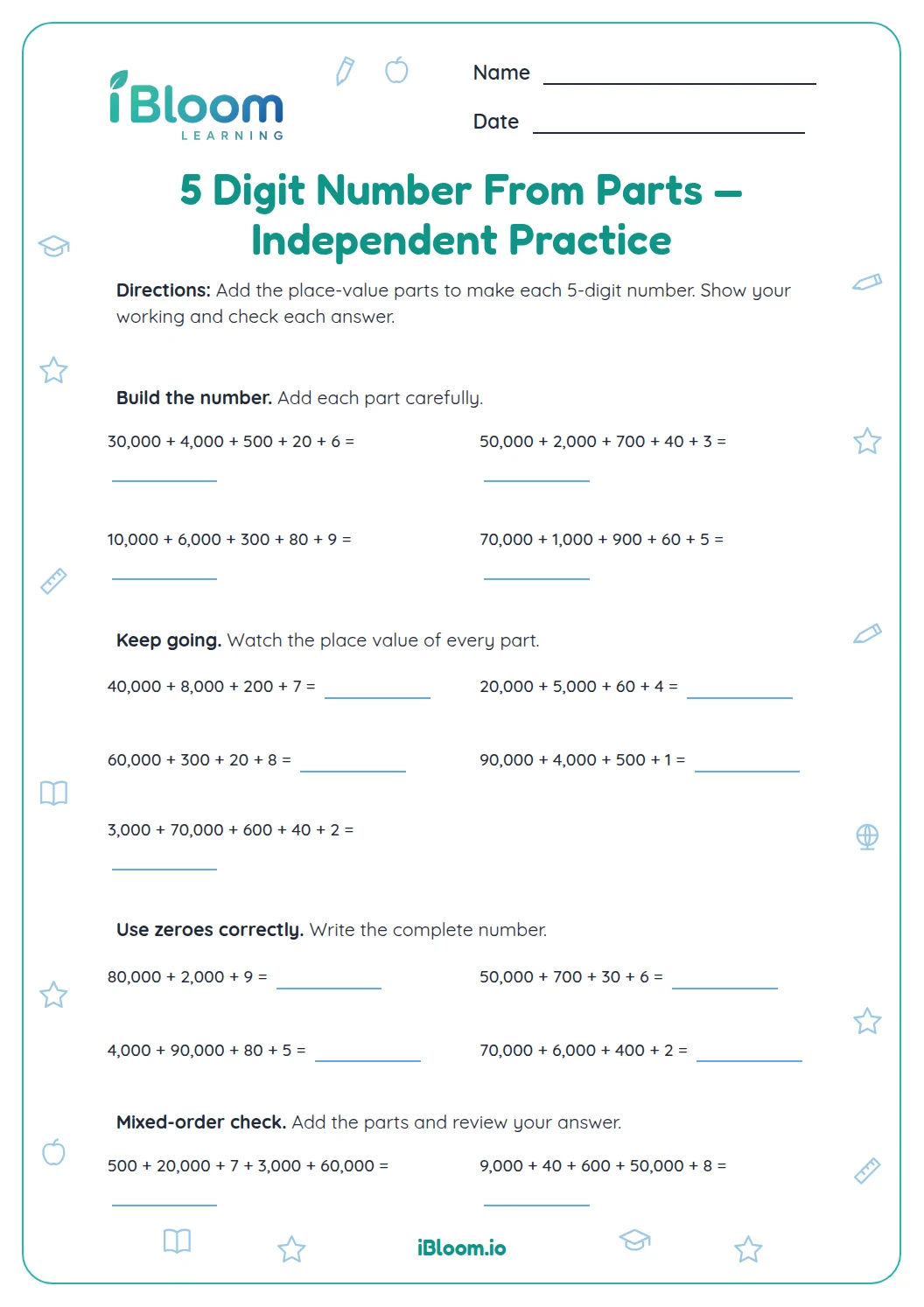
Expanded notation separates a number into the value of each nonzero digit. It makes place value visible, so 42,608 becomes 40,000 + 2,000 + 600 + 8. Zero tens and zero ones are left out.
Question 1 uses a fair attendance count. Write each nonzero digit as its place value, then add the parts to rebuild the number.
- 142,608
- 240,000 + 2,000 + 600 + 8
How do the stories help with place value?
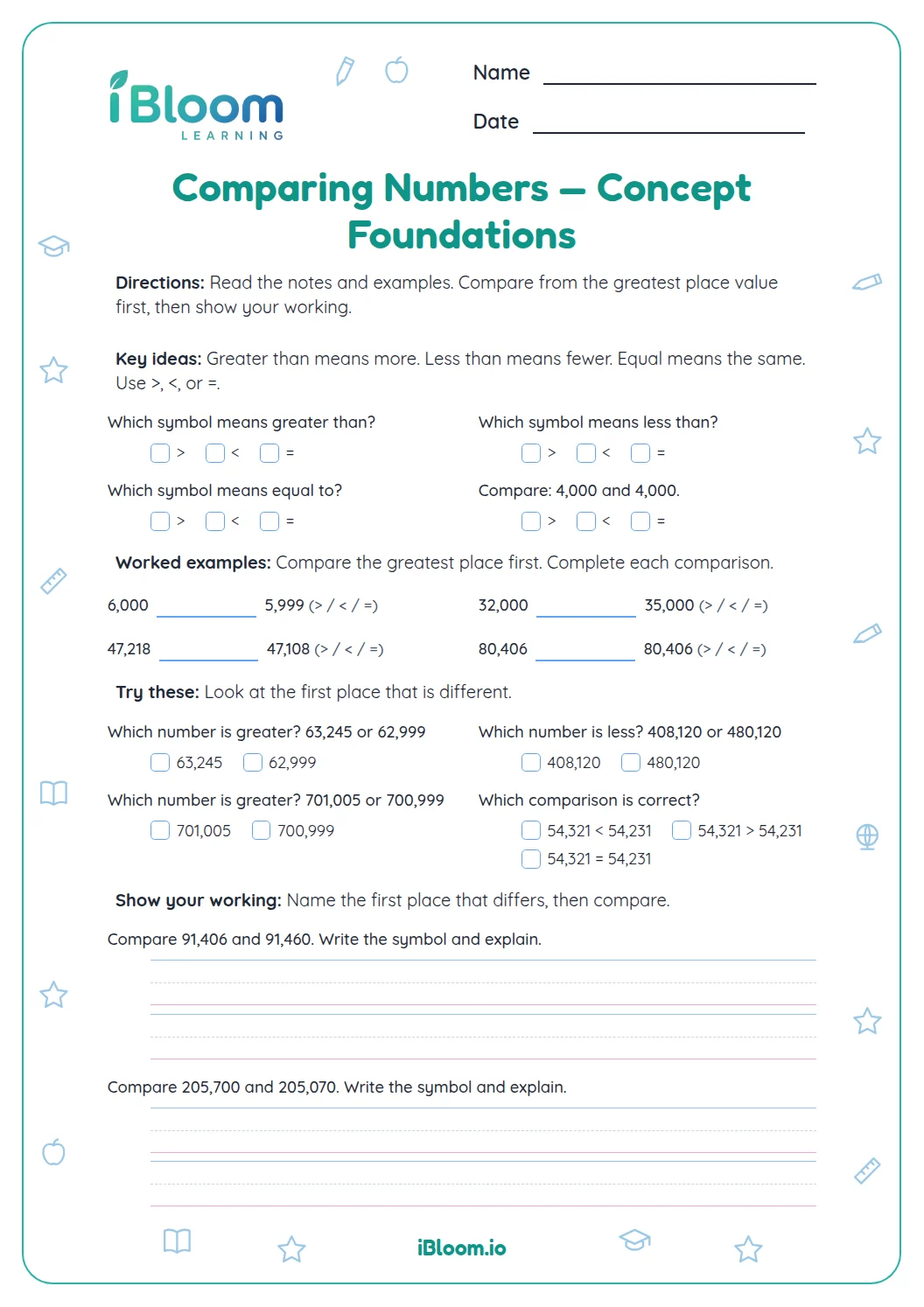
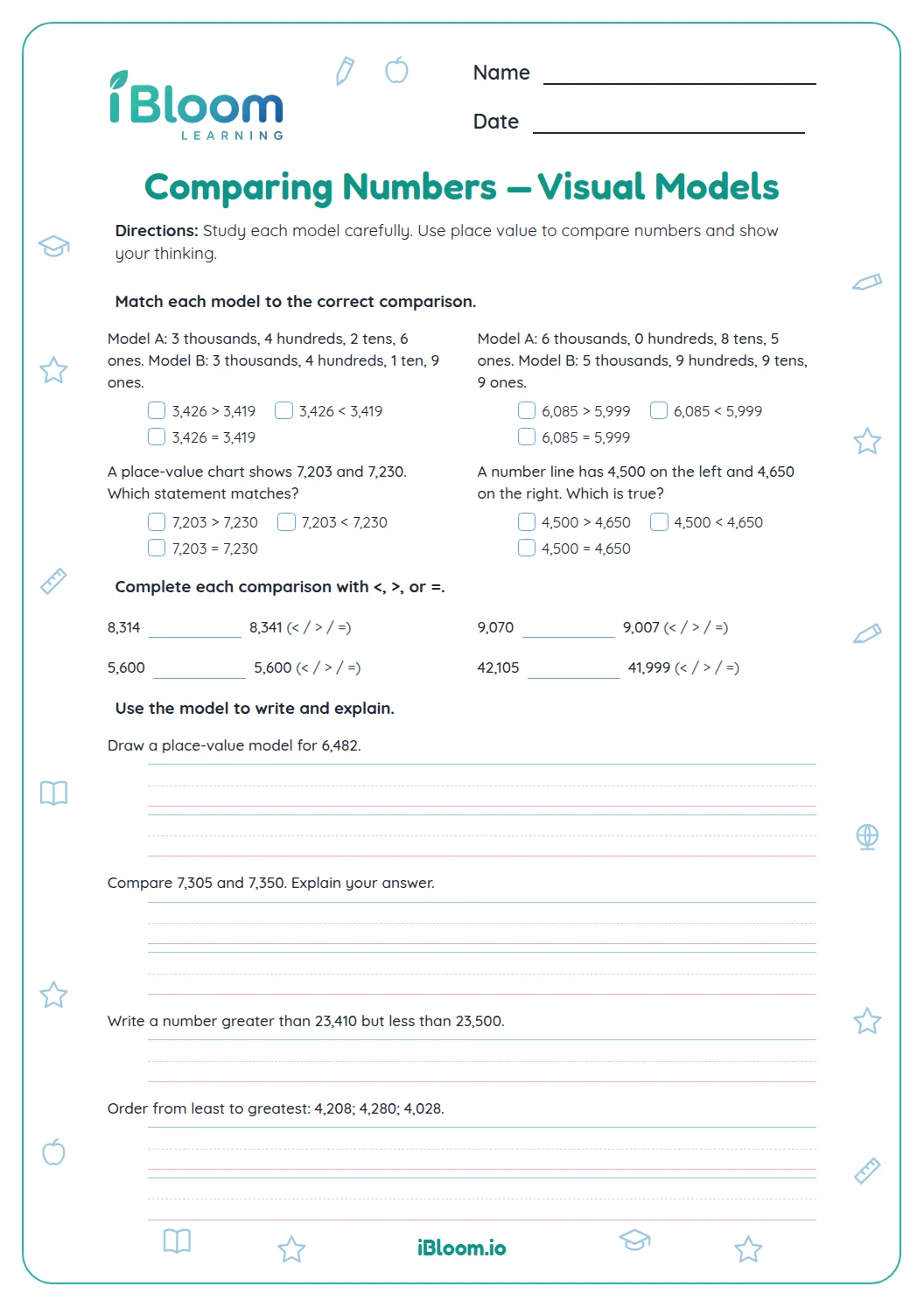
The numbers describe attendance, books, tickets, and community counts. Each context gives a reason to read or write the whole number accurately. Comparing 28,416 with 28,461 starts at the left and moves right until the digits differ.
What is on the two-page practice sheet?
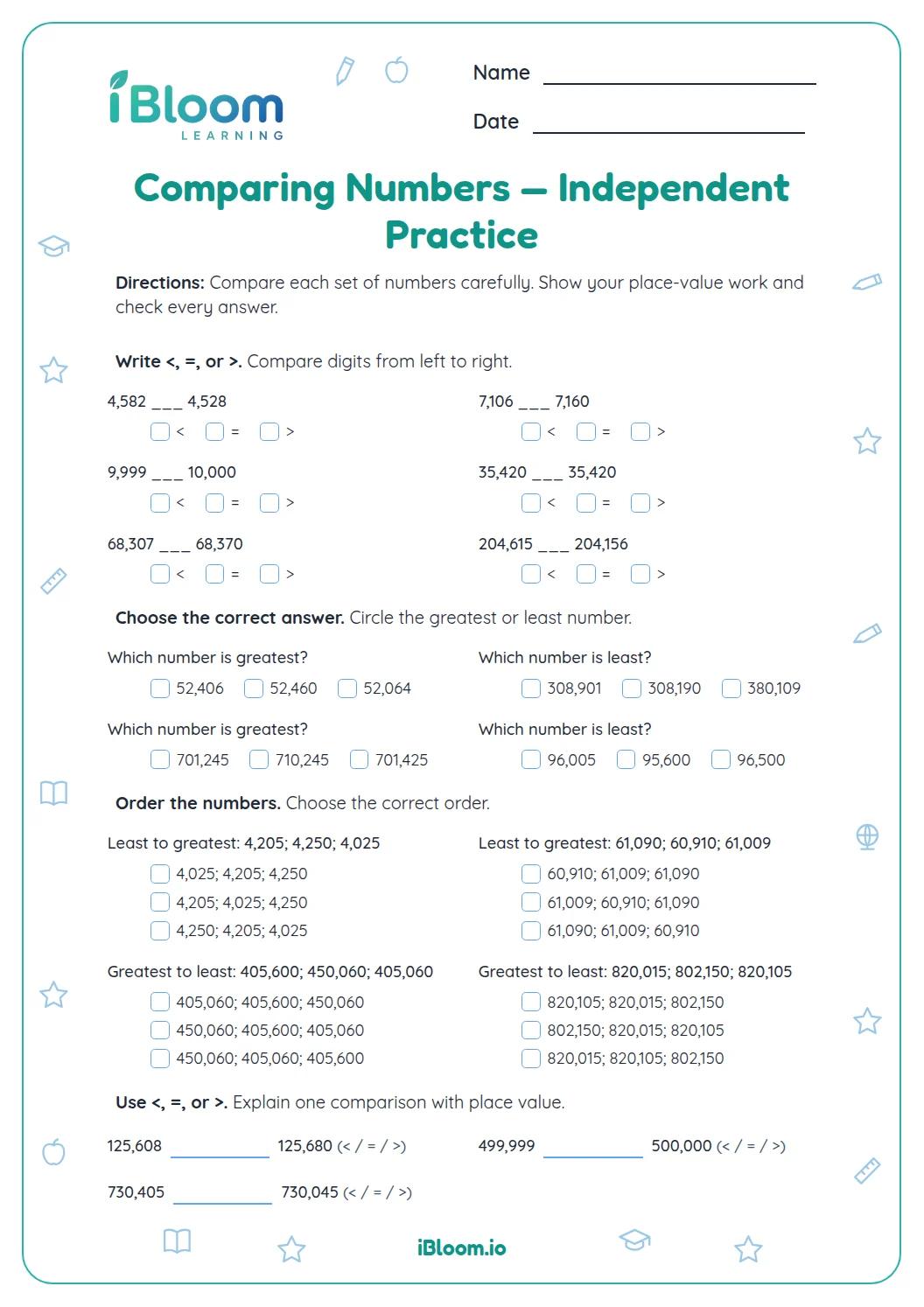
Sixteen questions move from writing numbers in expanded form to composing numbers and comparing counts. The answer key is a separate page.
How can I use this worksheet?
- 1Read each digit from left to right and name its place.
- 2Write the value of each nonzero digit.
- 3Add the parts to check the standard form.
- 4When comparing, stop at the first place where digits differ.
Common mistakes and quick fixes
The mistake
Leaving out the 70 when writing 305,071 in expanded form.
The fix
Line up the places and include every nonzero digit’s value.
The mistake
Writing the digit 6 instead of its value, 6,000, in 406,709.
The fix
Line up the places and include every nonzero digit’s value.
The mistake
Comparing from the ones place instead of the greatest place.
The fix
Write the value of each digit under its place name, then compare from the left.
Curriculum alignment
This sheet practices writing and comparing whole numbers using place value.
Write whole numbers in expanded form and compare their place values.
On this sheet: Items write, compose, compare, and interpret multi-digit whole numbers.
Show the official wordingHide the official wording
Read and write multi-digit whole numbers using base-ten numerals, number names, and expanded form. Compare two multi-digit numbers based on meanings of the digits in each place, using >, =, and < symbols to record the results of comparisons.
What to practice next
Make more practice
Further reading
Questions parents and teachers ask
Why does 305,071 have a 70 in expanded form?
In 305,071 the 7 is in the tens place, so its value is 70. The zero in the hundreds place contributes nothing and is left out. Write the remaining place values as 300,000 + 5,000 + 70 + 1, then add them to check.
How do I compare two six-digit counts?
Start at the leftmost place and move right only when the digits match. For 28,416 and 28,461, the hundred-thousands, ten-thousands, thousands, and hundreds digits match. At the tens place, 1 ten is less than 6 tens, so 28,416 is smaller.
Should zero-value places appear in expanded form?
No. A zero contributes no amount, so 504,060 is written 500,000 + 4,000 + 60. The nonzero terms keep their full place values, which preserves the zeros’ positions when you add the parts back together. Naming the place first makes the value easier to verify.
How many questions are on the sheet?
There are 16 questions across two worksheet pages. Learners write numbers in expanded or standard form, compare real-world counts, and identify digit values. A separate answer key spans two pages so each result stays easy to read. Naming the place first makes the value easier to verify.
Is an answer key included?
Yes. The separate answer key is two pages and lists the answer for every question. Learners can try the full sheet first, then use the key to check each written number, digit value, and comparison sign. Naming the place first makes the value easier to verify.
What should learners do if a comparison feels tricky?
Compare one place at a time from the left. Keep moving right while the digits match, then decide which number is greater at the first place where they differ. Question 10 is a useful example to check together.