

About this worksheet
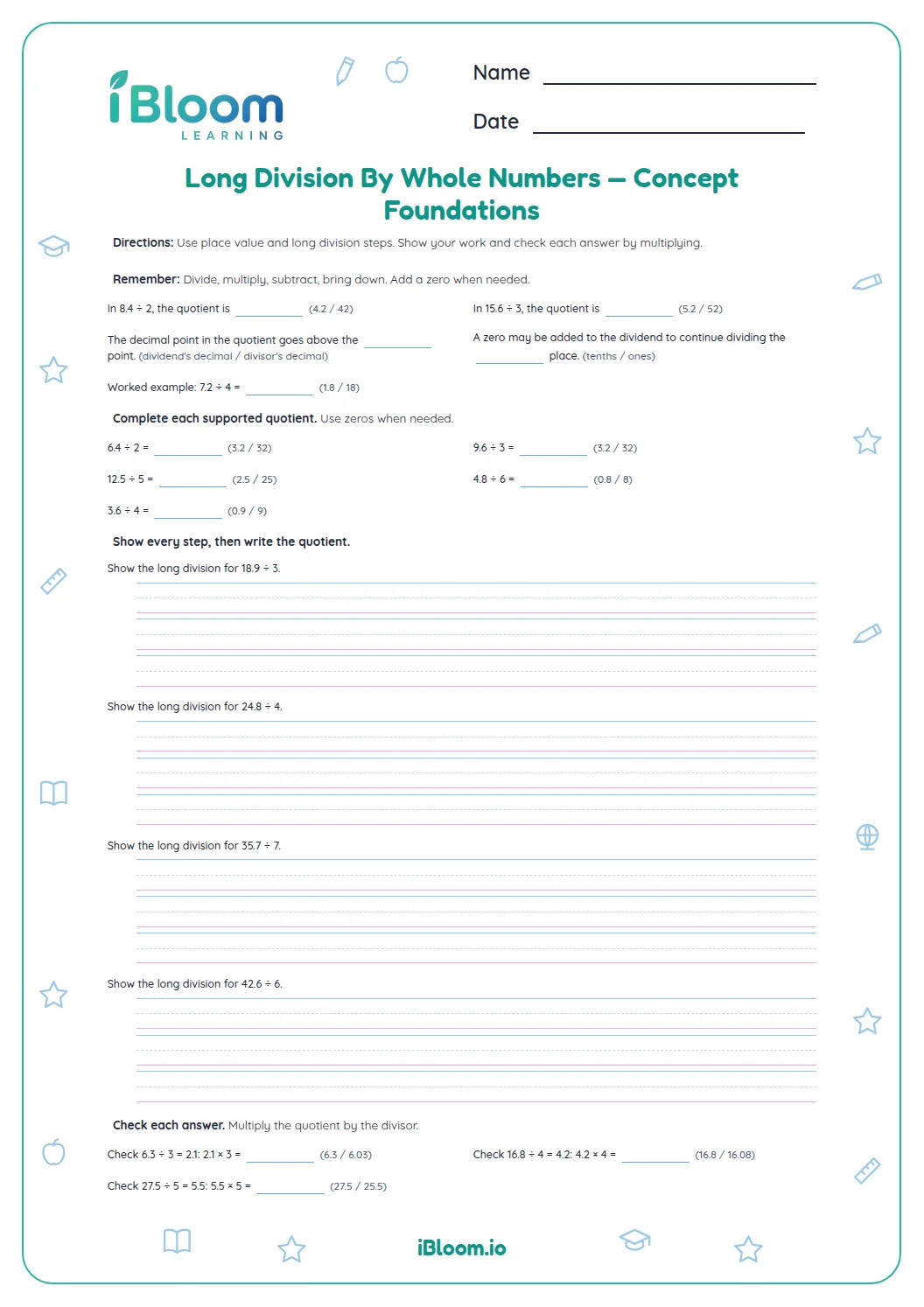
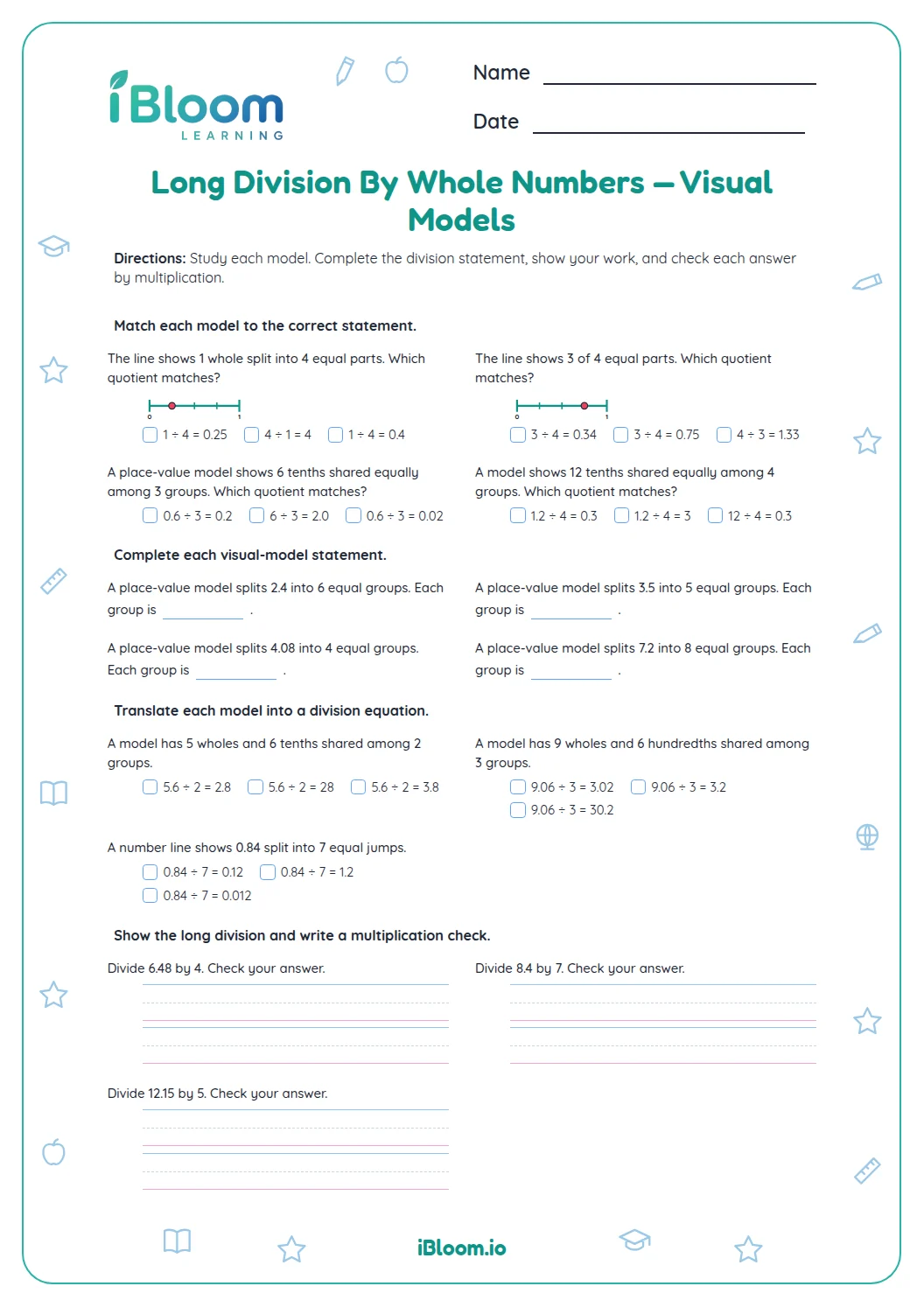
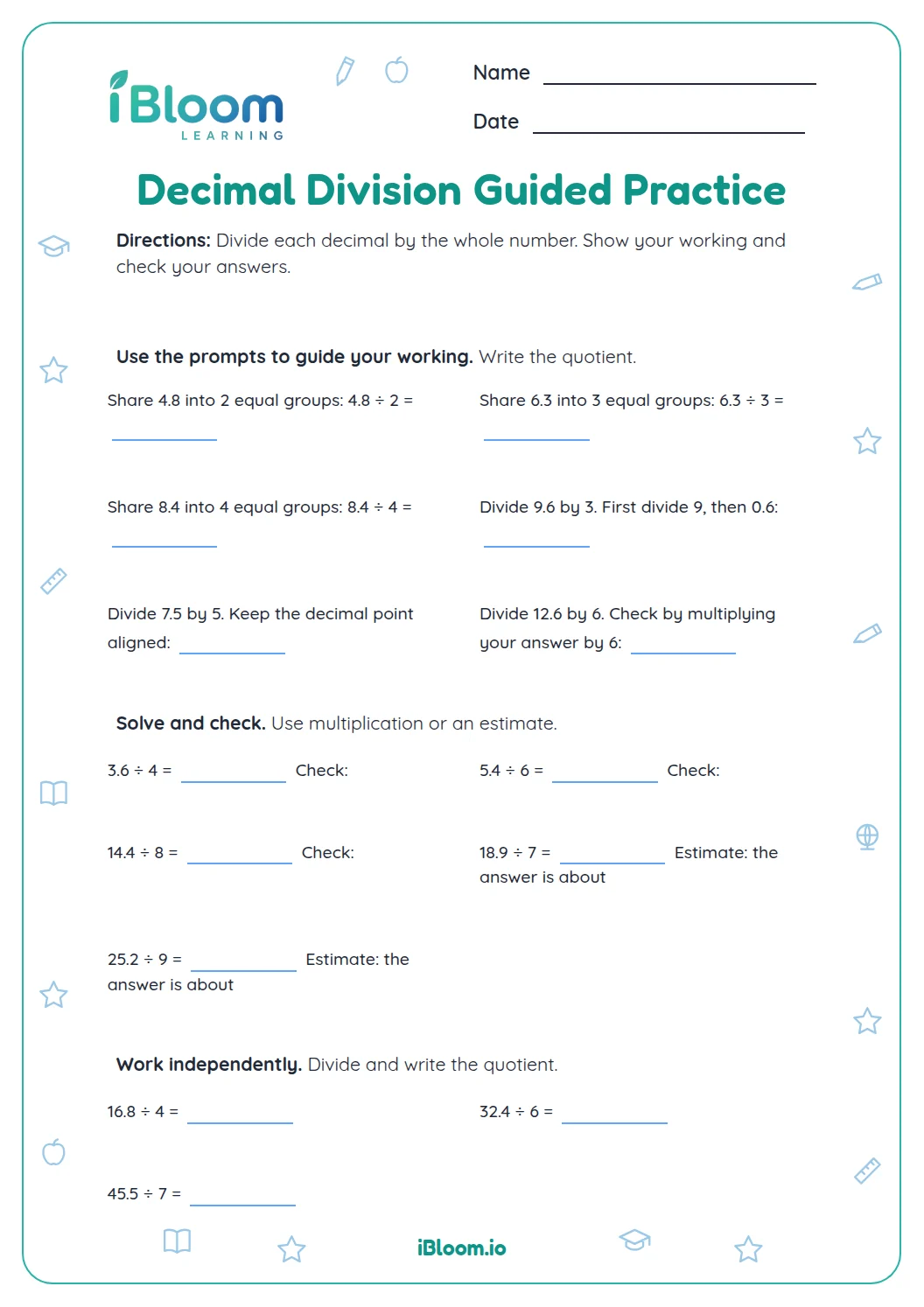
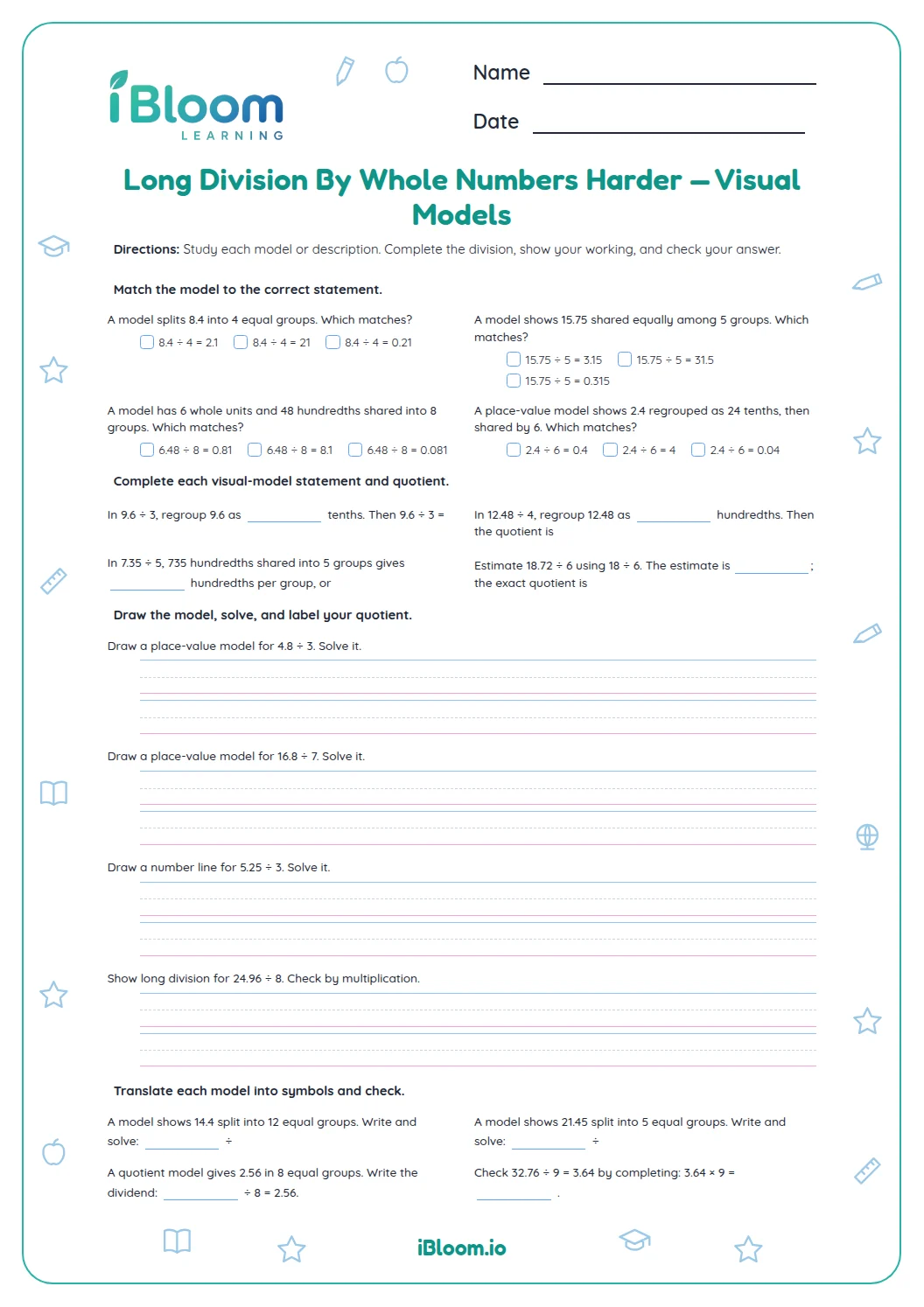
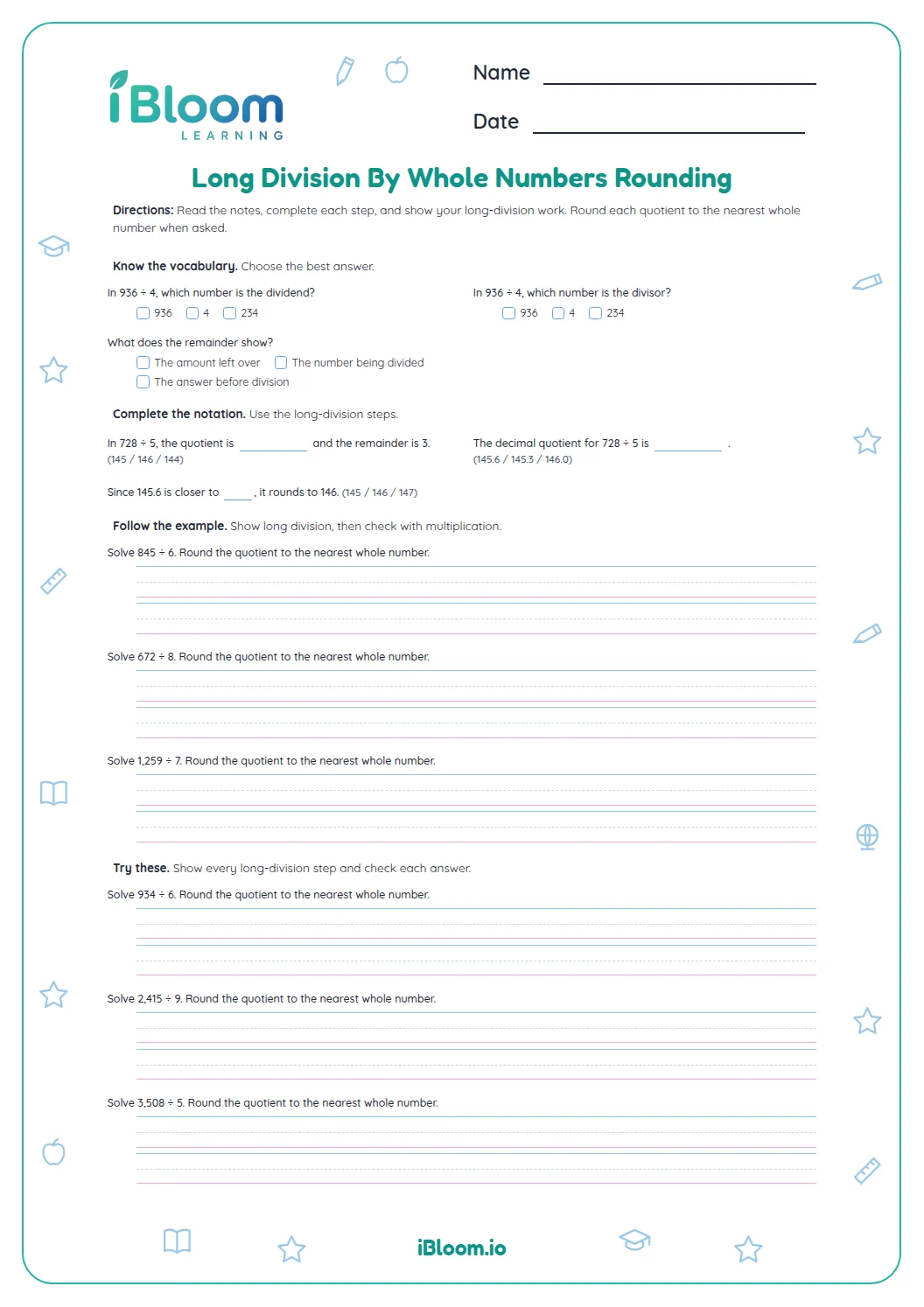
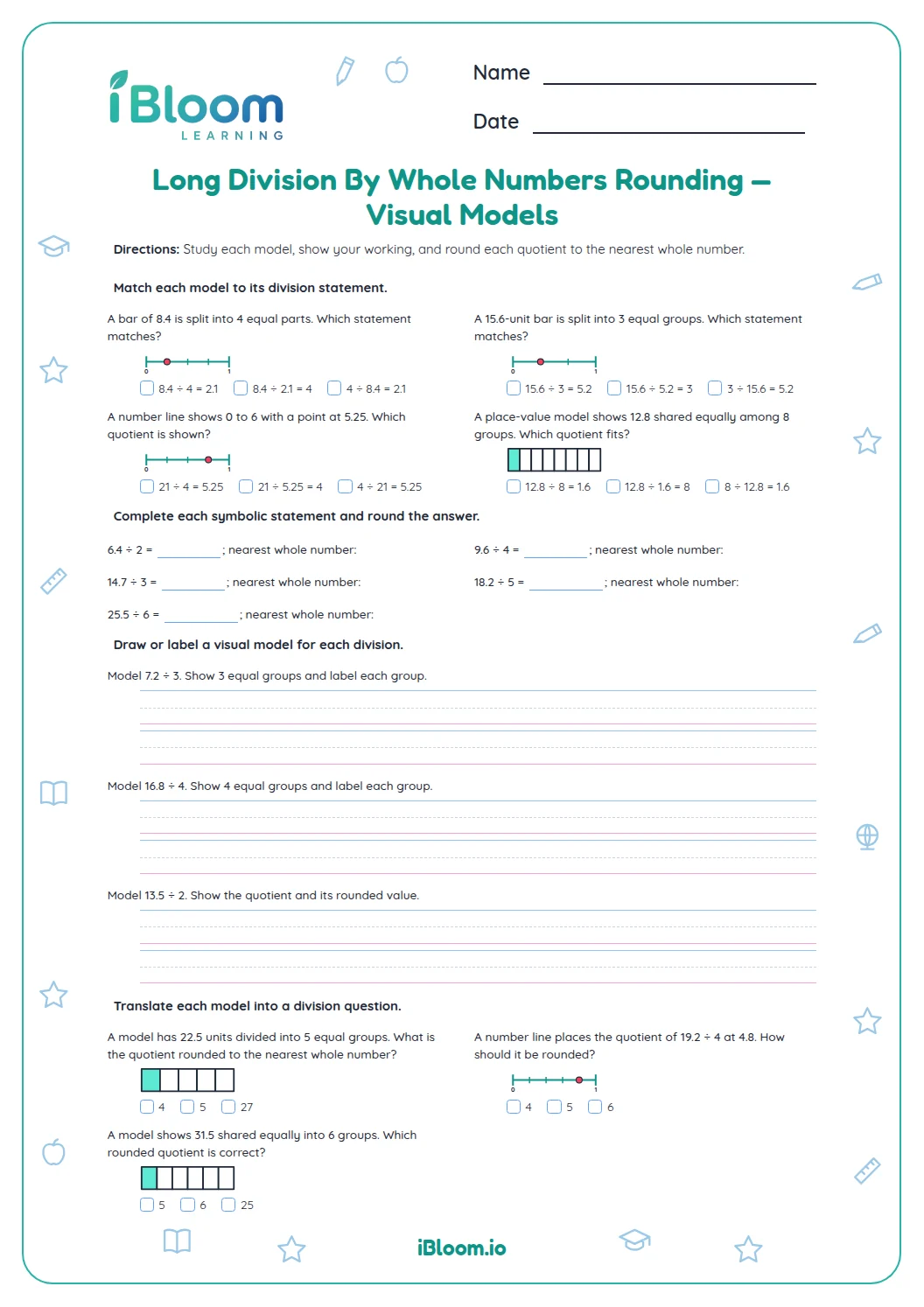
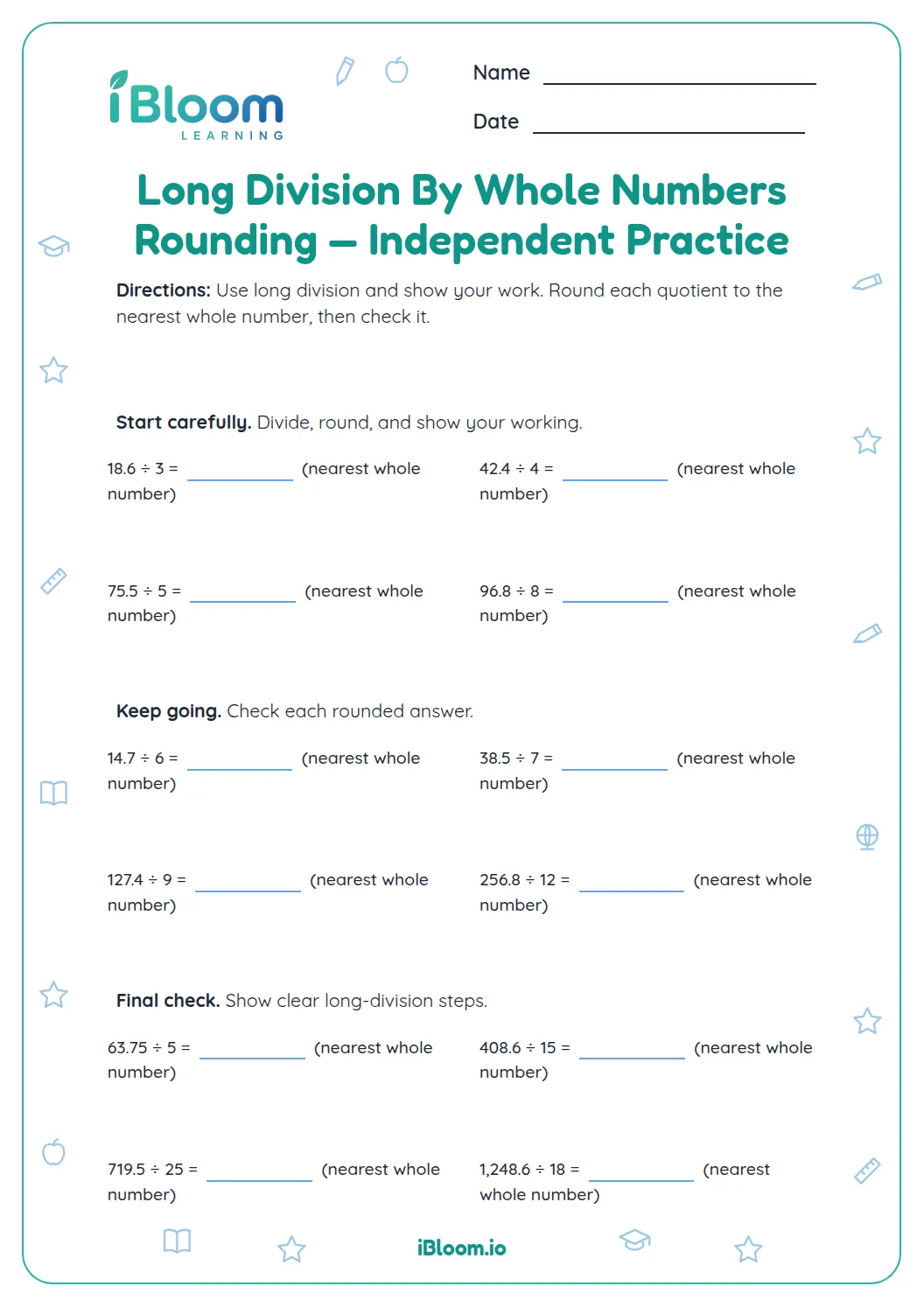
This Grade 6 math worksheet practices dividing decimal dividends by whole-number divisors with the long-division algorithm. Students solve six quotients, then apply the method to eight equal-sharing situations. The problems build fluency with decimal placement and include a separate answer key. The practice aligns with CCSS 6.NS.B.3.
Aligned to 6.NS.B.3
What does the worksheet ask students to do?
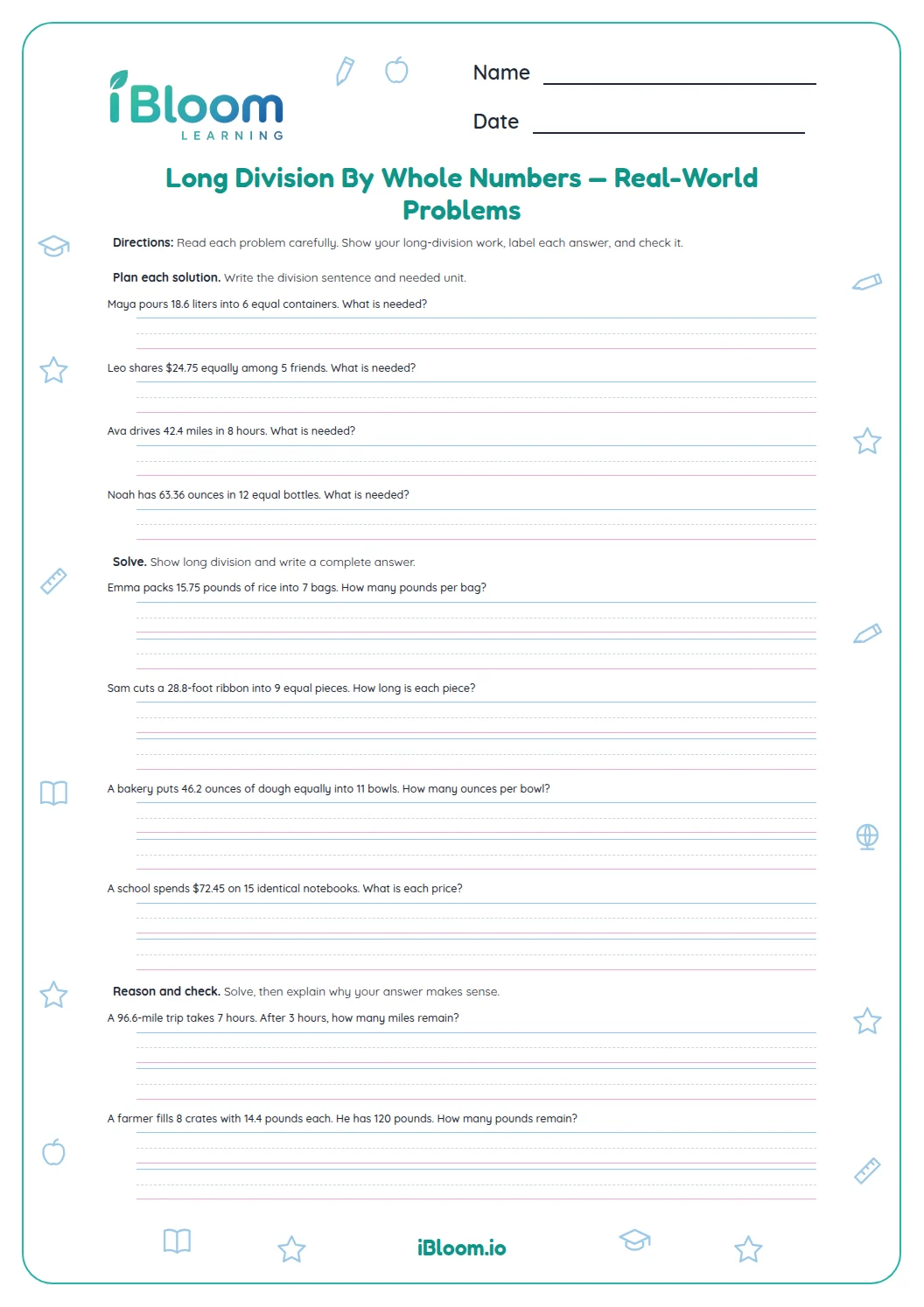
Part A has six decimal quotients to solve with long division. Part B uses eight equal-sharing situations; each answer is an amount per item or distance per section.
- 1Question 1: 8.64 ÷ 6
- 2Answer: 1.44; check: 1.44 × 6 = 8.64
How can students work through each question?
Divide as with whole numbers while keeping each quotient digit above its place. Check by multiplying the quotient by the divisor; the product should match the dividend. In a sharing story, attach the requested unit to the quotient.
How should families review the answers?
For story problems, estimate the quotient before calculating. Multiply to check the result, then reread the question to make sure the answer has the requested unit.
How to use this worksheet
- 1Read the direction for the first part together.
- 2Work through each question in order.
- 3Reread the prompt before writing an answer.
- 4Use the answer key to check each response.
Common mistakes and quick fixes
The mistake
Placing the quotient decimal incorrectly.
The fix
Put it directly above the dividend decimal.
The mistake
Forgetting a zero in an empty place.
The fix
Use a placeholder zero to keep places aligned.
The mistake
Leaving off the unit.
The fix
Name the unit asked for in the sharing problem.
Common Core alignment
Divide multi-digit decimals fluently using the standard algorithm.
On this sheet: Students use the standard long-division algorithm with whole-number dividends and divisors.
Show the official wordingHide the official wording
Fluently add, subtract, multiply, and divide multi-digit decimals using the standard algorithm for each operation.
What to practice next
Further reading
Questions parents and teachers ask
What does this worksheet practice?
It practices dividing decimal dividends by whole-number divisors with long division. Six direct quotients come first, followed by eight equal-sharing situations that ask for an amount per item or distance per section. Use the quotient to check place value as well as the calculation before moving to the next problem.
How should students place the decimal point?
Keep the dividend’s decimal aligned through the division steps, and place the quotient decimal directly above it. Students can check each result by multiplying the quotient by the whole-number divisor and comparing the product with the dividend. Writing the decimal in the quotient carefully keeps tenths and hundredths in their correct places.
What is an example from the sheet?
Question 1 is 8.64 ÷ 6. Divide to get 1.44, then check with 1.44 × 6 = 8.64. This check confirms both the quotient and its decimal placement. The multiplication check is a quick way to catch a misplaced decimal or a division error.
How are the questions organized?
Part A contains six quotients for direct long-division practice. Part B contains eight word problems about equal sharing or equal lengths. In the second part, students should include the unit named in the question. The problems keep the divisor whole while the quantity being divided includes a decimal part.
What does the answer key include?
The separate answer key gives all 14 quotients. Answers to the sharing problems include the requested units, such as meters, liters, kilograms, or miles, so students can compare both the number and what it measures. The answer key is best used after students have shown their own division steps on the sheet.