
About this worksheet
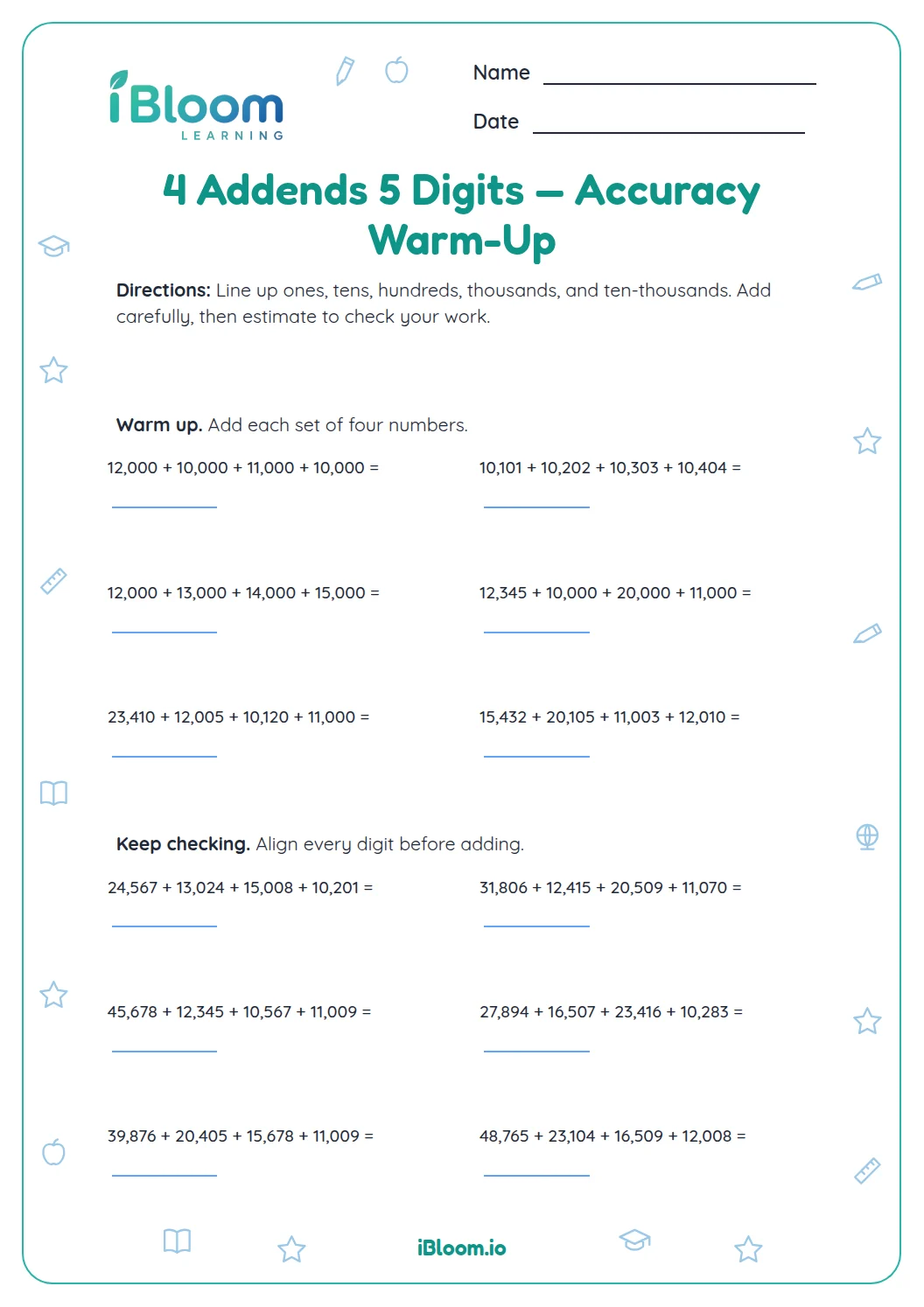
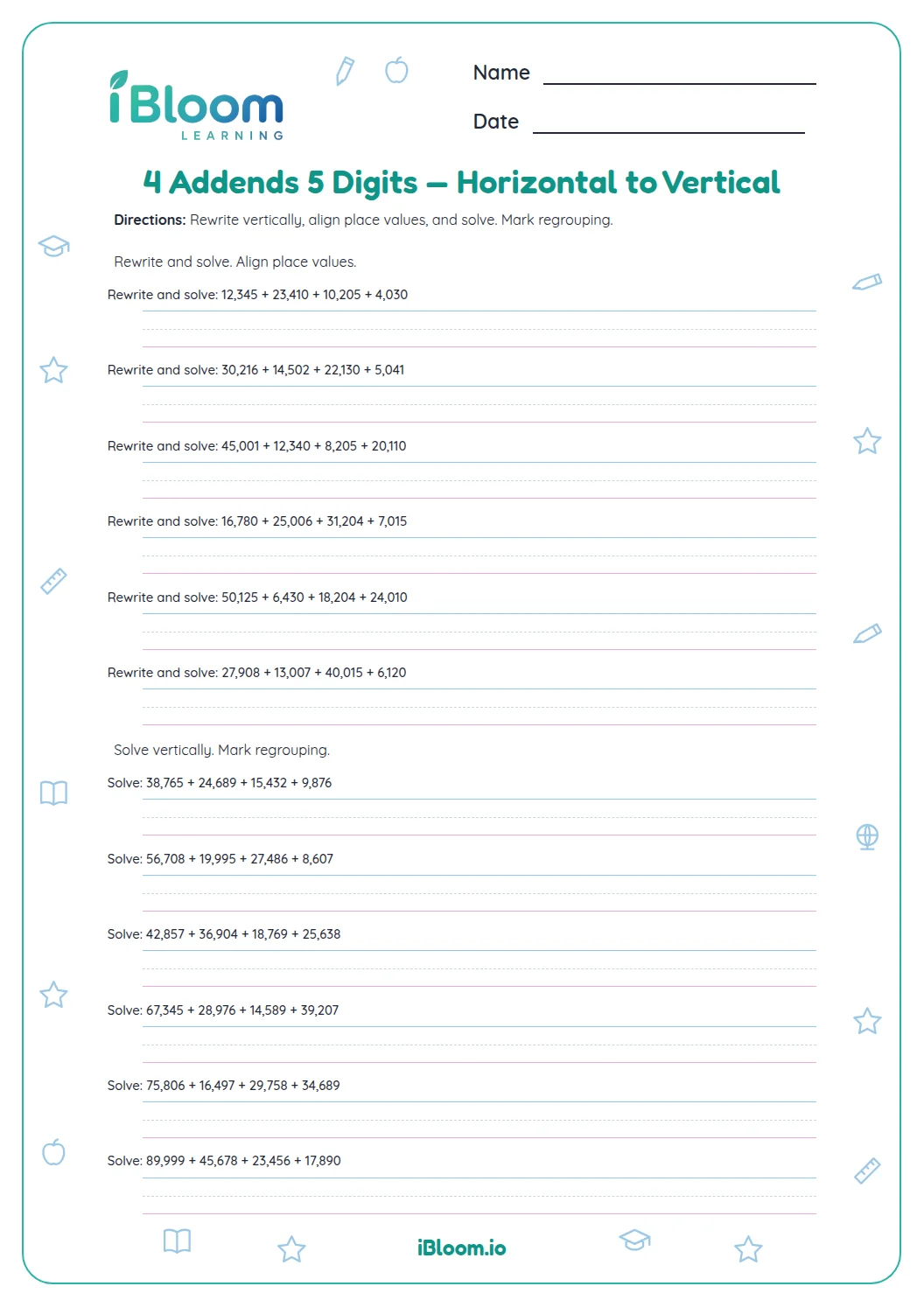
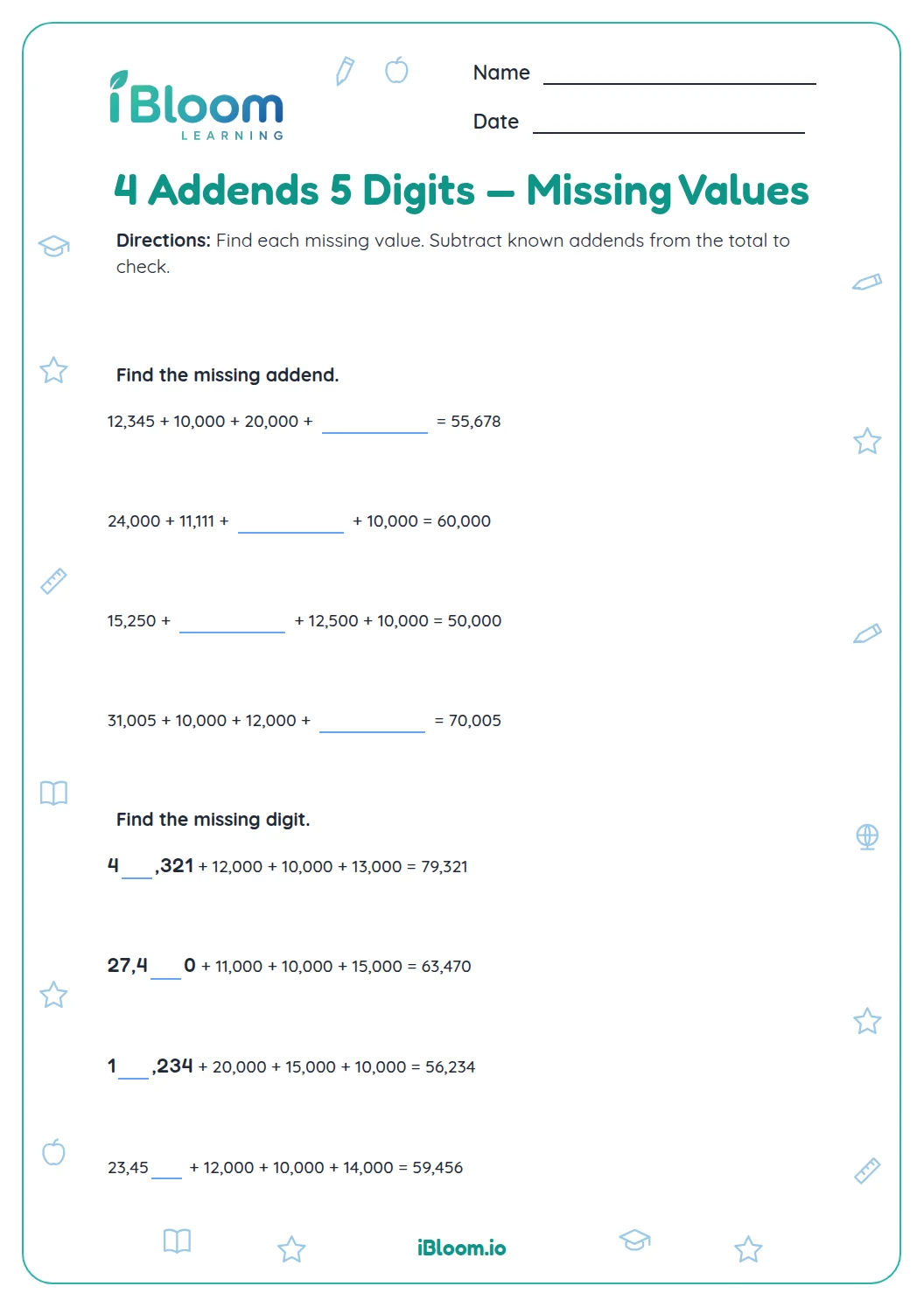
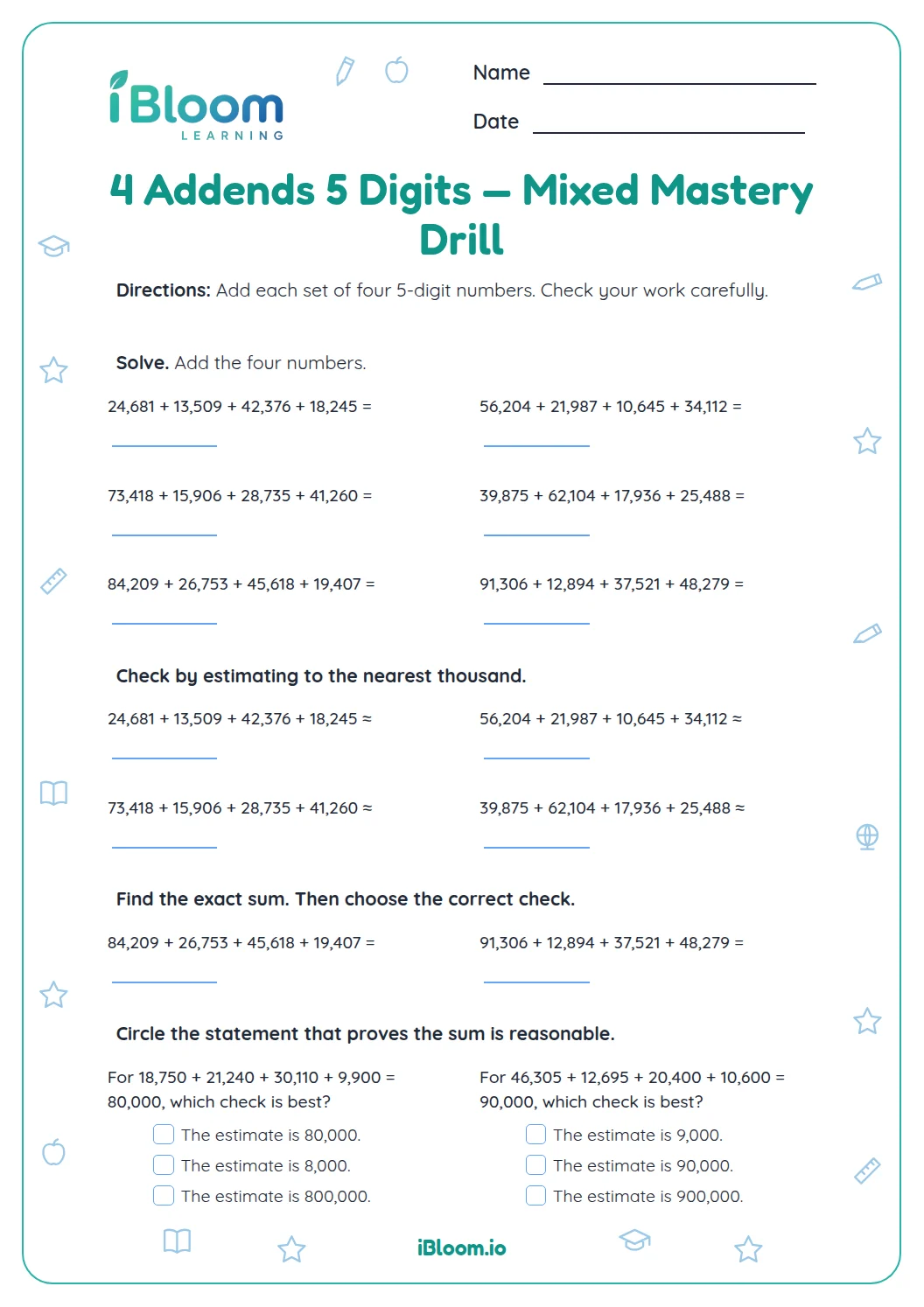
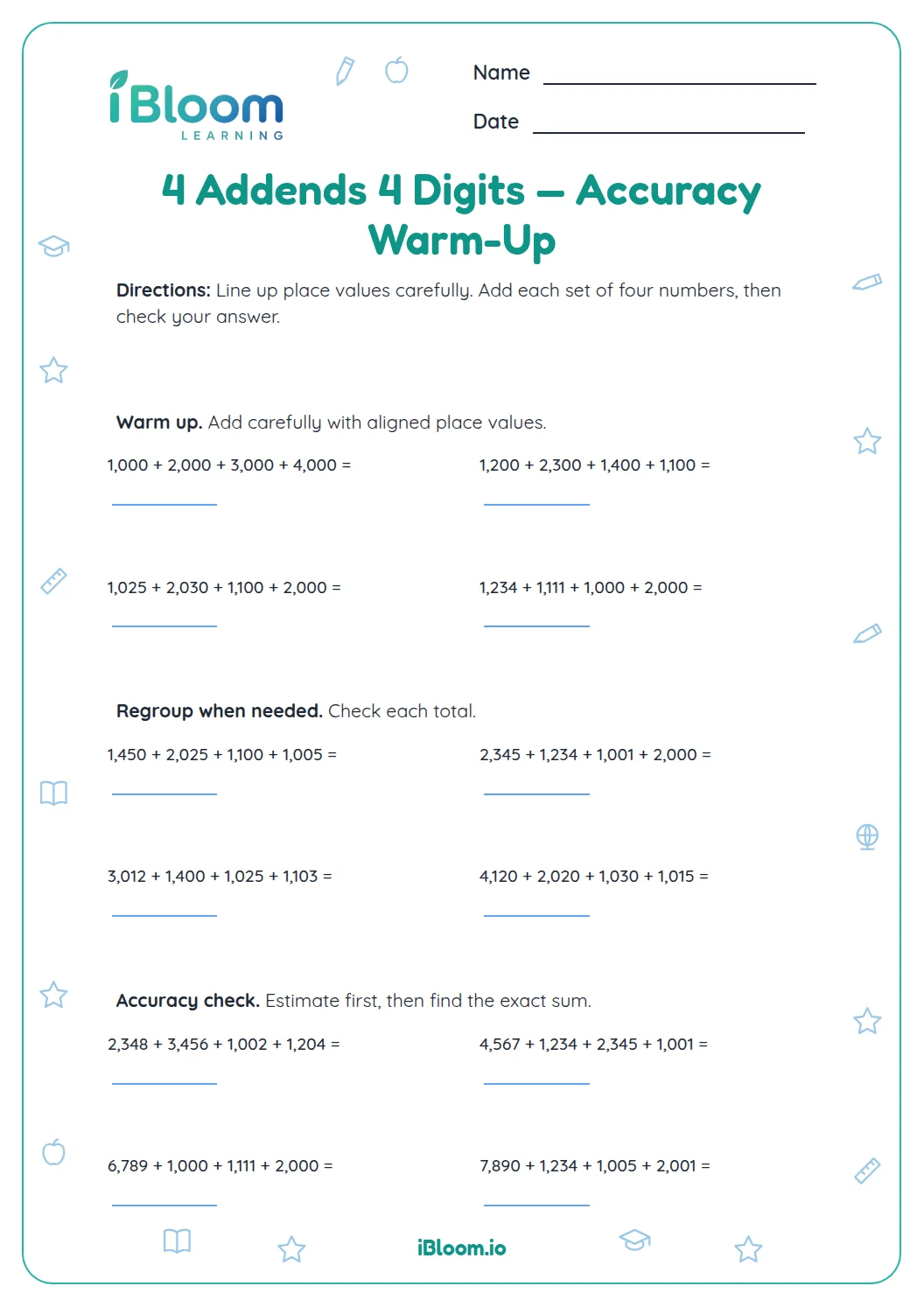
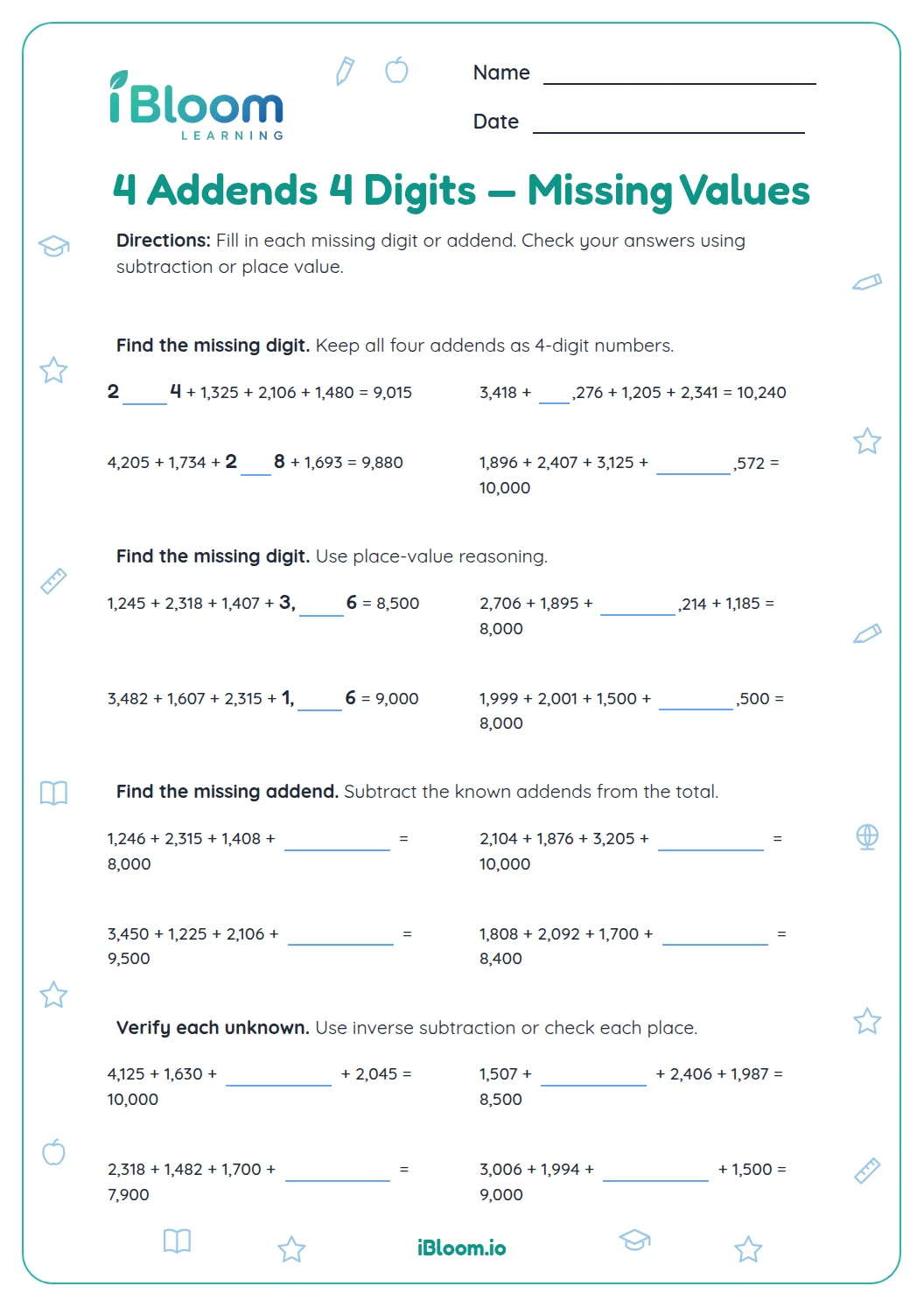
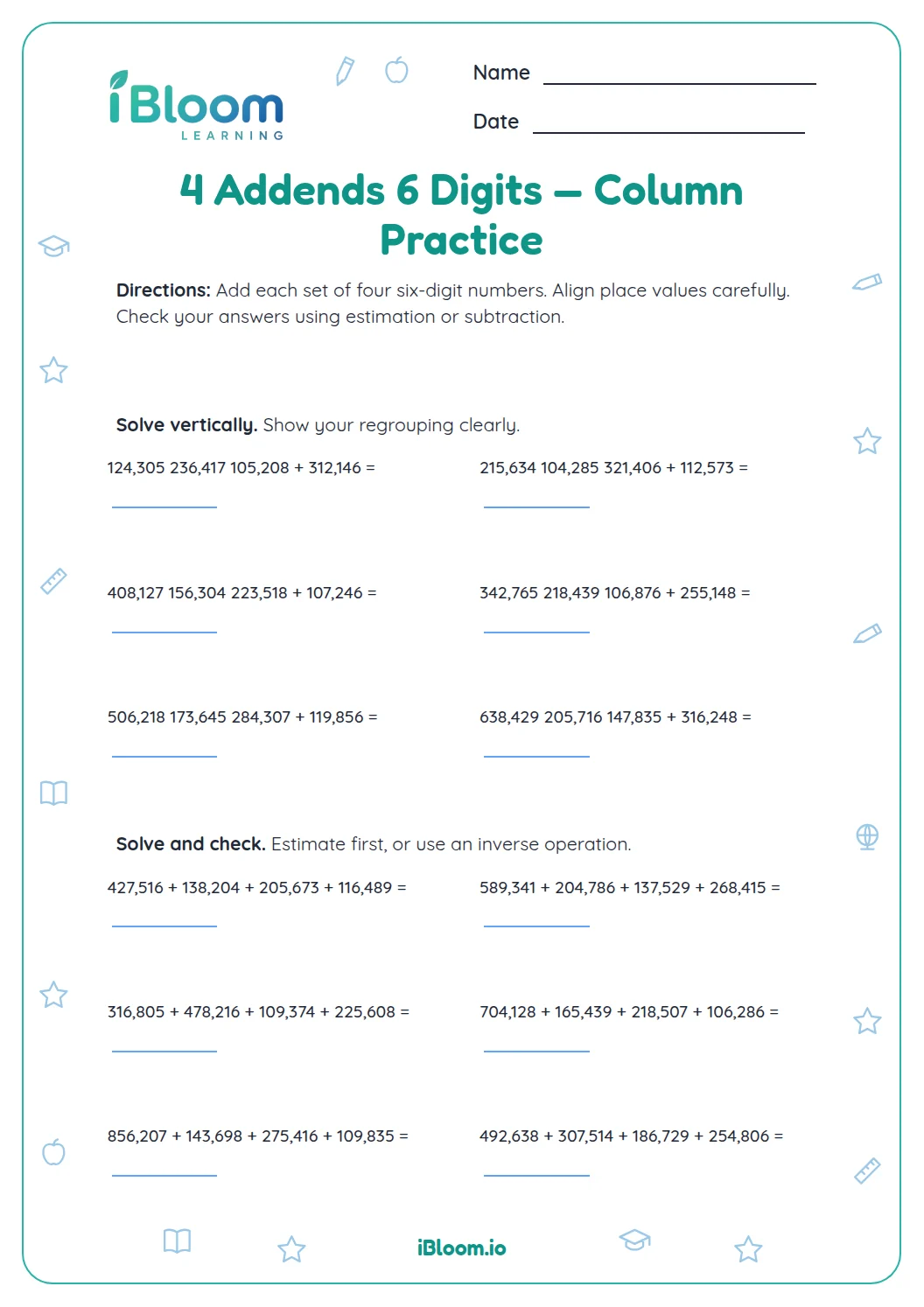
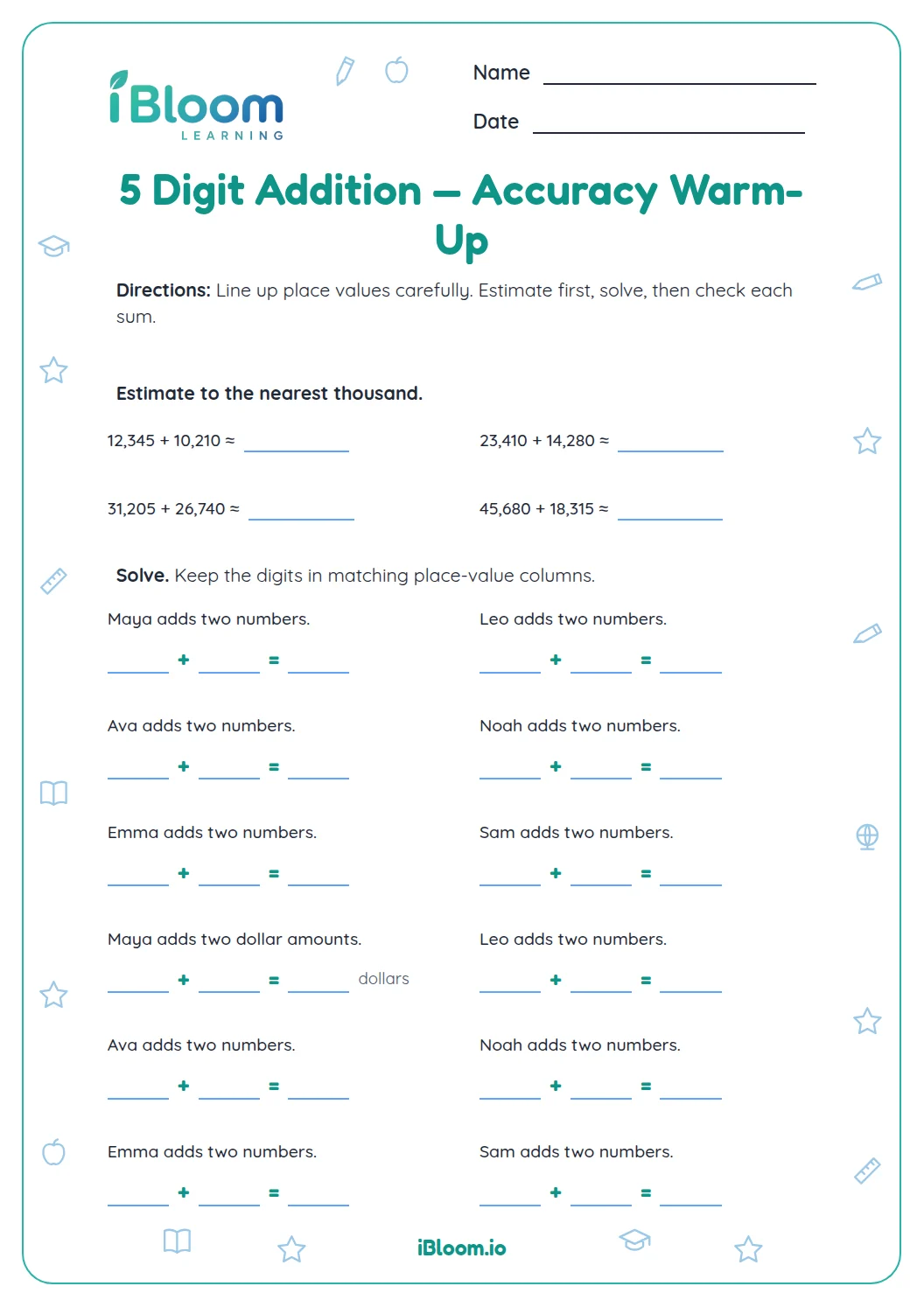
This printable gives Grades 5–6 learners 16 problems adding four five-digit numbers. The first part asks students to inspect two claimed totals; the main practice adds four addends in columns, then uses pair sums and inverse subtraction to check answers. The separate key lists every choice and total. The work practices the multi-digit addition and subtraction in Common Core 4.NBT.B.4.
Aligned to 4.NBT.B.4
How can a learner check a four-addend total?
Add the columns from right to left, carrying each regrouped ten into the next place. A claimed answer is only a starting point: recompute it or use subtraction to test it.
For question 1, the addends total 116,046, so Ava’s 106,046 is too small by 10,000. Check the place-value columns before accepting a total.
- 112,345 + 23,456 + 34,567 + 45,678 = 116,046
- 2Ava wrote 106,046, so her total is 10,000 too low.
What should the column work show?
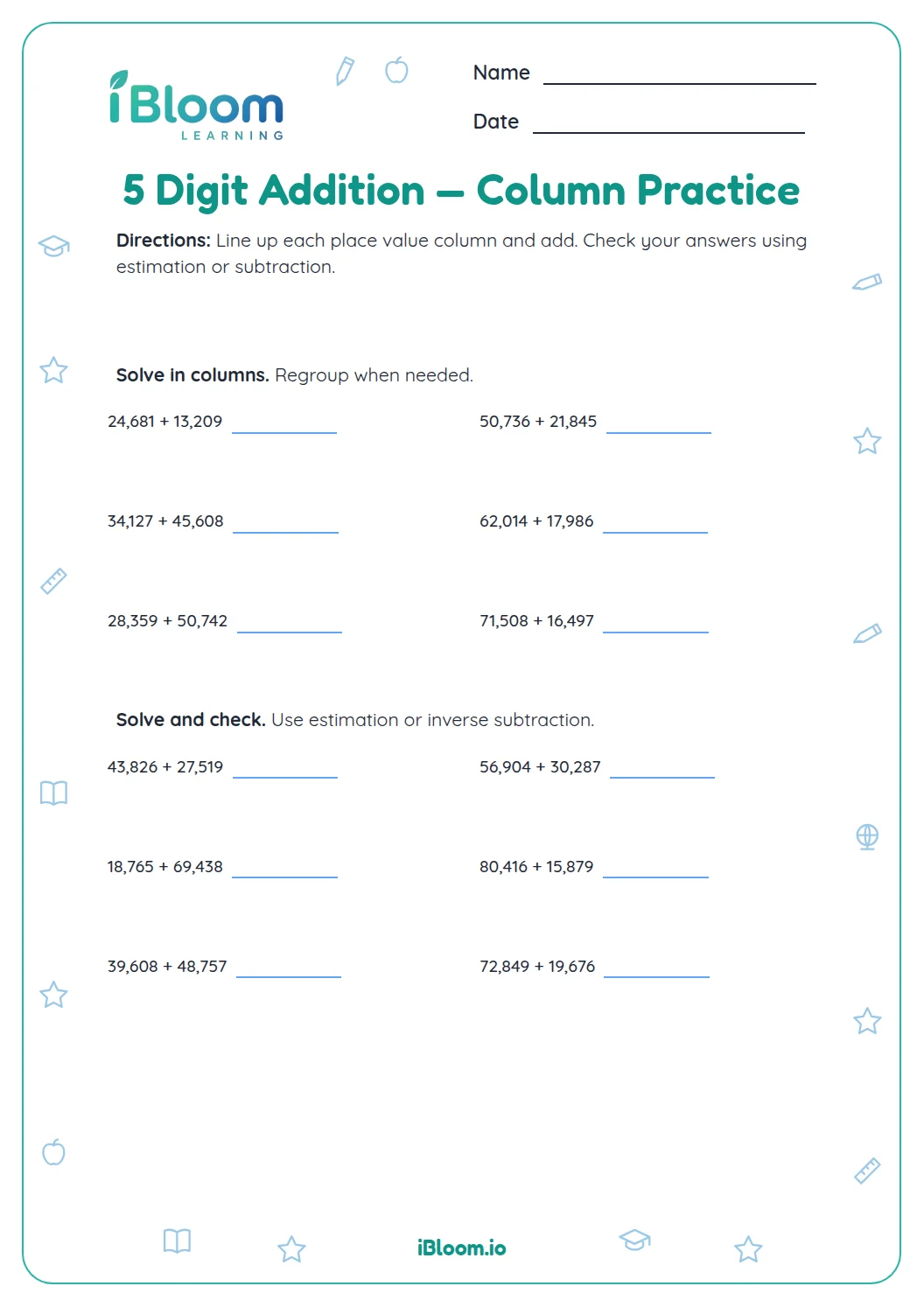
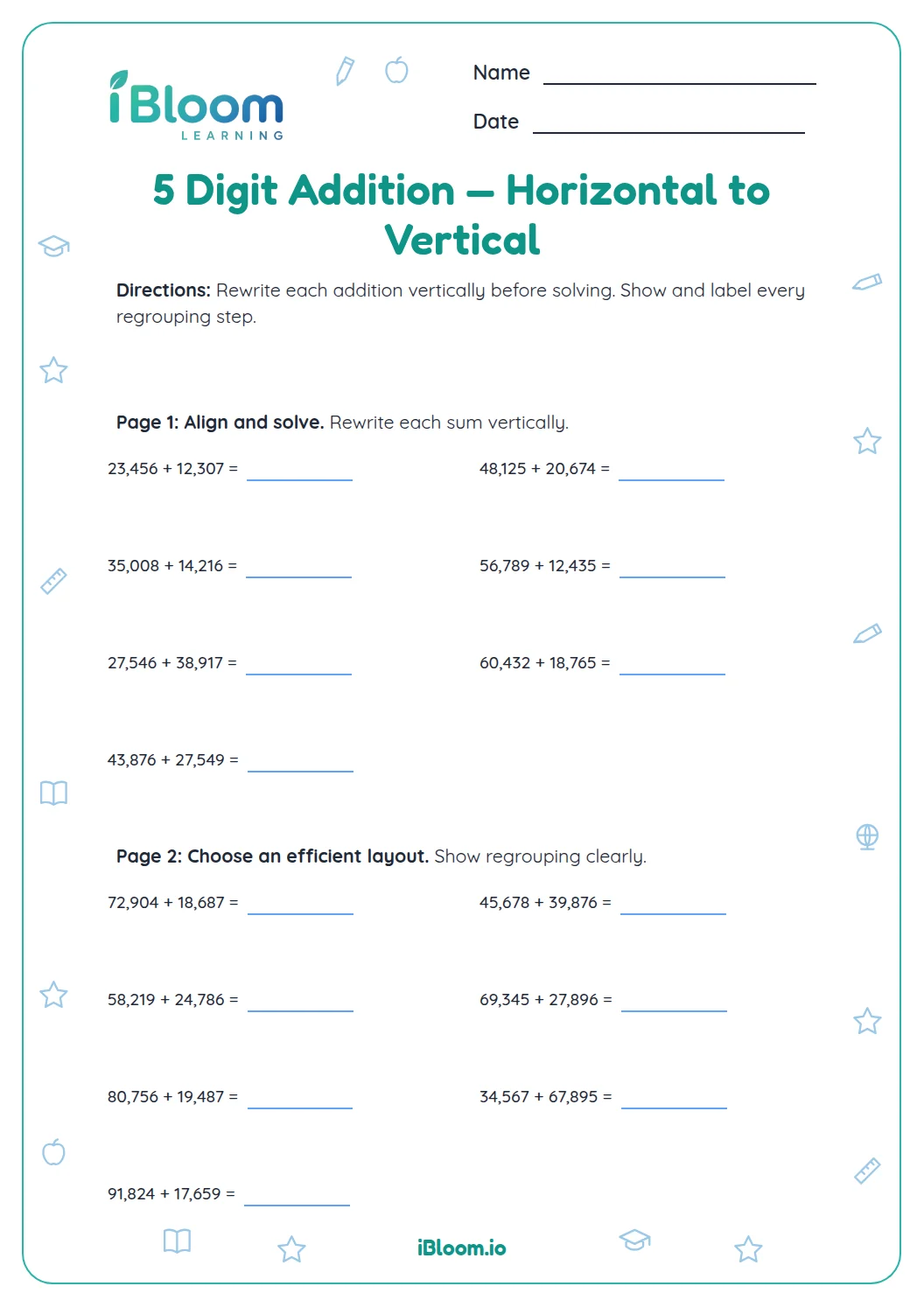
Keep the ones, tens, hundreds, thousands, and ten-thousands aligned. Add each column, write its ones digit, and carry any tens into the next column. The four full sums give practice applying that routine across different regrouping patterns.
How do the checking questions work?
Question 10 groups the addends into two pairs; those pair sums must add to the same total. Question 11 works backward by subtracting three addends from the claimed total. Both checks help locate an error without repeating the identical column addition.
How to use this worksheet
- 1Mark each place-value column before adding.
- 2Add the four digits in the ones column and record any carry.
- 3Repeat for tens, hundreds, thousands, and ten-thousands.
- 4Compare a claimed total by estimating or recomputing it.
- 5Use the inverse check to see whether the remaining addend is recovered.
Common mistakes and quick fixes
The mistake
Forgetting to carry a group of ten to the next column.
The fix
Write the carry above the next place before adding that column.
The mistake
Stopping at the ten-thousands column and missing a hundred-thousands digit.
The fix
Add the carries and digits in the final column before writing the total.
The mistake
Subtracting only one addend in an inverse check.
The fix
Subtract three addends in sequence; the amount left should equal the fourth.
Common Core alignment
This worksheet gives practice with the stated skill.
Add four five-digit whole numbers with regrouping and check the total.
On this sheet: The sheet asks learners to add four five-digit addends, analyze totals, and verify sums.
Show the official wordingHide the official wording
Fluently add and subtract multi-digit whole numbers using the standard algorithm.
What to practice next
Make more practice
Further reading
Questions parents and teachers ask
What does the error-analysis part ask students to do?
Questions 1 and 2 show a student’s claimed total for four addends. Students choose the correct sum, then use the later checking questions to examine a total in a second way. This keeps the error work tied to the same five-digit addition skill practiced in the written sums.
How many problems are on the printable?
There are 16 questions in four parts: two error-analysis choices, seven written sums, two checking choices, and five more sums. The answer key is separate. The first page introduces the error and column work, and the later questions continue with checking and independent addition.
How can I check a four-addend answer?
Add the numbers by place-value column and keep track of each carry. For another check, add two pairs of addends and combine those pair totals, or subtract three addends from the claimed total and see whether the fourth remains. The sheet includes both checking approaches.
Does the sheet include an answer key?
Yes. A separate key gives the correct choices and totals. Have the learner finish a part before checking, then revisit one missed column together and identify where a carry was dropped or a place value was misread. This helps connect the correction to the written addition.
What should students know before starting?
Students should be comfortable adding multi-digit whole numbers with the standard algorithm. It may help to review how ten ones make one ten and how the same regrouping idea works in each place. The problems then apply that routine to four addends at a time.