

About this worksheet
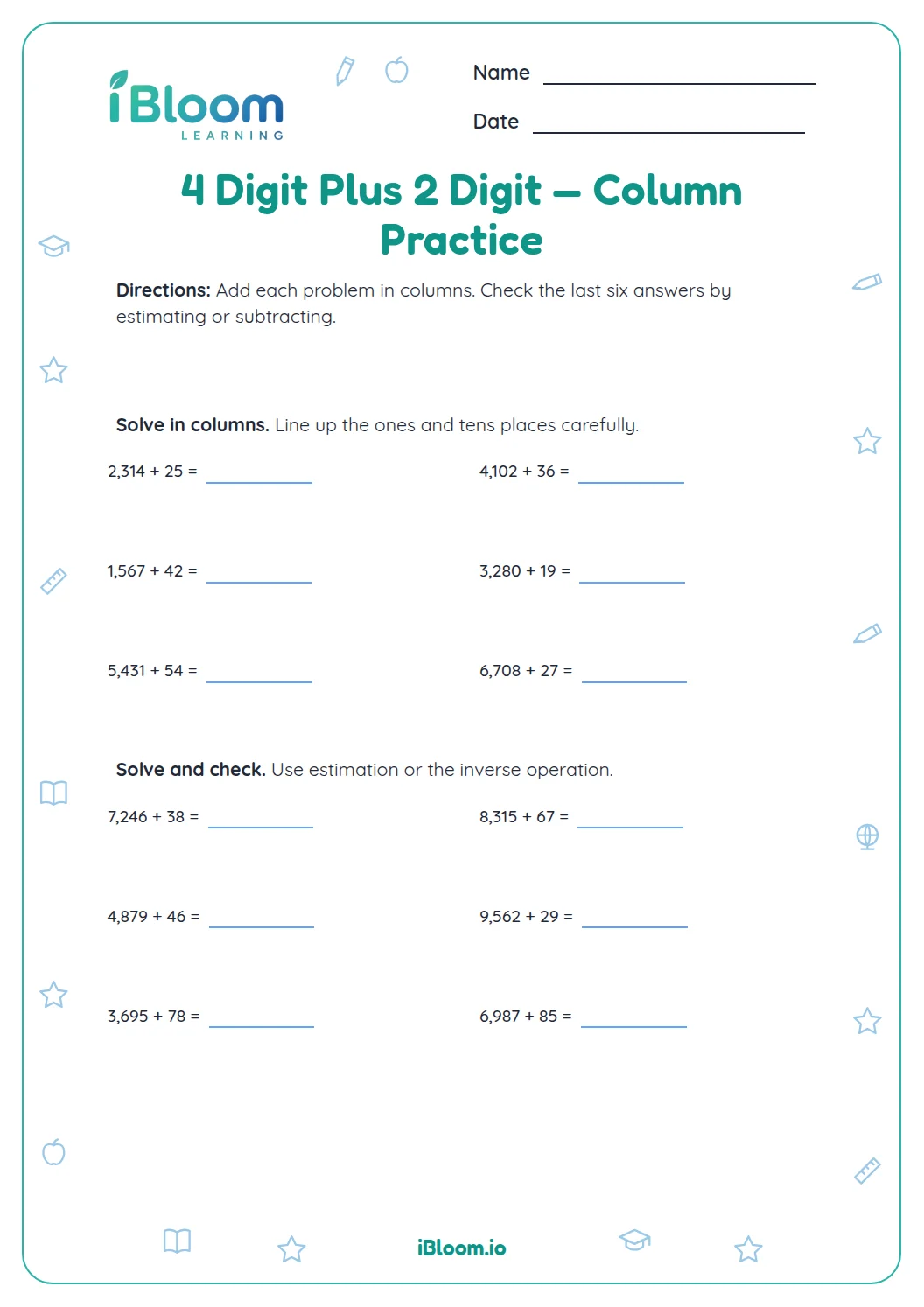
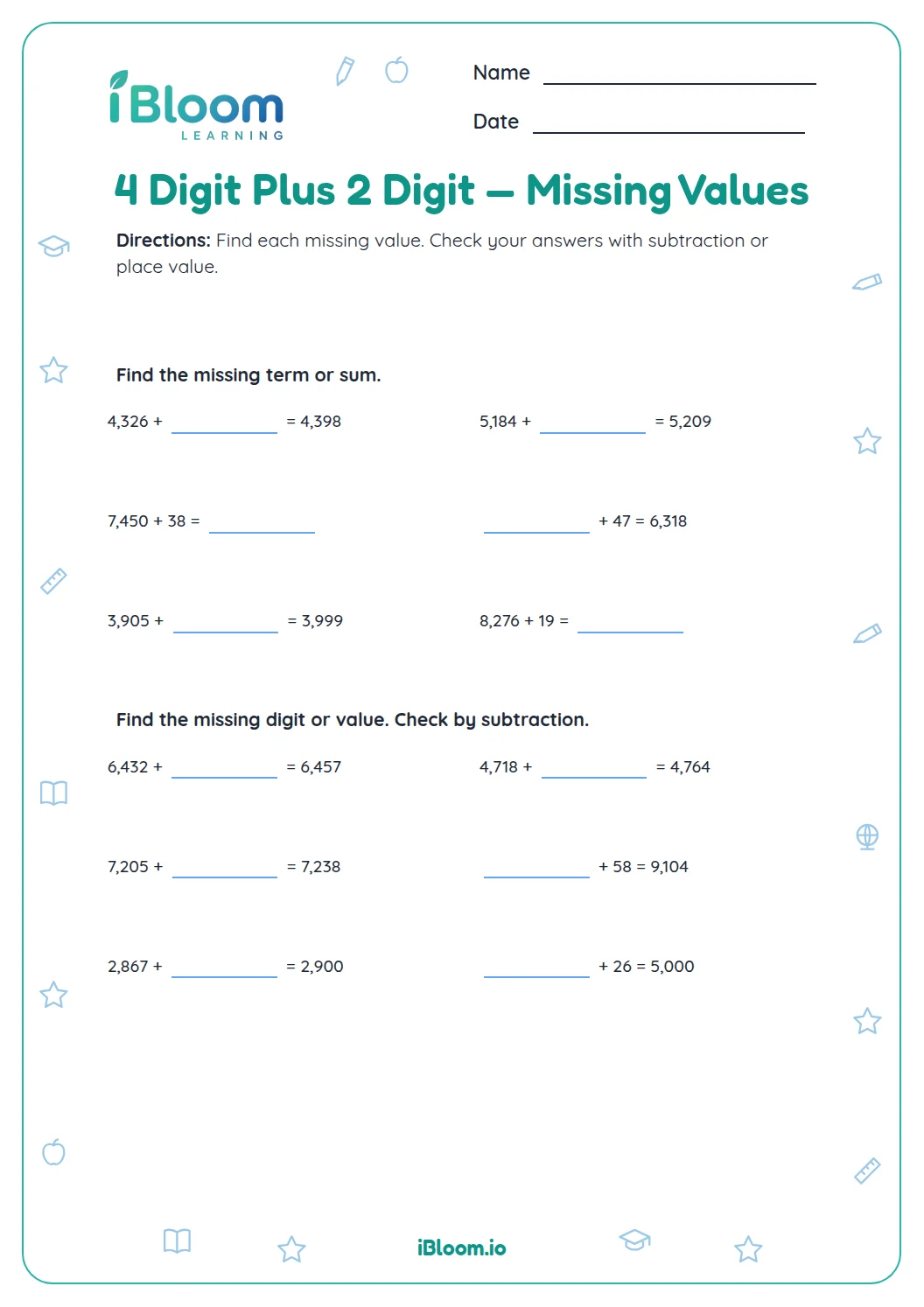
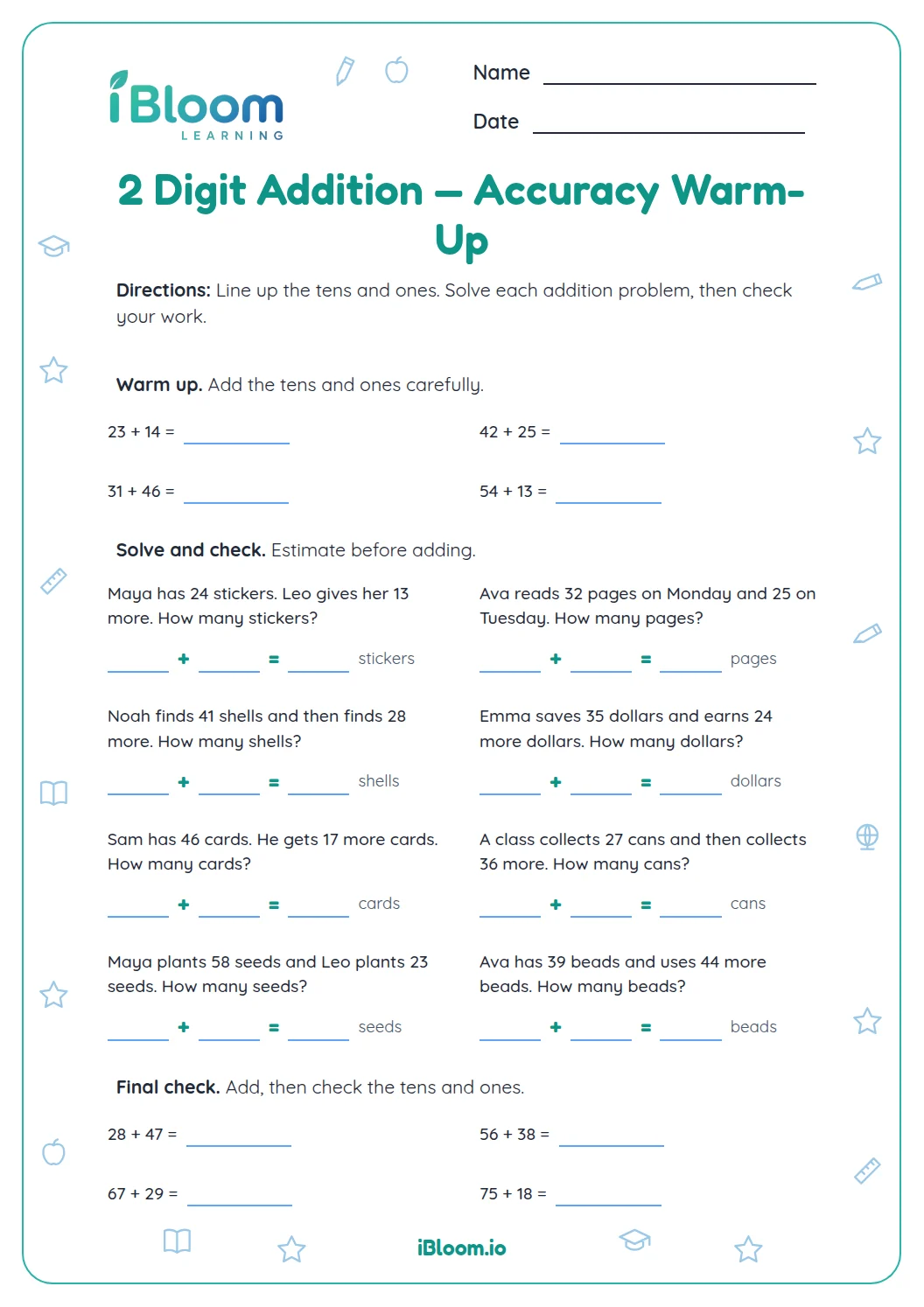
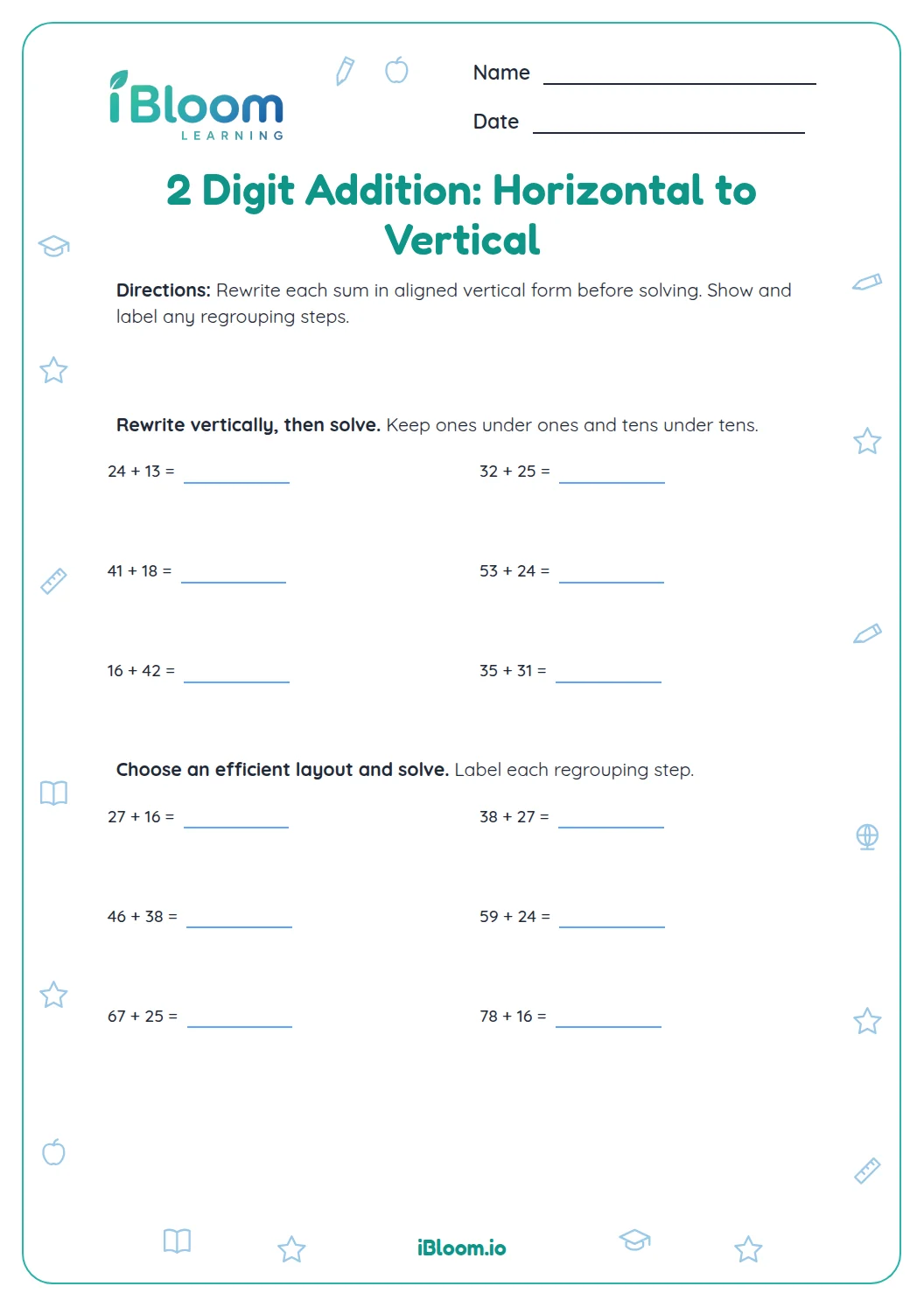
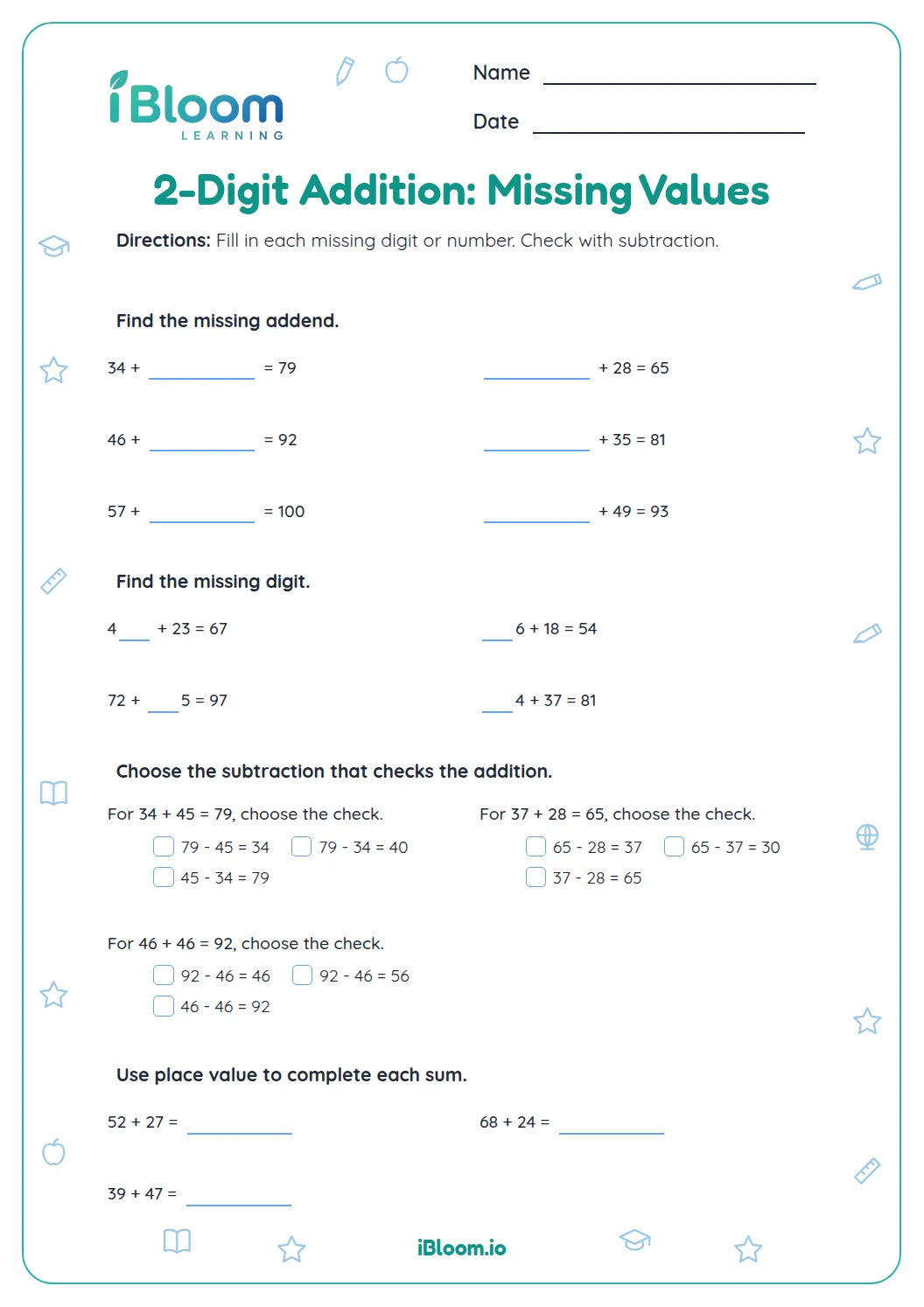
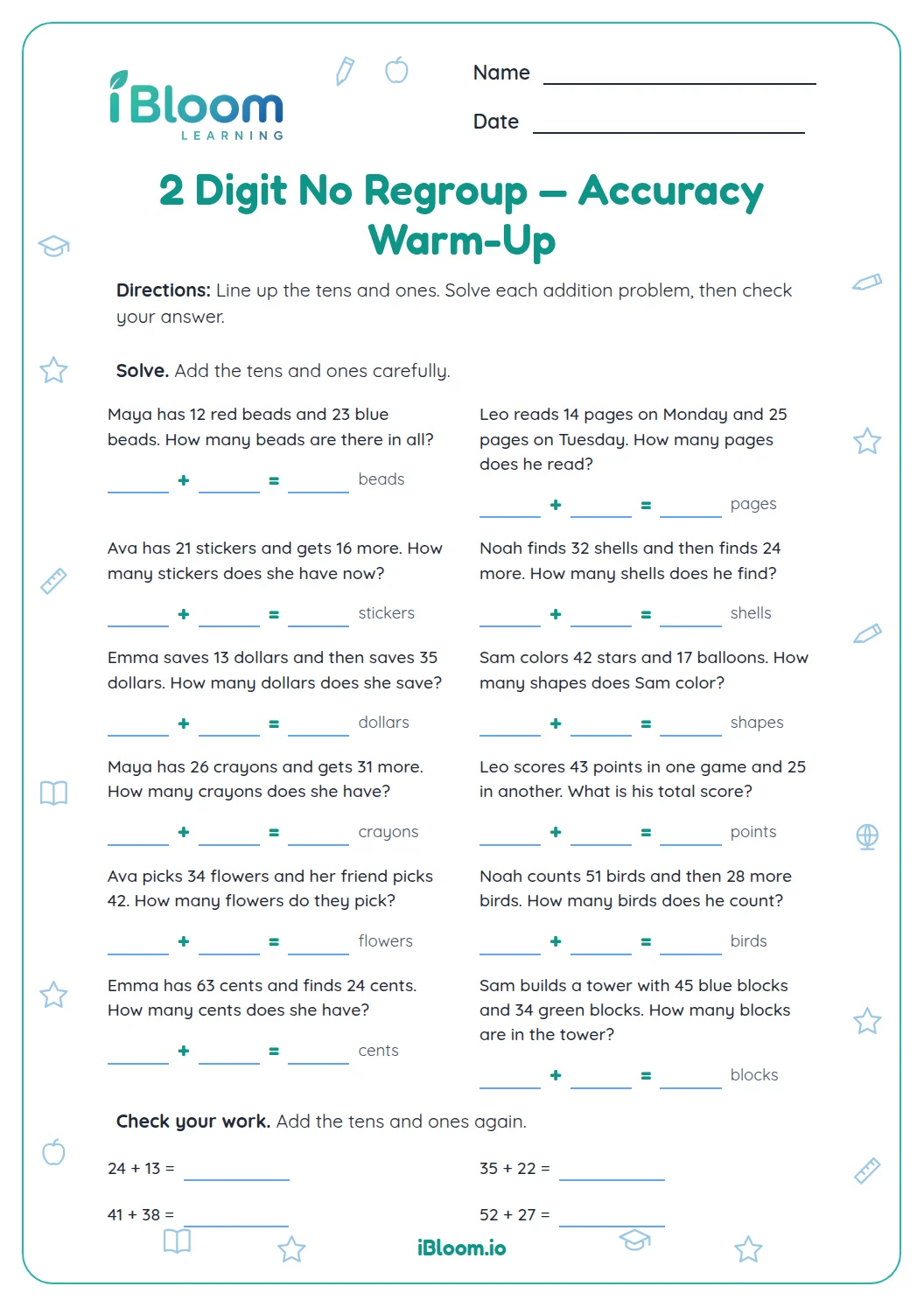
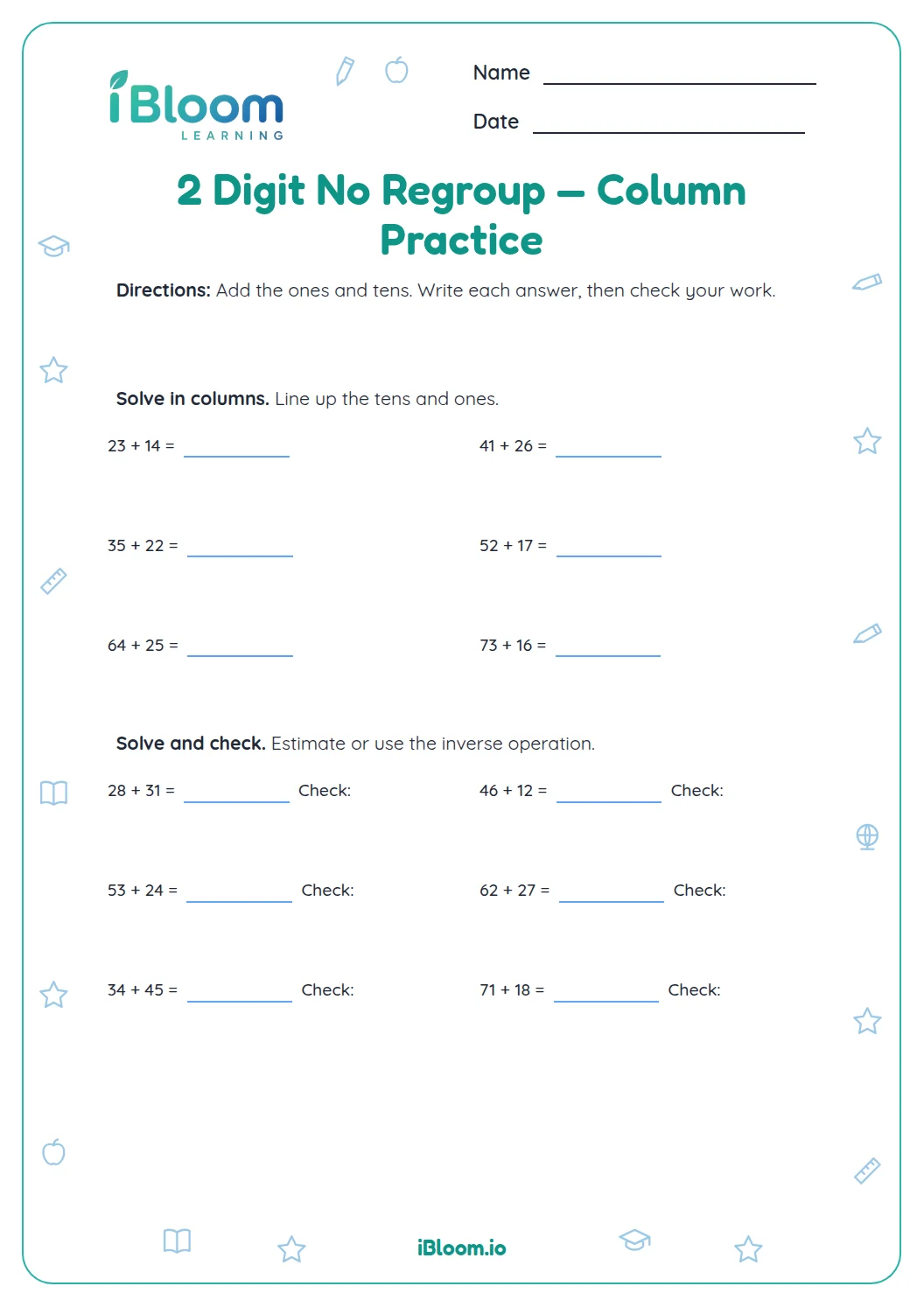
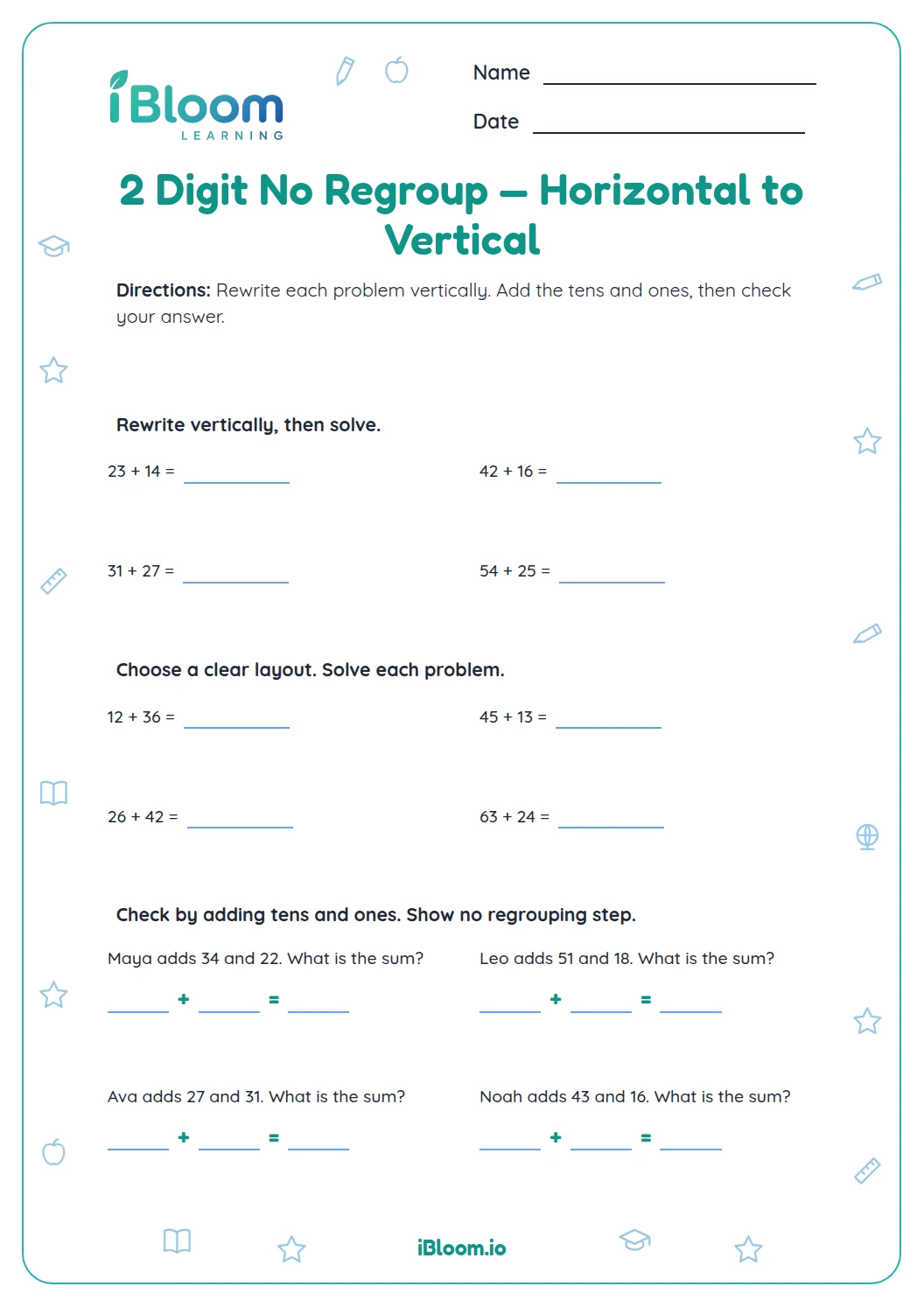
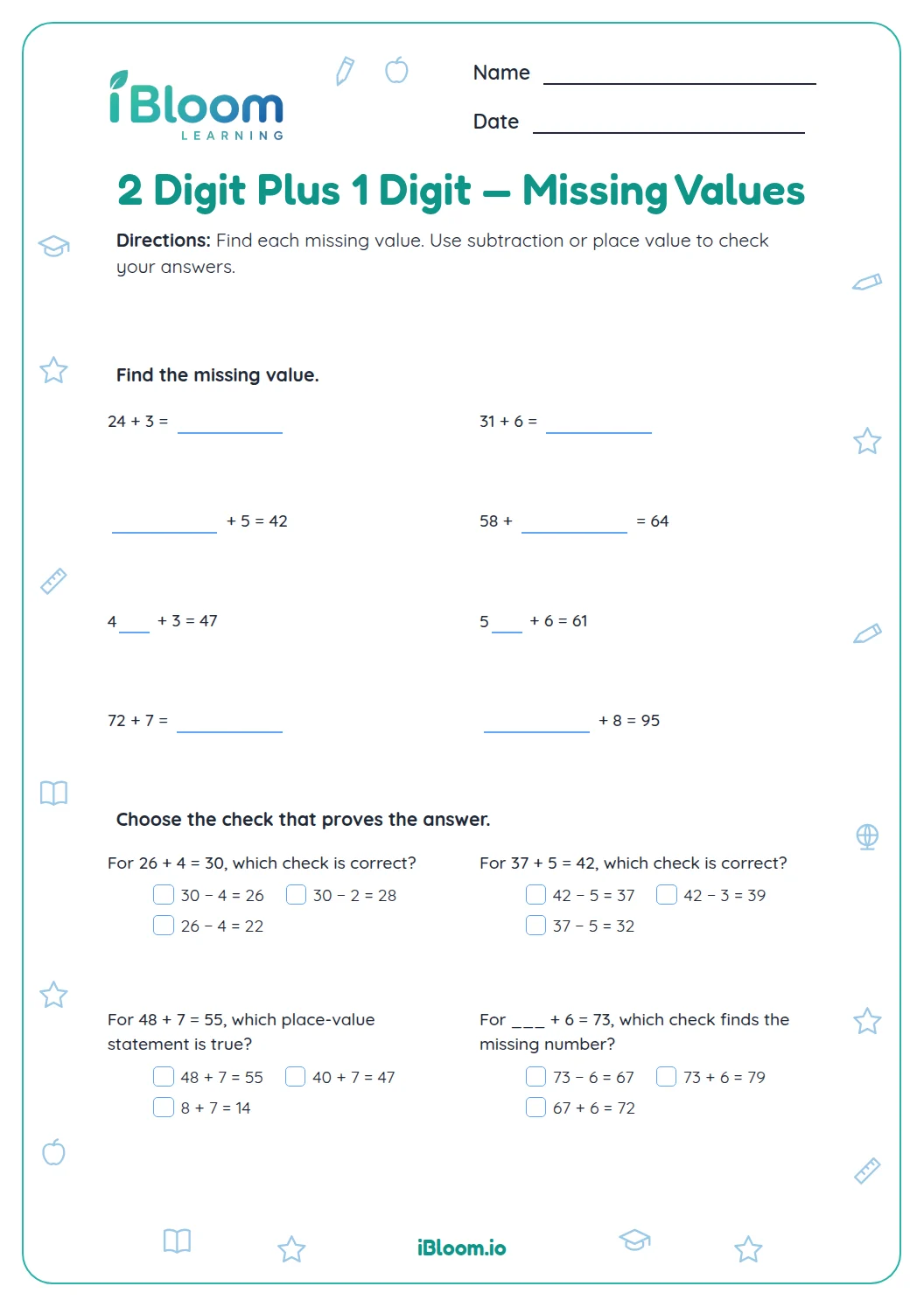
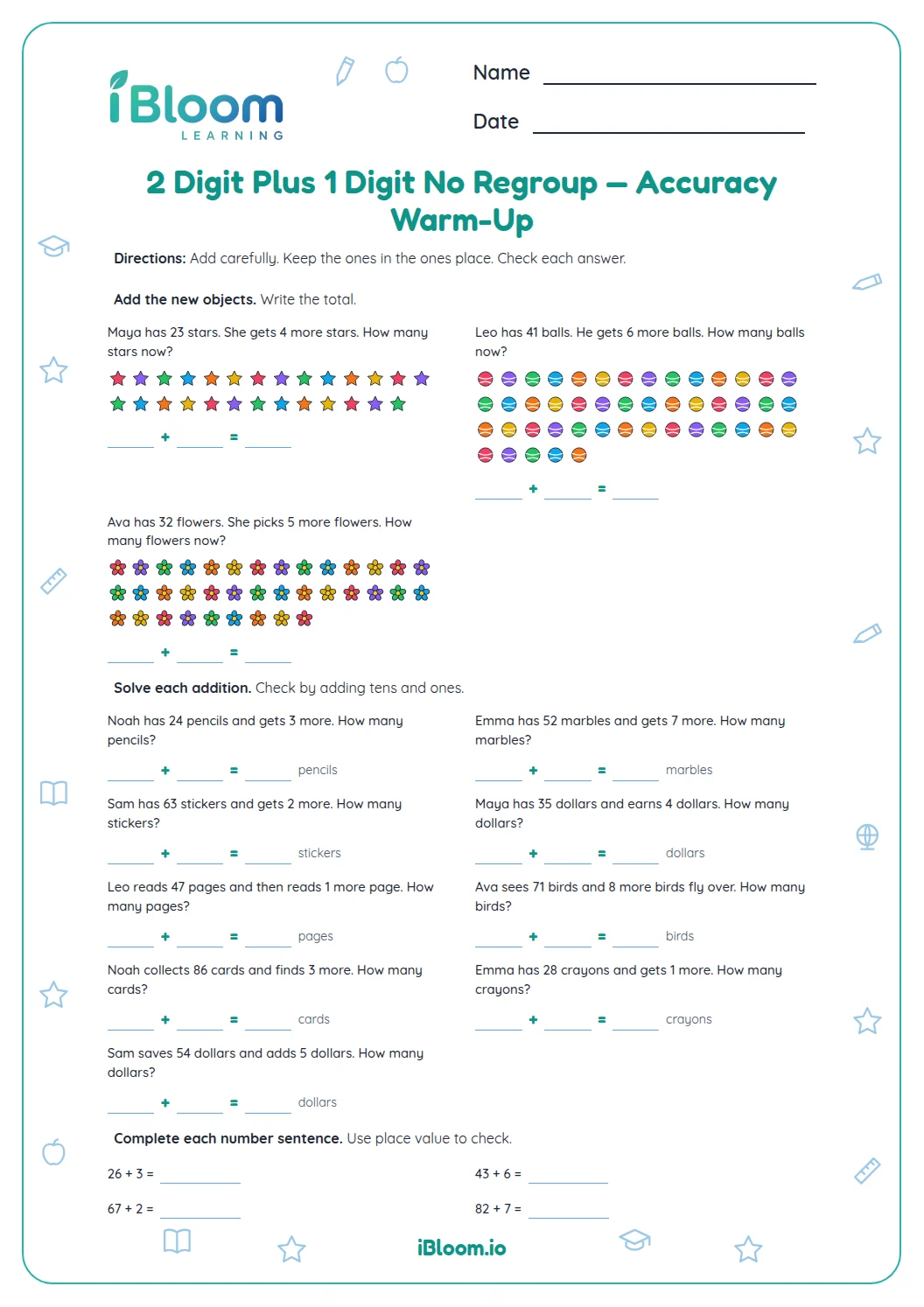
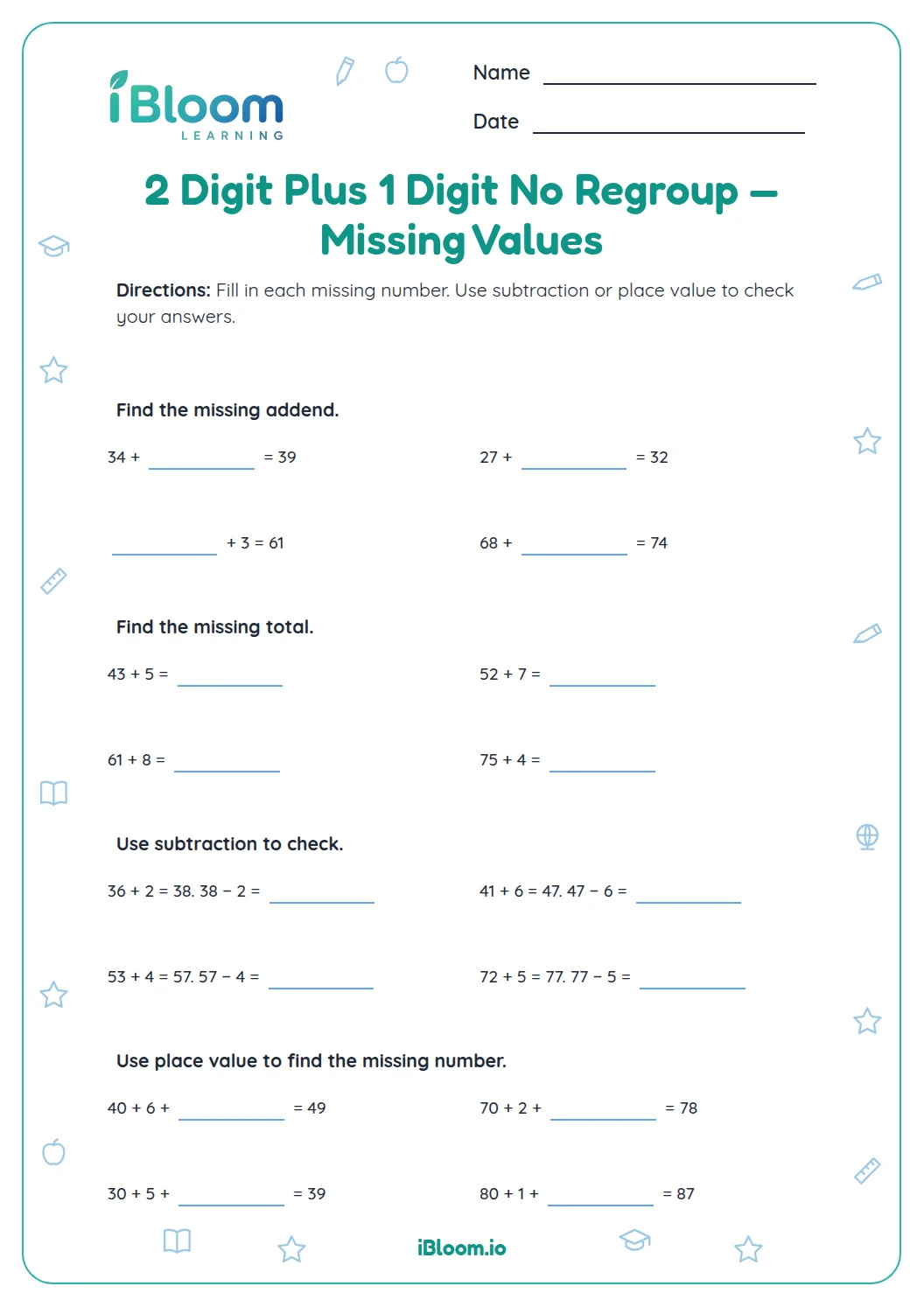
This mixed mastery printable gives Grade 4 and Grade 5 learners 16 four-digit plus two-digit addition problems. Eleven number sentences build fluency with regrouping, followed by five short situations where students write and solve an addition equation. Each sum uses the standard algorithm and place-value regrouping. The page practices CCSS 4.NBT.B.4, and a separate answer key lists every total.
Aligned to 4.NBT.B.4
When do you regroup in a four-digit sum?
Regroup whenever a place adds to ten or more. In 3,486 + 27, the ones make 13, so write 3 ones and carry 1 ten. Then continue across the tens, hundreds, and thousands.
- 1 3,486
- 2+ 27
- 3 3,513
How do you keep the digits in the right places?
Write the two-digit addend beneath the ones and tens digits. Empty hundreds or thousands places in that addend contribute zero. Estimate the total to check that it is close to the four-digit starting number plus a few dozen.
What is in the mixed mastery drill?
The first 11 items are direct number sentences. The last five use visitor, book, ticket, and produce totals, so students also translate a short situation into addition.
How can I use this worksheet?
- 1Line up ones under ones and tens under tens.
- 2Add the ones and regroup if the sum is 10 or more.
- 3Add the tens, including any regrouped ten.
- 4Continue through hundreds and thousands.
- 5Write an equation for each situation and check the size of the total.
Common slips and quick fixes
The mistake
Adding each column but forgetting to carry.
The fix
Circle any column total of 10 or more and carry its extra ten to the next place.
The mistake
Putting the two-digit addend in the hundreds column.
The fix
Check that its last digit is directly under the four-digit number’s ones.
The mistake
Dropping the regrouped ten in the next column.
The fix
Mark the carried digit above the column before adding it.
Common Core alignment
This page practices the standards below through the questions and examples on its worksheet.
Use place value and the standard algorithm to add multi-digit whole numbers.
On this sheet: The four-digit plus two-digit sums use place value and regrouping in the standard algorithm.
Show the official wordingHide the official wording
Fluently add and subtract multi-digit whole numbers using the standard algorithm.
What to practice next
Make more practice
Further reading
Questions parents and teachers ask
Do all problems use a four-digit number?
Yes. Every item adds a four-digit number to a two-digit number. The first 11 are direct sums, and the last five use short situations about visitors, books, tickets, people, and apples. Students can use the same place-value method in each part.
Which addition method should students use?
Line up digits by place value and add from right to left. Regroup ten ones as one ten, or ten tens as one hundred, whenever a column total reaches ten. The story problems also ask students to write an equation.
How many questions are included?
There are 16 questions: 11 number sentences and five short word problems. The worksheet and separate answer key each span two pages, with room to solve the sums and show work for the story problems. All direct sums use the same four-digit-plus-two-digit structure.
What should I do if a sum is incorrect?
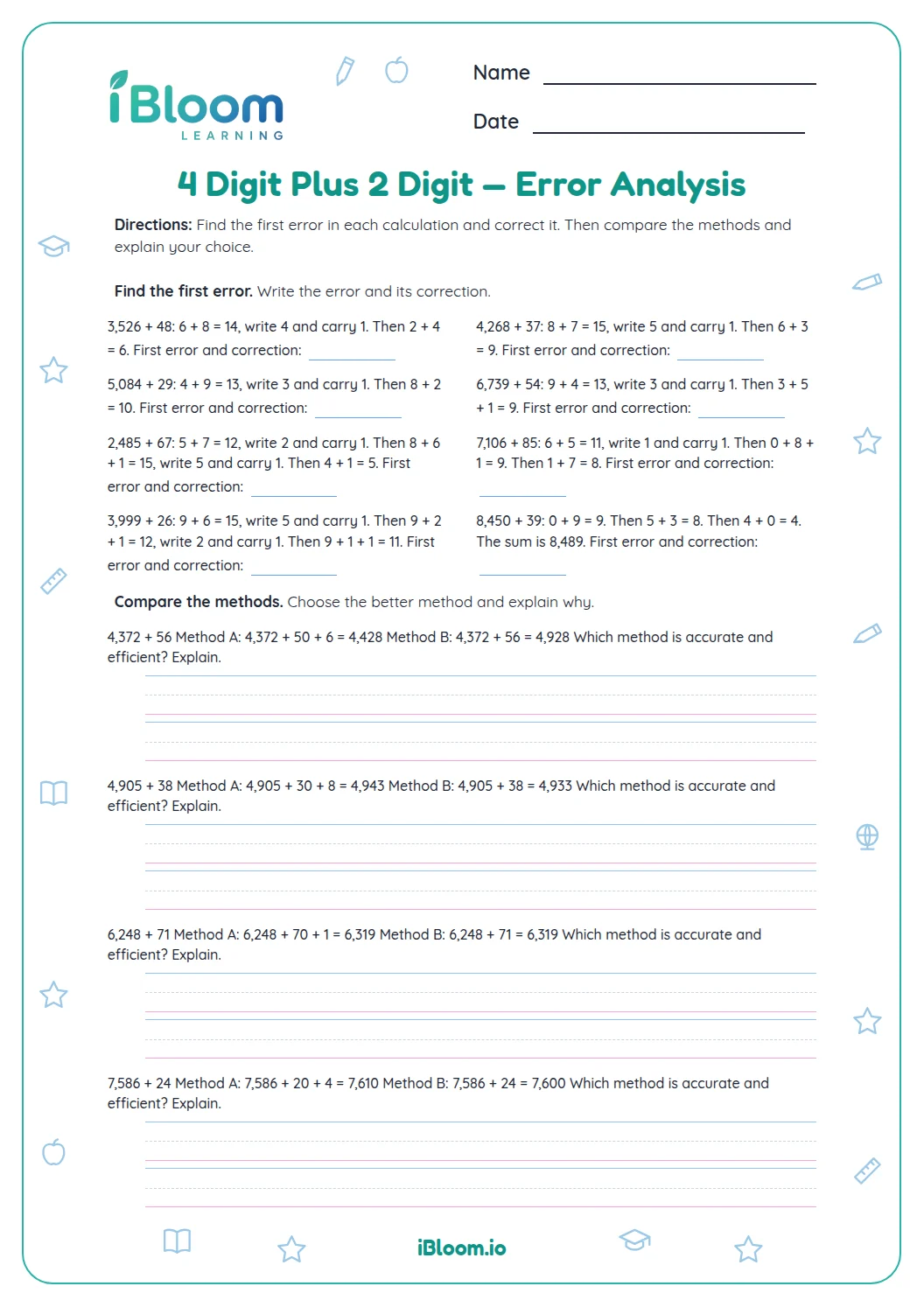
Find the first column where the written work differs from the key. Check whether a regrouped digit was carried into the next place, then redo the columns from right to left. Estimating the total can also help spot a place-value error.
Are regrouping steps shown in the answer key?
The key lists each correct total so an adult can check the work. Invite the student to write the regrouped digit above the next column while solving, especially when a ones or tens column totals ten or more.