

About this worksheet
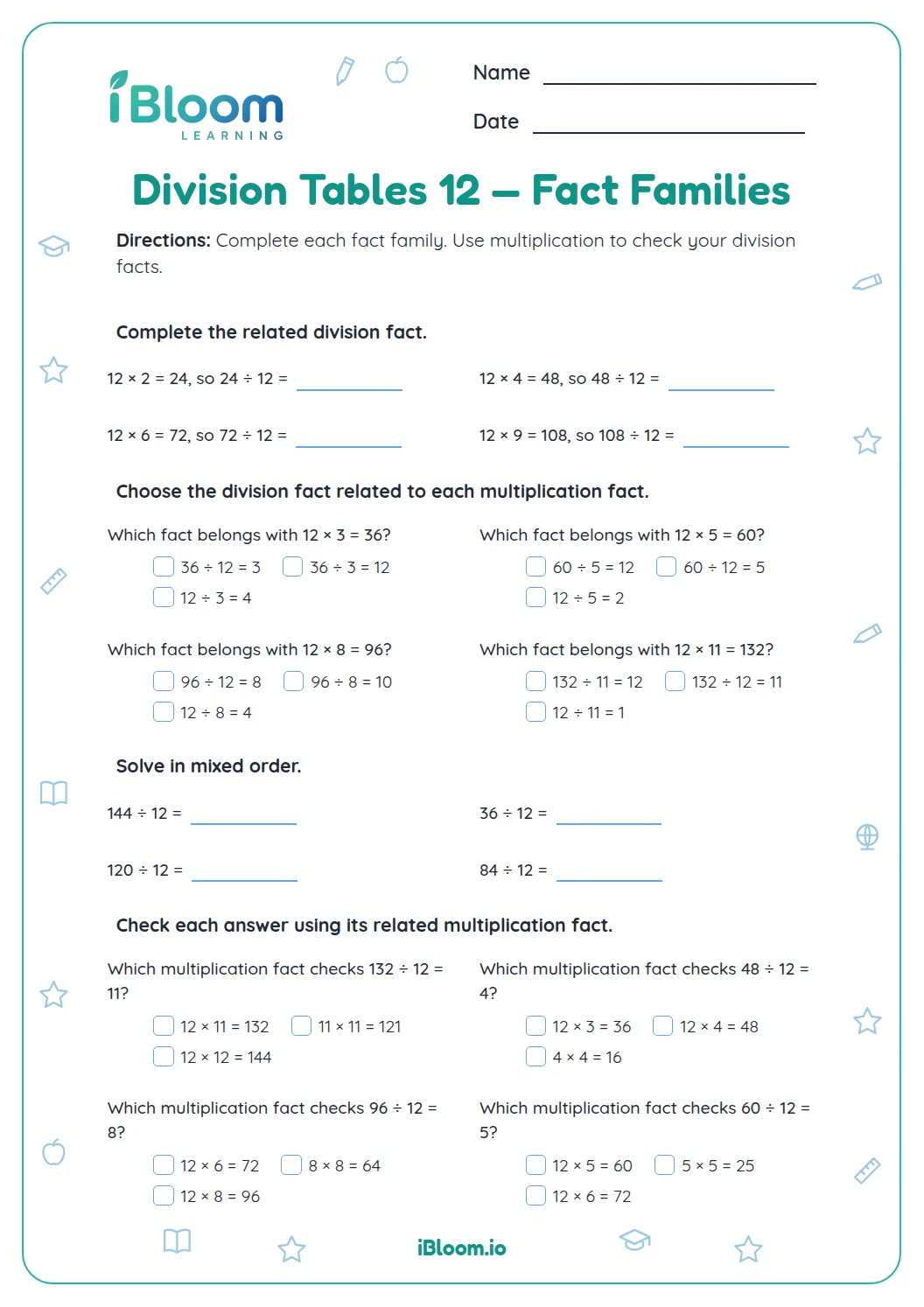
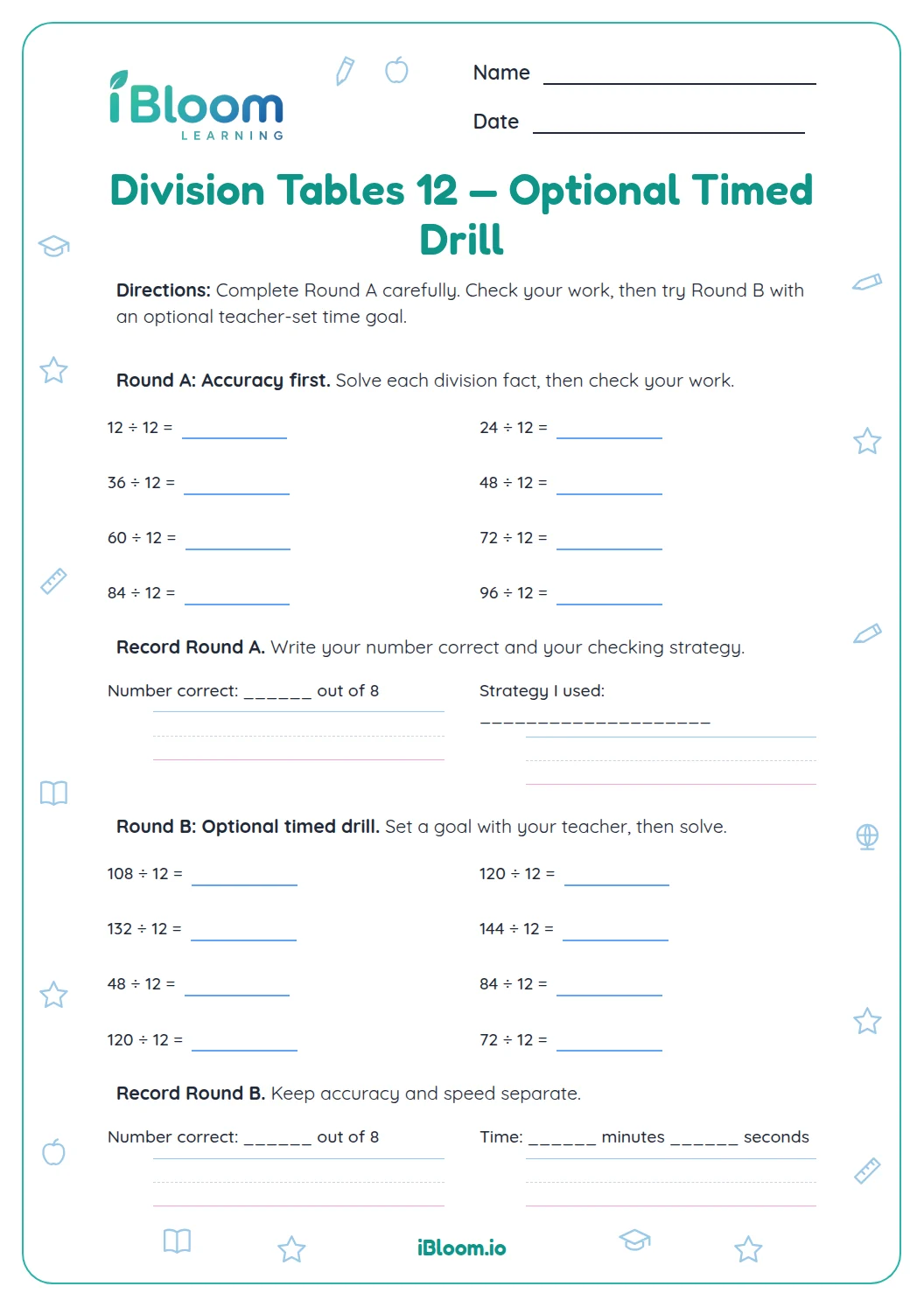
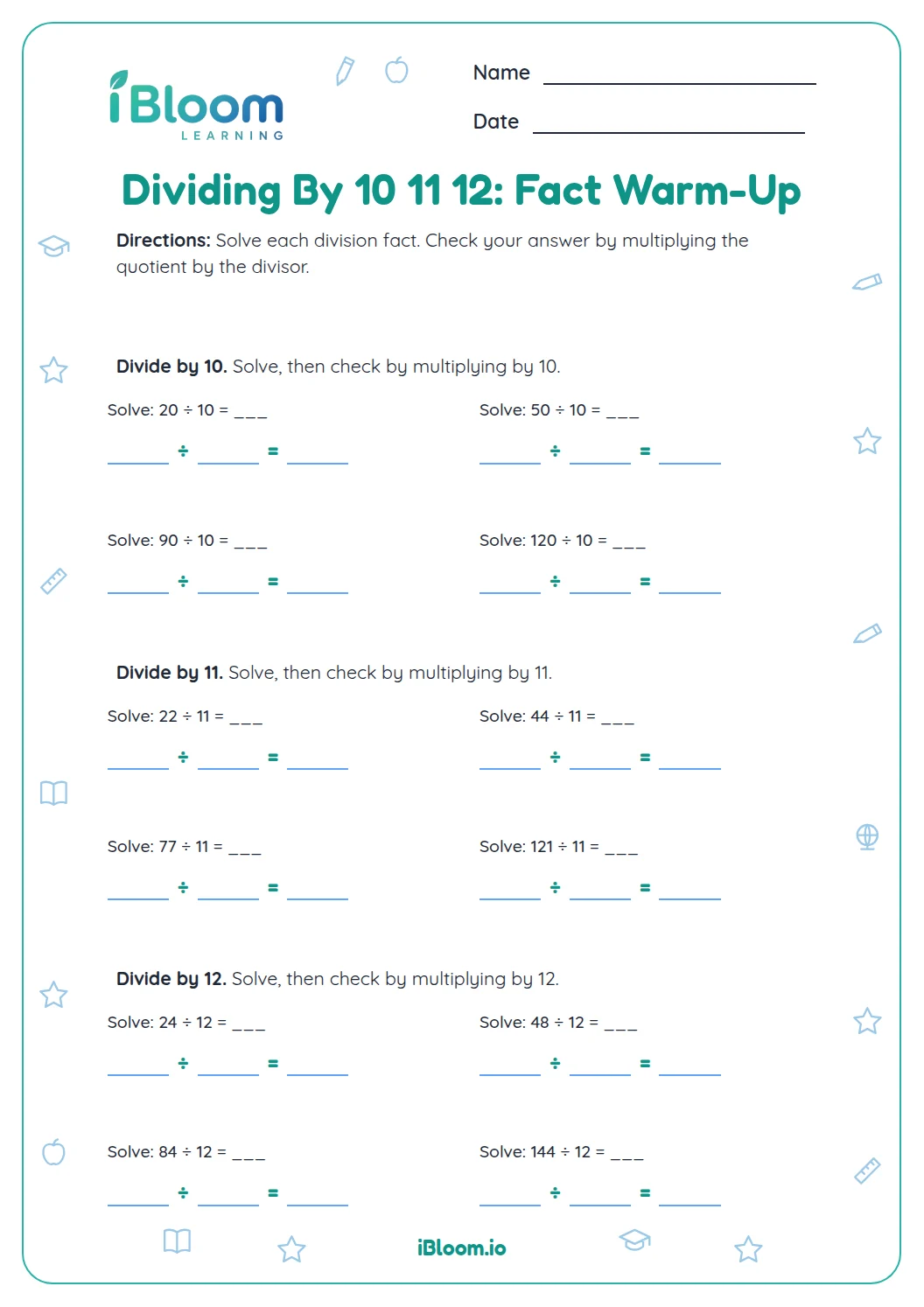
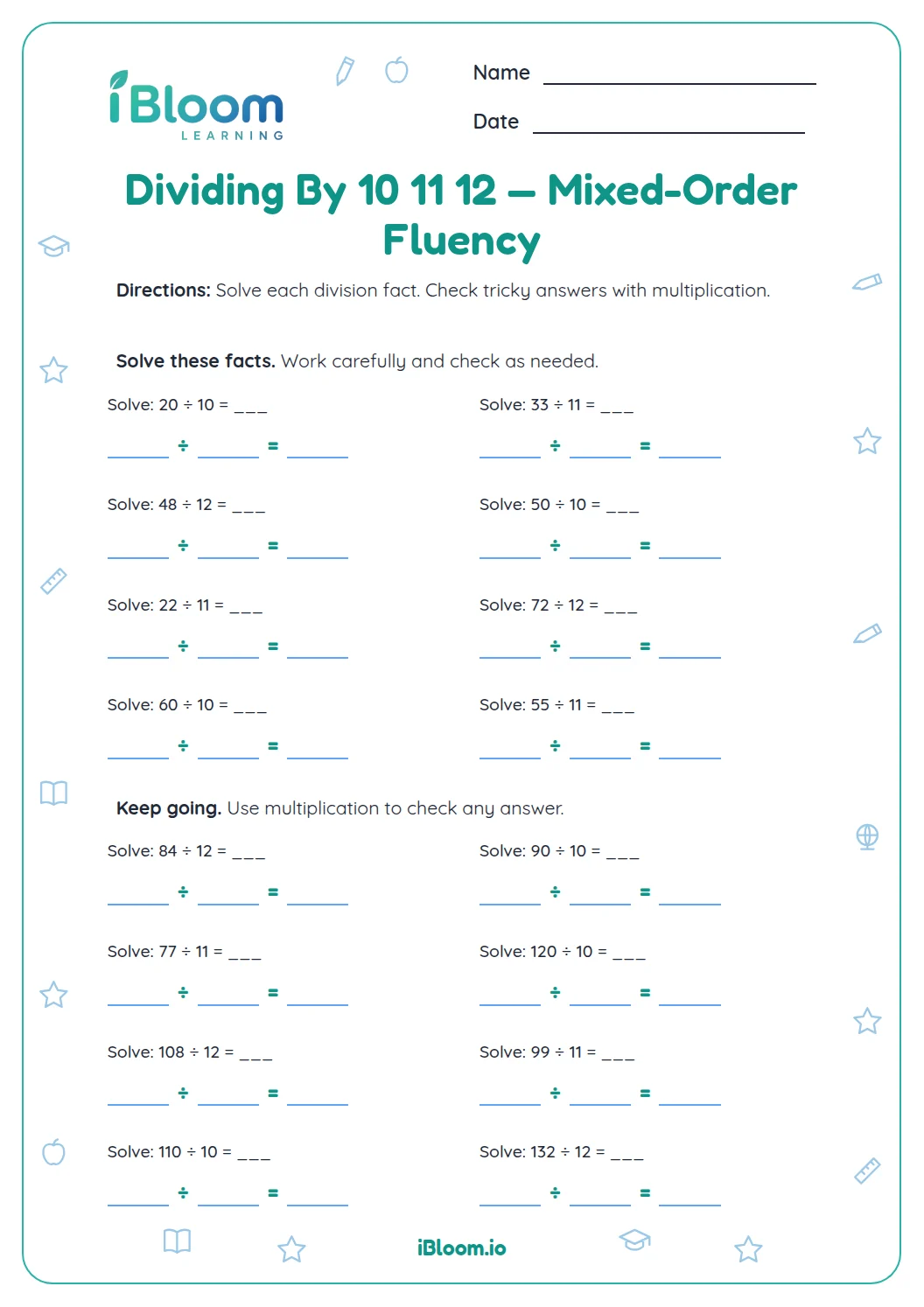
This free Grade 4 math worksheet gives students 16 questions for the division table of 12. The first part practices each quotient from 12 ÷ 12 through 144 ÷ 12; later questions connect division to equal groups and multiplication. Students can use multiplication to check whether a quotient matches its dividend. A separate answer key lists the quotients and related facts.
How can students learn the division table for 12?
Connect each division fact to multiplication: 12 × 7 = 84 means 84 ÷ 12 = 7. The worksheet gives one practice item for every quotient from 1 through 12.
A steady approach is to recall the related multiplication fact, then check that divisor times quotient equals the dividend.
How does a related fact help?
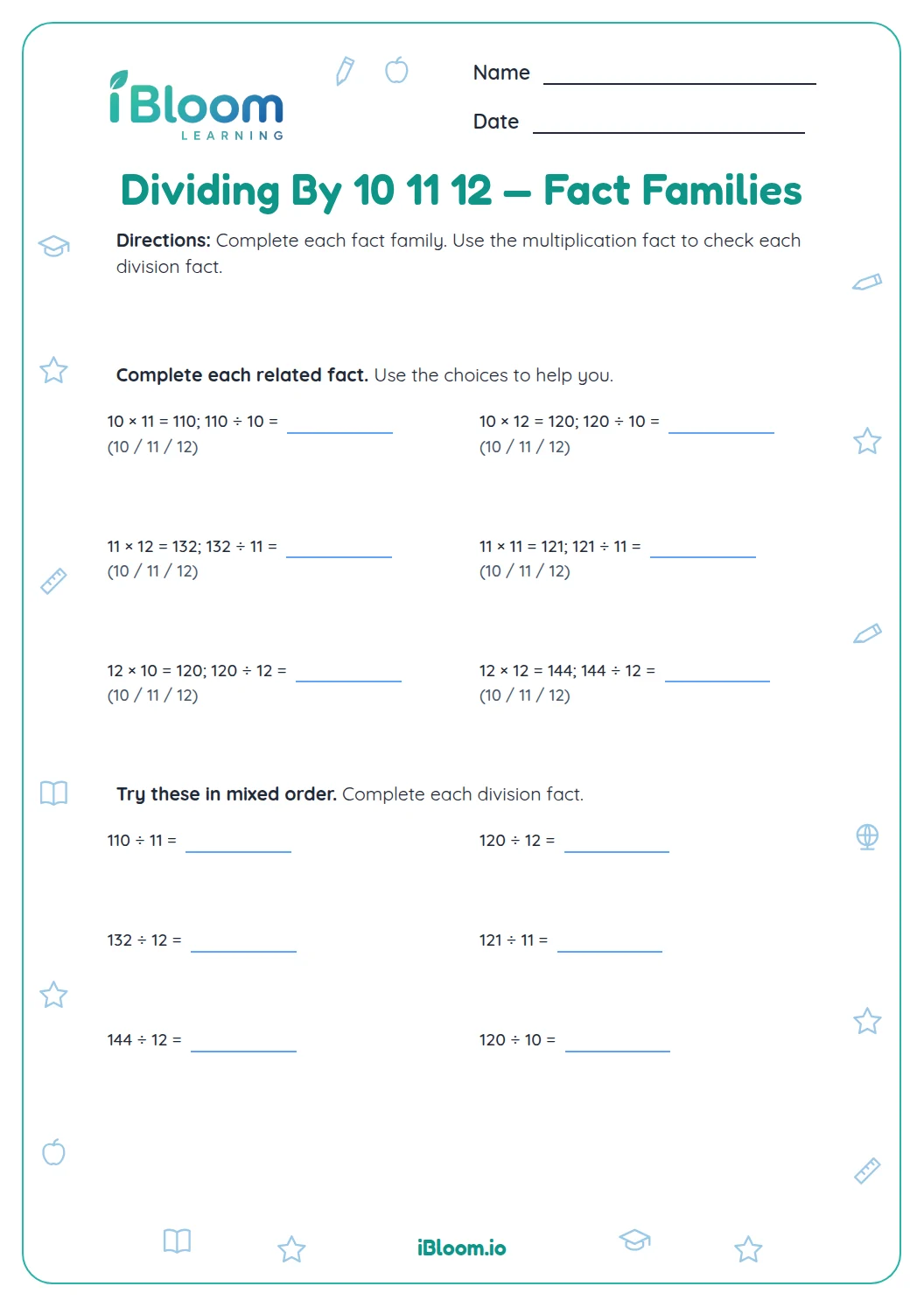
Division and multiplication are inverse operations. If 132 ÷ 12 is 11, then 11 × 12 must equal 132. Equal groups give another way to picture the same relationship.
What is on the mastery check?
The sheet begins with the full division table and finishes with related fact questions. Students can solve at a comfortable pace and use multiplication as a check.
- Part A: complete all 12 division facts
- Part B: apply equal groups and related multiplication facts
How to use the mastery check
- 1Read the divisor and dividend carefully.
- 2Recall a multiplication fact with 12 that has the same product.
- 3Write the quotient in the blank.
- 4Multiply the quotient by 12 to check the dividend.
- 5Use the same fact relationship on the final questions.
Common division-fact mistakes
The mistake
Confusing the divisor with the quotient.
The fix
Ask how many groups of 12 make the dividend.
The mistake
Using a nearby multiplication fact.
The fix
Multiply the quotient by exactly 12 and check the product.
The mistake
Reversing the numbers in the fact.
The fix
Keep the original dividend first in the division sentence, then verify with quotient × 12.
What to practice next
Questions parents and teachers ask
How many facts are on the worksheet?
The worksheet has 16 questions. Twelve cover every division fact in the table for 12, from 12 ÷ 12 = 1 through 144 ÷ 12 = 12. Four more questions use equal groups or related multiplication and division facts. The answer key shows each correct quotient.
What range does the table cover?
The quotient runs from 1 to 12, and each quotient appears once in the first part. The dividends are the multiples of 12 from 12 through 144. Students can connect each fact to multiplication and check that the quotient times 12 returns the dividend.
How can multiplication check a quotient?
Multiply the quotient by 12 and see whether the product matches the original dividend. For example, 8 × 12 = 96 confirms that 96 ÷ 12 = 8. This inverse relationship is useful throughout the table and gives students a quick way to check their work.
Is the worksheet timed?
No timer is required. Students can work at a comfortable pace and focus on accuracy. If a teacher or parent uses a timing goal, it can be optional; the main purpose is to complete and check the facts. The answer key supports a calm review afterward.
What is in the answer key?
The separate key gives each quotient and answers to the related-fact questions. For a multiplication check, students can verify that the quotient multiplied by 12 returns the dividend. This lets them check both the division fact and the fact-family questions independently.