





About this worksheet
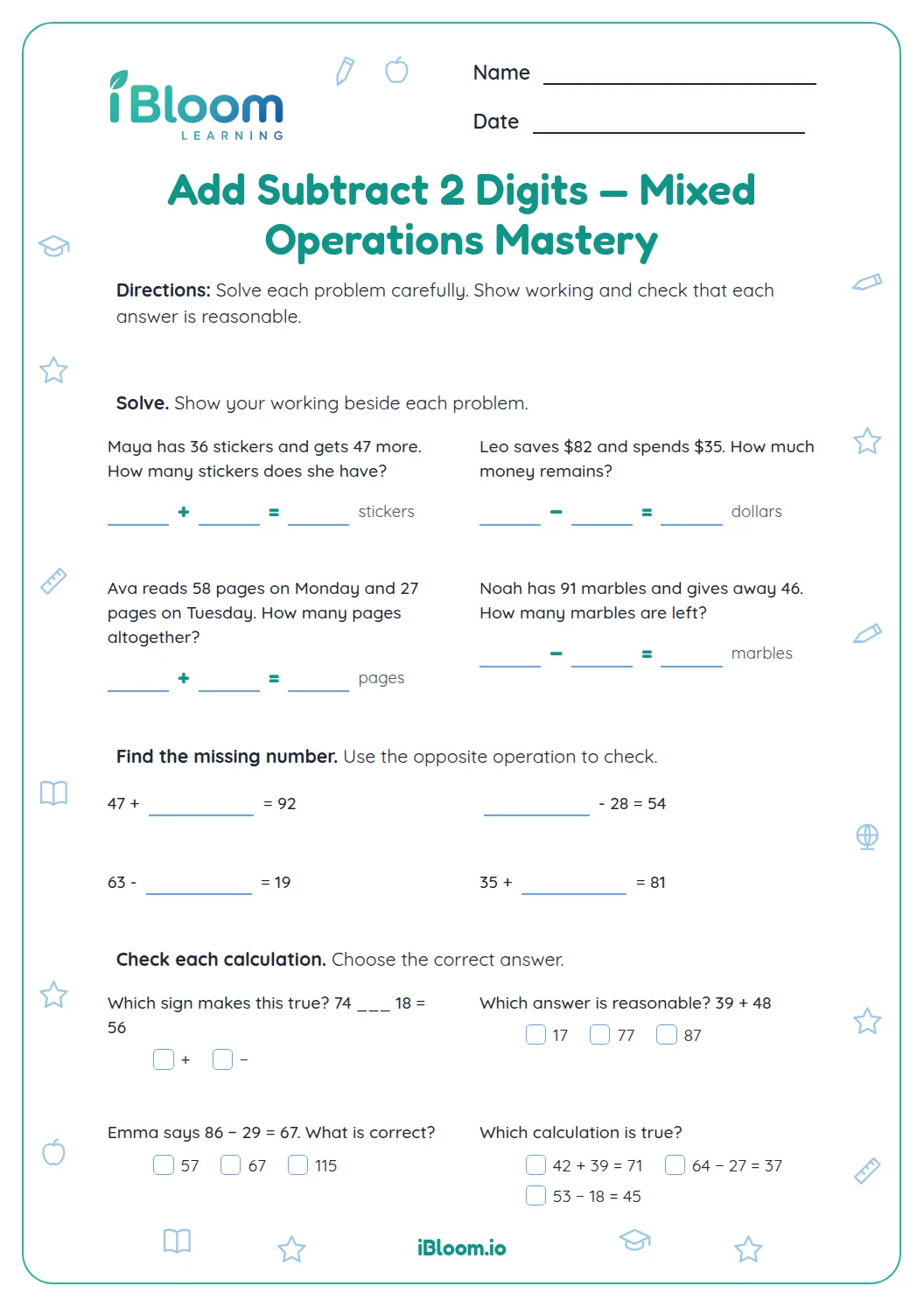
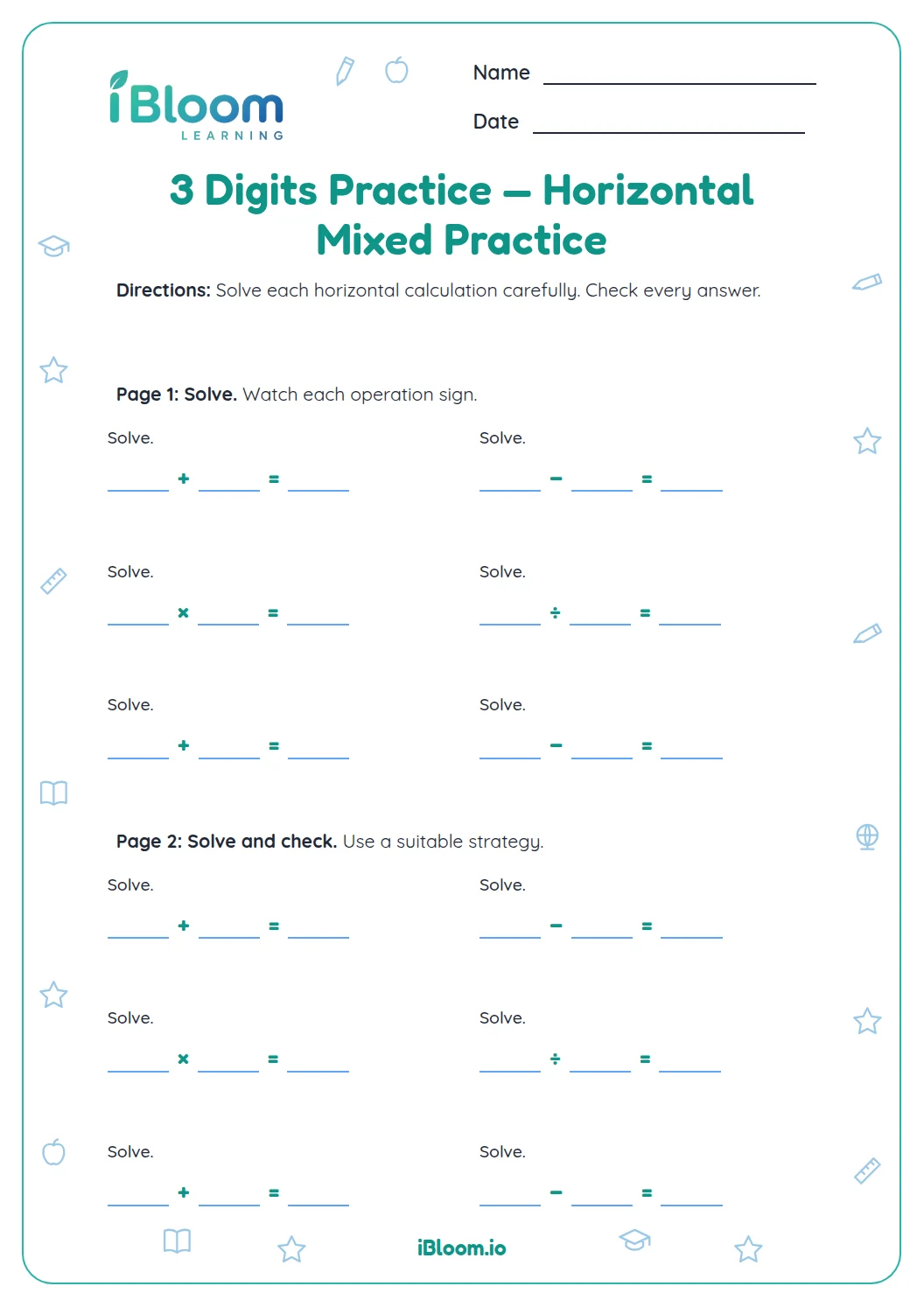
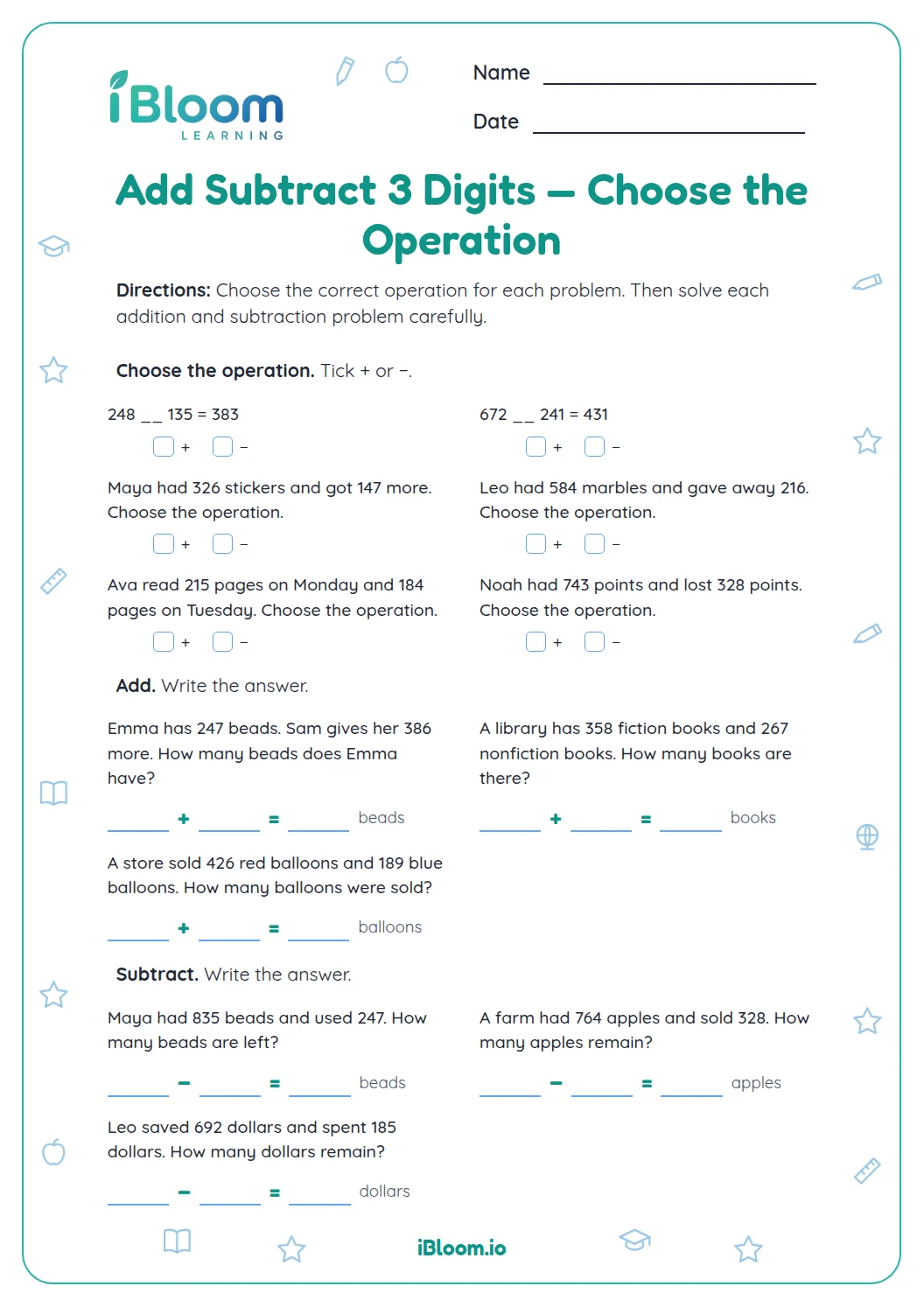
This printable worksheet gives students 20 horizontal two-digit addition and subtraction problems. The sequence alternates operations and includes sums and differences that require regrouping, so students must attend to both place value and the operation sign. The practice aligns with CCSS 2.NBT.B.5. A separate answer key lists every result.
Aligned to 2.NBT.B.5
How should a student solve a horizontal problem?
Keep the numbers lined up by place value in your thinking. For addition, combine the ones first; if they make ten or more, regroup one ten. For subtraction, exchange a ten when the top number has too few ones.
- 137 + 46
- 27 ones + 6 ones = 13 ones
- 3Regroup 10 ones as 1 ten; 3 ones remain.
- 43 tens + 4 tens + 1 ten = 8 tens
- 5Answer: 83
How can subtraction be checked?
Use addition to check a difference. For 82 − 57 = 25, add 57 + 25. The sum is 82, so the subtraction is consistent. For addition, subtract one addend from the sum to check.
What is in this mixed practice set?
The 20 problems alternate between addition and subtraction, with all answers between 0 and 100. Several problems require regrouping in the ones place. The horizontal layout asks students to read each sign carefully and record a clear answer.
- Part A: 20 alternating problems (10 addition and 10 subtraction)
- Answer key: all 20 results
How to use this worksheet
- 1Read the operation sign before calculating.
- 2Separate the tens and ones mentally or with a quick note.
- 3Regroup when the ones total ten or more or when subtraction needs another ten.
- 4Write the answer after the equals sign.
- 5Check with the opposite operation.
Common mistakes and quick fixes
The mistake
Adding the tens but forgetting to regroup extra ones.
The fix
For 37 + 46, 13 ones make 1 ten and 3 ones.
The mistake
Subtracting the smaller ones digit from the larger without exchanging.
The fix
If the top ones digit is smaller, exchange one ten first.
The mistake
Using the previous operation’s sign by mistake.
The fix
Point to the sign in every new number sentence before solving.
Common Core alignment
This worksheet gives students focused practice with the standard below.
Add and subtract within 100 using place-value strategies.
On this sheet: Students solve two-digit sums and differences within 100, including regrouping.
Show the official wordingHide the official wording
Fluently add and subtract within 100 using strategies based on place value, properties of operations, and/or the relationship between addition and subtraction.
What to practice next
Make more practice
Further reading
Questions parents and teachers ask
How many problems are on the worksheet?
There are 20 number sentences: ten addition problems and ten subtraction problems. They alternate in one section, so students practice reading the sign on every item. Students can work mentally or jot tens and ones to keep place value visible.
Do the problems require regrouping?
Yes. Some addition problems have ones that make ten or more, and some subtraction problems require exchanging a ten. Students should check each problem rather than assuming every item uses the same steps. Regrouping depends on the digits: check whether the ones require making or exchanging a ten.
How can I check an addition answer?
Subtract one addend from the sum. For example, after solving 37 + 46 = 83, check 83 − 46. If the result is 37, the addition is consistent. The opposite operation is a reliable check because addition and subtraction undo one another. This helps make checking simple at home or in class.
How can I check a subtraction answer?
Add the difference to the number being subtracted. For 82 − 57 = 25, check 57 + 25 = 82. This reverses the subtraction and confirms the starting number. Use the printed order so the key matches each numbered item and both operations get practiced.
Is the answer key separate?
Yes. A separate answer-key page lists all 20 results in question order, so a parent or teacher can check the completed worksheet quickly. The key gives each result in question order for quick checking after the practice is complete. This helps make checking simple at home or in class.