




About this worksheet
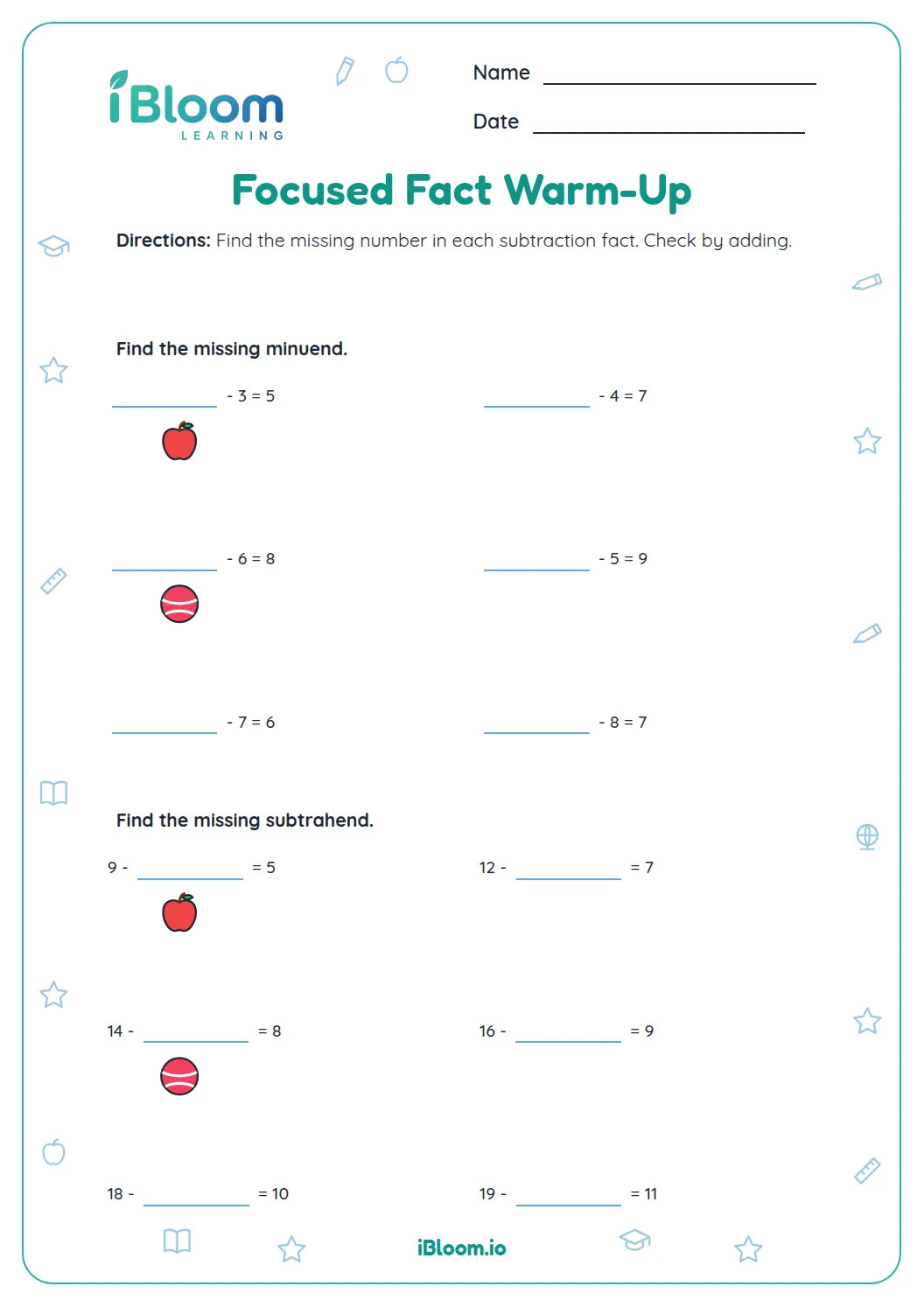
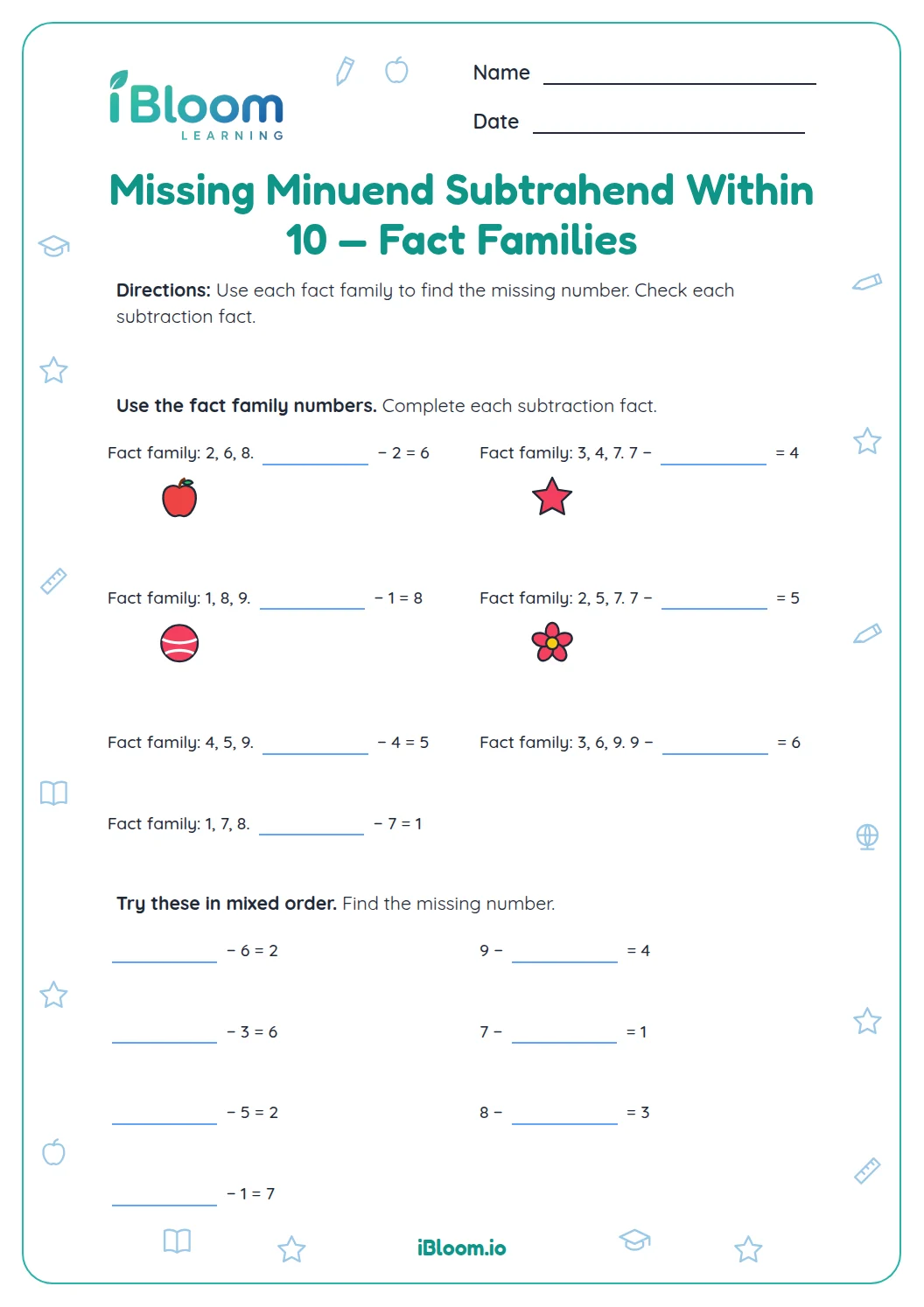
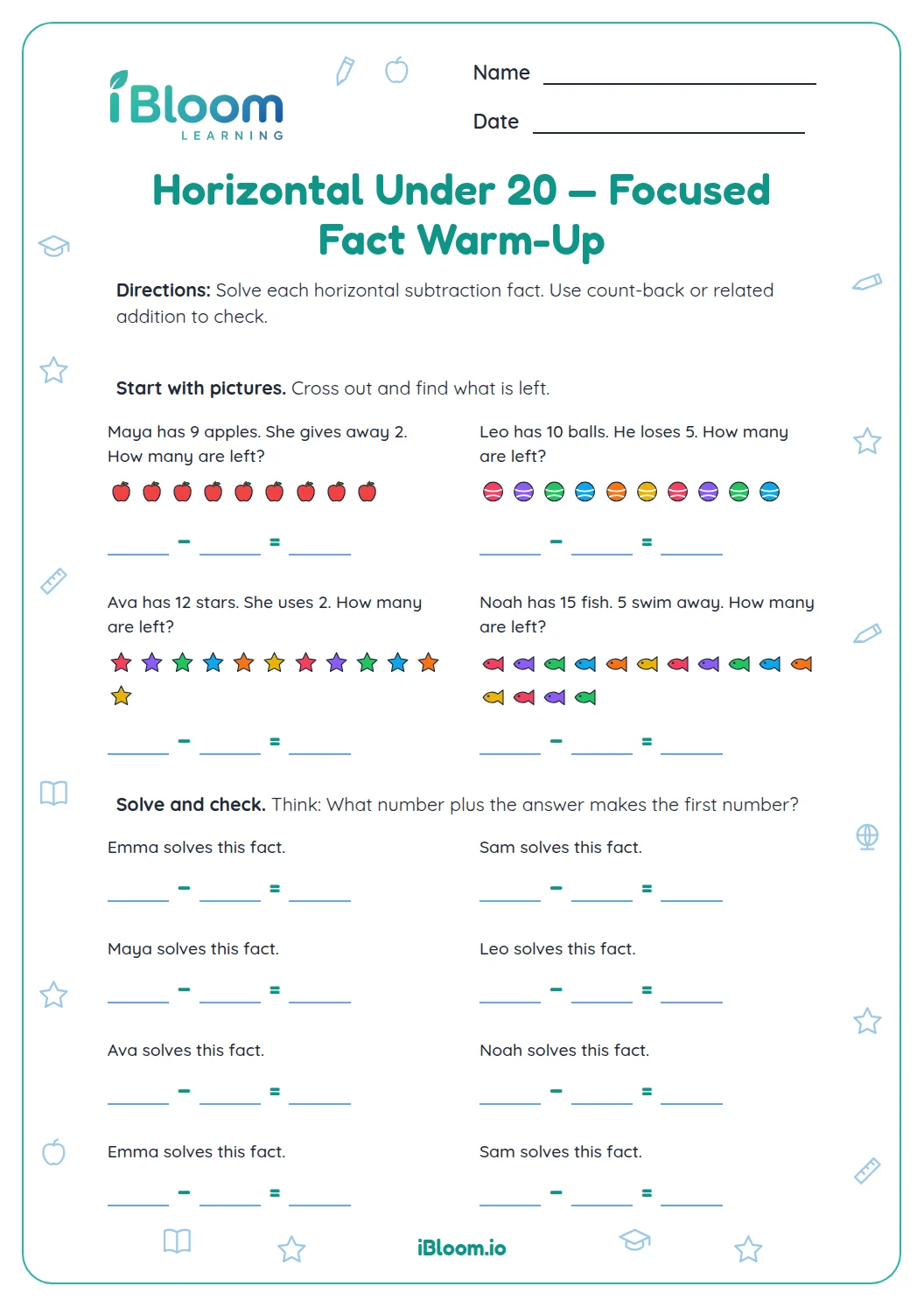
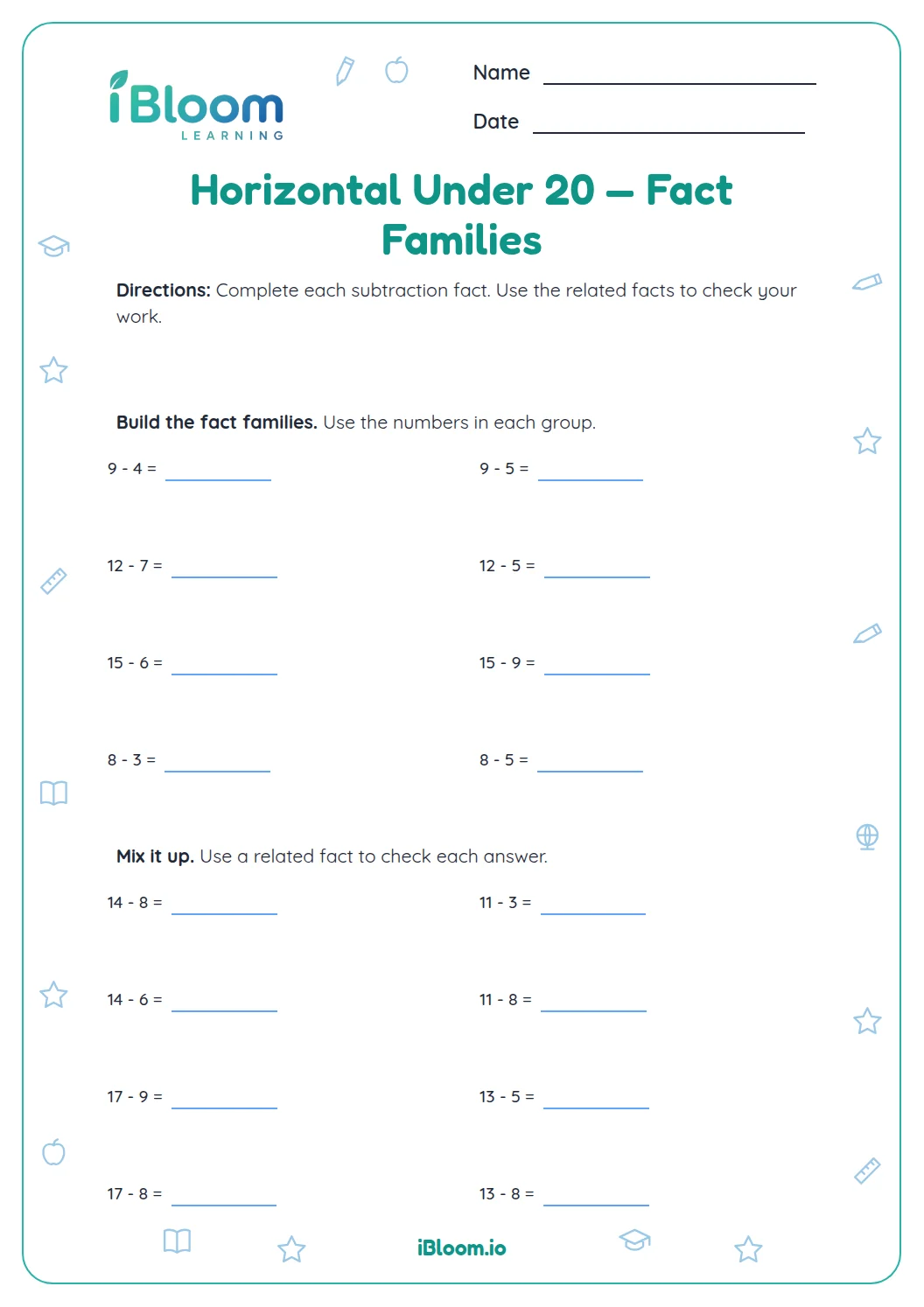
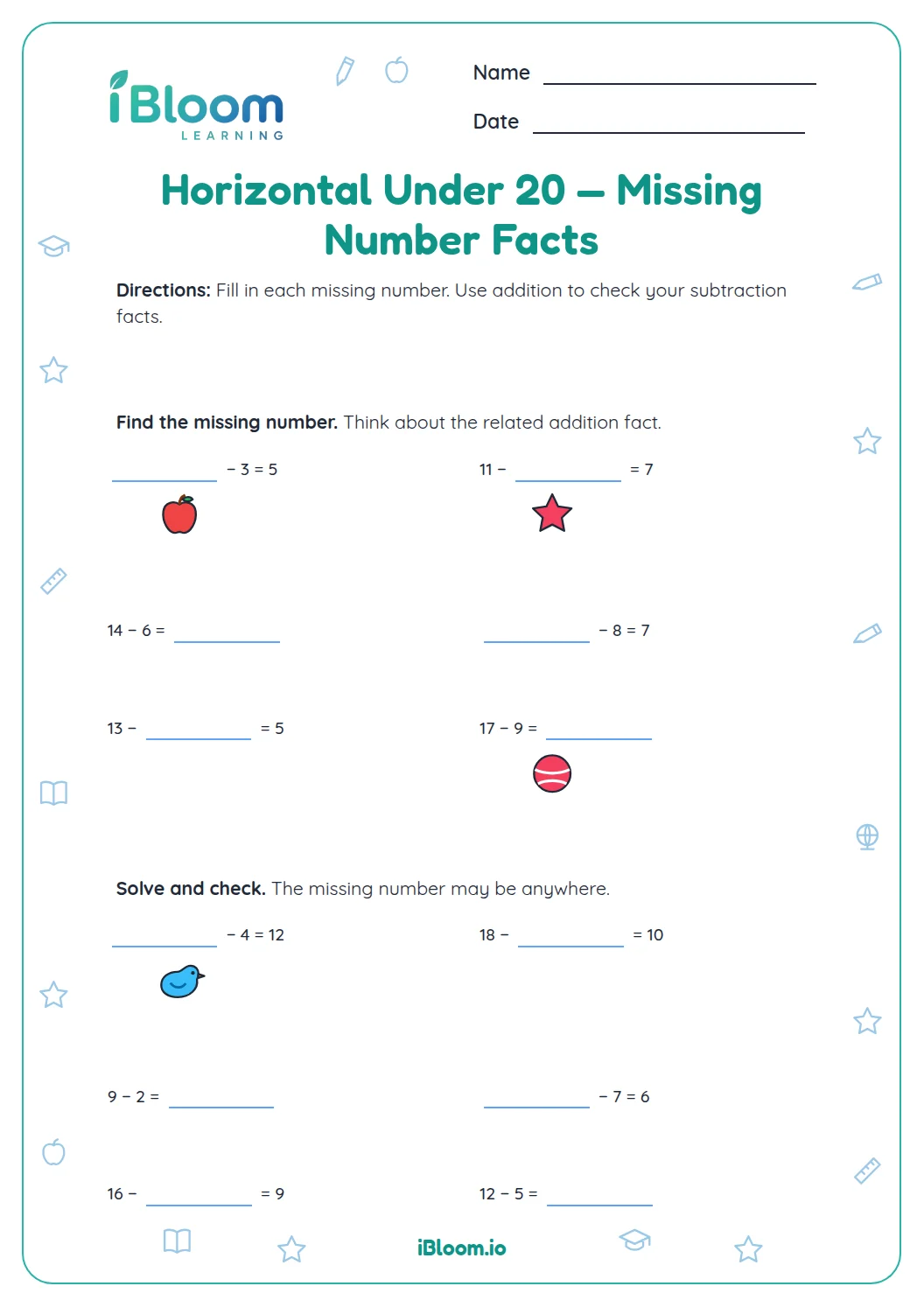
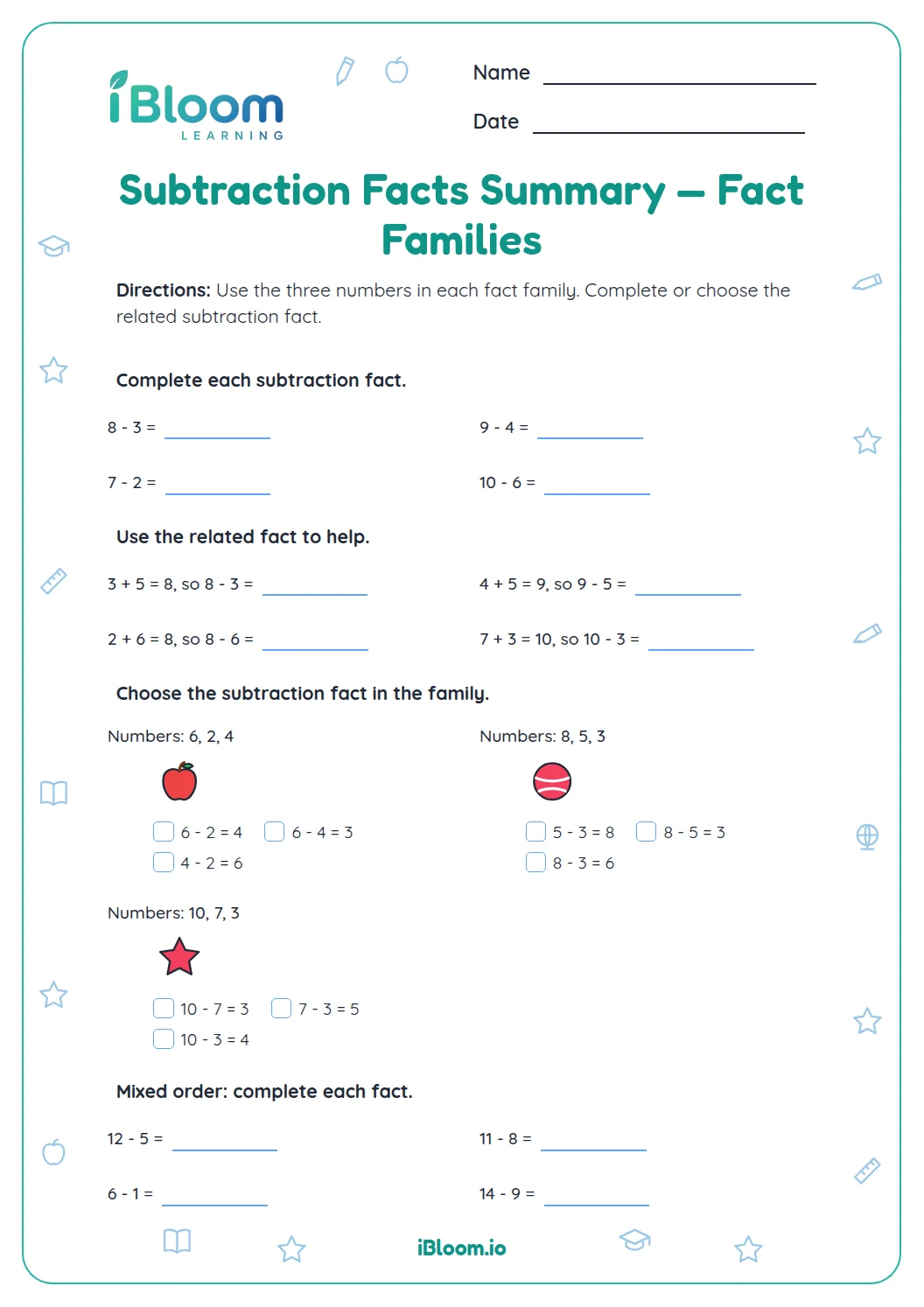
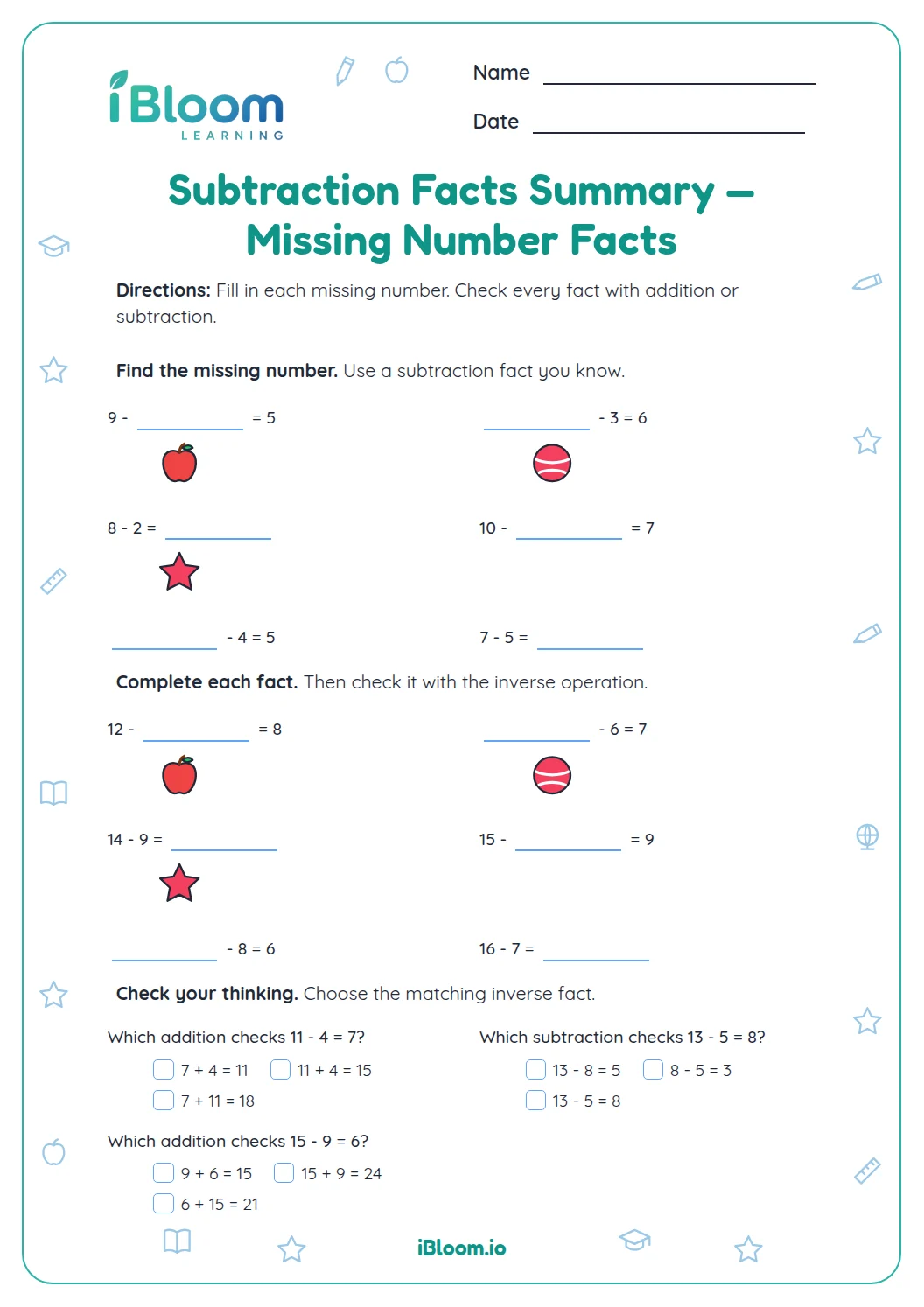
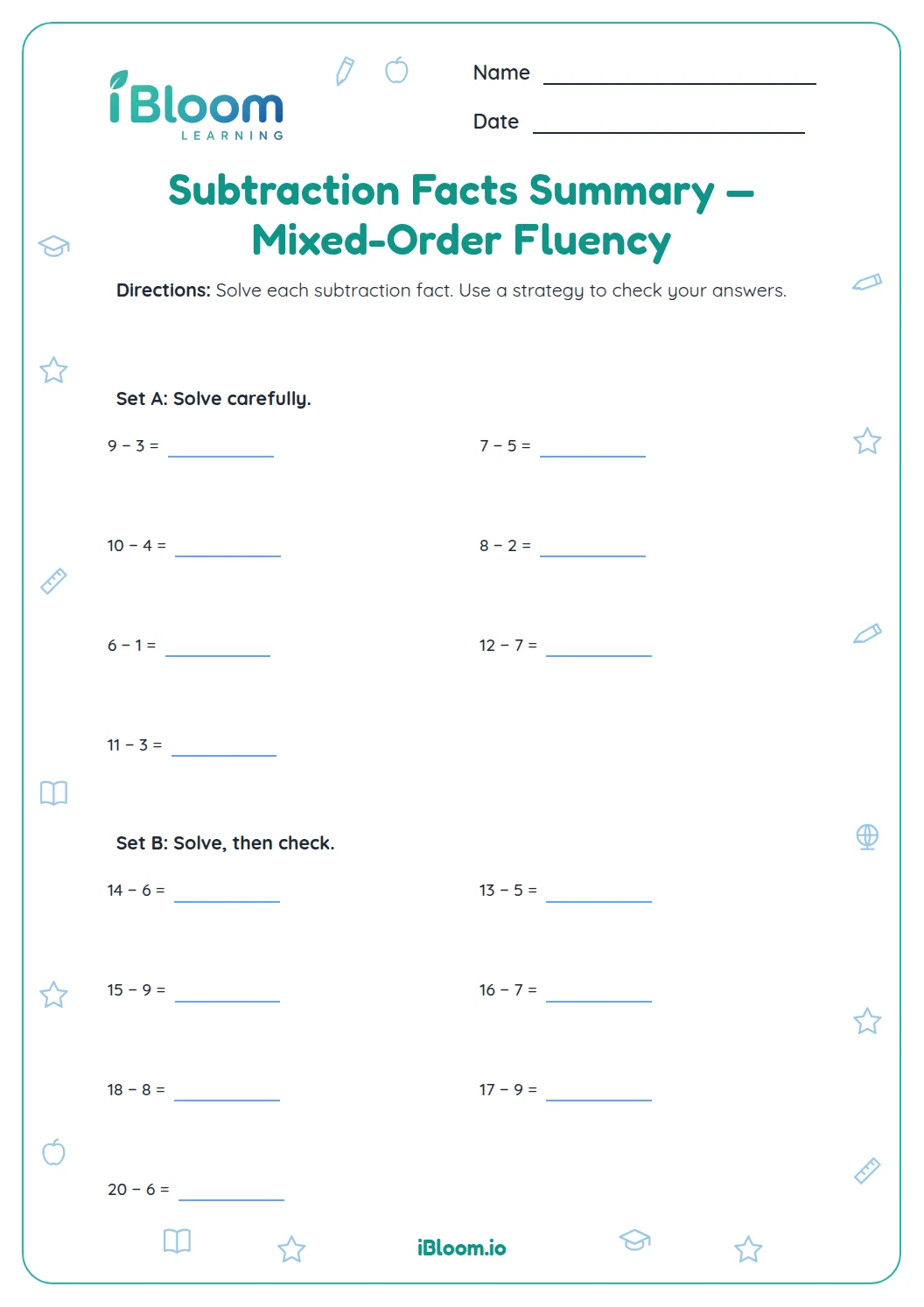
This printable drill gives Grades 1–2 students 20 subtraction equations with a blank in either position: before or after the subtraction sign. The first section focuses on the missing minuend, the second on the missing subtrahend, and the last mixes both forms. Every fact stays within 19, and timing is optional. Students can use mental strategies such as counting on or checking with a related addition fact. The practice aligns with Common Core 2.OA.B.2.
Aligned to 2.OA.B.2
What is the missing minuend?
The minuend is the number a subtraction starts with. In “___ − 6 = 8,” ask what number is 6 more than 8. The answer is 14 because 14 − 6 = 8.
- Part A: find the starting number
- Add the subtrahend and difference
What is the missing subtrahend?
The subtrahend is the number being subtracted. In “15 − ___ = 9,” compare the starting number and the difference: 15 − 9 = 6.
- Part B: find the amount taken away
- Use subtraction or a related addition fact
How should students use the optional timer?
Accuracy comes first. A timer can be used for a second try if a child finds it motivating, but the problems work just as well without timing.
- Part C mixes both blank positions
- Check each answer in the original equation
How to use this worksheet
- 1Name the blank: is it before or after the minus sign?
- 2For a missing minuend, add the subtrahend and the difference.
- 3For a missing subtrahend, subtract the difference from the start.
- 4Write the number and check that the equation is true.
- 5Use a timer only for an optional second round.
Common mistakes and quick fixes
The mistake
Treating the blank as the answer to a standard subtraction problem.
The fix
Check which number is missing, then use the known difference to find it.
The mistake
Adding when the subtrahend is missing.
The fix
For 15 − ___ = 9, calculate 15 − 9 to find the missing part.
The mistake
Rushing under a timer and overlooking the blank position.
The fix
Solve untimed first and point to the blank before calculating.
Common Core alignment
The drill builds mental subtraction fluency with facts within 20.
Use mental subtraction strategies to solve missing-number facts within 20.
On this sheet: The missing minuends and subtrahends are subtraction facts within 20; children can use counting on or related addition facts.
Show the official wordingHide the official wording
Fluently add and subtract within 20 using mental strategies. By end of Grade 2, know from memory all sums of two one-digit numbers.
What to practice next
Make more practice
Further reading
Questions parents and teachers ask
What is a missing minuend?
The minuend is the starting number in a subtraction equation. In ___ − 6 = 8, the missing number is 14 because 14 − 6 = 8. The first part of the worksheet gives students repeated practice finding this starting number.
How do you find a missing subtrahend?
Subtract the known difference from the starting number. For 15 − ___ = 9, calculate 15 − 9 to find 6. Check by putting 6 back in the blank: 15 − 6 = 9. The second part gives more examples with a missing amount taken away from the starting number.
How many facts are on the worksheet?
There are 20 facts in three parts. Students find missing minuends, find missing subtrahends, and then solve a mixed set. Every equation has one whole-number answer, and the separate answer key lists them in order for quick checking after the untimed or optional timed round.
Is the timed drill required?
No. The timer is optional. Students can first solve all 20 facts without a timer and check their work. If a child enjoys timed practice, use a second round to revisit familiar facts while keeping accuracy and careful reading in view.
How can a child check each answer?
Put the answer back in the blank and solve the subtraction sentence. For a missing minuend, make sure the starting number minus the subtrahend equals the difference. For a missing subtrahend, check that the amount taken away leaves the printed difference.