



About this worksheet
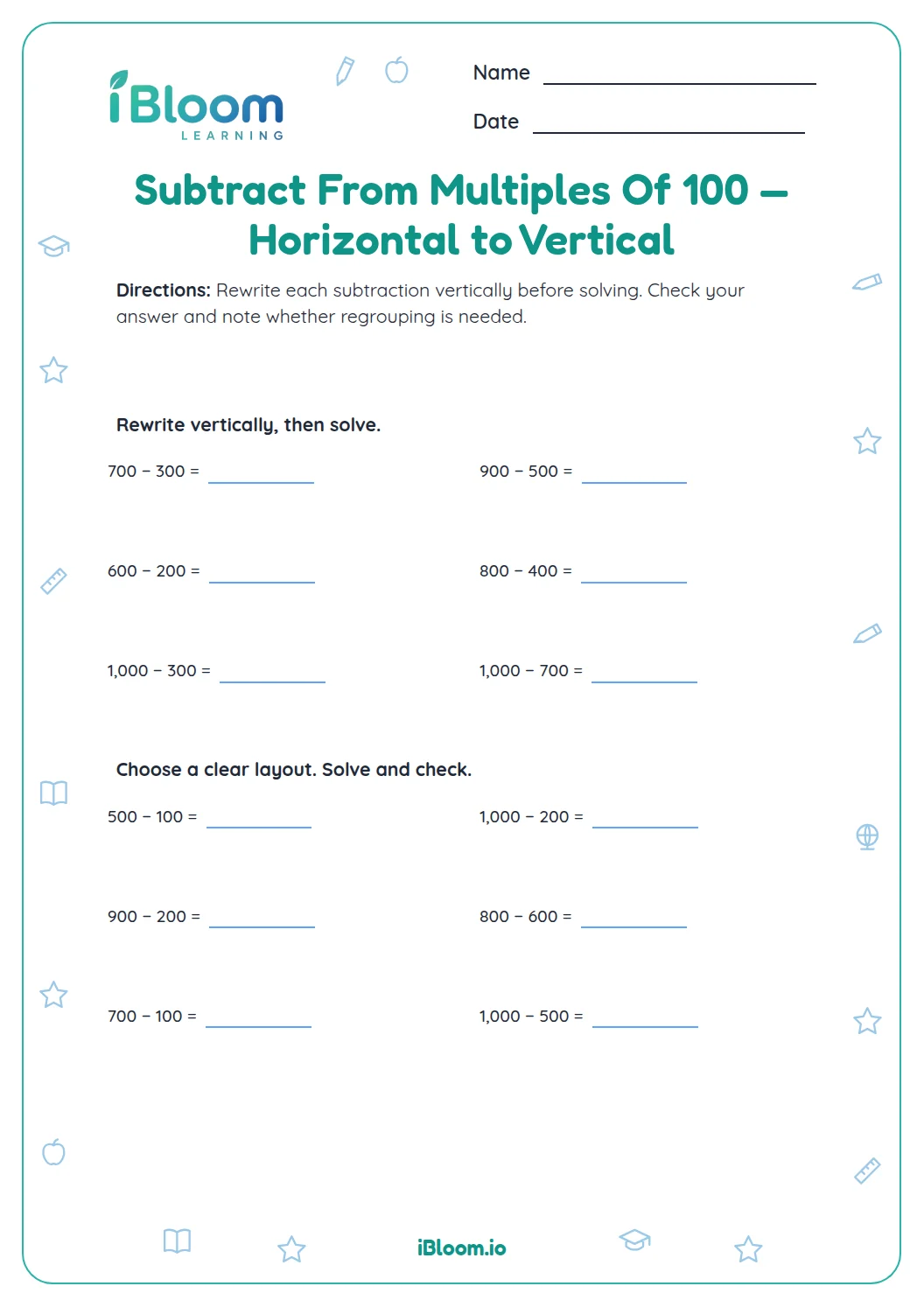
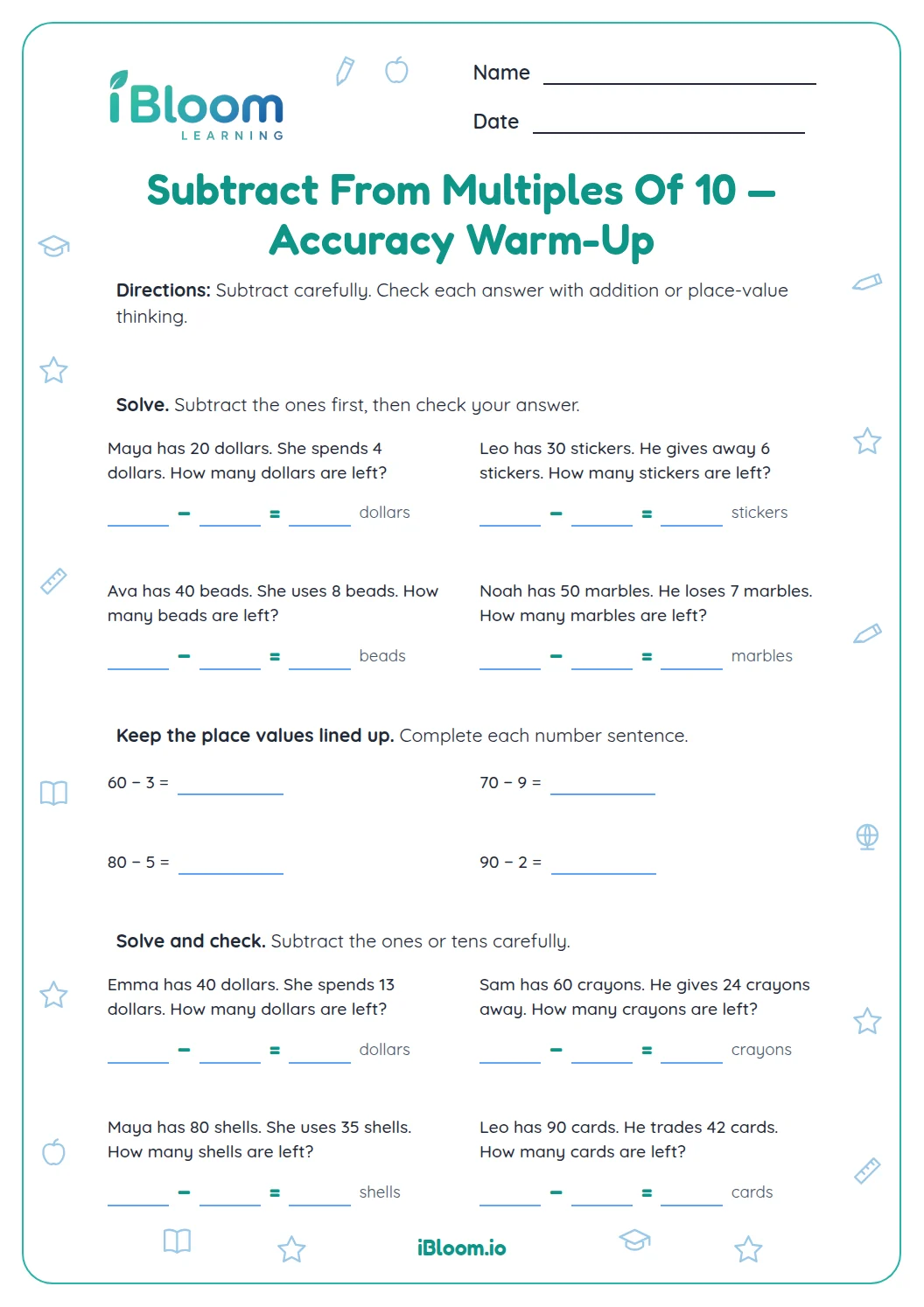
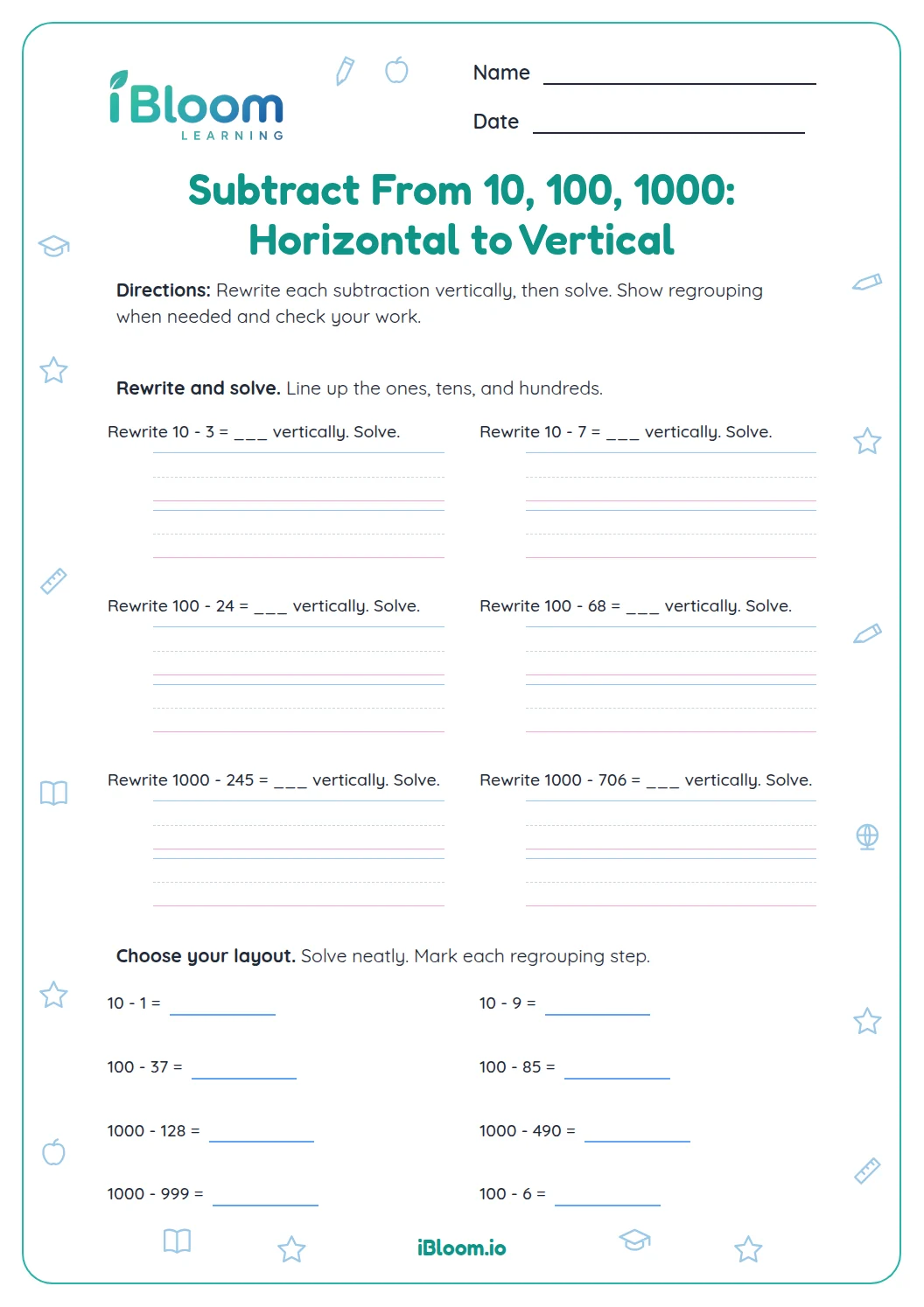
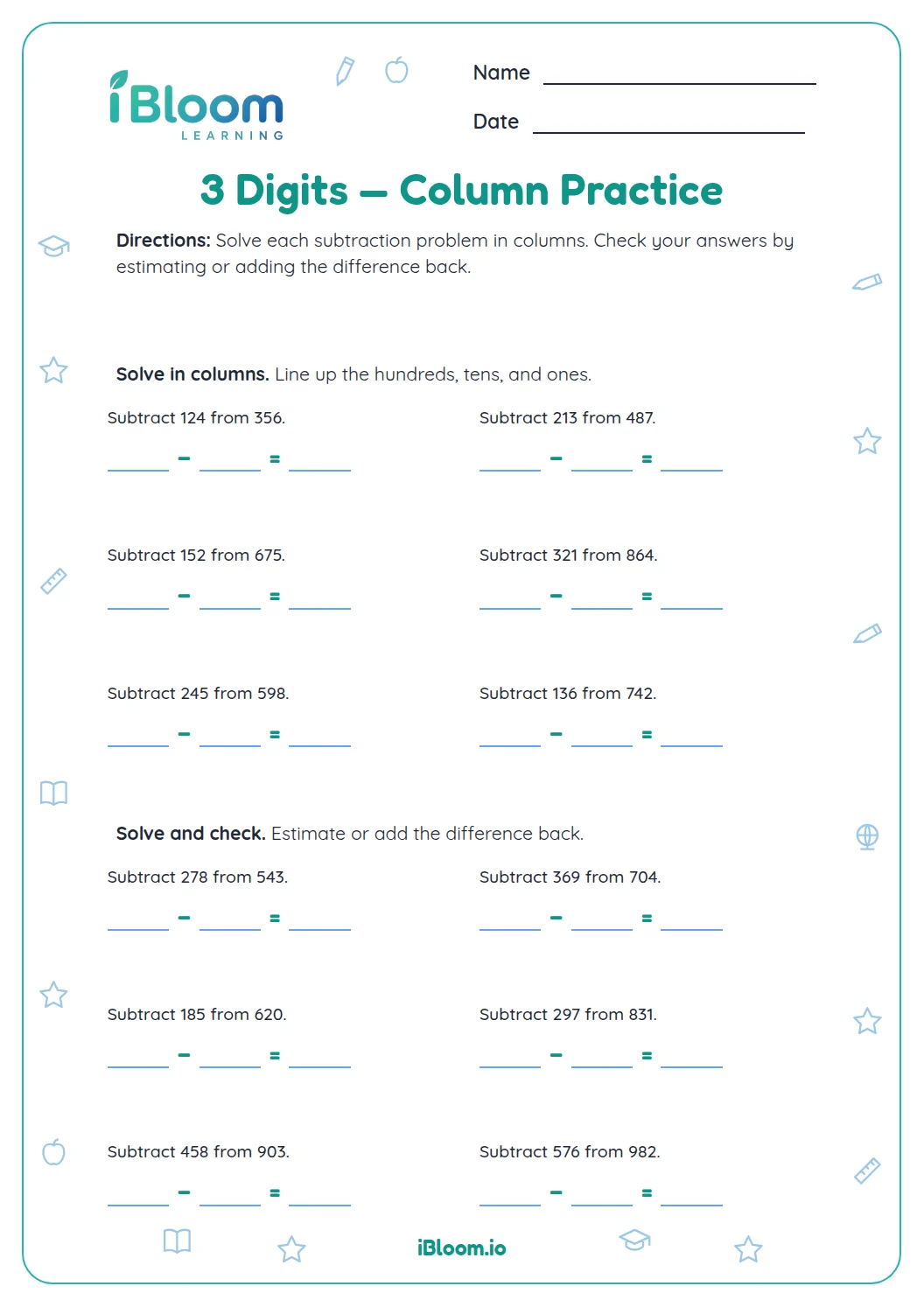
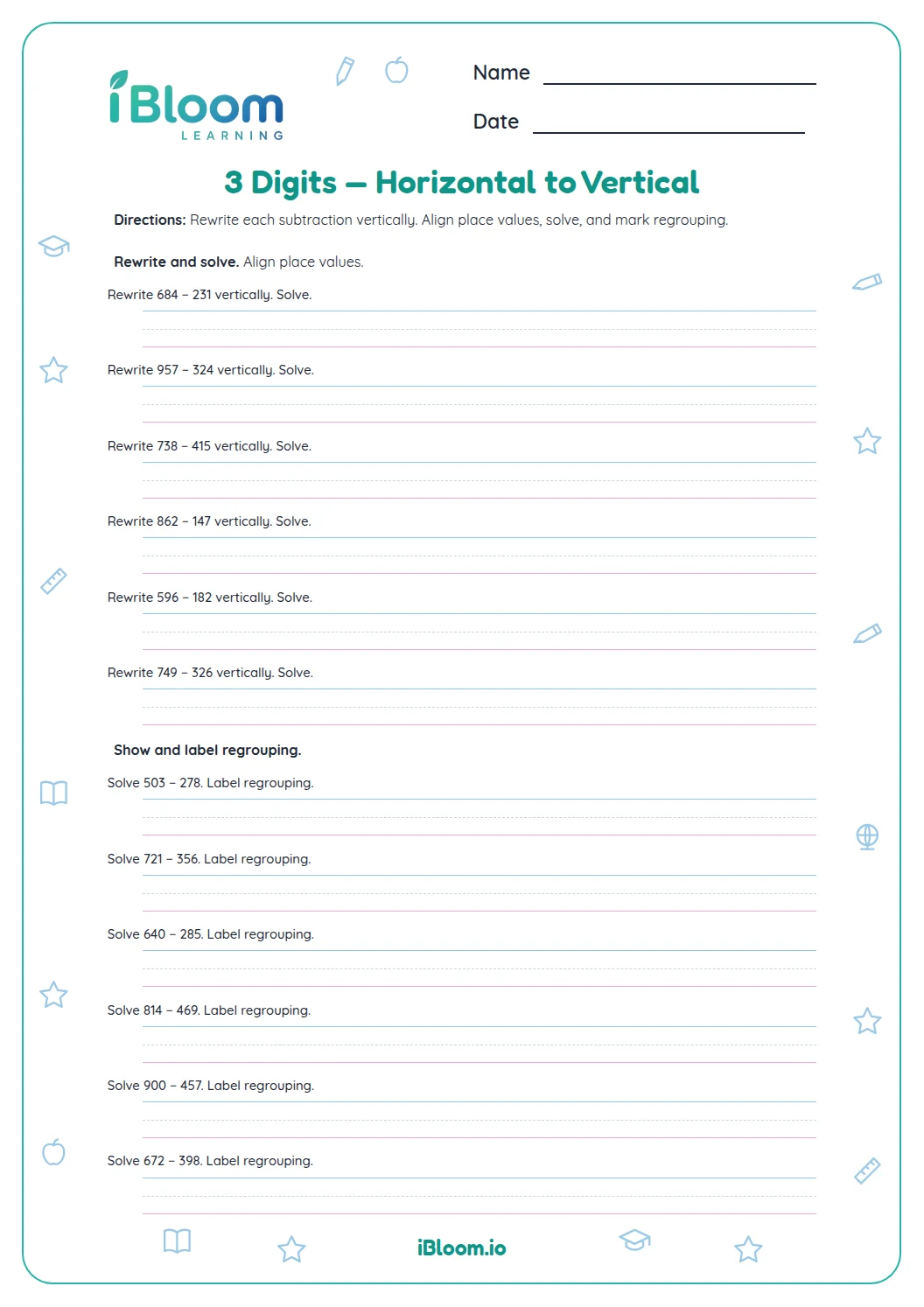
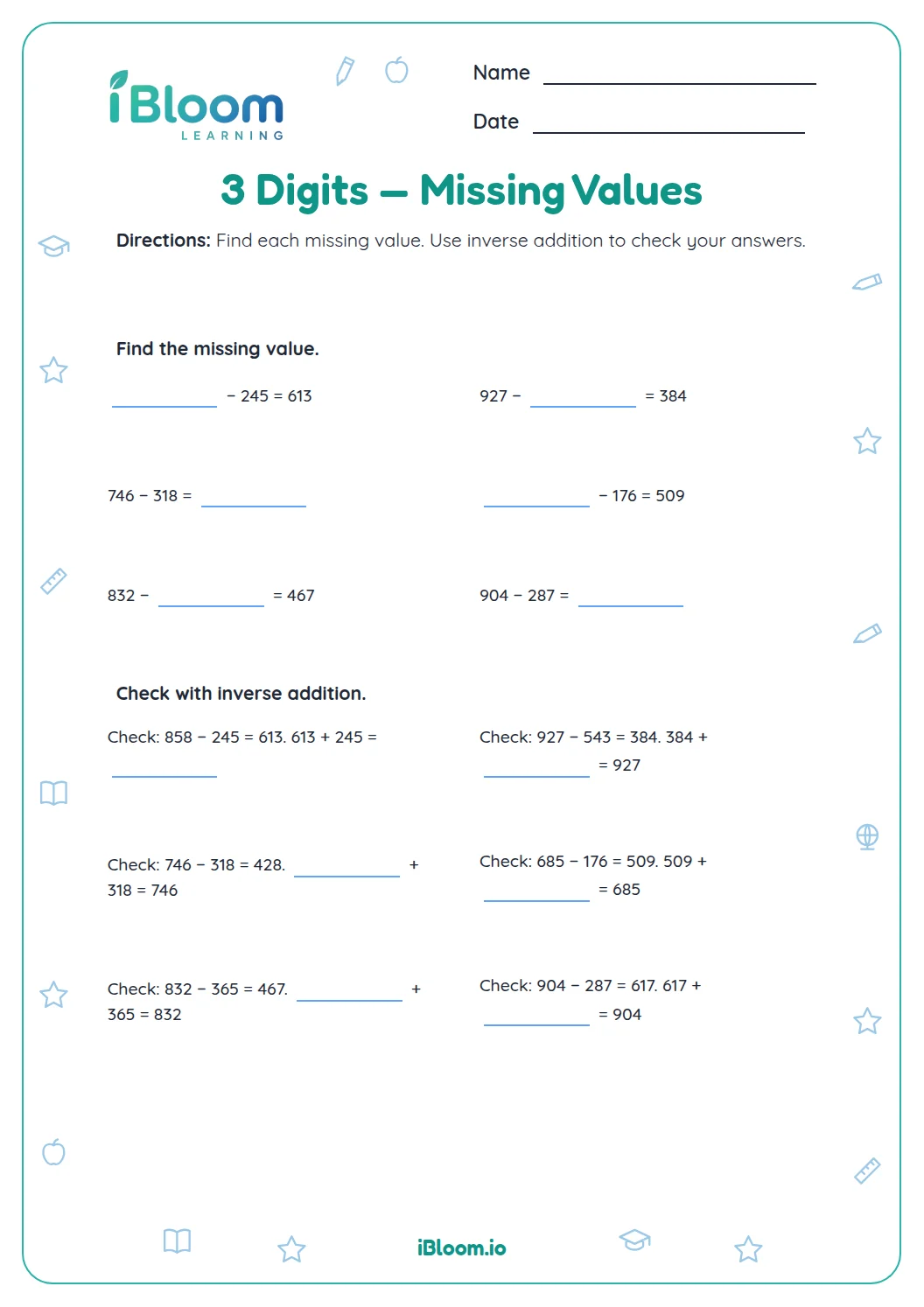
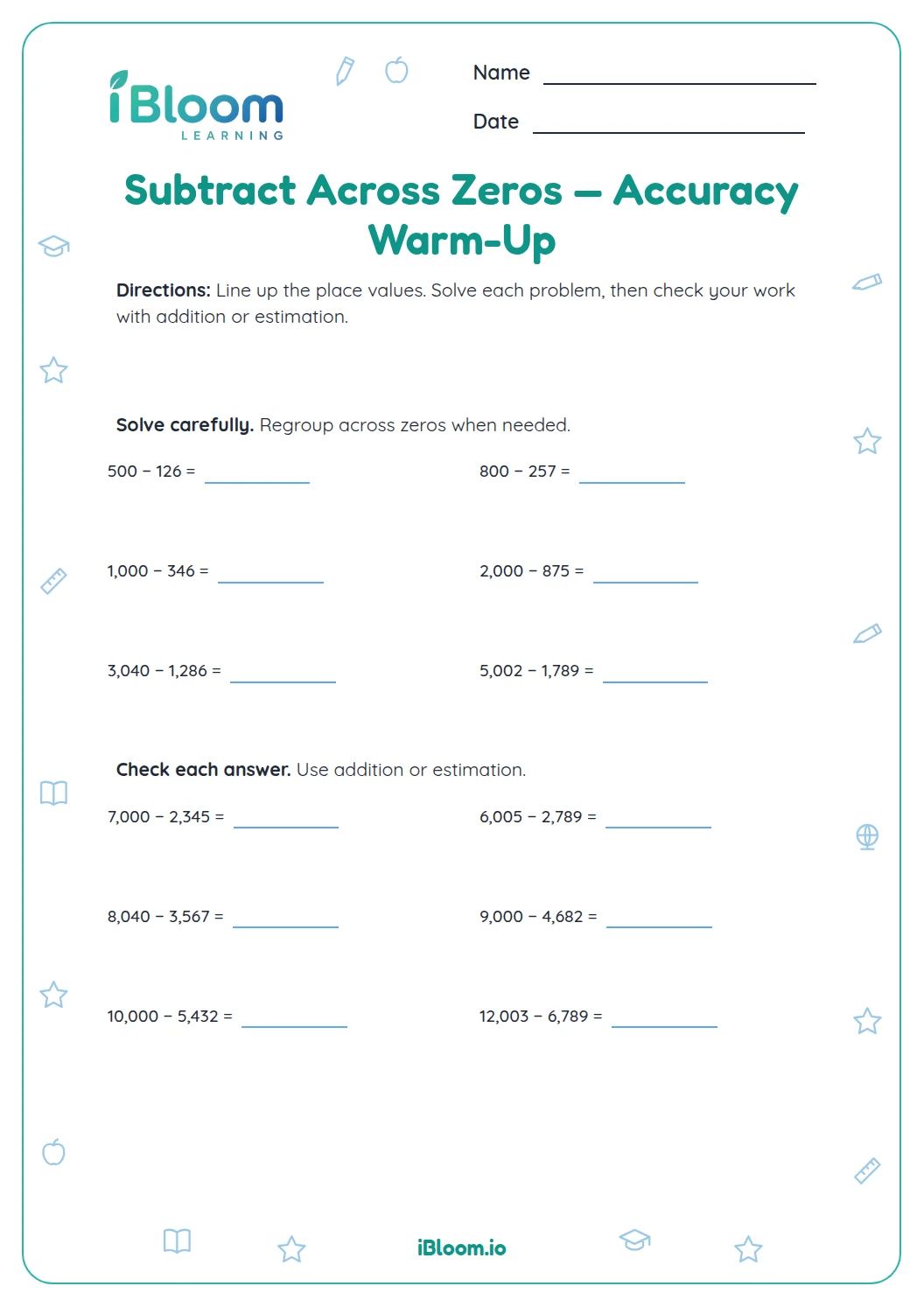
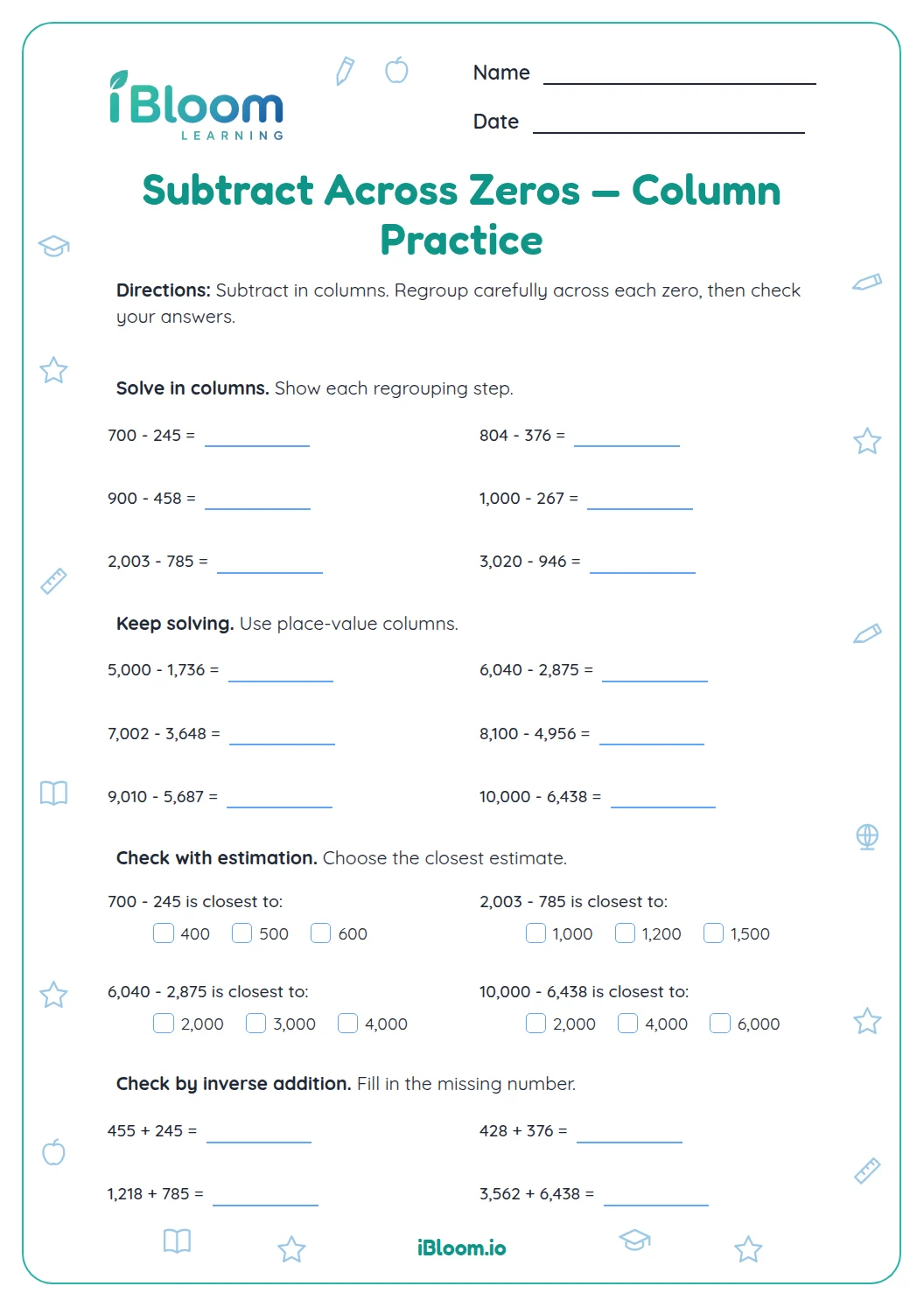
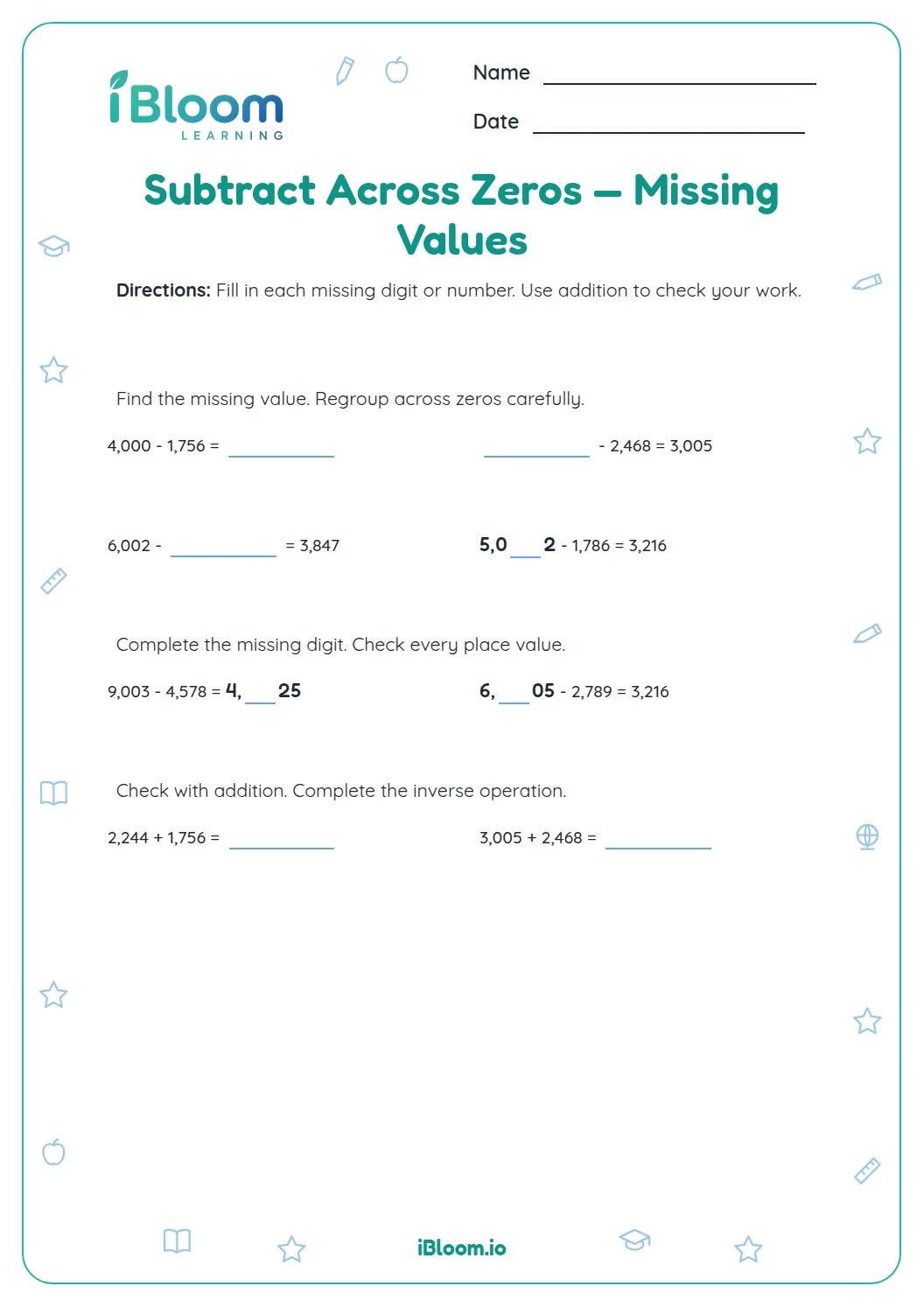
This free Grade 2 worksheet gives children practice subtracting a two- or three-digit number from a multiple of 100. Each of the 16 questions asks for column work, including regrouping across a zero. The page practices place-value subtraction within 1,000 under CCSS 2.NBT.B.7, with a separate answer key.
Aligned to 2.NBT.B.7
How does column subtraction work?
Line up hundreds, tens, and ones. Begin with the ones column. If the top digit is smaller, rename one ten as 10 ones; if there are no tens, first rename a hundred as 10 tens.
For question 2, 500 − 238, rename 5 hundreds as 4 hundreds and 10 tens. Then trade one ten for 10 ones, giving 4 hundreds, 9 tens, and 10 ones. Subtract each column and check by adding the difference to 238.
- 1 500
- 2− 238
- 3Regroup: 4 hundreds, 9 tens, 10 ones
- 4 262
- 5Check: 262 + 238 = 500
What does this column practice include?
All 16 minuends are multiples of 100, as the title promises. The subtrahends vary, so children practice both straightforward column subtraction and regrouping across a zero.
How to use this worksheet
- 1Line up each digit by place value.
- 2Start with the ones column and regroup when needed.
- 3Subtract ones, tens, then hundreds.
- 4Add the difference to the subtrahend to check.
Common mistakes and quick fixes
The mistake
Borrowing from a zero without renaming a hundred first.
The fix
Trade one hundred for 10 tens, then trade one ten for 10 ones.
The mistake
Subtracting the smaller digit from the larger in every column.
The fix
Regroup before subtracting when the top digit is too small.
The mistake
Misaligning a two-digit subtrahend.
The fix
Line up the ones digits; tens go under tens and hundreds under hundreds.
Common Core alignment
The problems use place-value strategies and a written column method within 1,000.
Subtract three-digit numbers by place value and connect the strategy to written columns.
On this sheet: Children solve three-digit subtraction with columns and regrouping.
Show the official wordingHide the official wording
Add and subtract within 1000, using concrete models or drawings and strategies based on place value, properties of operations, and/or the relationship between addition and subtraction; relate the strategy to a written method. Understand that in adding or subtracting three-digit numbers, one adds or subtracts hundreds and hundreds, tens and tens, ones and ones; and sometimes it is necessary to compose or decompose tens or hundreds.
What to practice next
Make more practice
Further reading
Questions parents and teachers ask
Why does 500 need regrouping in 500 − 238?
There are no tens or ones to subtract from, so 500 must be renamed. Trade one hundred for 10 tens, then one ten for 10 ones. The columns become 4 hundreds, 9 tens, and 10 ones. Ask the child to point to the specific word, number, or clue that supports the response as they check.
How can a child check a subtraction answer?
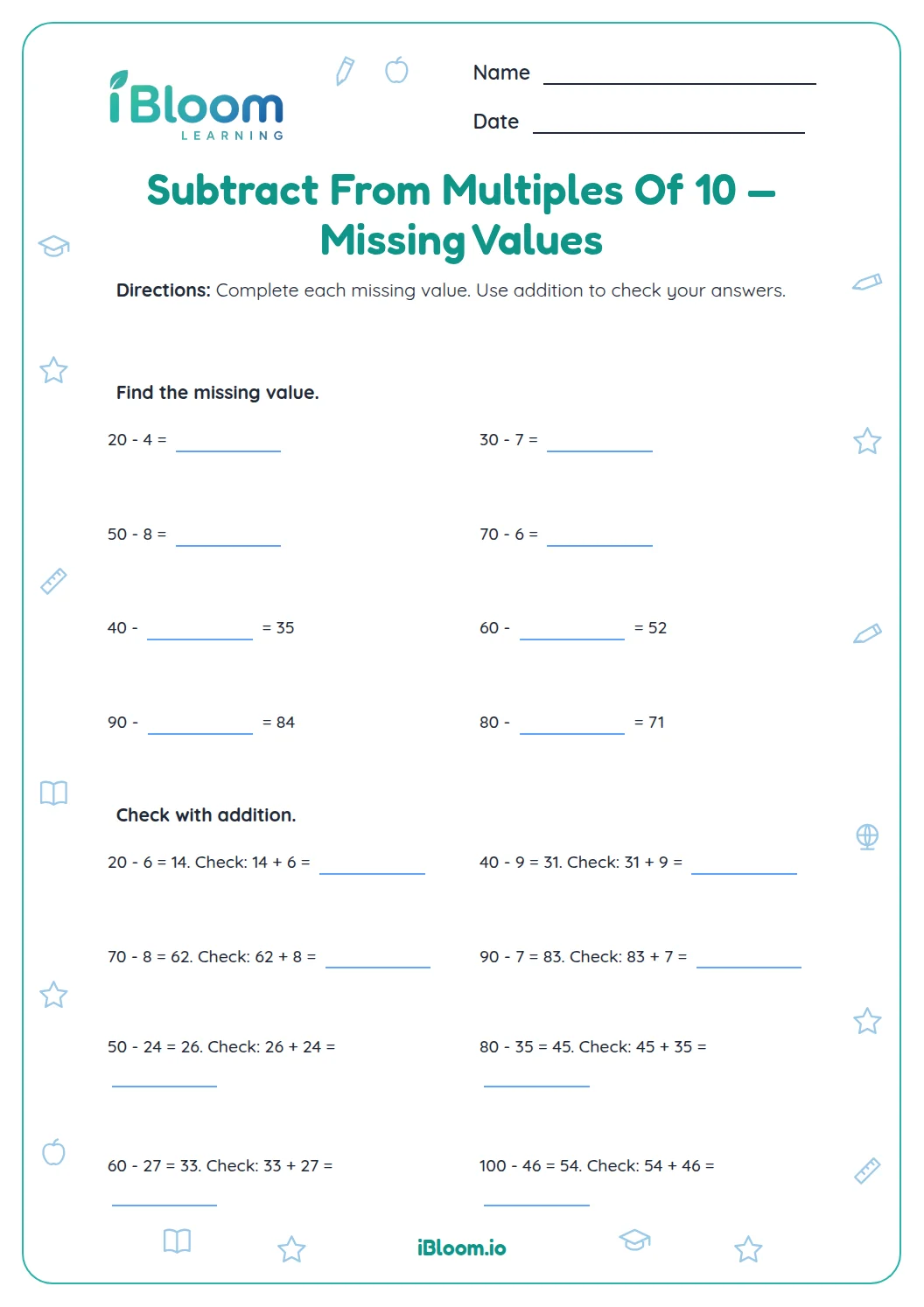
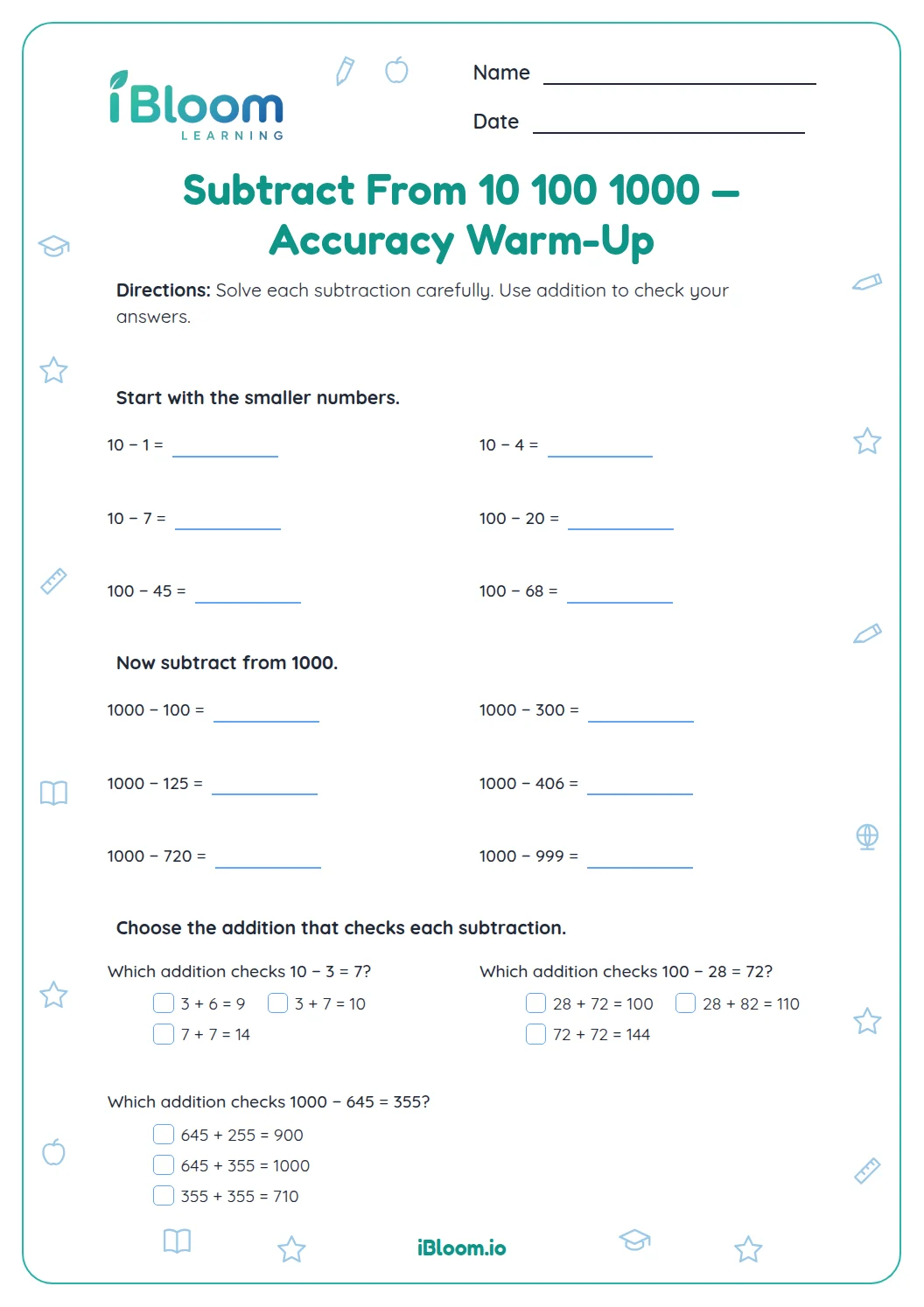
Add the difference to the number subtracted. If the total equals the starting multiple of 100, the subtraction is correct. For example, 262 + 238 returns 500. Ask the child to point to the specific word, number, or clue that supports the response as they check.
Are the numbers appropriate for Grade 2?
Each problem uses three-digit numbers within 1,000. The work focuses on hundreds, tens, and ones, including regrouping, which is the place-value strategy named in the standard. Ask the child to point to the specific word, number, or clue that supports the response as they check.
How many problems are included?
There are 16 column subtraction problems in four groups. The starting numbers are multiples of 100, while the subtrahends vary to give practice with different regrouping steps. Ask the child to point to the specific word, number, or clue that supports the response as they check.
Does every problem give room for working?
Yes. Each question uses a working-space format and tells the child to set up the subtraction in columns. The answer key lists the difference for each item. Ask the child to point to the specific word, number, or clue that supports the response as they check.
How long does the worksheet take?
About 20 minutes is a reasonable starting point for 16 problems with written column work. Allow extra time for a child who is practicing regrouping across zeroes for the first time. Ask the child to point to the specific word, number, or clue that supports the response as they check.