

About this worksheet
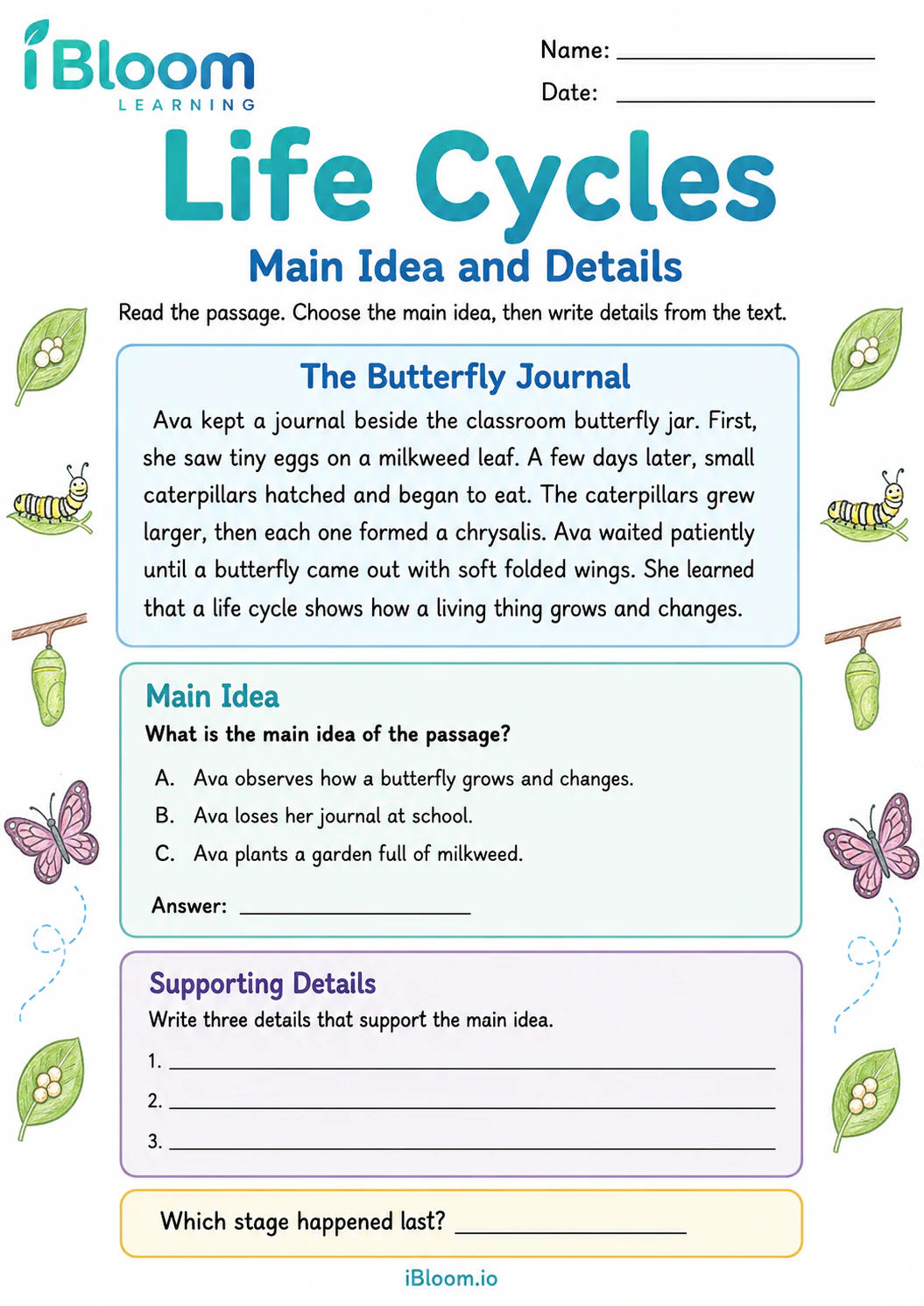
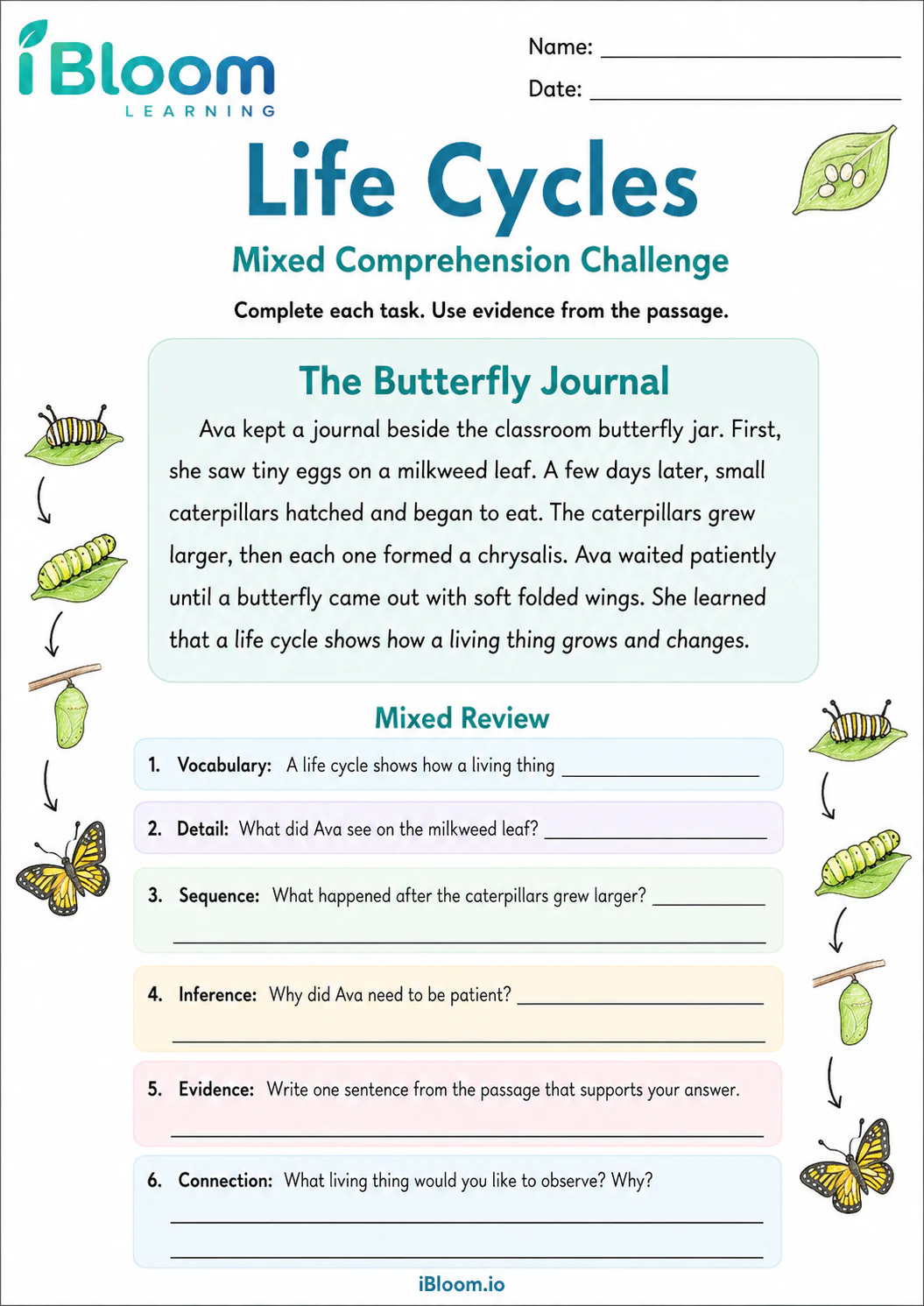
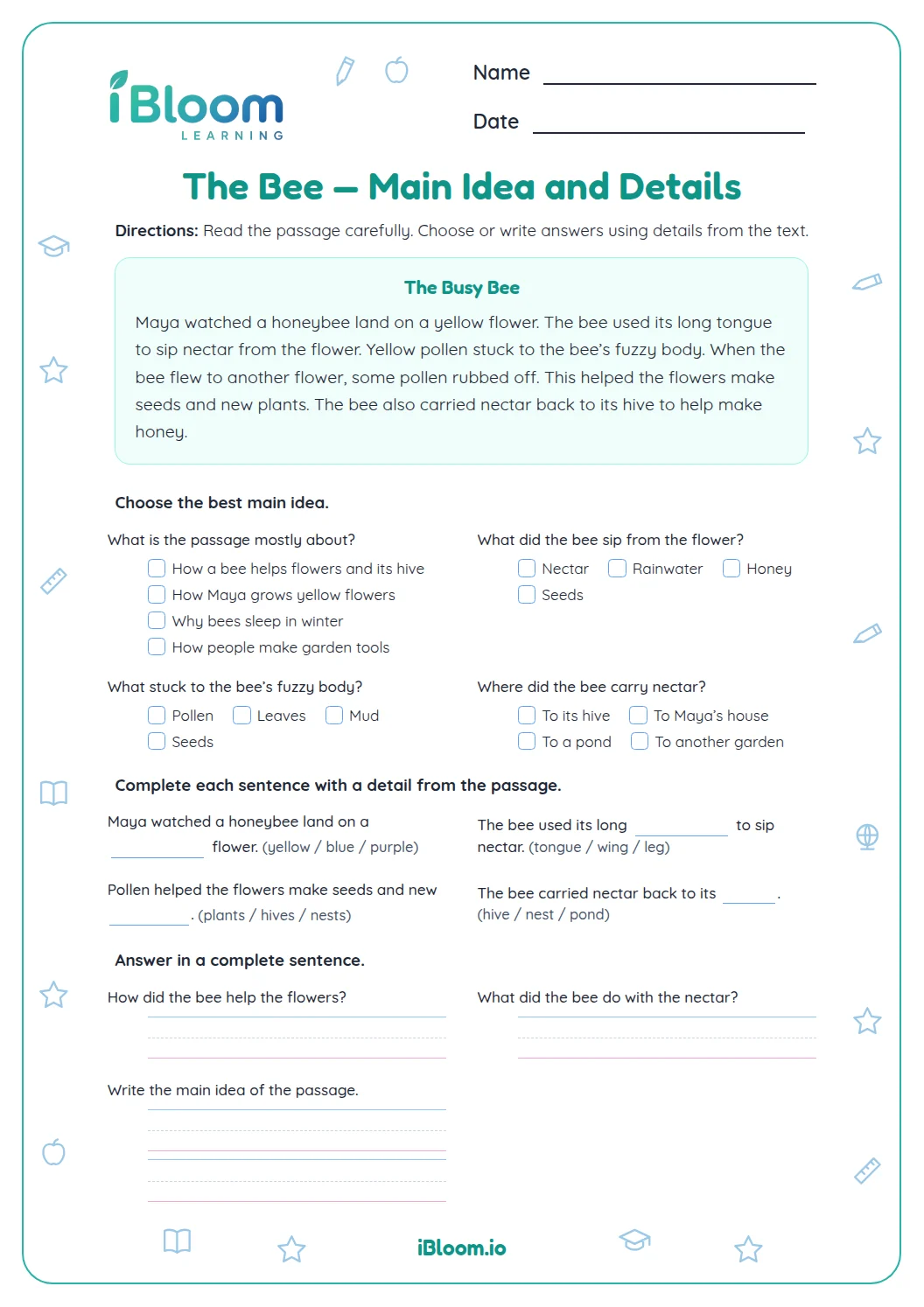
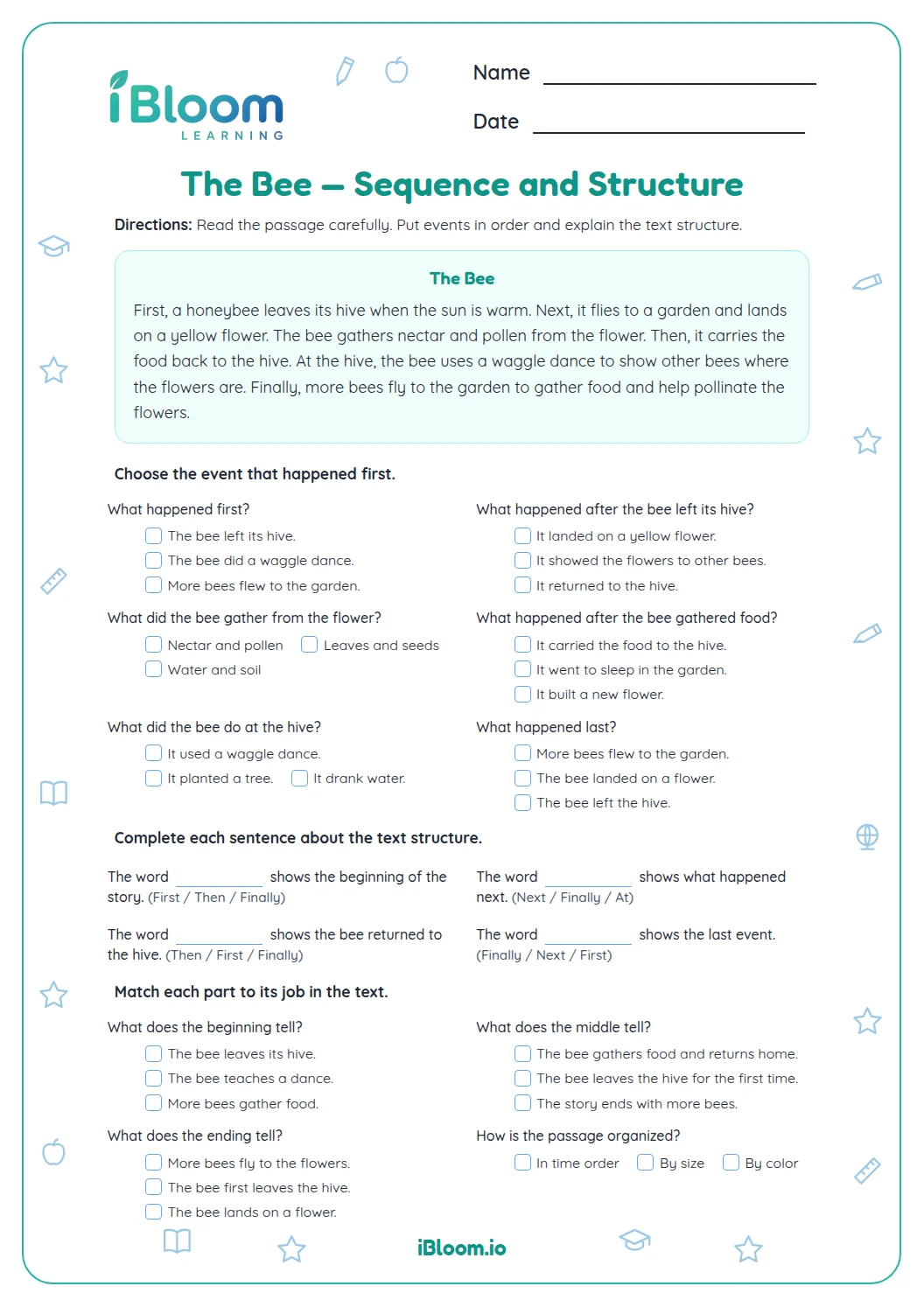
This Grade 3 reading worksheet pairs an original garden story with questions about inference and text evidence. Readers follow Luis as he observes a monarch egg, caterpillar, chrysalis, and butterfly, then use details from the passage to explain their answers. The 12 questions include multiple-choice and short written responses. A separate answer key provides choices and sample responses.
Aligned to RI.3.1
What is an inference?
An inference is a reasonable idea built from clues in a text. Readers notice what the author says and use it to understand something the author does not state directly.
In question 1, Luis makes a sign asking visitors to stay on the path. That detail supports the inference that he wants people to protect the caterpillar.
- 1Clue: Luis asks visitors to stay on the path.
- 2Think: The caterpillar is nearby and needs the plant.
- 3Inference: Luis wants visitors to protect it.
How do I choose strong text evidence?
Look for the sentence that most directly supports your idea. A detail about a tiny egg may describe the setting, but Luis’s sign is stronger evidence for why he wants visitors to stay back.
What happens in the garden passage?
Luis observes an egg, caterpillar, chrysalis, and butterfly near his grandmother’s porch. Questions ask students to connect these events with clues about Luis’s choices and the changes in the garden. The answers come from the passage rather than outside life-cycle facts.
How to answer inference questions
- 1Read the whole passage once for the main events.
- 2Reread the lines around the question’s clue.
- 3Ask what the detail suggests, beyond its literal meaning.
- 4Choose or write an inference that fits the passage.
- 5Point to the strongest detail that supports it.
Common mistakes and quick fixes
The mistake
Choosing an answer that sounds possible but has no passage clue.
The fix
Underline a detail that supports the idea before selecting it.
The mistake
Repeating a sentence without explaining what it suggests.
The fix
Add a phrase that connects the clue to the inference.
The mistake
Using outside facts instead of the text.
The fix
Answer what this passage shows; use its words as evidence.
Common Core alignment
Readers answer questions by referring explicitly to this passage.
Answer questions about the passage and cite explicit details as evidence.
On this sheet: Questions ask readers to make and support inferences with passage details.
Show the official wordingHide the official wording
Ask and answer questions to demonstrate understanding of a text, referring explicitly to the text as the basis for the answers.
What to practice next
Make more practice
Further reading
Questions parents and teachers ask
What is the difference between a clue and an inference?
A clue is information the passage states; an inference is a reasonable idea formed from that information. Luis’s sign asking visitors to stay on the path is a stated detail. Concluding that he wants them to protect the caterpillar is an inference supported by that clue.
Do written answers need to match the key exactly?
No. The key gives sample responses for questions with more than one acceptable wording. A student should answer the question and connect the idea to a relevant passage detail. For example, the answer about the sign can explain that Luis wants visitors to avoid disturbing the caterpillar.
Which life-cycle stages appear in the story?
The passage describes a monarch egg, a caterpillar, a chrysalis, and an adult butterfly. Students follow those stages as Luis observes the milkweed by the porch. Question 7 asks which stage came just before the adult butterfly, and the story provides each clue.
How can I help a child find text evidence?
Ask the child to point to the sentence that supports the answer. Then ask how that detail connects to the idea. For question 1, the sign and the nearby caterpillar support the inference that Luis wants visitors to protect it.
How many questions are on the worksheet?
There are 12 questions: seven multiple-choice items and five short written responses. They cover inference, supporting details, sequence, and a word’s meaning. The separate key lists correct choices and sample responses for the written items, all based on the passage.
Is there a separate answer key?
Yes. A separate key gives the multiple-choice answers and sample responses for the short written questions. Other wording is fine when it answers the question and is supported by a relevant detail from the passage. It also helps readers explain how the clue supports their inference.