

About this worksheet
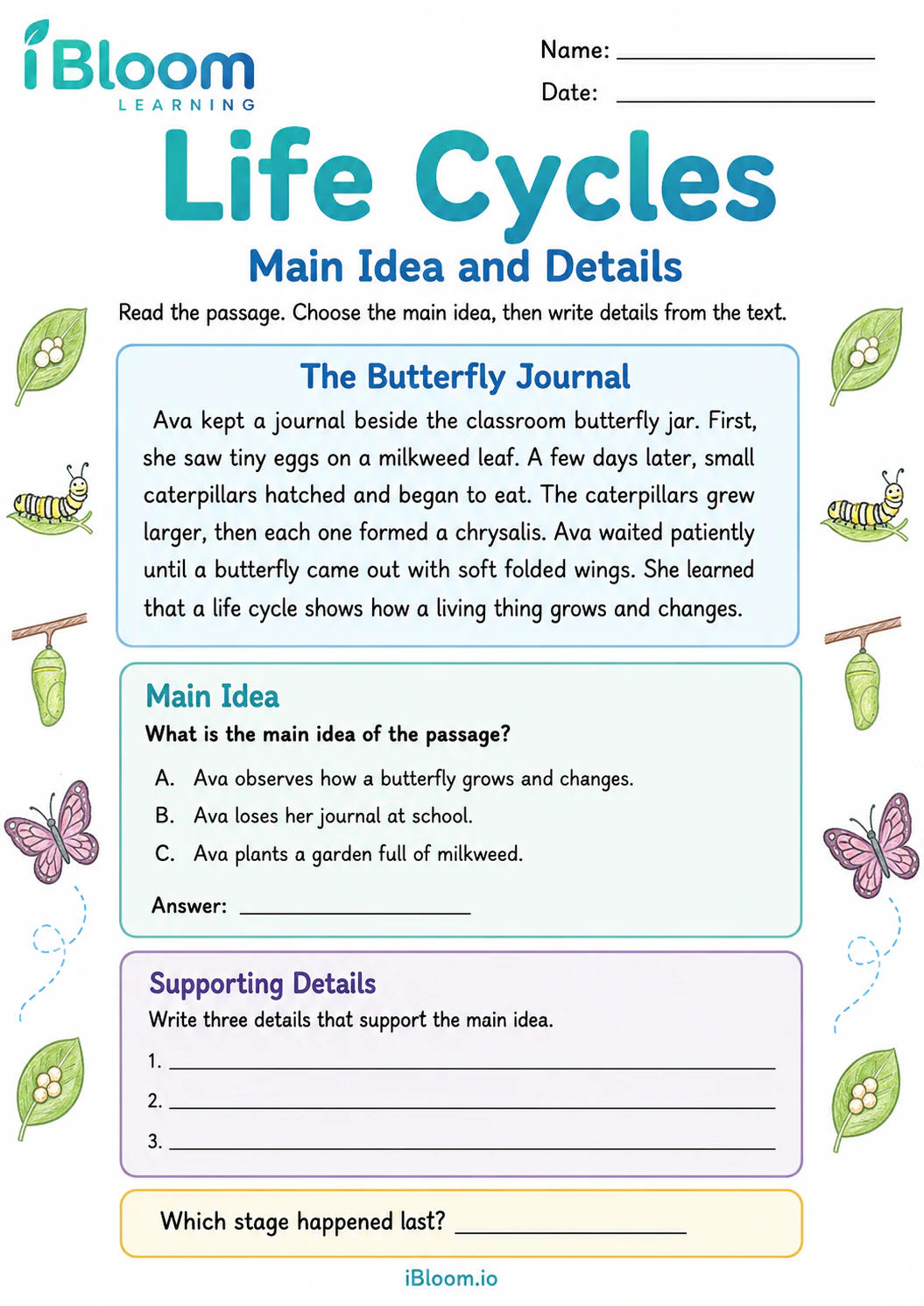
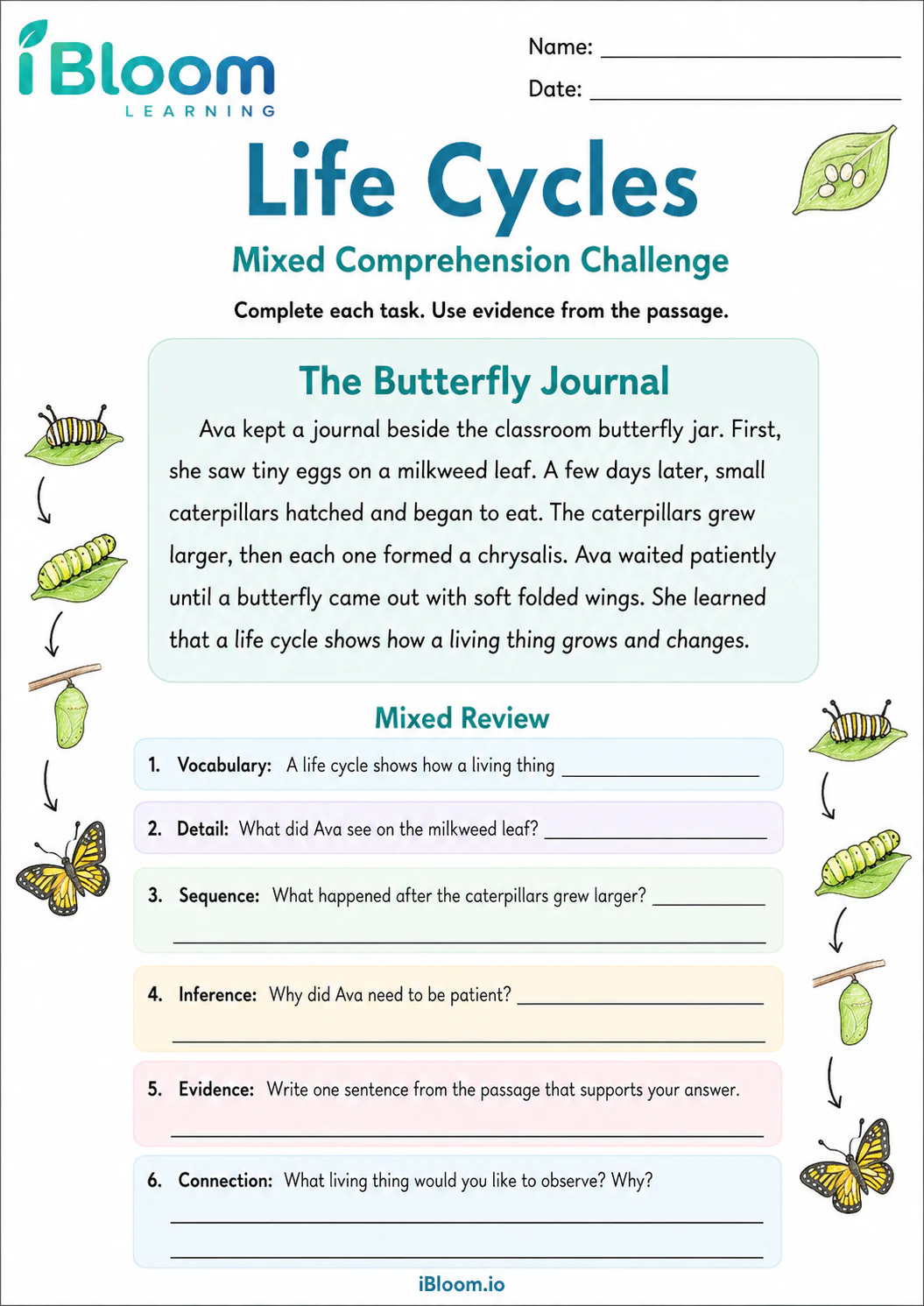
This Grade 3 life-cycle reading worksheet pairs an original passage about monarch butterflies with 16 comprehension questions. Students follow the egg, caterpillar, chrysalis, and adult stages, then use details to explain how the cycle continues. The questions move from locating stated facts to writing short text-based responses. It aligns with CCSS RI.3.1, which asks readers to answer questions using the text as evidence. A separate answer key includes sample responses for open-ended items.
Aligned to RI.3.1
Which facts can you find in the passage?
Questions 1–8 ask for facts stated in the passage, including what the caterpillar eats and where the egg is laid. Questions 9–16 ask students to sequence, explain, compare, and connect details from the passage.
How can you put the stages in order?
Track each change from egg to caterpillar to chrysalis to adult butterfly. Notice what happens before and after the chrysalis.
- 1Question 9 asks for the stages beginning with the egg.
- 2Sample answer: egg → caterpillar → chrysalis → butterfly.
- 3The passage names each stage in that order.
How do you support a written answer?
Answer the question first, then add a passage detail that proves or explains it. For example, milkweed matters because the monarch lays an egg on it and the caterpillar eats its leaves.
How to use this worksheet
- 1Read the passage once to understand the whole cycle.
- 2Reread the sentence that contains a fact you need.
- 3For sequence questions, mark each stage in order.
- 4Answer in your own words and include a text detail.
- 5Use the key to check facts and compare open responses.
Common mistakes and quick fixes
The mistake
Listing the butterfly before the chrysalis.
The fix
Retell the changes in order: egg, caterpillar, chrysalis, adult.
The mistake
Giving an outside fact instead of a passage detail.
The fix
Point to a sentence in the passage that supports the response.
The mistake
Naming a stage without explaining the requested connection.
The fix
Answer the whole question, then add the relevant detail.
Common Core alignment
The standard below describes the reading work practiced on this page.
Answer with details from the passage as evidence.
On this sheet: Questions ask students to retrieve and explain details from the original life-cycle passage.
Show the official wordingHide the official wording
Ask and answer questions to demonstrate understanding of a text, referring explicitly to the text as the basis for the answers.
What to practice next
Make more practice
Further reading
Questions parents and teachers ask
How many questions are on the worksheet?
There are 16 questions after the passage: five direct-detail items, four short answers, and seven written responses. They cover monarch stages, stated facts, and explanations supported by details from the text. A quick reread helps students return to the exact sentence that supports each response.
What does the passage explain?
The original passage follows a monarch from egg to caterpillar, chrysalis, and adult butterfly. Students also read how milkweed supports the early stages and how a female monarch can begin the cycle again. The stages appear in order, making the passage useful for retelling a complete cycle.
How should a child answer the written questions?
A child can answer in a complete sentence and point to a detail from the passage. The key provides sample responses, but wording may vary when the idea is accurate and supported by the text. Text details might describe what happens to the caterpillar or how the wings change.
Is an answer key included?
Yes. The printable includes a separate key with direct answers and sample responses for open-ended items. Students can compare the important idea and evidence even when their wording differs from the model. The key is meant for checking understanding, not requiring identical student wording.
How long should this page take?
Plan about 25 minutes for reading and answering all 16 questions. A student may take longer when writing full explanations or rereading the passage to find a detail that supports an answer. A short break between reading and writing can help a child focus on the passage details.