
About this worksheet
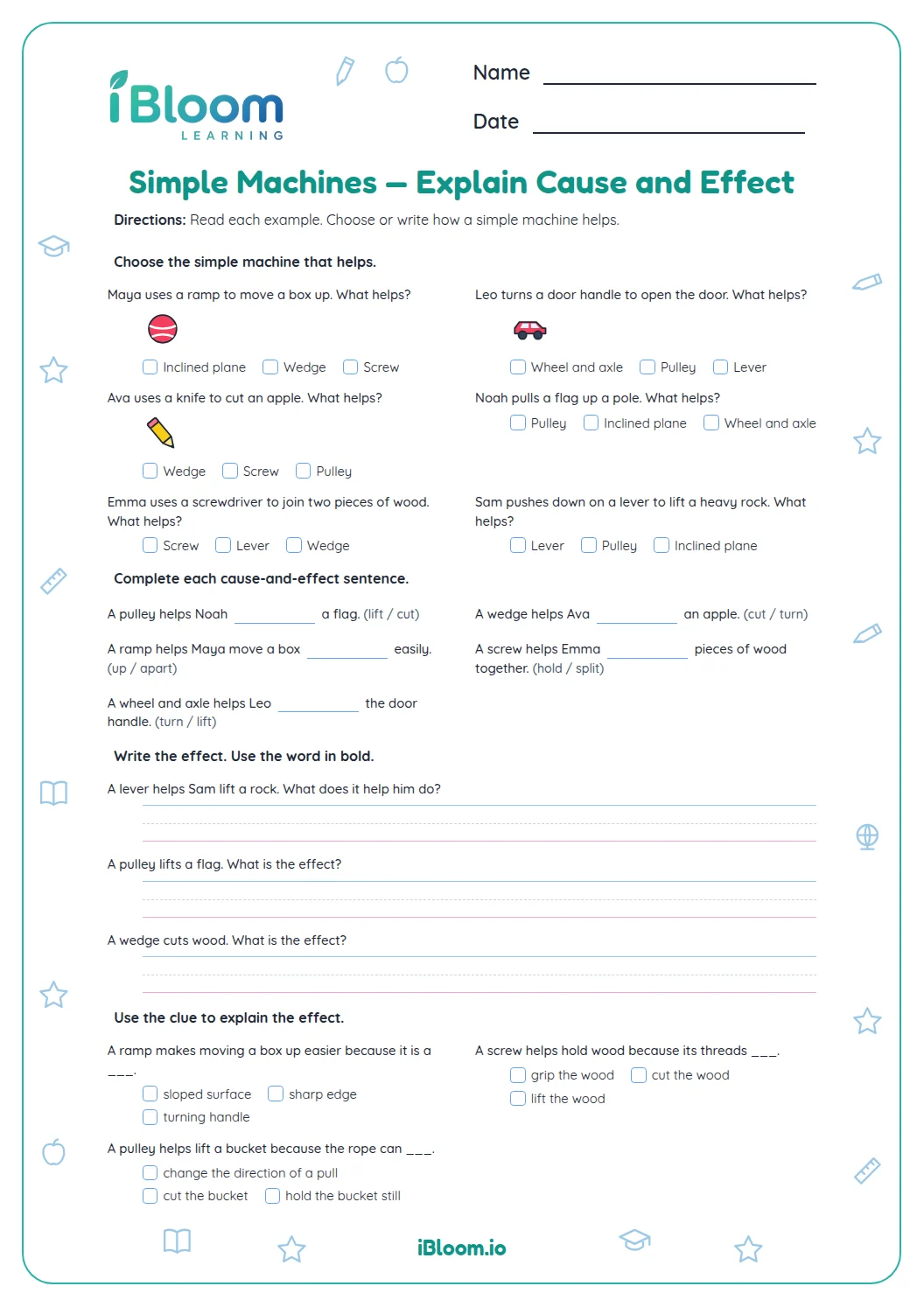
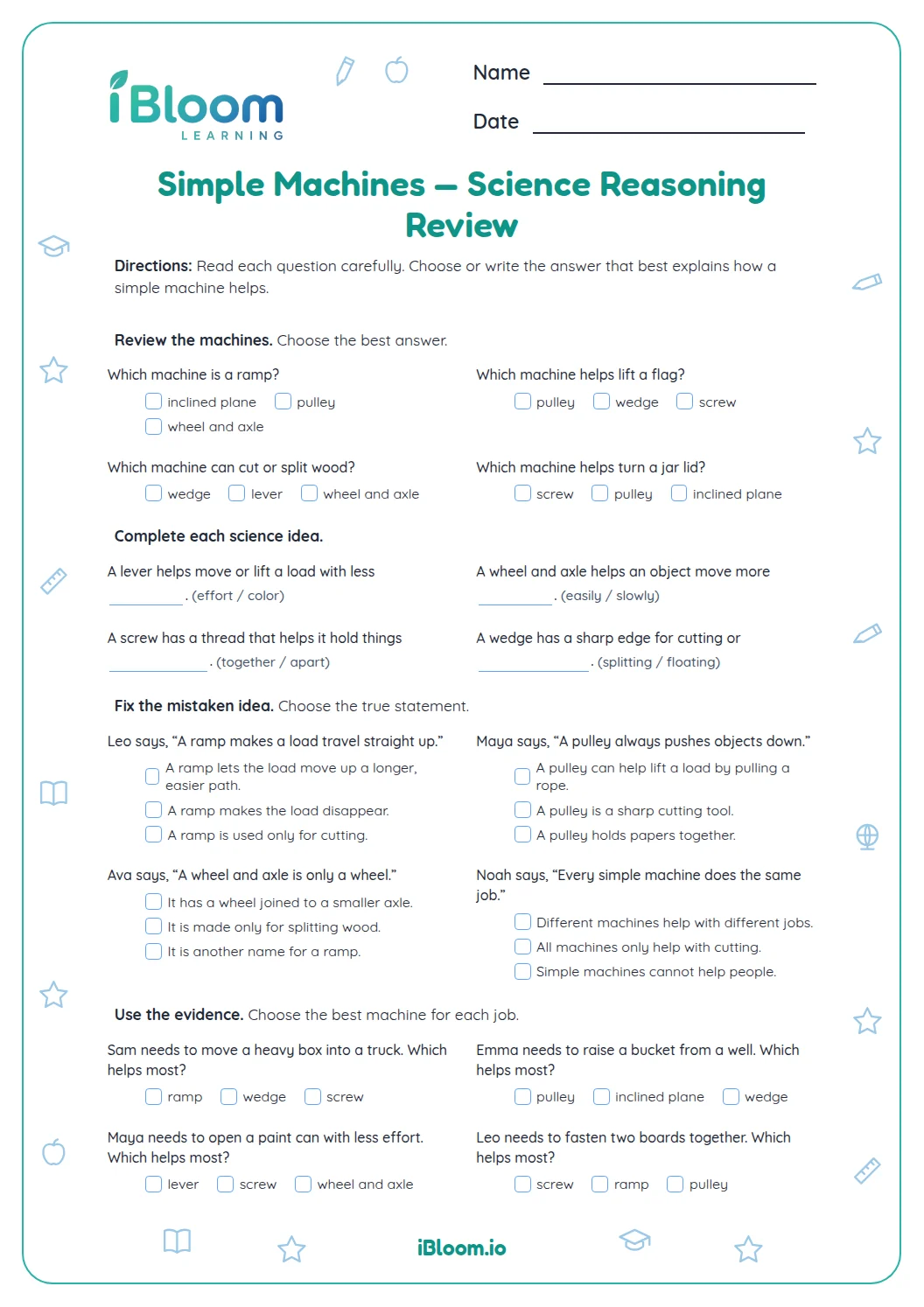
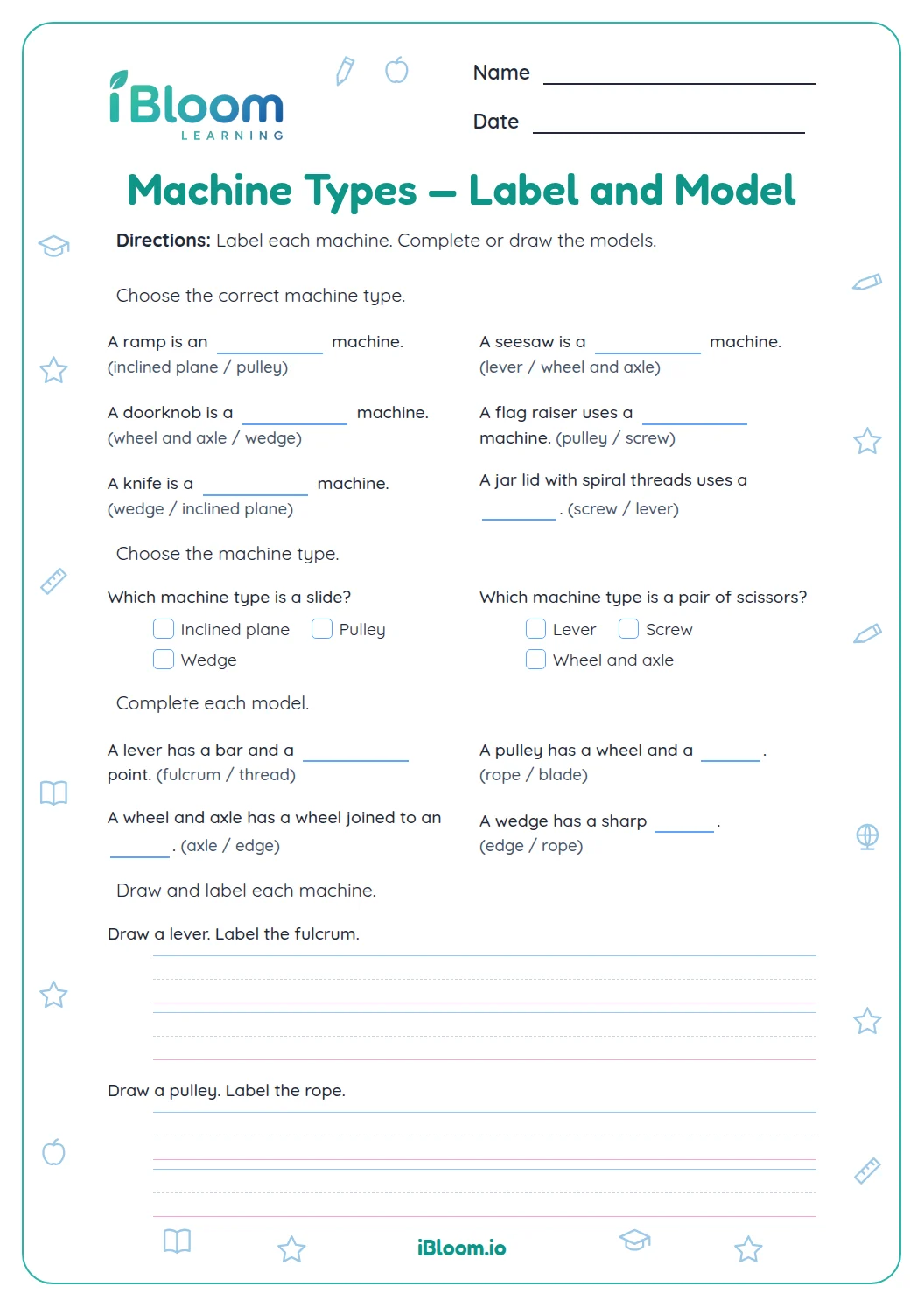
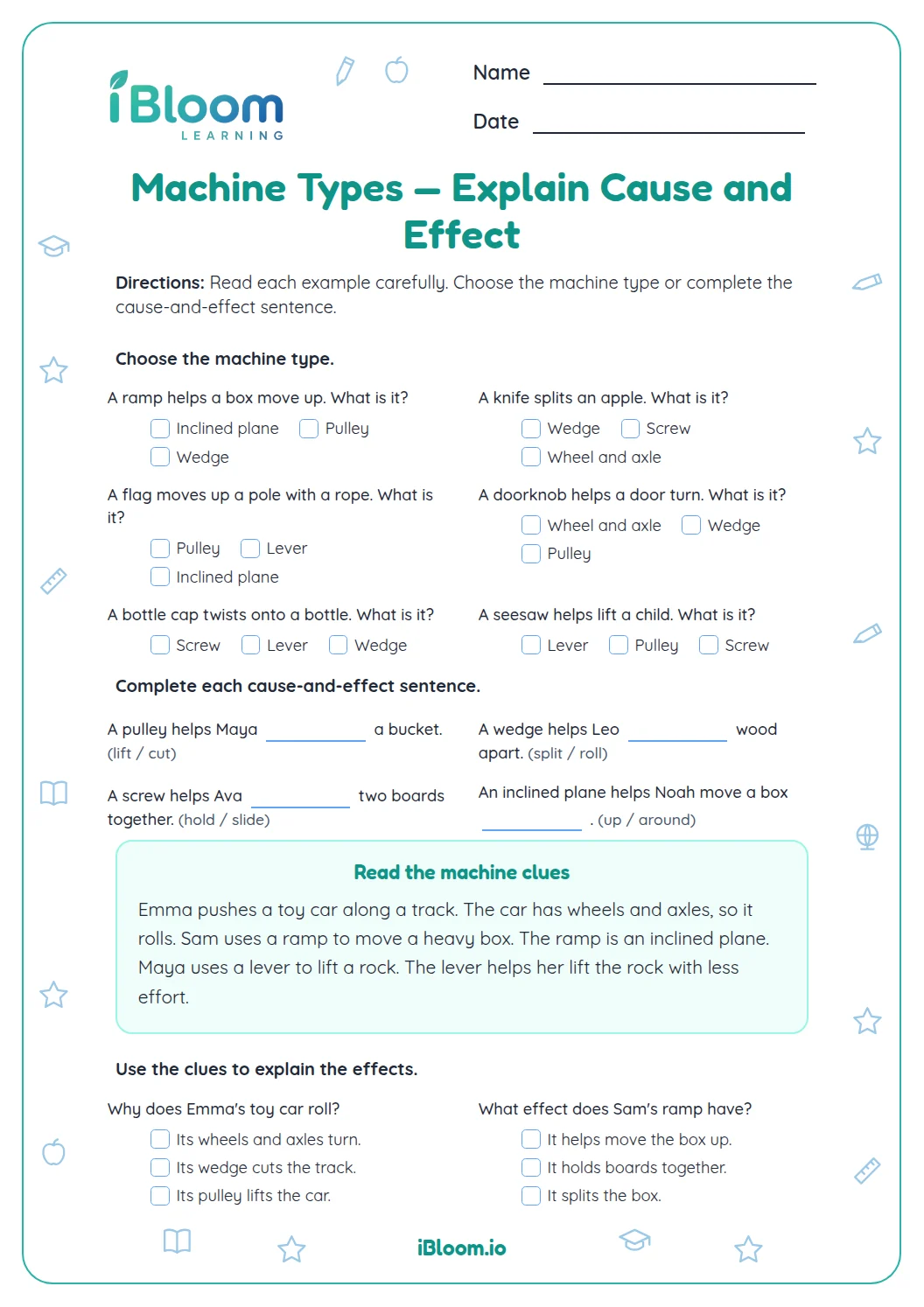
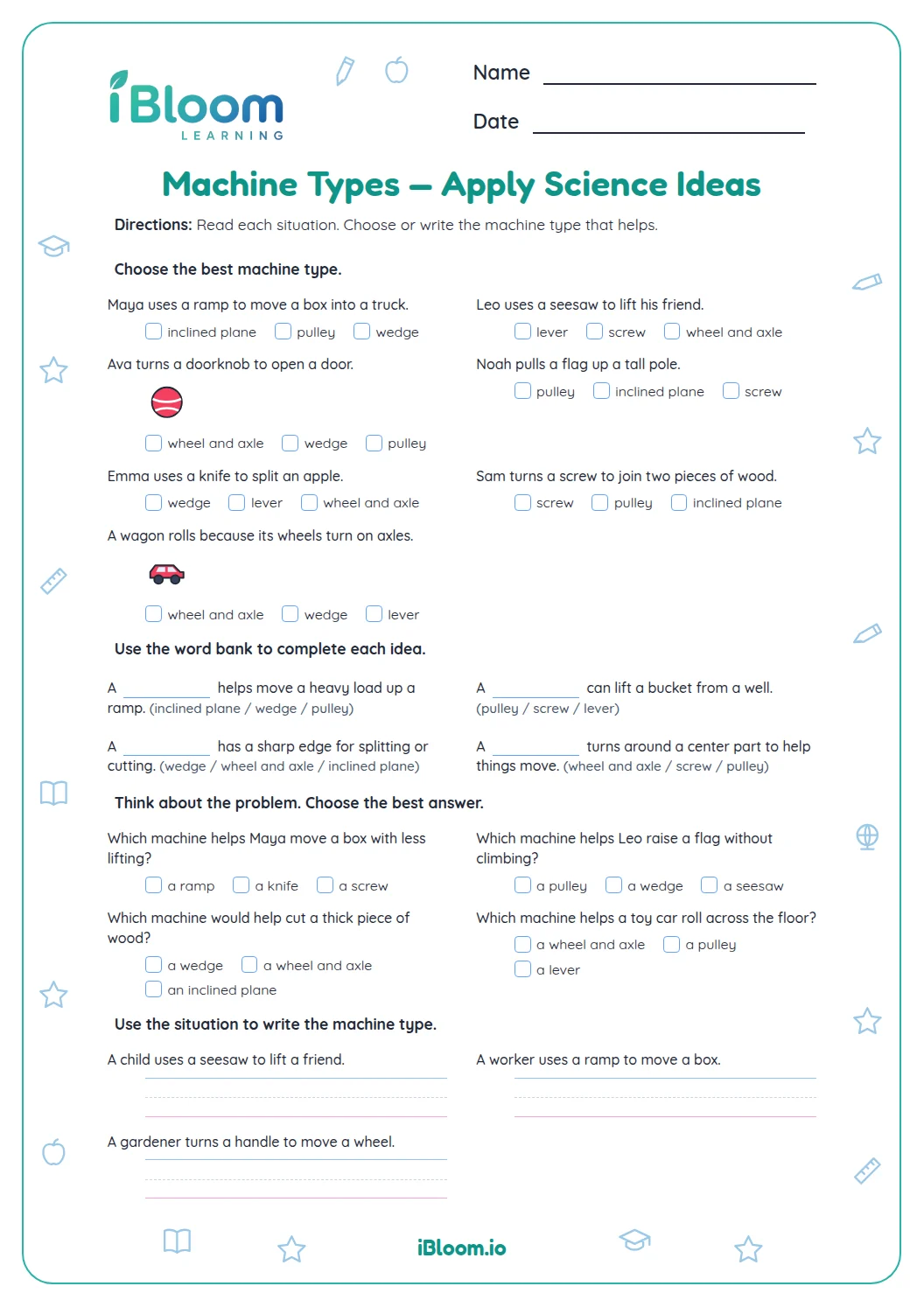
This Grade 1 science page asks children to recognize simple machines in familiar tools and connect each machine to a job it can help with. Part A identifies machine types, Part B applies those ideas to everyday situations, and Part C names the axle in a wheel-and-axle machine. A short answer key accompanies the worksheet.
How can you recognize a simple machine?
Look at the shape or movement that helps the tool do a job. A ramp is a sloping surface, a wedge has a sharp edge, and a lever turns around a support.
How do simple machines help with everyday jobs?
A pulley uses a rope and wheel to help lift a flag or bucket. A wheel and axle helps a wagon roll. A screw twists into place, as on a jar lid.
What will children practice on this sheet?
Part A asks children to identify six familiar machine types. Part B connects machine features with jobs, and Part C asks about the axle that turns with a wheel. The key gives a short answer for each item.
How to use this worksheet
- 1Have students name the job before naming the machine.
- 2Ask what moves or changes when the tool is used.
- 3Invite children to point out simple machines in safe classroom objects.
Common mistakes and quick fixes
The mistake
Calling every moving tool a lever.
The fix
Look for the defining part: a ramp slopes, a pulley uses a rope and wheel, and a lever turns around a point.
The mistake
Thinking a machine removes all effort.
The fix
Explain that the machine helps change how a push or pull is used.
What to practice next
Questions parents and teachers ask
What is a simple machine?
A simple machine is a basic tool that helps a person do a task by changing how a push or pull works. Ramps, levers, pulleys, wheels and axles, wedges, and screws are common examples students can spot in everyday objects.
How does an inclined plane help?
An inclined plane is a sloping surface, such as a ramp. It gives an object a path to move up or down instead of lifting it straight upward. A ramp does not remove the work, but it can make the movement easier to manage.
What can a pulley change?
A pulley uses a wheel and rope. It can change the direction of a pull, such as pulling down on a rope to raise a flag or bucket. Students can identify the wheel and rope as clues that a pulley is being used.
How does a wedge help split something?
A wedge has a sharp edge that can push into or split an object. A knife edge and an axe blade are familiar examples. The worksheet asks students to connect the wedge’s shape with its job. Notice how the blade edge pushes into the material as the tool moves.