

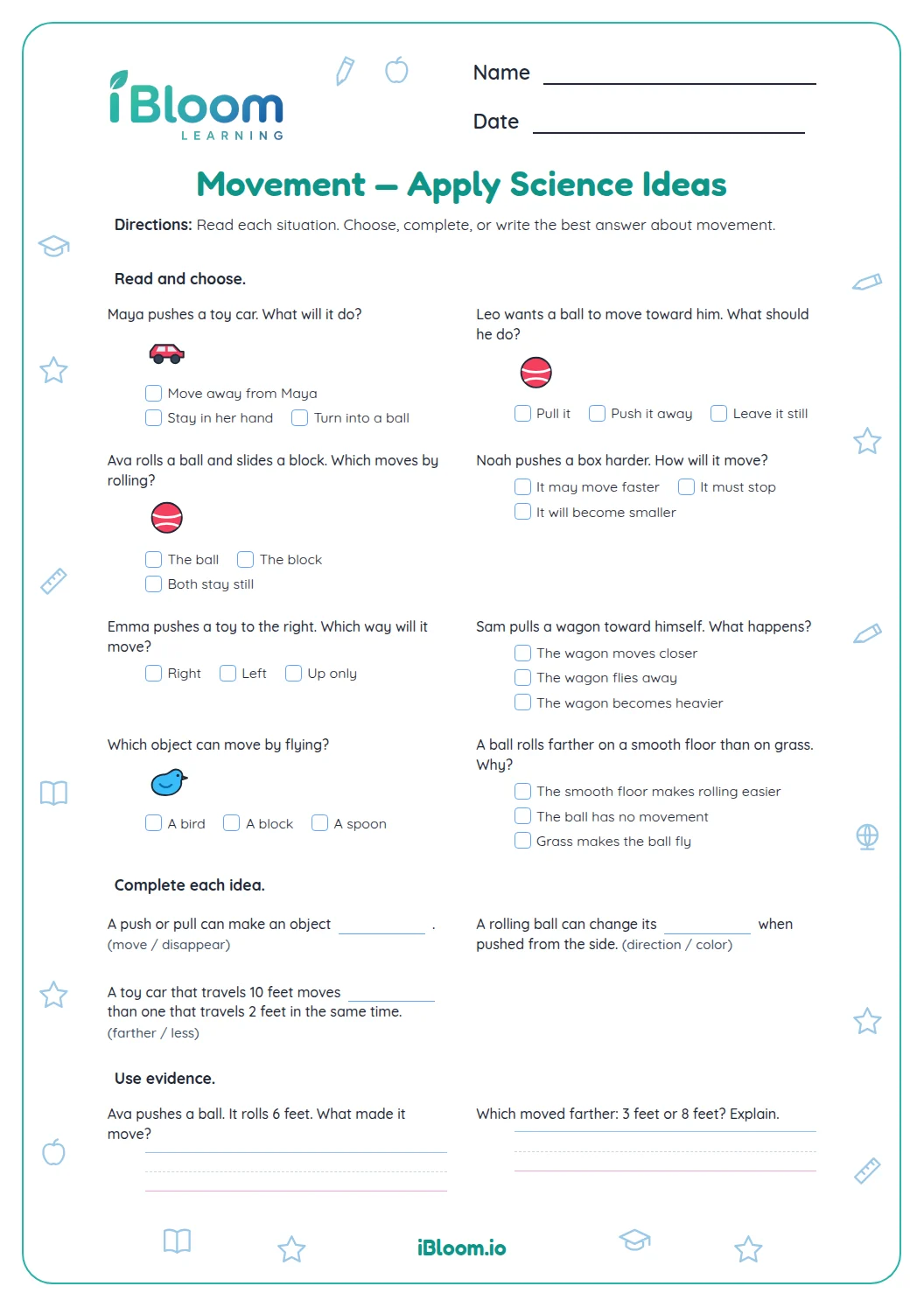


About this worksheet
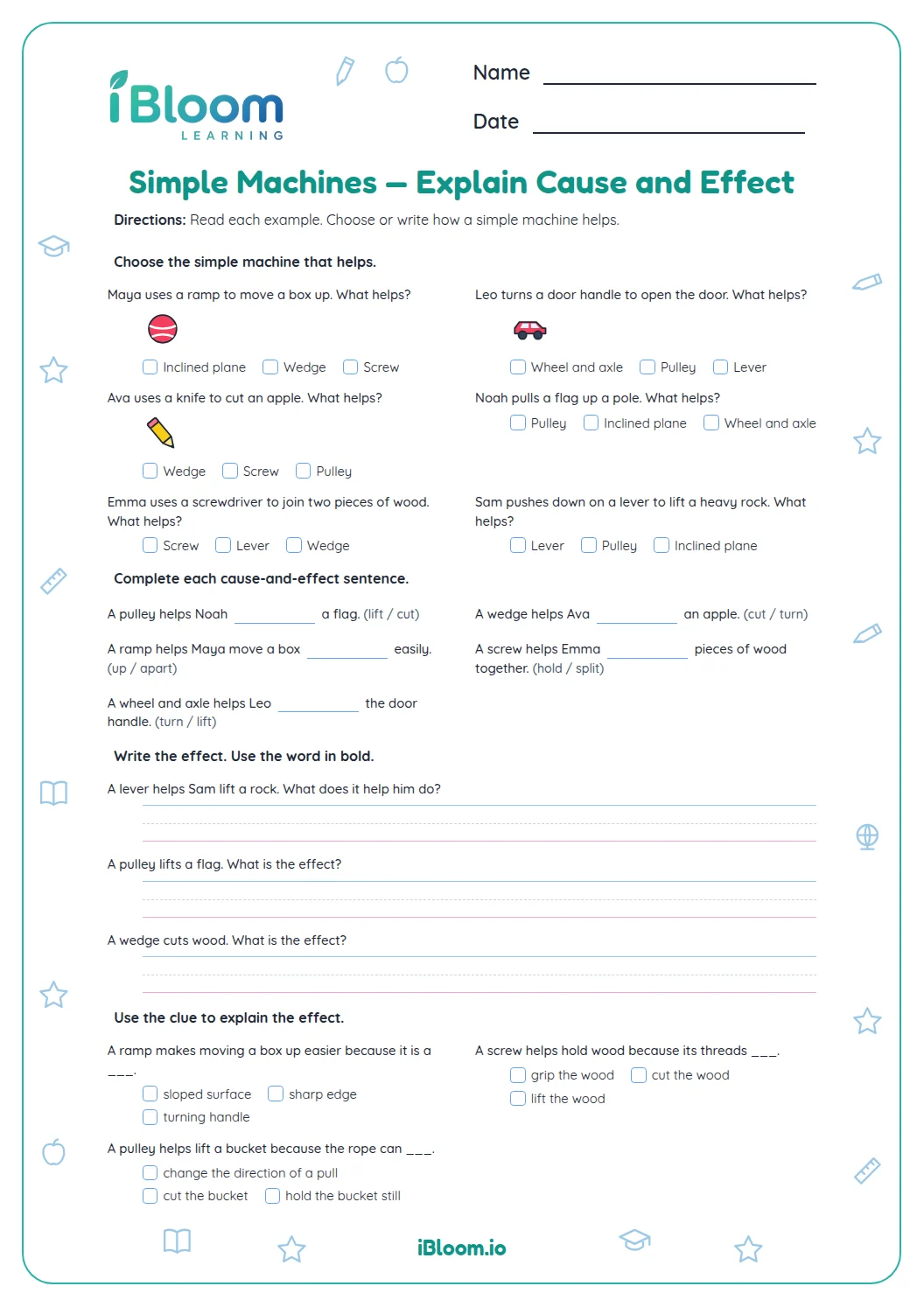
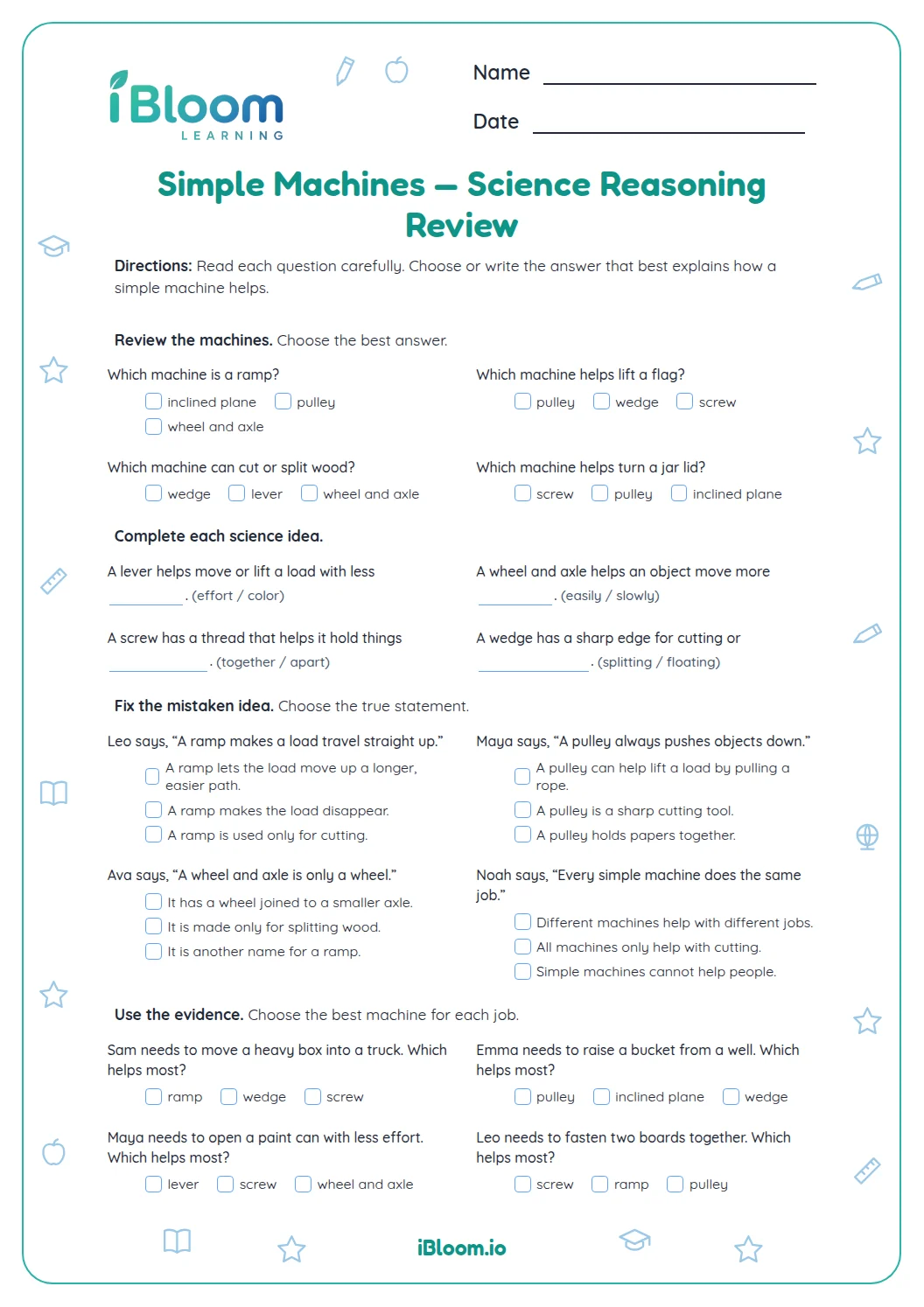
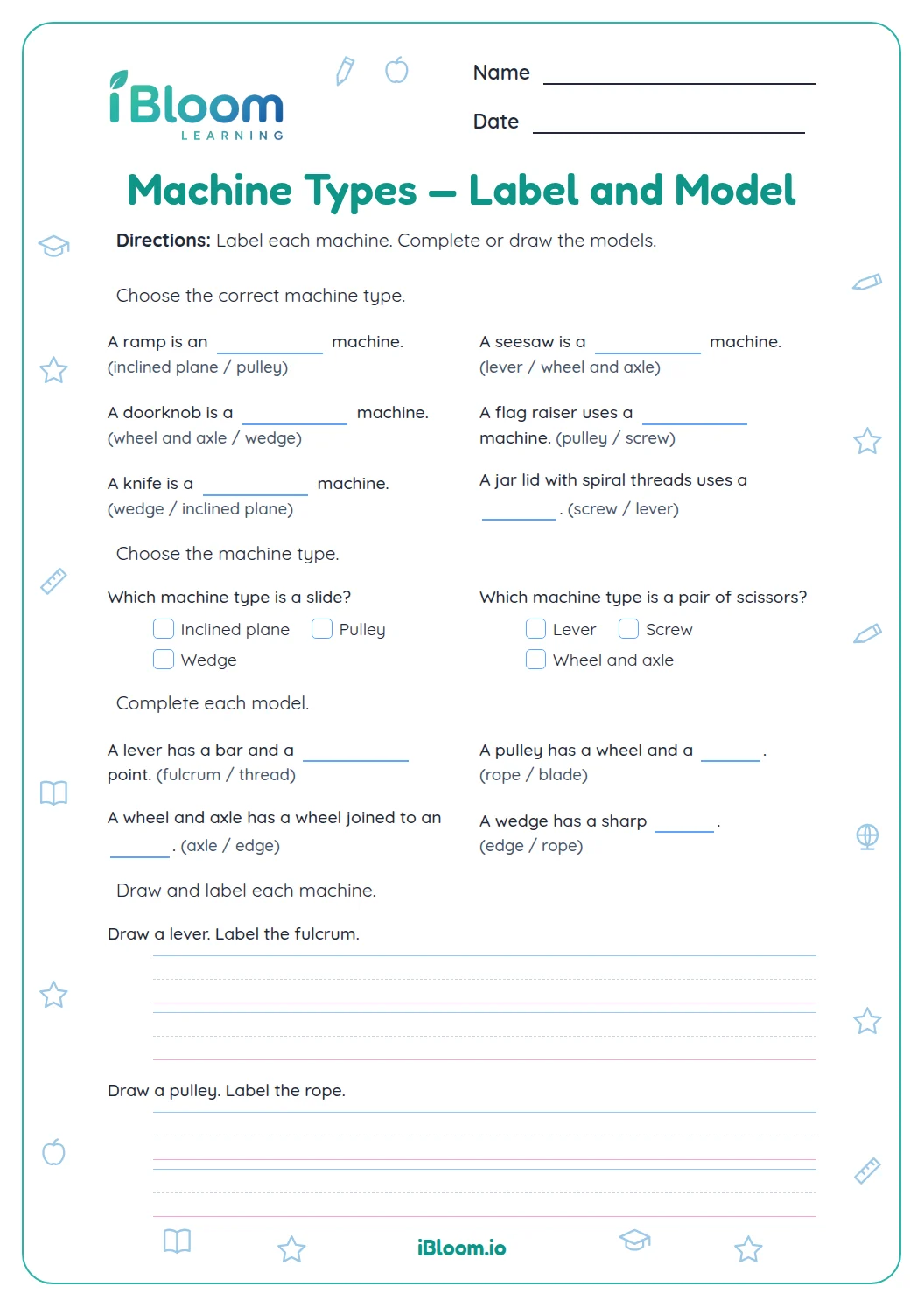
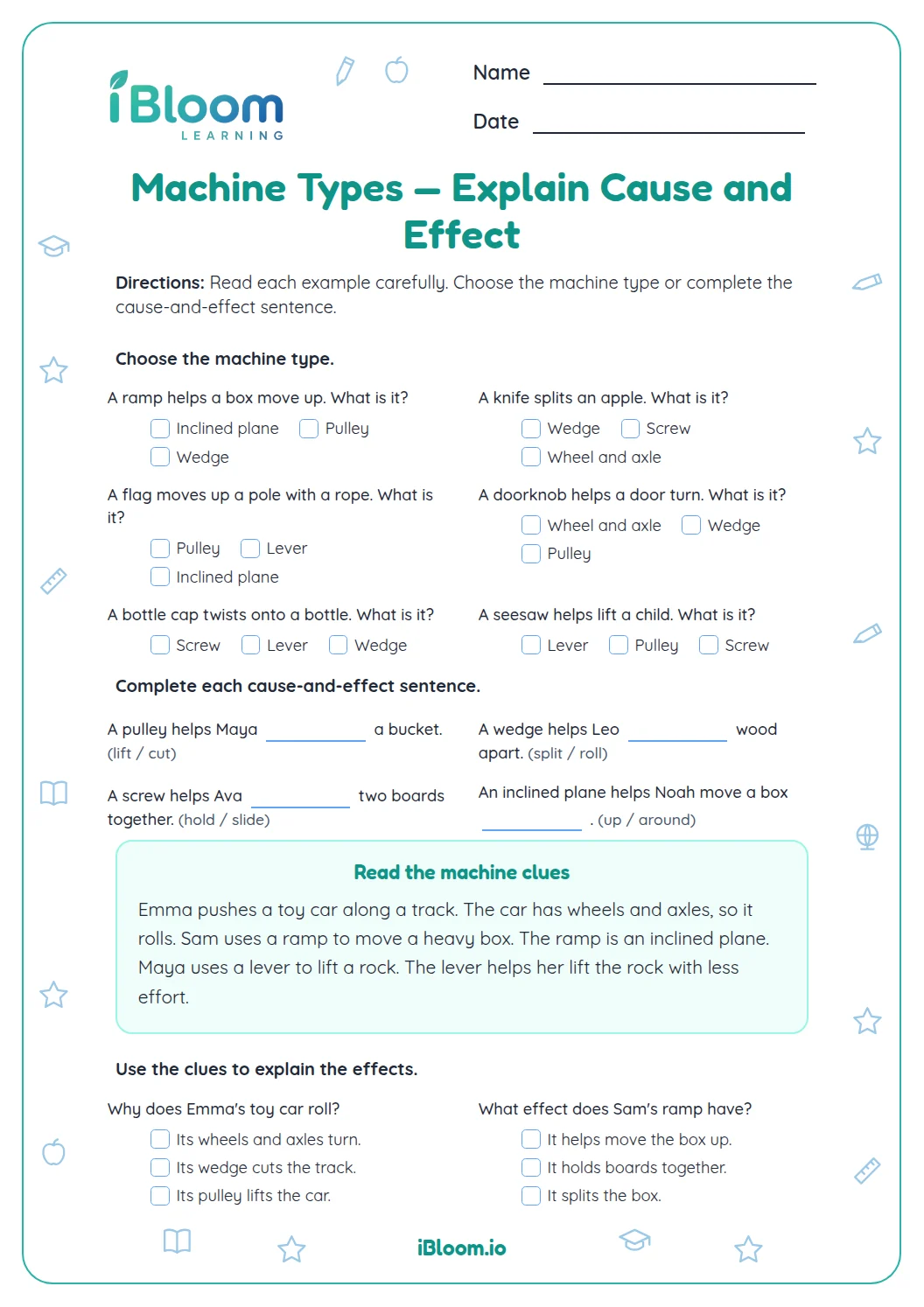
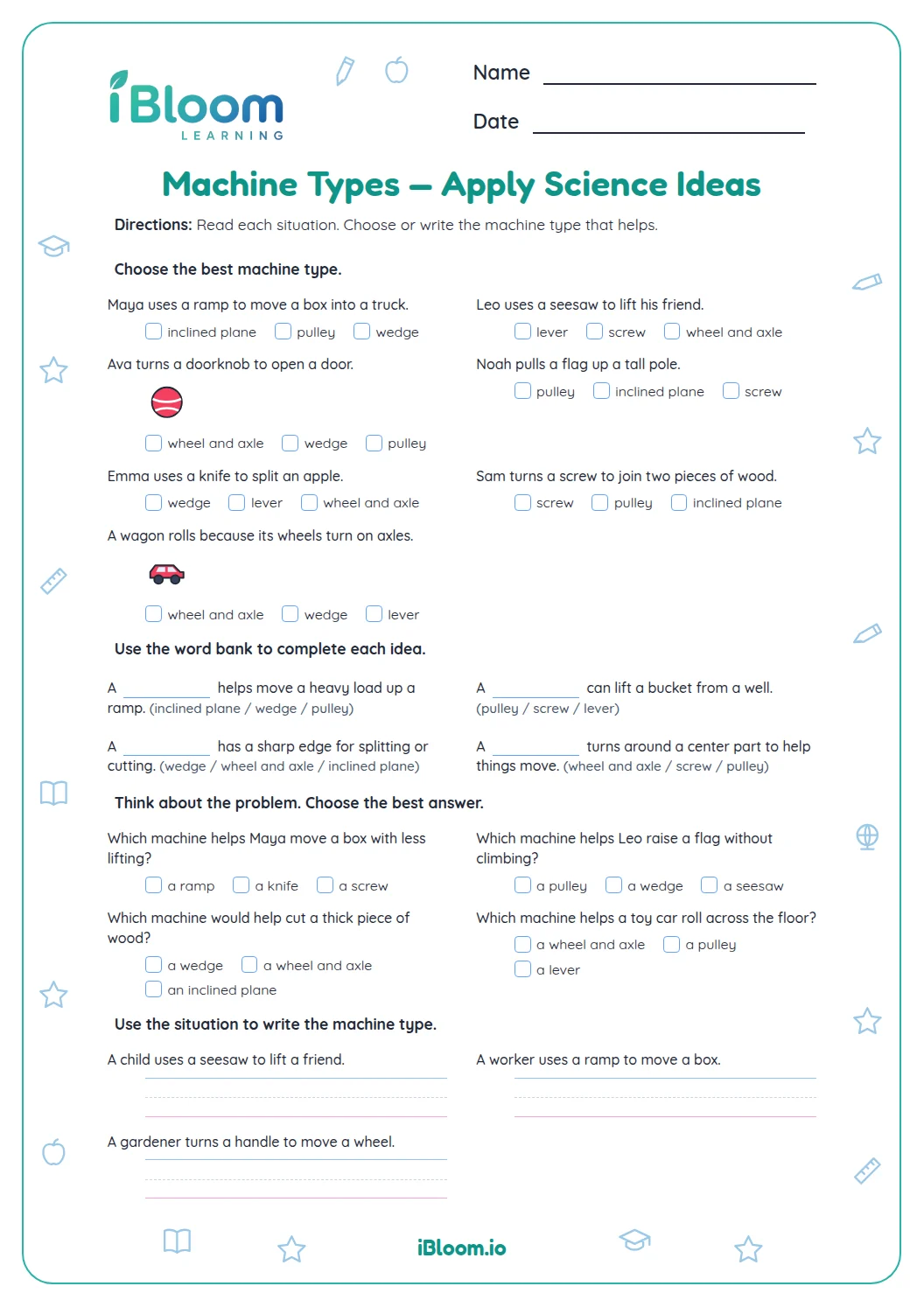
This free printable worksheet is for Grade 1 learners practicing how each machine helps through simple machines. It has 16 questions across the labeled parts and a separate answer key. Learners use what the object does and how its parts work to choose, complete, or explain an answer. The examples stay with the skill named in the worksheet title.
What does how each machine helps look like here?
The questions use simple machines. Learners pay attention to what the object does and how its parts work and check whether each answer fits the exact sentence, example, or situation.
How does the practice build?
The opening part establishes the task. Later questions ask learners to compare choices, apply the idea in a fresh example, or explain their thinking.
What is included in the printable?
There are 16 questions across 2 parts, followed by a separate answer key.
- Part A begins with notice the machines.
- The final items ask learners to apply or explain the target idea.
How to use this worksheet
- 1Read the directions and the first part heading together.
- 2Read each whole question before selecting or writing an answer.
- 3Point to the sentence detail or example that supports the response.
- 4For an explanation, name the clue and connect it to the answer.
- 5Check the key after completing the worksheet and revisit any mismatch.
Common mistakes and quick fixes
The mistake
Choosing an answer after reading only part of the prompt.
The fix
Read the full sentence or situation, then compare every choice.
The mistake
Giving a plausible answer that does not fit the specific clue.
The fix
Find the exact word, detail, or feature that supports the response.
The mistake
Writing an explanation without connecting evidence to the answer.
The fix
Name the clue and say what it tells you.
What to practice next
Make more practice
Questions parents and teachers ask
What does this worksheet practice?
This worksheet practices simple machines with 16 questions in several formats. Learners read each prompt closely, apply the target idea, and use the separate answer key to check their work. An adult can ask the learner to explain one answer from each part.
How many questions are included?
There are 16 questions arranged in three parts. The first part introduces the task, and later items ask learners to apply the same skill with additional detail. The answer key is provided separately so children can finish the practice before checking.
Is an answer key included?
Yes. A separate answer key lists the expected answer to each question. For an open response, the key gives a sample idea; accept other responses when they are accurate and supported by the task. Ask the learner to point to a specific example on the worksheet and tell how it supports the answer. This makes the checking step part of the practice.
How can I use this page at home?
Print the worksheet and let the learner work through one part at a time. Read a prompt aloud if needed, then ask the learner to explain what clue, detail, or reasoning led to the answer. Check responses together with the answer key.
How long should the worksheet take?
Plan for about 20 minutes, with flexibility for reading prompts aloud or discussing answers. Learners can pause between parts and return later. The main goal is careful practice and clear reasoning, rather than finishing quickly. Ask the learner to point to an example and explain how it supports the answer.