


About this worksheet
This Grade 1 science worksheet uses everyday actions to practice identifying pushes and pulls and describing changes in motion. Students classify six actions, reason about motion effects, and compare force strength while keeping the toy and floor the same. The 14 questions use concise situations instead of the old picture sort. The answer key lists one response for each item.
Aligned to K-PS2-1
How can you tell a push from a pull?
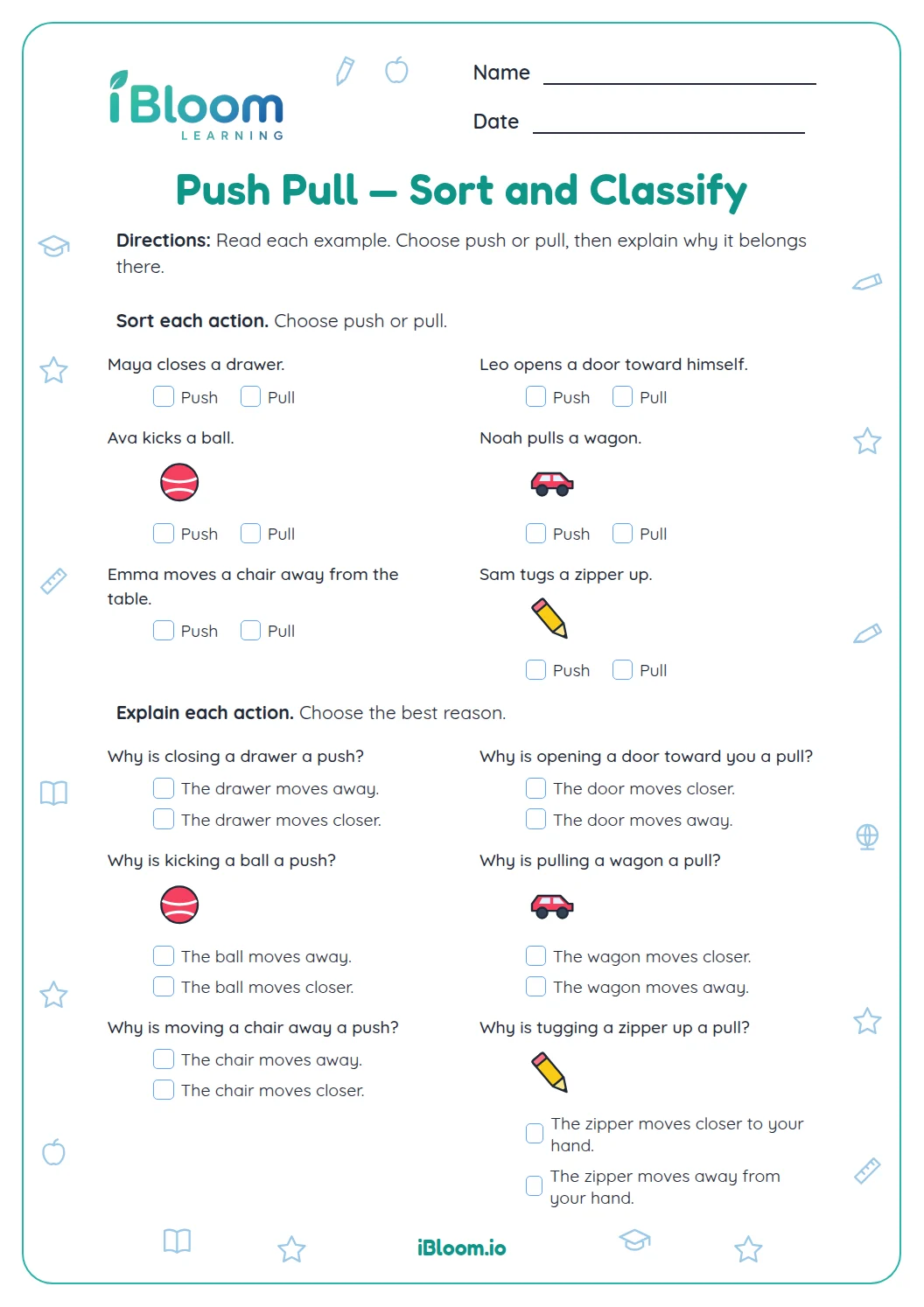
A push moves an object away from the person or source of the force. A pull brings an object toward it. In question 2, the rope draws the wagon toward the child, so it is a pull.
- 1A rope draws a wagon toward a child.
- 2The wagon moves toward the child: pull.
What can a force change?
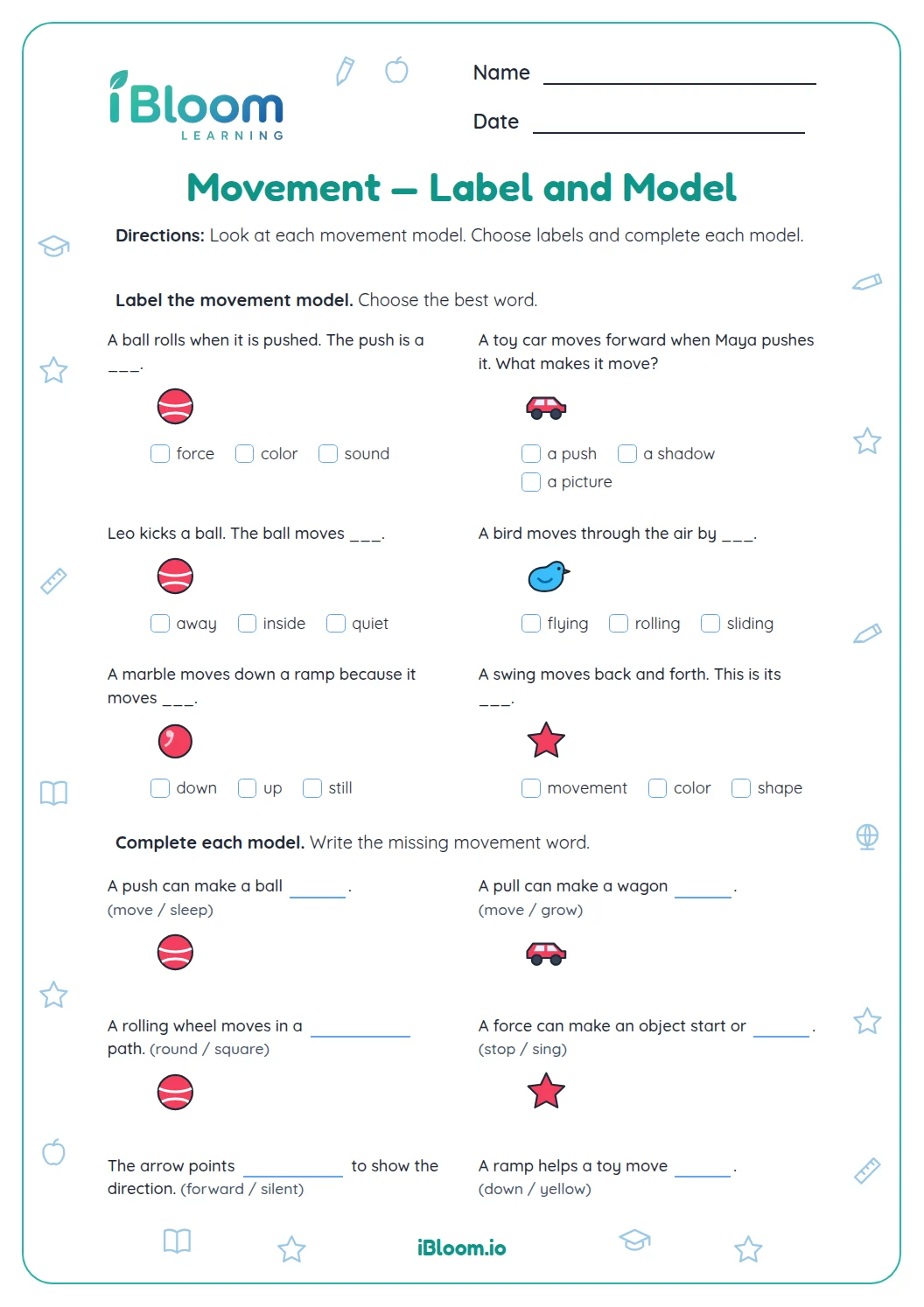
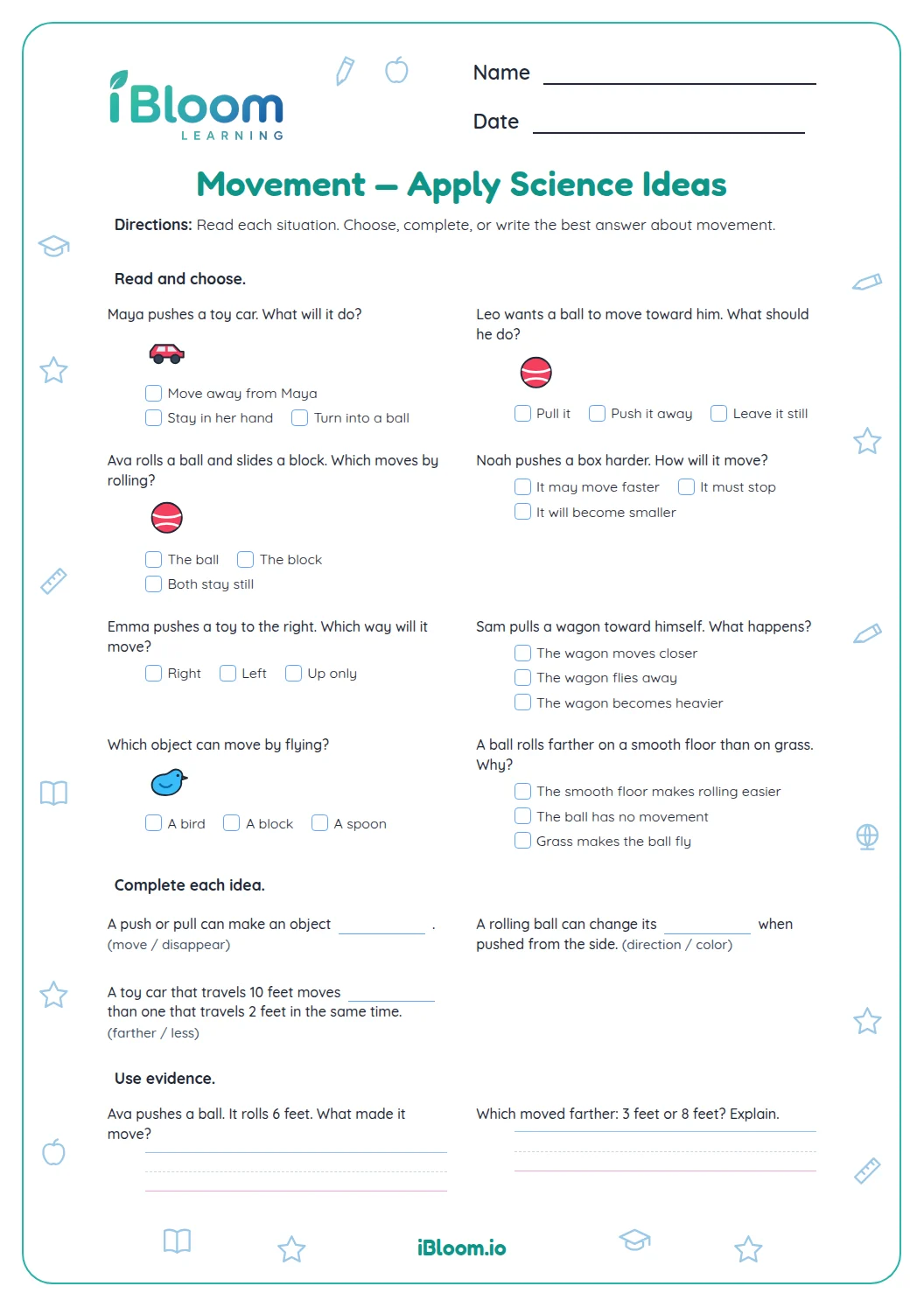
A force can start or stop motion, change speed, or change direction. Question 9 asks what a tap from the side can change; the ball’s direction can change.
How does direction matter?
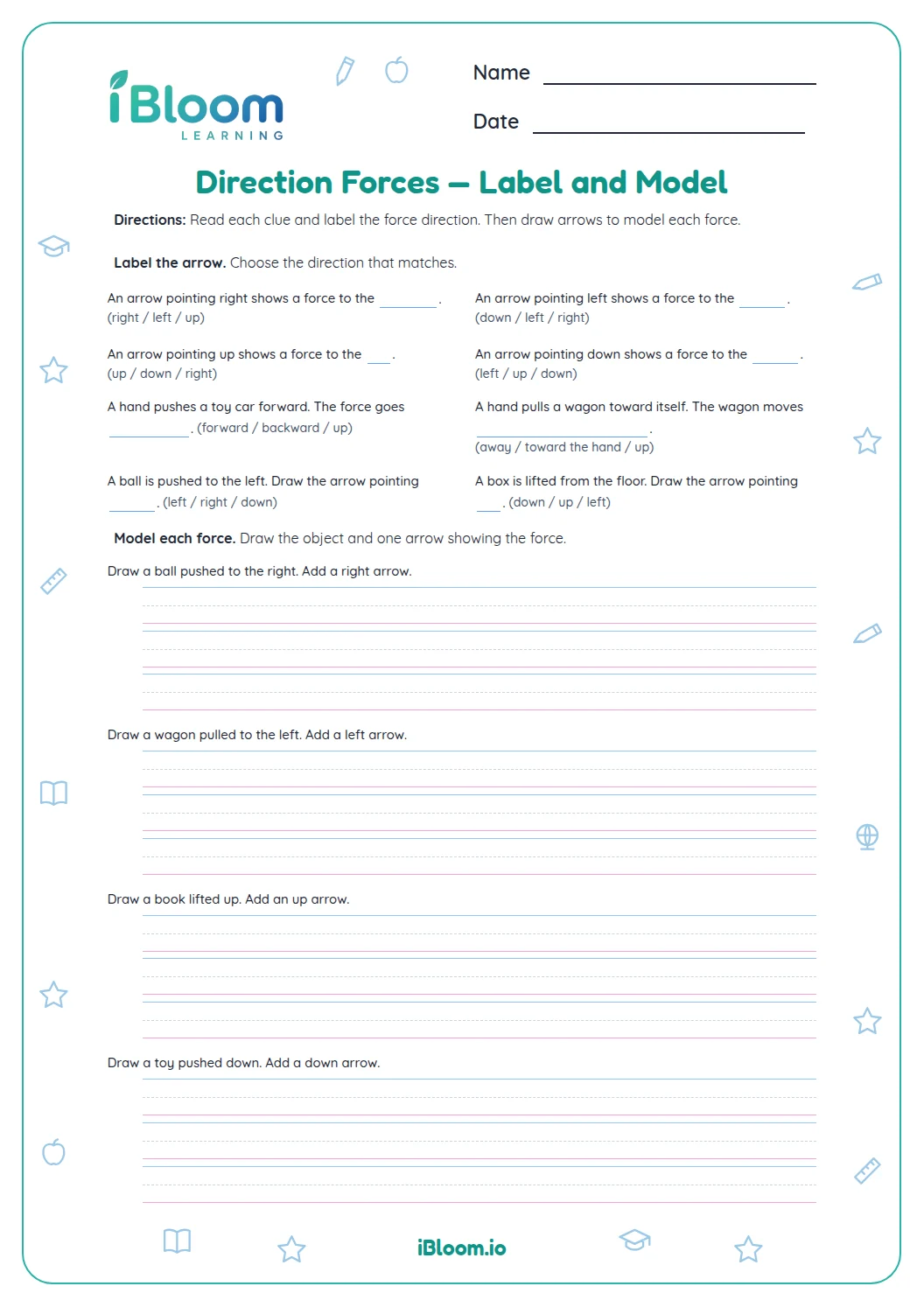
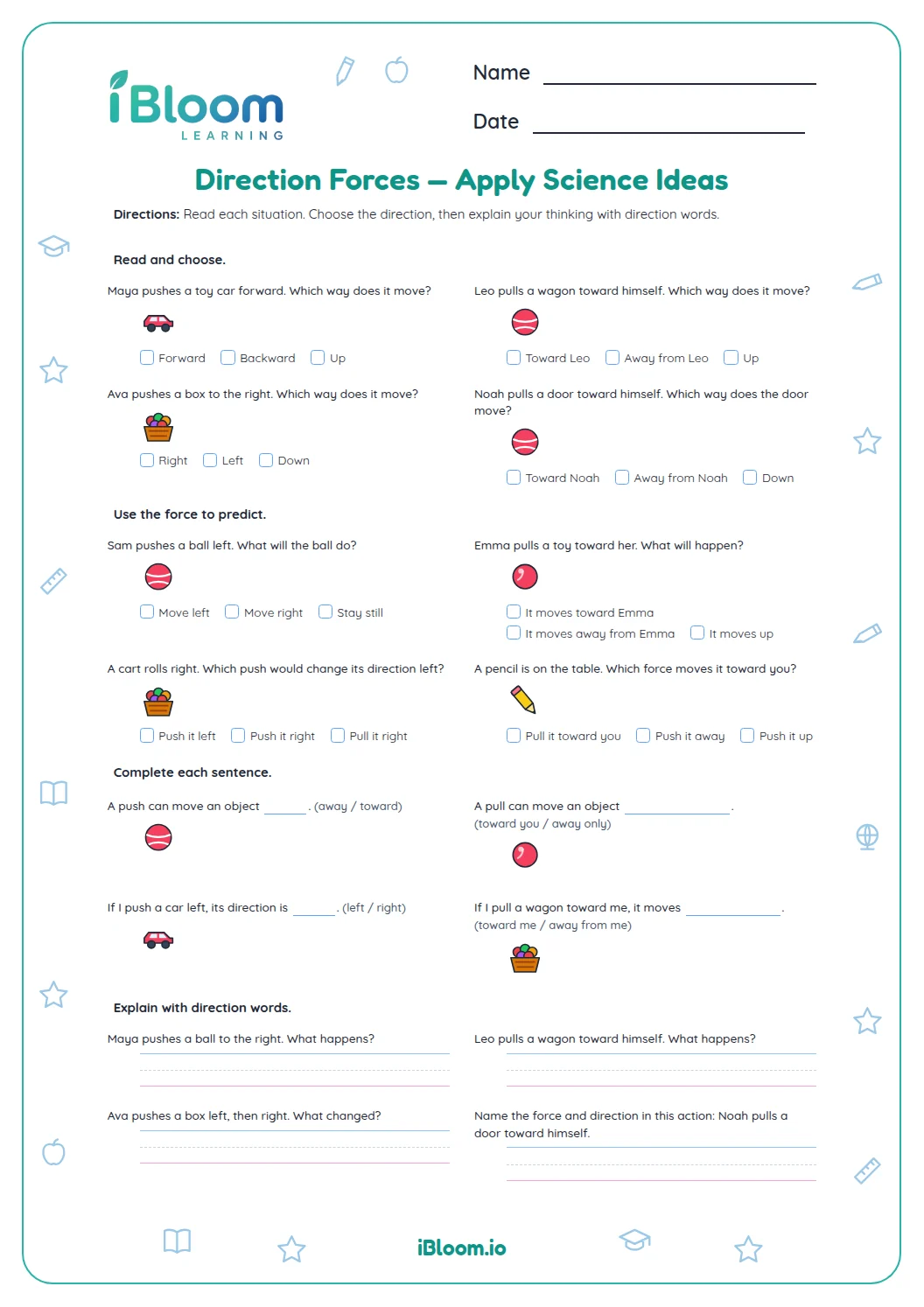
The words toward, away, left, and right describe direction. Compare the force with the object’s motion to decide what happens next.
How to use this worksheet
- 1Read who or what applies the force.
- 2Notice whether the object moves toward or away from that source.
- 3Name the force as a push or a pull.
- 4For motion questions, look for a change in speed, stopping, starting, or direction.
- 5Explain one answer by acting out the motion safely with a small toy.
Common mistakes and quick fixes
The mistake
Calling any moving object a push.
The fix
Ask whether the force moves the object away from or toward its source.
The mistake
Thinking a force changes an object’s color.
The fix
Forces change motion, such as speed or direction; they do not change color.
The mistake
Ignoring where the force acts.
The fix
Track the direction words in the sentence, such as left, away, or toward.
Next Generation Science Standards alignment
The scenarios connect pushes and pulls with observable changes in motion.
Compare how pushes or pulls in different directions can change an object’s motion.
On this sheet: The questions classify pushes and pulls and identify ways direction or strength can change motion.
Show the official wordingHide the official wording
Plan and conduct an investigation to compare the effects of different strengths or different directions of pushes and pulls on the motion of an object.
What to practice next
Make more practice
Further reading
Questions parents and teachers ask
What is a push?
There are 14 questions across two worksheet pages and a two-page answer key. Students classify pushes and pulls, identify motion changes such as stopping or turning, and compare a hard push with a gentle one. The final question asks what to keep the same in a fair comparison.
What is a pull?
A push moves an object away from the person or thing applying the force; a pull brings it closer. Students apply that idea to actions such as pressing a door, tugging a sled, or drawing a suitcase. Ask the child to describe which way the object moves.
Can a force change direction?
The middle questions connect pushes and pulls with motion. A force can start or stop motion, change speed, or change direction. For example, tapping a moving ball from the side may change its direction. Students choose the effect that matches each short situation.
How many situations are on the page?
The final item asks what should stay the same when comparing gentle and hard pushes. Using the same toy and floor helps make the push strength the main change. The worksheet introduces a simple fair comparison; an adult can demonstrate with a toy car on a clear surface.
How can we make this idea hands-on?
Use a small toy car on a clear floor. Give it a gentle push, then tap it from the side after it rolls. Have your child describe whether it started, sped up, or changed direction. Students can act out a situation with a toy and describe whether it starts, stops, speeds up, or turns.
What should students practice next?
After sorting pushes and pulls, students can explore movement and then see how simple machines help people apply forces. Those related practice pages extend the same ideas with new examples. Students can act out a situation with a toy and describe whether it starts, stops, speeds up, or turns.