

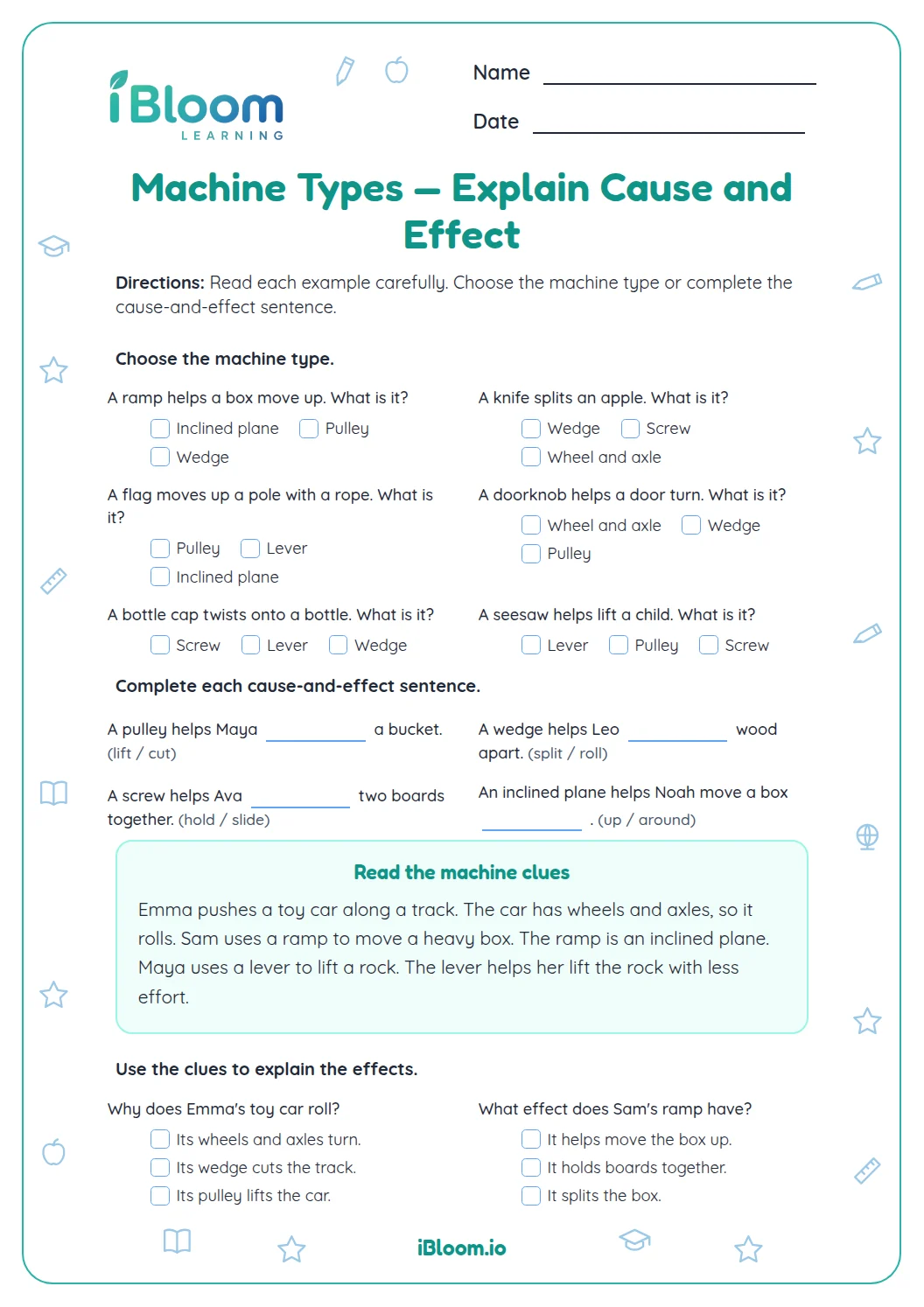
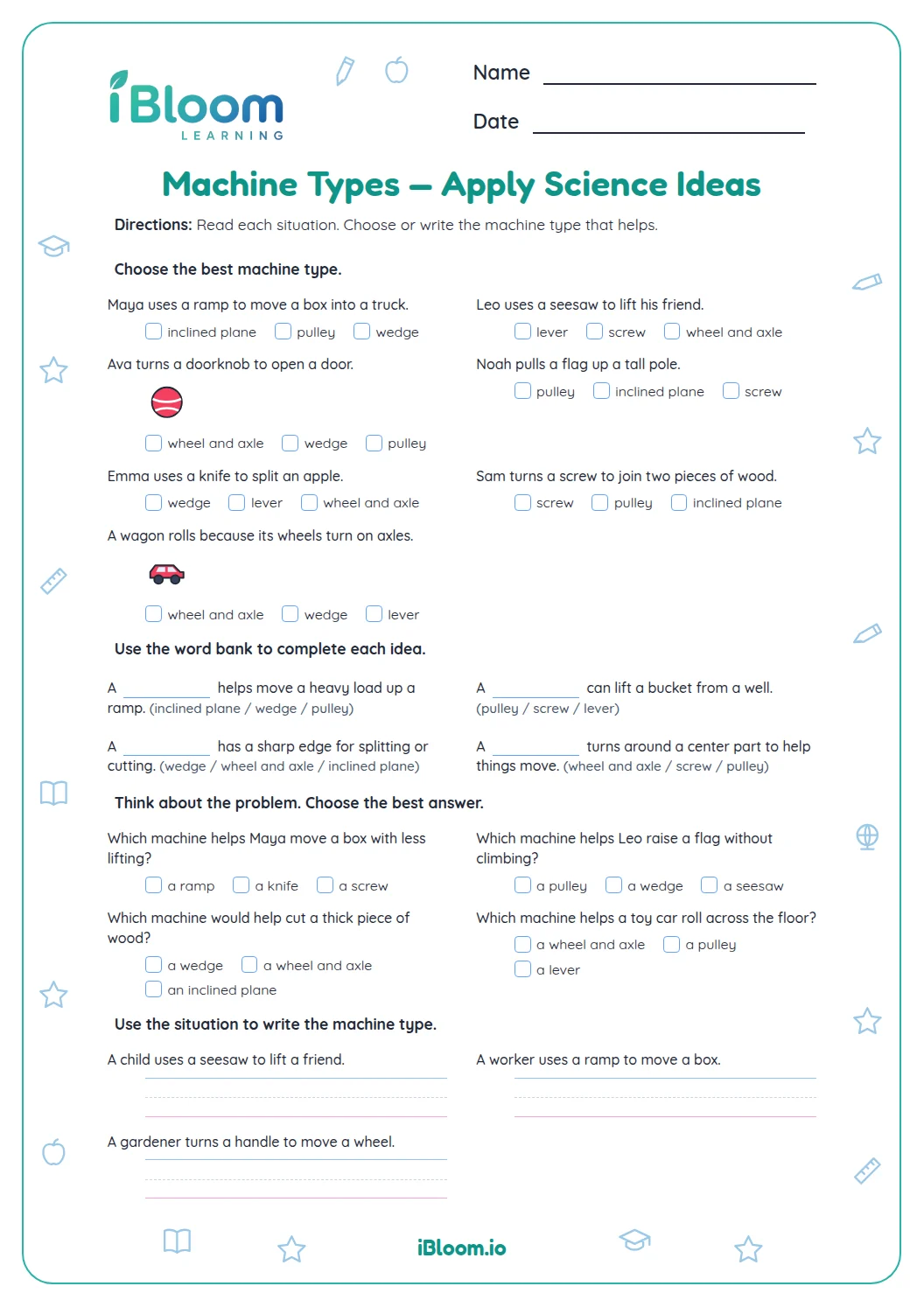
About this worksheet
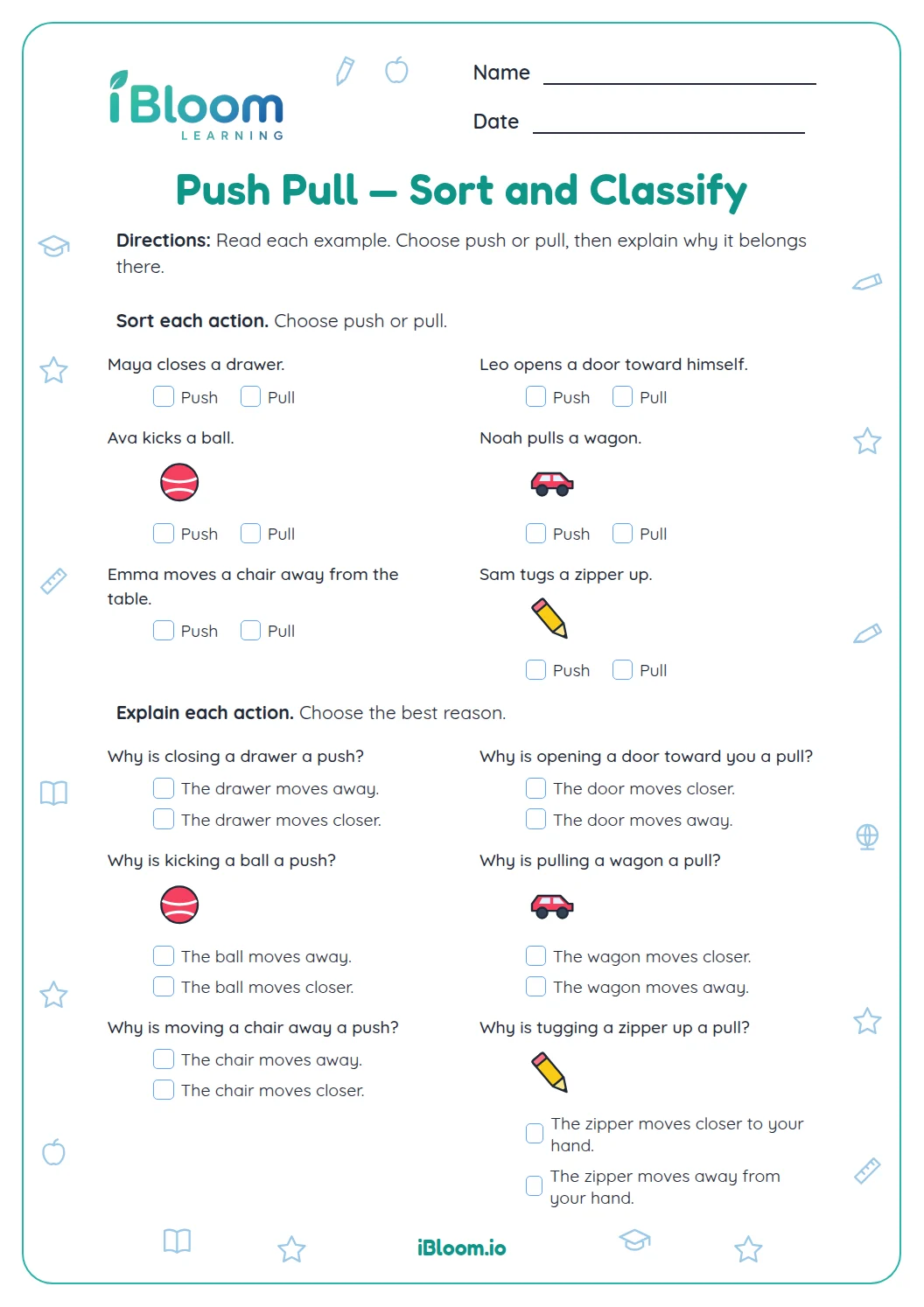
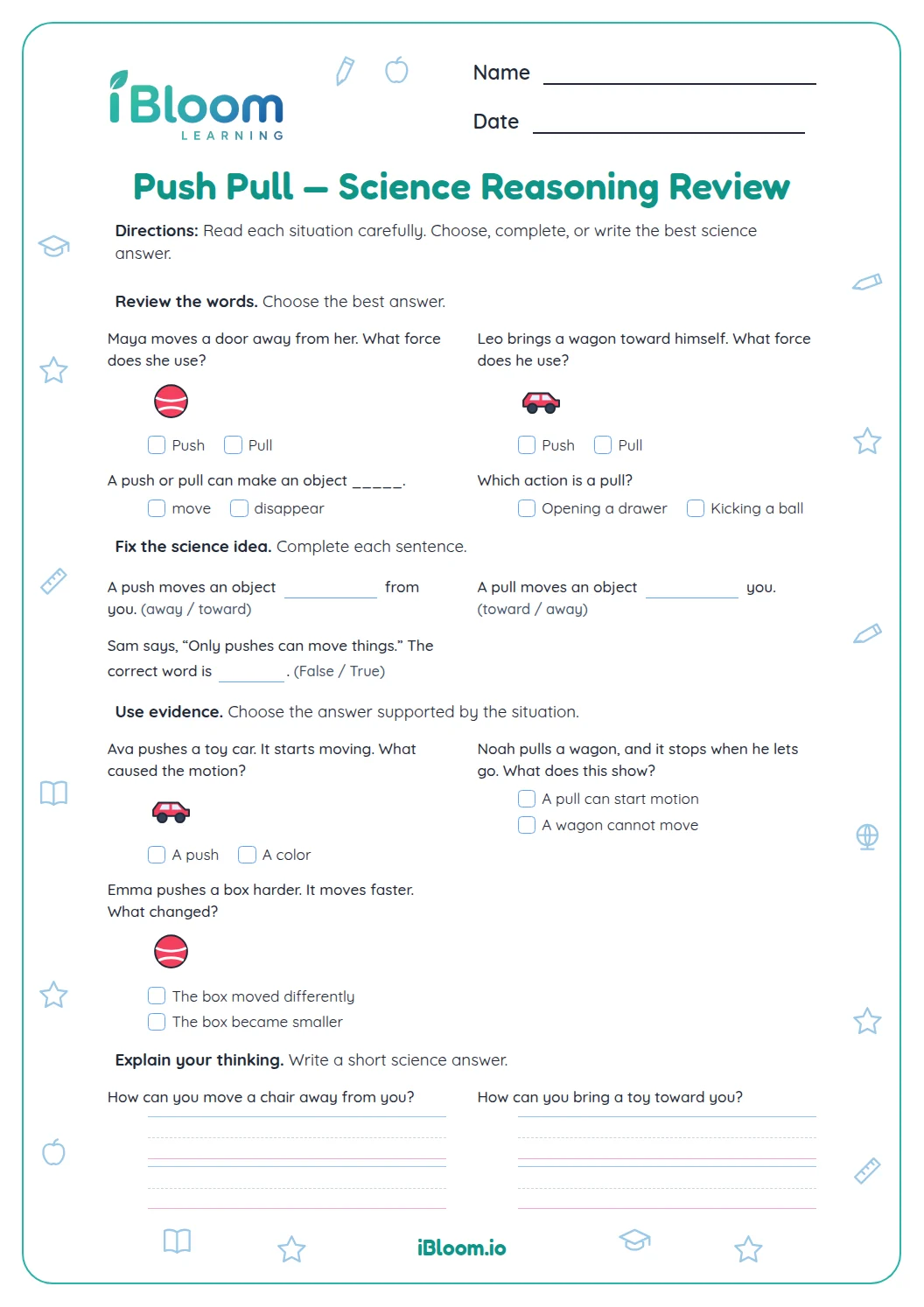
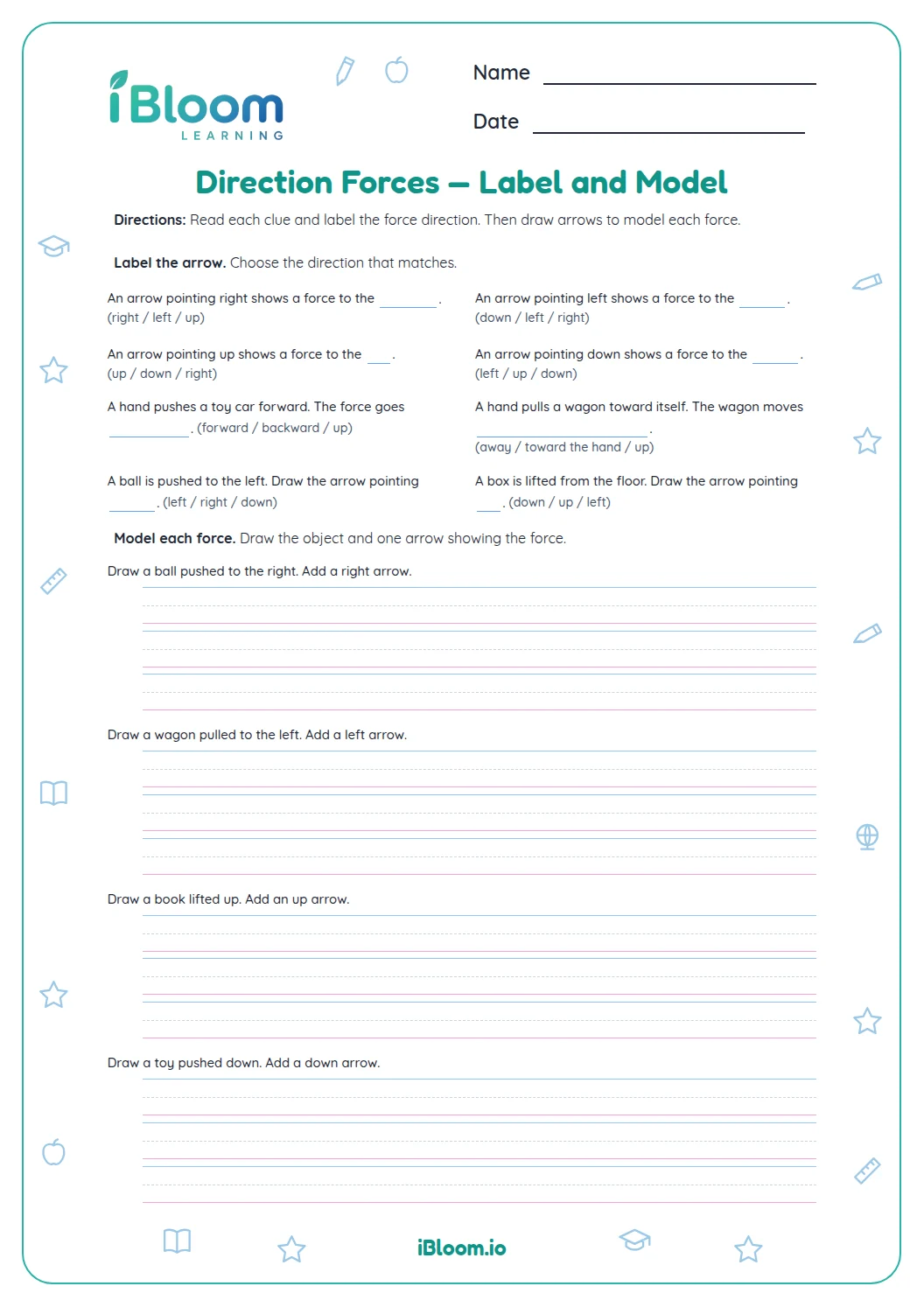
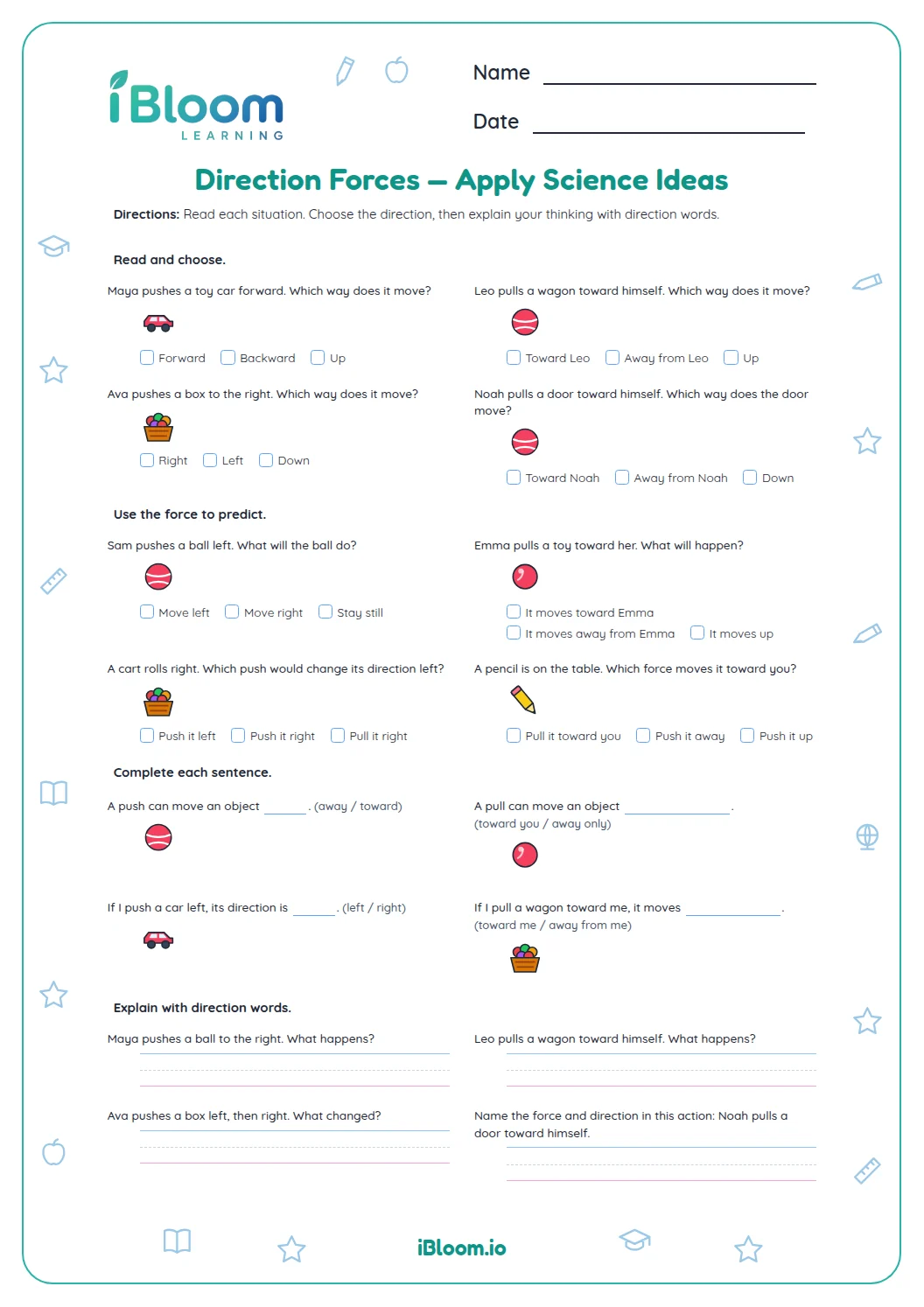
This free printable worksheet is for Kindergarten learners practicing pushes and pulls. It builds the named skill with focused questions, a short worked example, and a separate answer key. Children read each direction, try the item, and use the key to review their thinking. The worksheet aligns with K-PS2-1: compare how pushes and pulls of different strengths or directions affect an object’s motion.
Aligned to K-PS2-1
What does pushes and pulls mean?
Pushes and pulls asks a learner to notice how details work together, then choose or explain a response that fits. This sheet keeps each item focused so a child can use the same thinking more than once.
The questions move from identifying the skill to applying it with less support. Encourage a child to point to a clue, name a choice, or calculate each step before checking the key.
How can a child work through the questions?
Read the entire prompt before answering. Find the detail or operation that matters, then check that the response answers the question asked.
- 1Cause: a child pushes a toy car.
- 2Effect: the car starts moving.
- 3The push changed the car’s motion.
What will the worksheet practice?
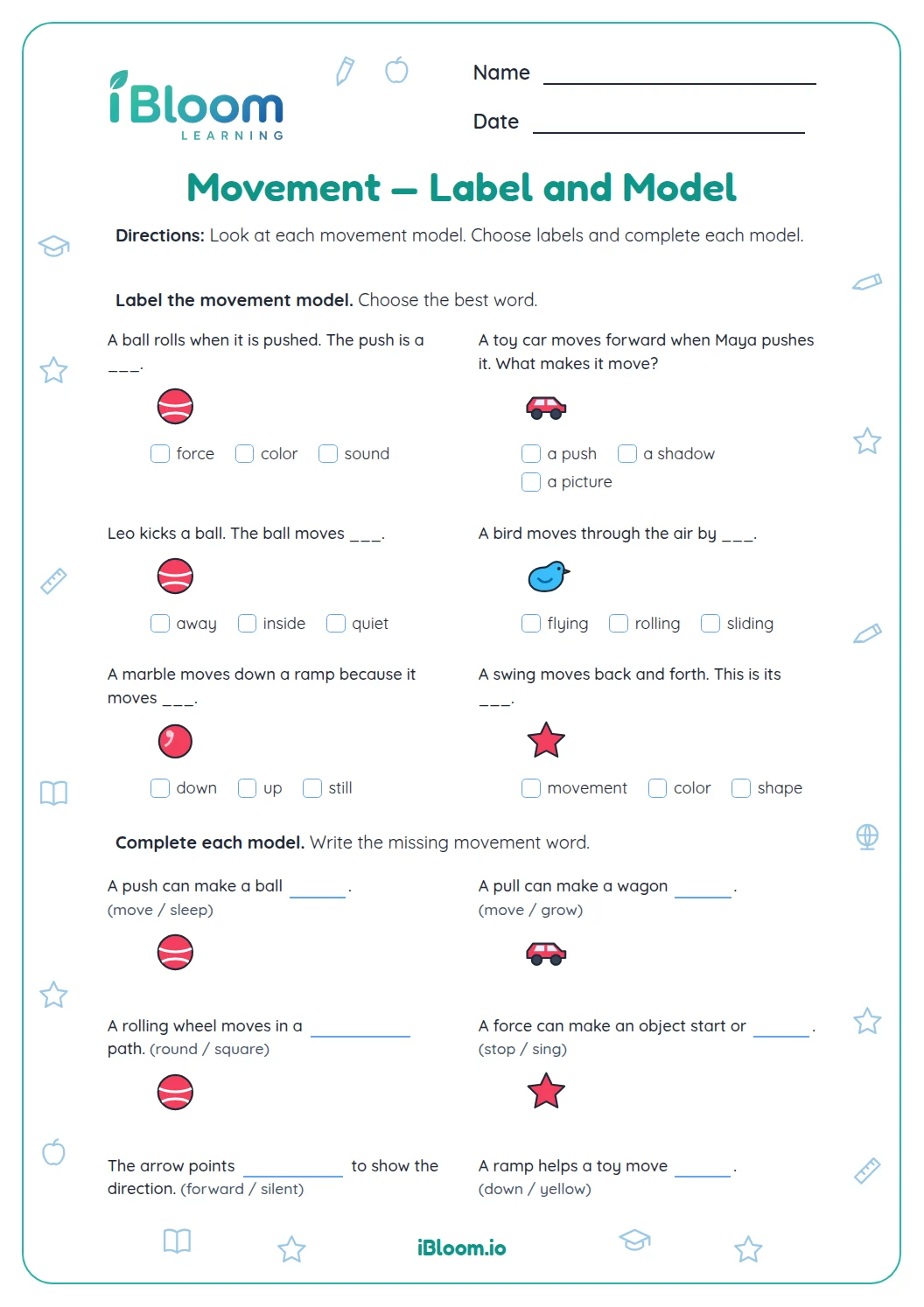
Part A asks children to identify pushes, pulls, and motion changes. Part B completes cause-and-effect statements about carts, balls, sleds, and collisions.
How to use this worksheet
- 1Read the instruction for the current part before starting.
- 2Complete one question at a time and mark the clue or step that supports the answer.
- 3For a written response, use a complete sentence and include the important detail.
- 4Pause after each part to review any uncertain items.
- 5Check the separate key and explain one answer in your own words.
Common mistakes and quick fixes
The mistake
Answering from a single familiar word or detail without rereading the whole prompt.
The fix
Read the full sentence or situation again and point to the clue that supports the answer.
The mistake
Choosing an answer that is related to the topic but does not answer the question.
The fix
Restate the question in your own words before choosing or writing.
The mistake
Stopping after a first thought when the item asks for evidence or a reason.
The fix
Add the detail or step that makes the response clear.
Curriculum alignment
This worksheet practices the named grade-level skill through explicit questions and answer checking.
Compare how pushes and pulls of different strengths or directions affect an object’s motion.
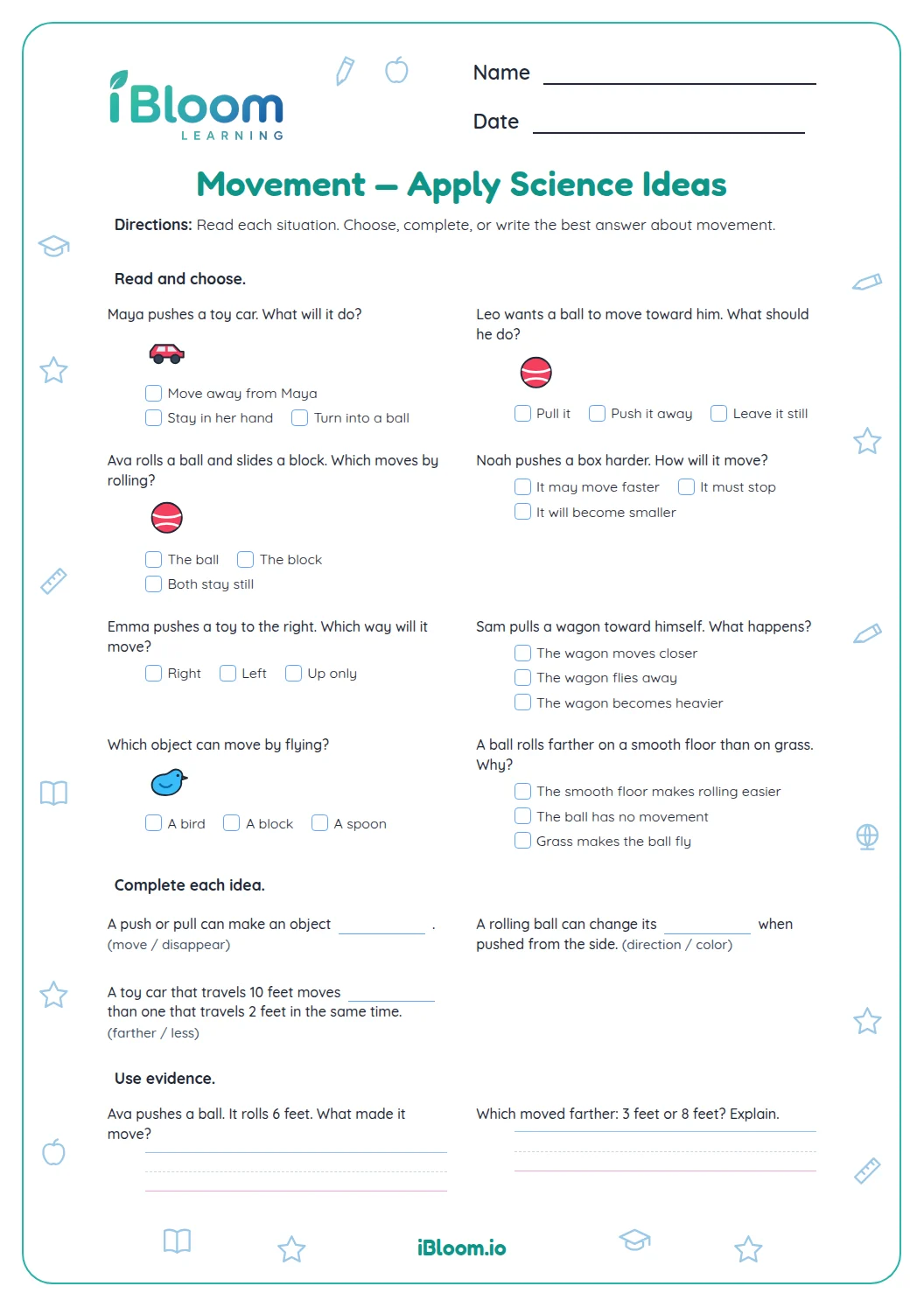
On this sheet: Children identify causes and predict how pushes or pulls change motion.
Show the official wordingHide the official wording
Plan and conduct an investigation to compare the effects of different strengths or different directions of pushes and pulls on the motion of an object.
What to practice next
Make more practice
Further reading
Questions parents and teachers ask
What skill does this pushes and pulls worksheet practice?
A push or pull can change an object’s motion. It may start or stop movement, make an object move faster or slower, or change its direction. The questions use familiar examples such as a toy car, a wagon, a ball, and a sled.
How many questions are on the printable?
There are 14 questions: six multiple-choice items and eight fill-ins. Children identify the force or its effect first, then complete cause-and-effect statements about familiar objects in motion. Examples include a toy car, a wagon, a ball, and a sled.
Is an answer key included?
Yes. The key gives an expected choice or word for all 14 items. For any response phrased differently, check that it names a sensible effect of the push or pull described. Ask the child to say what moved and how its motion changed.
How long should this worksheet take?
Plan for about 20 minutes to read the situations, answer the questions, and check the key. For a hands-on follow-up, gently push a toy car and compare its movement with a stronger push, changing only the strength of the push.
How can I support a child who gets stuck?
Ask the child to name what acted on the object first, then say what changed. A response such as “The child pulled the wagon, so it rolled toward the child” makes the cause and the effect clear. The answer key gives short examples to guide discussion.