Free printable practice
Forces Machines Practice Activities
Printable Grade 1 science activities for exploring pushes, pulls, movement, direction, simple machines, machine types, and designs inspired by nature.
Explore Forces Machines
Free printable worksheet PDFs
Preview every available page, then download the free worksheet PDF for home, homeschool, tutoring, or classroom practice.
Preview the exact activity before downloading it.
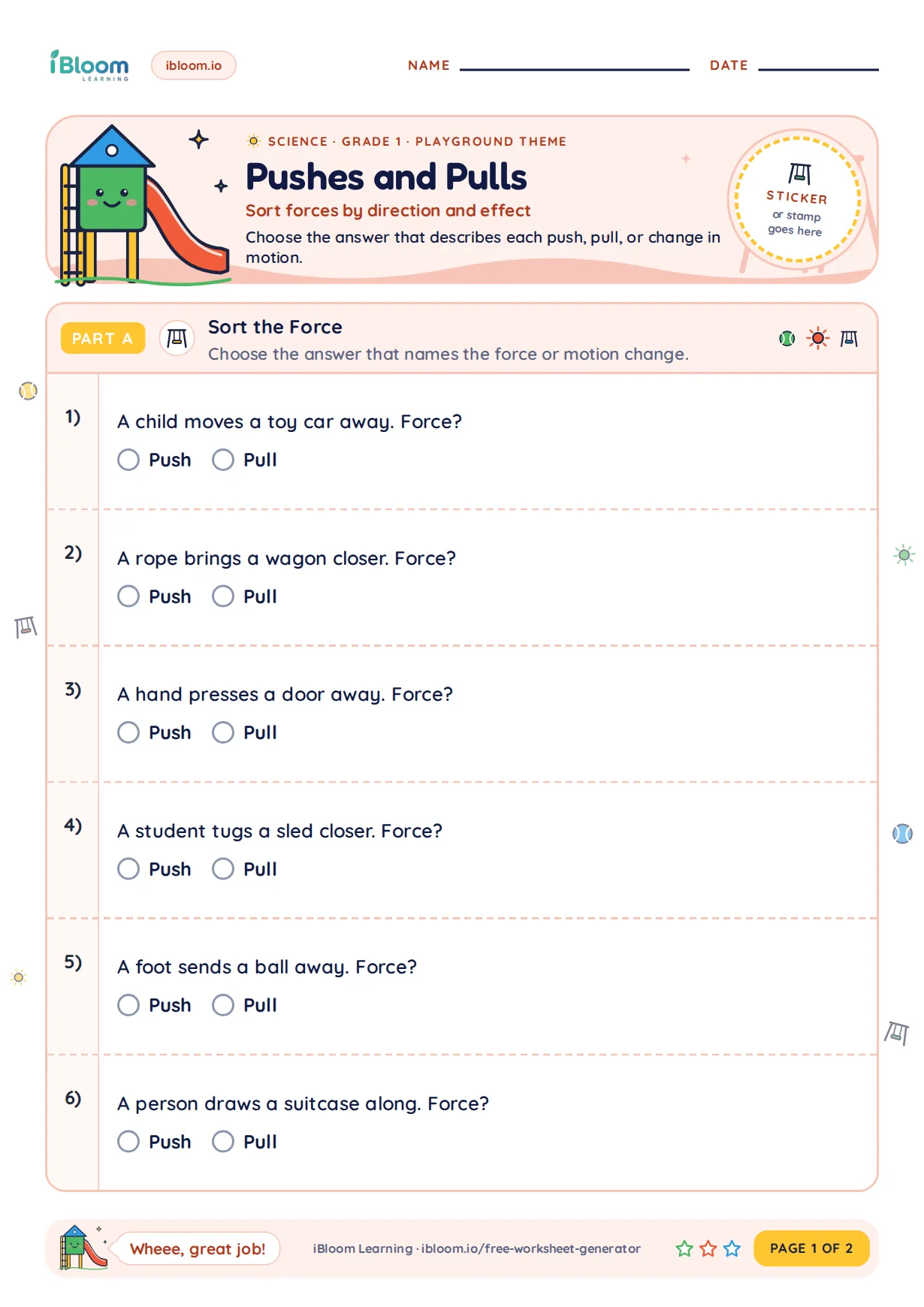 Direction Forces — Sort and ClassifyExplore direction forces practice activities within Forces Machines Practice Activities, organised so children, families, and elementary teachers can move from broad learning areas to focused printable practice. This sort and classify worksheet provides a distinct, age-appropriate way to practise the same lesson.Grade 1Free PDF preview4 pages
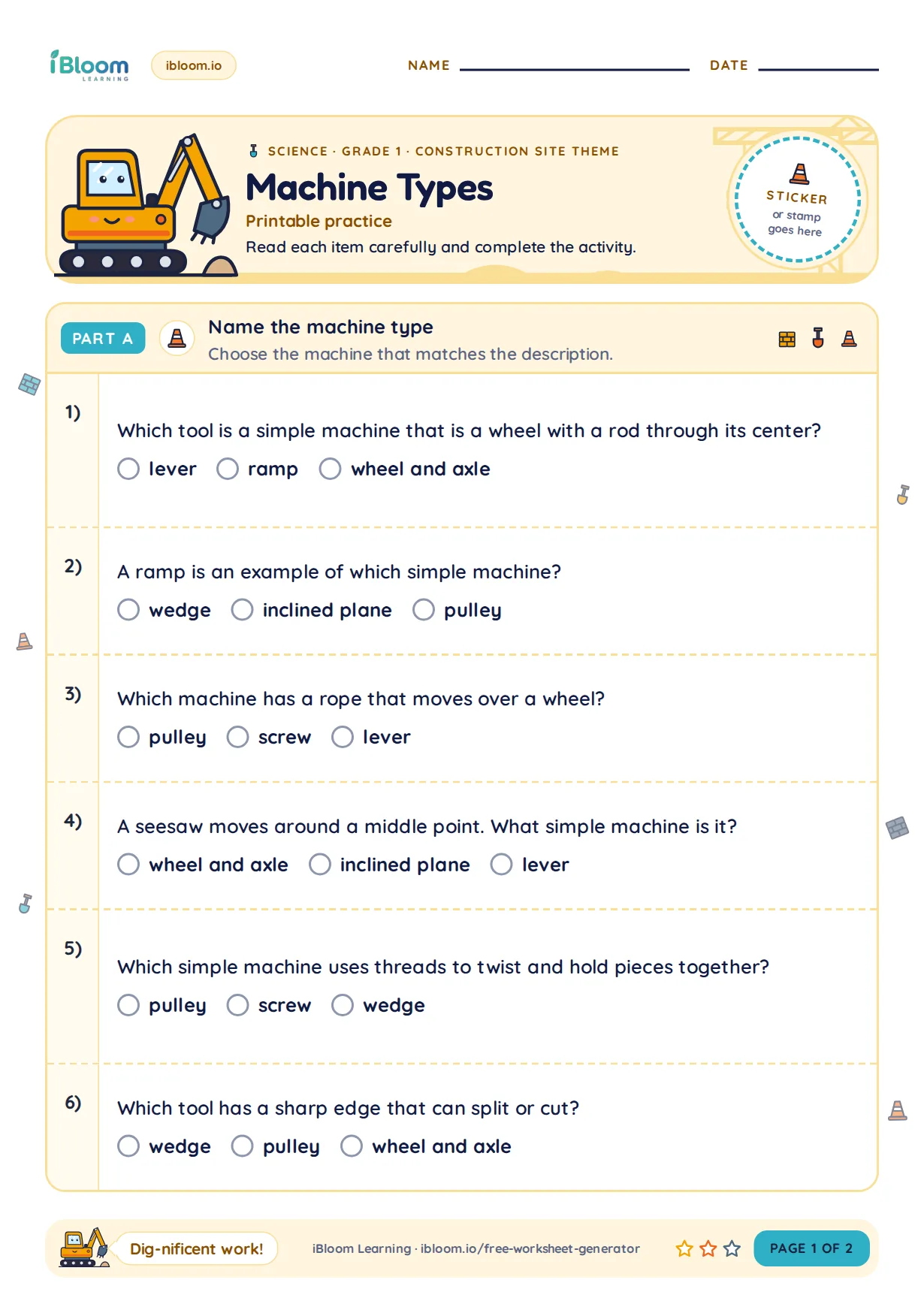 Machine Types — Sort and ClassifyExplore machine types practice activities within Forces Machines Practice Activities, organised so children, families, and elementary teachers can move from broad learning areas to focused printable practice. This sort and classify worksheet provides a distinct, age-appropriate way to practise the same lesson.Grade 1Free PDF preview
 Movement — Sort and ClassifyGrade 1 science worksheets that help children observe, describe, and compare how objects move in different ways. This sort and classify worksheet provides a distinct, age-appropriate way to practise the same lesson.Grade 1Free PDF preview
 Nature Machines — Sort and ClassifyGrade 1 science worksheets that help children spot simple machines in nature and compare natural shapes with human-made tools. This sort and classify worksheet provides a distinct, age-appropriate way to practise the same lesson.Grade 1Free PDF preview
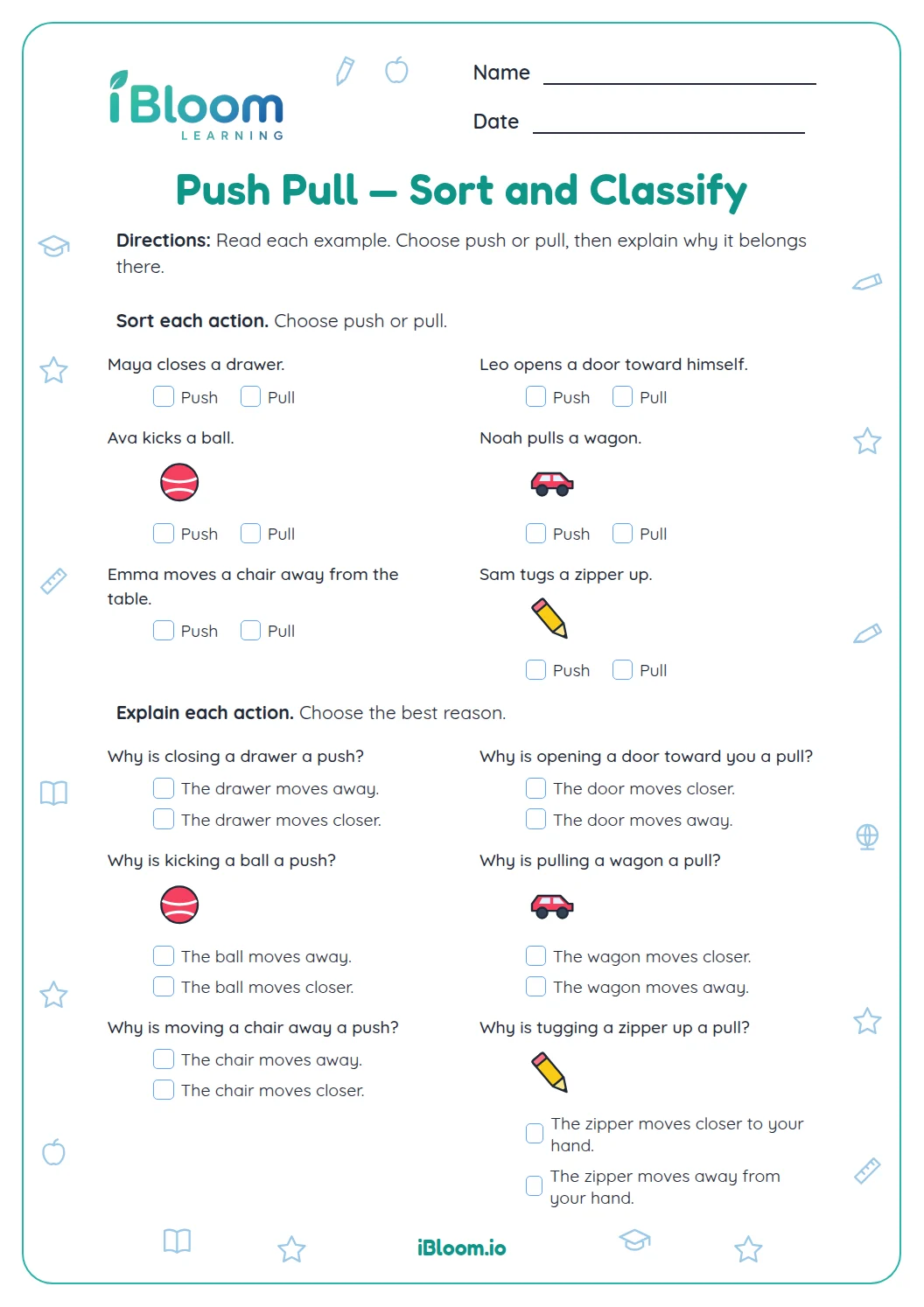 Push Pull — Sort and ClassifyGrade 1 science worksheets help children identify pushes and pulls and describe how these forces make objects start, stop, or move differently. This sort and classify worksheet provides a distinct, age-appropriate way to practise the same lesson.Grade 1Free PDF preview6 pages
 Simple Machines — Sort and ClassifyGrade 1 science worksheets for recognizing simple machines and explaining how they help people move, lift, cut, turn, or hold objects. This sort and classify worksheet provides a distinct, age-appropriate way to practise the same lesson.Grade 1Free PDF preview
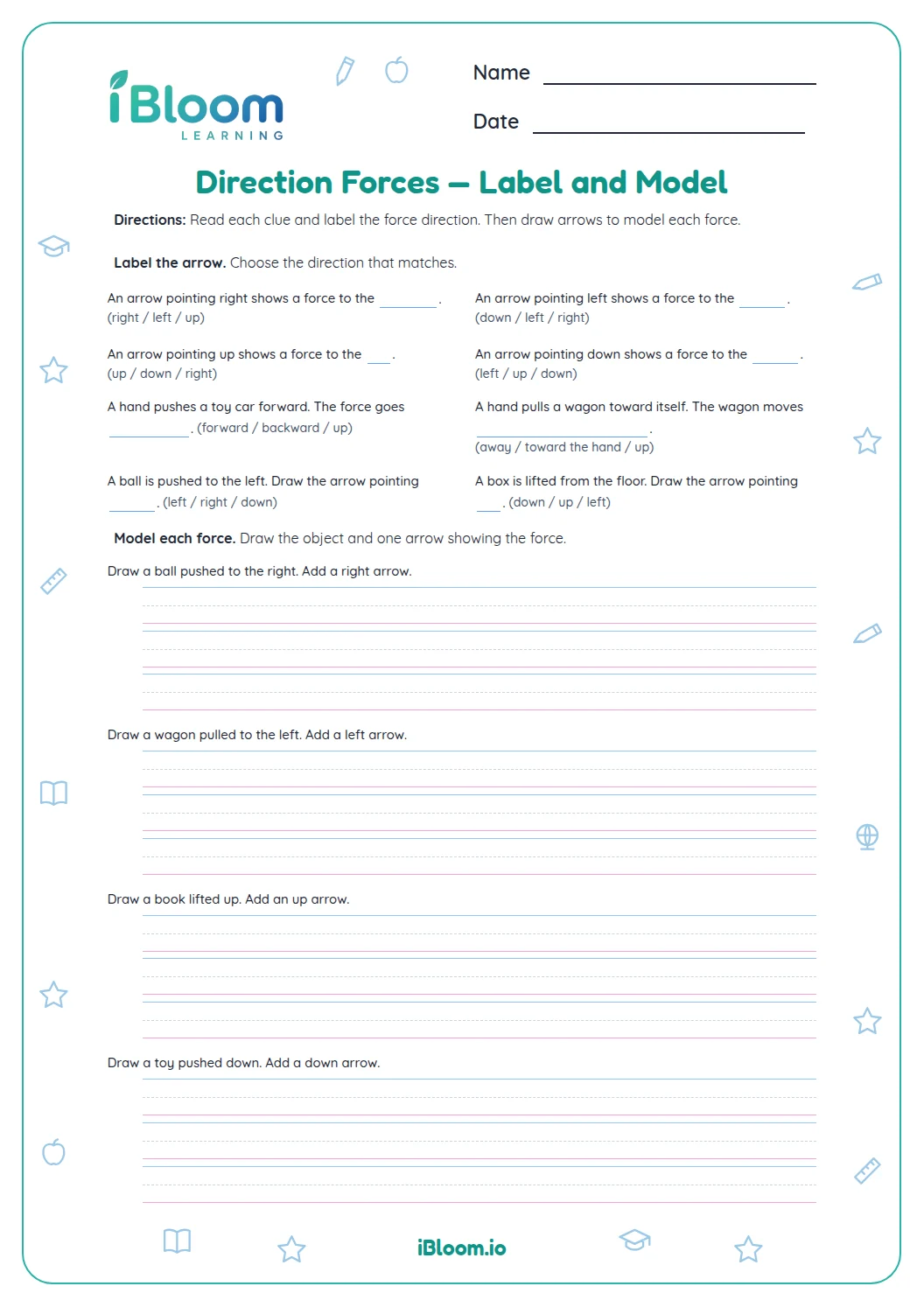 Direction Forces — Label and ModelExplore direction forces practice activities within Forces Machines Practice Activities, organised so children, families, and elementary teachers can move from broad learning areas to focused printable practice. This label and model worksheet provides a distinct, age-appropriate way to practise the same lesson.Grade 1Free PDF preview
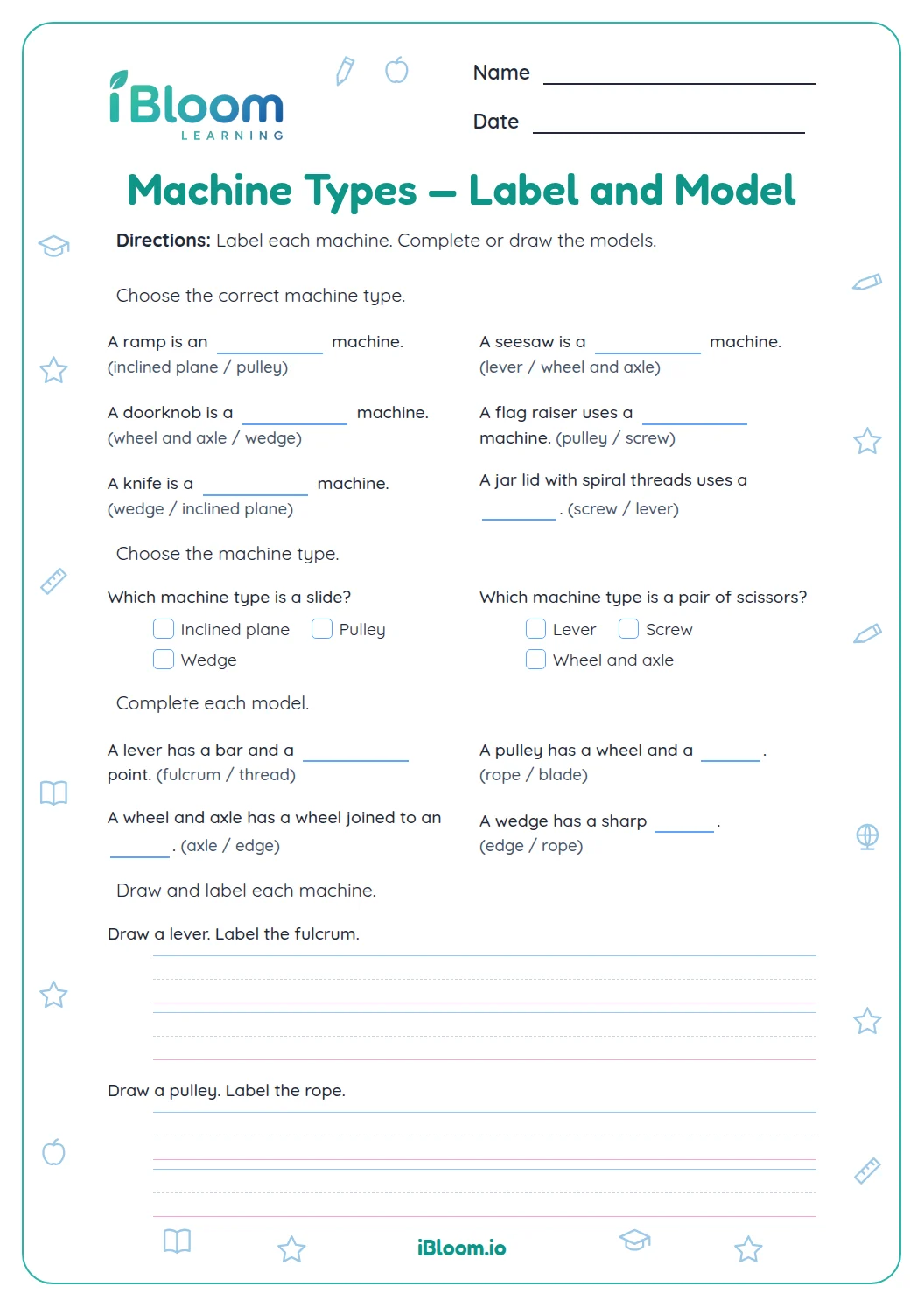 Machine Types — Label and ModelExplore machine types practice activities within Forces Machines Practice Activities, organised so children, families, and elementary teachers can move from broad learning areas to focused printable practice. This label and model worksheet provides a distinct, age-appropriate way to practise the same lesson.Grade 1Free PDF preview
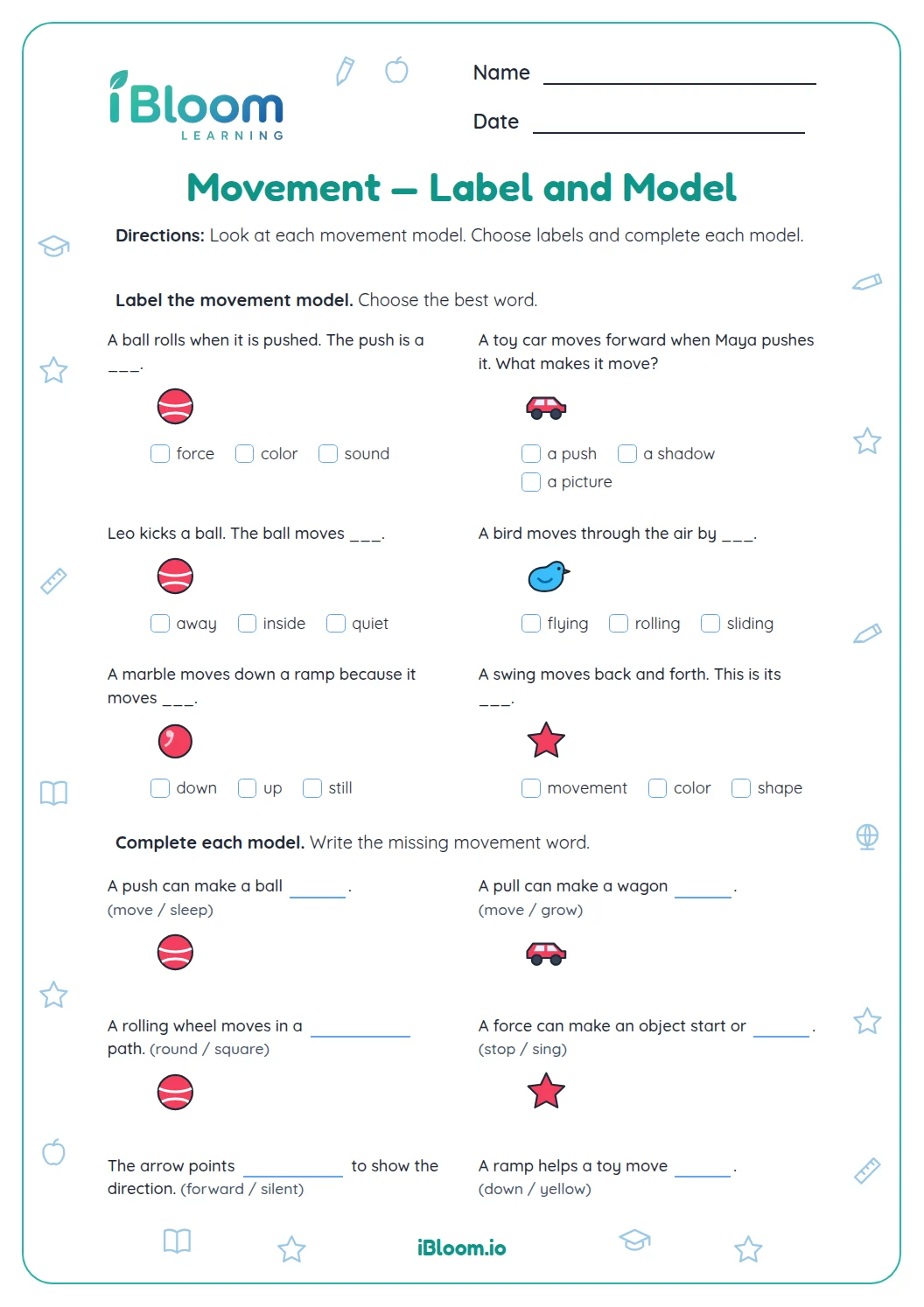 Movement — Label and ModelGrade 1 science worksheets that help children observe, describe, and compare how objects move in different ways. This label and model worksheet provides a distinct, age-appropriate way to practise the same lesson.Grade 1Free PDF preview
 Nature Machines — Label and ModelGrade 1 science worksheets that help children spot simple machines in nature and compare natural shapes with human-made tools. This label and model worksheet provides a distinct, age-appropriate way to practise the same lesson.Grade 1Free PDF preview4 pages
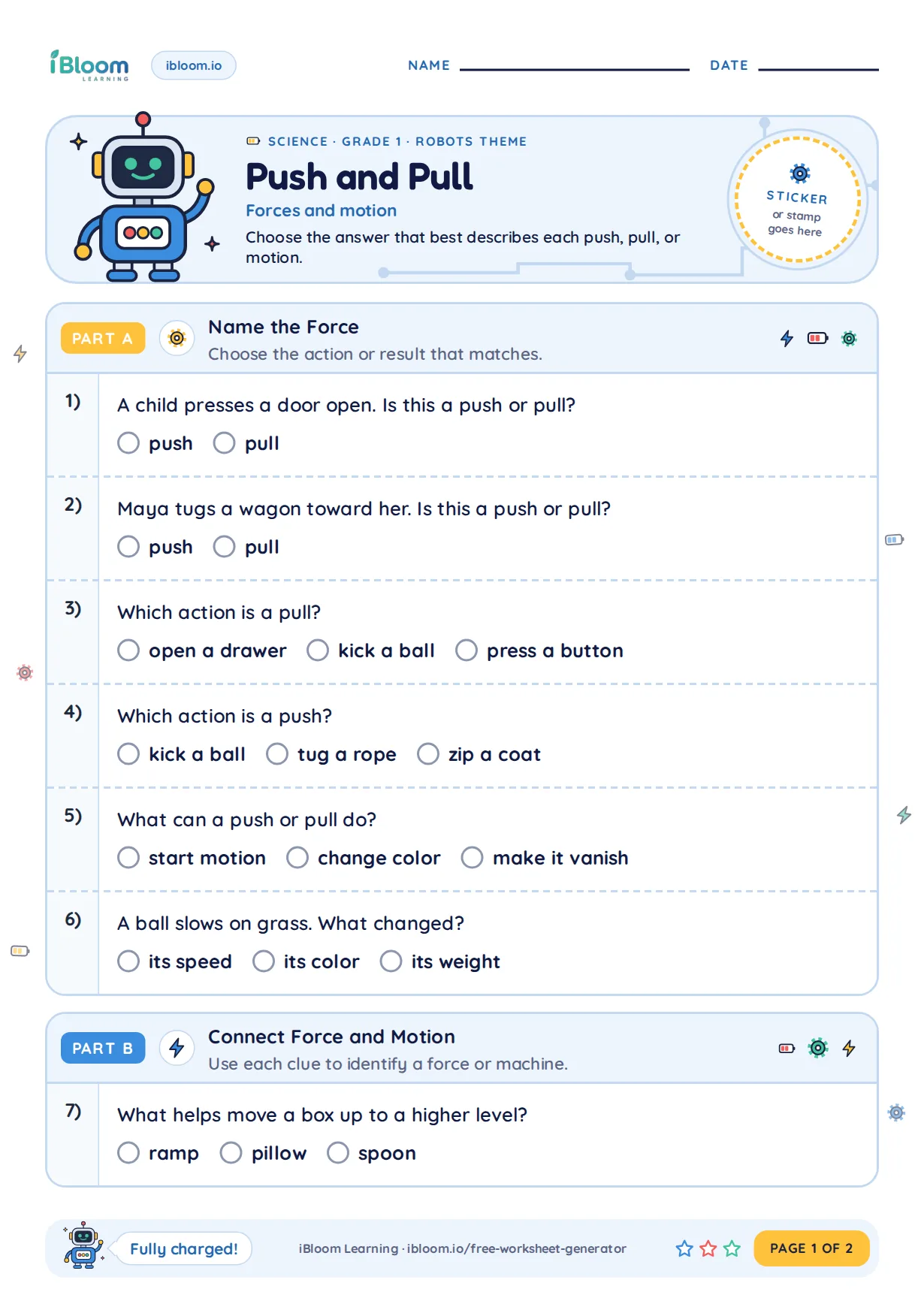 Push Pull — Label and ModelGrade 1 science worksheets help children identify pushes and pulls and describe how these forces make objects start, stop, or move differently. This label and model worksheet provides a distinct, age-appropriate way to practise the same lesson.Grade 1Free PDF preview4 pages
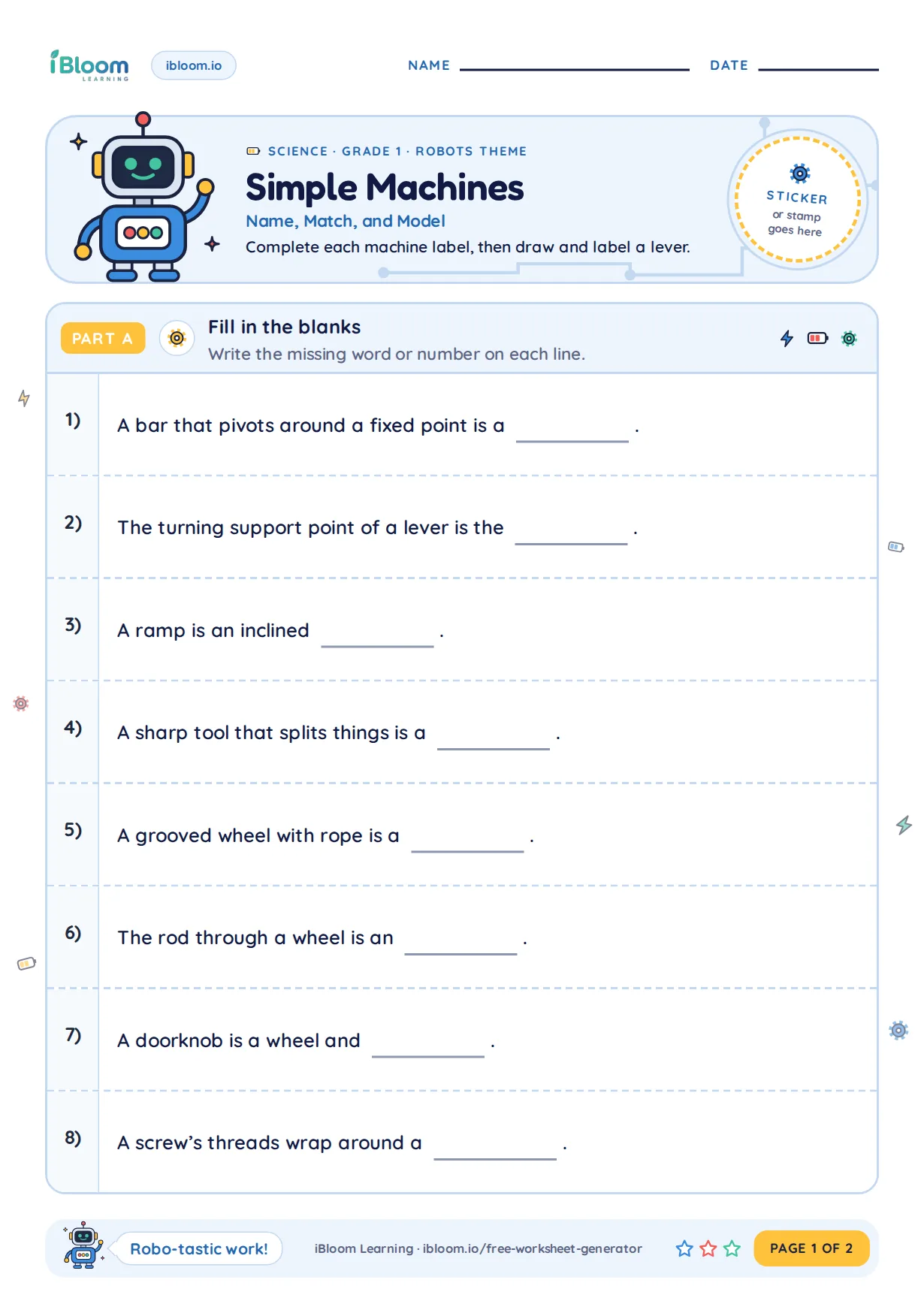 Simple Machines — Label and ModelGrade 1 science worksheets for recognizing simple machines and explaining how they help people move, lift, cut, turn, or hold objects. This label and model worksheet provides a distinct, age-appropriate way to practise the same lesson.Grade 1Free PDF preview4 pages
 Direction Forces — Explain Cause and EffectExplore direction forces practice activities within Forces Machines Practice Activities, organised so children, families, and elementary teachers can move from broad learning areas to focused printable practice. This explain cause and effect worksheet provides a distinct, age-appropriate way to practise the same lesson.Grade 1Free PDF preview
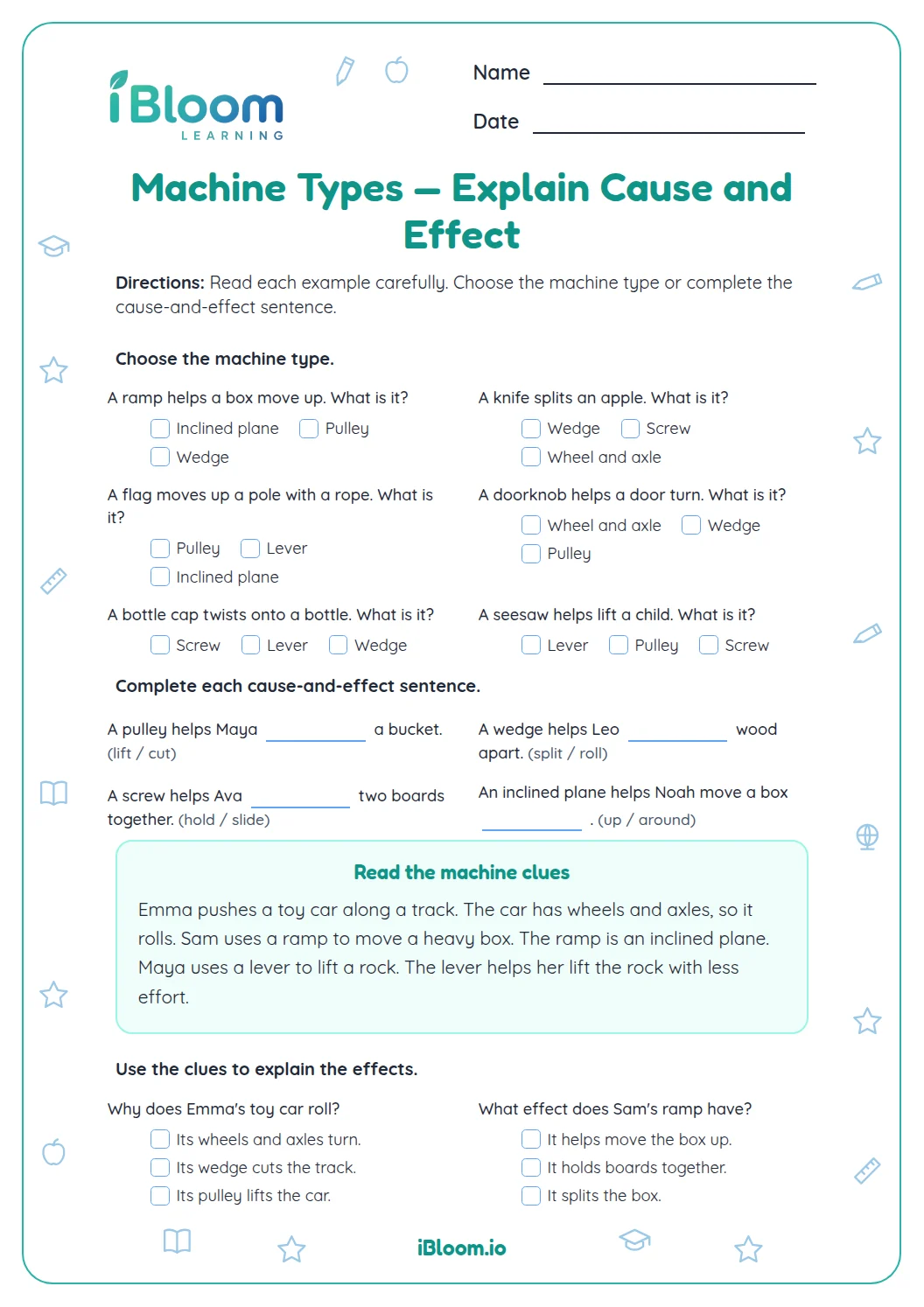 Machine Types — Explain Cause and EffectExplore machine types practice activities within Forces Machines Practice Activities, organised so children, families, and elementary teachers can move from broad learning areas to focused printable practice. This explain cause and effect worksheet provides a distinct, age-appropriate way to practise the same lesson.Grade 1Free PDF preview4 pages
 Movement — Explain Cause and EffectGrade 1 science worksheets that help children observe, describe, and compare how objects move in different ways. This explain cause and effect worksheet provides a distinct, age-appropriate way to practise the same lesson.Grade 1Free PDF preview4 pages
 Nature Machines — Explain Cause and EffectGrade 1 science worksheets that help children spot simple machines in nature and compare natural shapes with human-made tools. This explain cause and effect worksheet provides a distinct, age-appropriate way to practise the same lesson.Grade 1Free PDF preview4 pages
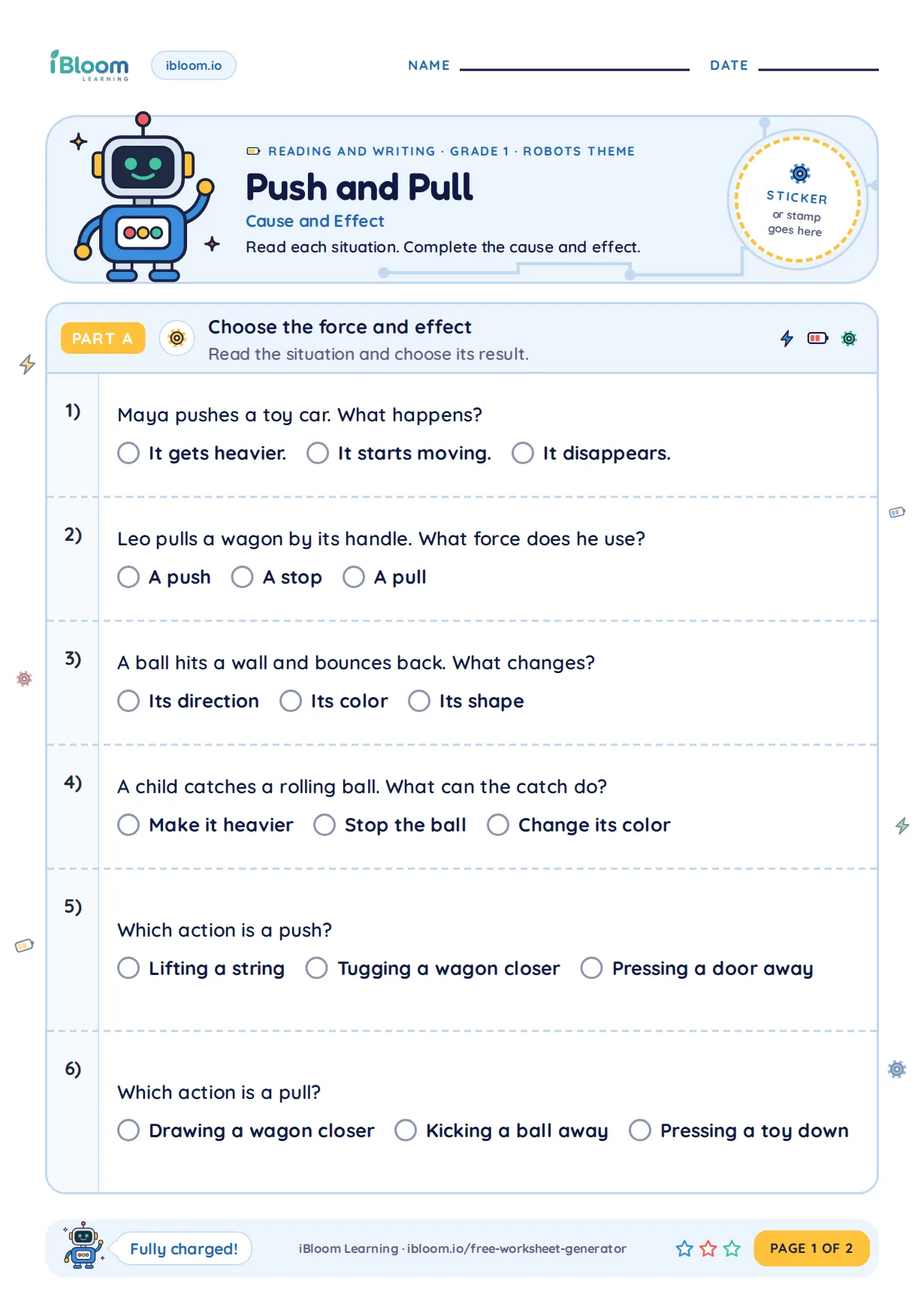 Push Pull — Explain Cause and EffectGrade 1 science worksheets help children identify pushes and pulls and describe how these forces make objects start, stop, or move differently. This explain cause and effect worksheet provides a distinct, age-appropriate way to practise the same lesson.Grade 1Free PDF preview
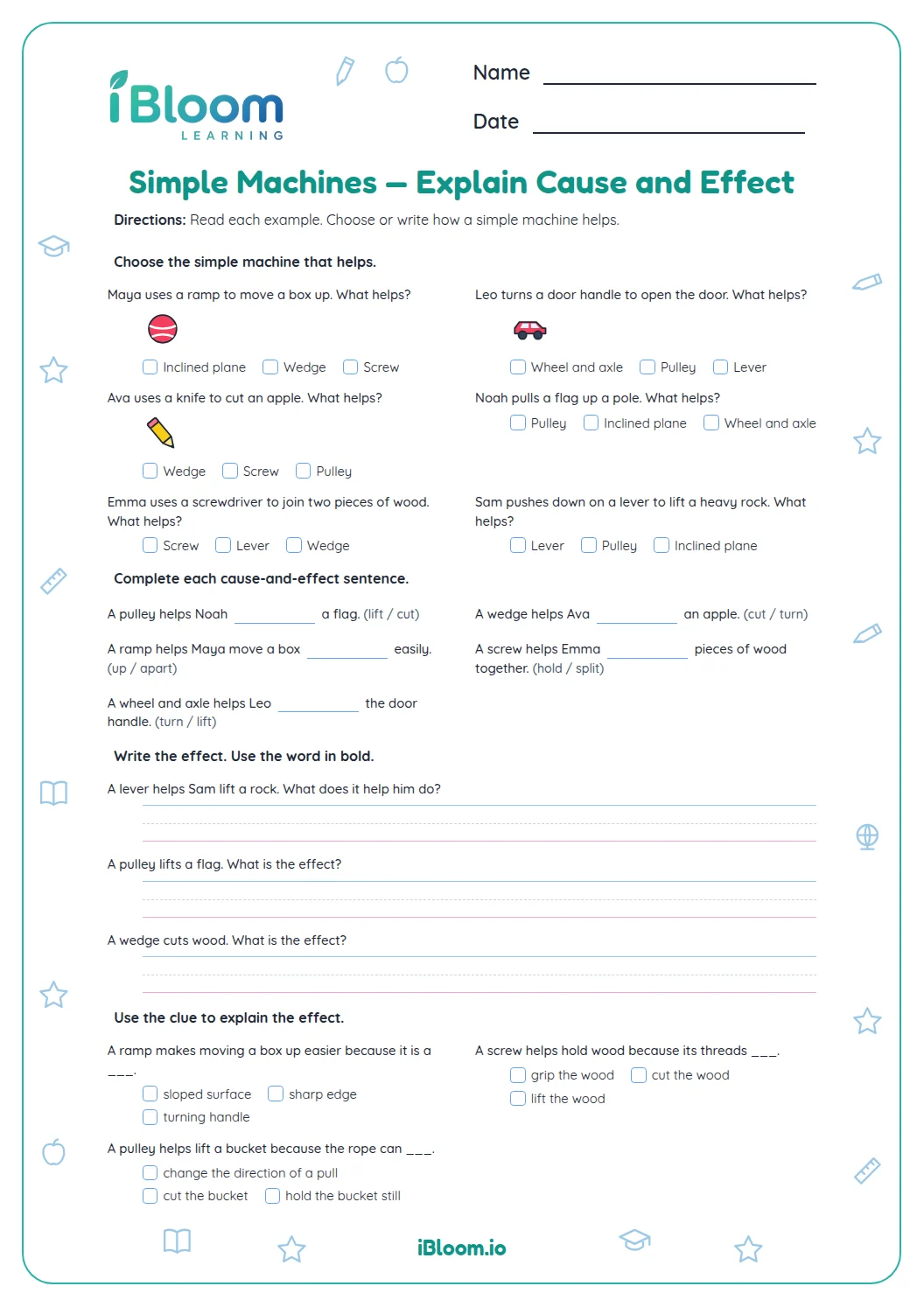 Simple Machines — Explain Cause and EffectGrade 1 science worksheets for recognizing simple machines and explaining how they help people move, lift, cut, turn, or hold objects. This explain cause and effect worksheet provides a distinct, age-appropriate way to practise the same lesson.Grade 1Free PDF preview
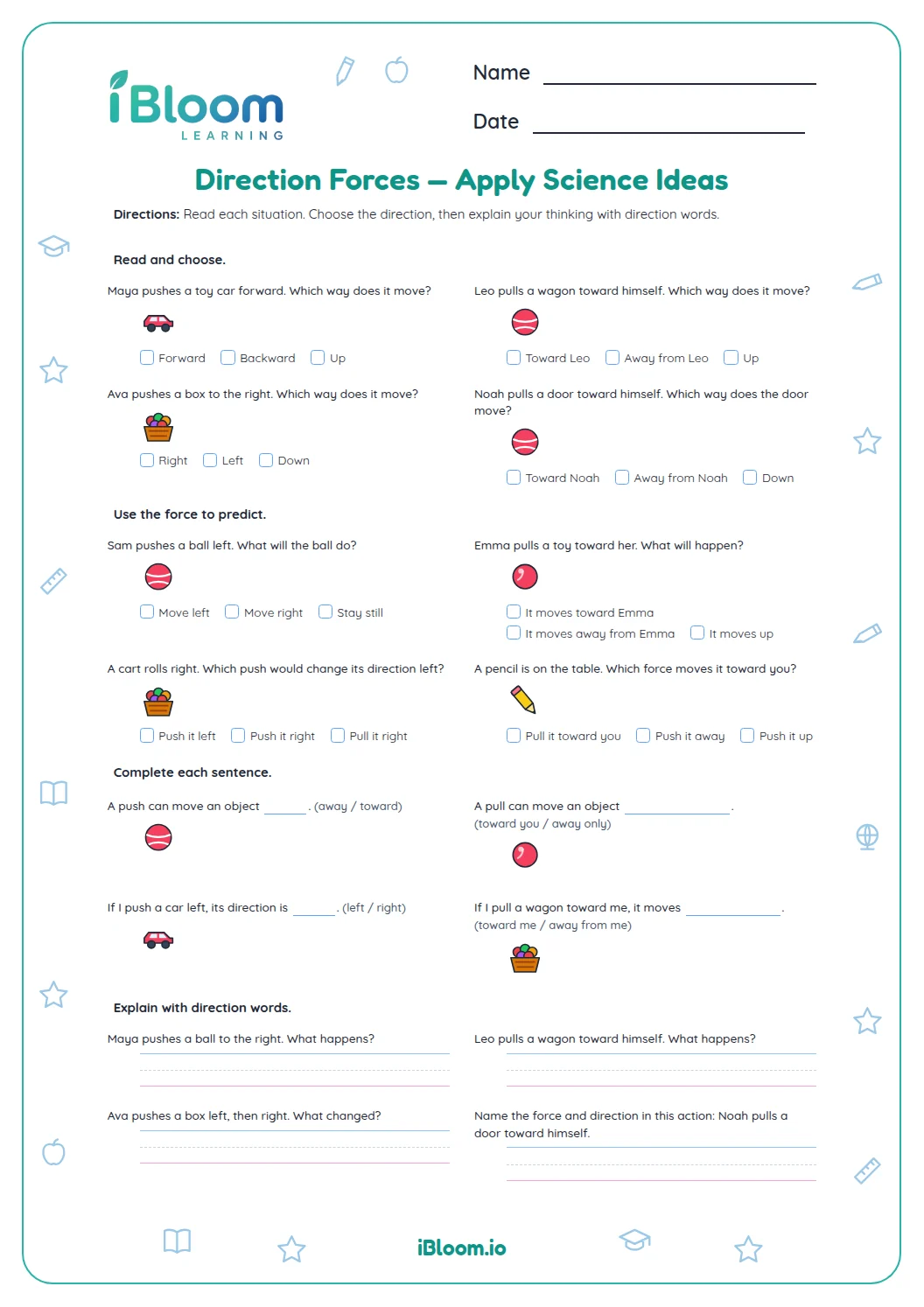 Direction Forces — Apply Science IdeasExplore direction forces practice activities within Forces Machines Practice Activities, organised so children, families, and elementary teachers can move from broad learning areas to focused printable practice. This apply science ideas worksheet provides a distinct, age-appropriate way to practise the same lesson.Grade 1Free PDF preview
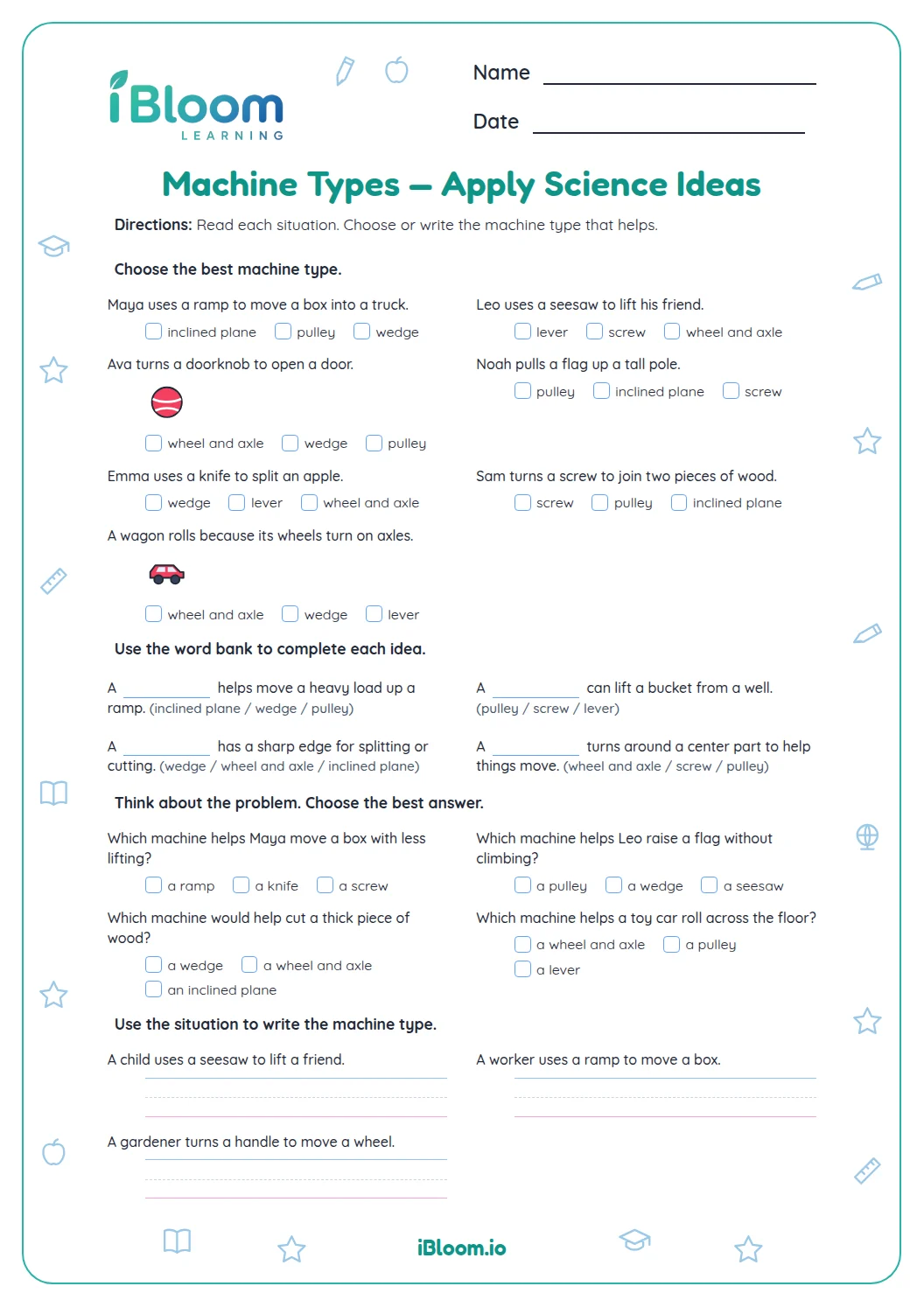 Machine Types — Apply Science IdeasExplore machine types practice activities within Forces Machines Practice Activities, organised so children, families, and elementary teachers can move from broad learning areas to focused printable practice. This apply science ideas worksheet provides a distinct, age-appropriate way to practise the same lesson.Grade 1Free PDF preview
Practice that builds confidence
What children learn about forces
These Grade 1 science worksheets help children explore how forces make objects move, stop, speed up, slow down, or change direction. Students practise identifying pushes and pulls, describing movement, and noticing how force is used in everyday machines.
The printable activities include picture sorting, labeling, matching, observation prompts, and simple explanation tasks. Children look at ramps, wheels, levers, tools, playground movement, and nature-inspired designs while building clear science vocabulary.
First graders begin with the idea that a force is a push or a pull. The worksheets connect this to familiar actions: pushing a toy car, pulling a wagon, opening a door, kicking a ball, or stopping a rolling object. Children also practise words such as move, stop, faster, slower, direction, push, and pull so they can explain what they see, not just choose an answer.
Movement and direction in pictures
Activities ask students to observe where an object starts, where it goes, and what might make its motion change. Direction forces are shown through arrows, left and right movement, up and down motion, and forward or backward pushes and pulls. This helps children understand that forces are not just strong or weak; they also act in a direction.
Simple machines and machine types
The machine pages introduce common simple machines in age-appropriate ways, such as wheels and axles, ramps, levers, pulleys, screws, and wedges. Children match tools and objects to how they help people do work, like a ramp helping something move up, a wheel helping something roll, or a wedge helping split or cut. Machine type activities encourage sorting by purpose and visible parts.
Nature machines and everyday design
Nature Machines activities help children notice that shapes and actions in nature can inspire useful designs. A bird beak, claw, shell, or seed shape can lead to a discussion about gripping, protecting, cutting, or moving. The goal is observation: What part helps? What does it do? How is it like a tool or machine people use?
A simple routine for home and class
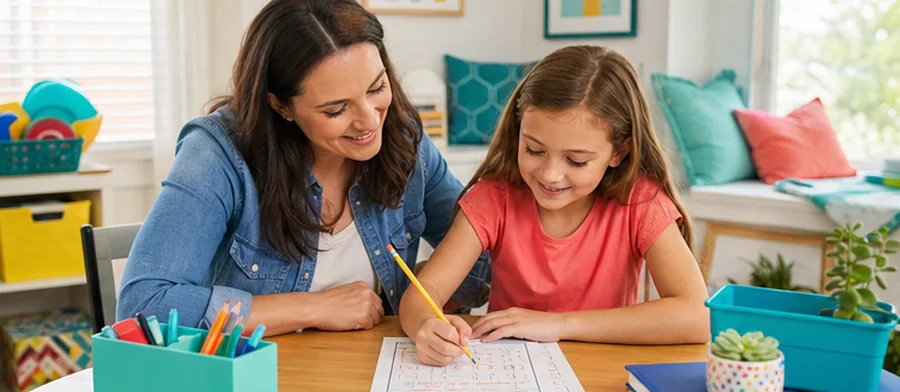
Parents can choose one page, then invite the child to find three matching examples at home: something to push, something to pull, and something with a wheel, ramp, or lever. Teachers can use the worksheets in science centers, after a short demonstration, or as a recording sheet during a classroom object hunt. Partner talk works well: one child names the force, the other explains the motion.
Free printable PDF download
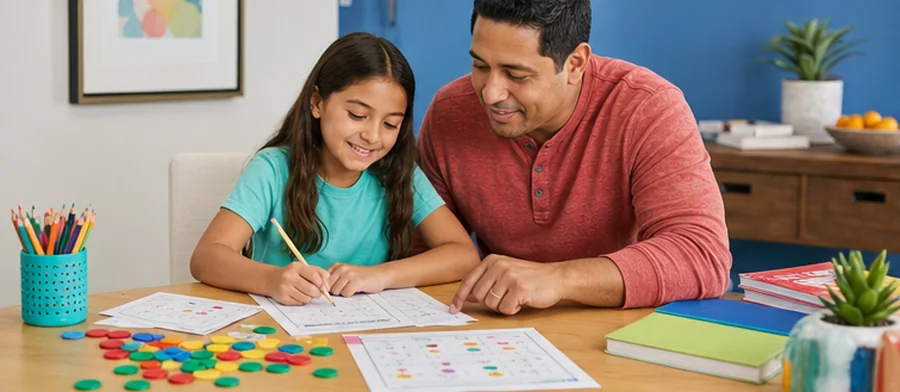
Use this grade 1 forces and machines worksheet page to preview the activity, print it, or download it as a PDF for quick practice. It works well for homework, homeschool lessons, tutoring, morning work, revision, and classroom centers.
Answers and answer key support
After the child completes the worksheet independently, parents and teachers can use the answer support or answer key information to check the work, review mistakes, and choose the next practice step.
Common errors and why iBloom worksheets help
Watch for children saying every movement is a push, confusing the object with the force, or naming a machine without explaining what it helps do. A useful child-friendly strategy is: Name the action, show the direction, tell what changed. iBloom worksheets support this step-by-step thinking with clear pictures, focused vocabulary, and varied tasks that move from recognition to simple explanations.
Helpful answers
Frequently asked questions
What force ideas are covered in these Grade 1 worksheets?
Children practise identifying pushes and pulls, describing movement, noticing direction, and explaining how a force can make an object start, stop, speed up, slow down, or change direction.
Do the worksheets introduce simple machines?
Yes. The activities include age-appropriate work with common simple machines such as wheels and axles, ramps, levers, pulleys, wedges, and screws, mainly through pictures and everyday examples.
What does Nature Machines mean for first graders?
It refers to observing shapes and actions in nature that work like helpful tools, such as claws for gripping or shells for protection, and comparing them with human-made machines or designs.
How can I use these worksheets with a hands-on lesson?
Let children test a toy car, door, ball, ramp, or classroom tool first. Then use the worksheet to label the push or pull, draw arrows for direction, and explain what changed in the object’s movement.
What mistakes should I watch for when teaching pushes and pulls?
Children may call every force a push, forget that pulls can also move objects, or name a machine without describing its job. Ask them to show the action with their hands and say what the object does next.
Is this grade 1 forces and machines worksheet free?
Yes. You can preview it for free and use the printable worksheet for home or classroom practice.
Can I download this grade 1 forces and machines worksheet as a PDF?
Yes. Use the worksheet download option to save a printable PDF, or print the worksheet directly from the page.
Does this grade 1 forces and machines worksheet include answers or an answer key?
When the activity has fixed answers, iBloom includes answer support so parents and teachers can check the completed worksheet.